Verdict, analysis, and key features for each pick.
#1 Pick
Best Overall
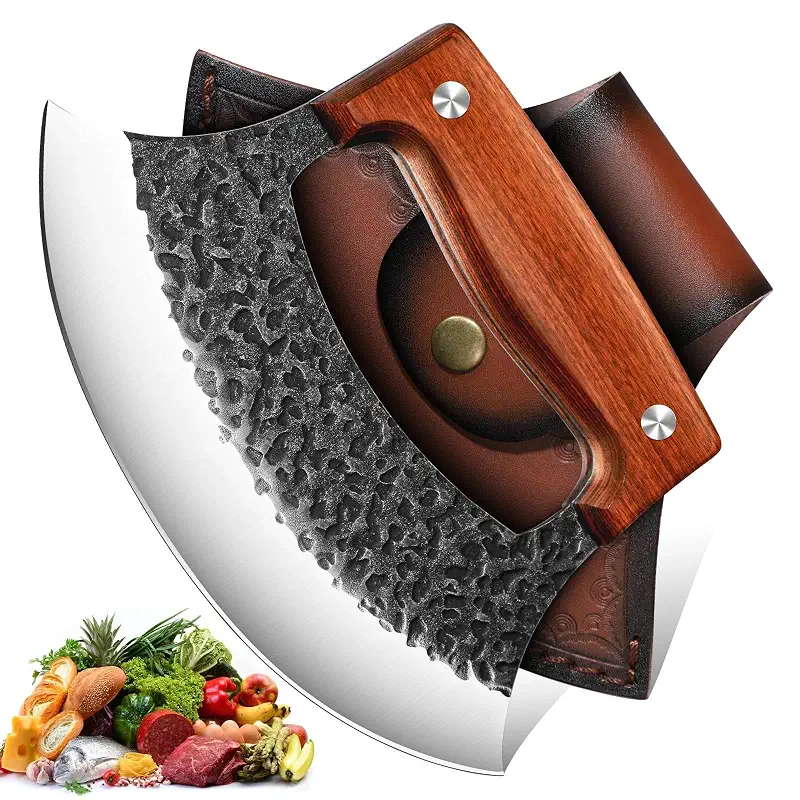
Tivoli
TIVOLI Hand Forged Ulu Knife - Mezzaluna Rocker Knife - Pizza Cutter | Anti-stick Pounding Texture, Full Tang, Rosewood Handle, Belt Sheath, Gift Box, for Kitchen, Camping, BBQ
4.9(238)
Hand-forged Japanese steel with rosewood handle and premium leather sheath. Exceptional sharpness and versatility at a fair price.
Ideal for: Home cooks who chop regularly, outdoor enthusiasts, anyone seeking a multi-purpose tool.
The Tivoli hand-forged ulu brings together Japanese forging tradition with genuine Inuit design. Owners consistently report it arrives razor-sharp, handling everything from fresh herbs to roasted chicken with equal ease. The high carbon steel retains its edge through dozens of uses, and the full tang construction means the blade extends through the entire rosewood handle for durability that lasts years. What sets this model apart is the care in details: the anti-stick texture on the blade prevents food from clinging, and the included leather sheath with belt loop makes it genuinely portable for outdoor cooking or camping.
The main trade-off is learning curve. The rocking motion is intuitive once you get going, but wrist positioning takes practice if you've only used chef's knives. A few owners with arthritis found the design actually easier on their joints than traditional blades: the blade sits directly above your cutting hand, so you push straight down rather than pulling at an angle. Others prefer this over lighter alternatives because the weight does work for you.
Compared to the Huusk model, which emphasizes Japanese steel with marketing flair, the Tivoli model delivers the same craftsmanship without the price inflation. If you want one reliable ulu that handles kitchen prep, pizza night, and occasional outdoor use, this is the safest choice.
Pros
Arrives razor-sharp with excellent edge retention
Full tang construction for lasting durability and balance
Included leather sheath with belt loop for portability
Ideal for: Home cooks who use fresh herbs daily, salad prep specialists, gardeners.
The ULU Factory Alaska set is the only option here that pairs the knife with its ideal companion: a concave birch or walnut bowl. This matters more than specs suggest. When you're mincing a large handful of cilantro or parsley, the curved bowl's shape keeps ingredients centered as you rock the blade, eliminating the frustration of lettuce creeping off a flat board. Owners who grow or buy fresh herbs in volume report this saves real time; you can prep a week's worth of garnishes in minutes without chasing leaves across a cutting surface.
The blade itself is stainless steel sharpened on one side in the traditional Inuit style. It won't hold an edge quite as long as the hand-forged carbon steel models, but it's easier to maintain and won't rust if you're negligent with drying. The one-sided sharpening is a detail: it reduces the blade weight slightly and makes the rocking motion feel smoother because you're only cutting on the downstroke.
This set sacrifices portability for specialization. There's no sheath included, so it stays at home on a counter or in a cabinet. If you run a kitchen where fresh herbs appear in nearly every dish, or if you spend half your week prepping salads, the bowl inclusion justifies the choice over the Coowolf model, which offers a stand but no actual cutting surface.
Pros
Concave bowl designed specifically for rocking and mincing
Made in Alaska by traditional craftspeople
Stainless steel blade easier to maintain than carbon steel
Cons
No sheath included; stays home rather than traveling
Dishwasher unsafe for bowl and blade; requires hand care
Key features
Stainless steel blade sharpened one-sided in traditional Inuit style
Concave Alaskan birch or walnut chopping bowl included
Independent knife stand for safe storage
Made in Anchorage, Alaska by The ULU Factory
#3 Pick
Best Value
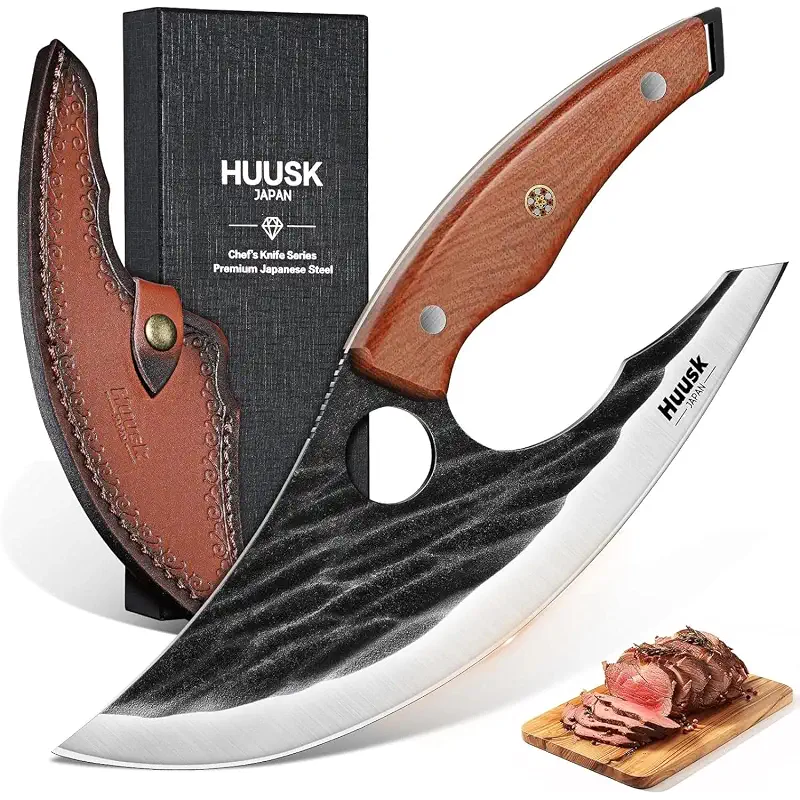
Huusk
Huusk Japan Ulu Knife with Sheath - Knives for BBQ | Hand Forged Caveman Ultimo Knife, Full Tang Wooden Handle, Gift Box, for Vegetables, Fruit, Pizza
4.5(2,373)
Hand-forged ATS-34 Japanese steel with finger holes and belt sheath. Strong performer at an entry price with honest trade-offs.
Ideal for: Budget-conscious cooks who want real steel quality and portability.
The Huusk ulu sits in the middle of the price range but punches above it in steel quality. The ATS-34 high carbon blade is hand-finished using the Honbazuke three-step method, which is genuine Japanese craftsmanship. Owners report it cuts through cheese, avocado, and vegetables cleanly, and the finger holes in the handle do add stability if you haven't used a rocking knife before. The included belt sheath makes it portable, and the full tang construction means it won't loosen over time.
However, there's honesty needed here: a handful of early owners noted the blade arrived less sharp than advertised and required stropping or professional sharpening to match what they expected. The steel itself is sound, but QC on the edge-finishing can vary. Also, the ergonomic design requires wrist adjustment: the hooked blade and finger holes are engineered for a specific grip, and if your hands are very large or very small, you might feel hand fatigue after ten minutes of chopping. One owner with arthritis found it actually worsened wrist discomfort, while others with mobility issues loved it.
Versus the Syokami lightweight option, the Huusk is heavier and more aggressive: better for serious chopping work but less approachable for beginners. The marketing around this model has sometimes overstated its origins, so buy it for the steel quality and sheath, not for the cultural narrative.
Pros
ATS-34 high carbon steel with professional hand finishing
Finger holes add grip stability for newer users
Lightweight belt sheath included for portability
Cons
Blade sharpness varies; may require stropping before first use
Ergonomic design doesn't suit all hand sizes equally
Key features
Premium ATS-34 high carbon steel blade
Hand-finished via three-step Honbazuke method
Full tang with three rivets for durability
Curved ergonomic handle with integrated finger holes
#4 Pick
Best with Storage Stand
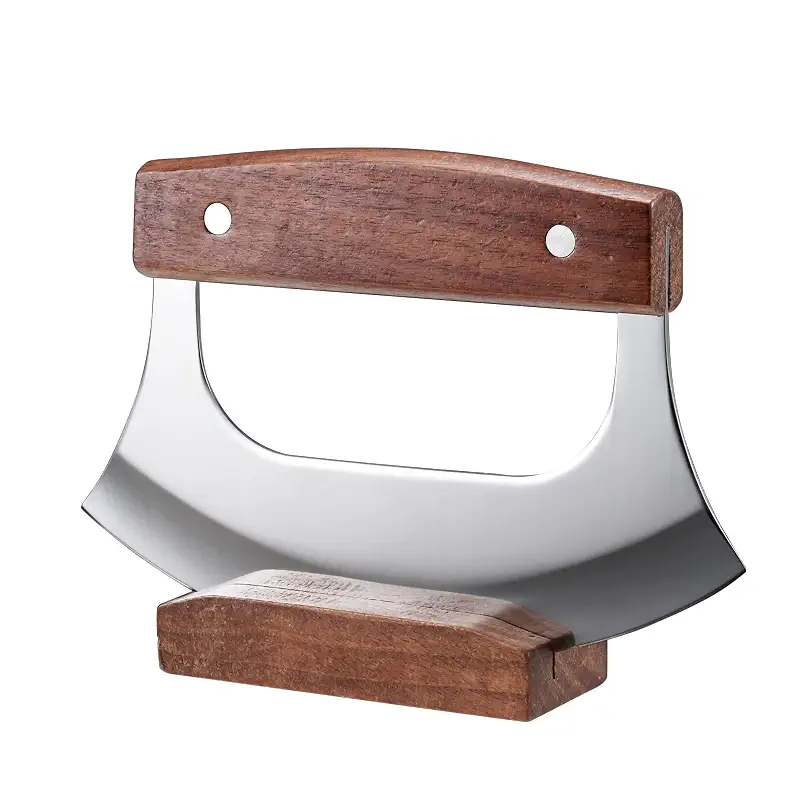
Coowolf
Coowolf Ulu Knife with Stand for Cutter Pizza Meat Vegetables Herb Salad | Stainless Steel Blade, Walnut Wood Handle, Sharp Rocker Mezzaluna Knife, Kitchen Essentials Accessories and Gadgets Tools
4.6(728)
Stainless steel blade with included walnut display stand. Kitchen-focused design prioritizes safety and aesthetics.
Ideal for: Home cooks wanting a beautiful, safe kitchen display piece that gets daily use.
The Coowolf distinguishes itself by including a wooden stand: a detail that solves a real problem. Curved blades are dangerous in knife blocks and don't lay flat safely in drawers. This stand keeps the blade upright and accessible on your counter, turning the ulu into kitchen decor that's also functional. Owners report this visibility actually increases usage; they see it and reach for it more often than knives stored away. The blade is quality stainless steel that holds an edge well, and the walnut stand complements nearly any kitchen aesthetic without looking out of place.
The handle is broader than other models and the grip reduces wrist strain during extended use, which appeals to cooks with arthritic hands or anyone doing salad prep for a crowd. The rocking motion here feels effortless because of the balance and leverage. One drawback: the grooved underside of the handle can pinch skin if you're not careful with your grip, and a few owners noted this took adjustment. The stainless blade won't match the sharpness of hand-forged carbon steel out of the box, but it's sharper than most kitchen gadgets and stays easier to maintain.
Compared to the Tivoli, which prioritizes portability and outdoor use, the Coowolf sacrifices belt sheath mobility to gain kitchen presence and safety storage. If your ulu rarely leaves the kitchen counter, this trade-off makes sense.
Pros
Included walnut stand for upright safe storage
Stainless steel blade easier to maintain than carbon steel
Broader handle reduces wrist strain during prep work
Cons
No sheath for portability; designed for counter display
Grooved handle underside can pinch skin if gripped incorrectly
Key features
Stainless steel curved blade for easy maintenance
Ergonomic enlarged handle reduces wrist fatigue
Walnut wood stand included for safe upright storage
6.5-inch blade with contoured grip for one-handed use
#5 Pick
Best Lightweight Option
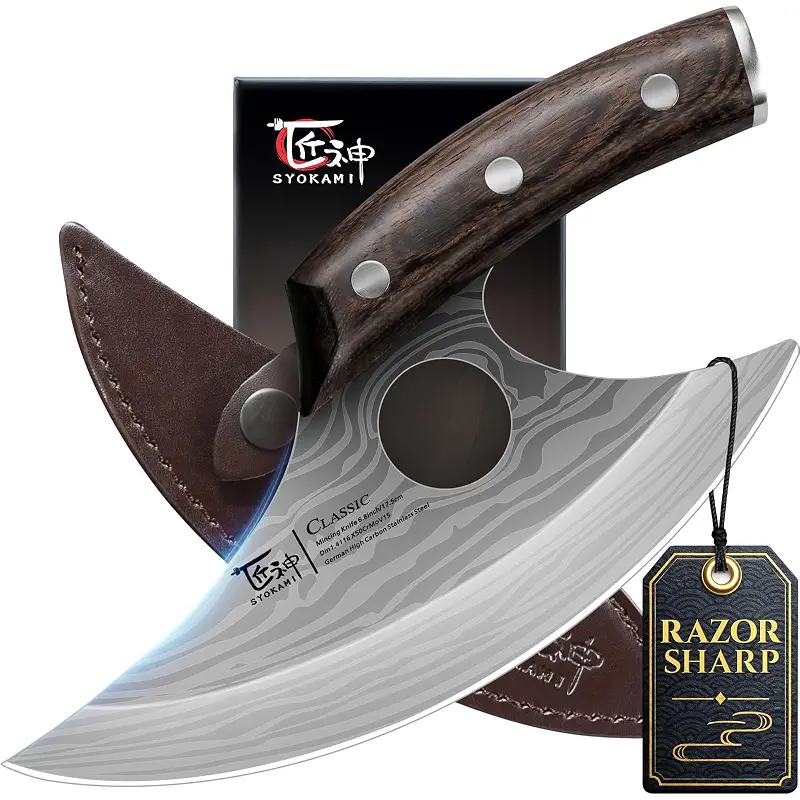
Syokami
SYOKAMI Lightweight Ulu Knife, Salad Rocker Chopper with Leather Sheath | Mezzaluna, Beginner-friendly, Vegetarian Essentials, Ergonomic handle, Cutter for Pizza Meat, Gift Box for Kitchen, Camping
4.9(24)
Hand-forged German steel with ergonomic wenge handle and leather sheath. Smallest footprint for beginners and arthritis-friendly use.
Ideal for: Beginners, arthritis sufferers, anyone prioritizing comfort over speed in prep work.
The Syokami is the lightest and smallest ulu in this lineup, which matters if you have limited hand strength, arthritis, or find standard kitchen tools exhausting to use repeatedly. The German high-carbon steel (HRC56+) is hand-forged through 70 stages and delivers sharpness competitive with pricier models. What makes this unique is the intentional design for comfort: the wenge wood handle has a natural arc that guides your hand into the correct rocking position, the finger hole feels instinctive to use rather than forced, and the overall balance means less effort goes into each cut.
Owners consistently mention the ulu knife rocking technique becomes easier to learn on this model because the blade geometry naturally encourages the proper motion. The handle doesn't require a death grip, so you can chop longer without fatigue. The leather sheath is well-made and the buckle fastens through the finger hole for stability, a clever detail that prevents accidental cuts when carrying. One owner noted they now own two (one for kitchen and one for camping) because the lightweight design makes it genuinely portable.
The trade-off: because it's lighter and shorter, it's less suited to heavy chopping work or high-volume prep. If you're mincing three bunches of herbs or cutting up a whole roasted chicken, the Tivoli or Huusk will feel more efficient. The Syokami shines at everyday tasks and tasks where comfort and control matter more than speed. It's also newer to market with fewer reviews, so you're betting slightly more on feedback from a smaller sample, though what exists is enthusiastic.
Pros
Lightest weight and smallest footprint in the lineup
Premium German high-carbon steel with excellent sharpness
Cons
Less suited to high-volume or heavy-duty chopping tasks
Newer model with smaller review base than established competitors
Key features
Hand-forged German high-carbon steel (HRC56+) blade
African wenge wood handle with natural ergonomic arc
Triple-riveted full tang for durability and balance
Premium leather sheath with buckle fastening through finger hole
How to Choose an Ulu Knife
Four trade-offs that actually matter when matching a ulu knife to your kitchen.
Steel Type: Carbon vs. Stainless
Hand-forged high carbon steel holds a sharper edge longer and feels more responsive in the hand, but it requires careful drying and occasional maintenance to prevent rust. Stainless steel is more forgiving (it won't rust and needs less fuss) but won't match the sharpness or edge retention. If you're patient with maintenance and want the sharpest tool, carbon steel wins. If you want low-maintenance reliability, stainless is your answer. Most premium models use carbon steel because the craftsmanship justifies the upkeep.
Handle Comfort and Design
The ulu knife rocking technique relies on your hand sitting directly above the blade's curve, which is why handle shape matters more than with chef's knives. Broader handles reduce wrist strain during extended use. Finger holes add stability and are especially useful for beginners or anyone with arthritis. Test the grip in your mind: will you chop for five minutes or thirty? If you prep salads nightly, ergonomic handle design saves real pain. Lighter models suit occasional use and comfort; heavier models work harder for you but demand more hand strength.
Portability vs. Kitchen Presence
If your ulu stays on the kitchen counter, invest in a beautiful stand or display piece like the Coowolf. If you camp, grill outdoors, or travel with kitchen tools, a compact model with a fitted leather sheath is essential. The blade's curved shape makes standard knife storage unsafe, so factor in whether you have safe storage at home. A belt sheath adds negligible weight but makes a huge difference in portability.
Blade Sharpness and Maintenance
Most quality ulus arrive very sharp and need stropping rather than professional sharpening for years. However, the ulu versus chef knife comparison shows they excel at different tasks: ulus are best for rocking and mincing, not for precision tip work. If you plan to hone the blade yourself, hand-forged carbon steel is more rewarding. Stainless steel stays sharper longer without intervention but is trickier to sharpen if needed. Buy from brands with good sharpening guidance if you're new to edge maintenance.
Frequently asked
Quick answers to the questions readers ask most.
Can I use an ulu knife on a regular cutting board?
Yes, but the curved blade works best on a flat surface or inside a shallow bowl. The blade's geometry is designed to rock rather than slice, so a slightly concave surface (like a wooden bowl) actually enhances efficiency. A flat wooden board works fine; avoid glass or marble because the blade can slip and damage the surface.
Is an ulu knife safe for beginners?
Yes, with caution. The downward rocking motion is actually safer than a chef's knife in many ways: your knuckles stay above the blade if you grip correctly. The danger is the blade's sharpness; these knives arrive razor-sharp and demand respect. Models with finger holes and ergonomic handles like the Syokami are designed for newcomers. Practice with small quantities of soft foods first (herbs, soft cheese, lettuce) before tackling harder tasks.
Should I store my ulu in a leather sheath long-term?
Leather sheaths are excellent for portability and travel but can trap moisture if the blade isn't completely dry. For long-term kitchen storage, a wooden stand or magnetic strip is safer. If you use a sheath, make sure the blade is bone-dry before sheathing, and air it out weekly if the knife sits unused. Always wash and dry immediately after use.
How do I sharpen an ulu knife?
Hand-forged carbon steel blades respond well to stropping with a leather strop and stropping compound: this maintains the edge between deeper sharpenings. For actual sharpening, a whetstone works, but the curved blade requires careful technique and angle control. Stainless steel models can be taken to a professional sharpener, which is often easier than DIY. Most quality ulus won't need sharpening for 6–12 months of regular home use if properly maintained.
What's the difference between a mezzaluna and an ulu?
They're essentially the same tool with different cultural origins. Mezzaluna is the Italian version with two handles on either end of a curved blade; an ulu is the Inuit design with a single centered handle above the blade. Ulu knives are lighter, easier to use with one hand, and the handle position gives better leverage. Both rock the same way and excel at mincing herbs, but an ulu is more versatile for general chopping.