Verdict, analysis, and key features for each pick.
#1 Pick
Best Overall Value for Gas Cooking
Carote
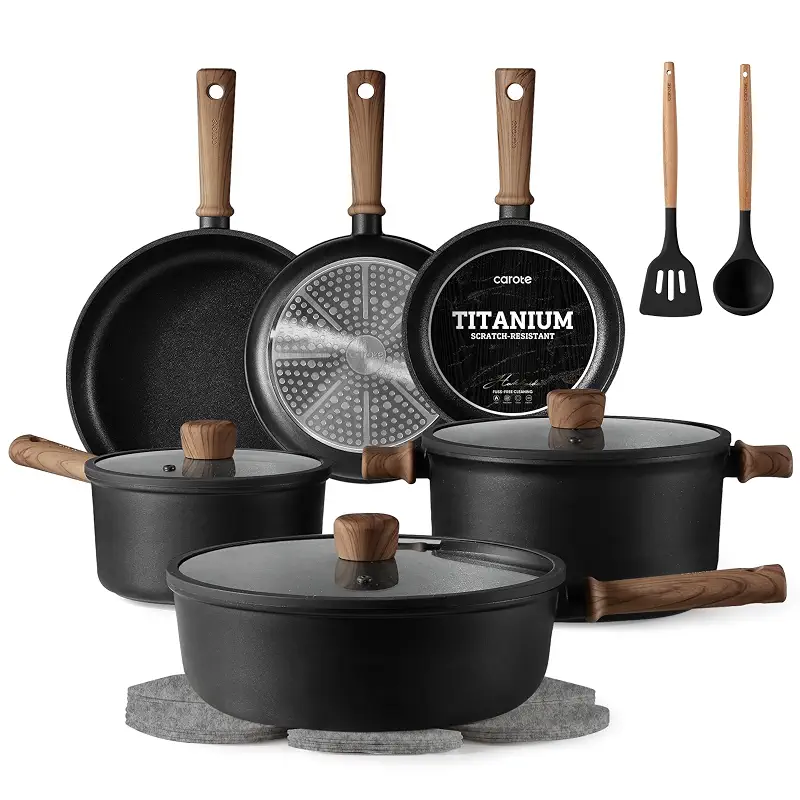
CAROTE 16pcs Pots and Pans Set, Nonstick Cookware Sets | Titanium Reinforced Coating, Scratch-Resistant, Easy to Clean, Even Heating, Induction Compatible, with Frying Pans Set
4.6(3,757)
Complete nonstick set with titanium-reinforced coating and even heating that gas cooks will appreciate for everyday versatility.
Ideal for: Daily home cooks who prioritize easy cleanup and nonstick convenience over decades of durability.
The Carote 16-piece set brings together what most home cooks need without forcing you to buy more than you'll use. The titanium-reinforced nonstick coating resists scratching when you follow basic care (wood or silicone utensils only), and the die-cast aluminum base heats evenly on gas without the learning curve that stainless steel demands. Buyers report that eggs release cleanly and oil cleanup takes minutes, which matters when you're cooking multiple meals a week.
On gas specifically, the flat bottom seats properly over flame, and the heat distributes fast enough to match your burner adjustments without lag. The silicone-sealed glass lids hold steam well, so covered simmering works as intended. You trade longevity for ease here: the nonstick surface won't outlast a stainless steel set by a decade, but for someone who cooks regularly and values simplicity, that trade makes sense.
Compared to the Cuisinart stainless steel option, the Carote asks almost nothing of you in terms of technique. If you want to brown chicken without studying preheating temperatures or oil-drop tests, this set keeps you cooking without friction. Hand-washing is mandatory, and metal utensils will damage the surface, so this works best in kitchens where those habits are already established.
Pros
Titanium nonstick coating resists scratching with proper care
Even heat distribution across die-cast aluminum base
Silicone-sealed glass lids trap moisture and flavor effectively
Complete 16-piece set covers breakfast through dinner cooking
Cons
Nonstick surface requires hand-washing only, no dishwasher
Hand-assembled handles on some pieces can feel initially loose
Key features
Titanium-reinforced nonstick coating for scratch resistance and food release
Die-cast aluminum construction heats quickly and distributes evenly
Silicone-sealed tempered glass lids with stay-cool wooden handles
Includes three frying pans, two saucepans, stockpot, sauté pan, and utensils
#2 Pick
Best for Long-Term Investment and Professional Cooking
Cuisinart
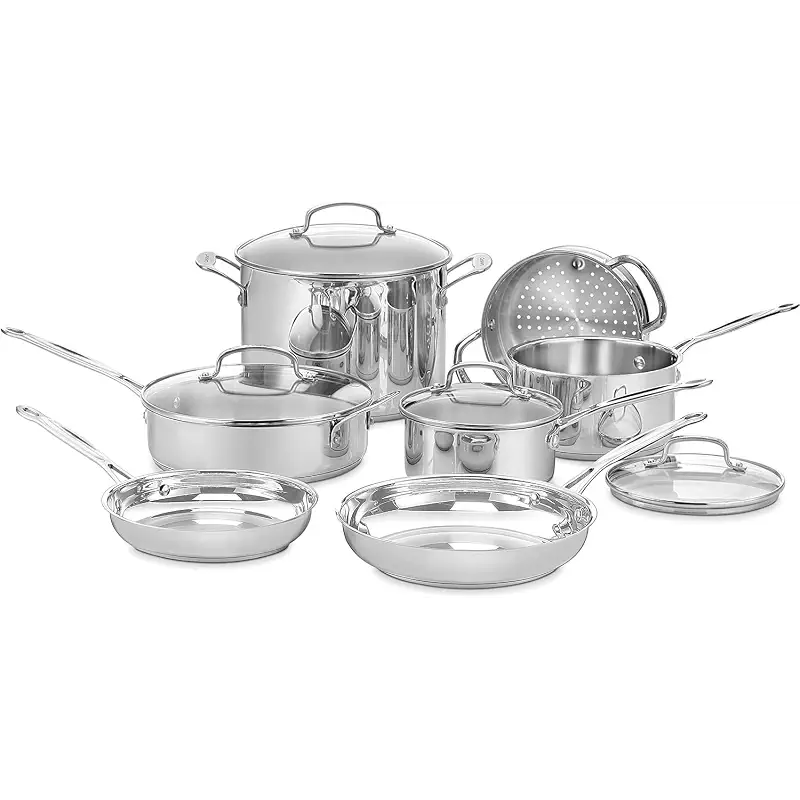
Cuisinart Chef’s Classic 11-Piece Stainless Steel Pots and Pans Set, Cookware Set Compatible with Induction, Electric, Gas Cooktops, Aluminum Core for Even Heat, Cool Grip Handles, Dishwasher Safe | Cuisinart stainless steel cookware set, dishwasher safe, oven safe to 500°F & gas/electric/induction compatible, 77-11G
4.3(9,698)
Premium stainless steel set built to last decades; requires technique but rewards careful cooking with superior browning and oven-to-stovetop versatility.
Ideal for: Serious home cooks or anyone planning to invest in one cookware set for life; gas stove owners comfortable with technique.
The Cuisinart Chef's Classic stainless steel set is the choice for cooks who see cookware as a lifetime purchase. The aluminum-encapsulated base heats quickly and evenly on gas without hot spots, and the polished stainless exterior cleans to a mirror finish with the right powder (Bar Keepers Friend works well). Owners who invest time in learning stainless steel technique (preheating, proper oil use, temperature control) report excellent browning, zero sticking, and performance indistinguishable from restaurant cookware.
On a gas stove, the flat bottom sits stable over flame, and you can use high heat without worrying about nonstick degradation. The riveted handles stay cool under normal cooking, and the glass lids are rock-solid. The learning curve is real, though. If you're used to nonstick, you'll need to break habits: preheat before adding oil, use enough fat, and learn which oils work (avocado or grapeseed, not olive oil at high heat). Several buyers note that the first few attempts feel frustrating until you adjust.
Where this set separates itself from the Carote nonstick is durability and browning power. A well-cared-for stainless steel pan browns proteins better than any nonstick, and you'll own it for thirty years. But it demands respect: rushed technique and high heat lead to burned food, not nonstick's foolproof release. This works best in kitchens with patient cooks or those who already understand stainless steel.
Pros
Stainless steel construction lasts thirty-plus years with proper care
Aluminum encapsulated base heats quickly and distributes evenly
Superior browning and searing performance versus nonstick options
Dishwasher safe and oven safe to 500°F for versatile cooking
Cons
Steep learning curve for cooks accustomed to nonstick cookware
Food sticks if pans aren't preheated or enough fat isn't used
Key features
Premium stainless steel with aluminum-encapsulated base for even heating
Riveted Cool Grip handles stay comfortable on stovetop and in oven
Tempered glass lids with wide handles fit snug and lock flavor in
Dishwasher safe, oven safe to 500°F, works on all stovetops including induction
#3 Pick
Best Hard-Anodized Nonstick for Durability
Cuisinart
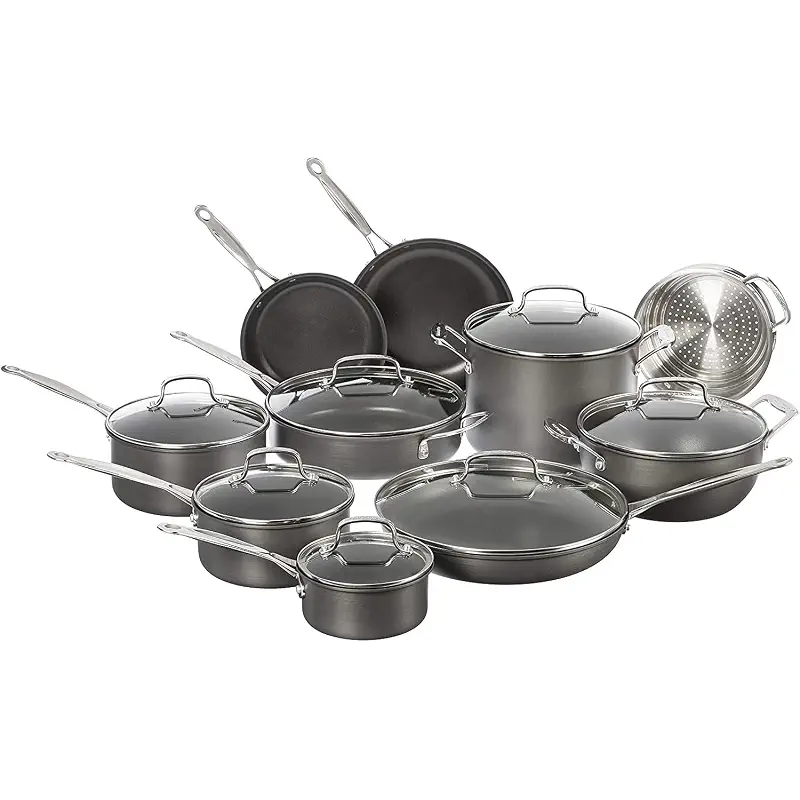
Cuisinart 17-Piece Pots and Pans Set, Non Stick Hard Anodized Cookware Set, Compatible with Electric, Gas Cooktops, Dishwasher Safe, Oven Safe Pot Set, Cool Grip Handles, Aluminum Core for Even Heat
4.6(3,865)
Heavy-duty hard-anodized nonstick set that outperforms standard nonstick without stainless steel's learning curve; scratch-resistant and long-lasting.
Ideal for: Home cooks wanting durable nonstick cookware that resists damage and performs well on gas without technique requirements.
Hard anodization is a process that hardens aluminum more than stainless steel, and the Cuisinart 17-piece set leverages that toughness to offer a nonstick surface with real durability. The exterior doesn't scratch easily, and owners report the Quantanium nonstick coating still releases food cleanly after months of use. On gas, the flat bottom seats well, and heat distributes evenly without the temperature-management demands of stainless steel.
This is nonstick that forgives some carelessness. You can heat it higher than softer nonstick coatings (up to 500°F oven-safe), stack pans without constant worry, and use medium heat without fear of degradation. The cool-grip handles work on gas cooktops, and the set is large enough to handle family-sized cooking. Cleanup remains simple: eggs slide out, and a soft sponge wipes the pan clean in seconds.
The trade-off versus the Carote set is weight and price: hard-anodized pans are denser and more expensive, but they'll outlast standard nonstick by years. Compared to stainless steel, you lose browning power and professional performance, but you keep ease of use and avoid the technique learning curve. This appeals to cooks who want durability without stainless steel's demands, or who've owned cheaper nonstick and want something built to last through years of regular use.
Pros
Hard-anodized exterior is harder than stainless steel and resists scratching
Quantanium nonstick coating maintains food release over time
Medium heat works well on gas without coating degradation concerns
17-piece set includes three skillets, steamer, and complete lid coverage
Cons
Heavier than standard nonstick, which some cooks find fatiguing
Hand-washing recommended to preserve nonstick coating lifespan
Key features
Hard-anodized aluminum exterior stronger and more durable than stainless
Quantanium-reinforced nonstick interior resists scratching and maintains food release
Oven safe to 500°F with glass lids safe to 450°F for versatile cooking
Includes saucepans, skillets, sauté pan, Dutch oven, steamer insert, and lids
#4 Pick
Best Heat-Control Feature with Thermo-Spot Indicator
T-Fal
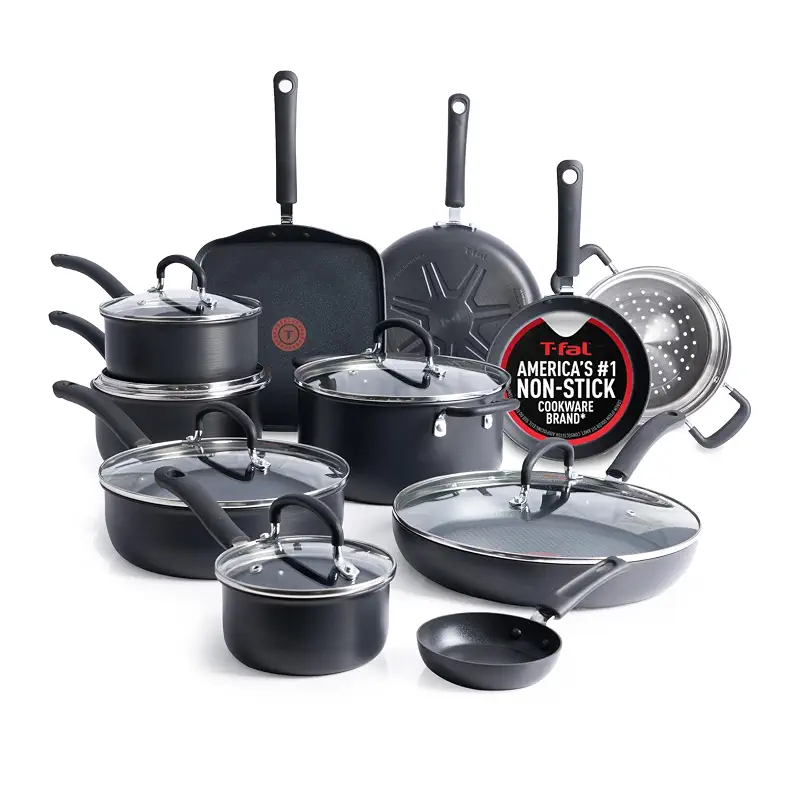
T-Fal Ultimate Hard Anodized Nonstick Pots and Pans Set 17 Piece, Nonstick Cookware Set with Fry Pan, Saucepans, Saute-Pan, Griddle, Dishwasher Safe, Onyx
4.7(18,845)
Hard-anodized nonstick set with built-in red heat indicator that signals proper preheat; ideal for gas cooks who value cooking consistency.
Ideal for: Gas stove cooks who value heat-control assistance and want durable hard-anodized nonstick without stainless steel technique.
The T-Fal Ultimate hard-anodized set adds a feature that changes gas cooking: the Thermo-Spot heat indicator turns solid red when the pan reaches proper temperature. For gas cooks, this removes guesswork. Instead of holding your hand over the pan or flicking water drops, you watch the indicator. This matters on gas especially, because open flame heat varies by burner, wind, and habit: the indicator keeps you calibrated.
Hard-anodized construction gives you durability that standard nonstick can't match, and buyers report the titanium coating holds up after years on glass-top and gas stoves alike. The set is lighter than the Cuisinart hard-anodized option, which appeals to cooks with smaller hands or arthritis. Medium heat is the sweet spot on gas: the instructions recommend avoiding high heat to prevent warping, which is a fair trade for a set that lasts a decade.
Where this differs from the Carote nonstick is thickness and the Thermo-Spot feature; where it differs from stainless steel is that you'll never need to learn oil-drop tests or preheating windows. The trade-off is that medium heat cooks slower than high flame, but most home cooking doesn't require high heat anyway. T-Fal's long history (owners report sets lasting fifteen years) gives confidence that this set will handle years of gas-stove cooking without degradation.
Pros
Thermo-Spot indicator turns red when pan is properly preheated
Hard-anodized construction resists warping and scratching over time
Titanium nonstick coating maintains performance through years of use
Lighter weight than some hard-anodized sets, easier for prolonged cooking
Cons
Instructions recommend medium heat maximum; high heat can warp cookware
Not induction compatible, limiting stovetop versatility if you upgrade later
Key features
Thermo-Spot heat indicator signals proper preheat with color change to red
Hard-anodized forged aluminum resists corrosion, scratching, and warping
Titanium nonstick coating with glass lids at 17 pieces: skillets, saucepans, steamer
Oven safe to 400°F, all stovetops except induction, dishwasher safe
#5 Pick
Best Induction-Compatible Set for Future Flexibility
Astercook
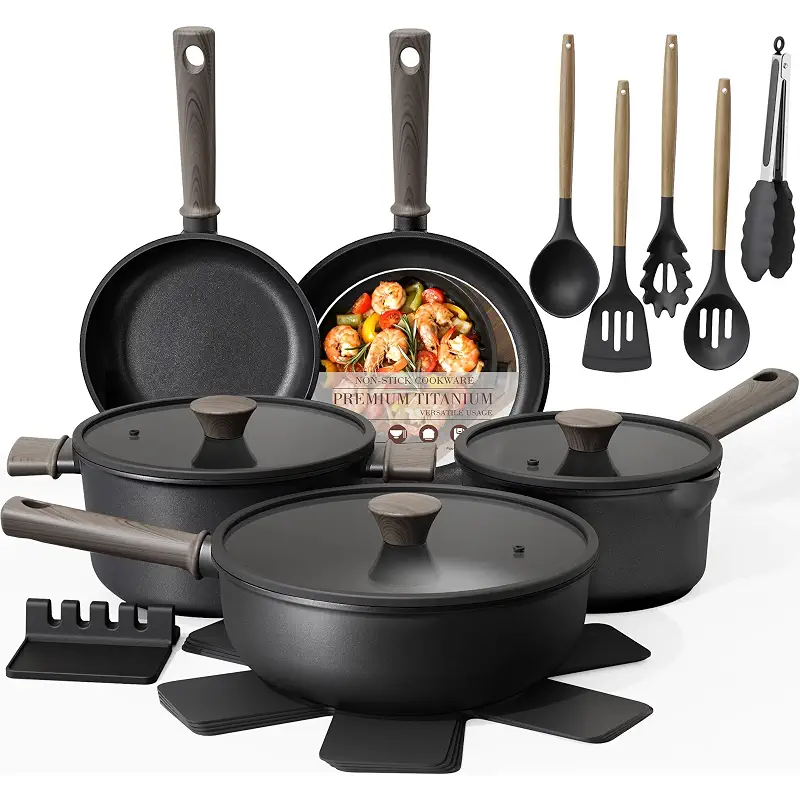
Astercook 19 Pcs Pots and Pans Set Non Stick, Black Titanium Induction Kitchen Cookware Sets, Non toxic Healthy Kitchen Cooking Set with Frying Pans Set, PTFE PFOA PFOS Free, Fathers Day Gift for Men
4.5(1,124)
19-piece titanium nonstick set with assembled handles and wide compatibility; works on gas, induction, and ceramic for kitchens that might change.
Ideal for: Cooks with flexible living situations, upgrading kitchens, or who want one cookware set that works on multiple stovetop types.
The Astercook 19-piece set covers the broadest range of stovetops: gas, induction, and ceramic. If you're unsure whether you'll stay with gas long-term, this eliminates worry. The titanium nonstick coating performs well on gas with even heating and fast food release, and owners note that cleanup is straightforward and the black finish with faux-wood handles looks modern in any kitchen.
Assembly is required (handles screw into pots with the included screwdriver) which feels unusual but isn't complicated. Some buyers worry this means handles will loosen, but reported issues are rare. Once assembled, the handles stay cool on gas and feel comfortable. The set includes five pan protectors and cooking utensils, so you're ready to cook from day one. Lighter weight than hard-anodized sets makes stirring on gas easier, though some owners note that pans can slide on a stovetop if you're not steadying them.
Compared to the stainless steel option, this keeps ease of use and nonstick convenience while adding induction compatibility. Compared to the T-Fal hard-anodized set, you gain broader stovetop flexibility but may sacrifice the Thermo-Spot indicator that T-Fal users praise. The 19-piece count is generous, though the utensils included are thinner than dedicated kitchen-tool sets. This appeals to cooks moving into larger homes, upgrading stoves, or who want a set that works with whatever cooking surface life brings next.
Pros
Works on gas, induction, and ceramic stovetops for maximum compatibility
Titanium nonstick coating resists staining and odors effectively
19-piece set includes pan protectors and cooking utensils for complete setup
Heat-resistant wood-grain handles and shatter-resistant glass lids included
Cons
Handles require assembly with screws; some worry about loosening over time
Lighter weight means pans can slide on gas stovetop without hand support
Key features
Titanium nonstick coating with induction, gas, and ceramic stovetop compatibility
Assembled handles with ergonomic wood-grain design stay heat-resistant
Includes three frying pans, three saucepans, sauté pan, stockpot, steamer, protectors
19-piece set with cooking utensils and silicone mat for complete kitchen setup
How to Choose the Right Pots and Pans for Gas Cooking
Four trade-offs that actually matter when matching a type of pots and pans for gas stove to your kitchen.
Nonstick vs. Stainless Steel on Gas
A stainless steel versus nonstick comparison shows that gas cooks benefit from different priorities than electric or induction users. Nonstick cookware heats quickly and responds to gas-burner adjustments instantly, so you avoid hot spots and overshooting temperature. Stainless steel requires preheating and proper technique but delivers superior browning and lasts longer. Gas heat is hot and direct, so nonstick coatings degrade faster under high, sustained flame. If you choose nonstick, medium heat is safer than high. Stainless steel thrives on gas because the flat bottom sits stable over flame, and you can adjust flame down instantly. Pick nonstick if convenience matters more than longevity; pick stainless if you're willing to learn proper technique for a set that lasts thirty years.
Bottom Design and Heat Distribution in Cookware
Heat distribution in cookware determines whether your food cooks evenly or burns in spots. On gas, a flat, heavy bottom is essential: it sits properly over an open flame and distributes heat without hot spots. Aluminum and copper cores conduct heat fastest; stainless-steel encapsulation adds durability. Gas cooks hotter and faster than electric burners, so thick, flat bottoms prevent warping. Look for pans that feel substantial when you lift them; lightweight cookware can warp under gas heat. Even distribution means eggs cook without crispy edges, sauces simmer without scalding, and meats brown uniformly. All five sets here prioritize flat bottoms and even-heating cores, so you're safe with any choice, but understand that thin, flimsy pans will disappoint on a gas stove.
Set Size and Piece Count
Larger sets (15-plus pieces) include skillets, saucepans, stockpot, and often a steamer or griddle, so you can handle breakfast, lunch, and dinner without repeat washing. Smaller sets (8-11 pieces) save cabinet space and cost, but you'll be limited to three burners cooking at once and may need extra pans for certain meals. Gas stoves have limited burner space anyway (most have four burners) so a comprehensive set lets you cook multiple components without stacking and reheating. Consider your family size and cooking style. A couple cooking dinners for two might thrive with eleven pieces; a family of four or someone who entertains benefits from the best stackable cookware to maximize variety without clutter. The Carote and Astercook sets are generous (16 and 19 pieces); the Cuisinart stainless steel is leaner (11 pieces) but still complete.
Maintenance and Longevity on Gas Stoves
Nonstick cookware lasts 3-7 years with careful use; hard-anodized nonstick lasts 7-15 years; stainless steel lasts thirty-plus years if hand-washed and stored properly. Gas heat is more intense than electric, so nonstick coatings degrade faster if you use high heat or metal utensils. Stainless steel needs no special care beyond hand-washing and drying to prevent water spots: it actually improves with age. If you're a careful cook and plan to keep cookware for decades, stainless steel or hard-anodized makes sense. If you cook casually or replace cookware every few years anyway, standard nonstick is fine. Hard-anodized splits the difference: durable enough for ten years but easier than stainless steel. Factor in your cooking habits when choosing. High-heat searing and daily use favor hard-anodized or stainless; casual weeknight cooking works with any option.
Frequently asked
Quick answers to the questions readers ask most.
Can I use any cookware set on a gas stove?
Most cookware works on gas, but not all performs equally. Gas requires flat-bottomed pans that sit stable over flame. Avoid thin, lightweight cookware: it warps under direct gas heat. Nonstick coatings degrade faster on gas than on electric stoves, so if you choose nonstick, use medium heat and avoid metal utensils. Stainless steel, hard-anodized, and quality nonstick all work well; cheap cookware with thin bottoms will develop hot spots and warp within a year.
Do I need induction-compatible cookware if I only cook on gas now?
Not unless you plan to upgrade stoves someday. Induction compatibility adds cost and doesn't affect gas performance. If you might move, renovate, or upgrade your kitchen in the next decade, induction-compatible cookware (like the Astercook set) gives future flexibility. If you're committed to gas for the long term, you can skip induction compatibility and save money.
Why does stainless steel cookware get such mixed reviews?
Stainless steel requires technique that nonstick doesn't. Food sticks if you don't preheat, use enough oil, or control temperature properly. Cooks expecting nonstick ease are frustrated. But owners who learn the basics (preheat on medium heat, use adequate fat, watch for the water-bead test) report excellent performance. The learning curve is real, but not insurmountable. Read reviews carefully: five-star reviews from stainless-steel users tend to mention learning the technique; one-star reviews often admit they used it like nonstick.
What's the difference between hard-anodized and regular nonstick cookware?
Hard-anodized aluminum is treated to be harder than stainless steel, making it more durable and scratch-resistant than standard nonstick. Hard-anodized cookware lasts two to three times longer than regular nonstick before the coating degrades. It resists warping and can handle medium-to-medium-high heat without damage. The trade-off is weight and cost: hard-anodized pans are heavier and more expensive than standard nonstick, but they're still easier to use than stainless steel.
Should I hand-wash or dishwash my cookware?
Hand-washing always extends the life of cookware, especially nonstick. Dishwasher heat and harsh detergents degrade nonstick coatings and can damage glass lids. Even cookware labeled dishwasher-safe lasts longer when hand-washed with warm soapy water and dried immediately. For stainless steel, the dishwasher is safe, but hand-washing gives you a chance to spot water spots and keep the mirror finish pristine. Budget time for hand-washing if you choose any nonstick set.