Kitchen & Dining · Cookware
Best Type of Percolator for Rich, Hot Coffee Every Time
Find your ideal percolator. Compare electric, stovetop, and classic models to brew bold coffee. Expert picks for home and camping use.
Affiliate disclosure: As an Amazon Associate I earn from qualifying purchases.
At a glance
1
Best Overall Electric PercolatorPresto
2
Best Stovetop PercolatorFarberware
3
Best for Camping and TravelColetti
4
Best Budget Stovetop OptionElite Gourmet
5
Best Budget Electric PercolatorFarberware
Detailed reviews
The Presto 02811 stands out because it does what an electric percolator should do without cutting corners on construction. The entire brew path (basket, tube, interior components) is stainless steel, which matters more than most people realize when you're running near-boiling water through metal multiple times a day. Owners consistently report that this machine brews in around 6 to 8 minutes and then holds coffee at a genuinely hot serving temperature as long as you keep it plugged in, a feature that separates it from cheaper drip alternatives that cool quickly.
The learning curve is nearly flat. You fill the carafe with cold water, add grounds to the basket, insert the brew assembly, and plug it in. A signal light tells you when the coffee is ready. That simplicity, combined with the robust metal construction, is why many owners buy backups or recommend it to others after years of trouble-free use. One owner noted this machine produces noticeably better coffee than several competing electric percolators they'd tried, and credited the all-metal design and the water temperature consistency.
The main trade-off is patience and planning. You cannot interrupt the brew to pour a cup mid-cycle, and if you want a second pot, you must wait for the first to cool before refilling. The heat retention is a double-edged feature: wonderful for keeping coffee hot during a lazy weekend, but the pot itself becomes dangerously hot and requires careful handling or a trivet on your counter. For buyers who prioritize brewing speed and fire-and-forget convenience over flexibility, this is a clear winner.
Pros
- All-stainless-steel brew path, no plastic contact with hot water
- Consistent, piping-hot coffee that stays warm for hours
- Rapid brewing at one cup per minute rate
Cons
- Pot becomes dangerously hot; requires trivet or caution
- No mid-brew interruption or pause feature
Key features (5)
- 12-cup capacity with brews 2 to 12 cups at any size
- Signal light indicates when coffee is ready to serve
- Automatic temperature control maintains piping-hot serving temperature
- Stainless-steel basket and perk tube resist corrosion
- Easy-pour spout and stay-cool handle for safe serving
The Farberware Classic Yosemite takes stovetop brewing seriously. It's made from heavy-duty 18/10 stainless steel polished to a mirror finish, and the permanent filter basket means no paper waste and no flavor oils stripped away by filters. The glass knob lets you watch the brew develop, turning from clear to rich brown as percolation happens. Owners who have used this pot daily report that it produces noticeably smoother, more nuanced coffee than even high-end drip machines, with subtle flavor notes (earthy, sweet, chocolatey) that shine through because of the percolation method.
The stovetop format gives you control that electric models cannot match. You choose the heat level, adjust timing, and can fine-tune the brew to your exact taste by experimenting with coffee-to-water ratios and steeping duration. One long-term user noted that after learning the rhythm (typically 15 to 20 minutes total, including bring-to-perk and actual percolation), they preferred this over both French press and pour-over methods. It's also the percolator of choice for camping, power outages, or anywhere without electricity.
The downside is that it demands attention. You cannot set it and forget it; you must monitor heat, listen for perking sounds, and adjust the burner at the right moment. The plastic knob (which Farberware includes for durability over glass) will eventually degrade, but replacement glass tops are inexpensive and readily available. Compared to the Presto electric model, this trades convenience for control and is better for cooks who enjoy the ritual and precision of manual brewing.
Pros
- Heavy-duty stainless steel construction resists years of daily use
- Permanent filter basket eliminates paper waste and preserves flavor oils
- Full manual control over heat and brew timing
Cons
- Requires active monitoring and heat adjustment during brewing
- Takes longer than electric percolators (15-20 minutes total time)
Key features (5)
- 8-cup capacity brews 4 to 8 cups on any stovetop
- Glass knob window shows percolation progress in real time
- Stainless-steel filter basket dishwasher safe for easy cleanup
- Non-electric design works on gas, electric, or camp stoves
- Mirror-polished finish resists staining and stays elegant
The Coletti Bozeman is purpose-built for conditions where durability and simplicity matter more than kitchen aesthetics. The entire coffee-contact assembly (stem, basket, internal parts) is stainless steel with no aluminum or plastic, which addresses a real concern for outdoor enthusiasts and minimalists who want to avoid any material degradation in high-heat brewing. Owners consistently praise how quickly it brews (around 10 minutes on portable burners) and how reliably it produces rich, full-bodied coffee in backcountry settings or at home.
The design is stripped down and practical: a glass knob, a wood-handled steel body, and straightforward assembly. One reviewer noted it became their favorite piece of camping gear after the first trip, and another mentioned using it daily at home despite owning multiple other coffee makers. The included filter pack is a thoughtful touch, though users report that skipping filters and seasoning the pot (like cast iron) yields even bolder coffee over time. Cleanup is minimal: rinse with water, wipe dry, pack it away.
The trade-off is that this model does not work on induction cooktops (Coletti makes a separate induction-compatible version). The handle is narrower and smaller than some competitors, which can feel cramped for large hands, though the wood stays cool enough to grip without an oven mitt. If you compare it directly to the Farberware stovetop, both are excellent, but the Bozeman leans harder toward durability in rough conditions, while Farberware emphasizes polish and everyday kitchen presence. For adventurers and minimalists, the Bozeman wins.
Pros
- 100% stainless steel with no plastic or aluminum in brewing path
- Compact, lightweight design fits easily into camping gear
- Quick brew time makes morning coffee practical in the field
Cons
- Does not work on induction cooktops without adapter
- Handle design is narrow and may feel cramped for large hands
Key features (5)
- 9-cup capacity with stainless-steel basket and stem
- Glass view knob shows brewing progress without breakage risk
- Dishwasher safe for camp cleanup or home convenience
- Works on any heat source: gas, electric, or open flame
- 1-year warranty backed by veteran-owned manufacturer
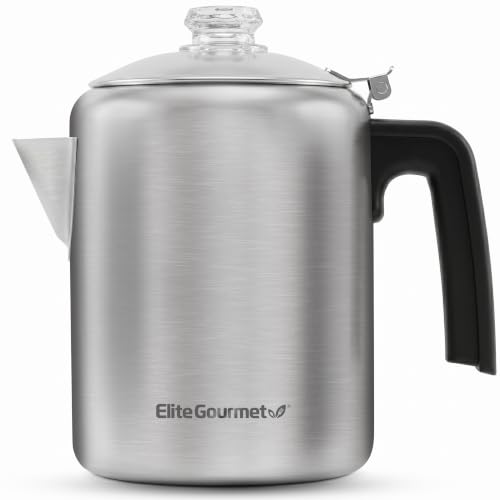
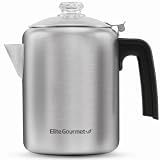
The Elite Gourmet 8-Cup hits a sweet spot for budget-conscious buyers who refuse to sacrifice build quality. It's made from food-grade 304 stainless steel and brews up to 8 cups of rich coffee in under 20 minutes on a standard stovetop. Owners report that for the price, the construction feels solid, the coffee tastes noticeably better than drip machines, and cleanup is straightforward, everything comes apart easily and rinses clean. One reviewer noted it became their favorite brewing method despite owning a collection of other coffee makers.
The glass knob works well for watching the brew progress, and the cool-touch handle design keeps your hand safe during pouring. The permanent stainless-steel filter basket means no paper filters to buy repeatedly, which compounds the value over time. Compared to higher-end stovetop percolators like the Farberware Yosemite or Coletti Bozeman, the Elite Gourmet trades some aesthetic polish and handle ergonomics for a significantly lower entry price, making it ideal for first-time stovetop percolator buyers or anyone skeptical about whether they'll actually use one regularly.
The main limitations are that the handle could be better designed for comfort on larger hands, and some reviewers mention the lid feels less substantial than pricier alternatives. It does not work on induction cooktops. For home cooks prioritizing value and reliable function over premium materials or outdoor toughness, this model removes the barrier to entry without cutting corners on the core brewing assembly.
Pros
- 304 food-grade stainless steel at a mid-range price point
- Permanent stainless filter basket eliminates ongoing paper filter expense
- Glass knob and drip-free spout for easy pouring
Cons
- Handle ergonomics feel cramped compared to premium stovetop models
- Lid construction feels less robust than higher-end alternatives
Key features (5)
- 8-cup capacity with rapid one-cup-per-minute brew rate
- Glass brewing progress knob indicates when coffee is ready
- Cool-touch handle and precision pouring spout minimize spills
- Works on indoor stovetops and outdoor camping fires
- Dishwasher-safe stainless-steel filter basket
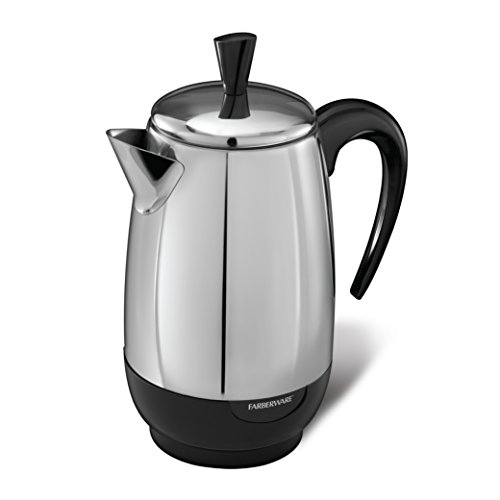
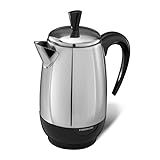
The Farberware Electric 8-Cup delivers the speed and convenience of electric brewing at entry-level pricing. It brews about one cup per minute and automatically switches to a keep-warm setting once percolation finishes, so you can leave it plugged in without worrying about the coffee sitting cold on the counter. The stainless-steel exterior and detachable cord are practical touches that make serving and storing simpler than fixed-cord competitors.
Owners appreciate the straightforward operation and the fact that it makes noticeably hotter coffee than drip machines. The no-drip spout minimizes counter mess during pouring, and the brewing process is genuinely foolproof: fill, add grounds, plug in, wait. However, this model has some important caveats that separate it from the Presto 02811. Several owners report that the removable top becomes extremely difficult to open after a few months of use, with some worrying the knob will snap off if they force it. More concerning, a few long-term users experienced cord degradation and electrical hazards after 6 to 8 months of regular use, and customer service responses were reportedly poor.
Compared to the Presto electric model, the Farberware electric sacrifices build quality and longevity for lower upfront cost. If you want a reliable electric percolator that will last years, the Presto is worth the extra investment. The Farberware electric makes sense only if you're testing the format before committing to a premium model, or if budget is the absolute priority and you accept shorter lifespan. For most buyers, the stovetop options offer better durability per dollar.
Pros
- Fast one-cup-per-minute brewing speed
- Detachable cord simplifies serving and storage
- Automatic keep-warm maintains coffee temperature
Cons
- Lid becomes very difficult to remove after months of regular use
- Cord durability concerns reported after 6-8 months of daily use
Key features (5)
- 8-cup capacity with 2-8 cup brewing flexibility
- Stainless-steel basket and exterior construction
- One cup per minute brewing rate for speed
- No-drip pour spout minimizes counter cleanup
- Detachable cord for easy handling and storage
How to Choose a Percolator
Electric vs. Stovetop: Core Trade-offs
The choice between electric versus stovetop percolators shapes everything about how you'll brew. Electric models like the Presto are fast, require zero attention once you plug them in, and keep coffee hot for hours without fuss. Stovetop models demand active monitoring but give you precise control over heat and brewing time, and they work anywhere, camping, power outages, offices without outlets. Neither is objectively better; it depends on whether you prioritize convenience or flexibility. Stovetop coffee tends to taste slightly bolder because you control the temperature precisely, while electric models prioritize speed and consistency. Many serious coffee drinkers own both.
Material Matters: All-Metal Construction
Modern percolators come in three material camps: all-stainless-steel, stainless-steel with aluminum internals, and stainless-steel with plastic parts. If avoiding plastic in the brew path is important to you, and many owners say it improves taste and eliminates health concerns about heated plastic leaching: stick to all-stainless models like the Presto, Farberware stovetop, or Coletti Bozeman. Aluminum is lighter and cheaper but degrades faster and is less inert than stainless. Plastic handles and knobs are fine on the outside; it's plastic touching hot water inside the pot that matters. Check product descriptions carefully, as many budget percolators sneak plastic components into the brew assembly.
Capacity and Actual Brew Volume
A 'cup' in percolator measurements means roughly 5 ounces, not the 8 to 10 ounces most people pour into a coffee mug. A 9-cup stovetop model typically brews enough for 4 to 5 regular mugs. An 8-cup electric percolator produces similar actual volume. If you're shopping for a household or small office where multiple people drink coffee, buy one size larger than you think you need. Solo morning drinkers should consider smaller models. Also note that electric percolators have a maximum fill line (usually marked inside), so you cannot use the full stated capacity if you want to avoid overflow during brewing.
Learning the Percolator Cleaning and Maintenance
All-metal percolators are remarkably durable if you follow basic care. The most common issue is that the tiny holes in the permanent filter basket clog with coffee oils over time, weakening the brew. A quick scrub with a brush under hot water solves this; some owners use an old toothbrush weekly. Interior staining happens naturally and won't affect safety or taste: it's seasoning, like cast iron. Many owners hand-wash the exterior and interior and let it air dry to keep the polish shiny. Electric models need cord care (never wrap it tightly while hot) and periodic unplugging to avoid the cord degradation some Farberware users reported. Stovetop models work forever if the handle stays tight and the glass knob isn't dropped.
Our picks at a glance
1
Best Overall Electric PercolatorPresto
2
Best Stovetop PercolatorFarberware
3
Best for Camping and TravelColetti
4
Best Budget Stovetop OptionElite Gourmet
5
Best Budget Electric PercolatorFarberware
Frequently asked
Will a percolator make coffee that tastes burnt?
No, not if you follow the basics. The common myth is that percolators burn coffee by recycling water through grounds repeatedly. In reality, percolation happens at a lower temperature than boiling, so the water never scorches the grounds if you don't overheat. Burnt coffee happens when you forget to turn down the heat after percolation starts or when you let already-brewed coffee sit on high heat for too long. Use medium or medium-low heat once perking begins, and most owners report the coffee tastes smoother and richer than drip alternatives.
Do I need special coffee or a special grind for a percolator?
No special beans, but grind matters. A grind one notch coarser than drip works best: too fine and coffee grounds slip through the basket; too coarse and the brew tastes weak. Standard grocery-store coffee works fine, though many percolator owners say they enjoy experimenting with fresh whole beans because the percolation method brings out flavor nuances that drip machines miss. Some owners use slightly less coffee than they would in a drip machine because percolation extracts flavor more thoroughly.
How long does it actually take to brew a full pot?
Electric percolators brew at about one cup per minute, so a full 12-cup pot takes roughly 10 to 12 minutes total (including heat-up time). Stovetop percolators take longer overall: typically 15 to 20 minutes for an 8-cup pot, with 10 to 15 minutes spent reaching perking temperature and another 5 to 7 minutes of actual percolation. Many owners say the wait is worth it for the flavor, and they plan accordingly by starting coffee while showering or getting dressed.
Can I use a percolator on an induction cooktop?
Most stovetop percolators do not work on induction because induction requires magnetic materials. Standard stainless steel is often non-magnetic. Check the product description; some brands make induction-compatible versions with magnetic bases. For electric percolators, induction is irrelevant since they plug into outlets. If you have an induction stove, verify compatibility before buying, or use a traditional electric percolator instead.
What's the difference between a permanent filter basket and paper filters?
Permanent baskets are stainless-steel mesh that strain grounds while letting coffee oils pass through, producing bolder, richer flavor. Paper filters trap oils, resulting in cleaner but slightly less full-bodied coffee. With permanent baskets, a few fine grounds may end up in the bottom of your cup (just don't drink the very last sip). Paper filters add ongoing cost but eliminate sediment entirely. Most percolators come with permanent baskets, though you can buy compatible paper filters separately if you prefer the cleaner cup.


![COLETTI Bozeman Percolator Coffee Pot — NO Aluminum or Plastic [9 cup]](https://m.media-amazon.com/images/I/31hE4XcgwKL._SL160_.jpg)


![COLETTI Bozeman Percolator Coffee Pot — NO Aluminum or Plastic [9 cup]](https://m.media-amazon.com/images/I/31hE4XcgwKL._SL500_.jpg)
![COLETTI Bozeman Percolator Coffee Pot — NO Aluminum or Plastic [9 cup]](https://m.media-amazon.com/images/I/41MhKL01Y+L._SL160_.jpg)
![COLETTI Bozeman Percolator Coffee Pot — NO Aluminum or Plastic [9 cup]](https://m.media-amazon.com/images/I/41YxpLiPbrL._SL160_.jpg)
![COLETTI Bozeman Percolator Coffee Pot — NO Aluminum or Plastic [9 cup]](https://m.media-amazon.com/images/I/41dQbPmBZkL._SL160_.jpg)
![COLETTI Bozeman Percolator Coffee Pot — NO Aluminum or Plastic [9 cup]](https://m.media-amazon.com/images/I/518LzDNl4jL._SL160_.jpg)