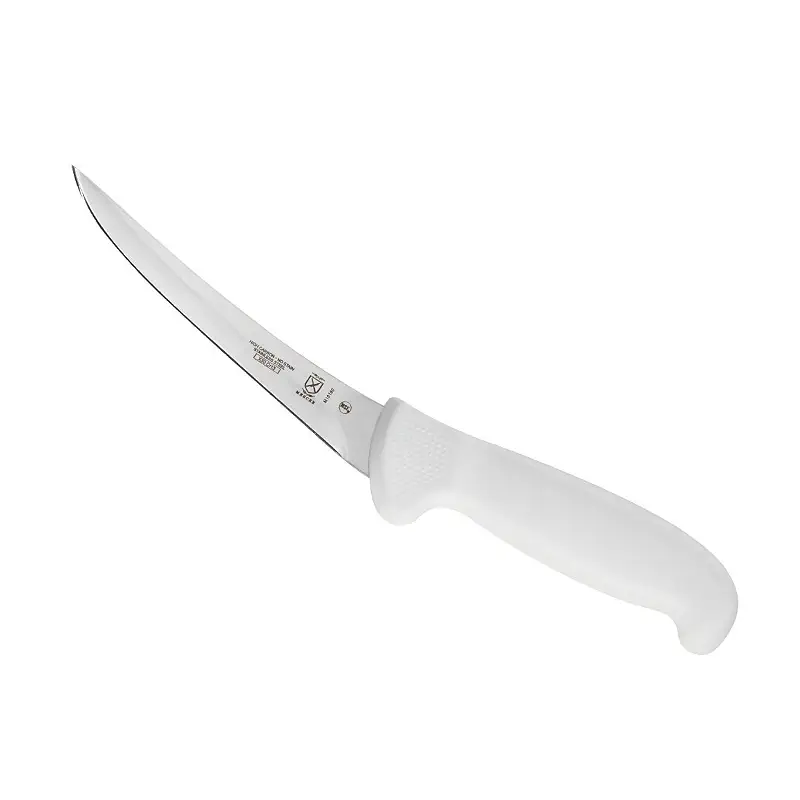
Ideal for: Home cooks and barbecue enthusiasts who trim meat regularly but don't need a professional-grade tool.
The Mercer Culinary Ultimate White has earned a reputation among barbecue pitmasters and home cooks for good reason. Owners consistently report that it arrives sharper than expected and maintains that edge through multiple uses. The curved blade is what sets this knife apart from a standard paring knife. That arc lets you follow the contours of bones and joints more naturally, reducing the meat you accidentally remove along with the fat and sinew. The narrow tip is precise enough to separate silver skin from muscle without tearing the meat itself.
The handle is polypropylene, which some might assume feels cheap, but owners who regularly process raw meat praise how the textured grip holds up when hands are wet or greasy. The white color lets you spot any staining, and most report cleaning it easily with warm soapy water. One thing to note: the handle can get slippery as you work through fatty cuts, which is why many recommend using it with gloves for longer prep sessions.
If you're comparing this to premium alternatives like the Cutluxe Curved Boning Knife, the Mercer wins on price and edge retention right out of the box. Where the Cutluxe offers a heavier, more substantial feel with German steel, the Mercer is lighter and sharper faster. For home cooks who trim meat a few times a month rather than daily, the Mercer's combination of performance and price is hard to beat.
Pros
Extremely sharp out of the box, holds edge for weeks
Curved blade ideal for precise trimming around bones
Textured handle maintains grip with wet or greasy hands
Cons
Polypropylene handle may feel less premium than wood or pakkawood
6-inch blade length may be too large for smaller hands
Key features
High-carbon Japanese steel blade with 6-inch curved design
Non-slip textured polypropylene handle, full tang construction
Lightweight and maneuverable for detail work on poultry and pork
Hand-wash only; maintains edge through repeated use
#2 Pick
Best Premium Curved Knife
Cutluxe
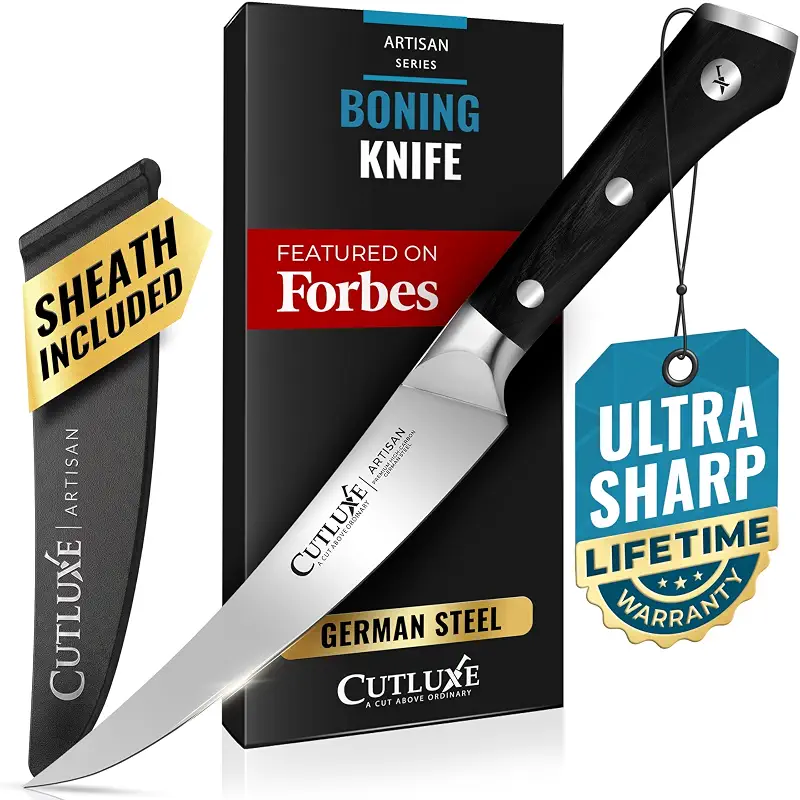
Cutluxe Curved Boning Knife, 6" for Meat Cutting & Trimming – Fillet Knife | High Carbon German Steel, Full Tang Ergonomic Handle Design for Brisket & Deboning, Artisan Series
4.8(412)
Heavier German steel boning knife with full tang handle and lifetime warranty for serious home cooks and processors.
Ideal for: Serious home processors and hunters who trim meat regularly and want durability and premium feel.
The Cutluxe Curved Boning Knife appeals to people who want a more substantial tool in their hand and aren't concerned with price alone. The full tang construction with triple-riveted pakkawood handle feels solid from the moment you grip it, and that weight carries through the cutting motion. German steel at 56+ Rockwell hardness is harder than the Mercer's Japanese steel, which means it takes longer to sharpen but holds an edge longer under heavy use.
Owners who process large quantities of meat during hunting season or regular butchery work report that this knife maintains its sharpness better than lighter alternatives over dozens of cuts. The blade is still sharp enough to skin a fish cleanly and flexible enough to follow bone without snapping. The pakkawood handle is more forgiving than plastic over long work sessions. However, some reviewers noted that the knife can feel lightweight initially for people expecting a heavier instrument, and that it needs regular stropping to maintain its edge between sharpenings.
Compared to the Mercer Culinary Ultimate White, the Cutluxe is the pick if you work with meat frequently and want a tool that telegraphs quality. For those preparing poultry, the knife for cutting chicken breast picks from specialty retailers often emphasize curved blades like this one because the arc naturally follows the joint and bone structure of whole birds. The Mercer is faster out of the box; the Cutluxe is the workhorse for sustained use.
Pros
German steel holds edge longer under heavy use
Full tang triple-riveted design feels substantial and durable
Lifetime warranty covers material and workmanship defects
Cons
Slightly lighter feel than some expect for the price
Handle grip can get slippery when cutting high-fat meat
Key features
High-carbon German steel blade at 56+ Rockwell hardness
Full tang construction with triple-riveted pakkawood handle
Hand-sharpened 14-16 degree edge for maximum precision
Lifetime warranty against defects; comes in protective packaging
#3 Pick
Best Japanese-Style Blade
Drgskl
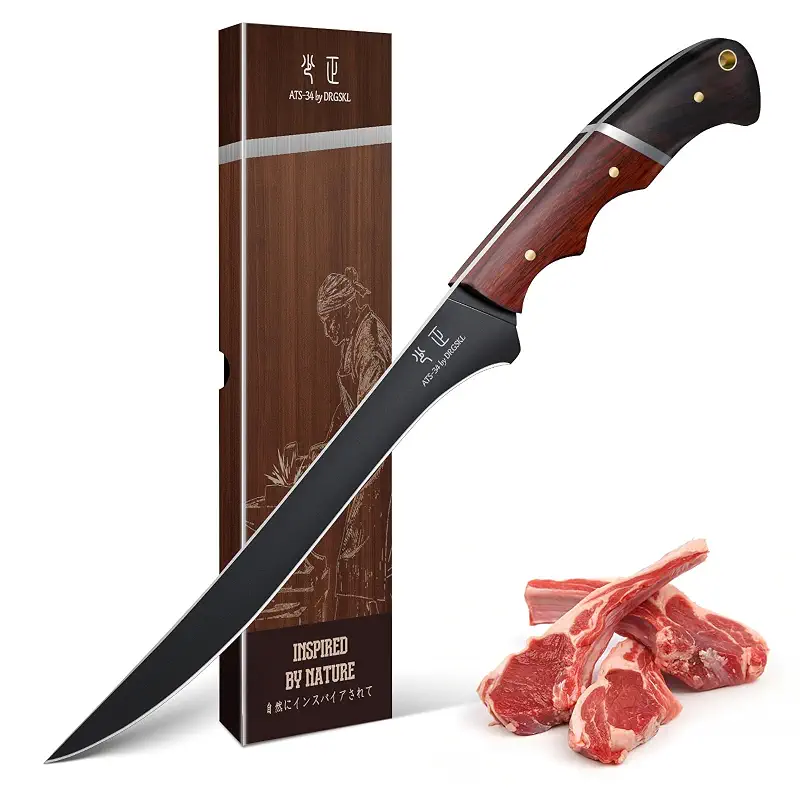
DRGSKL Boning Knife 7 inch - Brisket Trimming Knives for Meat Cutting | Japanese ATS-34 Steel, Full Tang, Ergonomic Walnut Handle, Precision Cutting, Gift Box
4.6(489)
Traditional Japanese steel with walnut handle and distinctive design for cooks who value craftsmanship alongside performance.
Ideal for: Home cooks who value design and craftsmanship and are willing to hand-sharpen and maintain the blade carefully.
The Drgskl Boning Knife represents a different philosophy than the German or Western Japanese approaches. It's forged using traditional Japanese methods with steel, a harder alloy that demands respect and proper care but delivers exceptional sharpness and edge retention when treated correctly. The Dual-Tech Black Shield coating (a titanium-reinforced finish) is meant to resist corrosion and maintain appearance, though owner experience with durability over years is still limited since this is a newer product.
The walnut handle is a meaningful departure from plastic or pakkawood. It feels elegant and absorbs hand oils naturally, developing a deeper patina over time. The full tang with three brass rivets adds visual and structural integrity. Owners note that this knife arrives almost dangerously sharp; it requires the kind of handling respect you'd give a professional blade. The steel is brittle, so it shouldn't be used to chop through frozen meat or bone. That thinness and brittleness, combined with the steep 15-degree sharpening angle, means this is best suited to slicing and precision work rather than heavy-duty trimming.
Unlike the Mercer or Cutluxe, the Drgskl is less forgiving if you're learning knife technique. It rewards careful use and sharpening discipline. Where the Wüsthof is a workhorse for small jobs and the Mercer is all-purpose, the Drgskl is the choice for someone who sees the knife as a craft tool.
Pros
Exceptionally sharp with fine grain steel
Beautiful walnut handle develops character over time
Full tang construction with brass rivets feels balanced and durable
Cons
steel is brittle; not suitable for frozen or very hard materials
Requires careful maintenance and proper sharpening technique
Key features
Japanese high-carbon steel with Dual-Tech Black Shield coating
Hand-polished walnut handle with full tang and brass rivets
Narrow tapered blade designed for precision deboning and trimming
Comes in elegant gift packaging; hand-wash only for longevity
#4 Pick
Best Compact Trimmer
Wüsthof
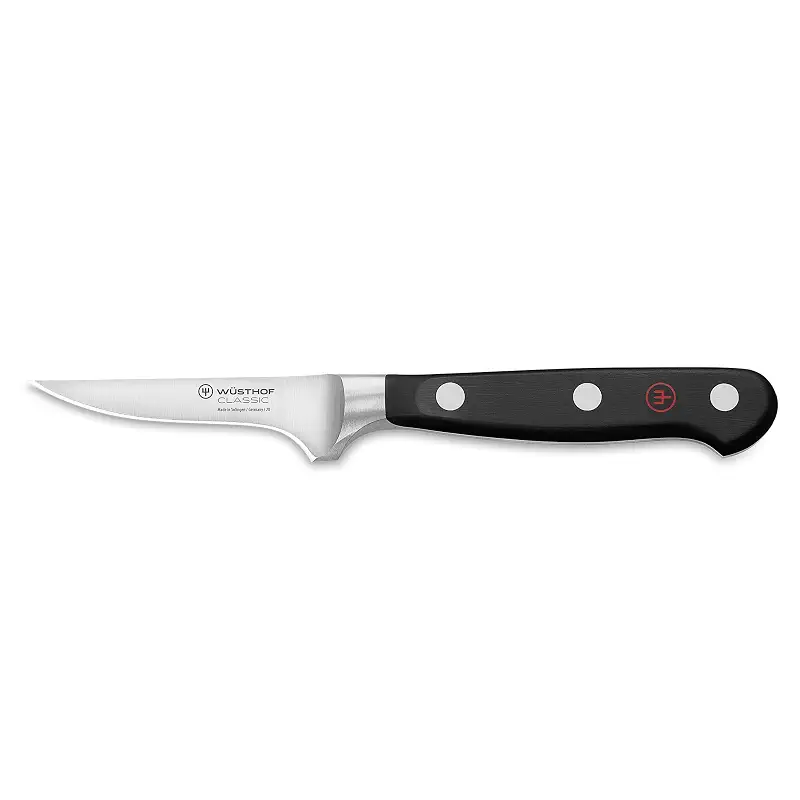
WÜSTHOF Classic 2.75" Trimming Knife, Black
5.0(71)
Wüsthof's 2.75-inch blade is a small, precise tool for detailed trimming work and light butchery, backed by German engineering.
Ideal for: Cooks who trim poultry and light meats frequently and want a small, precise tool from a heritage brand.
The Wüsthof Classic Trimming Knife exists in a niche: it's shorter and narrower than the curved boning knives above, making it ideal for work that demands a lighter touch. The 2.75-inch blade is precise enough to trim fat from individual chicken thighs without removing excess meat, and the curved edge follows bone contours smoothly. Precision Edge Technology means the blade is 20 percent sharper than previous Wüsthof models while maintaining twice the edge retention.
Wüsthof's reputation rests on over two centuries of German blade-making, and that heritage shows in the construction. The knife is forged from a single block of high-carbon stainless steel, tempered to 58-degree Rockwell hardness, and triple-riveted. The polypropylene handle is durable and won't absorb liquid like wood. Owners praise how well it fits a medium-sized hand and appreciate that it's lightweight enough for detail work but sturdy enough for occasional butchery.
Where this knife differs from the boning knife versus carving knife comparison, it's genuinely a trimming specialist. It won't slice a brisket or large roast the way a carving knife would. If you're processing whole birds or doing light prep work, the Wüsthof is efficient. Compared to the Mercer, which covers more ground, the Wüsthof is narrower and less versatile but more maneuverable in tight spaces.
Pros
Precision Edge Technology delivers 20% sharper blade than predecessors
Lightweight and maneuverable for detail trimming work
German-forged from single block ensures durability and edge retention
Cons
2.75-inch blade too short for larger trimming or slicing tasks
Price higher than comparable specialty knives from newer brands
Key features
2.75-inch curved blade forged from high-carbon stainless steel
Triple-riveted polypropylene handle, full tang design
Precision Edge Technology at 58-degree Rockwell hardness
Made in Germany, limited lifetime warranty included
#5 Pick
Best Two-Knife Set
Cutluxe
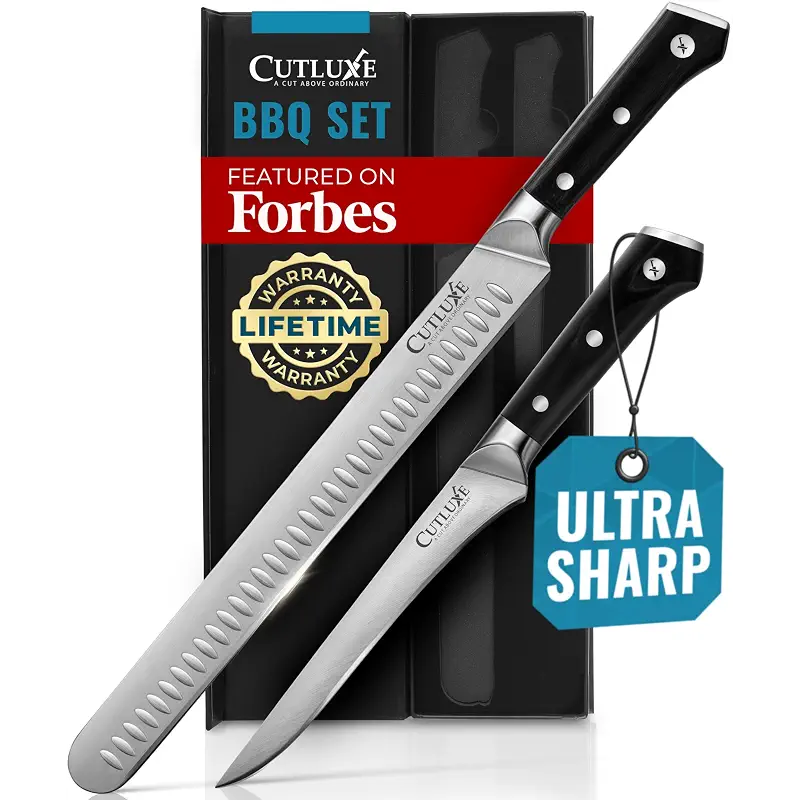
Cutluxe Carving Knife Set, Brisket Slicing & Boning Knife for Meat & BBQ | Razor Sharp German Steel, Full Tang Ergonomic Handle – Grilling Gift for Men, Artisan Series
4.8(1,524)
Paired 12-inch slicing and 6-inch boning knives with German steel and granton blades, designed for comprehensive meat work.
Ideal for: BBQ enthusiasts and home cooks who process meat from raw to cooked and need both trimming and carving tools.
The Cutluxe Carving Knife Set approaches the problem differently: instead of choosing one blade, you get two complementary tools. The 12-inch slicing knife is purpose-built for carving through larger cooked meats like brisket, roasts, and whole birds after cooking. The granton blade (those small dimples along the edge) reduces friction and prevents meat from sticking as you slice. The 6-inch curved boning knife handles the trimming and preparation work on raw meat. Together, they cover the full lifecycle of meat cooking and serving.
Owners consistently report satisfaction with the sharpness and balance of both blades. The German steel has a high Rockwell score (owners have compared it favorably to more expensive brands), and the full tang construction with ergonomic handles makes both knives feel professional. The set comes in velvet-lined presentation box, which makes it a strong gift choice. One practical note: the 12-inch slicing knife requires counter or storage space; it's too long to tuck into a knife block easily, so you need a dedicated spot.
If you're choosing between this set and a single curved boning knife like the Mercer, the decision depends on whether you also carve cooked meats. The Cutluxe set is less specialized than having two best-in-class single knives, but it's more versatile than a single trimmer. It makes sense for people who smoke or roast whole meats regularly.
Pros
Includes 12-inch slicing knife and 6-inch boning knife for complete coverage
Granton blade edge reduces friction when slicing cooked meats
German steel rivals premium brands at competitive pricing
Cons
12-inch blade requires dedicated storage space; awkward for knife blocks
Heavier long blade may fatigue hands during extended carving sessions
Key features
12-inch slicing knife with granton blade for cooked meats
6-inch curved boning knife for raw meat trimming and deboning
Full tang construction with ergonomic handles on both blades
German steel, high Rockwell hardness, lifetime warranty; comes in velvet-lined box
How to Choose a Trimming Knife
Four trade-offs that actually matter when matching a trimming knife to your kitchen.
Blade Curve and Flexibility
The curve of the blade determines how well a knife follows bone and joints. A tighter arc works best for precise work on chicken thighs or fish; a gentler curve handles larger trimming tasks on brisket or roasts. The blade also needs some flex. Too rigid and it snaps on hard bone; too soft and it won't slice cleanly. Most trimming knives sit in the middle, offering enough give to follow bone without collapsing.
Steel Type and Edge Retention
Japanese and German steels approach sharpness differently. Japanese steel (high-carbon) arrives sharper and holds a finer edge but is slightly softer and needs more frequent honing. German steel is harder and holds an edge longer under heavy use but takes longer to sharpen initially. For occasional home use, Japanese steel wins. For frequent processing or commercial work, German steel pays off over time.
Handle Material and Grip
Polypropylene is durable, dishwasher-resistant, and reliable for wet work. Pakkawood is laminated hardwood that feels more premium and warms in your hand. Natural wood like walnut is beautiful but demands hand-washing and occasional oiling. For people who trim meat with greasy hands, textured or grippy surfaces matter more than material. Glove use changes the equation entirely. The best knife for cutting chicken breast often emphasizes handle comfort since poultry trimming requires extended grip control around joints and tight angles.
Blade Length for Your Task
A 2.75-inch blade is precise and maneuverable but limited to small, detailed work. A 6-inch curved boning knife covers most home trimming and deboning. A 12-inch slicing knife is essential only if you carve large roasted meats. Many cooks find that one 6-inch blade and a boning knife versus carving knife approach covers both raw prep and cooked carving tasks without storage headaches.
Maintenance and Care
Hand-wash and dry immediately after every use. Don't put any of these knives in the dishwasher. Most trimming knives benefit from trimming knife care and sharpening every few months if used regularly. Honing steel (stropping) between sharpenings keeps the edge aligned. If you're unwilling to maintain a knife, choose a model with a softer steel that sharpens easily, even if it doesn't hold an edge as long.
Frequently asked
Quick answers to the questions readers ask most.
What's the difference between a boning knife and a fillet knife?
Boning knives have a sharper, narrower point designed to separate meat from bone with precision. Fillet knives are more flexible and tapered to follow the backbone and skin of fish without tearing the delicate flesh. Some people use the terms interchangeably, but fillet knives are generally thinner and bendier. For general meat trimming, a boning knife is the standard choice.
Can I use a trimming knife on a cutting board, or should I use it only for hand trimming?
Most trimming knives work best for hand trimming, where you control the cut against the meat directly. Using them on a cutting board risks dulling the edge faster if the board is hard wood or bamboo. If you do use one on a board, choose a soft wood or plastic surface and use the blade more carefully than you would with a chef's knife.
How often do I need to sharpen a trimming knife?
With regular honing (stropping) between uses, a quality trimming knife can go 2-3 months of home use before needing professional sharpening or a whetstone touch-up. Heavy users or commercial kitchens may sharpen weekly. Proper storage and immediate hand-washing extend the time between sharpenings significantly.
Are expensive trimming knives worth the investment?
Not always. A budget Japanese steel knife like the Mercer Culinary is often sharper and more forgiving for home cooks than a premium knife that demands careful maintenance. Premium knives pay off if you trim meat frequently, value edge retention, and are willing to maintain them properly. Occasional users often see diminishing returns beyond the mid-range price point.
What should I look for when buying a trimming knife online without handling it first?
Read owner feedback on grip comfort and weight. Check blade length against your hand size (reviews often mention this). Look for balanced construction and full tang design. Confirm the return policy in case the handle doesn't feel right in person. Buy from sellers offering lifetime warranties, which signal confidence in the product.