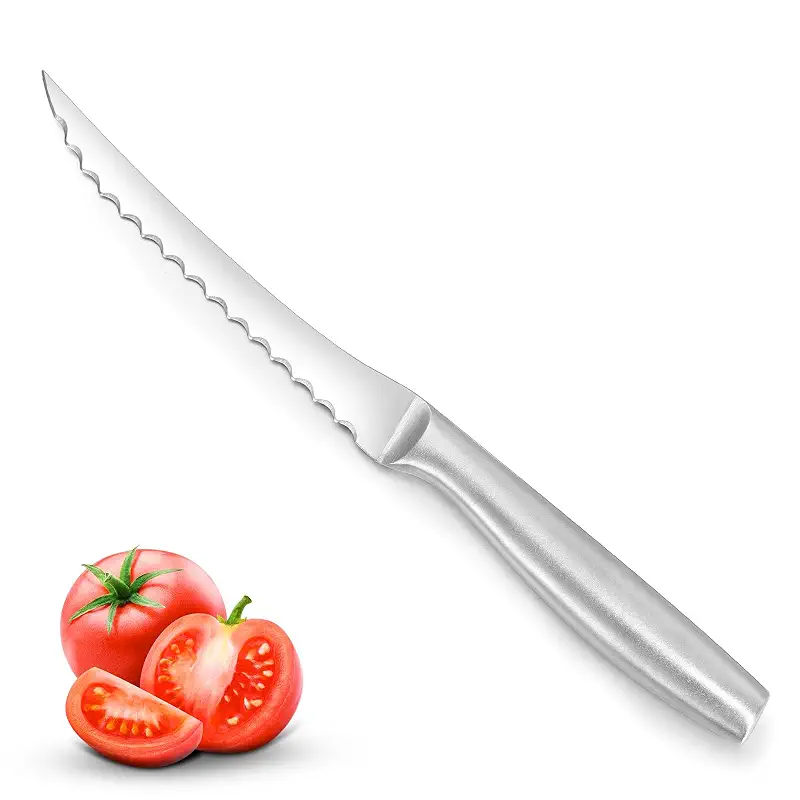
Ideal for: Home cooks who slice tomatoes and soft fruits regularly and want reliable performance without premium pricing.
The Omesata combines everyday reliability with exceptional value. Owners reach for this knife daily, often reporting they prefer it to significantly pricier alternatives like Wüsthof or Cutco. The high-carbon stainless steel holds its edge through repeated dishwasher cycles without rusting or dulling, which is rare in this price tier. The serrated blade bites cleanly into tomato skin without requiring pressure, and the pointed tip makes seed removal intuitive.
What makes this knife compelling is its versatility. While designed for tomatoes, buyers use it on peaches, kiwis, lemons, and even thin shallots, proving the blade works across soft fruits and vegetables. The lightweight design and textured handle mean it's comfortable for extended prep work, and the contemporary look fits any kitchen aesthetic.
The one caveat: it's genuinely sharp. Owners consistently warn that fingers and nails are as vulnerable as produce. If you're knife-shy or have limited kitchen experience, the Omesata demands respect and careful handling. Some reviewers note the blade can feel slim or delicate in hand, though durability hasn't been an issue for repeat buyers.
Pros
Maintains edge through repeated dishwasher cycles
Lightweight design reduces hand fatigue during prep
Sharp enough to slice thin without pressing down
Cons
Extremely sharp; requires careful finger placement when slicing
Slim blade profile may feel less substantial than heavier knives
Key features
High-carbon stainless steel serrated blade for durability
Textured, non-slip handle with ergonomic balance
Thin profile ideal for precision slicing tomatoes and soft fruits
Ideal for: Home cooks and professionals who value proven durability, heritage construction, and are willing to handwash.
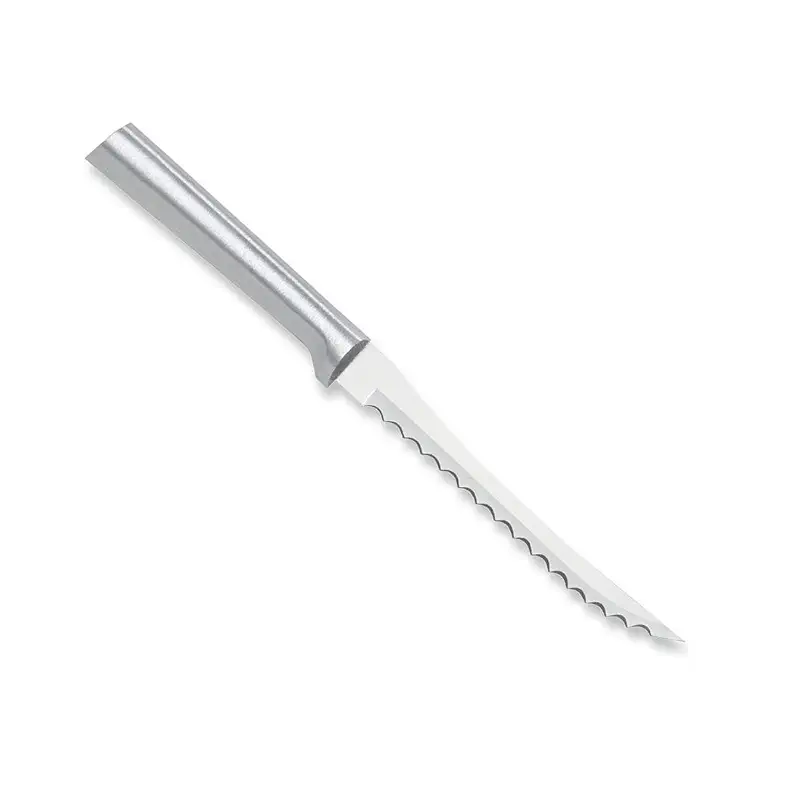
RADA Cutlery's tomato slicer is a category touchstone, built in the USA from T420 high-carbon stainless steel with a dual-serrated design. Owners with this knife for two decades report it still cuts as keenly as the day they bought it. The blade is thinner than many kitchen knives, allowing the kind of precision slicing that makes tomato prep almost meditative rather than a chore.
The build quality shows. The hollow-ground blade geometry creates the sharpness, and the permanently cast aluminum handle (while requiring handwash) develops a patina that many owners find characterful. Weight and balance are noticeably better than budget options, which makes sense for a knife with proven longevity. The knife glides through soft skin without crushing the flesh, and reviewers praise its ability to handle ripe tomatoes, bagels, breads, and delicate vegetables with equal ease.
Compared to the Omesata's contemporary lightweight feel, RADA leans into tradition and heft. The tradeoff is that the brushed aluminum handle can darken in the dishwasher, so handwashing is necessary to maintain appearance. The investment is steeper, but the multi-decade lifespan justifies it for cooks who keep knives for life.
Pros
Documented edge retention over 20+ years of daily use
Hollow-ground blade for precision thin slicing
Made in the USA with T420 high-carbon stainless steel
Cons
Handwash-only handle; brushed aluminum darkens in dishwasher
Higher cost than entry-level competitors
Key features
T420 high-carbon stainless steel with hollow-ground sharpness
Dual-serrated blade engineered to prevent crushing
Permanently cast brushed aluminum handle with satin finish
Made in the USA; lifetime edge-retention reputation
#3 Pick
Best for Premium Craftsmanship
Cutluxe
Cutluxe Serrated Tomato Knife – 5" Kitchen Utility Knife for Vegetables, Fruit & Bread – Razor Sharp Forged High Carbon German Steel, Full Tang, Ergonomic Pakkawood Handle – Artisan Series
4.6(1,450)
Full-tang German steel with professional-grade sharpness and ergonomic design; a luxury option for knife enthusiasts.
Ideal for: Experienced home cooks and collectors who appreciate German steel quality and full-tang construction.
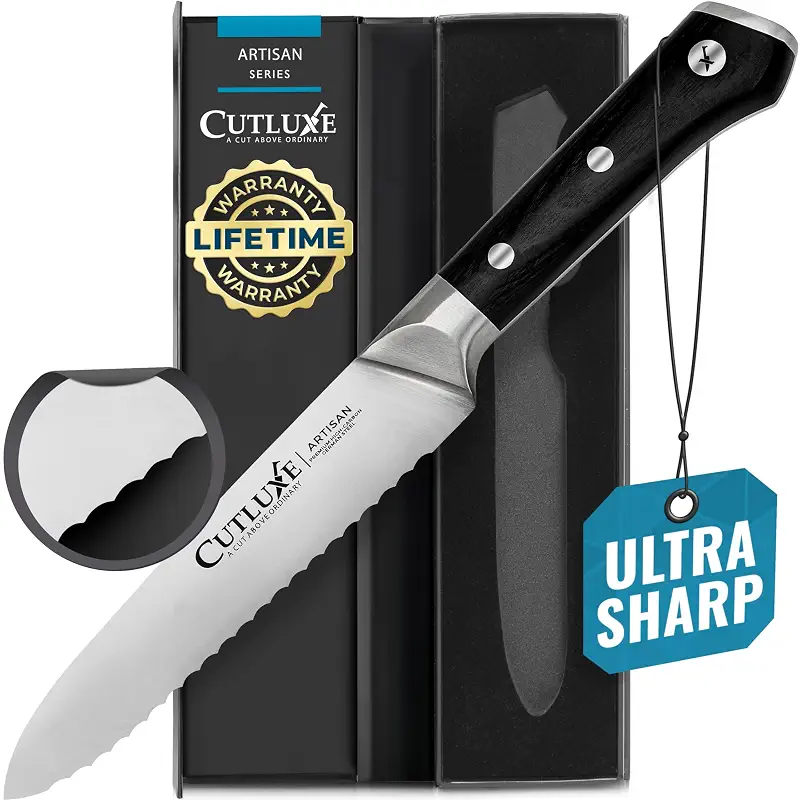
The Cutluxe represents a step into serious cutlery territory. Forged from high-carbon German steel at 56+ Rockwell hardness, it's substantially heavier and more deliberate than lighter competitors. The full-tang construction (blade continuous through the handle) ensures long-term structural integrity, and the triple-riveted pakkawood handle is sealed and polished for sanitary food prep. Owners consistently describe this knife as a pleasure to use, with the weight and balance inspiring confidence during precision work.
Sharpness out of the box is excellent, and the build quality speaks to professional intent. This knife also handles breads and cakes, making it more versatile than single-purpose tomato slicers. The lifetime warranty reflects the maker's confidence in durability. However, the heft and premium positioning come with a tradeoff: one reviewer, a senior, found it too heavy and sharp for comfortable daily use. This is not a beginner's knife; it demands experience and respect.
Where this diverges from the RADA is in philosophy. RADA pursues minimalist durability. Cutluxe pursues premium materials and feel. If you prioritize artisan craftsmanship and don't mind a heavier blade, this is the choice. If you want proven longevity at a lower price point, RADA wins.
Pros
Full-tang German steel construction for structural integrity
Triple-riveted pakkawood handle with ergonomic balance
Cons
Heavier than lightweight competitors; may fatigue less experienced users
Premium pricing reflects artisan construction
Key features
Forged high-carbon German steel at 56+ Rockwell hardness
Full-tang construction with triple-riveted pakkawood handle
Serrated edge for vegetables, fruits, bread, and soft meats
Lifetime warranty against material and workmanship defects
#4 Pick
Best Lightweight Option
Paudin
PAUDIN Tomato Knife, 5 inch Serrated Tomato Knife with Sheath | High Carbon Stainless Steel Tomato Slicer Knife for Smooth Cutting Slicing Vegetables and Fruits
4.7(60)
Thin blade and soft-wood handle ideal for precise cutting in small kitchens and lighter prep schedules.
Ideal for: Home cooks in small kitchens or those who slice tomatoes occasionally and value comfort over heavy-duty construction.
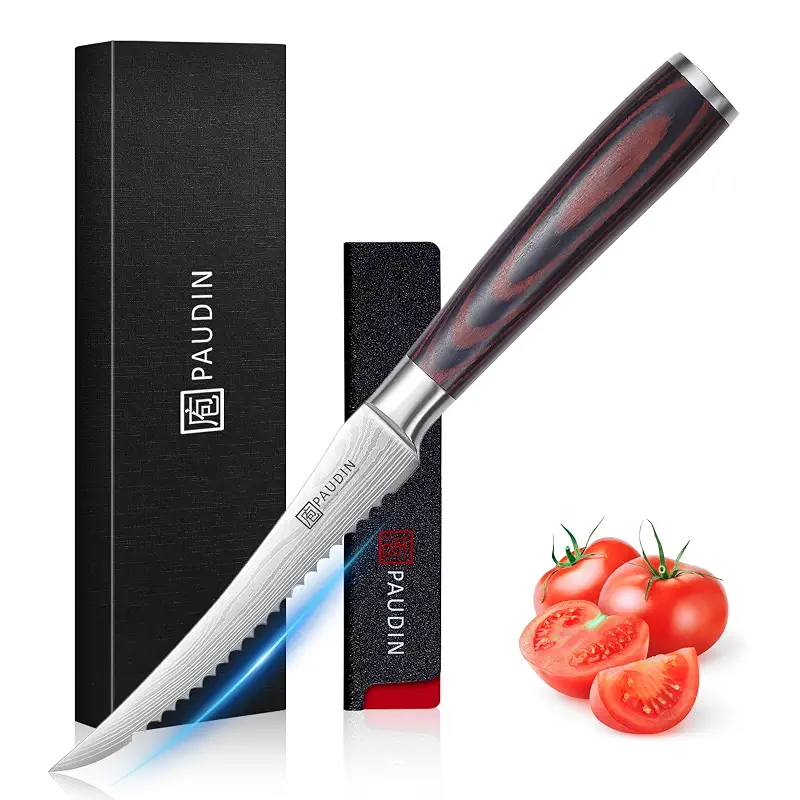
Paudin's tomato knife prioritizes finesse over heft. The 5-inch blade is thin enough to fit into paring knife slots of compact knife blocks, and the lightweight construction makes it comfortable during extended slicing sessions. The 5Cr15Mov high-carbon steel is handpolished to a 14-16° angle, creating a sharp edge optimized for soft foods. Owners praise the thin blade for precision work and the beautiful presentation, which makes it suitable as a gift.
The soft-wood handle feels natural in hand and reduces fatigue, which appeals to cooks with mobility or pain concerns. One reviewer with a spinal condition noted this knife saved standing time during prep by making clean cuts consistently: a practical benefit that extends beyond kitchen aesthetics. The laser-engraved blade pattern adds visual appeal without compromising function.
The caveat is durability and construction. Unlike full-tang knives, this design lacks the blade continuous into the handle, which some reviewers note limits long-term resilience compared to premium options. Another reviewer questioned whether the handle is genuine wood or plastic-composite. For occasional to moderate use (slicing tomatoes for sandwiches or salads a few times weekly) this knife excels. For daily professional work, the Cutluxe or RADA would be more robust investments.
Pros
Thin 5-inch blade fits compact knife blocks and paring slots
Lightweight design reduces hand fatigue during precision work
Sharp edge polished to 14-16° angle for clean slicing
Cons
Not full-tang; blade does not extend into handle for durability
Handle material ambiguity (wood or composite) raises longevity questions
Key features
5Cr15Mov high-carbon steel with HRC56+ hardness rating
Thin, lightweight blade optimized for precision cutting
Soft-wood handle with laser-engraved decorative pattern
Compact 5-inch size ideal for small kitchens and knife blocks
#5 Pick
Best Value Pack
Horonaxo
Tomato Slicer, Tomato Knives 2-Piece Serrated Tomato Knife | 6 inch Blade High Carbon Stainless Steel, Ergonomic Handle for Fruits and Vegetables
4.8(64)
Two 6-inch blades for the price of one premium knife; excellent for kitchens where a backup or shared use makes sense.
Ideal for: Multi-person households, shared kitchens, or cooks who want a backup tomato knife without doubling the cost.
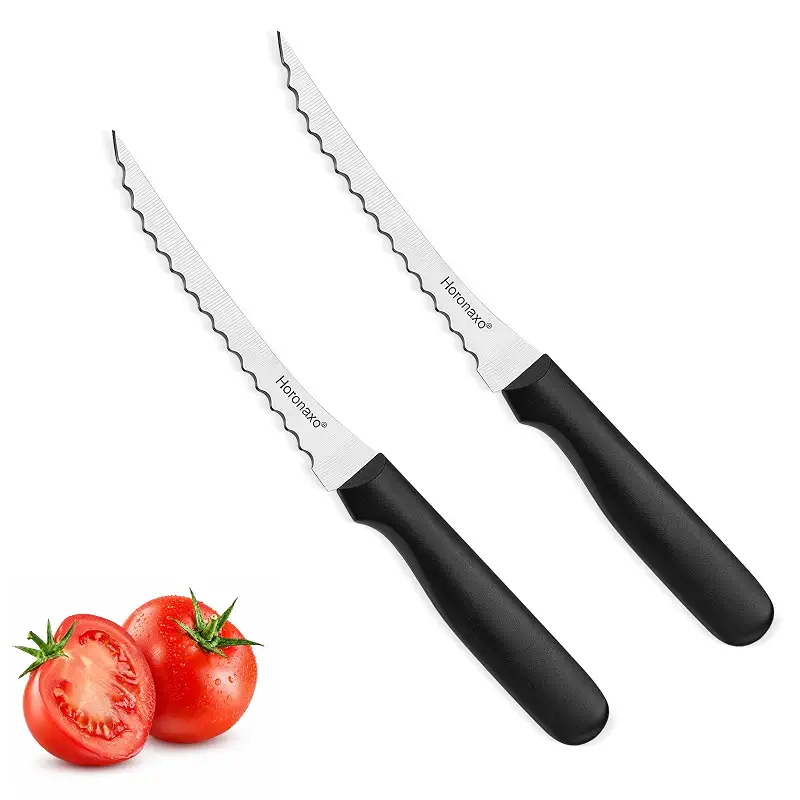
Horonaxo's two-knife set reframes the category as a value proposition. Two 6-inch high-carbon stainless-steel blades with serrated edges ship together, allowing separate tools for fruits and vegetables or one for cooking, one for cleanup rotation. The extended 6-inch length handles larger tomatoes and beef varieties with more surface area contact. Owners report the blades are thin, flexible, and remain sharp through repeated use on soft produce.
The ergonomic ABS handle is lightweight and non-slip, addressing a common pain point in budget knives. The pointed-tip design makes coring intuitive, and reviewers note unexpected versatility: one buyer uses the knife on a potting bench for garden work, proving the blade adapts outside the kitchen. The build benefits from production in a recognized knife-making hub, giving the design credibility despite modest pricing.
The tradeoff is that two slightly less refined blades may not match the edge retention or construction of a single premium knife like the RADA or Cutluxe. This set is pragmatic for households that want backup slicers or cooks who share kitchen duties. If you need one exceptional knife for decades, pick RADA. If you need two reliable slicers right now, Horonaxo delivers.
Pros
Two knives for single-knife pricing enables backup or shared use
Non-slip ABS handles remain ergonomic through repetitive slicing
Cons
Two knives may have less refined edge retention than premium single options
Only one protective tip cover included for two blades
Key features
6-inch high-carbon stainless-steel serrated blades on both knives
Lightweight, non-slip ABS handles for comfortable extended use
Thin blade profile for precision slicing without crushing
Artisan knife-making construction with two-knife efficiency
How to Choose a Tomato Slicing Knife
Four trade-offs that actually matter when matching a tomato slicing knife to your kitchen.
Blade Length and Weight
Tomato knives range from 5 to 6 inches. The 5-inch size works well for smaller hands, compact kitchens, or precision slicing of individual tomatoes. A 6-inch blade covers larger heirloom and beefsteak varieties with fewer strokes. Weight varies significantly: lightweight options (under 3 oz) reduce fatigue during extended prep but may feel less substantial, while heavier knives (4-5 oz) offer better momentum and control if you're comfortable with the extra heft. For beginners, a lighter blade often feels more manageable.
Steel Quality and Maintenance
High-carbon stainless steel (like T420, 5Cr15Mov, or German forged variants) resists rust and holds its edge longer than commodity stainless. A serrated versus smooth tomato knife matters too: serrated blades are standard in this category because the teeth grip soft skin without crushing. When considering a tomato knife maintenance guide, remember that handwash-only models preserve brushed finishes better than dishwasher cycling, but quality steel like RADA's holds up even after repeated machine cycles. Look for edge angles between 14-16 degrees; sharper angles bite better but dull faster.
Handle Construction and Ergonomics
Handles come in cast aluminum (durable, can tarnish), pakkawood (polished, professional), soft wood (comfortable, warmer feel), or ABS plastic (lightweight, non-slip). Non-slip grip is critical because a wet tomato and soapy hands create slipping hazards. Full-tang construction (blade continuous into handle) costs more but ensures the knife won't separate after years of use. For kitchens where multiple people share tools or prep work happens daily, an ergonomic handle reduces hand fatigue significantly.
Edge Retention and Durability Investment
Budget knives stay sharp for weeks; premium knives stay sharp for months or years. If you slice tomatoes once weekly, a budget option is sensible. If you prep daily, the difference between a knife that holds its edge for 20 years (RADA) versus one that requires sharpening after a season justifies paying more upfront. Consider lifetime warranties and maker reputation too. A knife made in the USA or forged in Germany typically reflects decades of design refinement, while newer brands may prioritize value over proven longevity. Factor maintenance cost into your decision as well.
Versatility Beyond Tomatoes
Most tomato knives also slice peaches, kiwis, lemons, bagels, and soft breads cleanly. If you want a single knife that earns daily counter space, choose one that feels comfortable on delicate fruits and also handles tougher skins with ease. Some cooks who process lots of tomatoes also invest in a best tomato dicer for batch work, keeping the slicing knife for plating and presentation tasks. A serrated blade does double duty better than a smooth one because it handles both soft and crusty items without squashing. A narrow, thin blade improves precision for garnish work or seed removal, making it worth considering if your kitchen prep extends beyond simple slicing.
Frequently asked
Quick answers to the questions readers ask most.
Why does a tomato knife work better than my regular chef's knife?
A chef's knife has a flat blade and rocking motion designed to crush and chop. A tomato knife's serrated, thin blade uses a sawing motion and grips the tough skin without squashing soft flesh inside. The pointed tip also makes seed removal easier. For ripe tomatoes especially, the serrated edge prevents the knife from sliding sideways while cutting through skin, which is why specialty design matters.
Can I put a tomato knife in the dishwasher?
Most high-carbon stainless-steel tomato knives survive dishwashers without rusting, but handwashing extends edge sharpness and protects decorative handles like brushed aluminum or pakkawood. If the maker specifies handwash only, follow that guidance to preserve the handle finish. Budget knives are often more dishwasher-tolerant than premium ones because they cost less to replace.
How sharp does a tomato knife need to be?
A good tomato knife should cut through tomato skin with minimal downward pressure. If you're pressing hard, the blade is dull or the angle is wrong. Serrations should feel like fine teeth, not rough bumps. A sharp tomato knife will glide through ripe produce and require only the weight of the blade itself: no straining necessary. If it crushes more than slices, it's time for sharpening or a new knife.
Is full-tang construction worth the extra cost?
Full-tang means the blade metal extends all the way through the handle and is pinned in place. It costs more but lasts longer because there's no glue or weak point where blade meets handle. For a knife you'll use daily for decades, full-tang is worth it. For occasional weekend slicing, a partial-tang knife performs fine and costs less. Consider your long-term kitchen investment goals.
What's the difference between a tomato knife and a serrated bread knife?
A tomato knife is shorter (5-6 inches), thinner, and optimized for delicate flesh with tough skin. A bread knife is longer (8-10 inches), heavier, and designed to saw through crusty exterior without crushing soft crumb. Both are serrated, but a bread knife's thickness makes it less precise for thin slicing. Use each for its intended purpose; a tomato knife won't work well on a crusty loaf, and a bread knife is overkill for a single tomato.