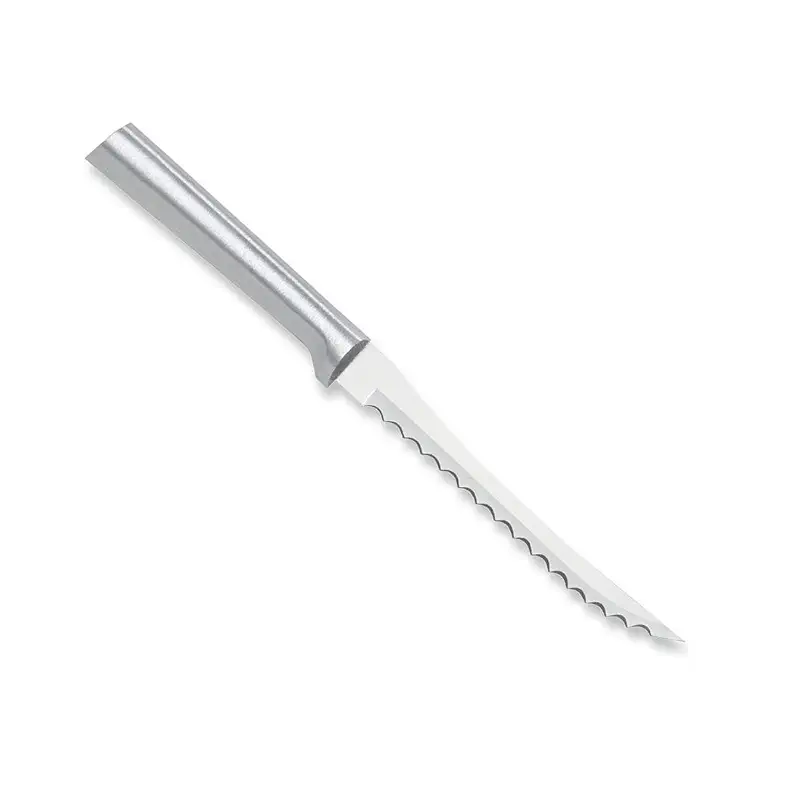
Ideal for: Home cooks who slice tomatoes regularly and value durability, edge retention, and made-in-USA craftsmanship.
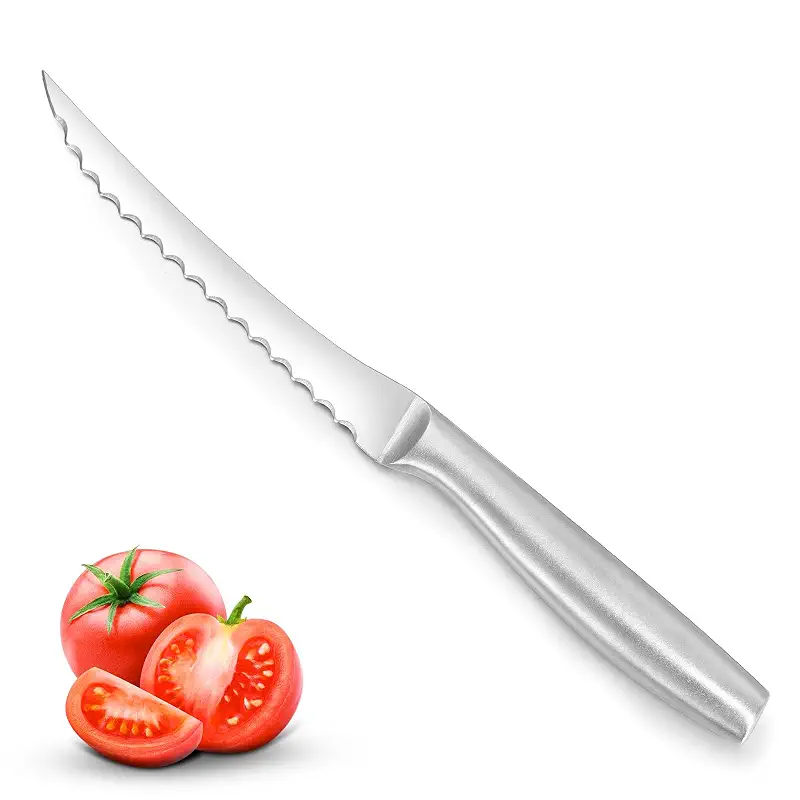
The RADA Cutlery tomato slicer has earned its reputation the hard way: through years of owner loyalty and a 4.8-star rating across over 12,000 reviews. The dual-serrated blade cuts through tomato skin with remarkable ease without pressing down, and owners consistently praise how thin the blade profile allows for precise, clean slices. The T420 high-carbon stainless steel holds its edge exceptionally well, which means less frequent maintenance and a knife that performs identically months or years into ownership. The cast aluminum handle has genuine weight and balance, making repetitive slicing feel controlled rather than tiring.
One real consideration: the brushed aluminum handle can darken or discolor over time, particularly if washed in a dishwasher. Several owners note this cosmetic shift doesn't affect function, but if appearance matters to you, hand-washing extends its shine. Compared to something like the Victorinox or Paudin, the RADA carries a more premium feel and demonstrable edge retention, which justifies its position as the benchmark choice for home cooks who slice frequently.
What sets this knife apart is the combination of American manufacturing, proven longevity (owners report their knives still performing at day-one sharpness after a decade), and a blade geometry that genuinely makes soft-skinned produce easier to cut than with conventional knives. If you're buying one tomato knife and want it to last, this is the one.
Pros
Exceptional sharpness from day one, holds edge for years
Dual-serrated blade design cuts without crushing delicate skins
Lightweight yet balanced; comfortable for extended prep work
Proven track record across thousands of verified long-term owners
Cons
Hand-wash only; aluminum handle discolors in dishwasher
Specialty knife limits use beyond tomatoes and soft foods
Key features
T420 high-carbon stainless steel with hollow-ground edge
Ideal for: Budget-conscious home cooks wanting professional slicing without premium investment; dishwasher users.
The Omesata tomato knife offers remarkable sharpness and precision for the investment. Owners who've paid significantly more for other brands report they reach for this one more often, which speaks volumes about real-world utility. The high-carbon stainless steel blade slices ripe peaches, kiwis, and tomatoes with minimal pressure, and the thin profile makes finely dicing shallots or lemons nearly as easy. A 4.8-star rating across 900-plus reviews shows consistency, and buyers note it holds its edge through repeated dishwasher cycles without rust or dullness: a genuine advantage if hand-washing isn't your routine.
The handle design prioritizes lightweight grip and non-slip texture, which reduces hand fatigue during prep. Some reviewers do mention the blade feels "slim" or slightly delicate compared to the RADA, though this is also what enables the thin, precise cuts buyers prize. Where the Omesata trades is in long-term edge retention; it may not maintain day-one sharpness for a decade the way the RADA does, but for the lower entry cost, the performance-per-dollar is hard to beat. If you're equipping a smaller kitchen, unsure about committing to a specialty knife, or simply want professional results without premium pricing, this is the pick.
Versatility is another strength: owners report using it for steak knives, general vegetable prep, and even bread, making it less of a one-trick tool than a true tomato-only specialist.
Pros
Razor-sharp blade at entry-level pricing
Dishwasher-safe stainless steel resists rust and dulling
Lightweight, slim design for precise, thin cuts
Versatile beyond tomatoes: works on fruits, vegetables, bread
Cons
Blade may feel less substantial or slightly flimsy compared to heavier knives
Long-term edge retention not guaranteed as with premium alternatives
Maintains sharpness through repeated washing cycles
Slim profile suitable for compact knife blocks
#3 Pick
Best for Gift-Giving
Paudin
PAUDIN Tomato Knife, 5 inch Serrated Tomato Knife with Sheath | High Carbon Stainless Steel Tomato Slicer Knife for Smooth Cutting Slicing Vegetables and Fruits
4.7(60)
Hand-crafted aesthetics and lifetime warranty wrapped in presentation-ready packaging.
Ideal for: Gift buyers wanting presentation appeal; beginner cooks or those with smaller kitchens seeking lightweight, manageable slicing tools.
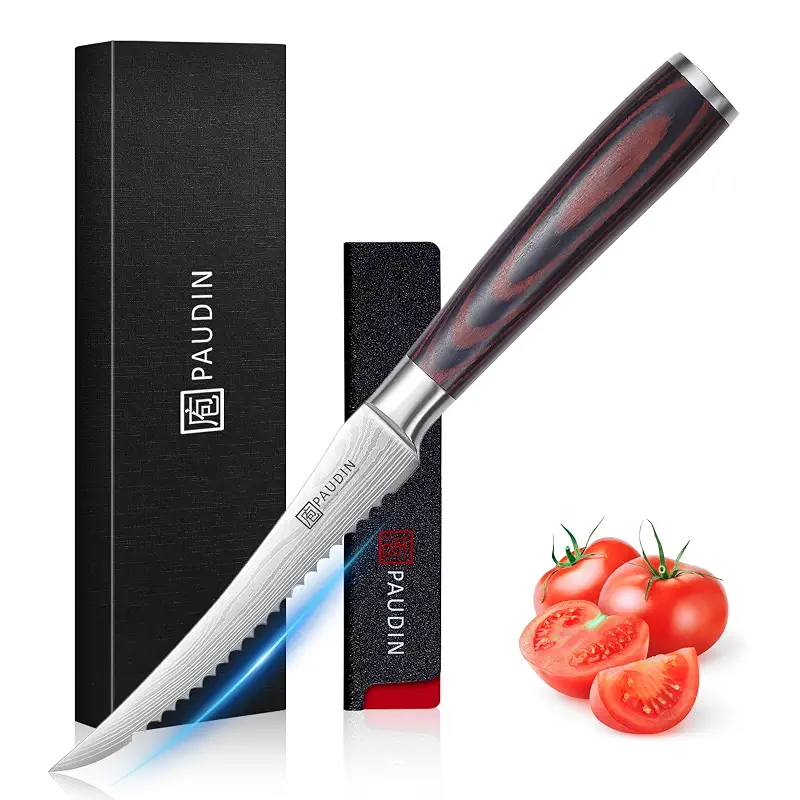
The Paudin tomato knife arrives in an attractive black box with foam insert and protective blade cover: essentially gift-ready. The double-serrated blade and laser-engraved pattern add visual appeal that justifies the presentation. Build-wise, the 5Cr15Mov high-carbon steel and hand-polished 14–16° angle deliver clean cutting performance for tomatoes, bread, and soft vegetables. The soft wood handle feels natural in hand, and the lightweight 5-inch profile makes it accessible for beginners and those with smaller hands or limited counter space.
One caveat: the blade is not full-tang (the steel doesn't extend into the handle), which some knife enthusiasts consider a quality shortcut. A few owners note the handle material feels ambiguous (possibly plastic despite wood appearance) and the knife sits at a mid-range price that sits between true budget options and premium German blades like the Wüsthof. Compared to the RADA, the Paudin prioritizes aesthetic presentation and beginner accessibility over multi-decade edge retention; compared to the Omesata, it costs more but offers nicer packaging and a lifetime warranty that appeals to gift recipients. If you're buying for someone who appreciates kitchen presentation and wants a no-fuss slicing tool without investing heavily, this is the thoughtful choice.
The lifetime warranty against defects is genuine reassurance, and owners report the knife cuts cleanly and feels balanced: a solid performer in an attractive package.
Pros
Attractive presentation and gift-ready packaging
Lightweight and easy to control for small hands or beginners
Lifetime warranty against manufacturing defects
Hand-polished edge at specific angle for consistent performance
Cons
Not full-tang construction; some durability concerns versus premium blades
Mid-range pricing without the edge-retention track record of established brands
Key features
5Cr15Mov high-carbon steel forged and hand-polished to 14–16° angle
Double-serrated blade for effortless tomato and vegetable slicing
Soft wood handle with ergonomic grip and lightweight 5-inch design
Laser-engraved blade pattern for visual distinction
Lifetime warranty against defects in workmanship
#4 Pick
Premium German Choice
Wüsthof
WÜSTHOF Gourmet 5" Tomato Knife, Black
4.8(330)
German engineering and uncompromising quality for cooks who value precision, durability, and multi-purpose capability.
Ideal for: Serious home cooks and professionals valuing German precision, multi-task capability, and long-term investment in quality tools.
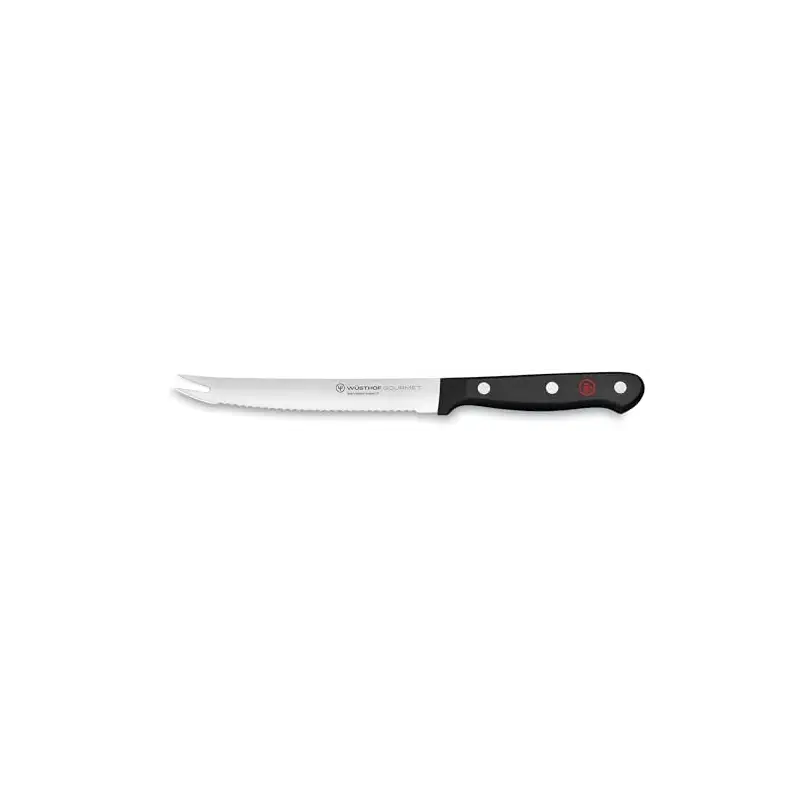
Wüsthof's reputation for knife-making rigor shows immediately in this 5-inch tomato blade. Owners consistently describe it as a joy to hold and use, with a sturdy, confident feel that reflects the brand's centuries of manufacturing tradition. The serration is precisely calibrated to slice tomatoes, grapes, plums, and bread with minimal effort and maximum control: one reviewer noted it transformed tomato slicing into something genuinely enjoyable. The blade stays sharp through years of use (one owner reports years of ownership with no dulling), and the wider range of users (from home cooks to bar professionals) suggests versatility beyond the category's typical single-crop focus.
There is a quality step-down within Wüsthof's own lineup: this knife is from the Gourmet series, and some owners prefer the Classic series for even higher perceived durability, though the difference may reflect personal preference rather than measurable performance. Priced notably higher than the Omesata or Victorinox, the Wüsthof is a commitment to professional-grade materials and manufacturing. If you already own other Wüsthof knives or prefer to invest in one knife that excels across multiple slicing tasks (tomatoes, fruit, cheese, cold cuts, bread), this justifies the step up. For strictly tomato-focused, budget-conscious kitchens, the RADA or Victorinox offer comparable performance at lower cost.
The hand-wash-only care requirement is standard for premium German steel and reflects the extra maintenance that high-end blades typically demand.
Pros
Robust, precise German engineering with proven durability
Performs excellently on tomatoes, fruit, bread, and cold meats
Maintains sharpness through years of regular use
Confident, balanced feel in hand; a pleasure to use repeatedly
Cons
Hand-wash only; higher maintenance than dishwasher-safe alternatives
Premium pricing limits appeal to budget-conscious or occasional-use buyers
Key features
Wüsthof Gourmet series with German precision engineering
5-inch serrated blade optimized for soft-skin produce and bread
Sturdy, well-balanced construction for controlled, effortless cutting
Proven edge retention through years of owner reports
Hand-wash recommended to preserve steel quality
#5 Pick
Most Accessible
Victorinox
Victorinox Swiss Classic 4.3 In Tomato and Table Knife,Serrated Blade, Red | stainless steel blade for precision cutting of soft-skin fruits and vegetables. Ergonomic non-slip handle.
4.8(4,486)
Swiss-made compact slicer combining exceptional sharpness, affordability, and versatility across everyday kitchen tasks.
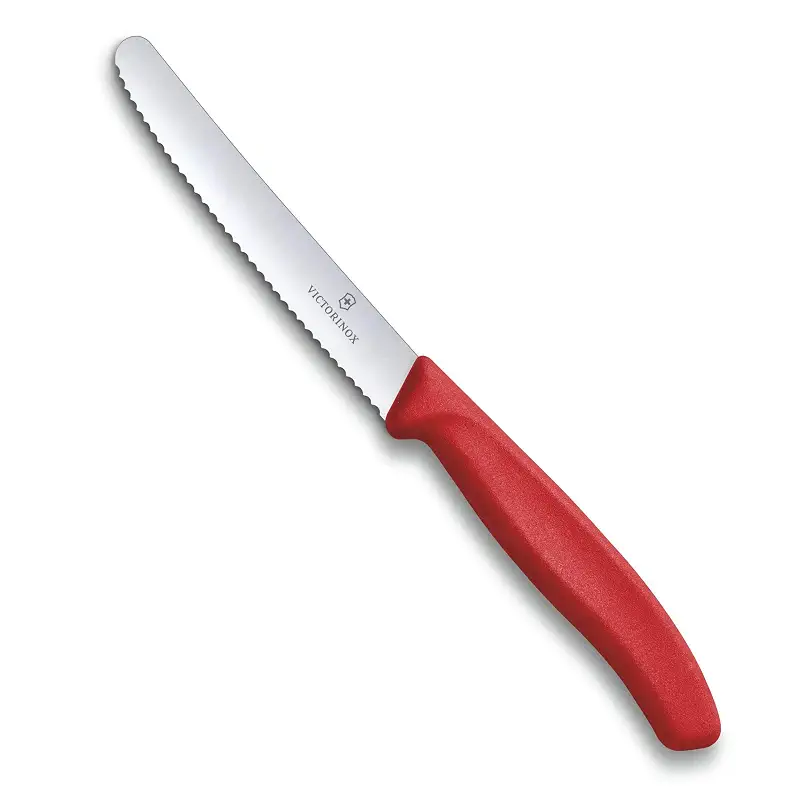
The Victorinox Swiss Classic 4.3-inch tomato knife delivers remarkable value through straightforward engineering and Swiss quality control. At initial sharpness, it bites through tomato skin with minimal pressure, and owners consistently report the thin blade and small size make it their go-to for slicing, dicing, and precision work beyond just tomatoes. The serrated edge is particularly effective on thick-skinned store-bought tomatoes and delicate fruits, and the lightweight design reduces hand fatigue. The non-slip handle performs reliably even when wet, addressing a real kitchen safety concern that less-thoughtful designs overlook.
One honest caveat: in direct comparison testing, a premium blade like the Wüsthof outperformed the Victorinox on small tomatoes, requiring slightly more sawing motion to achieve equally clean cuts. This doesn't diminish the knife's capability (most users won't notice the difference) but if you've used high-end German steel, the trade-off is visible. Where the Victorinox shines is in cost-to-performance ratio and the fact that many owners don't worry about sharpening it for years, suggesting solid edge retention despite the modest price. It's also the shortest blade in this lineup, making it ideal for cooks with smaller hands or those who prefer compact control.
Compared to the RADA's established multi-decade reputation, the Victorinox offers the same proven Swiss manufacturing and near-identical real-world performance at significantly lower financial commitment: a smart choice for renters, travelers, or anyone building a knife collection without breaking budget.
Pros
Exceptional value with Swiss-made precision and lifetime guarantee
Extremely sharp from purchase; holds edge for extended periods
Versatile across tomatoes, fruit, vegetables, and general prep
Lightweight and compact; comfortable for extended handling
Cons
Blade may require slightly more pressure on small, delicate tomatoes versus premium options
Shorter 4.3-inch length may feel small for cooks preferring larger knives
Key features
Swiss stainless steel, conical ground and ice-tempered for durability
4.3-inch serrated blade optimized for soft-skin fruits and vegetables
Contemporary textured handle with non-slip grip design
Lightweight, perfectly balanced for control and reduced fatigue
Lifetime Swiss warranty against defects in material and workmanship
How to Choose the Right Tomato Knife
Four trade-offs that actually matter when matching a tomato knives to your kitchen.
Blade Geometry and Sharpness Angle
The heart of a tomato knife is its serrated edge and blade thickness. A thinner blade allows more precise, cleaner cuts without crushing delicate flesh, while serration depth and spacing determine how effectively the knife bites through tough skin. Most quality tomato knives are hand-polished to a 14–16° angle on each side, creating a razor edge that requires minimal downward pressure. The RADA and Wüsthof both prioritize this geometry; comparing serrated vs. smooth blade tomato knives reveals that serrated designs are nearly universal in this category because they excel at handling the contrast between a tomato's tough exterior and soft interior. Initial sharpness matters less than edge retention: a knife that stays sharp for months without maintenance outperforms a blade that dulls after weeks.
Handle Comfort and Weight Distribution
Since tomato prep often involves repetitive slicing, handle design directly impacts hand fatigue and control. A well-balanced knife feels effortless to use; you're guiding it rather than forcing it. Look for ergonomic shapes with non-slip texturing, especially if you cook with wet hands. Aluminum and wood handles both perform well; aluminum (like the RADA) tends to be lighter and more durable long-term, while wood (like the Paudin) feels warmer in hand but requires hand-washing. Blade length also matters: a 5-inch blade suits most hands and kitchen tasks, while a 4.3-inch option (Victorinox) works better for smaller hands or compact kitchens. Test the knife in hand before committing if possible, or review owner feedback about grip comfort in your specific use case.
Material and Durability
High-carbon stainless steel is the standard across all options in this lineup, balancing edge-holding ability with rust resistance. Look for steel types like T420 (RADA), 5Cr15Mov (Paudin), or equivalent formulations that specify hardness ratings or tempering processes. Blade construction matters too: full-tang designs (where steel extends through the entire handle) are generally more durable long-term, though many serrated tomato knives use partial-tang construction without real-world penalty. Care requirements vary: hand-wash recommendations from Wüsthof and RADA reflect higher-end materials that benefit from gentle treatment, while dishwasher-safe options (Omesata, Victorinox) prioritize convenience. Consider your habits: if you hand-wash everything else, premium care is less burdensome; if you rely on the dishwasher, a durable, dishwasher-safe blade saves friction.
Versatility Beyond Tomatoes
While these are specialized tomato slicers, the best performers also handle bread, soft fruits, and delicate vegetables. Owners frequently report using their tomato knives for peaches, lemons, kiwis, shallots, and even cold cuts. If you want one knife to justify counter or drawer space, look for broader owner feedback about multi-task capability. The Wüsthof and Omesata particularly shine in this respect, while the RADA, Paudin, and Victorinox remain more tomato-focused but competent across related tasks. A knife that excels at one job but performs adequately at ten others is better value than a single-task specialist, assuming your kitchen workflow supports it.
Frequently asked
Quick answers to the questions readers ask most.
What makes a tomato knife different from a regular serrated knife?
A tomato knife combines a thinner blade profile, specialized serration geometry, and a shorter length optimized for controlling delicate cuts on soft-skin produce. A standard utility or bread knife is heavier and deeper-serrated, suited for tougher, thicker foods. The tomato knife's lower mass and precise edge angle make clean, thin slicing possible without pressing down hard enough to crush ripe tomatoes or other fragile items. The category exists because general-purpose knives simply don't perform this specific task as well.
How often do I need to sharpen a tomato knife?
Quality tomato knives like the RADA, Wüsthof, and Victorinox hold their edge for months or years with normal use and proper care. Hand-washing and avoiding the dishwasher extend edge life significantly. Serrated blades are generally harder to sharpen at home than straight blades, so if your knife begins to dull after a year or two, professional sharpening is often the better option. Many owners report their knives stay sharp enough for daily use without sharpening for a decade or more: longevity depends on blade material, care, and frequency of use.
Can I use a tomato knife for tasks other than tomatoes?
Yes. Owners regularly use tomato knives on bread, stone fruits like peaches and plums, citrus, kiwis, and delicate vegetables like shallots and garlic. The thin blade and serration make them excellent all-purpose slicing tools for anything with a tough exterior and soft interior. They're less suited to hard items like winter squash or raw potatoes, where a heavier chef's knife makes more sense, but within the realm of soft and medium-firm produce, tomato knives are versatile workhorses.
Is hand-washing really necessary, or is dishwasher-safe okay?
Premium German and American-made blades (RADA, Wüsthof) perform best with hand-washing because dishwasher cycles expose the steel to heat, moisture, and abrasive detergent for extended periods, potentially accelerating edge dulling and handle damage. Budget-friendly options like the Omesata and Victorinox are engineered to withstand dishwashers without meaningful performance loss. If convenience is your priority, a dishwasher-safe knife is fine; if you want maximum edge retention and longevity, hand-washing is the safer investment for premium blades.
What's the difference between dual-serrated and single-serrated blades?
Dual-serrated or double-serrated blades (like the RADA and Paudin) feature serration on both sides of the edge, theoretically providing more cutting contact points and easier slicing with minimal pressure. Single-serrated blades have serration on one side only. In practice, both perform excellently on tomatoes; the difference is subtle for most home cooks. Dual-serrated designs may feel slightly smoother and require less technique, while single-serrated blades are often easier to maintain and resharpen if needed. Your choice depends on comfort and preference rather than a dramatic performance gap.