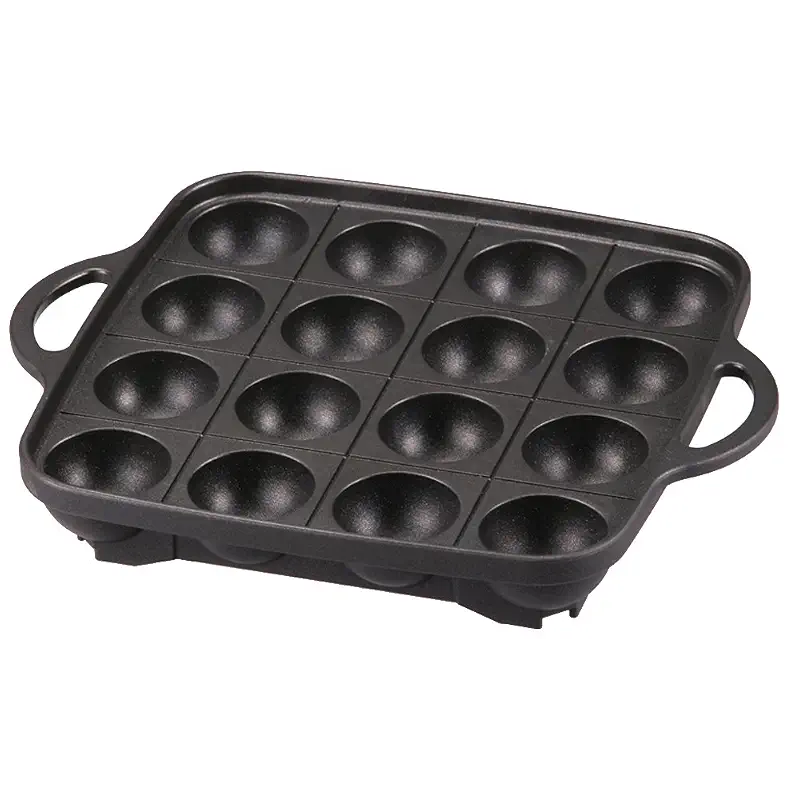
Ideal for: Home cooks seeking traditional stovetop takoyaki with reliable nonstick performance and proven durability.
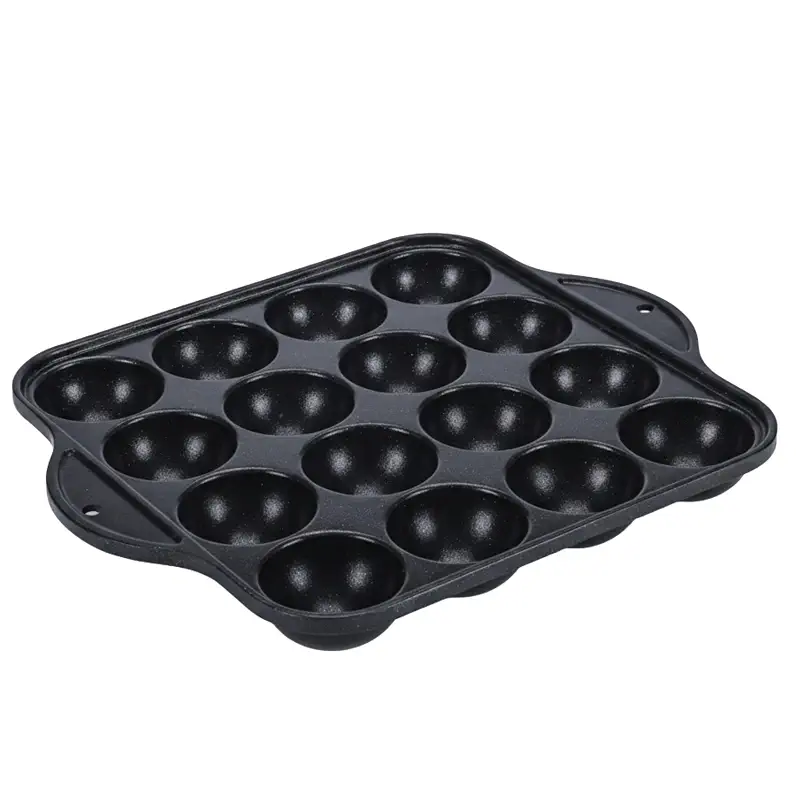
The Iwatani Takoyaki Grill Pan has earned its reputation through straightforward design and consistent performance. The thick aluminum distributes heat evenly, and the nonstick surface releases takoyaki cleanly once you understand the oil-to-batter balance that the reviews emphasize. Owners report it works not only on the portable butane stoves it was designed for, but also on gas ranges and electric burners, making it genuinely versatile despite the aluminum construction ruling out induction cooktops.
What sets this pan apart is the quality of execution. The 16-hole mold is precisely engineered, and the manufacturing is thoughtful: no rough edges, no coating defects out of the box. Buyers note it doubles as an aebleskiver or poffertjes pan, extending its usefulness beyond takoyaki alone. The aluminum does mean the nonstick coating will eventually wear, but reviewers treat this as an acceptable trade-off for the price and performance window you get.
Compared to the FineMade electric option, the Iwatani demands more hands-on attention and skill with the flip, but that interactivity is precisely what many home cooks enjoy. If you value simplicity, direct control, and a pan that sits flat on your existing stove, this is the reference standard.
Pros
Thick aluminum retains heat evenly for consistent browning
Nonstick coating releases takoyaki cleanly with proper oil
Works on gas, electric, and butane burners alike
Cons
Nonstick coating will wear over time with regular use
Requires skill and oil balance to avoid sticking on first attempts
Key features
16-hole aluminum mold with nonstick anodized surface
Compact 10.2" × 8.2" footprint fits standard stovetop burners
Lightweight at 1.6 lbs, easy to handle and store
Compatible with gas, electric, and portable butane heat sources
#2 Pick
Best for Beginners
Cookking
COOKKING - TAKOYAKI Nonstick Grill Pan/Cooking Plate, Made in Korea
4.6(1,209)
Korean-made nonstick pan with foolproof results and excellent heat distribution for first-time takoyaki makers.
Ideal for: First-time takoyaki makers and home cooks who prioritize ease of use and quick, reliable results.
The Cookking takoyaki pan earns its beginner-friendly reputation through a combination of responsive nonstick coating and forgiving design. Multiple reviewers describe their first attempts as successful straight out of the box, a testament to how readily the batter releases and how evenly the 16 molds heat. The pan sits flat and stable on glass-top electric burners and gas ranges alike, and the handles are ergonomic enough that even newcomers feel confident maneuvering it.
The Korean engineering shows in details: the batter doesn't require excessive oil to release, and the pan can handle some spillover without drama. Owners report that even moderate heat works well, and there are no tricky temperature adjustments to master. Hand-washing preserves the nonstick surface longer than dishwasher cycling, and cleanup remains quick. One notable caveat is that electric burner hot spots can create slightly uneven browning toward the center, but rotating the pan periodically solves this and becomes second nature fast.
Where the Cookking shines next to the cast iron Otafuku is in accessibility: no seasoning required, no rust worries, and a learning curve measured in minutes rather than batches. The smaller overall footprint (7.8" square) fits snugly on most burners, and it stores effortlessly in any kitchen drawer or cabinet.
Pros
Batter releases effortlessly without excessive oil
Even heat distribution produces uniform browning across holes
Stable, flat-bottomed design works on any stovetop type
Cons
Nonstick coating scratches easily with metal utensils
Hot spots on electric burners require occasional pan rotation
Key features
16-mold nonstick design made in Korea with premium materials
Compact 7.8" × 7.8" size with 1.7" diameter mold cavities
Heat-resistant handles for safe, confident manipulation
Hand-wash recommended to extend nonstick coating life
#3 Pick
Best for Long-Term Investment
Otafuku
Otafuku Takoyaki Plate, Cast Iron Japanese Grill (16 Holes) | For Cooking Takoyaki Balls - Silicon Coated Pan
4.4(117)
Durable cast iron takoyaki plate with 100+ years of Otafuku heritage and versatility across all stovetop types.
Ideal for: Patient cooks who embrace cast iron maintenance and want takoyaki equipment that lasts decades.
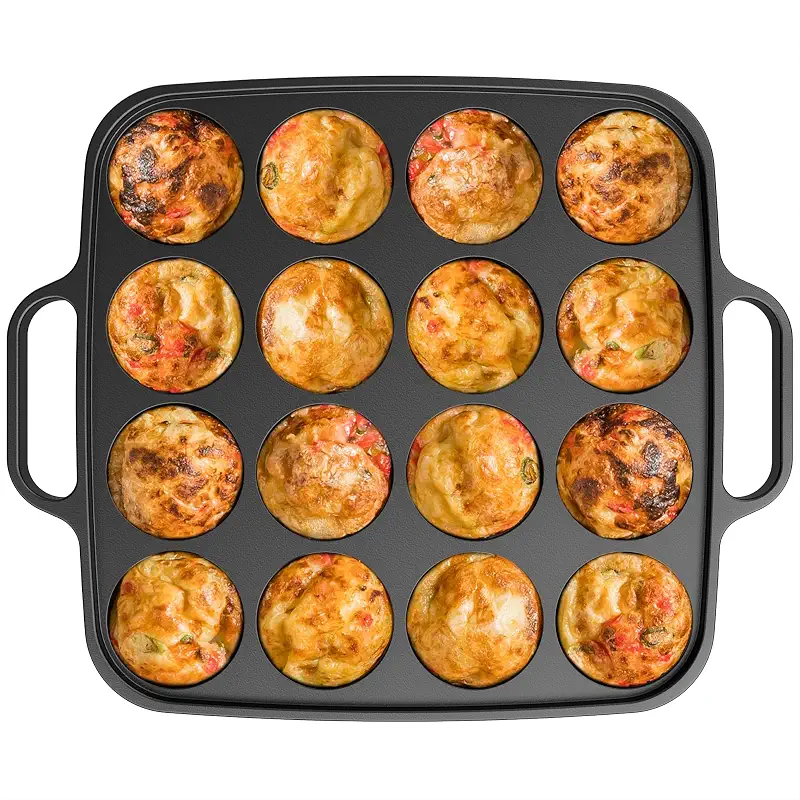
The Otafuku takoyaki plate represents a different philosophy: cast iron's unmatched heat retention and durability in exchange for upfront seasoning and ongoing care. Unlike the nonstick aluminum and Korean pans, this one doesn't degrade with use; it seasons and improves. Buyers who embrace the cast iron workflow report takoyaki that brown beautifully and last for decades. The flat bottom makes it work on gas, electric, ceramic, and induction cooktops: a compatibility advantage the aluminum pans cannot claim.
What makes the Otafuku approachable is the included QR code tutorial video and takoyaki recipe. First-time users report success after watching the guide, and the learning curve flattens once you understand the oil, batter amount, and flip timing. The silicon-coated surface (versus bare cast iron) eases cleanup without sacrificing heat performance. One trade-off: you must use adequate oil to prevent sticking, and post-cooking care (drying immediately to prevent rust) is non-negotiable. Owners comfortable with cast iron maintenance find this a trivial responsibility.
Compare this to the best baguette pan, which also benefits from cast iron's long-term investment logic. If durability and multi-generational use appeal to you, and you're willing to hand-wash and dry, the Otafuku is the pick that keeps giving.
Pros
Cast iron retains and distributes heat supremely well
Works on induction and all stovetop types
Improves with seasoning; lasts indefinitely with care
Cons
Requires immediate drying after cleaning to prevent rust
Heavier weight (cast iron) demands more strength to handle and flip
Key features
Cast iron construction with silicon coating for easy release
Flat bottom compatible with gas, electric, ceramic, and induction
Includes QR-linked recipe and tutorial for confident first use
16 mold cavities sized for restaurant-quality takoyaki balls
#4 Pick
Best for Temperature Control
FineMade
FineMade Takoyaki Maker Pan with Temperature Control, Tools and Recipes, Make 18 Japanese Octopus Balls at once, Easy to Use and Store
4.1(274)
Electric takoyaki maker with adjustable heat dial and 18-cavity capacity for consistent, hands-off browning.
Ideal for: Home entertainers and families who want to make large batches with minimal attention and adjustable heat.
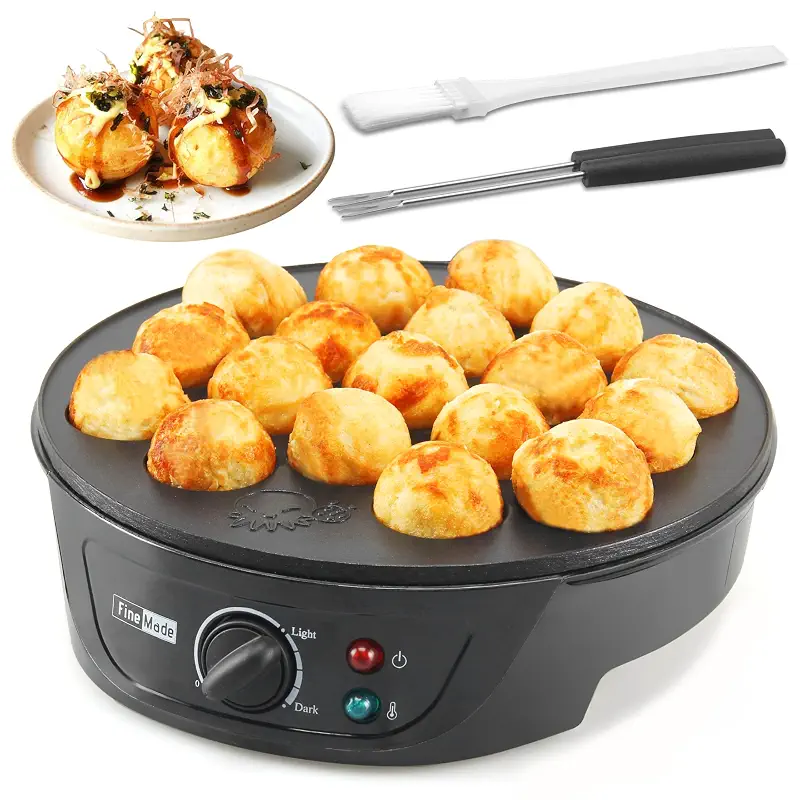
The FineMade electric maker trades the stovetop interaction for precision and volume. The temperature control is the key differentiator: you set the dial, and the unit maintains that heat across all 18 molds simultaneously, eliminating the hot-spot problem that plagues even premium stovetop pans. For households that entertain or have large families, batch capacity matters, and 18 takoyaki at once is meaningful. The included tools (forks for flipping) and recipe card lower the entry barrier, and the compact footprint lets you set it on a counter near an outlet rather than tying up a burner.
Owners praise the evenness of browning and the ability to adjust temperature if your first batch hints that you've dialed it too high or too low. The nonstick surface is straightforward to clean, and there's no worrying about induction compatibility. That said, a minority of reviewers report uneven heating across left and right sections, and the thin aluminum construction has drawn criticism from durability-conscious buyers. One early reviewer's experience with a defective non-stick coating underscores that QC can vary, though most units perform without issue.
Where the FineMade diverges from the Iwatani or Cookking is in the reduction of technique: once the batter is portioned and fillings added, the appliance handles most of the heavy lifting. If you'd rather minimize the learning curve and produce larger batches with less fuss, this makes sense. The trade-off is that you lose the tactile feedback and control that makes stovetop pans appealing to tradition-minded cooks.
Pros
Adjustable temperature dial maintains consistent heat across all molds
18-mold capacity lets you cook for groups without repeat batches
Compact electric design frees up stovetop and works anywhere with outlet
Cons
Thin aluminum construction feels less durable than cast iron options
Heating can be slightly uneven across pan left-to-right sections
Key features
18-cavity nonstick mold with adjustable temperature control
Measures 8.9" × 8.9" × 2.6" and weighs 2.2 lbs for easy storage
Includes metal forks and recipe guide to get started immediately
AC 120V,, 650W for reliable plug-and-play operation
#5 Pick
Best for Frequent Cooking
StarBlue
StarBlue Takoyaki Maker - Electric Machine for Japanese Octopus Balls with FREE Picks - Easy to Operate, AC 120V 50/60Hz 650W
4.2(1,979)
Durable electric machine with 18 molds, fixed optimal heat, and sturdy aluminum build designed for regular use.
Ideal for: Frequent takoyaki cooks and families who make them multiple times per month and value simplicity.
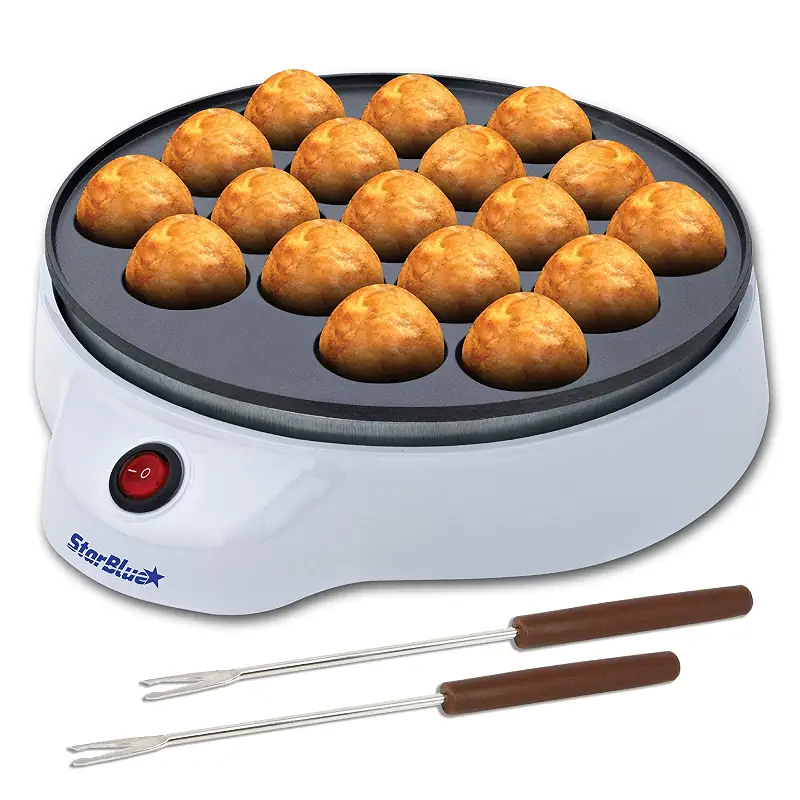
The StarBlue electric takoyaki maker is built for households that fall into a takoyaki routine. The aluminum body is thicker and more rigid than budget competitors, and reviewers who have cycled this through weekly or bi-weekly use report zero coating degradation. The fixed heat setting (no temperature dial) might sound limiting, but StarBlue engineered it to be reliably correct, eliminating guesswork and the risk of burnt bottoms or undercooked centers. Owners from Japan who've lived with street-vendor takoyaki report that this appliance reproduces that result consistently.
The 18-mold capacity matches the FineMade, but the simplified controls and absence of temperature adjustment mean less tinkering and fewer settings to second-guess. One caveat: a small number of owners report uneven heat distribution or minor electrical shock when using metal picks: a reason to switch to wooden skewers or toothpicks for flipping, which most experienced users do anyway. The included metal forks are a courtesy; they're not the ideal tool for a nonstick surface, and wooden or silicone alternatives are safer long-term.
Compared to cast iron versus stovetop takoyaki comparison dynamics, the StarBlue sits in the middle ground: it's electric (no burner tie-up, no induction worries), but it's appliance-grade rather than cookware-grade, so it won't age like cast iron. For cooks who embrace routine and consistency over variety or ultimate durability, the simplicity and reliability of this design deliver strong value.
Pros
Thicker aluminum construction holds up to regular, frequent use
Fixed heat setting eliminates guesswork and temperature adjustment
18-mold capacity produces generous batches for families or entertaining
Cons
No temperature control; heat setting is fixed and not adjustable
Metal picks can cause minor static shocks; wooden alternatives strongly recommended
Key features
18-cavity nonstick takoyaki mold with fixed optimal heat setting
Sturdy aluminum and HDPE construction rated for frequent use
Compact 9" × 9" × 3.5" footprint at only 700 grams
Includes metal picks and easy-clean nonstick surface; hand-wash recommended
How to Choose a Takoyaki Pan
Four trade-offs that actually matter when matching a takoyaki pan to your kitchen.
Stovetop vs. Electric
Stovetop pans (aluminum or cast iron) demand hands-on involvement: you control the heat, you flip each takoyaki, and you manage timing. Many home cooks find this interactivity rewarding and enjoy the simplicity of a single-piece tool that requires no cord or outlet. Electric makers automate the heat consistency and let you cook larger batches (typically 16–18 molds at once), but they trade control for convenience and tie up counter space. If your kitchen has limited counter real estate or you prefer a more passive cooking method, electric wins. If you value traditional technique and direct control, stovetop is the answer. An electric versus stovetop takoyaki comparison can help you weigh the hands-on experience against batch speed.
Material and Heat Performance
Aluminum and Korean nonstick pans heat quickly and are lightweight, making them forgiving for beginners and ideal if you want to use multiple cookware types on a shared burner. Cast iron heats more slowly but retains temperature longer and is compatible with induction cooktops: a major advantage if your kitchen has electric or ceramic ranges. Cast iron also lasts indefinitely with proper care, making it a generational investment. The trade-off is that cast iron requires seasoning, careful drying to prevent rust, and higher skill on the flip. Aluminum nonstick is easier to maintain but will eventually wear, especially if you cook takoyaki weekly or more.
Capacity and Batch Size
Most stovetop pans make 16 takoyaki per round. Electric makers often offer 18 molds, letting you cook slightly larger batches without doubling a session. For small households or occasional entertaining, 16 is plenty. For families or hosts who cook for groups regularly, the extra two molds on electric models add real efficiency. Consider how many people you typically feed and how often you plan to make takoyaki; infrequent cooks don't need the extra capacity, while weekly routines benefit from it.
Nonstick Care and Cast Iron Takoyaki Pan Care
Nonstick surfaces (aluminum and Korean pans) require gentle handling: use only soft silicone, wooden, or rubber utensils to avoid scratching the coating. Hand-washing extends their life compared to dishwashers. Cast iron takoyaki pan care is more involved but pays dividends over time. Season it lightly before first use, always dry it thoroughly after washing (a damp cloth followed by air-dry or heat-dry is essential), and store in a dry place. Both types benefit from adequate oil during cooking: nonstick pans need less, but cast iron relies on a light oil layer to prevent rust and improve release. Most owners find this upkeep minimal once it becomes routine.
Stovetop Compatibility
Aluminum pans work on gas and electric burners but not induction. Cast iron works on all stovetop types, including induction. Electric machines require an outlet and no stovetop at all. If your kitchen has mixed stove types (gas and electric) or you plan to use takoyaki equipment at a cottage or while camping, verify compatibility before buying. Gas users can confidently choose any stovetop option; induction users must select cast iron or go electric.
Frequently asked
Quick answers to the questions readers ask most.
Do I really need oil to make takoyaki, or can I use cooking spray?
Oil is strongly preferred over cooking spray. Takoyaki requires an oil layer thick enough to help the batter release and rotate smoothly. Cooking spray leaves a thinner, less effective coating. Owners report that light vegetable oil or high-oleic sunflower oil (both handle heat well) work best. Brush or pour a small amount into each mold cavity before filling with batter. Start with about one teaspoon per mold and adjust based on how easily your takoyaki releases on the first flip.
Can I use metal picks to flip takoyaki, or do they scratch the pan?
Metal picks risk scratching nonstick coatings, especially aluminum and Korean pans. Most experienced users switch to wooden toothpicks, sharpened wooden skewers, or silicone-tipped tools instead. For cast iron, metal is less of a concern since the material is durable, but wooden picks still perform the job effectively and are gentler overall. The included metal forks in some electric models are convenient but treat them as a backup option rather than your primary flipping tool.
What's the difference between takoyaki and other ball-shaped foods I can make in these pans?
Takoyaki is the Japanese original: wheat flour batter filled with diced octopus, pickled ginger, and scallions, cooked until golden. The same pans work beautifully for aebleskiver (Danish pancake balls, often served with jam or chocolate), banh khot (Vietnamese shrimp and scallion cakes), paniyaram (Indian savory balls), and even dessert versions with fruit or sweet fillings. The technique (fill, flip, rotate) is universal. Some fillings work better with different flavor profiles or textures, but the equipment is identical. One recipe book or online tutorial opens the door to global street-food variety.
How long do nonstick takoyaki pans last before the coating wears off?
Most owners report two to five years of weekly use before significant coating wear becomes noticeable, depending on how gently you handle it and how often you cook. The pan doesn't become unusable once the nonstick fades; it simply requires more oil and a bit more patience on the flip. Some cooks season their worn nonstick pans with oil before each use and extend their usable life considerably. Cast iron, by contrast, improves with age and lasts indefinitely if cared for properly.
Can I use a takoyaki pan on a ceramic or glass cooktop?
Yes, most takoyaki pans work on ceramic and glass cooktops as long as the bottom is flat. Aluminum and Korean nonstick pans sit flat and heat well. Cast iron also works, though it's heavier and requires careful placement to avoid sliding. Induction cooktops are the one stovetop type that requires cast iron (aluminum won't work). Electric takoyaki makers eliminate stovetop concerns altogether, making them ideal if cooktop compatibility is uncertain or if you have limited burner space.