Verdict, analysis, and key features for each pick.
#1 Pick
Best Value Pick
kanngou
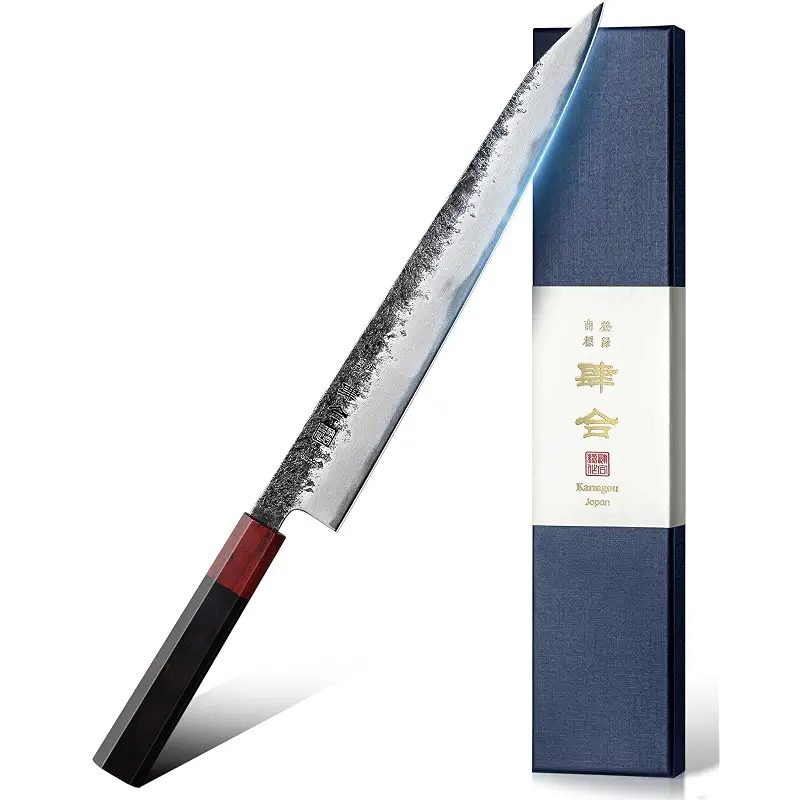
kanngou Sushi Knife 27cm Japanese Carving Knife, AUS-8 Steel Sujihiki Sashimi Knives for Fish Filleting and Meat Slicing, Double Edge Yanagiba Knives with Premium Gift Box
4.4(44)
Sharp, practical AUS-8 sujihiki that delivers professional-level slicing at an entry-level investment.
Ideal for: Home cooks, sushi enthusiasts, and beginners to Japanese knives who want clean slicing without premium maintenance demands.
The kanngou 27cm sujihiki lands in that sweet spot where a home cook or sushi enthusiast gets genuine Japanese knife performance without stepping into professional-grade pricing. The AUS-8 stainless steel is forgiving: it's easy to sharpen, resists rust, and won't demand obsessive maintenance between uses. Buyers consistently praise the out-of-the-box sharpness and how the long blade glides through fish and boneless meats in single strokes, which is where a sujihiki earns its place in the kitchen. The micro-concaved edge and hammered texture reduce friction, so slices stay clean and intact.
The trade-off is edge retention. AUS-8 won't hold a sharp edge as long as premium high-carbon or steels, but for home use and light professional work, the difference is marginal: one weekly touch-up keeps it ready. The handle blends ebony and red sandalwood, and feedback suggests it feels balanced and comfortable during extended prep work, though not quite at luxury-knife refinement.
Compared to the Masamoto AT, which targets the same 270mm length but uses higher-hardness stainless steel, the kanngou prioritizes ease of maintenance and affordability. If you sharpen weekly and value a lower barrier to entry, this knife justifies itself. If you want maximum edge retention and are willing to pay for it, the Masamoto edges ahead.
Pros
Razor-sharp out of the box, single-stroke cuts glide through fish and meat
AUS-8 steel easy to sharpen and forgiving for occasional users
Comfortable, balanced handle with decent ergonomics for longer sessions
Long 27cm blade ideal for large fillets, roasts, and sashimi prep
Cons
Edge retention shorter than or high-carbon alternatives, weekly sharpening needed
Minor sharpening inconsistencies reported on some units
Key features
27cm long, narrow double-edged blade for single-stroke slicing
AUS-8 Japanese stainless steel, HRC 59, rust and wear resistant
Micro-concaved edge with hammered Nashiji texture reduces friction
Ebony and red sandalwood handle with full-tang construction
Gift-boxed and ready for home or light professional use
#2 Pick
Best for Professionals
Masamoto
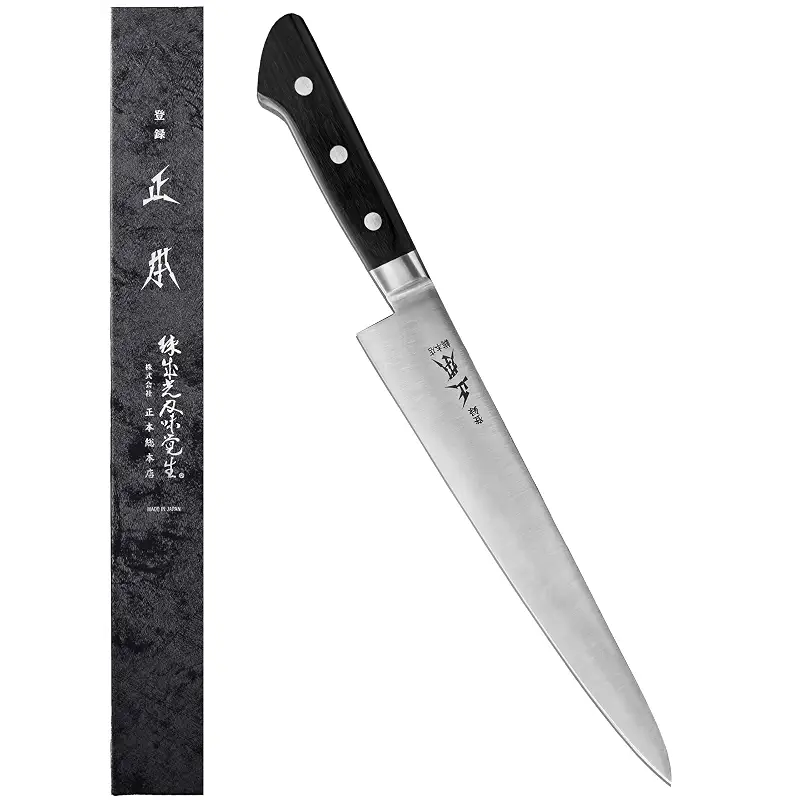
MASAMOTO AT Sujihiki Slicing Knife 10.6" (270mm) Made in JAPAN, Japanese Slicer Knife for Brisket, Meat, Sashimi, Sushi, Sharp Japanese Stainless Steel Blade, Full Tang Pakkawood Handle, Black
4.3(73)
Masamoto's heritage blade delivers consistent sharpness and reliability for sushi chefs and kitchen professionals.
Ideal for: Sushi chefs, professional kitchen staff, and experienced home cooks who prioritize consistent edge retention and low-maintenance sharpening.
Masamoto AT carries 150+ years of Japanese blade-making into a Western-handle format that feels at home in a busy sushi bar or professional kitchen. The Molybdenum Vanadium stainless steel runs at HRC 57, sitting between entry-level and ultra-premium hardness: a deliberate middle ground that sushi chefs value because it holds an edge through high-volume prep without demanding constant resharpening. The full-tang bolster-covered handle and curved pakkawood grip are built for long service shifts; the design absorbs repetitive cutting without fatigue.
Professionals consistently report that this knife performs well for daily sushi rolls, sashimi cuts, and general slicing work. One buyer, a 16-year sushi chef, described it as "one of the best knives I've owned." The 270mm length suits both detail work and carving larger pieces in single motions. The main caveat is that some units arrive with uneven sharpening or inconsistent edge geometry, though most function very well out of the box. It's not a beginner's knife in the sense that it demands respect and proper technique, but it's also not finicky.
Where this knife stands apart from the Yoshihiro 46-layer Damascus is the steel type. Masamoto's stainless blend prioritizes durability and ease of sharpening over aesthetic layering and ultra-premium edge retention. If you value reliability and daily workhorse performance over visual artistry, the Masamoto is your pick.
Pros
Consistent edge retention through high-volume daily cutting work
Stainless steel formula easy to sharpen, forgiving for professional pace
Full-tang bolster and curved pakkawood handle rated for long shifts
Heritage Japanese brand with proven track record in commercial kitchens
Cons
Some units show uneven sharpening or minor edge inconsistency on arrival
Less visually striking than Damascus or layered blades
Key features
270mm blade, Molybdenum Vanadium Japanese stainless steel, HRC 57
Full-tang construction with stainless steel bolster
Non-slip curved pakkawood handle rated for professional use
Made in Japan with 150+ year Masamoto lineage
Designed for sushi, sashimi, and professional meat carving
Ideal for: Experienced home cooks, sushi enthusiasts, and chefs willing to maintain knives with whetstones and seeking long-lasting edge performance.
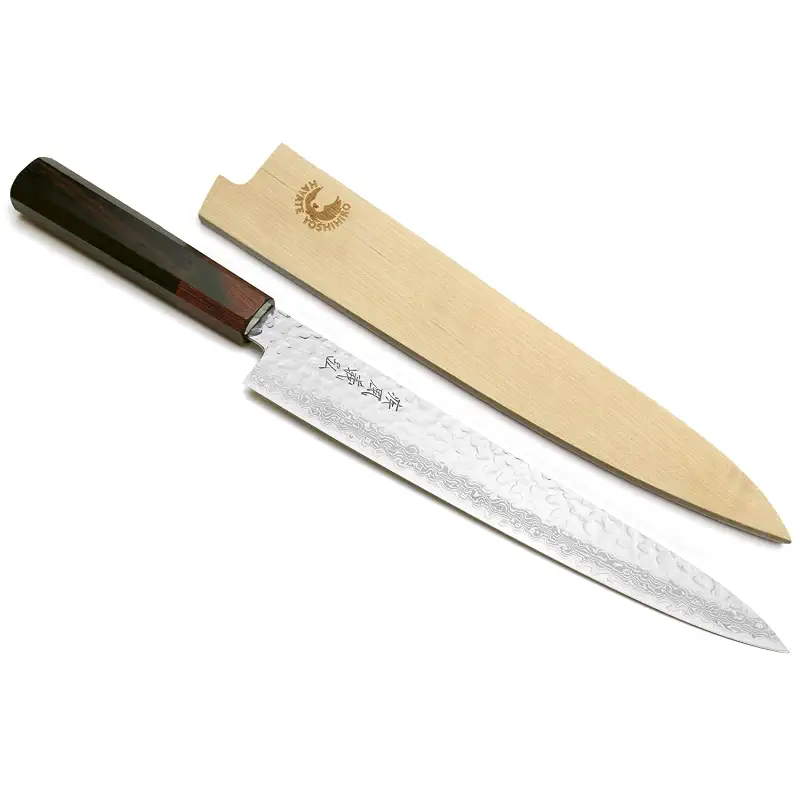
Yoshihiro's 46-layer Hammered Damascus sujihiki sits a tier above entry-level in both price and capability. The core stainless steel runs at HRC 60, the hardest in this lineup, which means the edge lasts longer through heavy use before needing a touch-up. The pattern-welded layers aren't just for show; they reduce friction during slicing, and the hammered texture prevents food from sticking to the blade. Buyers who work in kitchens describe it as owning them all: superior to mid-range German and Japanese brands they've tested, with a point and edge that resist chipping even under demanding use.
The trade-off is sharpening. requires a whetstone and a steadier hand than the easier-to-maintain stainless steels in this lineup. If you're not already comfortable with a whetstone, the learning curve is real. The 240mm blade is slightly shorter than the kanngou and Masamoto 270mm options, which makes it more nimble for detail work but less ideal for carving a whole brisket in one motion. The included wooden saya is a practical touch, and the traditional octagonal wa-style handle is lightweight and ergonomic, though more delicate-feeling than a Western bolster.
Unlike the Sanmeiho knife, which targets similar budget-conscious buyers, the Yoshihiro invests in steel quality and craftsmanship that compounds with time. You're paying for edge retention and durability; the aesthetics are a bonus. If you want to reach for one knife for years and sharpen it properly, this is the investment that justifies itself.
Pros
stainless steel, HRC 60, holds edge significantly longer than AUS-8
46-layer Damascus pattern reduces friction and food sticking during cuts
Lightweight octagonal wa-handle with excellent balance and control
Included wooden saya protects blade and adds display appeal
Cons
Requires whetstone sharpening; not beginner-friendly for maintenance
Shorter 240mm blade less ideal for carving large roasts in one motion
Key features
240mm blade, core with 46-layer Damascus pattern, HRC 60
Hammered texture reduces friction and food adhesion
Traditional octagonal wa-style handle, lightweight and ergonomic
Includes protective magnolia wood saya
Made in Japan, acclaimed by professional sushi chefs and experienced home cooks
Ideal for: Sushi chefs, restaurant prep cooks, and professional kitchens needing reliable daily performance and easy sharpening.
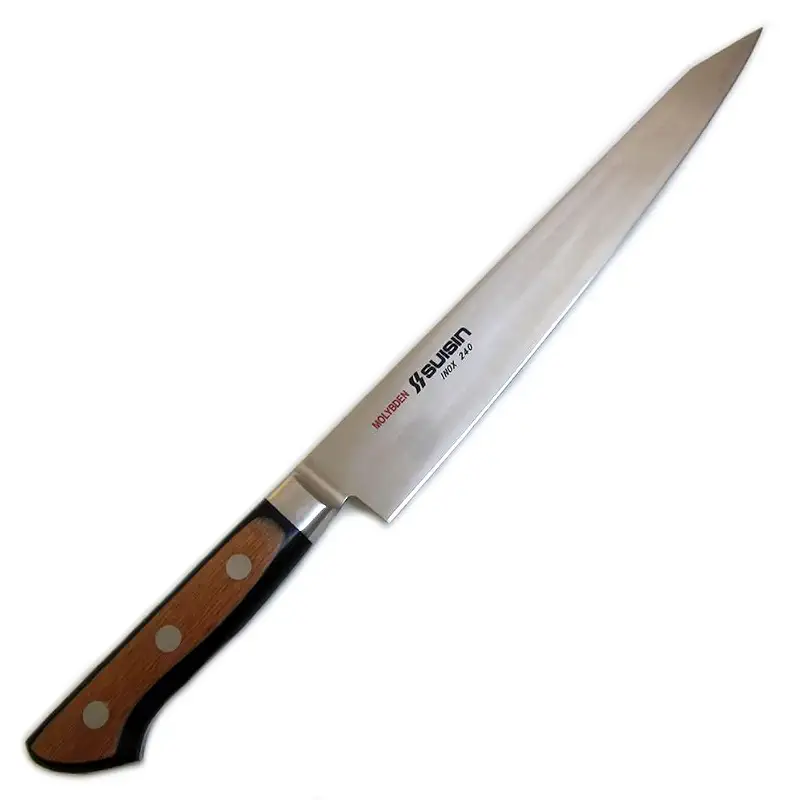
Houcho.com's Suisin Inox sujihiki is purpose-built for restaurant and bar environments where a knife must survive 50-hour weeks and multiple hands. The Inox AUS-8 steel (8A grade) adds molybdenum and chromium for exceptional rust resistance and chip resistance, making it more durable than standard AUS-8 formulas. Sushi chefs report that weekly sharpening keeps it razor-ready through heavy roll cutting, vegetable prep, and detail work. The blade runs thin and flexible compared to the kanngou or Masamoto, which professional users praise for agility and reduced resistance when slicing rolls and vegetables.
The hand-sharpened honbazuke edge comes already extremely sharp, so you're not waiting to get started. The palm-conforming riveted handle and rounded grip sit at the sweet spot between security and comfort during long shifts. The 240mm blade is shorter than the 270mm options, trading carving capacity for precision and control: a deliberate choice for sushi and restaurant work where detail matters more than slice length.
The caveat is that some users find the blade too thin and flexible for cutting into harder vegetables or chunking meat into smaller pieces. One buyer noted it's more of a fillet knife than a general sujihiki, which is accurate feedback if you expect to use it for home cooking beyond fish and sashimi. If you're choosing between professional options, the best kiritsuke knife serves a different purpose (squared tip for vegetable work), whereas the Suisin focuses purely on slicing finesse. For restaurant or high-volume prep spaces, this investment is justified.
Pros
Sakai-manufactured Inox AUS-8 with molybdenum for chip and rust resistance
Hand-sharpened honbazuke edge arrives ready for immediate professional use
Thin, flexible blade excels at roll cutting and vegetable slicing with minimal resistance
Comfortable palm-conforming handle designed for 50-hour work weeks
Cons
Thin flexible blade less suited for cutting through bones or harder vegetables
Narrower 240mm blade limits single-motion carving of large roasts
Key features
240mm blade, Inox AUS-8 stainless steel with molybdenum, easy to sharpen
Hand-sharpened honbazuke edge, ready for professional use
Thin, flexible blade optimized for sushi rolls and vegetable prep
Palm-conforming riveted handle with rounded grip
Sakai-manufactured in Japan, designed for commercial kitchen durability
#5 Pick
Best Budget-Friendly
Sanmeiho
10 Inch Sushi Knife, High Carbon Japanese Steel Sashimi Knife | Japanese Knives for Fish Filleting & Slicing, Sushi Making Knives with Red Sandalwood Handle
4.6(87)
Sanmeiho delivers sharpness and clean cuts at the lowest price point, ideal for casual sushi prep and home use.
Ideal for: Home cooks, casual sushi enthusiasts, gift-givers, and budget shoppers testing the sujihiki knife style before committing to premium options.
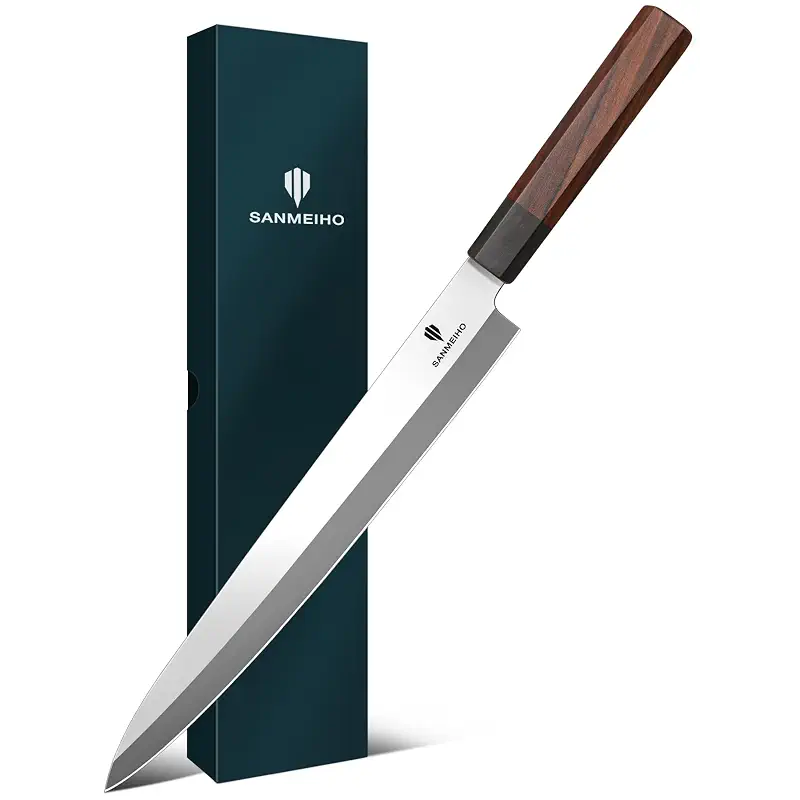
Sanmeiho's 10-inch (254mm) sujihiki undercuts premium options while holding its own on edge sharpness. The 5Cr15Mov Japanese stainless steel at HRC 57 falls between AUS-8 and in hardness, and the ultra-thin blade with a 12-degree cutting angle on both sides produce remarkably sharp factory geometry. Buyers consistently praise the value and how cleanly it slices through fish and soft meats. The octagonal red sandalwood handle and full-tang construction feel solid and balanced, and the presentation in a gift box makes it a low-risk gift choice for someone exploring sushi cooking.
The trade-off is that edge retention and durability aren't at the level of the Masamoto or Yoshihiro. A few buyers noted the initial sharpness doesn't match the advertising hype, and the blade isn't as forgiving if you're learning knife technique. For casual home use, weekend sushi rolling, or a trial before committing to a premium sujihiki, the Sanmeiho represents practical value. The sujihiki versus yanagiba comparison highlights how a double-beveled sujihiki is friendlier than single-beveled yanagiba for home cooks; this affordable Sanmeiho lets you test that profile without overcommitting.
Compared to the kanngou, which targets the same entry-level budget, the Sanmeiho is slightly shorter (254mm vs. 270mm) and uses a different steel formula. The kanngou edges ahead on established reviews and sushi-chef endorsements, but if you prioritize the lowest outlay and don't mind a slightly shorter blade, the Sanmeiho is credible.
Pros
Lowest price point in the lineup without sacrificing initial sharpness
5Cr15Mov stainless steel anti-rust and beginner-friendly to maintain
Ultra-thin blade and 12-degree cutting angle produce clean cuts on fish
Attractive gift box and octagonal red sandalwood handle
Cons
Edge retention and durability trail kanngou and Masamoto over time
Initial sharpness marketing claims exceed some buyers' real-world experience
Key features
254mm blade, 5Cr15Mov Japanese stainless steel, HRC 57
Ultra-thin blade with 12-degree double-sided cutting angle
Octagonal red sandalwood handle with full-tang construction
Hand-sharpened and ready for immediate use
Gift-boxed presentation, ideal for home sushi prep and casual use
How to Choose a Sujihiki Knife
Four trade-offs that actually matter when matching a sujihiki knife to your kitchen.
Blade Length and Purpose
Sujihiki knives typically range from 240mm to 270mm, and the difference matters. A 270mm blade suits carving large roasts, filleting whole fish, or working on a spacious cutting board where you can execute full drawing strokes. A 240mm blade trades carving reach for agility and detail work, making it better for roll cutting, sashimi slicing, and smaller home kitchen setups. Think about your primary use: if you're prepping restaurant-volume sushi, 240mm is industry standard. If you're carving a brisket or filleting whole salmon at home, 270mm gives you leverage and range in one motion.
Steel Type and Maintenance
Sujihiki knives come in three main steel categories. Stainless AUS-8 is forgiving, easy to sharpen, and rust-resistant: ideal for beginners and home cooks willing to touch up weekly. Molybdenum Vanadium stainless (like Masamoto AT) sits in the middle, holding an edge longer while remaining maintainable with basic whetstones. semi-stainless, used in premium knives like Yoshihiro, requires whetstone sharpening and careful hand-drying but rewards you with longer edge retention and beautiful Damascus patterns. Match the steel to your comfort with sharpening: if you avoid whetstones, stick with AUS-8 or Molybdenum Vanadium. If you already own whetstones and sharpen regularly, pays dividends over time.
Handle Design and Comfort
Western-style bolstered handles (like Masamoto and Houcho.com Suisin) feel substantial and familiar to chefs trained in German knife ergonomics. Japanese wa-style handles (like Yoshihiro) are lighter and more delicate, requiring a gentler grip and better technique. Neither is objectively better; it's about what feels natural in your hand. If you work long prep shifts, a heavier riveted Western handle with a palm-conforming curve reduces hand fatigue. If you prefer minimal weight and traditional Japanese feel, wa-style is worth the learning curve. Test in person if possible, or order from sellers with good return policies.
Sharpening and Long-Term Care
All sujihiki knives demand hand-washing and immediate drying, especially after acidic tasks. The sujihiki knife care and sharpening routine varies by steel. AUS-8 can be maintained with pull-through sharpeners or basic whetstones and bounces back quickly if you nick it. demands a proper whetstone and steady technique but holds an edge two to three times longer. Budget for a good whetstone or honing steel if you buy a premium knife. A 5-10 minute weekly touch-up with a honing steel keeps any sujihiki ready; full sharpening on a whetstone happens monthly or quarterly depending on volume. Expect to invest in a quality whetstone if you go ; it's the hidden cost of premium blades.
Budget vs. Skill Level
Entry-level sujihiki knives (AUS-8, under $150) are sharp, practical, and forgiving of technique mistakes and maintenance lapses. Mid-range options ($150–$300) offer better edge retention and Molybdenum Vanadium durability, appealing to serious home cooks and professionals who sharpen weekly. Premium knives ($300+) feature or high-carbon steel and demand respect and proper maintenance but become cherished tools that improve with age. Don't buy premium if you'll let it dull or use it on bones. Don't buy entry-level if you sharpen obsessively and expect 6-month edge retention. Match your budget to your sharpening commitment.
Frequently asked
Quick answers to the questions readers ask most.
What is the difference between a sujihiki and a yanagiba knife?
Both are Japanese slicing knives with long, narrow blades, but they have distinct purposes. A yanagiba has a single bevel (one sharpened edge) and is the traditional sashimi knife, requiring more finesse and whetstone skill. A sujihiki has a double bevel (both edges sharpened) and is the Western adaptation, easier to maintain and more forgiving for home cooks. The top yanagiba knives remain the choice for sushi professionals, while a sujihiki works well for home cooking, sashimi prep, and meat carving. If you're new to Japanese knives, a sujihiki is a friendlier entry point.
Can I use a sujihiki knife on bones or frozen meat?
No. Sujihiki blades are designed for soft ingredients: fish, boneless meat, and vegetables. Cutting through bones, frozen foods, or hard materials will chip or break the blade, especially if it's a premium or high-carbon steel. The thin, narrow profile makes the edge vulnerable to lateral stress. Use a heavier chef's knife or cleaver for bone work. If you regularly work with bones, pair your sujihiki with a separate tool for that task.
How often should I sharpen my sujihiki knife?
Frequency depends on use and steel type. A home cook using AUS-8 or Molybdenum Vanadium a few times a week should touch up with a honing steel weekly and do a full whetstone sharpening monthly. A sushi chef using the knife 40+ hours weekly might sharpen on a whetstone 2-3 times per week. blades hold an edge longer, so full sharpening may be needed only monthly even with heavy use. Keep a honing steel handy between major sharpenings; a quick realignment takes 30 seconds and extends the interval between whetstone work. Listen to the blade: when slices start tearing instead of gliding, it's time to sharpen.
What is the best way to store a sujihiki knife?
Always store sujihiki knives clean and completely dry. A wooden saya (protective sheath) is the gold standard if one is included; it keeps the blade safe and adds visual appeal. If you don't have a saya, a magnetic strip on the wall or a knife block works well. Never store in a drawer where the blade can bang against other utensils or corrode from moisture. Hand-wash immediately after use and wipe dry with a soft cloth, especially after contact with acidic foods. If you use the knife on fish, dry it right away to prevent mineral spotting on stainless blades.
Is a sujihiki knife worth the investment, or should I stick with a Western chef's knife?
A sujihiki is worth it if you regularly slice raw fish, prepare sashimi, carve roasts, or want cleaner cuts than a chef's knife provides. The long, narrow blade and drawing-stroke technique produce less cellular damage, preserving texture and appearance. A good Western chef's knife is a versatile workhorse for chopping, dicing, and slicing, but it's heavier and less suited to fine slicing tasks. If your cooking centers on sushi, sashimi, or presentation-focused slicing, a sujihiki becomes indispensable. If you chop vegetables and meat equally, stick with a chef's knife. Many serious cooks own both.