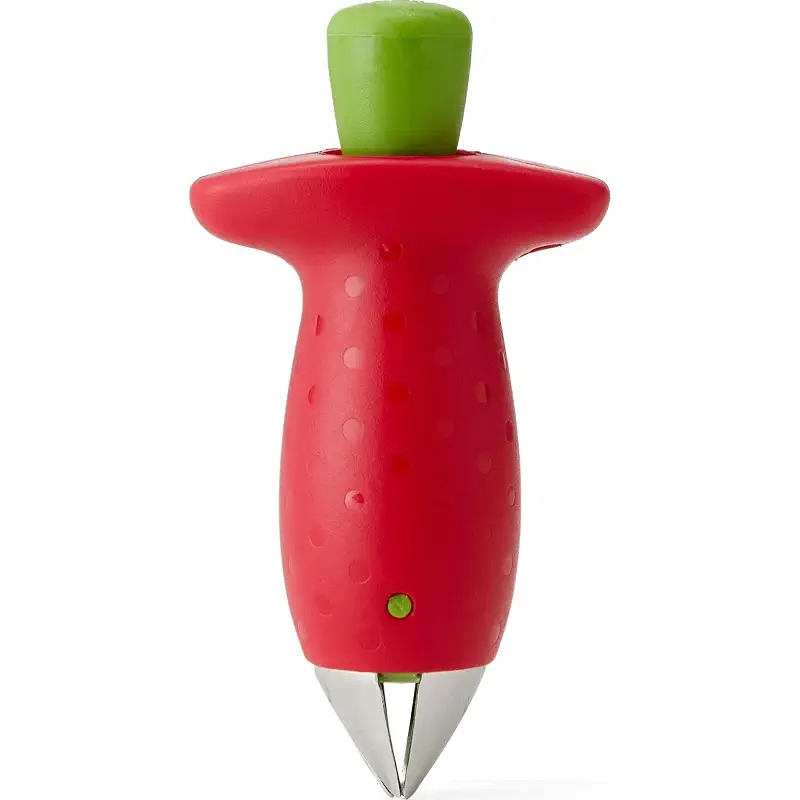
Ideal for: Home cooks, families, and anyone making jams or desserts who values ease over precision.
The Chef'n Stem Gem has earned its reputation through simplicity and reliability. You push a button to open the stainless steel claw, position it over the green hull, twist gently, and pull away the stem in one motion. Most owners report clean results with minimal fruit loss, and the tactile feedback of the twist action gives you real control over how much you remove.
The learning curve matters here. New users often need a few strawberries to dial in the pressure and rotation speed; buyers note that smaller or softer berries take more finesse than larger, firm ones. Once you find the rhythm, though, many say they can process a full container in 10-15 minutes. The tool is truly ambidextrous, which is a genuine plus for left-handed cooks.
Where this huller falls short is consistency on very small or delicate berries, and a few owners report incomplete stem removal that requires a second pass. It's also dishwasher-safe but not as robust as solid stainless-steel models: the plastic housing can feel less durable over years of heavy use. Compared to the OXO Good Grips, the Chef'n trades precision claw design for a more intuitive button mechanism, making it better for families who want speed over perfection.
Pros
Ambidextrous, push-button design is intuitive
Affordable entry point for most home cooks
Fast processing once technique is mastered
Top-rack dishwasher safe
Cons
Requires a learning curve for small or soft berries
Occasional incomplete stem removal on first pass
Key features
Push-button stainless-steel claw with twist-lock action
Ergonomic grip fits either hand comfortably
Removes stems and minimal fruit flesh in seconds
Dishwasher safe for simple cleanup
#2 Pick
Best for Precision
OXO
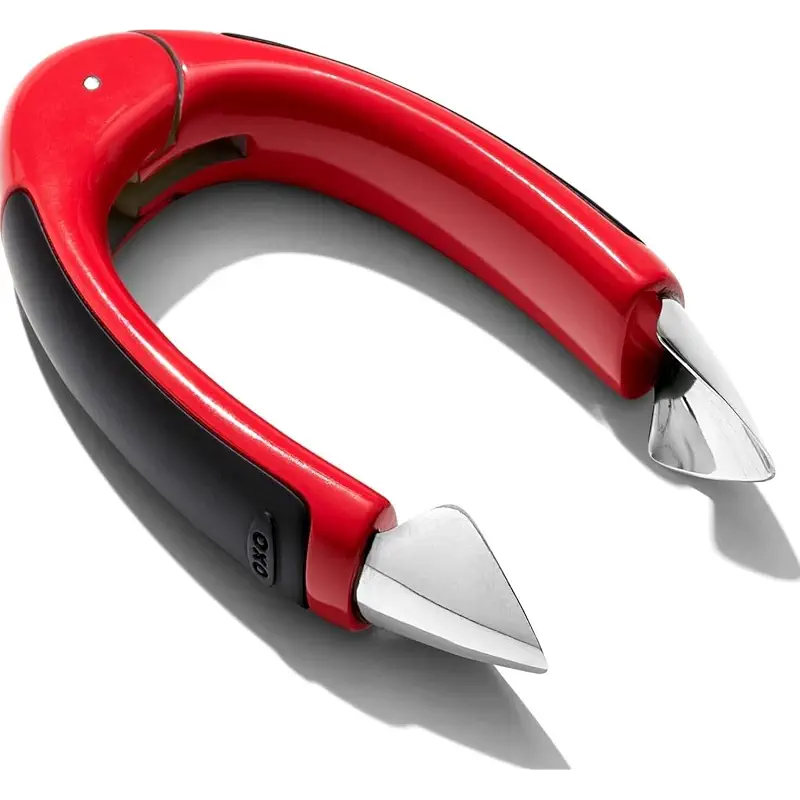
OXO Good Grips Strawberry Huller | Tapered Stainless Steel Blades, Non-Slip Grip, Quickly Removes Strawberry and Tomato Stems, Dishwasher Safe
4.8(3,253)
Premium hinged design with tapered blades that adapt to berry size and minimize waste: worth the investment for regular users.
Ideal for: Precision-focused cooks, regular jam makers, and anyone who wants a tool that handles multiple prep tasks.
The OXO Good Grips takes a different approach: instead of a push-button claw, it uses tapered stainless-steel blades on a spring-hinged hinge that you squeeze like a small plunger or vegetable peeler. The blades are embedded directly into the metal frame rather than glued or held by plastic, which makes them sharper and far easier to keep clean. Owners consistently praise the precision: the tapered design lets you remove just the hull without carving out half the strawberry, which translates to less waste and better-looking fruit for platters or desserts.
The hinge design means you have two modes: squeeze for a light hull removal, or apply more pressure for a deeper core extraction. This versatility extends the tool's usefulness to tomatoes, pineapple eyes, and blemish spots on other produce. Multiple buyers report using this one tool instead of multiple specialty gadgets, which speaks to thoughtful engineering.
The trade-off is a steeper learning curve than the Chef'n, and the smaller size (which is a space-saver) takes some adjustment if you have larger hands. A few owners mention the hinge can feel stiff at first, though it loosens with use. Where the OXO pulls ahead of the Kitchendao is in blade sharpness and hinge stability. OXO's molded construction simply outperforms models with bolted or riveted hinges. The same precision engineering you'd expect from OXO also applies to kitchenware like the best tomato dicer, where clean cuts and durable hinges matter just as much.
Pros
Tapered blades remove stems with minimal waste
Embedded stainless-steel design stays sharp and clean
Spring hinge allows variable pressure for different fruits
Works on tomatoes, pineapple, and other produce
Cons
Slightly steeper learning curve than button-style hullers
Smaller size may feel cramped for larger hands
Key features
Spring-hinged stainless-steel blades, tapered for precision
Versatile enough for tomatoes, pineapple eyes, and blemishes
Ideal for: Busy cooks, parents, and anyone who values compact storage and fast processing over absolute precision.
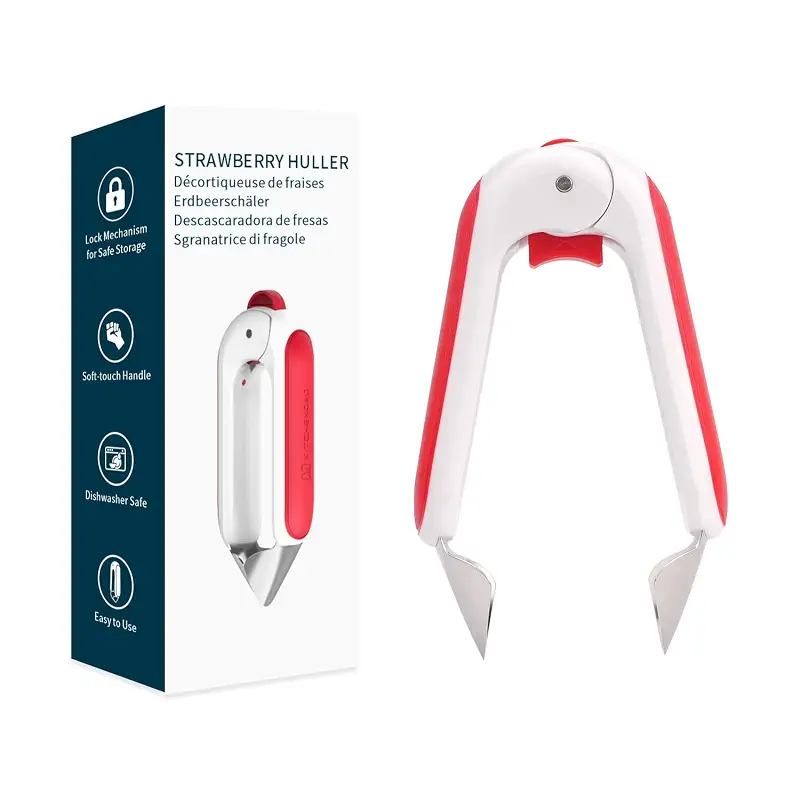
The Kitchendao huller combines the best thinking from recent designs: spring-hinged operation similar to the OXO, but adds a pull-to-lock mechanism that keeps the blades closed when stored. This lock matters if drawer space is tight or if you have young kids who might grab an open blade. The stainless-steel construction is robust, and owners report that this tool makes quick work of medium to large strawberries with minimal fruit loss.
What sets the Kitchendao apart is speed. Multiple buyers note they can process a gallon of berries in 20 minutes flat, which is competitive with or faster than the Chef'n. The non-slip soft-touch handle is genuinely comfortable, and the ergonomic design reduces hand fatigue during longer sessions. One parent reported using this one-handed while managing a toddler: the stable grip made all the difference.
The main caveat is that some owners report the tool removes a slightly larger core than the OXO, so if you're fussy about waste, the OXO's tapered design may edge this one out. The locking mechanism is also a physical step, unlocking takes a second, which isn't a deal-breaker but is worth noting if you're prepping hundreds of berries in a single session. Compared to the HomeRidge model, the Kitchendao trades the adjustable latch for a simpler lock-and-unlock system, making it faster to deploy but less versatile.
Pros
Pull-to-lock mechanism for safe, compact storage
Fast processing, 20+ berries per minute
Non-slip ergonomic handle reduces hand strain
Food-grade stainless steel resists dulling
Cons
Removes slightly larger core than tapered designs
Lock mechanism adds a step to each use cycle
Key features
Spring-hinged stainless-steel blades with locking closure
Ergonomic soft-touch handle for secure grip
Removes stems and core cleanly from medium to large berries
Dishwasher safe for easy cleanup
#4 Pick
Best Combo Kit
MSC International
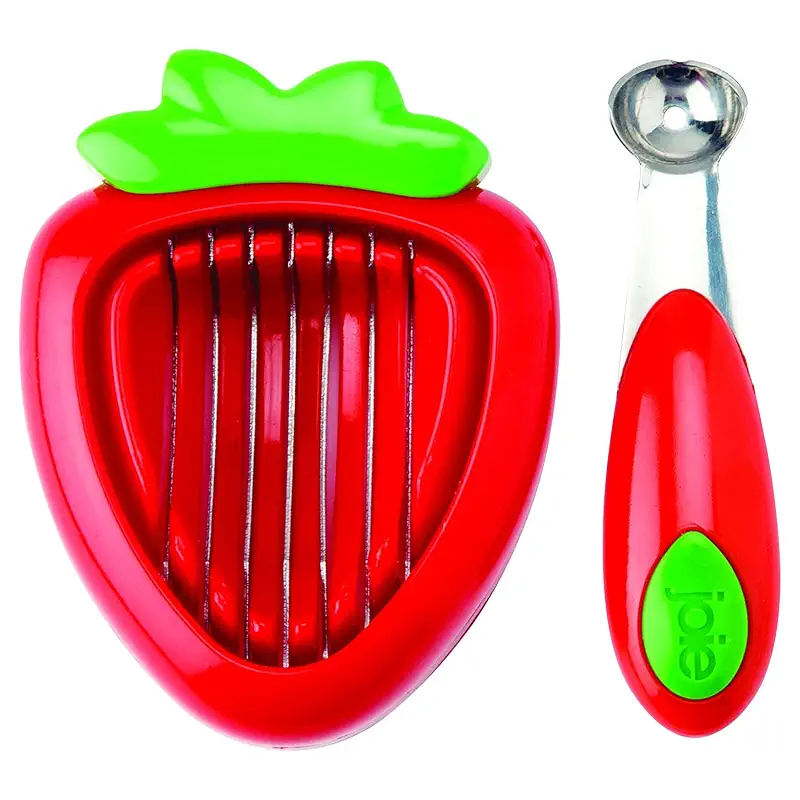
Joie Strawberry Huller and Slicer, Berry Preparation Set, Baking Tools, Red
4.6(458)
Two-in-one huller and slicer set that turns berry prep into a complete workflow: fun design, practical results.
Ideal for: Bakers, entertaining hosts, and cooks who appreciate uniform fruit presentation and are willing to manage a two-piece kit.
The Joie set is the only entry here that bundles hulling and slicing into one purchase. The huller operates like a small spoon with a serrated edge, and the slicer works on an egg-slicer principle: you nestle a hulled strawberry into the frame and slide wires through to cut uniform slices. Owners genuinely love this for dessert work: cheesecake toppings, crepe fillings, and salads all benefit from those even slices, which look more polished than hand-cut results.
The huller component is simpler than the hinged or button designs; it's more of a scoop-and-twist action that works well for larger berries but can be clumsy on small ones. The slicer is where this kit shines. If you're regularly plating desserts or want professional-looking fruit arrangements, the uniformity and speed justify the two-piece setup. Multiple buyers report buying extras to keep in different kitchens, which hints at strong everyday utility.
The drawback is that the slicer only accommodates berries up to a certain size, so oversized strawberries need to be halved first (which defeats some time-saving benefit). The blades stick out beyond the frame, so careless storage or retrieval can mean finger injuries: owners specifically warn about careful handling. Compared to the standalone hullers like the Chef'n, this trades single-task speed for a complete prep solution that works best when you're both hulling and slicing in the same session.
Ideal for: High-volume fruit prep, serious bakers, and anyone who processes dozens of berries regularly and won't compromise on build quality.
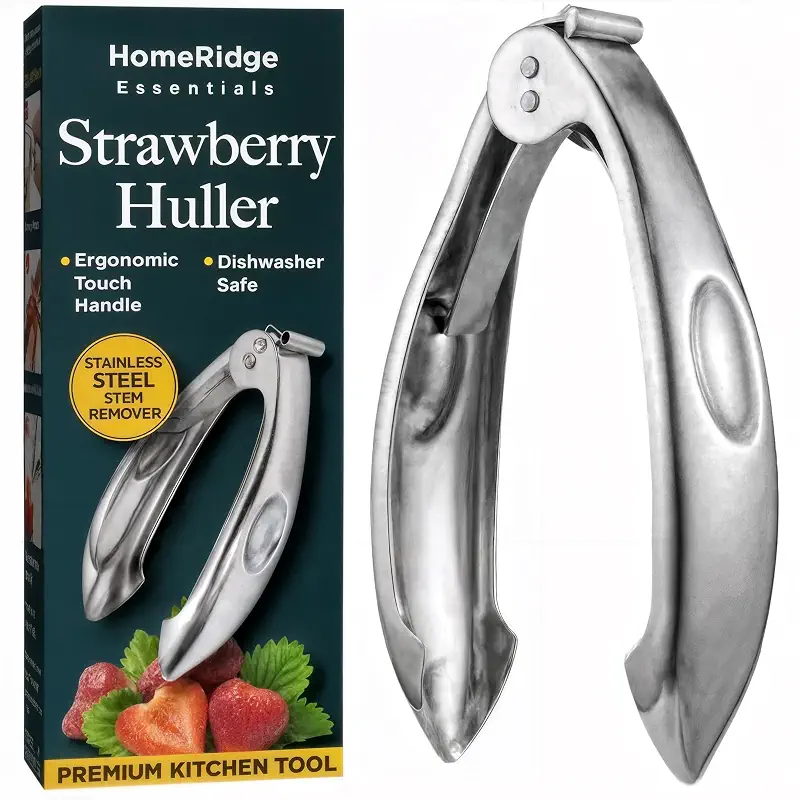
The HomeRidge Essentials huller feels like the culmination of incremental design refinement. It uses the spring-hinged claw approach but adds an adjustable latch on top of the handle that expands the claw's depth capacity, letting you tackle larger tomatoes or berries with really substantial green tops. This adaptability is genuine: owners report processing large strawberries, big tomato caps, and even pineapple eyes without struggling or making multiple passes. The full 304 stainless-steel construction (rather than plastic housing) conveys quality; it won't crack or bend after years of regular use.
One buyer who had used multiple hullers over a decade noted this was the first one that truly outperformed her old favorite. The spring-loaded action feels premium, almost like a high-end toenail clipper, and the pointed V-tip of the claw bites cleanly through tough green matter without crushing the fruit. Processing speed is excellent: two pounds of strawberries in under five minutes is cited by experienced users.
The trade-off is price and a slightly larger footprint than compact models. The hinge is riveted rather than screwed, so if something goes wrong, it's not field-repairable. For most home kitchens, this is not a real concern, but serious-use cooks may see it as a minor design miss. Compared to the Kitchendao, the HomeRidge's adjustable latch gives you more control over how much fruit you remove, making it the better pick if you want to fine-tune the hulling depth on the fly.
Pros
Adjustable latch expands claw depth for variable fruit sizes
Full stainless-steel construction resists dulling and cracking
Spring-hinged action feels premium and responsive
Processes large batches quickly, 2 lbs in under 5 minutes
Locks closed for compact drawer storage, dishwasher safe
How to Choose a Strawberry Huller
Four trade-offs that actually matter when matching a strawberry huller to your kitchen.
Action Type and Feel
Hullers fall into two main camps: push-button styles that open and close a claw, and hinged designs that work like a squeeze tool. Button styles tend to feel more intuitive and fun, especially for families or first-time users. Hinged models require a slight learning curve but reward you with finer control and often sharper results. Consider which motion feels natural in your hand and whether you'd prefer a one-handed squeeze or a two-handed push-twist action.
Material and Durability
Stainless-steel construction outlasts plastic housings by years, though it typically costs more upfront. All-metal designs resist dulling and stay hygienic longer because they have fewer seams where debris can hide. If you hull berries weekly or make jam seasonally, investing in solid stainless steel pays off; for occasional use, a hybrid plastic-and-metal design is fine. Check that any hinges or moving parts are either molded into the frame or screwed in, not glued: glued construction fails faster.
Specialty Features and Versatility
Some hullers double as tomato corers or pineapple eye removers thanks to their blade shape. Locking mechanisms keep the tool closed in storage, which saves drawer space and prevents accidental blade contact. The strawberry hulling technique that works for one berry size may struggle on others, so consider whether adjustable depth (like a pull-to-expand latch) matters for the fruit you typically buy. Combo kits like huller-and-slicer sets make sense if you regularly plate desserts; standalone hullers are faster for bulk prep.
Processing Speed and Batch Size
If you're making jam or prepping berries for a crowd, speed and efficiency compound. Test reports suggest hinged spring-loaded designs and premium models process 20-30+ berries per minute, while simpler designs may run slower. For occasional snacking prep, speed is less critical; for commercial or high-volume home use, pick a model that handles large batches without hand fatigue. The best tool is the one you'll actually pull out instead of reaching for a knife.
Frequently asked
Quick answers to the questions readers ask most.
Do strawberry hullers work on all berry sizes?
Most hullers handle medium to large berries well but struggle with very small, soft, or delicate varieties. Button-style hullers need enough berry volume for the claw to grip. Spring-hinged models adapt better to size variation, and models with adjustable depth latches offer the most flexibility. If you buy a mix of sizes, test the huller on your typical berry before committing to it for a full season.
Can I use a strawberry huller on tomatoes or other produce?
Yes, many hullers are designed for dual use. Spring-hinged models with tapered or pointed blades work well on tomato stems, pineapple eyes, and blemish spots. Button-style hullers are more specific to soft fruit and less reliable on tougher vegetable skins. Check the product description or buyer reviews if multi-purpose use is important to your kitchen workflow.
How do I clean a strawberry huller, and is it dishwasher safe?
Nearly all modern hullers are dishwasher safe (top rack recommended). Hand-washing is simpler for immediate cleanup: rinse under warm water, gently brush out any trapped bits with a soft brush, and pat dry. For hinged or spring-loaded models, a quick rinse displaces debris without damaging the mechanism. Avoid soaking for extended periods, as it can promote rust at hinge points or corrode plastic components over time.
What's the learning curve for using a strawberry huller?
Button-style hullers typically take 5-10 strawberries to master. Hinged designs may need a dozen or so attempts to find the right pressure and angle. The key is aligning the claw or blade with the center of the green hull and applying steady, controlled motion rather than forcing it. Once you develop the feel, the process becomes automatic and very fast.
How much fruit do I waste with a hulling tool versus a knife?
A good huller removes primarily the green hull and stem with minimal fruit loss, often saving 20-40% of the berry compared to knife cuts. Precision hinged models with tapered blades waste the least. Button-style hullers and basic designs remove slightly more flesh along with the hull. If waste minimization matters for cost or principle, invest in a tapered or adjustable-depth model and practice the technique.