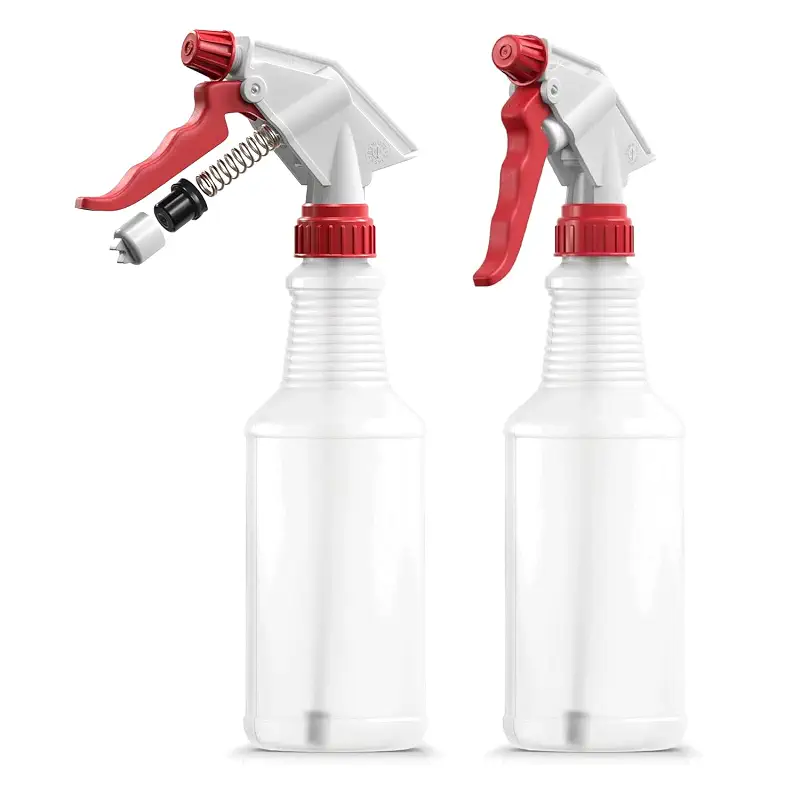
Ideal for: Year-round smokers and grillers who prioritize longevity and cleanliness.
The Bar5F bottles stand out because they solve the mold problem that haunts spray bottle owners. Most bottles have pump chambers you cannot fully access, so after months of humid storage or repeated fills with sugary mixtures, hidden mold takes root. These disassemble completely, gasket and all, which means you can actually sanitize the spots where growth starts. Users who smoke year-round report this matters. The trigger is ergonomic and adjustable from fine mist to heavier spray, and the bottles hold enough liquid for a full brisket or pork butt without refills.
The heavy-duty HDPE plastic feels substantial without being burdensome. A handful of buyers note occasional leaks if the gasket isn't seated perfectly, so assembly has to be done with care. One reviewer mentioned the bottle feeling top-heavy when empty, which is a minor ergonomic quirk but not a deal-breaker. The 2-pack format is practical for anyone who runs two meats or wants a backup on hand.
These bottles are not oil misters; dilute any oil-based liquids to 50 percent or less to avoid clogging the nozzle. For vinegar-based spritzes, apple juice, or straight water, they perform reliably.
Pros
Fully disassembles for thorough cleaning and mold prevention
Adjustable mist nozzle; consistent spray across all angles
2-pack value; durable virgin HDPE plastic
Cons
Can leak if gasket is not seated correctly during assembly
Heavier spray mechanism may clog with thick liquids or solids
Key features
16 oz capacity; fully disassemblable pump chamber for hygiene
Ideal for: Traeger grill owners who want seamless integration and minimal setup.
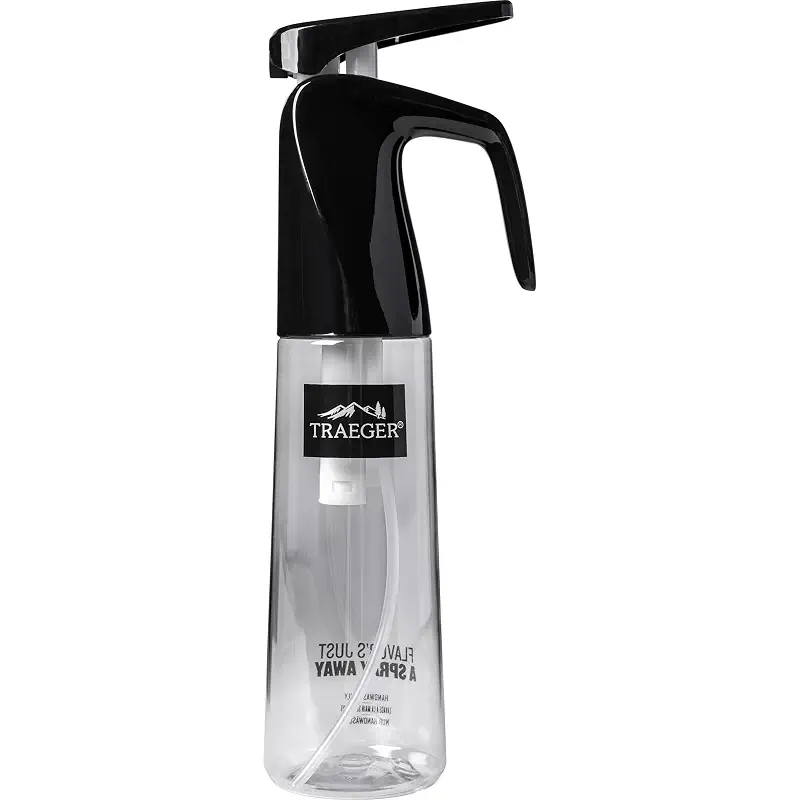
If you own a Traeger, this bottle was designed with your grill's ecosystem in mind. It hangs on the P.A.L. rail, keeping it within reach and off your work surface. The continuous spray is a real advantage: pull the trigger once and you get a steady mist rather than multiple taps, which means more even coverage and less repetitive motion during long cooks.
Owners praise the fine mist quality and the convenience of having the bottle tethered to the grill itself. However, Traeger's stipulation that you avoid any liquid with solids is a hard constraint. Apple juice alone works beautifully, but anything with sediment or spice particles will clog the nozzle, and cleaning requires disassembly and patience. One reviewer found this out the hard way after a second use with a brined mixture. The bottle is lighter and more compact than pressurized models, which suits quick touchups but not marathon smokes where you need large liquid reserves.
Compared to the Bar5F bottles, the Traeger prioritizes integration with a specific grill ecosystem over standalone versatility and cleanability.
Pros
Hangs on Traeger P.A.L. rail for convenient access
Continuous spray mist for even, uninterrupted coverage
Food-grade, BPA-free plastic; lightweight design
Cons
Clogs easily if liquid contains any solids or sediment
Smaller capacity limits use on extended cooks without refills
Key features
Continuous spray trigger for steady mist without repetitive pumping
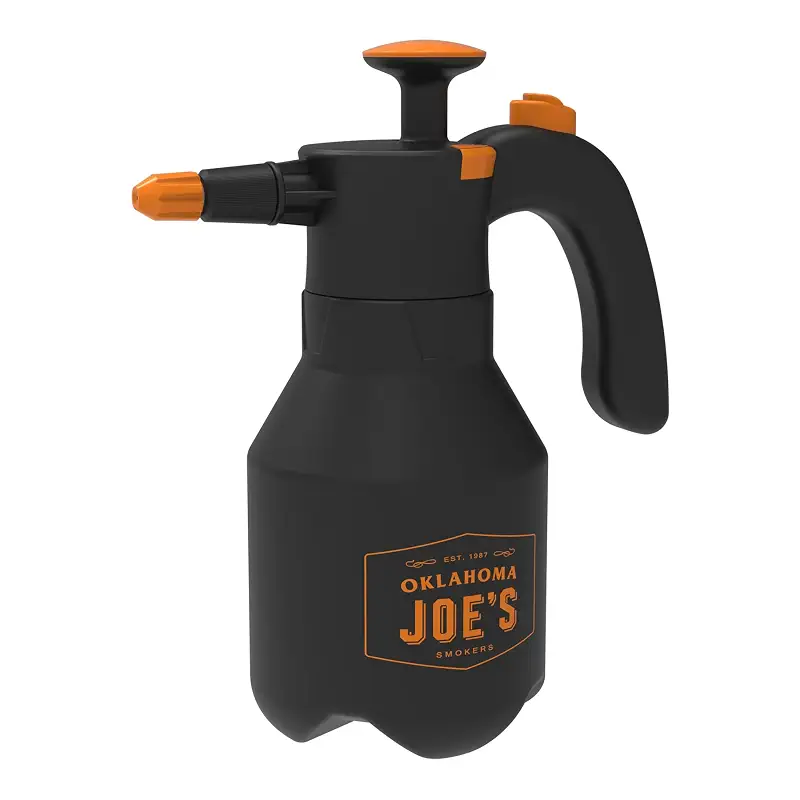
The Oklahoma Joe's bottle holds more than double what the smaller 16 oz options can carry, which matters if you're cooking a whole packer brisket or a large batch of ribs without stopping to refill. The 1.2-liter capacity means you can spritz for hours on end. The continuous spray function delivers consistent coverage without wearing out your trigger finger, and the pressure release valve prevents over-pressurization, which is a safety feature that cheaper bottles often skip.
With only five reviews on record, the sample size is small, so buyer feedback is limited. What's available is uniformly positive, but that also means you're taking a minor risk on longevity and durability compared to products with hundreds of owner reports. The heavy-duty plastic and shatterproof construction suggest serious build quality, though real-world performance data is sparse.
Where the Bar5F excels at cleanliness and the Traeger focuses on grill integration, this Oklahoma Joe's model prioritizes pure capacity and power, making it the choice for barbecue operations that demand large-scale, continuous spritzing without refills.
Pros
1.2-liter capacity; spray for hours without refilling
Continuous spray mechanism; pressure release valve included
Ideal for: Cooks who value European durability standards and adjustable spray power.
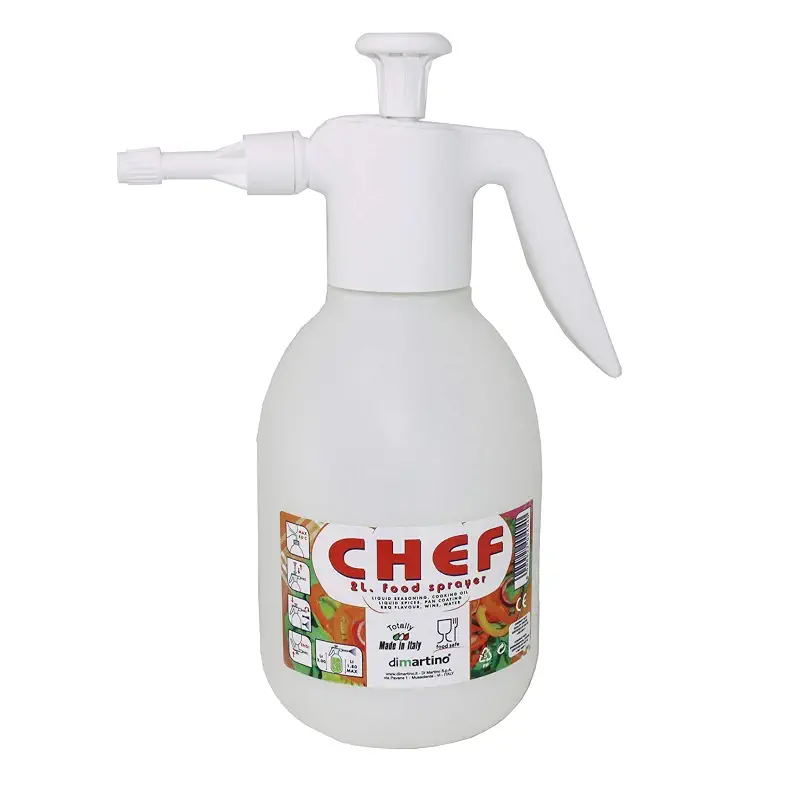
The Di Martino is a hand-pump pressurized sprayer, not a trigger model. You prime it by pumping the handle to build air pressure, then trigger a continuous spray until pressure drops and you pump again. This design has been used in professional kitchens for decades because it delivers reliable, adjustable spray without electronics or complex trigger mechanisms. The nozzle can be tuned from fine mist to a more forceful stream, and the large mouth opening makes filling and cleaning straightforward.
The bottle is certified food-safe under strict European regulations and made from sturdy plastic with special food-quality seals. Several buyers note the thick plastic feels reassuringly durable. However, some owners report pressure loss over time, with one reviewer experiencing a bulge and near-rupture due to a soft crack that developed. The rubber seal and pump rod can degrade with acidic liquids like vinegar, and one user mentioned hearing a hissing sound before failure. These aren't universal complaints, but they suggest you should monitor pressure and inspect the bottle regularly if you use it daily.
Compared to the trigger-based Bar5F, this pump-and-spray approach requires an extra step, but some cooks prefer the sustained pressure control once primed.
Pros
Hand-pump pressurized spray; delivers sustained misting once primed
Large-mouth opening for easy filling and rinsing
European food-safety certified; sturdy, thick plastic construction
Cons
Pressure can drop over time or fail if seals degrade
Requires periodic pump priming; not as convenient as trigger-only design
Key features
Pressurized hand-pump sprayer with adjustable nozzle control
Large-mouth filling opening; easy-to-clean design
Food-grade, BPA-free plastic; certified under European food standards
2-liter capacity; suitable for oils, vinegar, juice, and water mixtures
#5 Pick
Most Versatile for Adjustability
Smoke Kitchen
Smoke Kitchen BBQ Spray Bottle – 50oz Adjustable Spritz for Brisket, Ribs & Pulled Pork – Fine Mist or Stream for Smoking & Grilling
3.9(42)
50 oz capacity; twist-adjustable nozzle from mist to stream; stainless steel pump rod.
Ideal for: Cooks wanting 50 oz capacity and nozzle versatility, willing to test before cooking.
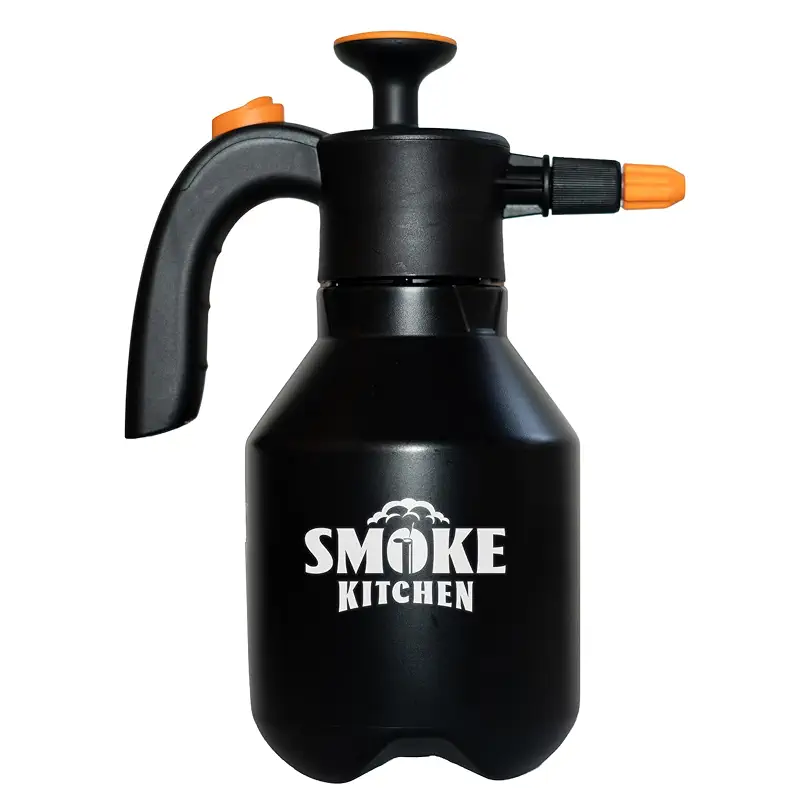
The Smoke Kitchen bottle combines a large 50 oz capacity with a twist-adjustable nozzle that lets you shift between fine mist and strong stream without swapping bottles. That flexibility appeals to cooks who spritz delicate ribs with juice but also want a hard stream for applying competition-grade basting mixes. The silicone gaskets and stainless steel pump rod are built to resist corrosion from vinegar and citrus, which is a thoughtful detail for an acidic-liquid spray bottle.
However, the reviews reveal a troubling pattern: several owners report that the bottle either failed to build pressure on first use or lost pressure after a few applications. One user mentioned that after only five uses over six months, the trigger stopped working and started spraying uncontrollably when pumped. Another waited four weeks for delivery only to find it leaking and unable to hold pressure. While some buyers report excellent performance, the pressure-seal failures are significant enough that you should inspect the bottle immediately upon arrival and test it before relying on it during a cook.
The Smoke Kitchen bottle's generous capacity and adjustability appeal, but the pressure-hold inconsistency is a genuine concern. If you're risk-averse, the Bar5F or Oklahoma Joe's offer more predictable results.
Pros
50 oz capacity; spray all day without refilling
Twist-adjustable nozzle from fine mist to strong stream
Stainless steel pump rod resists vinegar and citrus corrosion
Cons
Pressure-hold failures reported by multiple buyers after minimal use
Trigger mechanism can malfunction, spraying uncontrollably when primed
Key features
50 oz capacity; handles full-day smoking sessions without refills
Twist-adjustable nozzle for mist or stream spray patterns
Silicone gaskets and 304 stainless steel pump rod for durability
Pressure relief valve and reinforced pump mechanism for safety
How to Choose the Right BBQ Spray Bottle
Four trade-offs that actually matter when matching a spray bottle for barbecue to your kitchen.
Trigger vs. Pump Design
The spray mechanism you choose depends on your cooking style and hand fatigue. Trigger bottles like the Bar5F require a squeeze every time you want to mist; with proper ergonomics, this is fine for short sessions, but your finger can get sore during eight-hour cooks. Pressurized pump models like the Di Martino need you to build air pressure first, then deliver a longer continuous spray before you pump again. Continuous-spray triggers, found on the Traeger and Oklahoma Joe's, split the difference by letting you hold the trigger for an unbroken mist. The choice between trigger versus pump sprayers depends on how long you cook and how much repetitive motion your hand can handle.
Cleanability and Mold Prevention
Spray bottles are prone to mold and mildew because the pump chamber stays damp and hidden. Disassemblable designs let you access and sanitize every part, while integrated pump systems trap moisture in hard-to-reach spots. If you cook year-round or store your bottle in a humid climate, invest in a bottle you can actually take apart. A bbq spray bottle cleaning guide will show you that full disassembly, gasket by gasket, is the only real defense against growth. Non-disassemblable bottles save space and assembly time but require more vigilance and may need replacement sooner.
Capacity and Cook Length
Small bottles (16 oz) work fine for a few ribs or a small pork butt; you refill partway through if needed. Medium bottles (around 50 oz) let you spray for most of the day without stopping. Large bottles (1.2 liters) are for marathon cooks, competition setups, or cooking for crowds. The trade-off is weight and storage space. A 2-pack of smaller bottles gives you backup and flexibility without the bulk of one giant bottle, while a single large bottle reduces refill frequency. Think about your typical cook duration and how many meats you handle at once.
Material and Pressure Durability
Food-grade plastic is the standard, but thickness and seal quality vary. Heavy-duty HDPE and pressure-resistant plastics hold up longer under repeated pumping and acidic liquids like vinegar. Stainless steel or high-quality rubber seals resist corrosion better than cheap alternatives. Check whether reviews mention pressure loss over time, leaks, or seal failures. Bottles that last through many seasons are worth a higher entry investment; bottles that fail after a few uses cost far more in frustration and replacement.
Liquid Compatibility
Most spray bottles work fine with water, juice, vinegar, and broth. Oil-based liquids and anything with solids (spice rubs dissolved into liquid, sediment from brines) can clog nozzles or gum up pumps. If you plan to spray diluted oils, confirm the bottle can handle it. If you want to use thick, sediment-laden mixtures, you'll need either a very adjustable nozzle or a willingness to strain your liquid first. Straight apple juice, apple cider vinegar, and water are the safest bets for any food-grade spray bottle.
Frequently asked
Quick answers to the questions readers ask most.
Can I use a regular spray bottle from the discount store for barbecue?
Regular bottles are not food-grade and may leach chemicals into your liquid. They also have sealed pump chambers that trap mold-causing moisture. If you're spritzing frequently, invest in a food-grade bottle designed for the job. The cost difference is modest, and it ensures your food stays clean and your bottle lasts years instead of months.
Why does my spray bottle clog after using vinegar or apple cider?
Acidic liquids can corrode cheap seals and leave mineral deposits in the nozzle. Strain your liquid before filling to remove sediment, and use a bottle with stainless steel or corrosion-resistant components if you plan heavy vinegar use. Disassemble and clean the nozzle after each cook if you notice any spray pattern change.
How do I fix a spray bottle that loses pressure between pumps?
Check the gasket and seal for cracks or degradation. If the seal looks fine, the pump rod may be bent or the valve dirty. Disassemble, rinse every part with hot water, and reassemble carefully, ensuring the gasket sits flat. If it still leaks, the bottle has likely reached end-of-life and replacement is safer than repeated repairs.
Is a 2-pack better than buying one larger bottle?
A 2-pack of smaller bottles gives you backup and flexibility if one fails mid-cook, and you can keep one filled with different liquids (juice in one, vinegar in the other). One large bottle means fewer refills but more weight and storage space. Choose based on your typical cook volume and whether you like having options handy.
Can I spray oil directly, or do I have to dilute it?
Most food-grade spray bottles are designed for water-based liquids. If you spray pure oil, it will likely clog the nozzle. Dilute oil to 50 percent or less with water or another liquid, or look for bottles explicitly rated for oil use. For barbecue, oil-based spritzes are less common than juice, vinegar, or broth anyway, so this is rarely a limiting factor.