Best Skillet to Cook Steak: Top Picks for Home Cooks
Find the best skillet for cooking steak. Compare cast iron and nonstick options with expert recommendations for searing, heat retention, and durability.
Verdict, analysis, and key features for each pick.
#1 Pick
Best Overall Value
Utopia Kitchen
Utopia Kitchen Cast Iron Skillet 12 Inch Pre-Seasoned PFAS-Free Black | Chef Pan, Even Heat Distribution, Stovetop, Oven, Campfire and Grill Safe, Large Skillet, Indoor Outdoor Use
4.6(27,355)
A reliable cast-iron foundation that delivers restaurant-quality sears at a price that won't make you hesitate before buying.
Ideal for: Home cooks seeking authentic searing performance and durability without premium pricing.
This 12-inch skillet hits the sweet spot between authentic cast-iron performance and genuine affordability. Buyers consistently report that once properly seasoned, it rivals pans costing three times as much. The pre-seasoning gets you cooking immediately, though serious steakhouse results emerge after you add a few coats of your own seasoning: a process most owners find rewarding rather than tedious. Heat retention and even distribution are textbook cast iron: a steak sits down, the pan holds its temperature, and you get a proper crust without fighting hot spots.
The main trade-off is maintenance discipline. Unlike the nonstick alternatives, this requires hand-washing, immediate drying, and a light oil coat after each use to prevent rust. Buyers who treat it as a tool rather than a burden report it becomes easier with repetition. The weight is substantial: a deliberate choice that contributes to its heat-holding prowess, but it won't suit everyone. If you're deciding between cast iron and a modern nonstick, this skillet proves cast iron deserves its place on the counter.
Compared to the Lodge option, both are excellent cast-iron choices, but this Utopia model edges ahead on pure value, while Lodge edges ahead on the helper handle convenience. For most home cooks prioritizing sear quality and long-term durability at a tight budget, this wins.
Pros
Excellent heat retention and even searing once seasoned properly
Pre-seasoned and ready to use out of the box
Exceptional value for long-term cast-iron investment
Large 12-inch surface handles family meals and sides together
Cons
Requires consistent hand-washing and oiling to prevent rust
Initial seasoning may need bolstering for optimal nonstick performance
Key features
12-inch cast iron with pre-seasoned vegetable oil finish
Even heat distribution for steaks, sautéing, and oven finishing
Compatible with stovetop, oven, grill, and campfire cooking
Heavy-duty construction built to last decades with proper care
#2 Pick
Premium Cast Iron with Best Comfort
Lodge
Lodge Pre-Seasoned Cast Iron Skillet with Silicone Handle Holder, 12 Inches | Non-Toxic & Naturally Non-Stick Frying Pan with Silicone Hot Handle Holder, Pan is Safe for Oven & Stovetop Use
4.7(21,356)
Lodge's heritage and USA manufacturing shine through in a heavier-duty pan that adds genuine convenience touches.
Ideal for: Cast-iron enthusiasts who value comfort features and American manufacturing in a heritage brand.
Lodge has been casting iron since 1896, and that lineage shows in a skillet engineered for consistency and longevity. The included silicone handle holder is the difference-maker here: a small feature that meaningfully improves handling a 7-pound hot pan. Owners praise how the handle stays cool enough to grip safely, even after a long sear. The pan itself heats beautifully and develops a naturally nonstick surface that improves with use, especially after cooking fatty foods like bacon or steak trimmings.
You're paying slightly more than the Utopia option, and that premium reflects Lodge's Made-in-USA guarantee and their reputation for consistent quality. Many buyers own Lodge for years and decades without a single failure. The pre-seasoning is solid but not perfect: most users still add extra coats for eggs-on-cast-iron performance, though less touch-up is needed than with rougher finishes. The weight is genuine; this is a substantial tool, not a nimble pan.
Where the Utopia appeals to budget-first buyers, Lodge appeals to those who value the handle convenience and brand heritage. Both deliver world-class steak sears; this one just reduces hand-fatigue and adds an American-made story to your purchase.
Pros
Silicone handle holder reduces hand strain on heavy pan
Made in USA with 125+ years of cast-iron expertise
Superior heat retention for consistent restaurant-quality sears
Develops naturally nonstick finish that improves over time
Cons
Heavier than most alternatives, requiring two-handed handling
Pre-seasoning is functional but benefits from user-applied coats
Key features
12-inch cast iron made in USA with 125 years of heritage
Included silicone heat-resistant handle holder for safe transport
Pre-seasoned with natural vegetable oil. PFAS-free finish
Works on gas, electric, induction, grill, and campfire sources
#3 Pick
Best for Bold Grill Marks
Lodge
Lodge Square Cast Iron Grill Pan, PFAS-Free, 10.5 Inches | Square Skillet with Ridged Burger Grill, Even Heat Distribution, Non-Toxic Cast Iron Pan, Made in USA
4.5(32,174)
A ridged cast-iron specialist that delivers steakhouse presentation and authentic grilled flavor indoors.
Ideal for: Cast-iron traditionalists who prioritize bold grill marks and superior crust over convenience.
Square grill pans are a different animal from flat skillets, and this Lodge option dominates the category. The raised ridges do two things exceptionally well: they create the visual grill marks that make steak look restaurant-ready, and they channel fat and juices away from the meat, letting it sear rather than steam. Owners report that a thick ribeye or strip steak cooks noticeably better on ridges than on a flat surface: the sear is superior, and the texture is drier and more caramelized.
The 10.5-inch square footprint is smaller than a traditional 12-inch round skillet, which matters if you're cooking for a crowd. One or two steaks, a handful of burgers, or a cut of pork? Perfect. Four family steaks? You'll need two passes. The weight and maintenance are identical to flat cast iron: hand-wash, dry immediately, oil lightly. Cleaning the ridges requires more attention, though a dedicated grill pan scraper (often sold separately) makes it trivial. Indoor smoke can be an issue; readers note that a glass lid helps contain it.
Compared to the Sensarte nonstick grill pan, this cast-iron option requires more care but delivers superior crust and heat. Choose this if you're committed to cast-iron maintenance and want the most authentic grilled-steak experience at home.
Pros
Raised ridges create restaurant-quality grill marks and superior crust
Channels fat away from meat for drier, more flavorful sear
Exceptional heat retention and even cooking from cast iron
Compact 10.5-inch square footprint fits standard stovetops easily
Cons
Requires careful cleaning around ridges to maintain seasoning
Smaller cooking surface limits quantity per batch
Key features
10.5-inch square cast-iron grill pan with ridged cooking surface
Pre-seasoned, PFAS-free, made in USA; compatible with all cooktops
Excellent heat distribution and retention for even indoor grilling
Pour spouts and ridges direct excess fat away from food
#4 Pick
Best Modern Nonstick Alternative
Sensarte
SENSARTE Nonstick Grill Pan for Stove Tops, Versatile Griddle with Pour Spouts, Square Big Cooking Surface, Durable Skillet Indoor & Outdoor Grilling. PFOA Free, 9.5 Inch
4.6(2,809)
A lightweight aluminum grill pan with genuine nonstick coating that prioritizes ease over tradition.
Ideal for: Home cooks who prioritize convenience, easy cleanup, and lightweight handling over cast-iron tradition.
This Sensarte pan represents the modern answer to cast iron's maintenance demands. Die-cast aluminum with a Swiss ILAG nonstick coating means food releases easily even on your first use, and cleanup is genuinely effortless: paper towel or quick rinse, done. Buyers consistently report amazement at how little sticking occurs and how quickly they go from cooking to clean kitchen. For busy home cooks or anyone with arthritis or hand weakness, the lightweight construction is liberating compared to a seven-pound cast-iron pan.
The grill ridges are effective, delivering visible marks and adequate fat drainage. Heat distribution is even and fast; the pan responds quickly to temperature adjustments, which some cooks prefer over cast iron's longer preheat and slower response. The handle requires screwing into place upon arrival, but that's a one-time assembly, and the included full-size screwdriver is a thoughtful touch.
The trade-off is longevity. Nonstick coatings eventually wear down with time and metal utensils: perhaps five to ten years of regular use, versus a cast-iron pan's potential multi-generational lifespan. Steak sear is good but not quite as aggressive as what cast iron achieves. Compared to the cast-iron options and the premium Carote grill pan, this sits in the middle ground: easier than cast iron, more affordable than premium nonstick, and ideal if you value quick cleanup and lightweight handling.
Pros
Genuine nonstick coating releases food easily with minimal oil
Lightweight die-cast aluminum requires minimal effort to handle
Quick heat-up and responsive temperature control
Works on gas, electric, induction, and ceramic cooktops
Cons
Nonstick coating will eventually wear with years of use
Lower steak sear intensity than cast-iron alternatives
Key features
9.5-inch square aluminum grill pan with Swiss nonstick coating
Lightweight and easy to maneuver; responds quickly to heat changes
Pour spouts on both sides drain excess fat and liquids
PFOA-free; includes screwdriver and assembly hardware
#5 Pick
Premium Nonstick with Granite Coating
Carote
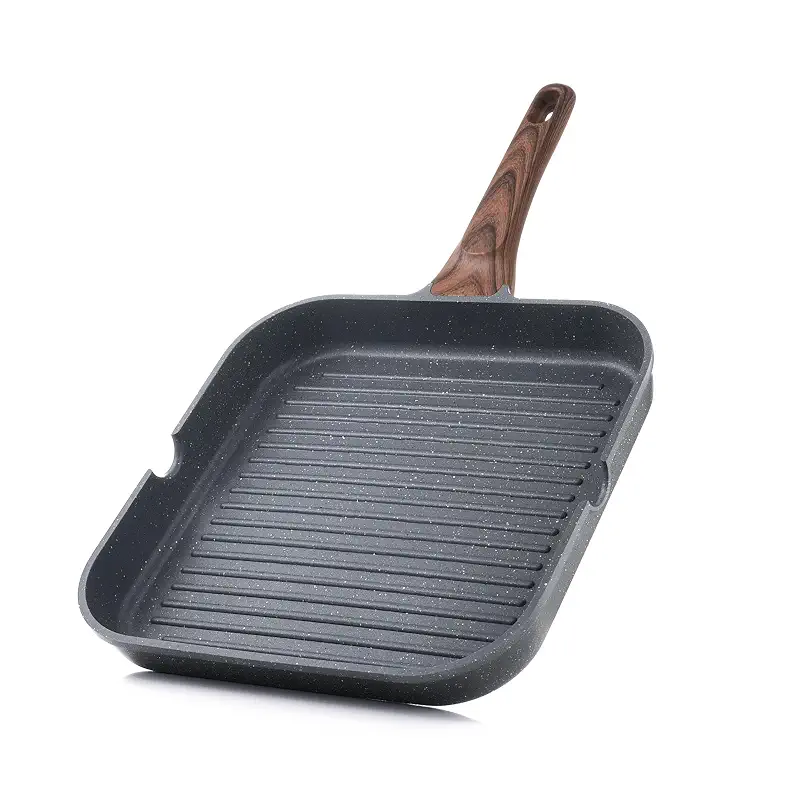
CAROTE 11 Inch Nonstick Grill Pan for Steak, Premium Granite Coating | Square Grill Skillet, Indoor Outdoor RV Camping Use, Gas & Induction Safe, All Stovetops Compatible, PFOA Free, Black
4.8(410)
A high-end nonstick grill pan that combines easy cleanup with serious durability and heat performance.
Ideal for: Cooks seeking premium nonstick durability, easy cleanup, and reliable heat performance without cast-iron care.
Carote's granite-coated nonstick represents the premium tier of modern grill pans. The high-density mineral coating is noticeably more durable than standard nonstick, and owners report little degradation even after months or years of regular use. Heat distribution is excellent and consistent: this pan punches above its weight-class for sear quality from a nonstick option. Buyers who cook steak and asparagus simultaneously report even browning across both; hot spots are minimal.
The 11-inch size splits the difference between the compact 9.5-inch Sensarte and the traditional 12-inch round skillets, offering good cooking surface without oversized footprint. The wood-grain handle stays cool and feels premium in hand. Assembly is quick (one screw), and the overall construction feels engineered rather than budget-conscious. At a higher price point than other nonstick options, it's positioned for cooks who want modern convenience but aren't willing to accept corner-cutting on materials.
Compared to the Sensarte, the Carote commands more dollars but offers visibly better nonstick longevity, thicker construction, and superior heat management. Compared to cast iron, it loses the multi-generational story but wins on immediate usability and zero maintenance. If you're torn between cast iron and nonstick, this is the nonstick option that earns respect from cast-iron traditionalists.
Pros
High-density granite nonstick coating resists wear and degradation
Excellent even heat distribution for consistent searing
Premium construction and wood-grain handle feel substantial
Compatible with gas, electric, induction, and ceramic cooktops
Cons
Higher price than standard nonstick alternatives
Nonstick finish eventual wear is natural, though slower than budget options
Key features
11-inch square grill pan with high-density granite nonstick coating
Thick base ensures even, consistent heat distribution across cooking surface
Wood-grain handle stays cool; pan weighs significantly less than cast iron
Suspended oxygen design drains grease; easy cleanup with water and cloth
How to Choose the Right Steak Skillet
Four trade-offs that actually matter when matching a skillet to cook steak to your kitchen.
Cast Iron vs. Nonstick: The Core Trade-Off
Cast iron delivers unmatched heat retention and sear quality: a steak develops a proper crust because the pan holds its temperature through the entire cook. The cost is maintenance: you wash by hand, dry immediately, and oil lightly to prevent rust. Nonstick pans heat quickly, require zero maintenance, and cleanup is effortless. The trade-off is sear intensity (slightly lower) and longevity (five to ten years versus decades). The best frying pan for steak ultimately depends on your habits: choose cast iron if you cook steak weekly and enjoy tending a tool; choose nonstick if you value convenience and don't cook as frequently.
Size and Shape Matter for Your Steak Load
A 12-inch round skillet holds two large steaks comfortably. Square grill pans (10.5 or 11 inches) hold roughly the same but deliver bolder grill marks. If you cook for two and don't mind multiple batches, a smaller grill pan feels nimble and stores easily. If you often cook for four or more, invest in the full 12-inch round. Compact kitchens and apartment cooking often favor square pans for their footprint efficiency. Consider your typical dinner size and stovetop space before choosing.
Weight, Heat Retention, and Your Hands
Cast-iron skillets weigh 7 to 8 pounds; aluminum nonstick options weigh 2 to 3 pounds. A lighter pan is objectively easier to handle, especially for smaller hands or anyone with arthritis. But a heavier pan means better heat retention: it won't lose temperature when a cold steak touches it. Lodge includes a silicone handle holder to address this friction. Nonstick pans respond faster to heat adjustments because they're lighter and conduct differently. Your searing steak skillet technique and overall strength should influence this choice.
Long-Term Cost and Investment Horizon
Cast iron is the true heirloom option: potentially multi-generational, with only occasional re-seasoning as maintenance. Nonstick coatings wear down in five to ten years, making them a consumable tool. Upfront, a quality cast-iron skillet (40–80 dollars) costs less than premium nonstick (80–120 dollars). But if you cook steak twice monthly for thirty years, cast iron's cost per use is vastly lower. If you cook steak four times yearly, nonstick's convenience may outweigh the eventual replacement cost. Think about best stackable cookware too if you're building a broader collection, matching materials help coordination.
Seasoning and Maintenance Reality
Don't let cast-iron seasoning intimidate you. Pre-seasoned pans arrive ready to use. You can add extra coats to speed up the nonstick development, or simply cook with them and let natural use build the seasoning over weeks. Owners report that after cooking bacon, steak, or fatty foods regularly, the nonstick surface becomes surprisingly slick. Nonstick requires a single hand-wash and dry cycle: no special routine. Cast iron demands hand-washing only, no dishwasher, and oiling after each use. If that routine sounds like a burden, nonstick is the clearer choice.
Frequently asked
Quick answers to the questions readers ask most.
What's the difference between a grill pan and a regular skillet for cooking steak?
A grill pan has raised ridges that create sear marks and channel fat away from the meat, producing a drier, more caramelized crust. A flat skillet offers more surface contact and is better for shallow pan-frying and sauces. For steak specifically, ridged grill pans deliver superior crust and presentation. If you also cook other foods frequently, a flat skillet is more versatile.
Do I really need to season a cast-iron skillet, or is pre-seasoning enough?
Pre-seasoning is functional: you can cook immediately. But most owners add a few coats of their own seasoning in the first week or two to accelerate the nonstick development. After that, normal cooking builds seasoning naturally. You'll develop the best nonstick surface by cooking fatty foods (bacon, steak, pork) regularly. It's optional extra work, not mandatory, but rewarding if you commit to it.
Can I use soap on cast iron, or will it ruin the seasoning?
Light soap and water won't destroy your seasoning, though traditional cast-iron wisdom discourages it. The concern is that soap strips away surface oil. Most owners now use a tiny drop of mild soap with a soft brush or silicone sponge, then dry and oil immediately. Avoid aggressive scrubbing or soaking. For most food residue, hot water and a plastic or silicone scraper work perfectly without soap.
How hot should my skillet be when I put a steak on it?
Cast-iron skillets should preheat on medium to medium-high heat for 5–10 minutes, until a drop of water dances across the surface. Nonstick pans preheat faster, typically 3–5 minutes on medium heat. Never preheat empty on high heat for extended periods: it can warp the pan or damage nonstick coatings. Your steak should hit a genuinely hot pan to achieve a proper sear, but temperature depends on thickness and desired doneness.
Will a nonstick grill pan get hot enough to sear steak properly?
Yes, quality nonstick pans reach high enough temperatures to sear steak well. The sear won't be quite as aggressive as cast iron because aluminum conducts heat differently and the nonstick coating adds a thin barrier. Most buyers report excellent results with nonstick grill pans for steak, especially premium models with granite coating. The difference is noticeable to serious cooks but not a dealbreaker for home use.