Best Shark Tooth Sifter for Beach Treasure Hunting
Find the best shark tooth sifter for your beach adventures. Compare top-rated sand sifters for shells, fossils, and treasure hunting. Expert buyer's guide inside.
Ideal for: Families looking for an affordable two-pack with angled, lever-assisted digging design.
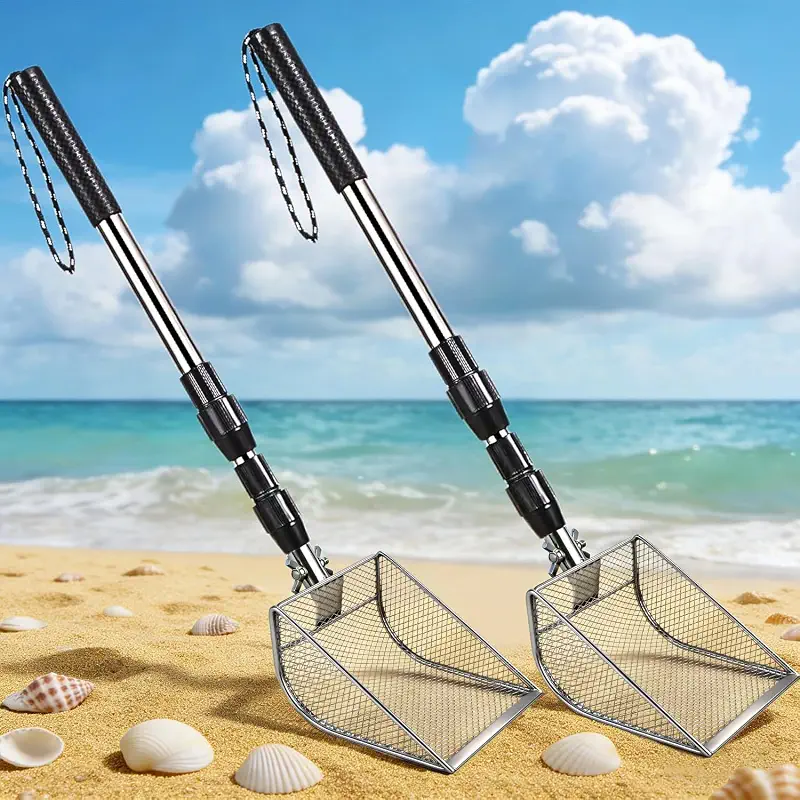
The angled weld design on this two-piece set stands out as a genuine engineering choice, not marketing speak. That bevel connection extends the lever arm and channels your pushing force along the shovel's working line, which means less strain on your wrist and more sand moved per scoop. Most buyers report the lightweight telescoping handles work smoothly for both adults and children, and the stainless steel construction resists the corrosion that dooms cheaper plastic-handled rivals.
Durability concerns do surface in the feedback, though. A small number of owners report weld failure at the connection point between handle and basket, usually within the first few uses. This isn't universal; many reviewers describe sturdy, long-lasting performance across multiple beach trips. The inconsistency suggests quality control varies unit to unit, which is a real gamble when ordering online.
The telescoping adjustment from 21.6 to 33 inches covers most ages and heights, and the two-shovel set makes it practical for families or for keeping one at your beach house. If the welds hold, this delivers strong value. If yours fails early, you're stuck with the return process.
Pros
45-degree bevel weld cuts digging force and effort needed
Adjustable telescoping handle from 21.6 to 33 inches
Lightweight stainless steel resists rust and corrosion
Two sifters included, practical for family trips
Cons
Weld durability varies; some fail within first uses
Handle tightness loosens when fully extended
Key features
Precision 45-degree bevel-welded shovel head boosts lever efficiency
Telescoping stainless steel handle adjusts from 21.6 to 33 inches
Fine-mesh stainless steel head designed for shells and small finds
Two-piece set with lightweight, detachable construction
#2 Pick
Best Complete Gear Kit
Gadfish
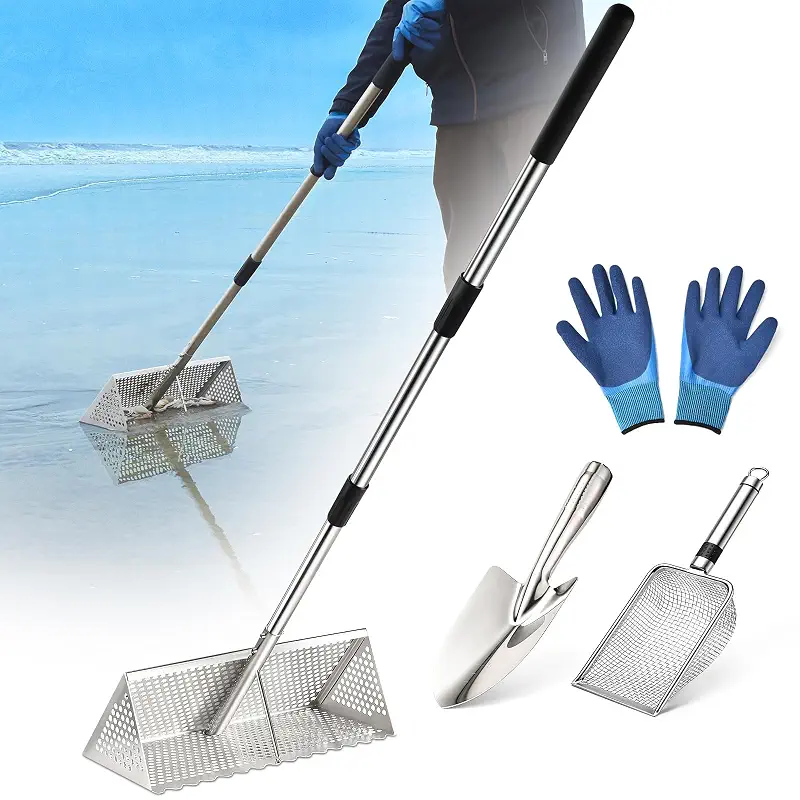
Sand Flea Rake, Long Handle Sand Sifter for The Beach, Stainless Steel Shark Tooth Sifter Comes with A 16-Inch Wide Mesh Screen for Collecting Fleas, Shark Teeth, and Seashells
4.5(298)
Comprehensive sand flea rake bundle includes rake, shovel, and secondary sifter for multi-tool beach work.
Ideal for: Homeowners and serious hunters willing to manage weight for multiple-tool versatility and stationary shallow-water work.
This kit arrives as a full beach-hunting station: rake with a 46-inch pole, a sand shovel, soil sifter, mesh scoop, gloves, and hardware. The 16-inch rake head with 8mm mesh holes does cover large ground quickly, and stainless steel throughout means you're not fighting rust after salt exposure. Buyers who use it in the intended fashion (soft or wet sand, paired with the shovel and secondary sifter for layered sifting) find it genuinely efficient at capturing sand fleas and multiple treasures in one pull.
Weight and injury risk are the critical trade-offs here. The rake base alone weighs 3 pounds; fully assembled, the system becomes cumbersome for long beach days, especially if you're also carrying towels, chairs, and sunscreen. More serious, several owners report the rake's long handle and shallow angle create a hazard in moving water: a wave can catch the rake's edge and drive it into your legs or shins without warning, leading to bruising and tetanus-shot visits. This isn't theoretical: it happened within seconds on calm-water days. That risk alters the recommendation: best for stationary backyard or shallow-water use, risky for active ocean hunting.
Compared to the simpler two-piece sets, this trades portability and safety ease for multi-tool coverage. If you're cleaning a sandy yard or hunting fleas in very shallow water away from wave action, the kit makes sense. For typical family beach trips in the surf, the injury hazard tips the scales toward lighter alternatives.
Pros
Complete kit includes rake, shovel, sifter, gloves, pole
16-inch wide rake head covers large areas efficiently
Stainless steel throughout resists rust and corrosion
Effective for sand fleas and multi-size treasure capture
Cons
Heavy and cumbersome to carry; 3 pounds for rake base alone
Rake handle poses injury risk in moving water or waves
Key features
16-inch wide rake with 8mm mesh holes for large-area coverage
46-inch adjustable pole and secondary shovel and sifter included
Durable stainless steel throughout resists ocean salt corrosion
Multi-tool kit for sand fleas, shells, and backyard cleanup
#3 Pick
Best for Portable Family Use
Qingler
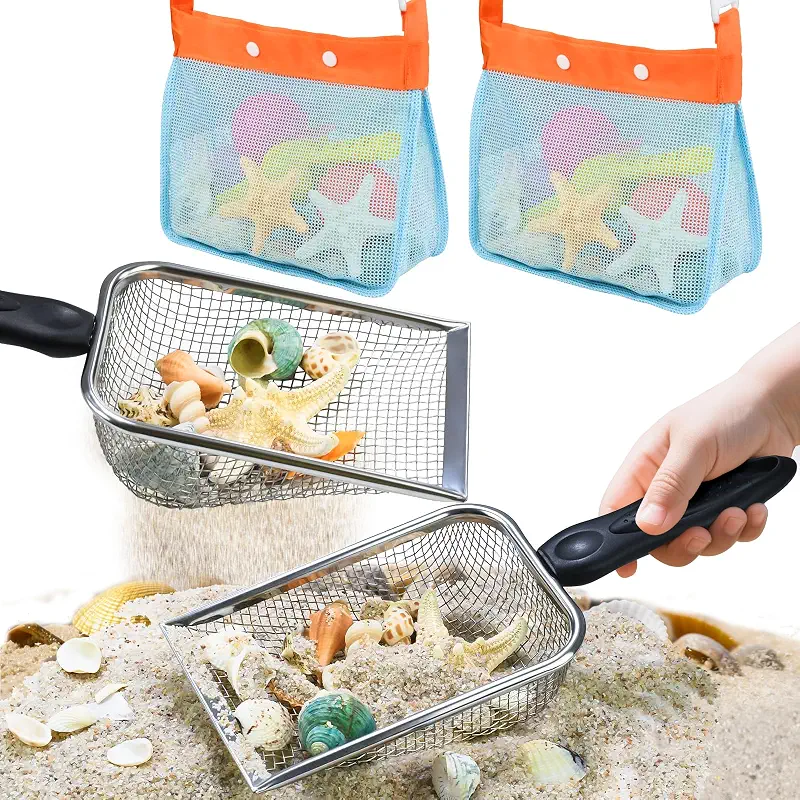
2 PCS Beach Mesh Shovel Sand Sifters with 2 PCS Mesh Beach Bag | Shark Tooth Sifter for Shell Collecting, Filter Sand Scooper Shells Tools for Boys and Girls
4.5(567)
Two-pack with mesh bags, compact 10.5-inch shovels strike balance between portability and durable metal construction.
Ideal for: Families prioritizing portability, durability, and included carry bags for compact beach trips.
Qingler's two-piece set focuses on portability without sacrificing durability. The 10.5-inch metal shovel heads use fine, smooth mesh grids that resist deformation under wet sand pressure, and reviewers consistently report the sifters held up across multiple beach trips without bending or rust. The included mesh bags with adjustable shoulder straps are more than accessory padding; owners find them genuinely useful for carrying tools and rinsing treasures in seawater without losing small shells or shark teeth. The lightweight plastic handles make this comfortable for kids to use all day without fatigue.
The trade-off against larger competitors is throughput. These aren't meant to cover acres of beach in one afternoon; they're built for careful, methodical sifting in a defined area. Some buyers note the metal mesh can separate slightly with heavy continuous use, though this appears rare and doesn't render the shovels useless. If you're comparing this to the larger Sand Dipper or Relodecor models, you're choosing compact convenience over raw sifting volume.
This set works especially well if you're split between beach and home storage space, or if multiple family members are hunting and need their own tools. The included mesh bags set this apart from many competitors that leave you figuring out how to carry and rinse your finds.
Pros
Durable metal mesh resists deformation under wet sand
Two included mesh bags with adjustable shoulder straps
Lightweight plastic handles comfortable for kids and adults
Compact 10.5-inch shovel heads easy to pack and store
Cons
Metal mesh occasionally separates with heavy continuous use
Smaller shovels cover less sand per scoop than larger rivals
Key features
Two metal mesh shovels, 10.5 inches with fine grids
Two adjustable mesh carry bags, shoulder strap 19 to 35 inches
Durable metal construction with plastic handles, lightweight
Designed for shells, shark teeth, conches, and family treasures
#4 Pick
Best Durability and Design
Sand Dipper
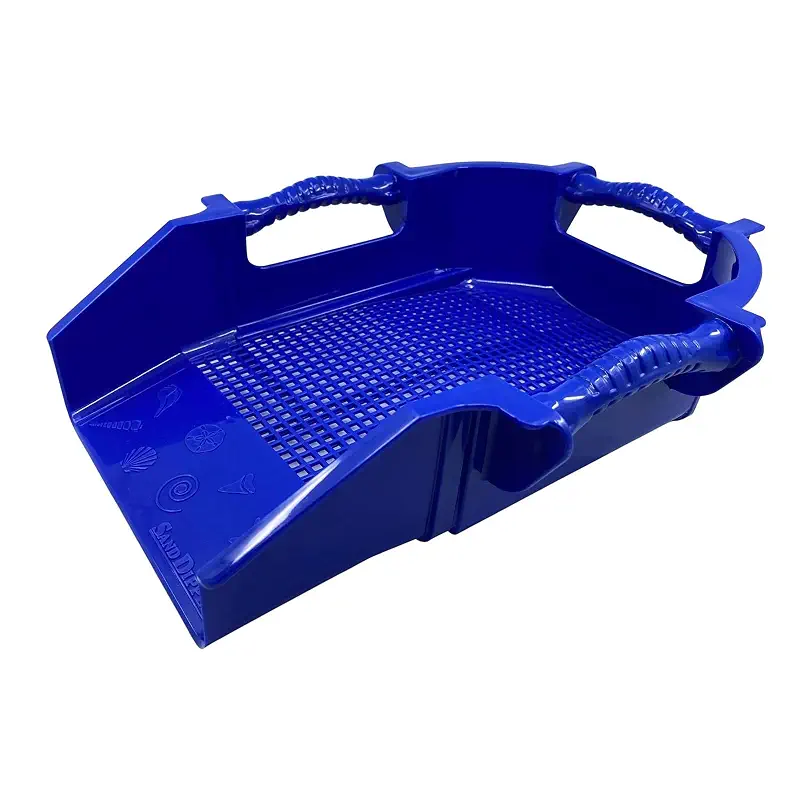
Sand Dipper - Treasure Digger Sifter
4.6(887)
Thick ABS plastic with large 12x9x3-inch sifting surface withstands years of use and extreme conditions.
Ideal for: Beachcombers who plan years of heavy use and want a tool that won't rust, bend, or need replacing.
Sand Dipper's Treasure Digger stands out for sheer durability and thoughtful design. The thick ABS plastic construction doesn't rust, doesn't corrode, and according to one reviewer, even survived being run over by a car (though the brand wisely doesn't recommend testing this). The 12x9x3-inch basket is larger than most rivals, so you move more sand per scoop while the fine mesh still captures tiny shark teeth and sea glass that coarser competitors miss. The ergonomic handle and shovel-shaped head do most of the mechanical work, which is exactly the appeal: less arm strain over a long hunt.
Where Sand Dipper trades off is water management. Reviewers note the side walls sit low enough that active ocean scooping (dipping in the surf and pulling up a load) results in water carrying away some of your catch before the mesh can drain. It works better as a deliberate sifter (scoop, hold steady, let water run through) than as a rapid plunge-and-pull tool. For calm water or sand-only hunting, this isn't a problem. In the surf, you need technique. One buyer mentioned it doubles as a gold-pan tool if you treat it that way, which hints at the learning curve.
The no-hassle 1-year replacement promise and multiple color options add practical appeal, especially for families buying multiple sifters. Compared to the Relodecor model, Sand Dipper prioritizes durability and size over the wrist strap security feature, making it the pick for long-term, frequent use.
Pros
Thick ABS plastic resists rust, corrosion, and deformation
Large 12x9x3-inch sifting surface covers more ground per scoop
Fine mesh captures tiny shark teeth and sea glass effectively
1-year replacement promise and multiple color options
Cons
Low side walls allow water to carry away catches in active surf
Requires technique for efficient sifting in moving water
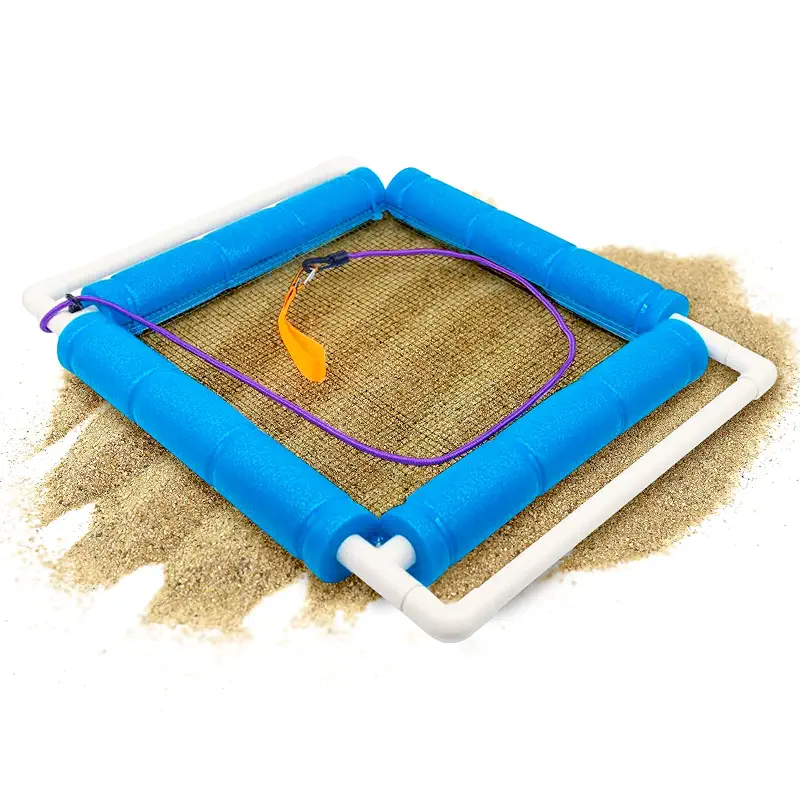
Ideal for: Serious hunters wanting maximum sifting coverage, wrist security, and lightweight performance across varied sand and water types.
Relodecor's sifter pushes toward the largest surface area in this lineup. The 22-inch width and 13.5-inch sifting area mean every scoop covers more real estate, which appeals to hunters working through high-volume sand or hunting in time-limited visits. The wrist strap addresses a real pain point: losing your tool in surf or accidentally dropping it in deeper water. Reviewers praise the lightweight-but-durable build and note it performs equally well on Florida beaches (shells and shark teeth) and Michigan freshwater (rocks and stones), suggesting genuine versatility across environments.
Size and assembly are the practical downsides. This tool is notably larger than competitors like Sand Dipper or Qingler's compact set, so beach-bag packing requires planning. A few owners report the foam noodle pieces (used as flotation or edge padding) aren't permanently attached and can separate, which means either velcro-tying them yourself or watching them slip off. For a premium-priced option, that assembly detail feels sloppy. One buyer also reported it's smaller than expected despite the dimensions: a perception mismatch that might reflect the large promotional photos.
Where Relodecor pulls ahead of the Sand Dipper is the wrist strap; losing your sifter mid-hunt is genuinely frustrating. If you prioritize the absolute largest surface area and appreciate the security tether, this justifies the step-up investment. If you want durability without the assembly fiddling or prefer more compact beach carry, Sand Dipper edges ahead.
Pros
Extra-wide 22-inch frame with 13.5-inch sifting area, large coverage
Wrist strap prevents loss in water and during active hunting
Lightweight and durable, performs on beaches and freshwater
Comfortable grip and easy assembly for quick beach readiness
Cons
Foam noodle attachments not permanently secured, can separate
Larger overall size requires more beach-bag planning
Key features
Large 22-inch wide frame with 13.5-inch sifting area
Secure wrist strap prevents loss during hunting and water use
Lightweight durable construction for beach and freshwater use
Comfortable ergonomic grip and quick-assembly design
How to Choose a Shark Tooth Sifter
Four trade-offs that actually matter when matching a shark tooth sifter to your kitchen.
Mesh Size and Construction Material
The mesh size and sifting guide matter more than most buyers realize. Stainless steel meshes resist rust and hold up to repeated wet-sand use, but they add weight and can occasionally separate under stress. Thick ABS plastic rivals never rust and stay lighter, but they won't last as long under extreme use. Fine mesh (under 5mm holes) catches small shark teeth reliably; coarse mesh (8mm or larger) moves more volume but lets tiny treasures slip through. Match the mesh size to what you're hunting for: if you're after penny-sized treasures, go fine; if you want quick large-volume sifting for shells and conches, coarser works.
Size and Portability Trade-offs
Larger sifting surfaces (12x9 inches or bigger) cover more ground per scoop but become cumbersome to carry, especially on long beach walks or if you're packing chairs and towels. Compact shovels (10.5 inches or smaller) slip into bags and backpacks but require more scoops to work the same area. Consider your typical trip: day-long hunts from a beach umbrella base favor larger models; family runs to the beach where hiking in and out matters favor portable compact designs. A wrist strap or carry bag dramatically improves convenience, so don't overlook those details when comparing.
Use Environment: Surf, Wet Sand, or Calm Water
The environment changes which design works best. Active surf and moving water favor lower side-wall designs that let water drain quickly without losing catches; higher walls work better for dry sand or deliberate sifting in shallow areas. If you're hunting sand fleas or moving through wet beach sand, a tool designed for leverage (like the angled bevel models) cuts fatigue. Fresh-water hunters should verify materials won't rust in non-salt environments; most stainless steel and ABS plastic options handle both, but it's worth confirming. Test the tool's behavior in your specific hunting spot before committing to a larger investment.
Sifter Cleaning and Maintenance
What happens after the hunt affects long-term value. Always rinse your sifter with fresh water after salt-water use to prevent corrosion and salt buildup in the mesh. Stainless steel and ABS plastic both clean easily, but fine mesh can trap sand and debris; a soft brush or old toothbrush clears it quickly. Store sifters dry in a garage or shed, not left damp in a beach bag. Occasionally inspect welds and mesh attachment points for weakness before they fail mid-hunt. A few minutes of post-trip cleaning adds years to any sifter's life and keeps your finds from getting stuck in crusty salt deposits.
Frequently asked
Quick answers to the questions readers ask most.
What size mesh holes do I need to catch shark teeth?
Most shark teeth fall between 0.5 and 1 inch, so a mesh size under 5mm (roughly 0.2 inches) reliably captures them. Fine mesh sifters catch more small teeth but require more patience when draining water; coarser mesh (5-8mm) moves sand faster but may lose tiny fossilized teeth. If you're serious about teeth hunting, fine mesh is worth the slower sifting speed.
Can I use a kitchen colander or strainer instead of a beach sifter?
Colanders work in a pinch for larger shells, but they're too fine for efficient sand sifting and too fragile for repeated wet-sand and wave pressure. Beach sifters use coarser, sturdier mesh specifically designed to handle salt water, sand grit, and rough handling. Many reviewers mention switching from kitchen tools to real sifters and never looking back.
How much weight difference is there between plastic and stainless steel sifters?
Stainless steel sifters typically weigh 1.5 to 3 pounds depending on size, while thick ABS plastic rivals weigh 0.5 to 1.5 pounds. If you're hunting all day or carrying multiple tools, plastic's lighter weight adds up. However, stainless steel's durability often justifies the extra heft for frequent hunters who use the tool multiple times per season.
Do I need to worry about weld failures in metal-handled sifters?
Weld quality varies by manufacturer and sometimes by production batch. Some owners report immediate failure at the handle-to-basket connection; others use the same model for years without issue. If durability is your priority, thick ABS plastic sifters eliminate welding risk entirely. For metal models, read recent reviews carefully and consider the return policy before committing.
What's the best way to use a sifter in moving ocean water?
Plunge and hold steady rather than rapid plunge-and-pull motions. Scoop sand and shells, keep the sifter level or slightly tilted, and let the water drain through the mesh while holding the catch. In strong surf, lower side walls let water escape faster and prevent your finds from washing away. Practice in shallow, calm water first to develop a feel for the motion before working in active conditions.