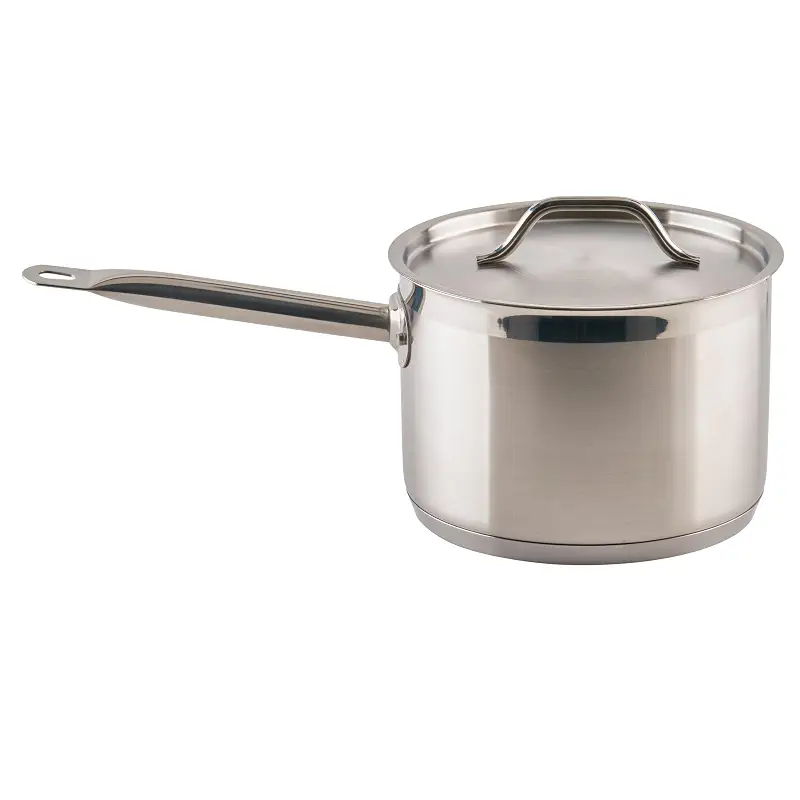
Best Saucepan for Candy Making: Heavy-Duty Pans for Perfect Results
Find the best saucepan for candy making. Compare heavy-duty stainless steel and aluminum options for even heat, precise temperature control, and reliable results.
Verdict, analysis, and key features for each pick.
#1 Pick
Best Overall: Commercial-Grade Durability
Winco
Winco 4 1/2 qt Heavy-Duty 4.5 qt Stainless Steel Sauce Pan with Cover | Even heat distribution, Secure riveted handle, Great for Cooking, Food Preparation and Restaurant Kitchens
4.6(578)
Heavy tri-ply saucepan that outperforms its price point with consistent heat and long-lasting build.
Ideal for: Home and professional cooks prioritizing heat performance and durability over lightweight handling.
The Winco 4 1/2 qt Heavy-Duty earns its reputation in both restaurant and home kitchens because it does the job without fuss. Owners consistently praise its heat retention and the speed at which the heavy bottom heats and cools, a crucial trait when you're working with sugar syrups that can overcook in seconds. The tri-ply construction (aluminum core sandwiched between stainless steel layers) delivers the even heat distribution candy makers depend on. The riveted handle is built solid, though some buyers note it stays warm during cooking, so you'll want a pot holder ready.
What sets this pan apart is how it performs across any heat source. Gas, electric, and induction all work equally well, giving you flexibility whether you're upgrading your kitchen or replacing a single workhorse. The included lid is substantial and fits snug, which helps when you're simmering a syrup down over time. For the money, I'd lean toward this if you want commercial reliability without paying premium prices.
The main trade-off is weight. This pan is genuinely heavy when full, not an issue if you're stirring at the stove, but transferring a full pot demands care. A few owners with arthritis or hand weakness mentioned fatigue with larger batches, though most see the weight as a feature, not a bug, because it means the bottom won't warp under high heat.
Pros
Tri-ply aluminum core ensures even heat distribution
Heats and cools quickly for precise temperature control
Works on gas, electric, and induction heat sources
Commercial-grade stainless steel resists warping and wear
Cons
Notably heavy when full; requires two hands and care
Round handle can rotate slightly during tilting
Key features
4.5-quart capacity with tri-ply stainless and aluminum construction
Tri-ply aluminum core for even heat distribution across bottom and sides
Riveted reinforced handle with hanging hole for storage
Induction compatible; includes tight-fitting stainless steel lid
NSF-listed commercial-grade material resists stains and corrosion
#2 Pick
Best for Candy Makers: Extra Capacity and Helper Handle
Fortune Candy
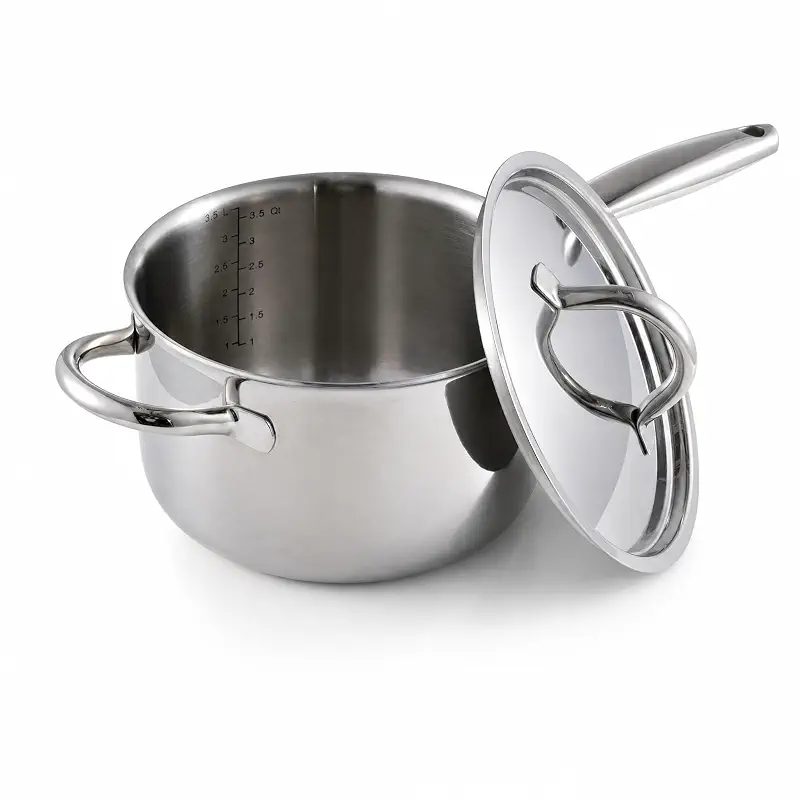
Fortune Candy 4-Quart Saucepan with Lid, Tri-Ply, 18/8 Stainless Steel, Advanced Welding Technology, Dishwasher Safe, Gas & Electric Stovetop Compatible
4.5(204)
Purpose-built 4-quart saucepan with twin handles designed specifically for handling large batches safely.
Ideal for: Candy makers, fudge enthusiasts, and home cooks regularly working with high-heat sugar syrup batches.
Fortune Candy engineered this pan with candy makers in mind, and the difference shows. The extra quart of capacity compared to typical 3-quart options matters when you're pulling sugar to high temperatures: you need headroom so boiling mixtures don't spill over. Owners consistently report that the extra room makes a tangible difference when cooking fudge, brittle, or caramel, giving you space to stir vigorous batches without spillage. The second handle positioned near the rim is the real innovation here; it lets you safely grip and tilt a hot, heavy pot with both hands, something the best candy cooks understand as essential.
The tri-ply construction delivers even heating throughout the bottom and walls, which is non-negotiable for tempering chocolate or cooking jams that scorch easily. The lid is designed heavy and deep-edged to contain splashes, and the interior measurement markings let you track liquid reduction without constant dipping and measuring. Where this pan trades off against a basic 3-quart is simply volume; if you're making single batches for yourself, the extra space might feel like overkill. But if you make candy in any serious quantity, the helper handle and roomy design justify the step up.
One minor note: the welded handles are robust, but a few owners mentioned the lid can get quite hot during extended cooking, so handle it with care. The weight is substantial, but the dual-grip design distributes effort better than pans with a single main handle.
Pros
Twin handles enable safe two-handed lifting of full batches
Four-quart capacity reduces overflow risk on large candy batches
Tri-ply construction with welded handles per EN12983 standard
Deep-edged lid contains splashes and prevents boil-over mess
Cons
Notably heavy; requires strength and two-handed control when full
Larger capacity than needed for occasional small-batch cooks
Key features
4-quart capacity with dual handles for safe two-handed control
Tri-ply bonded stainless steel and aluminum core for even heating
Interior measurement markings for tracking liquid reduction
Welded stainless steel handles tested for 15,000 lift cycles
Tapered pouring rim and heavy stainless steel lid, oven-safe to high heat
#3 Pick
Best Premium Choice: Trusted Performance Over Decades
Cuisinart
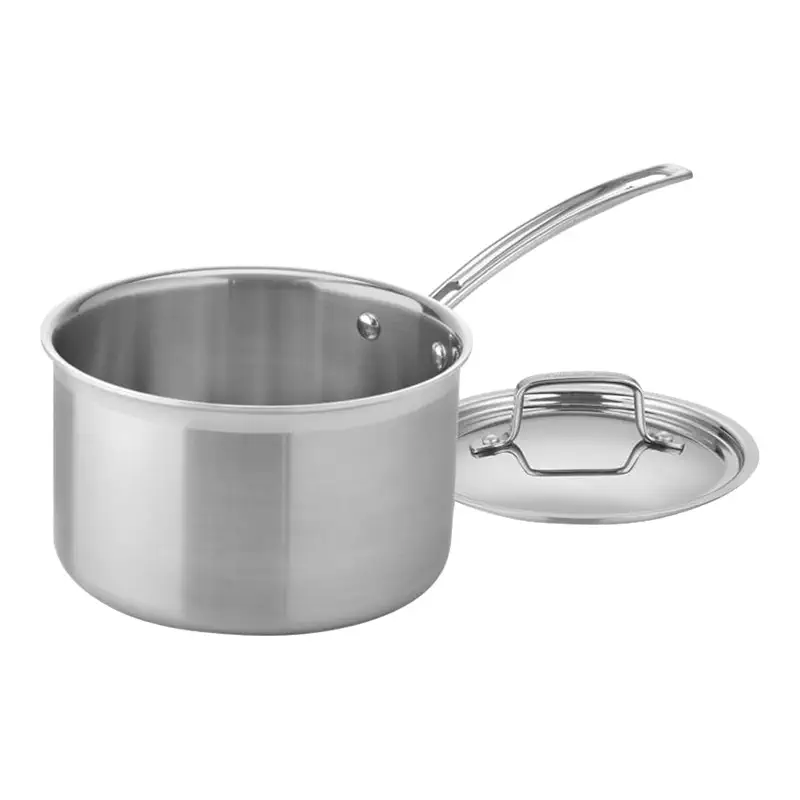
Saucepan with Lid Size: 4 qt.
4.8(7,617)
Proven Cuisinart triple-ply design with cool-grip handle and even heat that justifies its premium positioning.
Ideal for: Home cooks seeking reliable, recognized-brand cookware with proven long-term durability.
Cuisinart's MultiClad Pro line has earned trust across countless home kitchens, and this saucepan reflects decades of refinement. The triple-ply construction runs the entire height of the pan (not just the bottom) which means the aluminum core extends up the sidewalls. That detail matters for candy work because it ensures the side walls heat as evenly as the bottom, preventing hot spots where sugar can crystallize prematurely. Owners who've switched from non-stick report that the stainless steel, while not non-stick, responds beautifully to lower heat settings once you understand the pan's behavior.
The cool-grip handle is genuinely engineered; it stays noticeably cooler than simple riveted metal, a feature many candy makers appreciate during long cooking sessions. The lid seals tightly, and the tapered pouring rim does its job: no drips when you're carefully transferring a batch of syrup. Compared to the Fortune Candy model, this pan costs more but delivers that premium-brand assurance that works for cooks who prioritize trusted names. If you compare it side by side with the Cooks Standard professional option, you're mainly paying for the Cuisinart name and perhaps slightly tighter tolerances; performance-wise, both deliver solid tri-ply heating.
One caveat: on a gas stove with high flame, the handle can transmit some heat up the sides: this is physics, not a flaw, but it's worth knowing. Electric or induction users won't face this as acutely. The pan is not lightweight, but reviewers consistently report it balances well in the hand despite its heft.
Pros
Triple-ply construction extends aluminum core up entire sidewalls
Cool-grip handle stays noticeably cooler during extended use
Tapered rim for drip-free pouring of syrups and reduction
Lifetime warranty and decades of proven kitchen reputation
Cons
Premium price point higher than comparable tri-ply options
Handle can transmit some heat on gas stoves with high flame
Key features
Triple-ply stainless steel with aluminum core throughout construction
Heat Surround Technology distributes heat along bottom and sidewalls
18/10 stainless steel interior resistant to staining and discoloration
Cool-grip riveted handle with thumb rests for control and balance
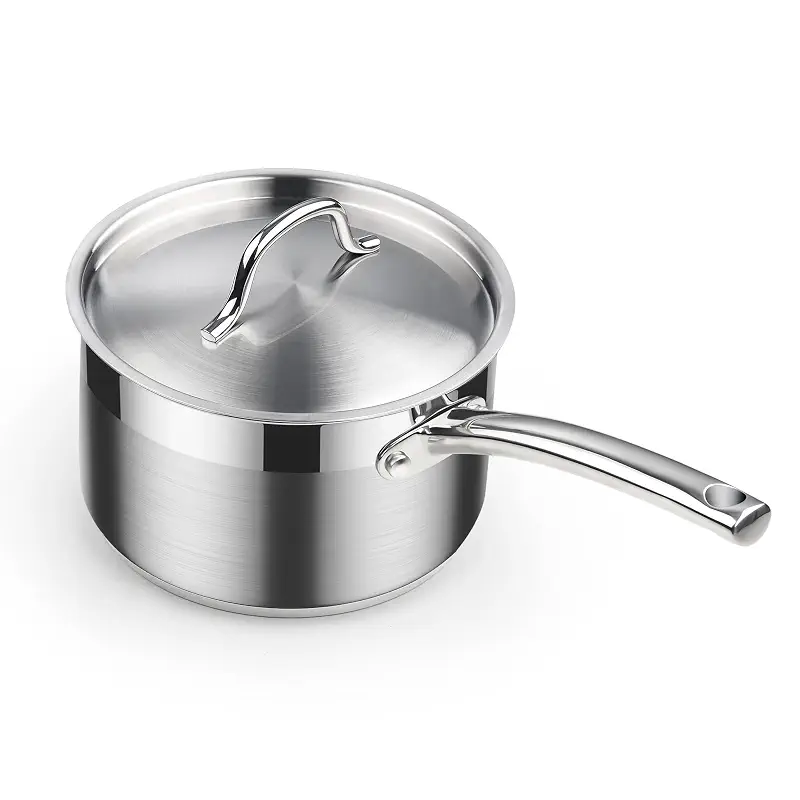
Cooks Standard Professional delivers the fundamentals without excess cost, making it the smart choice if you want stainless steel performance without paying premium-brand markup. The aluminum disc capsule bottom ensures even temperature distribution (essential for candy work) and owners who've compared it to older Cuisinart pieces report nearly identical performance. The 18/10 stainless steel resists discoloration and doesn't react with acidic ingredients, so if you're making fruit preserves or lemon curd alongside candy, the surface won't pit or stain. The 3-quart size sits between the smaller 2-quart pans and larger specialty models, making it practical for most home batch sizes.
What's practical here is oven-safe capability to 500 degrees and dishwasher safety, features that matter if you're moving a sauce or reduction from stovetop to oven to finish. Compared to the Fortune Candy dual-handle model, you're trading the helper handle and extra capacity for lower cost and lighter overall weight: a fair trade if you make candy occasionally rather than in large batches. A few owners mentioned the metal lid can get hot, which is true of nearly all stainless steel cookware, but it's not a functional issue, just something to keep in mind.
The only real limitation is that aluminum-disc bottoms, while effective, can eventually separate with heavy use over many years, nothing that affects immediate performance, but a consideration if you want a pan you'll pass down to your children.
Pros
Aluminum disc capsule provides even heat without hot spots
18/10 stainless steel resists discoloration and corrosion
Oven safe to 500 degrees; seamless stovetop-to-oven workflow
Balanced price-to-performance ratio compared to premium brands
Cons
Disc-bottom construction can separate after extended heavy use
Metal lid retains significant heat during cooking
Key features
3-quart capacity with brushed 18/10 stainless steel interior and exterior
Aluminum disc capsule bottom for even temperature distribution
Ergonomic handle with hanging hole for convenient storage
Induction, gas, electric, glass, ceramic, and halogen stovetop compatible
Oven safe to 500 degrees Fahrenheit; dishwasher safe
#5 Pick
Specialty Pick: Aluminum for Speed and Control
Winco
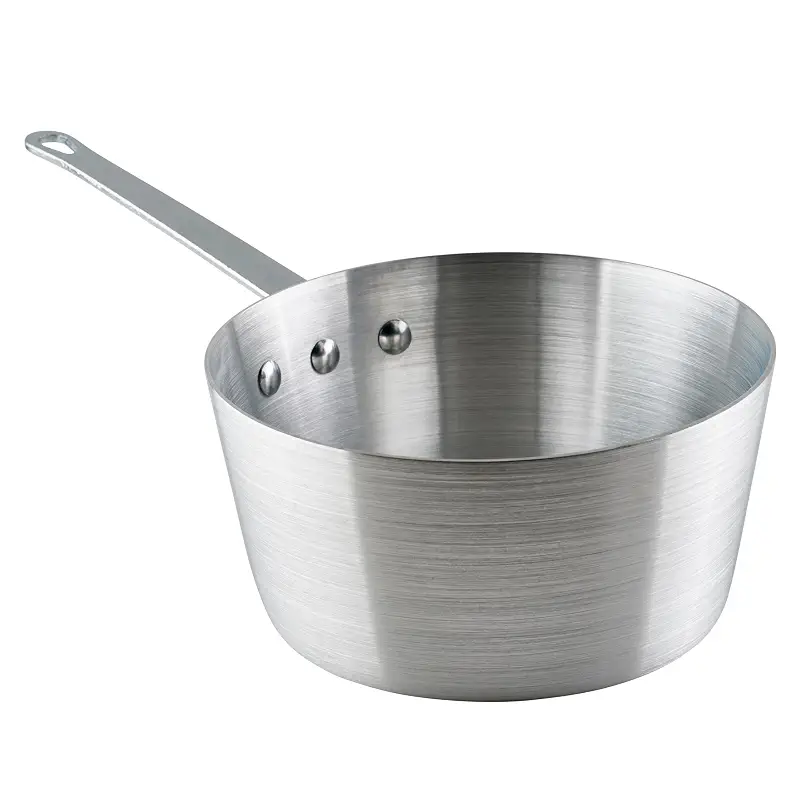
Winco 3 3/4 qt Heavy-Duty Tapered Aluminum Sauce Pan, 3.75 qt | Tapered sides, Heavy-duty, Riveted handle, Great for Cooking and Food Preparation
4.5(656)
Commercial-weight 3.75-quart aluminum saucepan favored by candy professionals for rapid temperature response.
Ideal for: Serious candy makers and professionals who prioritize rapid temperature response over convenience.
This Winco aluminum pan occupies a niche that candy professionals understand better than casual cooks: aluminum's superior heat conductivity makes it the fastest responder when you need to drop or raise temperature instantly. Sugar work demands this kind of control: once a batch reaches soft-ball stage, you need to move it off heat immediately, and aluminum cools faster than stainless steel. The tapered sides aren't just design; they're engineered to ease stirring and churning, which matters when you're working with candy that needs constant agitation to prevent graining or crystallization. At 3.75 quarts, the capacity sits between smaller pans and the larger specialty models, giving you adequate room without unnecessary volume.
The 3mm-thick 3003-grade aluminum is commercial kitchen stock. NSF listed, designed for daily restaurant use, and built to last through decades of hard work. Owners consistently report that once seasoned lightly with oil, the pan develops a non-stick patina that actually prevents sticking better than many non-stick coatings. The big trade-off is that this pan works only on gas and electric heat, not induction, which rules it out if you've committed to an induction cooktop. Hand-washing only is required, though that's typical for aluminum. Compared to stainless steel pans in this roundup, aluminum demands more care and attention, but professionals make that trade to gain the temperature control that defines precision candy work.
One real consideration: the handle gets hot and stays hot: there's no insulation in aluminum, only mass. This is why seasoned candy makers keep heavy pot holders within arm's reach.
Pros
Aluminum conducts heat fastest; drops temperature instantly when moved off heat
Tapered sides facilitate stirring and churning during candy work
3mm-thick commercial-grade aluminum built for daily professional use
Not induction compatible; works only on gas and electric stovetops
Requires hand-washing and regular seasoning to maintain non-stick surface
Key features
3.75-quart capacity with 3mm-thick 3003-grade commercial aluminum
Tapered sides designed for easier stirring and churning action
Riveted reinforced handle with hanging hole for storage
Natural aluminum finish provides even rapid heat distribution
Gas and electric stovetop compatible; hand-wash and season recommended
How to Choose a Saucepan for Candy Making
Four trade-offs that actually matter when matching a saucepan for candy making to your kitchen.
Heat Distribution and Response
Even heating across the bottom and sides is non-negotiable for candy work. A thin-bottomed pan creates hot spots where sugar crystallizes or burns. Look for tri-ply construction (stainless steel exterior, aluminum or copper middle, stainless interior) or solid aluminum if you want the fastest temperature response. The aluminum core should extend up the sides, not just encapsulate the bottom. Test this by reading the spec sheet carefully: if it mentions "triple-ply construction," verify whether that extends the full height or just the bottom. This detail separates a general-purpose saucepan from one designed to handle precise candy temperatures.
Capacity and Headroom
Candy batches foam and bubble as sugar heats. A pot that's too small will boil over and waste both ingredient and cleaning time. Most candy recipes work in 3 to 4-quart pans. The extra half-quart or full quart of capacity gives you safety margin without being wastefully large for home batches. If you make brittle, caramel, or fudge in volume, the 4-quart options provide meaningful headroom; if you're making single batches of jelly or small candy experiments, a 3-quart is efficient and easier to handle.
Material Choice: Stainless Steel vs Aluminum
This comes down to control versus convenience. Stainless steel pans are durable, dishwasher-safe, and require minimal maintenance: they suit home cooks who value ease. Aluminum pans like the Winco tapered model offer superior heat response and conductivity, which professionals prefer because they can throttle temperature instantly. However, aluminum requires hand-washing, seasonal maintenance, and cannot be used on induction cooktops. Understanding stainless steel vs aluminum saucepans will clarify which trade-off fits your kitchen best.
Handle Design and Weight Management
A full pot of hot candy syrup is heavy and dangerous. Single-handle pans require one-handed control of substantial weight; dual-handle designs like the Fortune Candy model let you distribute effort and grip safely with both hands. If you have hand weakness, arthritis, or limited grip strength, the second handle matters. Round handles tend to rotate in your grip unless you're deliberate; consider whether the handle shape feels secure in your hand during the purchasing decision. All metal handles transmit heat: assume you'll need a pot holder.
Heat Source Compatibility and Candy Temperature Stages Explained
Not all pans work on all stove types. Gas and electric stoves accept both stainless steel and aluminum pans. Induction requires ferromagnetic materials: stainless steel with an encapsulated or tri-ply bottom, or specific induction-ready aluminum (rare). If you're upgrading to induction, verify compatibility. The Winco aluminum pan, while excellent for temperature control, will not work on induction. Knowing your current and planned heat sources eliminates frustration. When cooking candy to specific firmness stages, the precision control that the right material and heat source provide directly affects whether you pull soft ball, firm ball, hard ball, or hard crack exactly when the candy temperature stages explained in your recipe guide says you should.
Frequently asked
Quick answers to the questions readers ask most.
Can I use a regular saucepan for candy making, or do I really need one designed for high heat?
A thin-bottomed or single-layer pan will likely fail you. Candy needs precise, even heat; thin pans create hot spots where sugar burns while other sections remain cool, leading to graining or burning. A heavy-bottomed, tri-ply or aluminum pan distributes heat uniformly, letting you control temperature by moving the pan on and off the burner. The investment in a proper saucepan prevents ruined batches and frustration.
Why do some candy makers prefer aluminum over stainless steel?
Aluminum conducts heat faster and responds instantly to temperature changes, which is crucial when you're pulling sugar to a precise stage and need to move the pan off heat immediately. Stainless steel heats more slowly but is more durable, less reactive with acidic ingredients, and easier to maintain long-term. For home candy makers working occasionally, stainless steel's low-maintenance appeal often outweighs the speed advantage aluminum offers professionals.
What size saucepan do I need for most candy recipes?
Most home candy recipes work in 3 to 4-quart pans. A 3-quart handles single batches efficiently; a 4-quart gives extra headroom if you tend to make larger quantities or prefer safety margin as the syrup foams. Anything smaller than 3 quarts risks boil-over when sugar heats and expands. Anything larger than 4 quarts becomes inefficient for home batches and harder to handle safely.
Do I need to season an aluminum candy pan the way you season cast iron?
Not in the traditional sense, but a light seasoning helps. A thin rub of neutral oil heated on medium (never to smoke) creates a patina that resists sticking and corrosion. This takes just a few minutes and extends the pan's life. After each use, hand-wash promptly and dry completely. Avoid acidic foods stored in aluminum for long periods, as they can pit the surface. Stainless steel pans need no seasoning: simply wash and dry.
Is a candy thermometer essential, or will visual stages suffice?
A reliable candy thermometer removes guesswork and guarantees consistent results. Visual cues (cold water tests, color changes) are traditional but require practice and skill. A thermometer clips to your pan's side and tells you exactly when you've reached soft ball, firm ball, hard crack, or any other stage your recipe specifies. For serious candy making, a thermometer is the safety net that prevents learning-curve failures.