Verdict, analysis, and key features for each pick.
#1 Pick
Best Overall Value
Sanmeiho
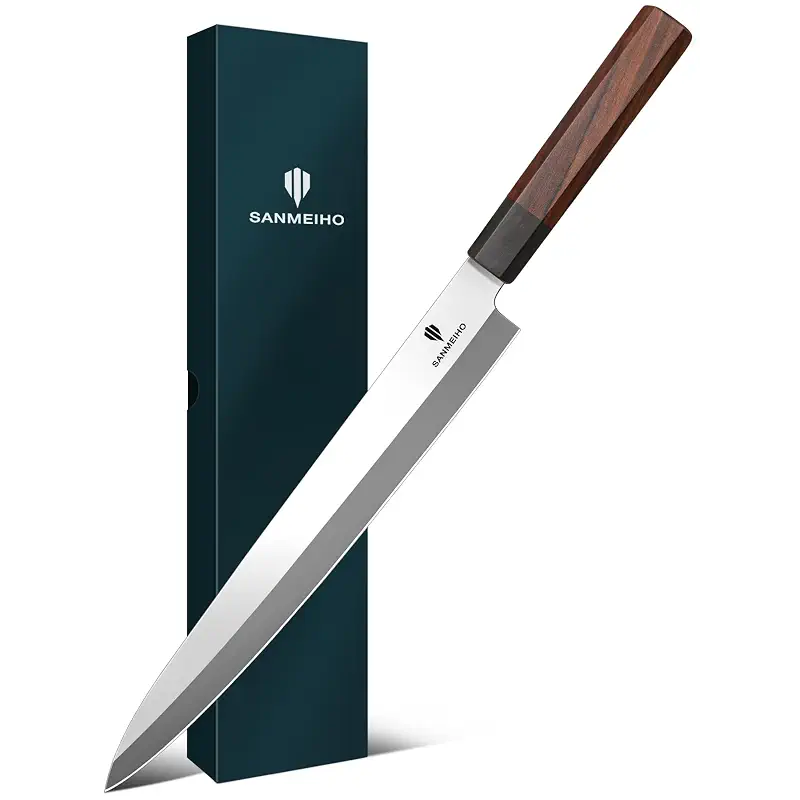
10 Inch Sushi Knife, High Carbon Japanese Steel Sashimi Knife | Japanese Knives for Fish Filleting & Slicing, Sushi Making Knives with Red Sandalwood Handle
4.6(87)
Sharp, reliable, and cost-effective for home cooks exploring sashimi work without a big investment.
Ideal for: Home cooks and sushi enthusiasts learning the craft without premium investment.
The Sanmeiho sits in that sweet spot for home kitchens: genuinely sharp out of the box, comfortable to hold, and priced low enough that you won't feel anxious about learning on it. Owners rave about the sharpness and clean cuts through fish, and the octagonal red sandalwood handle with full tang construction feels balanced and secure even during longer sessions. The 57 HRC hardness and 12-degree angle deliver a blade that keeps its edge reasonably well for casual home use.
This knife doesn't pretend to be a high-end hand-forged yanagiba, and that's actually its strength. You get Japanese stainless steel that resists rust without the fussiness of carbon-steel maintenance. Compared to premium picks like the Cangshan YARI, the Sanmeiho trades some aesthetic polish and steel layering for genuine accessibility and performance at a fraction of the cost.
One caveat: a small number of reviews mention the blade arriving less sharp than advertised, though most owners report exceptional sharpness. Hand-checking sharpness upon arrival (or one quick pass on a whetstone) is prudent with any online blade purchase.
Pros
Exceptional sharpness out of the box for the price
Comfortable octagonal handle with secure full-tang design
Stainless steel resists rust and simplifies maintenance
Cons
Some units arrive less sharp than typical
Lacks aesthetic refinement of hand-forged blades
Key features
Japanese stainless steel, 57 HRC hardness for reliable edge retention
12-degree cutting angle on both sides for efficient slicing
Full-tang octagonal red sandalwood handle reduces fatigue
blade length suited to home kitchens and standard fish portions
#2 Pick
Best for Beginners
Mercer Culinary
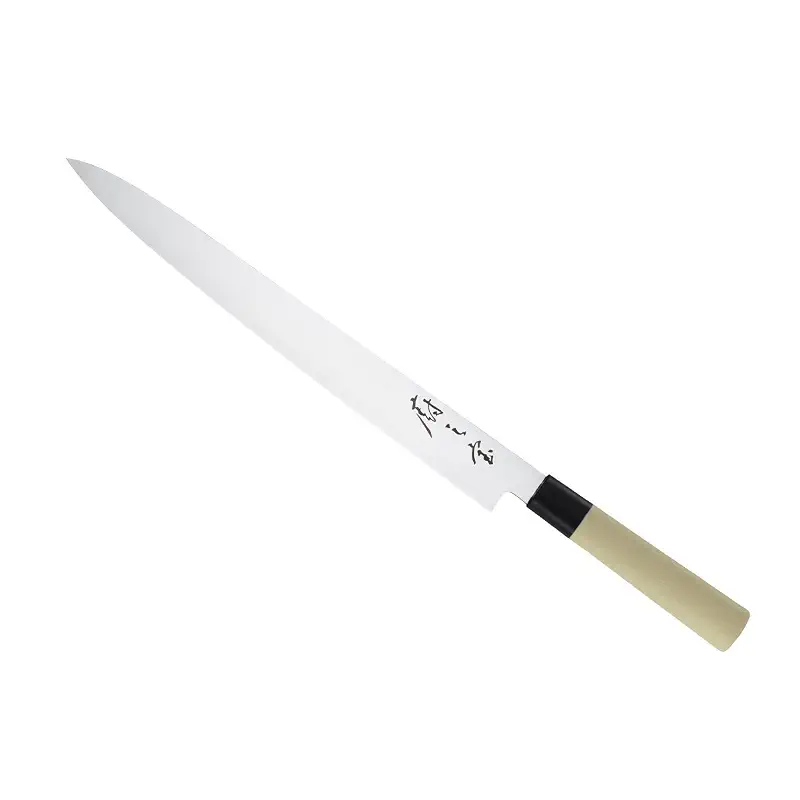
Mercer Culinary Asian Collection Yanagi Sashimi Knife with NSF Handle, 12-Inch
4.5(419)
Professional-grade entry point with forgiving steel, excellent edge, and a practical design that handles frequent use.
Ideal for: Culinary students, home cooks, and first-time sashimi knife buyers seeking professional function.
The Mercer Culinary Yanagi is arguably the most popular sashimi knife for culinary students and home cooks stepping up from a regular chef knife. The 12-inch length is longer than many entry knives, which at first seems intimidating but actually works in your favor: that extra blade real estate lets you execute a single, uninterrupted pull through sashimi or fish fillets, which produces cleaner results than multiple passes. The high-carbon German steel (56 HRC) hits the learning sweet spot: hard enough to hold an edge through multiple uses, soft enough to sharpen easily on a home whetstone without the specialized technique required by traditional hand-forged blades.
Owners consistently praise the grip, especially when working with wet fish for hours. The Santoprene handle resists slipping even during high-volume prep, and the single-bevel design (6 degrees on one side, 15 on the other) is traditional yanagiba geometry without the concave back that complicates sharpening. Where the Mercer differs from the premium Cangshan YARI is in material complexity: you're getting straightforward German steel rather than Damascus layering, but that directness is honest and functional.
A minority of users report the edge dulling faster than expected if abused on hard surfaces or used for tasks beyond fish, but for its intended purpose (fish slicing in a home or professional kitchen) the edge retention is solid.
Pros
12-inch blade enables single-motion slicing for cleaner cuts
High-carbon German steel easy to sharpen on home whetstones
Slip-resistant rubber handle for secure grip when wet
Cons
Longer blade requires practice and counter space to control
Edge may dull faster with off-knife use or improper surfaces
Key features
High-carbon German steel, 56 HRC hardness for durable edge
Single-bevel blade, 6° one side and 15° other side, traditional yanagiba geometry
12-inch length maximizes cutting stroke efficiency on larger fish
NSF-certified rubber handle with ergonomic design for professional kitchens
#3 Pick
Best Premium Choice
Cangshan
Cangshan YARI Series 10-inch Sashimi Knife with Sheath, X-7 Damascus Steel, 501295
4.6(19)
Exceptional sharpness and Damascus aesthetics in a modern sashimi knife with excellent balance and included sheath.
Ideal for: Home cooks and enthusiasts who value blade aesthetics, sharpness, and refined handling.
The Cangshan YARI represents a step into premium territory without full-on luxury pricing. The 67-layer X-7 Damascus pattern (layered stainless steel with aesthetic etching) creates a visually striking blade, and the 58 HRC hardness with proprietary ULTRA6 heat treatment keeps that edge longer than softer alternatives. Owners describe it as "one of the sharpest knives I've ever reviewed," and the double bevel (16 degrees per side) works well for both right- and left-handed users, which broadens the appeal compared to traditional single-bevel designs.
What sets this knife apart is execution: the octagonal G10 handle is ergonomic and modern, the weight distribution feels balanced, and it ships with a magnetic wooden sheath that protects the blade during storage. The craftsmanship feels refined without pretension. One caveat worth noting: a knowledgeable reviewer pointed out that the Damascus pattern is a surface treatment rather than true through-and-through Damascus forging, so if you're paying for authentic Damascus blade construction, this isn't it. However, if you value sharpness, aesthetics, and hand-feel, the YARI delivers on all three fronts.
Compared to the more utilitarian Mercer Culinary, the Cangshan leans toward beauty and precision rather than workhorse durability, making it ideal if you enjoy the ritual of sashimi prep as much as the result.
Pros
Extremely sharp out of the box with excellent edge retention
Beautiful Damascus pattern and G10 handle appeal visually
Double-bevel design works for both right- and left-handed use
Cons
Damascus pattern is surface treatment, not solid forged steel
Premium price may not reflect full construction authenticity
Ideal for: Professional sushi chefs and high-volume home kitchens seeking proven, balanced design.
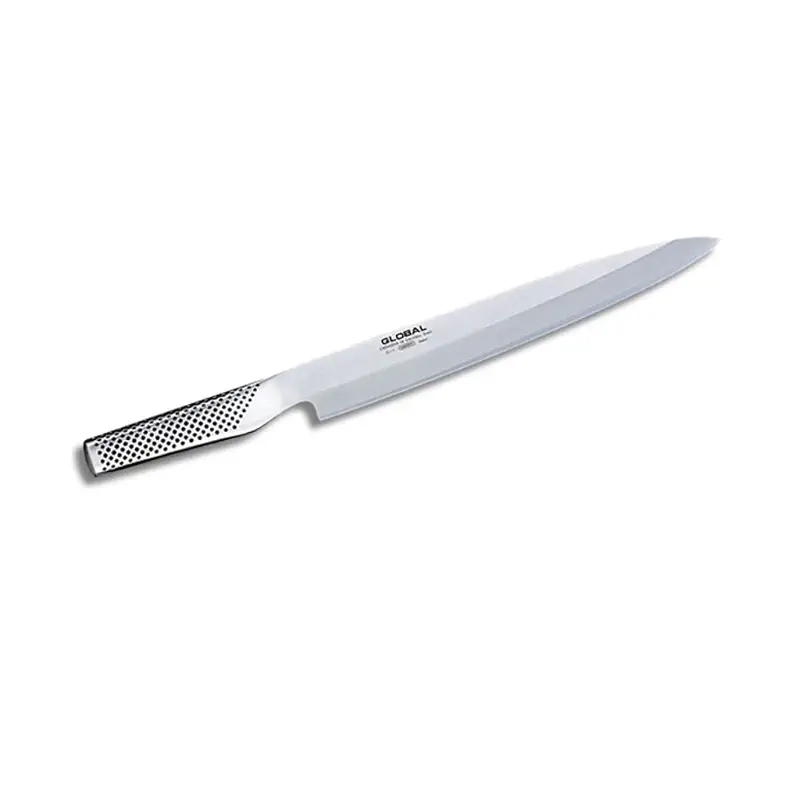
Global's Yanagi carries the weight of the brand's 50+ year reputation in professional kitchens worldwide. The triple-layered Cromova 18 stainless steel (core plus flexible outer layers) is designed to handle repetitive use without chipping, and the hand-hammered hollow air pockets reduce drag: when the knife is sharp, food practically floats through. The 12.5-degree mirror-polished edge holds well under high-volume conditions, and the industrial design of the handle with its signature black dots reflecting samurai codes feels like a conversation piece in the kitchen.
Where Global excels is consistency and Made-in-Japan build quality that professionals trust. The seamless construction and balance are legendary. However, the reviews reveal a significant issue: some units arrive shockingly dull, and resharpenings haven't always restored acceptable edge. This is a quality-control problem that affects the reliability of an otherwise excellent knife. Owners who receive a properly sharpened unit praise it effusively; those who don't face frustration because Global's stainless won't achieve the razor edge that carbon-steel competitors deliver. If you're comparing this to the best yanagiba knives in the same weight class, check that edge before committing to extended use.
The handle can feel slippery when wet, though experienced users adapt quickly. This is a professional-grade choice if your unit ships sharp; otherwise, you may face an uphill battle.
Pros
Triple-layered Cromova stainless steel resists chipping under hard use
Hand-hammered air pockets reduce drag for non-stick cutting
Legendary balance and professional kitchen heritage
Cons
Some units arrive dull with difficulty resharpening to acceptable edge
Handle can feel slippery when wet without practice
Key features
Triple-layered Cromova 18 stainless steel with ice-hardened and tempered core
Hand-hammered hollow air pockets for reduced drag and non-stick properties
12.5-degree hand-polished blade edge for long-lasting sharpness
Ergonomic handle with thumb rest and seamless Japanese construction
#5 Pick
Best for Home Sushi Rolling
Lucky Cook
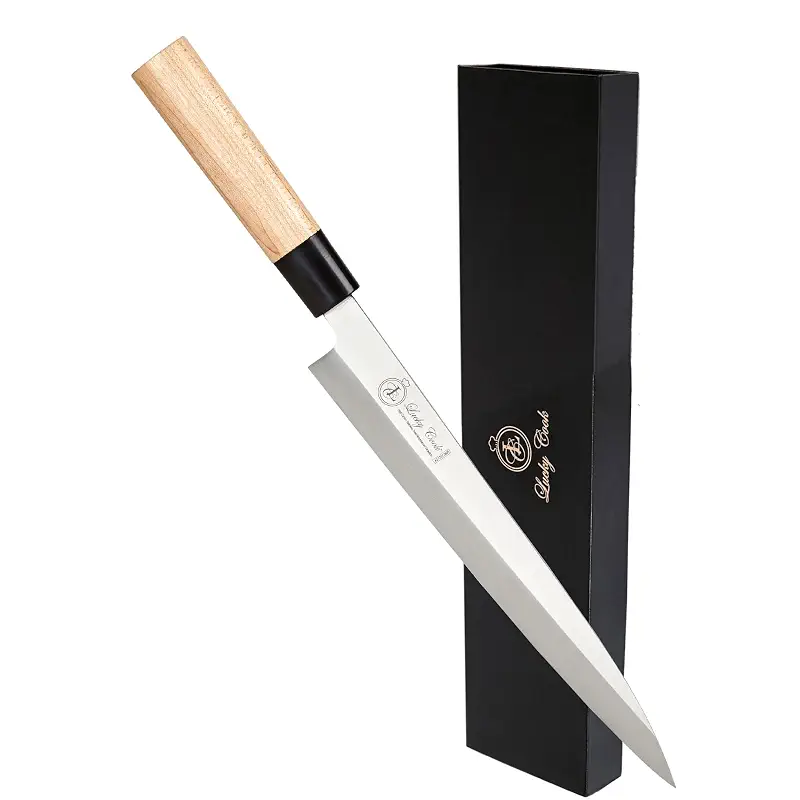
10” Sashimi Sushi Knife – Ultra Sharp Traditional Japanese Sushi Knife for Sashimi, Fish Filleting & Precision Slicing – Premium Stainless Steel Blade, Pakkawood Handle & Gift Box
4.6(2,143)
Razor-sharp and beautifully balanced entry sashimi knife with generous length and ergonomic design for beginners.
Ideal for: Home sushi enthusiasts and beginners who roll occasionally and value ease of use.
The Lucky Cook has become a crowd favorite among home sushi enthusiasts, and the 2,100+ reviews offer genuine insight into how it performs in real kitchens. Owners consistently report exceptional out-of-box sharpness, light weight, and a blade that glides through sushi rolls without crushing the rice: a real challenge for many entry knives. The single-bevel design (traditional yanagiba geometry) respects the craft, and the Pakkawood handle strikes a balance between comfort and durability. It comes beautifully boxed, making it gift-worthy, and includes a plastic blade protector.
What resonates with reviewers is that this knife doesn't feel cheap despite the accessible price point. The blade thickness is substantial (not flimsy), the balance is predictable, and it holds an edge reasonably well with normal home use. One reviewer noted the bolster (handle-to-blade junction) is simple plastic that may crack under heavy use, which is a legitimate concern if you're planning professional-volume work. Additionally, the blade profile at the tip has minor grinding inconsistencies noted by a detail-oriented user, though this doesn't impair function. Where this differs from the best yanagiba knives focused on professional techniques is that Lucky Cook optimized for home convenience and visual appeal rather than artisanal construction.
This is the knife to buy if you're rolling sushi once or twice monthly and want something that looks and feels quality without the learning curve of sharpening on whetstones.
Pros
Exceptional sharpness and smooth cutting action for sushi rolls
Lightweight and well-balanced for fatigue-free preparation
Beautiful presentation with included gift box and blade protector
Cons
Simple plastic bolster may crack under heavy professional use
Minor blade profile and spine grind inconsistencies out of box
Key features
Premium stainless steel blade handcrafted for precision and edge retention
Traditional single-bevel yanagiba design for authentic sushi preparation
blade length suited to home kitchens and standard sushi rolls
Ergonomic Pakkawood handle with slip-resistant finish and included storage box
How to Choose a Sashimi Knife
Four trade-offs that actually matter when matching a sashimi knives to your kitchen.
Blade Length and Your Workspace
Sashimi knives typically range from 8 to 12 inches. Longer blades (11–12 inches) let you execute a single, uninterrupted pulling stroke through a piece of fish, which produces the cleanest cuts and is preferred in professional kitchens. Shorter blades (8–10 inches) suit home cooks with limited counter space and are easier to control while learning. The sashimi knife sizing basics matter more than you might think: a knife that's too long for your prep space will be awkward to use, while one that's too short forces you to make multiple passes, which tears delicate fish rather than cleanly slicing it.
Single Bevel vs. Double Bevel
Traditional yanagiba knives are single-bevel (one sharpened edge, one flat back), which creates the sharpest possible edge and is standard in Japanese sushi bars. Single-bevel knives are harder to sharpen correctly because you must maintain the angle on one side only. Double-bevel knives sharpen more easily on a home whetstone and work for both left- and right-handed users, making them more forgiving for beginners. If you plan to keep your knife sharp using professional sharpening services, single-bevel is worth learning; if you'll sharpen at home, double-bevel simplifies maintenance considerably.
Steel Type: Stainless vs. High-Carbon
Stainless steel resists rust and requires minimal maintenance, making it ideal if you live in a humid climate or wash knives frequently. High-carbon and German steel blades hold a sharper edge longer and are easier to resharpen, but they require more care (hand washing, prompt drying, occasional oiling). For home cooks, stainless is usually the practical choice. For professionals who sharpen regularly and work in controlled conditions, high-carbon delivers better edge retention and that razor-like quality that makes sashimi prep feel effortless.
Hardness and Sharpness Trade-offs
Blade hardness (measured in Rockwell, or HRC) ranges from 54 to 60+ on sashimi knives. Higher hardness (58–60 HRC) means the edge lasts longer but is more brittle and harder to sharpen. Lower hardness (54–56 HRC) takes a razor-sharp edge quickly but dulls faster with use. For beginners, aim for 55–57 HRC as a practical middle ground. If you have access to sashimi knife maintenance guide resources and plan to sharpen regularly, higher hardness makes sense; if you're occasional, choose softer steel that sharpens easily at home.
Handle Material and Grip
Japanese wood handles (sandalwood, cherry) are beautiful and traditional but require care in wet conditions. Rubber, G10, and Pakkawood handles resist slipping and are more durable for high-volume work. If you'll be handling wet fish for long stretches, prioritize grip security over aesthetics. For home use where comfort matters during shorter sessions, a handle that feels balanced in your hand often outweighs material choice.
Frequently asked
Quick answers to the questions readers ask most.
What's the difference between a sashimi knife and a regular chef's knife?
A sashimi knife has a long, narrow blade designed for a single pulling motion through fish, producing a clean, glistening edge. Chef's knives are wider with a curved belly for rocking and chopping. Using a chef's knife on sashimi-grade fish will tear the tissue and damage the visual presentation. A sashimi knife dedicated to fish and vegetables won't work well for chopping herbs or vegetables, so ideally you own both.
Can I use a sashimi knife for other tasks besides fish?
Yes, the design works beautifully for thinly slicing cooked meats, poultry, and tender vegetables like cucumbers or daikon. Avoid hard vegetables and bones, which can chip the blade. Some owners use sashimi knives for bread, but the blade isn't designed for that pressure. Keep it primarily for fish and delicate proteins to preserve sharpness and longevity.
How often should I sharpen a sashimi knife?
With normal home use (a few sushi rolls monthly), a quality sashimi knife may go 6–12 months before needing sharpening. Professional kitchens sharpen after every 2–5 pounds of fish. Stainless steel generally requires sharpening more frequently than high-carbon. A simple test: if the knife no longer cleanly cuts a piece of paper or drags slightly through fish, it's time to sharpen.
Should I buy a left-handed or right-handed sashimi knife?
Traditional single-bevel yanagiba knives are handed (the sharp edge is on one side only). If you're left-handed, you need a left-handed knife. Double-bevel sashimi knives work for both hands. Some brands offer both options; confirm handedness before ordering to avoid disappointment.
What's a reasonable budget for a beginner sashimi knife?
You can find solid entry-level knives in the budget-friendly range that deliver genuine sharpness and reasonable edge retention for home use. Mid-range options offer better steel and construction for users committed to regular sushi prep. Premium knives add aesthetic refinement and slightly superior materials but aren't necessary for learning or occasional home cooking. Start with what you'll actually use, then upgrade if the craft pulls you deeper.