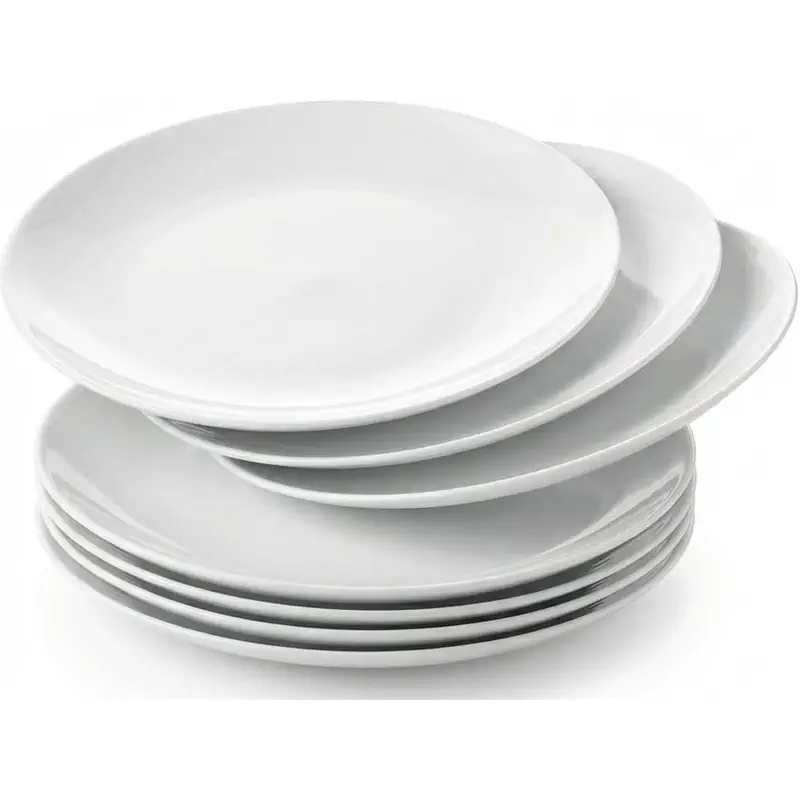
Ideal for: Budget-conscious households, renters, kitchens with tight storage, anyone prioritizing durability over design.
Corelle's triple-layer vitrelle glass has earned a loyal following for good reason. The plates are genuinely thin but remarkably strong, which gives you both the lightweight handling and compact storage ceramic plates can't match. After years of daily use, owners consistently report that these plates survive the kinds of rough handling that would leave scratches or chips on standard ceramic. The minimalist white design pairs with almost any kitchen aesthetic, and the non-porous surface resists staining and bacteria growth better than porous ceramics.
What makes these stand out compared to the MORA ceramic artisan plates is the weight and footprint. If your cabinet space is limited or you prefer not to feel heft when reaching for plates, Corelle's glass construction won't fatigue your hands. The trade-off is aesthetic warmth; some cooks prefer the tactile and visual richness of matte ceramic over bright white glass.
The 3-year warranty reflects Corelle's confidence in their chip-resistance claim, though owners note that even when a plate eventually does break after extended use, the set holds its value for replacements. Dishwasher and microwave safe, and made in the USA, these plates deliver reliability without fussiness.
Pros
Triple-layer glass resists chips and cracks under rough handling
Lightweight and stackable, uses half the cabinet space of ceramic
Non-porous surface resists stains and is ultra-hygienic
Made in USA with 3-year warranty
Cons
Minimalist white design lacks visual warmth compared to colored ceramics
Thin profile feels fragile to some despite actual durability
Key features
Triple-layer vitrelle glass construction for chip and crack resistance
8.5-inch diameter, lightweight at approximately 0.6 oz per plate
Dishwasher, microwave, and oven safe; non-porous material
Classic bright white finish complements most kitchen styles
Set of six plates; made in Corning, New York
#2 Pick
Best for Color and Personality
vancasso
vancasso Bonita Blue Salad Plate Set of 6, 7.5 Inch Ceramic Dinner Plate, Dishwasher and Microwave Safe
4.6(1,401)
Vibrant stoneware plates with artistic glaze design that bring style and durability to everyday tables.
Ideal for: Cooks who prioritize visual design, entertaining-focused households, anyone wanting color without mixing multiple sets.
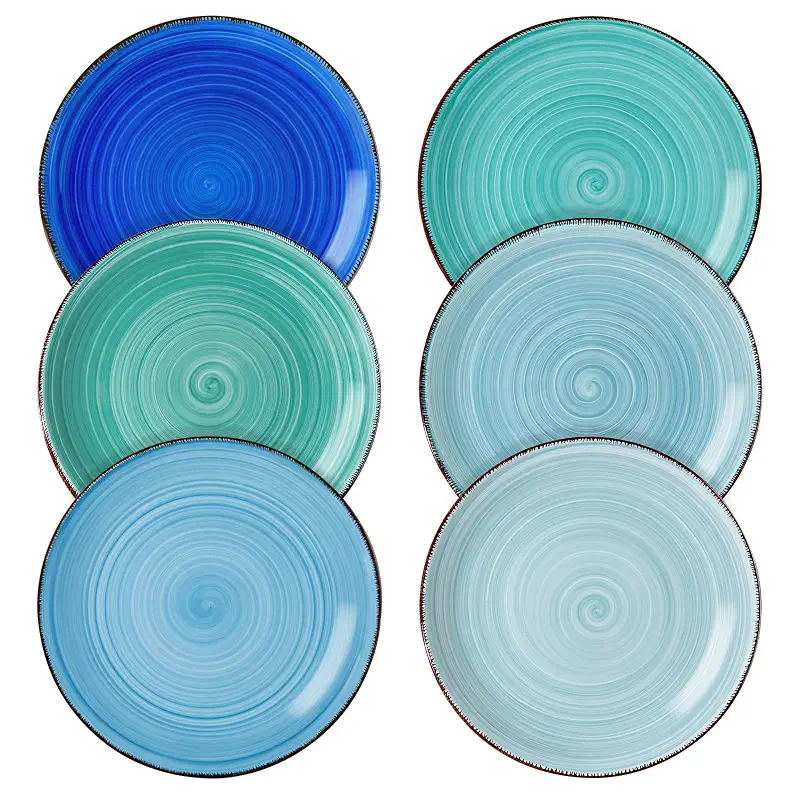
The vancasso Bonita line stands out for its visual appeal. Six different shades of blue glaze create a cohesive yet playful set, and the lollipop swirl design with brown eyelash trim at the rim gives these plates personality that plain white or solid colors can't match. Owners consistently highlight how much these plates brighten their table settings and inspire compliments from guests. The stoneware material is fired twice at high temperatures, creating a nonporous surface that resists stains and distributes heat evenly, making them reliable for both microwave and dishwasher use.
Compared to the simple white ceramic from 10 Strawberry Street, the vancasso plates sacrifice minimalist versatility for aesthetic interest. If your kitchen leans modern farmhouse or eclectic, these work beautifully; if you're matching traditional or contemporary formal settings, the bold blues might feel too casual.
One genuine drawback: owners report that stoneware can chip more easily than glass or high-fired ceramic under certain conditions. The plates are sturdy for normal use, but they're not as chip-resistant as Corelle. If durability in a multi-kid or RV environment is your priority, this isn't the first choice. For a household that values beauty and doesn't subject dishes to extreme rough handling, the trade-off is worthwhile.
Pros
Six coordinated blue hues with artistic lollipop swirl design
Twice-fired stoneware feels substantial and professional
Vibrant colors remain fade-resistant through regular use
Even heat distribution and microwave safe
Cons
Stoneware is more prone to chipping than glass under heavy handling
Bold color design may feel too casual for formal or minimalist table setting
Key features
7.5-inch diameter stoneware plates fired twice at high temperature
Six different blue glazes with artistic swirl and brown rim detail
Nonporous material resists stains and distributes heat evenly
Microwave, dishwasher, and oven safe; inorganic pigments resist fading
Set of six plates in coordinated colors
#3 Pick
Best Budget Option
10 Strawberry Street
10 Strawberry Street Simply White 7.5" Round Salad Plate, Set of 6
4.6(517)
Simple white ceramic plates that deliver solid everyday performance at an entry-level price point.
Ideal for: First-time dinnerware buyers, apartment dwellers, households seeking basic white plates without frills.
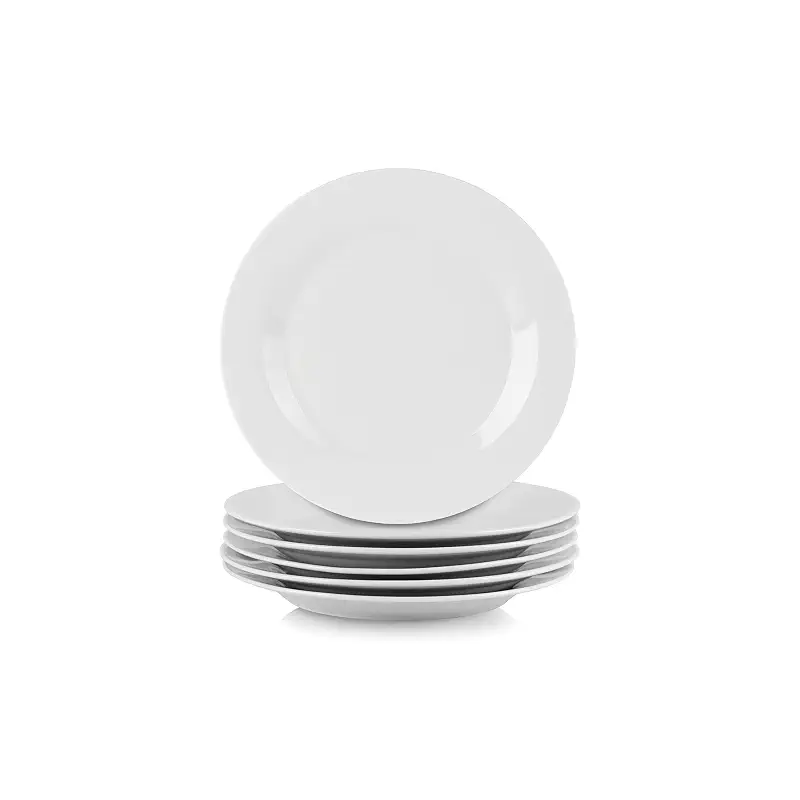
The 10 Strawberry Street Simply White set offers the classic white ceramic salad plate without premium pricing or premium features. The 7.5-inch diameter sits between a dessert and a side plate, and owners find them reliable for bread, small appetizers, or portion-controlled meals. The bright finish looks clean and complements any table setting. These are straightforward dinnerware: microwave, dishwasher, and oven-safe to 500 degrees, with a defined rim that helps contain sauces.
Where this set differs from the MORA ceramic plates is in the detailing and material philosophy. MORA emphasizes a matte, artisanal finish and uses a proprietary Paladin clay formula for extra strength; 10 Strawberry Street opts for a simpler, glossy glaze on standard ceramic. Both are durable, but MORA's plates feel heavier and more handcrafted, whereas these read as functional restaurant-style dinnerware.
The main consideration is that ceramic is more porous than glass and can chip under pressure. One reviewer reported finding hidden cracks under the glaze upon arrival, which suggests occasional quality control variability. For everyday family use and occasional entertaining, the value is solid; for a forever investment or extremely rough handling, the Corelle glass or MORA ceramics justify a step up in cost.
Pros
Entry-level price makes replacing broken pieces affordable
Classic white finish works with any table setting or existing dinnerware
Sturdy ceramic feels comfortable to hold and use daily
Oven safe to 500°F for serving and reheating
Cons
Standard ceramic is more prone to chips than glass or artisan ceramics
Glossy glaze lacks the refined aesthetic of matte or artist-designed finishes
Key features
7.5-inch diameter round ceramic salad plates with defined rim
Glossy white finish enhances food presentation and cleans easily
Microwave, dishwasher, and oven safe to 500°F
Set of six plates in classic ceramic construction
Functional design works for salads, desserts, and appetizers
#4 Pick
Best Premium Choice
MORA
Mora Ceramic Artisan Matte Plates Set, 7.8 in - Set of 6 - The Dessert, Salad, Appetizer, Small Dinner etc Plate. Microwave, Oven, and Dishwasher Safe, Scratch Resistant. Kitchen Porcelain Dish
4.8(2,345)
Artisan ceramic plates with matte finish, exceptional durability, and thoughtful design that elevate everyday meals.
Ideal for: Design-conscious cooks, open-shelf kitchen displays, anyone prioritizing food safety and artisan quality over budget.
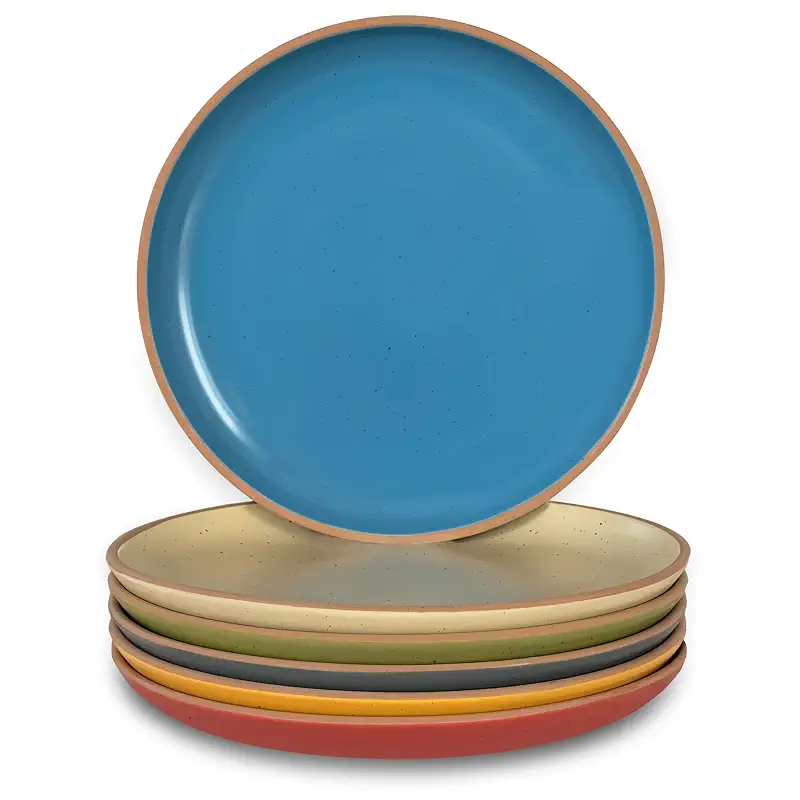
MORA represents the premium segment of this category, and the investment difference shows in material and philosophy. The plates use a proprietary Paladin clay that is 20 percent stronger than standard ceramic, fired and glazed with a crystallized matte finish that resists scratches from cutlery under 1000 grams of pressure. Unlike many ceramic manufacturers, MORA explicitly certifies that its glazes are lead-free and all-natural, a commitment that matters if you're concerned about long-term exposure from regular dinnerware use. The substantial weight and carefully considered shape create a dining experience that feels intentional and restaurant-quality.
Compared to the Corelle vitrelle plates, MORA's ceramics offer visual and tactile richness at the cost of space and weight. If you have open shelving or display cabinets, the matte finish and neutral cream or white tones photograph beautifully and feel like a design investment. The Mora brand philosophy emphasizes slowing down and mindful eating, which resonates with cooks who view dinnerware as part of a deliberate home environment rather than pure utility.
Two real considerations: the unfinished bottom can scratch polished furniture (though place mats solve this easily), and the matte glaze can develop metallic marks from silverware that are cosmetic rather than permanent damage. For households that use these plates daily and wash them through the dishwasher without issue, owners report year-plus durability with no degradation. MORA backs this with a no-questions-asked replacement promise.
Pros
Paladin clay 20 percent stronger than standard ceramic materials
Lead-free, all-natural glaze resists lead leaching concerns
Crystallized matte finish resists scratches and feels refined
Substantial weight and nesting design enhance both use and storage
Cons
Unfinished plate bottoms can scratch polished table surfaces without protection
Premium price reflects material quality and design philosophy
Key features
7.8-inch diameter ceramic plates with proprietary Paladin clay formula
Matte glaze finish in neutral tones with subtle speckled texture
Lead-free, all-natural glaze eliminates health concerns from regular use
Scratch-resistant to 1000 grams of pressure under cutlery
Microwave, freezer, oven, and dishwasher safe; stacks and nests efficiently
Ideal for: Smaller households, those seeking contemporary design with practical features, cooks who like color without boldness.
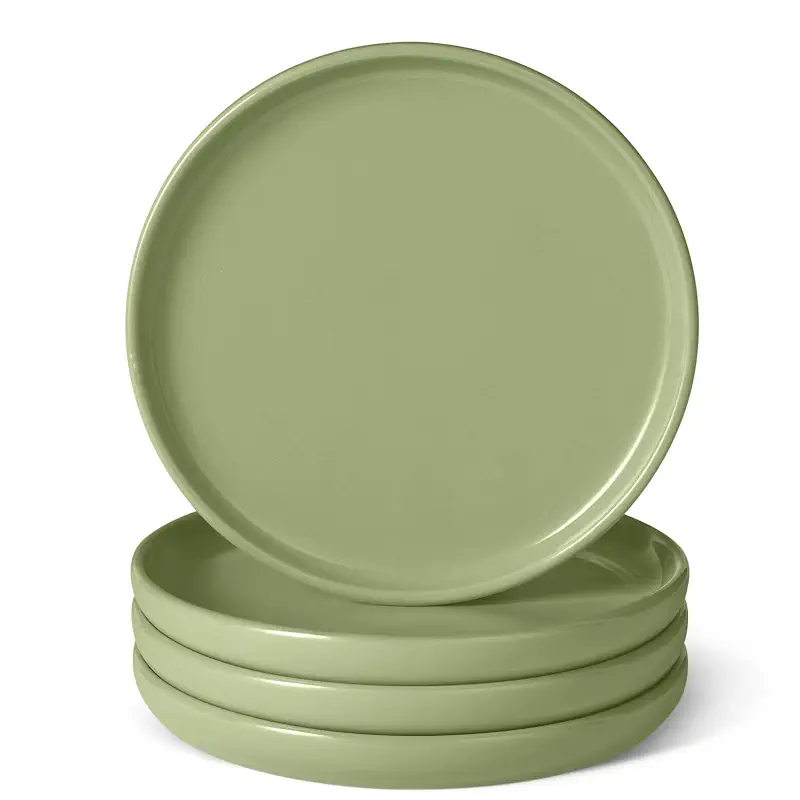
The Amazon Basics glazed stoneware set brings contemporary form to salad-plate utility. The 8.3-inch diameter and raised rim are practical features that keep food centered and sauces from wandering, while the soft olive glaze adds subtle color without being as bold as the vancasso blues. The stoneware construction resists stains, and owners frequently mention that the raised rim is the feature they reach for most; it solves real plating problems that plain flat ceramics don't address.
This set sits midway between the simple white 10 Strawberry Street ceramics and the artisan MORA plates. It offers more design intention than the budget option and more contemporary restraint than the colorful vancasso line, making it a natural choice for cooks who want to step up from pure utility but don't want maximalist color or premium pricing.
The main trade-off is quantity: this is a 4-piece set rather than 6, which limits place settings for larger tables. Owners also note that stoneware carries noticeable weight, which some appreciate for a quality feel and others find cumbersome. For smaller households or as a supplement to existing dinnerware, the focused design and practical rim make these plates compelling; for entertaining or consolidating multiple sets into one, you may need to purchase multiple sets to reach six plates per setting.
Pros
Raised rim keeps food and sauce contained on the plate
Soft olive color adds visual interest without overwhelming the table
Substantial stoneware weight feels quality and durable
Contemporary design complements modern and transitional kitchens
Cons
Set of four plates requires multiple purchases to outfit a full table
Stoneware weight makes handling less convenient for extended use
Key features
8.3-inch diameter stoneware plates with contemporary straight rim
Glazed finish in soft olive with stain-resistant coating
Microwave, freezer, and dishwasher safe for temperature adaptability
Set of four plates; contemporary design for modern table settings
Raised rim contains food and sauces; durable stoneware construction
How to Choose the Right Salad Plates
Four trade-offs that actually matter when matching a salad plates to your kitchen.
Material Matters: Glass, Ceramic, and Stoneware
Material choice fundamentally shapes how your plates perform and feel. Glass plates like Corelle are the most chip-resistant and take up minimal cabinet space, making them ideal for small kitchens or households with kids. Ceramic and stoneware offer more design options and visual warmth but require more careful handling. When weighing ceramic versus glass plate durability, glass wins for longevity under rough use, while ceramic wins for aesthetic range and weight preference. Stoneware sits between the two: more porous than ceramic but heavier and often more artistic. Consider your household's actual handling: do dishes get tossed into the cabinet, or are they placed carefully? That answer will guide your material choice more than any other factor.
Size and Versatility
Salad plates typically range from 7.5 to 8.5 inches in diameter, a difference that matters more than it sounds. Smaller plates (7.5 inches) work best for desserts, appetizers, or portion control, while larger salad plates (8.5 inches) can double as small dinner plates. Think about your actual use: do you cook for two and prefer smaller servings, or do you entertain frequently and need plates that handle both sides and main courses? A raised rim, as featured on some options, keeps food from sliding and makes plating neater. If you're supplementing existing dinnerware, measure what you already own to ensure the new set won't look awkwardly small or oversized at the same table.
Everyday Care and Maintenance
Almost all modern salad plates are dishwasher and microwave safe, but longevity depends on how you treat them. Refer to the salad plate cleaning guide before your first wash: most manufacturers recommend avoiding extreme temperature swings (don't pull a hot plate from the oven and immediately soak it in cold water). Stoneware and ceramic can develop metal marks from silver cutlery, but these are cosmetic and removable with a soft cloth. Check the oven temperature limit if you plan to reheat; some ceramics max out at 350°F while others handle 500°F. Non-porous materials like glass are the lowest-maintenance; porous ceramics require more occasional deep cleaning to prevent staining. If you run dishes through the dishwasher daily, opt for materials rated for frequent cycles, such as vitrelle glass or high-fired stoneware.
Design and Table Setting Flexibility
Your salad plates should either blend seamlessly with your existing dinnerware or become a deliberate design statement. Pure white plates work anywhere, making them the safest choice if you mix styles or plan to entertain with different table settings. Colored ceramics or stoneware (like soft olive or coordinated blues) work best in kitchens with an intentional design direction. If your table aesthetic is still evolving, neutral or white plates provide flexibility. When pairing with flatware and glasses, consider how top serving utensils coordinate with your plate color: matte ceramic handles shiny silver differently than glossy white ceramic or glass. For entertaining, aim for sets of six to ensure you have enough place settings for a small dinner party without significant repetition.
Budget and Long-Term Value
Salad plate pricing spans from budget options around $15 per set to premium ceramics at $40 or more. The most expensive option isn't always the best value. A budget set of six plates that survives daily use for three years costs pennies per use, while a premium set used once weekly might cost more per meal. Factor in: Will you replace a broken plate or buy a new set? Do manufacturers offer individual plate replacements? Is the warranty meaningful? Entry-level options work perfectly for apartments or situations where eventual replacement is acceptable. Premium sets make sense if you have display space, value design as a home investment, and plan to keep them indefinitely. Mid-range options often deliver the best value for families seeking reliability and modest design elevation without premium pricing.
Frequently asked
Quick answers to the questions readers ask most.
What's the difference between salad plates and dessert plates?
Salad plates typically measure 7.5 to 8.5 inches in diameter and are designed to handle a variety of foods with enough surface for dressing and sides. Dessert plates are usually 6 to 7 inches, explicitly sized for pastries, cakes, or small servings. Most salad plates work fine for dessert, but dessert plates are too small for a full salad. If you have limited space, salad plates offer more versatility.
Are ceramic or glass salad plates more durable?
Glass plates, particularly triple-layer vitrelle glass, resist chips and cracks better under rough handling and last longer in high-traffic kitchens. Ceramic and stoneware are more prone to chipping but offer richer aesthetics and warmth. If durability under extreme conditions is your priority, glass wins; if you prioritize design and careful use, ceramic is perfectly durable for 5+ years of daily dishwasher use.
Can I use salad plates in the microwave and oven?
Most modern salad plates are microwave and oven safe, but check the manufacturer's limits. Vitrelle glass, ceramic, and stoneware typically handle microwave heating without issue. For oven use, ceramic and stoneware usually top out at 350–500°F; glass may have lower limits. Never use plates with metallic trim or paint in the microwave. Always verify the product specifications before your first use.
How many salad plates should I buy?
If you live alone, a set of four suffices. For a household of two to four, six plates per setting ensures you can entertain without constant washing. For larger families or frequent entertaining, consider two sets of six (12 total) to maintain a complete place setting for a dinner party. Most sets come in four or six, so buy accordingly to your actual needs rather than defaulting to whatever size the set offers.
Do white salad plates stain easily?
White ceramic and glass plates resist visible staining if nonporous, but glazed ceramics can absorb liquids over time if not sealed properly. Most modern white plates include stain-resistant glaze. Red sauces or beets may leave faint marks on older or lower-quality ceramic, but these typically rinse away. If staining concerns you, opt for vitrelle glass or stoneware with explicit stain-resistant glaze, or choose a light color like cream or soft gray that hides minor marks.