Kitchen & Dining · Gadgets
Best Salad Dressing Mixer for Homemade Vinaigrettes
Find the best salad dressing mixer for fresh homemade dressings. Compare top-rated shakers, bottles, and emulsifiers for easy mixing and storage.
Affiliate disclosure: As an Amazon Associate I earn from qualifying purchases.
At a glance
2
Best for EmulsifyingChef'n
3
Best Capacity & LongevityWhiskware
4
Premium Glass with Hand PumpBoxiki Kitchen
5
Best for Compact KitchensOXO
Detailed reviews
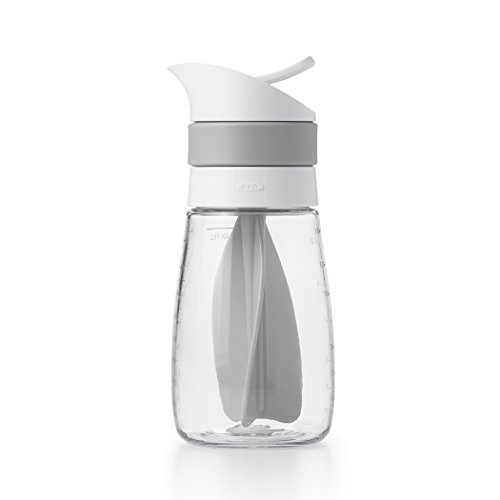
The OXO Good Grips Twist & Pour combines a practical design with real-world performance that shows in its review volume and consistency. The bi-directional blade mixes both thin vinaigrettes and thicker emulsions without requiring a second appliance, and the non-slip grip means you're not wrestling with an oily bottle mid-mix. What owners emphasize most is the leakproof seal, which is not trivial when you're storing dressing on a crowded fridge shelf or tossing it in a lunch bag.
At 14 ounces, the capacity sits between the budget compact options and larger mixers, making it ideal for a household that uses homemade dressing regularly but isn't catering. The wide opening accepts ingredients easily, and the measurement markings take the guesswork out of doubling a recipe. One caveat that surfaces occasionally: the spinning mechanism can stick if not rinsed promptly, though this is more inconvenience than defect.
Compared to the Whiskware option, this model favors hands-free emulsification through its blade rather than requiring you to shake, which matters if you have limited grip strength or prefer a gentler mixing motion. The plastic construction is BPA-free and sourced from 50% recycled material, which appeals to buyers conscious of durability without waste.
Pros
- Bi-directional blade mixes without manual shaking
- Consistently leakproof seal in real-world use
- Wide mouth for easy ingredient addition
Cons
- Spinning mechanism requires prompt rinsing to prevent sticking
- Narrower pour spout can drip if not wiped
Key features (5)
- 14-oz capacity with bi-directional mixing blade
- Leakproof, airtight design for fridge storage
- Non-slip grip ring stays secure when wet
- Dishwasher-safe with measurement markings
- 50% recycled content plastic, BPA-free
The Chef'n takes a different mechanical approach: instead of spinning or shaking, you pump a plunger rod to emulsify oil and vinegar directly inside the glass carafe. This matters for cooks who prefer a gentler, more controlled mixing method and want to watch the dressing come together. The glass is elegant enough that many owners leave it on the table during meals, which changes how you think about dressing prep. The measurement guide printed on the side (in ml, oz, and cups) is especially useful when following packet dressings like Hidden Valley.
The trade-off is durability. Several owners report the glass carafe developed leaks from the seam where the bottom connects, or cracked after a modest drop. The plastic base can also become brittle over time. If your kitchen is careful with dishware, this is a non-issue; if your household tends toward the chaotic side, it's worth noting. Where the OXO Good Grips Twist & Pour uses a blade system, this pump mechanism is gentler but demands you remember to maintain the plunger action, which some find tedious compared to passive emulsification.
The drip-free spout is genuinely useful: that small angled lip prevents the mess that many other models struggle with.
Pros
- Pump-action emulsifies oil and vinegar thoroughly
- Glass carafe elegant enough for table service
- Measurement guide in multiple units
Cons
- Bottom seam prone to leaking under heavy use or impact
- Requires active pumping rather than passive mixing
Key features (5)
- Glass carafe with pump-action plunger stirrer
- Drip-free angled spout prevents counter mess
- Measurement markings in ml, oz, and cups
- Top-rack dishwasher safe components
- Holds typical packet-dressing batch
The Whiskware Dressing Mixer Tritan stands out for sheer holding capacity at 2.5 cups, which matters if you're prepping dressing for a family salad or meal prep several servings at once. The surgical-grade stainless-steel BlenderBall wire whisk mixes in seconds and leaves the ball inside the sealed bottle during storage, so your oil and vinegar stay emulsified for up to an hour without restirring. Owners who have kept this product for years report it still looks and functions like new, with only minimal cosmetic wear.
The one-handed lever spout is genuinely clever for weeknight plating: press to pour, release to seal, all with one finger. The bottle comes in either Tritan plastic or glass, both stain-resistant and BPA-free. Tritan is particularly durable and won't degrade the way some plastics can after years of vinegar exposure.
Where this differs from the OXO Good Grips Twist & Pour is the emphasis on shake-based mixing and the larger format. You're doing the work yourself rather than relying on a powered blade, but the BlenderBall handles it efficiently. If your counter space is tight, the taller profile may be harder to store, though the carafe itself is narrow. For salad preparation and serving, this mixer pairs well with a top salad shooter if you're already invested in quality vegetable prep tools.
Pros
- 2.5-cup capacity covers family-size dressing batches
- BlenderBall keeps emulsion stable for an hour
- One-handed lever spout with auto-close seal
Cons
- Requires active shaking rather than passive emulsification
- Taller profile takes more fridge shelf space
Key features (5)
- 2.5-cup capacity with surgical-grade stainless BlenderBall
- Available in Tritan plastic or soda-lime glass
- One-handed lever spout with auto-closing seal
- Emulsion stays stable up to one hour
- Fully dishwasher safe, all pieces disassemble
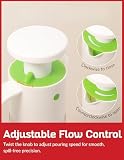
The Boxiki Kitchen Salad Dressing Mixer Bottle appeals to owners who want glass without the durability concerns that plagued earlier glass models. The pump mechanism on top works similarly to the Chef'n but with a different aesthetic: instead of a plunger lid, you hand-pump a rod inside the bottle to agitate the dressing. This gives you fine control over how much you mix without committing to a full shake. The twist-close lid (adjustable by turning clockwise to close and counterclockwise to open) is marketed as spill-free, though one owner did report leaking if the bottle tips after filling close to the brim.
The wide-mouth design makes cleaning straightforward, and the glass is thick enough to feel premium without being fragile. Measurement markings in ounces and milliliters are printed directly on the glass. Most owners praise the build quality and the fact that you can use it for vinaigrettes, marinades, and infused oils. Compared to the Whiskware option with its BlenderBall, this model is quieter and more elegant but demands you keep pumping rather than relying on residual emulsification.
The main limitation is that it's newer to market with fewer reviews, so long-term durability data is still emerging. Early reports suggest the glass is solid, but the lid gasket can show wear after extended use.
Pros
- Durable glass with thick walls and wide mouth
- Hand-pump agitator offers fine control
- Twist-close lid with adjustable pour angle
Cons
- Can leak if filled to brim and tipped
- Newer model with limited long-term durability data
Key features (5)
- Food-grade glass bottle with hand-pump agitator rod
- Twist-close lid for adjustable pouring and sealing
- Measurement markings in ounces and milliliters
- Wide mouth for easy filling and cleaning
- Dishwasher-safe glass and agitator; hand-wash lid
OXO's Little Salad Dressing is the pocket-sized option, and it's the most-reviewed model in this entire lineup, which speaks to how many people crave something this small and practical. At 3/4 cup, it holds enough for two salads in a sitting or a single person's week of lunches. The one-handed lever flips back to pour and forward to seal, a design that feels intuitive and reliable. Owners consistently emphasize that the seal is genuinely leak-proof, even after months of fridge storage.
Where this wins against the Twist & Pour is pure simplicity: there's no spinning mechanism to maintain, no pump to operate. You unscrew the top, add ingredients, unscrew it back on, and shake. The plastic is break-resistant and feels durable despite the compact footprint. It easily tucks into a fridge door pocket, a lunch bag, or even your hand while eating at a desk. The drawback is obvious: if you're serving a family or meal-prepping, this size forces you to make multiple batches. But if you're cooking for one or two, or if your kitchen is micro-sized, this is the glass versus plastic dressing containers answer that wins on practicality.
One owner did accidentally microwave it (they don't recommend it), but that's user error, not product design.
Pros
- 3/4-cup size fits easily in door pockets or bags
- One-handed lever seal is intuitive and reliable
- No moving parts simplifies cleaning and maintenance
Cons
- Small capacity requires multiple batches for families
- Narrow pour opening limits drizzle control
Key features (5)
- 3/4-cup capacity, compact footprint for tight kitchens
- Watertight lever seal flips back to pour, forward to seal
- Wide top opening for adding oils, vinegars, and seasonings
- Measurement markings for consistency and recipe scaling
- BPA-free plastic, dishwasher safe, break-resistant
How to Choose a Salad Dressing Mixer
Capacity Matters for Your Routine
The 3/4-cup models suit solo cooks and couples eating salad daily, while 14-ounce and 2.5-cup sizes serve families or meal-prep workflows. If you're making dressing just for yourself, the smallest option saves fridge real estate and forces you to make fresh batches more often: which actually improves flavor. Households making large green salads multiple times a week will appreciate the 2.5-cup Whiskware, which holds enough for several servings without repeat mixing sessions.
Seal Reliability is Non-Negotiable
A truly leakproof design keeps homemade salad dressing basics from becoming a fridge mess and prevents vinegar vapor from tainting adjacent foods. The OXO models and Whiskware have the strongest track records here; the Chef'n glass carafe has occasional seam-leaking issues that surface in reviews. Check whether the seal is one-handed (lever or twist) or requires two hands (screw-top), especially if you're juggling a plate or managing arthritis. A one-handed seal means you can pour mid-meal without setting everything down.
Mixing Mechanism: Active vs. Passive
Blade-based mixers (OXO Twist & Pour) emulsify without you doing the work; shake-based models (Whiskware, Boxiki) put the action in your hands; pump systems (Chef'n, Boxiki with rod) offer middle ground. If you have limited hand strength, arthritis, or just prefer watching the emulsion happen, passive blade mixing wins. For small batches or occasional use, shaking is quick and requires no moving parts to break. Pump systems are quieter and slower, which appeals to perfectionists.
Material: Glass vs. Plastic Trade-Offs
Glass versus plastic dressing containers each have merit. Glass looks professional on a dinner table and won't absorb vinegar stains over years of use, but it's heavier, takes up more fridge space, and breaks if dropped. Plastic (especially Tritan) is lightweight, durable, and forgiving, but can feel less premium and may cloud or stain with acidic dressings. For daily meal prep, plastic wins on practicality; for entertaining or serving, glass's visual appeal justifies the fragility risk.
Storage and Portability
Consider where the mixer lives in your kitchen. Compact models fit fridge door racks; larger bottles need shelf space. If you pack salad for work, a sealed, one-handed shaker matters more than at-home convenience. Travel-focused buyers should verify that the seal doesn't leak under pressure from a backpack or change in altitude: the Whiskware and OXO Little excel here based on owner reports.
Our picks at a glance
2
Best for EmulsifyingChef'n
3
Best Capacity & LongevityWhiskware
4
Premium Glass with Hand PumpBoxiki Kitchen
5
Best for Compact KitchensOXO
Frequently asked
Do I really need a special mixer, or can I just use a jar and lid?
A dedicated mixer adds two things a jar can't: controlled emulsification (blade or whisk keeps oil and vinegar blended, not separating) and a practical pour spout that doesn't dribble. A mason jar works for storage but requires shaking every time you pour, and vinegar runs down the side. A proper mixer's ergonomic seal and spout are worth it if you make dressing weekly.
How long does homemade dressing stay fresh in the fridge?
Oil-based vinaigrettes keep for 1-2 weeks in a sealed container; cream-based dressings (mayo or yogurt) last 3-5 days. Store-bought shelf-stable dressings last months due to preservatives. The leakproof seal matters most during the first few days when the emulsion is freshest. Most owners make batches to use within a week, so capacity under 2.5 cups covers that window without waste.
Can I use the mixer for marinades and sauces, or just dressing?
All these mixers work for marinades, hot sauces (once cooled), and infused oils. The pump and blade systems shine with thicker liquids that wouldn't shake well. The plastic models are safer than glass if you're marinating hot proteins that could leak and stain or break glassware. Avoid very thick aioli in the smaller models; they work best with pourable liquids.
Which model is safest to pack in a backpack or lunch bag?
The OXO Little and Whiskware both have proven spill-resistant seals that handle jostling and pressure. Test any model you're eyeing by filling it halfway, sealing it, inverting it over a sink for 10 seconds, then setting it upright. If even a drop appears, it's not backpack-safe. Leak-free is a strong selling point for portable use.
Do the measurement markings help me make consistent dressing?
Yes, especially if you follow a ratio like 3 parts oil to 1 part vinegar. The printed markings take guesswork out of scaling recipes and let you nail the same flavor twice. Some cooks ignore them and eyeball, but they're genuinely useful for beginners and anyone avoiding kitchen math mid-meal prep.