Best Roti Maker USA: Electric & Manual Options Compared
Find the best roti maker for your kitchen. Compare electric models and manual cast iron presses with expert guidance on durability, ease of use, and results.
Verdict, analysis, and key features for each pick.
#1 Pick
Best Overall for Automatic Cooking
StarBlue
10inch Roti Maker by StarBlue with FREE Roti Warmer and Removable Handle - The automatic Stainless Steel Non-Stick Electric machine to make Indian style Chapati, Tortilla, Roti AC 110V 50/60Hz 1200W
3.2(2,963)
Delivers soft, evenly cooked rotis when dough is perfectly prepared; includes a warmer for keeping batches fresh.
Ideal for: Daily roti cooks with consistent technique who want speed and soft results without hand-rolling.
The StarBlue brings genuine convenience to roti-making if you're willing to dial in your dough consistency first. Its 1200W heating system warms up quickly, and the non-stick plates roll out round shapes without the arm work that manual pressing demands. The included roti warmer is a real bonus for families who eat rotis every night, keeping a stack soft instead of turning rubbery. I'd choose this over the Imusa or Victoria press if your priority is speed and minimal physical effort.
That said, buyer feedback reveals a hard truth: dough preparation matters enormously here. A handful of reviewers achieved soft, puffed rotis consistently, while others struggled through batch after batch of undercooked, overly thick, or broken results. The machine's success hinges on hitting a narrow window of dough moisture and consistency, which takes trial and error even for experienced roti cooks. Hinges show wobble over time, and some units have stopped heating after moderate use, raising durability concerns.
If your dough-making skills are solid and you make rotis daily, this machine pays for itself in time saved. If you're still figuring out the technique, expect a frustrating adjustment period. A few owners reported the unit failing after 3-5 months, so factor in potential warranty claims.
Pros
Fast heat-up and consistent temperatures with 1200W power
Free roti warmer keeps batches warm and soft
Non-stick plates eliminate sticky dough friction
Cons
High failure rate reported; some units stop heating after months
Requires precisely balanced dough or results suffer dramatically
Key features
1200W electric heating for quick puffed rotis and chapatis
Non-stick stainless steel plates with removable handle design
Included insulated roti warmer with temperature control
10-inch plate diameter for standard-sized flatbreads
#2 Pick
Best for Precision and Long-Term Durability
Uno Casa
Uno Casa Cast Iron Tortilla Press 8 Inch - Tortilla Maker Press, Pre-Seasoned Roti Maker with 100 Pcs Parchment Paper - Heavy Duty Quesadilla Maker for Homemade Flatbreads, Rotis, Empanadas
4.4(11,517)
Heavy cast iron that delivers excellent results with proper seasoning and dough technique; parchment paper makes cleanup effortless.
Ideal for: Home cooks who value durability, don't mind a learning curve, and will maintain cast iron properly.
The Uno Casa cast iron press is a workhorse. It comes pre-seasoned and ready to use right out of the box, but reviewers who invested time in re-seasoning it with flaxseed oil report transformative results: a darker, harder seasoning layer that resists sticking even better and lasts indefinitely. Unlike electric machines, there's no motor to fail or heating element to burn out; cast iron simply improves with age if cared for.
Where this press stands out is in the consistency of pressed shape. The included parchment paper pack means zero sticking and cleanup that amounts to a quick wipe. The heavy weight (crucial for even pressure) can be awkward to move around the counter initially, but that same mass is what makes pressing effortless once it's positioned. Owners frequently note that a learning curve exists (your first few batches may be thicker or unevenly pressed) but by batch three or four, most home cooks dial in the right dough consistency and pressure.
Compared to the StarBlue electric model, this trades heating automation for mechanical simplicity and near-total reliability. Compared to the lighter Imusa, the Uno Casa's extra heft means less wobble and more even pressure from edge to edge. The one genuine drawback: if you have arthritis or hand weakness, the pressing force required may be uncomfortable.
Pros
Lifetime durability with proper seasoning; no electrical components
100 parchment papers included; sticky-free pressing and cleanup
Heavy enough to press evenly without rocking on the counter
Cons
Requires significant hand strength to press effectively
Heavier than aluminum alternatives; harder to store or move
Key features
Pre-seasoned 8-inch cast iron with extra screw hardware included
Bundle includes 100 parchment paper rounds for mess-free pressing
Reinforced hinges and bolts designed for years of daily use
Suitable for tortillas, empanadas, dumplings, roti, and chapatis
#3 Pick
Best Budget-Friendly Option
Imusa
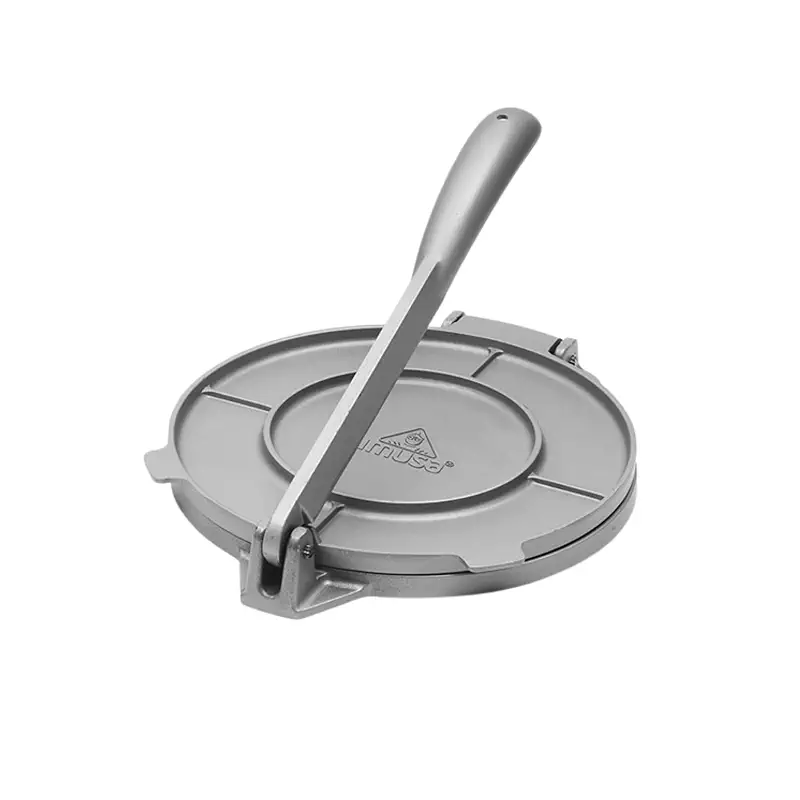
IMUSA USA Tortilla Press, 8 Inch, Silver | Bare Aluminum Finish, Easy Lever, Makes Flatbreads and Dumplings, Essential for Home Kitchens
4.2(14,168)
Lightweight aluminum press that gets the job done affordably; trade-off is less durability than cast iron but easier handling for everyday use.
Ideal for: Occasional roti and tortilla makers on a budget who prefer lightweight tools.
The Imusa has earned its reputation as a bestseller in the U.S. for a reason: it's affordable, genuinely easy to use, and produces decent results without requiring the hand strength that heavier presses demand. Aluminum construction keeps it light enough that even someone with mild arthritis can operate it comfortably, and the simplicity of the lever mechanism means there's almost no learning curve. You insert dough, press down, and remove a flat round: that's the entire process.
What owners consistently report is that Imusa presses are reliable workhorse tools for occasional use. If you make tortillas once or twice a week, this press will last years without issue. Where it diverges from cast iron is in the texture of results: aluminum doesn't retain heat the way cast iron does, so tortillas tend to stay flexible longer, which some cooks prefer. However, aluminum is also thinner and more prone to warping if stored improperly or pressed with extreme force.
Compared to the heavier Victoria or ARC presses, the Imusa sacrifices some durability and edge-to-edge pressure consistency in exchange for comfort and affordability. If you're torn between the Imusa and the Uno Casa, the choice depends on whether you prioritize ease of pressing (Imusa) or longevity and even results over decades (cast iron).
Pros
Lightweight aluminum; easy to press and store for anyone
Affordable entry point to homemade flatbread making
Reliable for casual weekly use without complex maintenance
Cons
Thinner aluminum warps more easily than cast iron under pressure
Edges may brown unevenly compared to heavier presses
Key features
8-inch cast aluminum construction; light enough for comfortable operation
Simple lever design with no screws or complex assembly required
Versatile for tortillas, roti, tostones, arepas, and empanadas
Easy cleaning and storage; no special seasoning needed
#4 Pick
Best for Heavy-Duty Daily Production
ARC Advanced Royal Champion
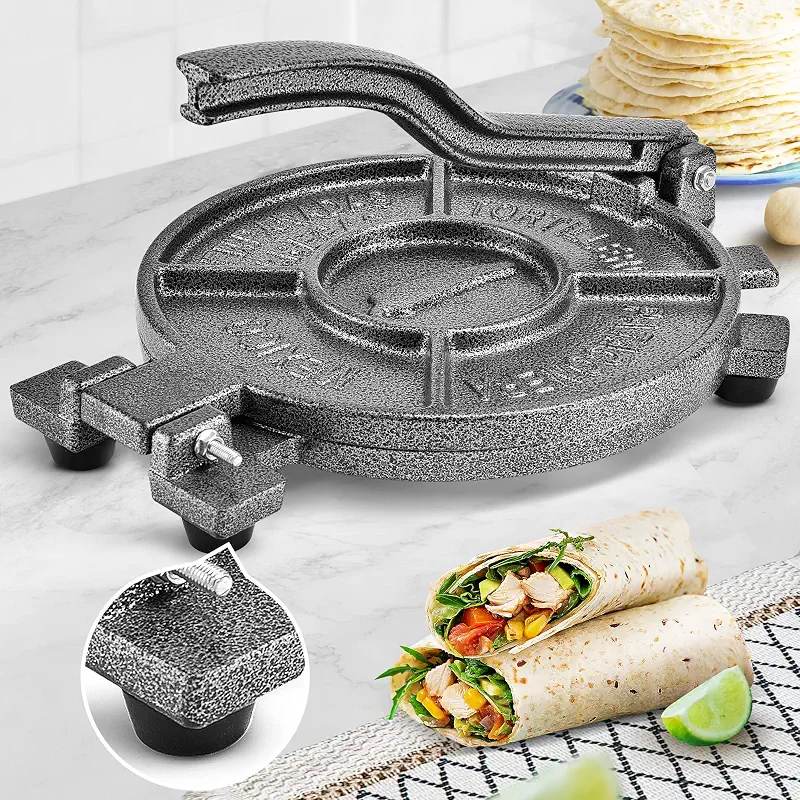
ARC 10 Inch Heavy Duty Cast Iron Tortilla Press with Non-Slip Foot Pad | Include 100 Pcs Parchment Paper, Rust-Proof Coating Tortilla Maker, Perfect for Homemade Quesadillas, Rotis & Empanadas
4.4(5,386)
Reinforced 10-inch cast iron press with non-slip feet and 100 parchment papers; tackles larger batches and thicker doughs without wobble.
Ideal for: Families or home cooks making large batches of tortillas or rotis multiple times per week.
The ARC is built for households that make roti or tortillas multiple times daily and demand unwavering consistency. The 10-inch size (nearly two inches wider than the standard 8-inch press) means you can make larger flatbreads or press thicker doughs without binding the handle. The reinforced handle is genuinely thicker than competitor models, and the non-slip rubber feet grip the counter so there's zero rocking when you press hard, a feature that solo cooks or people with less upper-body strength genuinely appreciate.
Owners report exceptional build quality and the 100 included parchment papers represent real value. Unlike the electric StarBlue or lighter Imusa models, this press has no failure points beyond hinges, and even those are simple to replace with hardware-store bolts if needed. The cast iron seasoning is solid out of the box, and the finished tortillas or rotis come out evenly browned and consistent. If you're comparing this to the Victoria, the ARC trades a bit of prestige and heritage for a larger working surface and slightly lower price point.
One caveat: the weight is substantial at over 18 pounds, so it's a genuine commitment to kitchen real estate. If you make tortillas occasionally, this is overkill; if you make them daily, it's indispensable.
Pros
Reinforced wider handle resists bending even under high pressure
10-inch plate for larger flatbreads and thicker dough batches
Non-slip feet prevent counter slipping during hard presses
Cons
Heaviest option at 18+ pounds; requires dedicated storage space
Hinge screws can shear after frequent use; require periodic replacement
Key features
Heavy-duty 10-inch cast iron with rust-resistant surface treatment
Non-slip rubber feet and reinforced handle design for stability
Includes 100 parchment paper rounds; pre-seasoned and ready to use
Available in multiple sizes for different production needs
#5 Pick
Best for Heritage and Premium Build
Victoria
Victoria 8 Inches Cast Iron Tortilla Press, Roti Maker and Tortilladora, Pataconera Seasoned with Flaxseed Oil, Made in Colombia, Traditional Style, Black | Pataconera, Seasoned with Flaxseed Oil, Made in Colombia, Traditional Style, Black
4.5(31,632)
Colombian-made cast iron press seasoned with flaxseed oil; combines traditional craftsmanship with modern durability for a lifetime tool.
Ideal for: Serious home cooks valuing heirloom-quality tools and traditional craftsmanship over high-volume production.
The Victoria is the heirloom option. Made in Colombia since 1939 by a manufacturer with a genuine circular-economy philosophy, this press carries weight: both literally and in terms of heritage. It arrives pre-seasoned with food-grade, non-GMO flaxseed oil (no PTFE or PFAS chemicals), and the cast iron quality is noticeably denser and smoother than many imports. Owners consistently describe it as 'built like a tank' and note that the pressing feels effortless despite the weight, a testament to the engineering of flat plates and ergonomic handle design.
Where the Victoria shines is in consistency and prestige. If you care about supporting traditional manufacturing and using a tool that will genuinely outlast you, this press justifies its premium price. The 8-inch size is standard and sufficient for most households. One real consideration: Victoria emphasizes that the press requires special care: never air-dry it or put it in a dishwasher, and hand-wash after each use. If that level of maintenance feels tedious, the ARC or Imusa might suit you better. However, committed cast iron users find this routine second nature.
Compared to the ARC's heavier 10-inch capacity, the Victoria at 8 inches is more portable and stores more easily. Compared to the electric versus manual question, the Victoria is unambiguously mechanical: no heating elements, no failure points, just iron and gravity doing the work you ask.
Pros
Pre-seasoned with flaxseed oil; exceptional food-safe quality
Colombian heritage brand with 80+ years of cast iron expertise
Engineered flat plates and ergonomic handle for effortless pressing
Cons
Premium pricing; highest cost of any manual press option
Requires careful hand-washing and seasoning maintenance
Key features
8-inch cast iron press made in Colombia with flaxseed oil seasoning
Reinforced design with flat plates that prevent pinching or uneven browning
No PTFE, PFAS, or synthetic coatings; natural materials throughout
Versatile for tortillas, arepas, empanadas, roti, and flatbreads
How to Choose Between Electric and Manual Roti Makers
Four trade-offs that actually matter when matching a roti maker usa to your kitchen.
Electric vs. Manual: Speed vs. Reliability
The choice between an electric roti maker and a manual press hinges on your cooking frequency and tolerance for maintenance. Electric versus manual roti makers represent two different philosophies. An electric machine like the StarBlue handles dough pressing and heating automatically, saving time if you make rotis daily and have consistent technique. Manual presses (cast iron or aluminum) rely entirely on your hand strength and technique but eliminate heating failure points and last indefinitely with care. If reliability and longevity matter more than speed, cast iron wins. If you prioritize convenience and make rotis every single day, electric is worth the risk.
Dough Preparation Is Non-Negotiable
Whether you choose electric or manual, the roti-maker can't fix bad dough. Your flour-to-water ratio, resting time, and kneading depth determine success more than any appliance does. Most owners report a learning curve of 3-5 batches before dough consistency becomes intuitive. Experienced roti cooks switching to a new press often nail it immediately; beginners may need 20 or 30 attempts. If you're new to roti-making, start with a budget-friendly manual press so you're not frustrated if the learning phase takes time. Once your dough skills are locked in, upgrading to a heavier press or electric model will feel like a genuine upgrade.
Size, Weight, and Storage Considerations
Manual presses range from 8 inches (standard, around 7-9 pounds) to 10 inches (heavy-duty, 18+ pounds). Larger plates let you press bigger flatbreads and thicker doughs, but they demand more counter space and physical effort. If you have arthritis, hand weakness, or a small kitchen, an 8-inch lightweight aluminum press removes friction from your decision. If you make rotis for a large family or run a semi-commercial kitchen, the 10-inch cast iron's stability and size justify the footprint and weight. Electric machines occupy similar counter real estate but require a power outlet and care not to splash water near the cord.
Long-Term Cost and Maintenance
Cast iron presses cost more upfront but function forever. A Victoria or ARC press purchased today will outlast you if maintained: hand-washed, dried immediately, and re-seasoned occasionally with food-grade oil. Electric roti makers are cheaper initially but carry the risk of heating elements failing, hinges breaking, or motors burning out. Budget for how to season and maintain your cast iron press properly: flaxseed oil seasoning works best, but it requires an hour in a 450°F oven and proper ventilation. If you're uncomfortable with cast iron maintenance or want zero upkeep, aluminum or electric is the simpler choice, albeit less durable long-term.
Frequently asked
Quick answers to the questions readers ask most.
Can I use a tortilla press to make roti?
Yes. Tortilla presses and roti makers are mechanically identical: both flatten dough between two heated plates (electric) or unheated surfaces (manual). The main difference is whether your dough is corn masa, wheat flour, or a blend. Manual cast iron or aluminum presses work for any flatbread: tortillas, rotis, chapatis, arepas, and empanadas. Electric roti makers are optimized for Indian flatbreads but can handle tortillas if your dough consistency is right. Expect minor texture differences depending on the tool and dough.
What's the ideal dough consistency for a roti maker?
Roti dough should be smooth, soft, and slightly tacky, like a baby's skin, as traditional cooks say. Too dry and it cracks during pressing; too wet and it sticks. Most home cooks find success with a 2:1 flour-to-water ratio (by weight), then adjust based on humidity and flour type. Whole wheat flour absorbs more water than all-purpose, so the ratio shifts. Let dough rest 30-60 minutes after kneading to allow gluten to relax; this makes pressing easier and prevents tearing. If you're using an electric roti maker, aim for slightly softer dough than you'd use for manual pressing, since the machine adds heat.
Do I need parchment paper with a cast iron press?
Parchment paper isn't mandatory if your cast iron is well-seasoned, but it's highly recommended. It eliminates sticking (reducing frustration for beginners), keeps cleanup to seconds, and protects your seasoning layer from repeated scraping. Most quality presses come with 100 parchment rounds included. Reusable silicone baking mats work too and are more eco-friendly, though they wear faster. If you use neither, ensure your press is seasoned thoroughly: hand-wash and dry immediately after each use, then rub a whisper of oil over the plates.
How long does it take to master a roti maker?
Expect 3-10 batches (30-100 rotis) before your results feel consistent. The first batch usually reveals that your dough is too thick, too thin, or stuck to the press. By batch two or three, you've adjusted dough consistency and pressure. By batch five or six, most home cooks produce rotis that taste good and look reasonably round. Complete mastery (thin, puffed rotis every time) takes weeks of practice, especially with electric machines that punish dough inconsistency. Manual presses are more forgiving because you control the pressure and can sense when something is wrong mid-press.
Can I use an electric roti maker if I have no baking experience?
Yes, but start with lower expectations. Electric roti makers skip the rolling and shaping work, which is helpful, but they demand precise dough preparation and technique. Beginners often struggle because they don't realize how sensitive the machine is to moisture and consistency. If you've never made rotis by hand, buy a manual press and learn the fundamentals first: how dough should feel, how to recognize the right thickness, what 'cooked' looks like. Once those skills are automatic, upgrading to an electric model will feel like a genuine shortcut, not a frustration. Skipping the manual learning phase and jumping to electric usually leads to disappointment and a returned product.