Find the best Rocket espresso machine for your kitchen. Compare heat exchanger models, temperature control options, and compact designs from Milan's premium espresso makers.
Ideal for: Home baristas who want manual control and don't mind learning the nuances of heat exchanger operation.
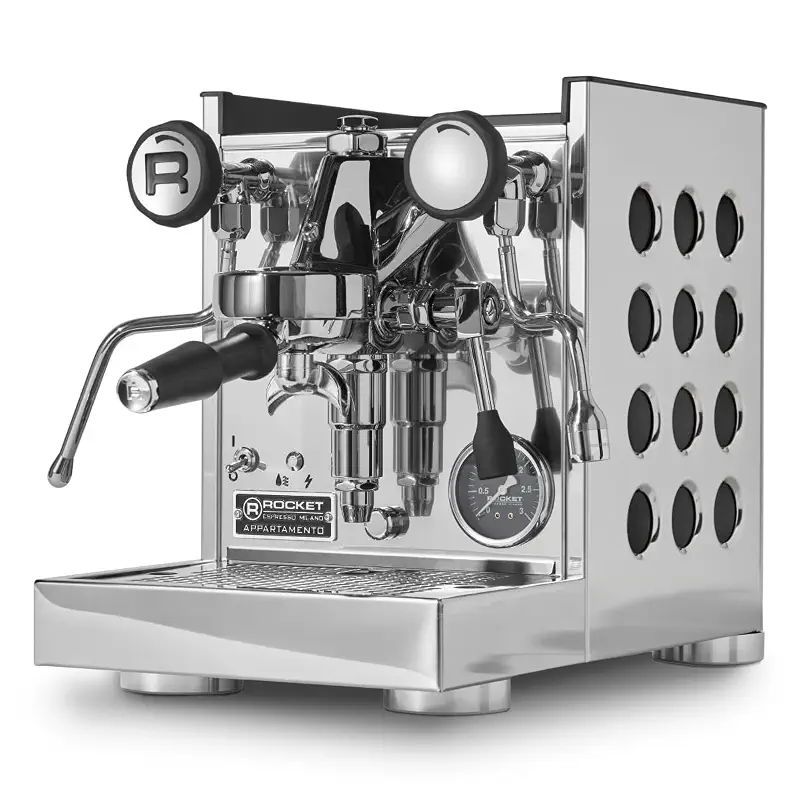
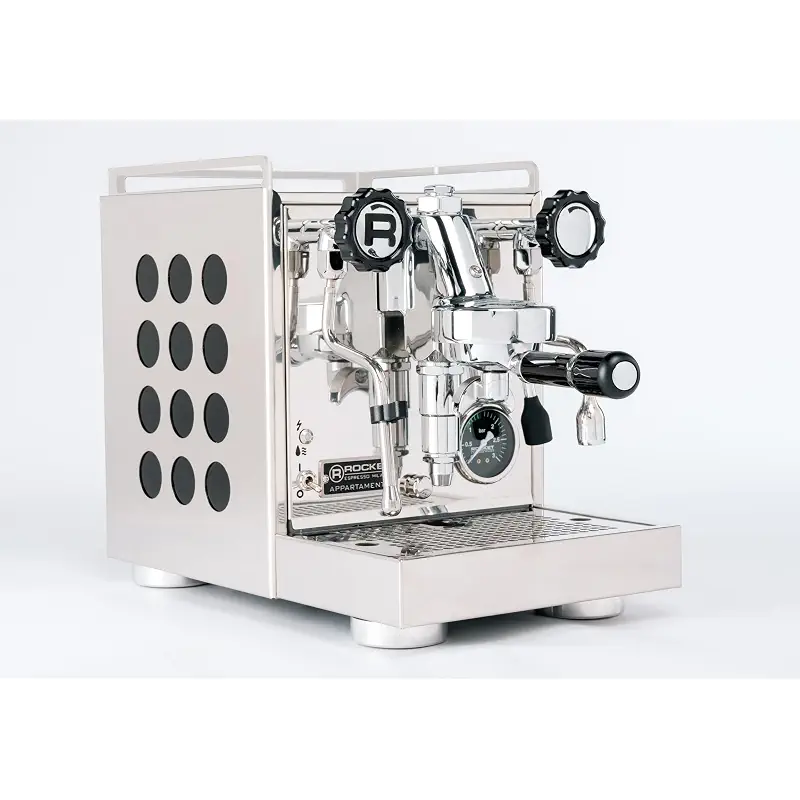
The Appartamento 2.0 lands as the standard-bearer in Rocket's lineup. It's a heat exchanger machine, meaning you can brew and steam simultaneously once you dial in the workflow: no waiting between tasks. The updated version adds practical touches: a deeper drip tray (you'll thank yourself for this when emptying), longer steam and hot water valve handles, and a control board with an RGB indicator light that flags when the machine needs attention.
This machine asks you to own your mistakes and learn from them. Brew pressure, timing, grind fineness: all manual. There's no PID temperature control or digital displays second-guessing your choices. That's the point. If you want to understand espresso mechanics and develop technique, this directness is a feature, not a limitation. The compact footprint suits kitchens where counter real estate is tight, and the option to customize with powder-coated cases and colored side panel inserts means it doesn't have to look industrial.
The one trade-off: heat exchanger machines have a learning curve around temperature management. You'll need to run water through the group head before pulling a shot if the machine has been sitting idle, and you need patience to dial things in. Compared to the Appartamento TCA's temperature control system, this model requires more hands-on feel.
Pros
Compact design fits small kitchens without sacrificing performance
Updated drip tray and valve handles improve daily usability
Heat exchanger allows simultaneous brewing and milk steaming
Handcrafted in Italy with long-term repairability
Cons
Manual controls require practice and patience to dial in
No temperature adjustment between shots
Key features
1.8-liter heat exchange boiler with heated group head
Mechanical brew, steam, and hot water controls
Compact footprint for space-restricted kitchens
Customizable powder-coated case and panel insert colors
Ideal for: Rocket machine owners looking for a purpose-built grinder with programmable dosing and consistent burrs.
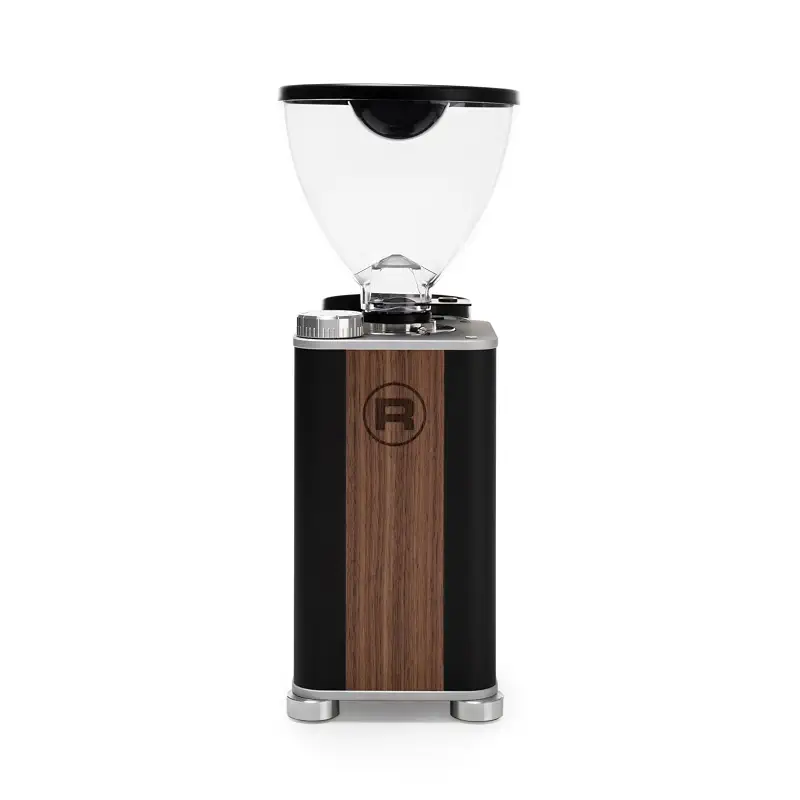
The Giannino grinder is built to work in tandem with Rocket espresso machines, which is worth noting since grinder and machine must complement each other to pull consistent shots. The 55mm burrs handle espresso-range grinds with speed and consistency, and the stepless adjustment knob with etched indicators gives you near-infinite settings for dialing between beans or shot styles.
Programmable dosing is practical if you pull multiple shots in a session. Set three doses (maybe single, double, and a finer grind for a ristretto) and toggle between them without re-measuring. The insulated case mutes the grinding noise, which matters if you're working in an open kitchen or early mornings. If you're budget-conscious, exploring the best espresso grinder under 200 category can reveal entry-level alternatives, though the Giannino prioritizes build quality and burr consistency at its investment level.
The main consideration: you'll want to pair this with a Rocket machine, as it's engineered for that ecosystem. If you're building a full Rocket setup from scratch, bundling this grinder with the Appartamento 2.0 or TCA gives you a cohesive workflow and ensures the grind settings align with your machine's brew pressure.
Pros
55mm espresso burrs deliver consistent, fast grinding
Programmable dosing saves time across multiple shots
Stepless grind adjust with etched markers for repeatability
Sound-insulated case reduces noise during operation
Cons
Limited color and finish options compared to other Rocket grinders
Requires Rocket espresso machine ownership for full ecosystem benefit
Key features
55mm hardened steel burrs for espresso-range grinding
Stepless grind adjustment with etched reference indicators
Three programmable doses plus continuous grind mode
Ideal for: Home brewers who want heat exchanger simplicity with temperature precision and don't need a dual-boiler system.
The Appartamento TCA is a fresh take on the standard Appartamento, built from scratch rather than incremental updates. The standout feature is its hybrid PID temperature control system: instead of guessing when the group head has cooled enough, you select one of four boiler pressure settings (0.9 to 1.2 bars) and adjust brew temperature accordingly. This removes the most frustrating part of heat exchanger brewing: the temperature dance.
The redesign shows throughout. The case, frame, brew group, control board, and even the portafilter handles have been revisited for durability and feel. An eco-mode lets you set a 30-minute standby window, cutting energy costs if you brew in clusters rather than all day. The new RGB indicator light shows status at a glance: heating, ready, water level warnings. Owners praise the consistent performance and sleek updated aesthetics.
One caveat: at least one owner reported a damaged drip tray on arrival, and after only two weeks of daily use, their machine started under-extracting and leaking water. This points to either shipping damage or a rare defect batch, not a design flaw, but it underscores the importance of buying from a reputable dealer and inspecting upon arrival. The Rocket heat exchanger vs dual boiler conversation matters here too: the TCA is still heat exchanger, so you can steam and brew simultaneously, but temperature control takes the guesswork out of that workflow.
Pros
Hybrid PID temperature control removes guesswork from brewing
Four selectable boiler pressures for shot customization
Eco-mode saves energy during idle periods
Ground-up redesign improves durability and tactile quality
Cons
Higher price point than base Appartamento 2.0
Shipping damage reported in reviews; inspect carefully upon arrival
Key features
Hybrid PID with selectable 0.9 to 1.2 bar boiler pressures
Heat exchanger allows simultaneous brewing and steaming
RGB indicator light for at-a-glance status and alerts
Ideal for: Home brewers who want a grinder that matches their Rocket machine visually and offers fine stepless control.
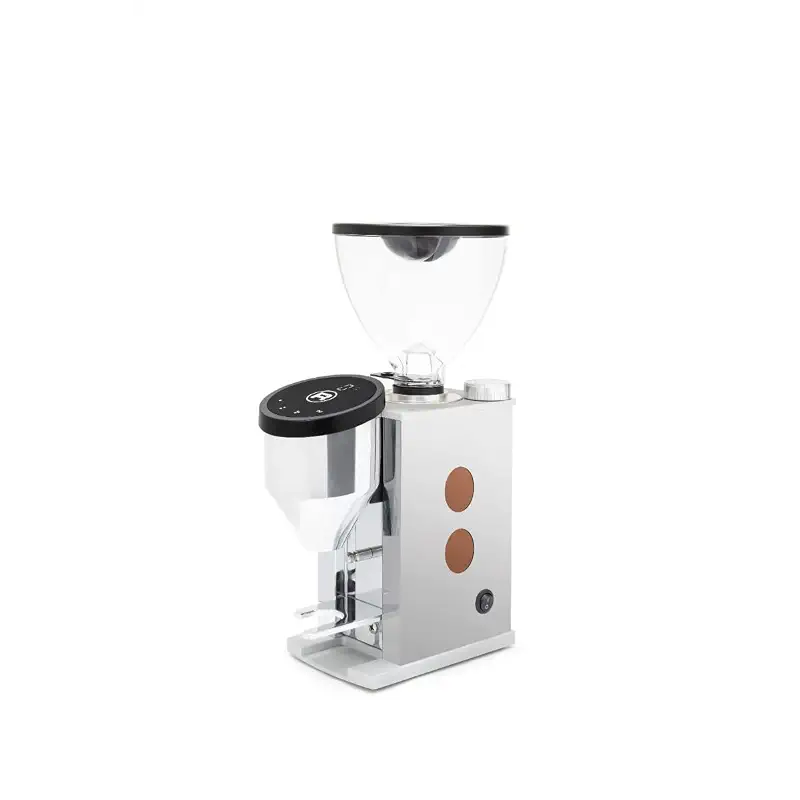
The Faustino 3.1 is the aesthete's grinder. It comes in black, chrome, or Appartamento-style colors (white, copper) so you can match your machine without compromise. The single-revolution stepless adjustment means one full turn of the knob spans your entire grind range: finer control than multi-revolution competitors, and worth learning if dialing becomes a daily ritual.
50mm flat burrs grind reliably, and like the Giannino, you get three programmable doses plus continuous mode. Owners love the sleek look and easy-to-use buttons, though they've flagged two real issues: grinds scatter across the counter and surrounding surfaces (plan for cleanup), and the bean hopper occasionally clogs, requiring a shake or stir stick to keep beans flowing. These aren't design flaws so much as realities of this burr type and hopper geometry, but they matter if your kitchen space is tight or you brew multiple shots back-to-back and don't want downtime.
Note that Faustino units may arrive unadjusted for your espresso range; the manual includes a recalibration procedure using a 2mm hex wrench. First-time setup takes time, unlike the Giannino which is factory-tuned. If you prioritize aesthetics and don't mind a bit of grinding mess, the Faustino edges out the Giannino for kitchens where the grinder sits visible on the counter.
Pros
Single-revolution stepless grind adjust for precise dialing
Multiple color options including Appartamento-matched finishes
50mm flat burrs produce consistent espresso grinds
Touch-sensitive programmable dosing with three custom buttons
Cons
Bean hopper can clog; may require occasional shaking or stirring
Grinds scatter across counter; daily cleanup necessary
Key features
50mm hardened steel flat burrs for espresso grinding
Single-revolution stepless adjustment knob with fine control
Programmable dosing with three custom dose buttons
Available in black, chrome, or Appartamento-matched colors
Handmade in Italy with three-year manufacturer warranty
Ideal for: Patient home espresso enthusiasts who enjoy tinkering, prioritize durability over automation, and embrace routine maintenance.
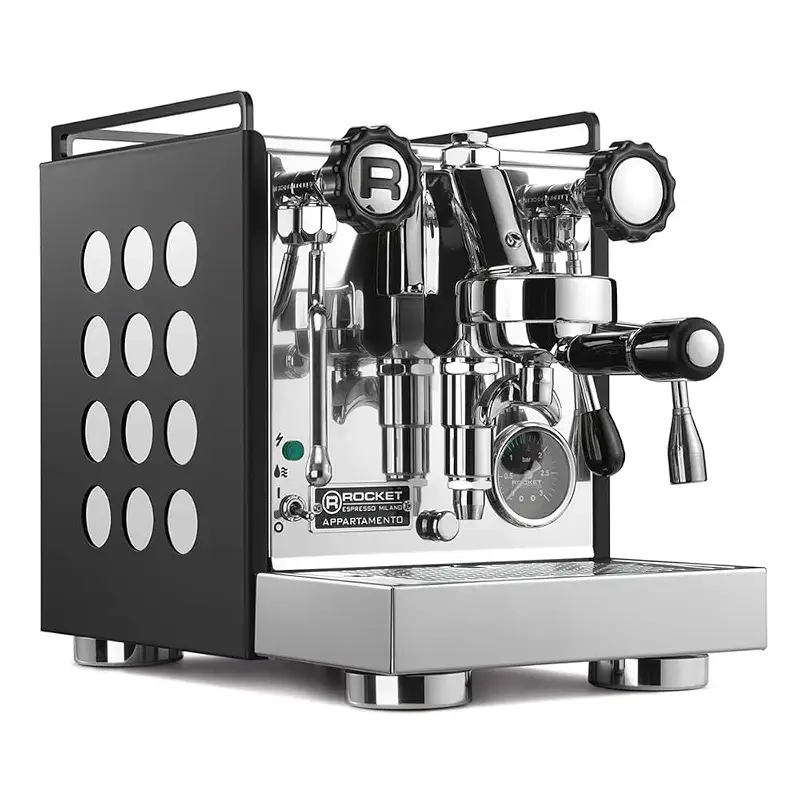
The Appartamento Nera is the most established entry in the Rocket lineup, and its longevity record speaks loud. Owners are pulling exceptional shots on year-old or older machines, and more tellingly, they're doing simple repairs themselves because the design is straightforward and parts are widely available. This machine will outlive many of your kitchen appliances if you commit to the maintenance routine.
Heat exchanger brewing means you manage temperature through timing and water management rather than dials. The E61 group head design is proven across decades of espresso history; it pre-infuses shots gently, which translates to sweeter, less bitter extractions even as you're learning. The 1.8-liter boiler steams milk while you brew, and the heated group head keeps shot-to-shot temperature swings minimal. Owners consistently stress the importance of descaling regularly, backflushing the group head weekly, and using filtered water. The rocket espresso machine maintenance guide becomes essential reading, not optional.
One consistent thread from owners: brew pressure runs around 13 bars out of the box, which is higher than the ideal 9 bars for espresso and can taste bitter. Many owners install a flow-control device or adjust the pressure stat to dial it back. This isn't a defect: it's part of the hands-on ownership model. The three-year warranty covers parts and labor, but the real value is in the machine's replaceability and the YouTube video ecosystem around E61 mods. Compared to the TCA's temperature control convenience, the Nera asks more of you and rewards that effort with decades of use.
Pros
E61 group head design proven over decades for gentle pre-infusion
Nearly universal parts availability makes repair DIY-friendly
1.8-liter heat exchanger enables simultaneous brewing and steaming
Simple mechanical design ensures reliability and longevity
Cons
Brew pressure ships at 13 bars; adjustment often needed for optimal shots
Requires strict weekly cleaning and descaling to maintain performance
Key features
E61 heat exchanger group head with gentle pre-infusion
1.8-liter heat exchange boiler for simultaneous operations
Manual mechanical brew and steam controls
Compact footprint ideal for smaller kitchen counters
Three-year parts and labor warranty
How to Choose a Rocket Espresso Machine
Four trade-offs that actually matter when matching a rocket espresso machine to your kitchen.
Heat Exchanger vs. Temperature Control
Rocket's entry-level machines use heat exchanger boilers, which let you brew and steam simultaneously but require you to manage temperature through timing and experience. The Appartamento TCA adds hybrid PID control with selectable pressures, removing the guesswork at a higher price. If you're new to espresso, heat exchanger models teach technique; if you want consistency faster, the rocket heat exchanger vs dual boiler conversation is worth exploring via comparison articles before committing. Most home brewers find heat exchangers sufficient once they understand the workflow.
Compact vs. Full-Size Footprint
All Rocket machines are smaller than commercial units, but the Appartamento series (2.0, TCA, Nera) prioritize compact design for kitchens with tight counter space. If you have room and want more boiler capacity or dual-boiler heating, other brands may suit you better. Measure your counter, account for portafilter clearance, and factor in space for a quality grinder, scale, and knock box beside the machine.
Matching Your Grinder
Your espresso machine is only as good as your grinder. The Rocket Giannino and Faustino grinders are purpose-built for Rocket machines and simplify the pairing decision. If you already own a quality grinder (Baratza Sette, Fellow Ode, or similar), you can use it with any Rocket machine. Budget for a grinder in the $300-400 range minimum; cheaper models won't dial espresso finely enough. The rocket espresso machine maintenance guide should also cover grinder care, as both need regular cleaning to avoid performance drift.
Maintenance Commitment
Every Rocket machine requires weekly backflushing, monthly tank cleaning, and periodic descaling. If you skip this, scale builds up, pressure fluctuates, and your machine ages fast. Owners who stick to the routine report machines working flawlessly for a decade or more. Those who don't often see problems within months. Factor in the time: roughly 30 minutes weekly, plus occasional deeper work. If this feels like a burden rather than a ritual, a fully automatic machine may suit you better.
Frequently asked
Quick answers to the questions readers ask most.
Do I need a bottomless portafilter with a Rocket machine?
No, but many owners buy one. Bottomless portafilters let you see water distribution during extraction, which helps diagnose packing or tamping errors. Most Rocket machines ship with a spouted portafilter and accept third-party bottomless models. It's a useful tool for learning, not a requirement.
Can I use pre-ground coffee in a Rocket espresso machine?
Technically yes, but don't. Pre-ground coffee loses aromatics within hours and won't pull shots with the clarity or crema you're paying for. Grind immediately before brewing. Whole beans stay fresh 2-4 weeks after roasting; ground coffee degrades in days.
How much counter space do I actually need for a Rocket machine and grinder?
Plan for at least 24 inches wide and 12 inches deep for the machine, plus another 18 inches for the grinder beside it. Add room for a small scale, knock box, and milk pitcher if you're steaming. Roughly 3-4 feet of counter is comfortable; cramped setups slow your workflow and increase mess.
What's the difference between the Appartamento 2.0, TCA, and Nera?
The 2.0 is the baseline heat exchanger with manual controls. The TCA adds hybrid PID temperature control and a redesigned case for more consistency. The Nera is the proven E61 model that's been around longer and has the largest owner community for learning and mods. Pick based on how much automation you want and how much time you'll invest in technique.
How long do Rocket espresso machines last?
With proper maintenance and filtered water, 10+ years of daily use is common. The simple mechanical design and Italian craftsmanship mean most parts are replaceable, and repair communities are active online. Neglect (skipping descaling, using unfiltered water), however, can shorten lifespan dramatically.