Kitchen & Dining · Cookware
Best Reusable Chemex Filter for Eco-Friendly Pour Over Brewing
Find the best reusable Chemex filter for sustainable pour over coffee. Compare stainless steel mesh and organic cotton options with expert guidance.
Affiliate disclosure: As an Amazon Associate I earn from qualifying purchases.
At a glance
2
Best Budget-FriendlyBarista Warrior
3
Best for Hario V60 UsersGeeAnkok
4
Best for Full-Bodied FlavorCoffeeSock
Detailed reviews
The Hapyhoom filter stands out for its solid welding-based construction and double-layer mesh design that buyers consistently praise for keeping sediment out of the cup. After a month of daily use, owners report zero buildup issues and say it fits snugly on Bodum and Chemex setups without leaking around the rim. The filter handles both hand-washing and dishwasher cycles, though one reviewer flagged the importance of disposing grounds in the trash first to avoid plumbing blockages, a practical tip that applies to all mesh filters. We'd reach for this one if you want reliable filtration without fussy maintenance.
The main limitation is grind size: coarse coffee flows through cleanly, but finer grinds can clog the mesh and slow your brew to a crawl. That's a trade-off inherent to mesh filtration, not unique to this brand, but it's worth knowing if you prefer a medium grind. Compared to cloth options like the CoffeeSock, the Hapyhoom trades a touch of softness in mouthfeel for lower maintenance and faster flow once you dial in your grind.
With hundreds of five-star reviews and a track record of months of use, this filter punches above its price point for durability. Food-grade stainless steel and BPA-free materials mean you're not wondering what's leaching into your coffee.
Pros
- Double-layer welded mesh resists sediment escape
- Works equally well in hand wash or dishwasher
- Snug rim fit prevents leaks during brewing
Cons
- Clogs noticeably with medium or fine grinds
- Requires trash disposal of grounds to avoid plumbing issues
Key features (4)
- Double-layer food-grade stainless steel mesh with welded construction
- Compatible with Chemex 6/8/10 cup, Hario V60, and Bodum drippers
- Dishwasher safe with hand-wash option for longevity
- BPA-free and descales with vinegar solution every 2-3 weeks
The Barista Warrior filter earns its position through sheer value. The dual-filtration design (fine mesh inside with laser-cut exterior) keeps grounds contained while allowing oils through, and most users report richer flavor compared to paper. Setup is immediate: drop it in your Chemex or Hario V60 and brew without any learning curve. One reviewer detailed using it daily with a gooseneck kettle at precise temperatures, showing it adapts well to both casual and technique-focused brewing.
The trade-off appears in long-term maintenance. One user discovered that coffee oils can gunk up the mesh over weeks of use, and a two-minute flame treatment (holding the filter over a stovetop with tongs) burns off the buildup and restores flow. That's a useful hack, but it's also a responsibility most paper-filter users never face. Where the Barista Warrior differs from the Hapyhoom is in the steeper learning curve for grind size; the mesh can struggle with finer grinds even more than stainless options built with slightly larger holes.
If you're committed to coarse-ground coffee and consistent rinsing, this filter delivers flavor-forward brews for less money upfront. The 25,000-filter lifespan claim stacks up against real usage patterns reported by owners.
Pros
- Laser-cut exterior plus fine mesh interior for reliable filtration
- Affordable entry point for reusable mesh filters
- Works with Chemex, Hario V60, and standard drippers
Cons
- Mesh can clog with coffee oil buildup after weeks of use
- Requires flame cleaning or vigorous vinegar descaling to restore flow
Key features (4)
- Dual-layer fine mesh with laser-cut exterior design
- Universal compatibility across Chemex, Hario V60 02/03, and most drippers
- Stainless steel construction designed to replace 25,000 paper filters
- Rinsable after each use; descale with vinegar solution every few weeks
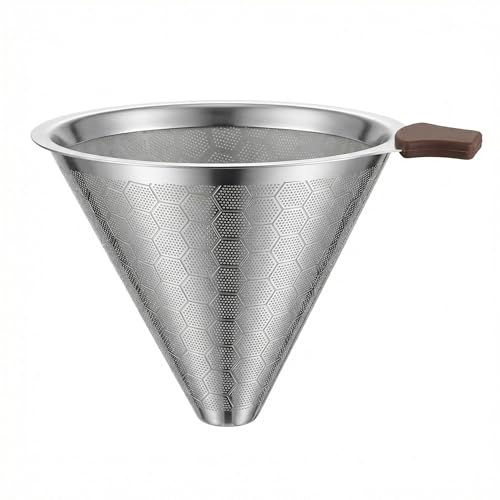
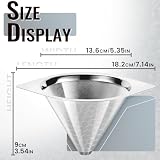
The GeeAnkok filter trades breadth of reviews for focused engineering: several users tested it specifically against other reusable filters and chose this one for its fit and speed. The 3.46-inch height and silicone handle are standout details. One reviewer who brewed for decades on Chemex paper filters switched to this metal option and was shocked by the espresso-like qualities of the full-bodied brew: a testament to how completely mesh lets oils through compared to paper. The handle itself solves a real pain point: you don't burn your fingers picking up a hot filter midway through brewing.
Compared to the Barista Warrior, this model sits narrower and inside the cup rather than spanning across the rim, which some find easier to position but others report makes it sit off-center slightly. One buyer noted the filter is smaller than anticipated and didn't fit their 8-cup Chemex, so sizing does vary by brewer model. The same owner who loved it for their Hario said it needed a bit of angle adjustment in their Chemex, a minor trade-off for the convenience factor. Another user found it drains slower than expected and wished for a slightly larger strain, hinting that the mesh may be finer than other options on this list.
If you're serious about Hario V60 and want a handle-equipped filter that also works with Chemex when needed, this one lands the brief well. The heat-resistant silicone handle alone justifies the slight premium over frameless competitors.
Pros
- Ergonomic silicone heat-resistant handle prevents finger burns
- Precision fit for Hario V60 with Chemex compatibility
- Food-grade 304 stainless steel rust-resistant construction
Cons
- Slower drain speed compared to other mesh filters
- Sizing can vary; some 8-cup Chemex users report misfit
Key features (4)
- Double-layer fine mesh with 3.46-inch height for V60/Chemex fit
- Heat-resistant silicone ergonomic handle for safe handling
- Food-grade 304 stainless steel construction, rust and corrosion resistant
- Fits Hario V60 02/03, Chemex 4-10 cup, and most standard pour overs
The CoffeeSock stands apart as the only cloth option here, and it earns its spot with an impressive 4.7 rating and a manufacturer promise of 700+ reuses. Made from GOTS-certified organic cotton with no bleach or synthetics, it feels like the most premium sustainability choice on the list. The two-pack means one filter brews while the other dries, and buyers consistently note how easy they are to clean: just empty grounds, rinse in cold water, hang dry. One reviewer switched from expensive disposable half-moon filters and noticed the coffee tasted smoother and richer, especially after setup (the package includes first-use instructions).
The trade-off is workflow. Several owners mention cloth filters flow faster at first but bog down toward the end of the brew, creating an uneven extraction. One clever user solved it by placing a metal straw in the Chemex spout as a hot-air release, which smoothed the flow. Another reported the filter sits out damp all day if you're not diligent about drying, which some find less hygienic than a quick rinse and store. Unlike the mesh versus cloth filter comparison, the CoffeeSock genuinely requires more active care: you can't throw it in the dishwasher or leave it wet without concern.
If you're willing to trade some convenience for the belief that you're brewing in the most natural, compostable vessel possible, CoffeeSock delivers. Made in the USA and handmade in Austin adds to the story. The price is higher per filter, but the two-pack and longevity claim it as a fair value for the commitment.
Pros
- GOTS-certified organic cotton preserves rich coffee oils and aroma
- Two-pack ensures one filter always clean and ready to use
- Fully compostable at end of life; made in USA
Cons
- Flow rate bogs down toward end of brew, requiring attention
- Requires careful drying to avoid mold or off-smells
Key features (4)
- GOTS-certified organic cotton half-moon shape, fits Chemex 6/8/10/13 cup
- Two-pack reusable filter set with 700+ uses per filter
- Bleach-free and fully compostable. BPA-free construction
- Rinse after each brew and air-dry; no dishwasher; replace every 1-2 years
The Misetto filter is the reliable middle ground: 800-mesh double-layer stainless steel that fits Chemex, Hario V60, and Bodum without quibbling about sizing. One long-time user praised its brightness and shine even after many uses, and the cute belly button design marker at the midpoint shows when you've filled halfway through a 10-cup brew. Another reviewer switched from disposable filters and loved avoiding the recurring cost, noting the rubber ring at the top prevents grounds from sneaking underneath: a small design touch that matters in real brewing.
The 12-month warranty is a confidence signal that most competitors don't offer outright, though it also suggests Misetto expects some failures within that window. One user flagged that grounds don't eject as easily as from paper filters, meaning you'll spend an extra few seconds tapping the mesh into the trash. The brew time is noticeably faster than some cloth options, which buyers generally prefer, but the downside is less control over extraction if you're using a lighter roast that needs slower contact with water. Compared to a best white coffee maker that handles automatic brewing, this manual mesh filter demands active technique, but rewards that attention with superior control over temperature and timing.
Where Misetto differs from the GeeAnkok is in the lack of a handle and the slightly wider rim design that sits atop the carafe opening rather than inside. If you're juggling multiple brewing methods or don't want to track which filter fits which brewer, the Misetto's proven versatility across 445 real users is compelling. The high mesh count also promises finer filtration, though it can demand coarser grounds to maintain reasonable brew times.
Pros
- 800-mesh count double-layer stainless steel for fine sediment control
- Proven fit across Chemex, Hario V60, and Bodum without sizing issues
- 12-month hassle-free warranty with 24-hour customer support
Cons
- Coffee grounds don't eject as easily as paper, requiring extra tapping
- High mesh count can clog faster with finer grinds
Key features (4)
- 800-mesh double-layer stainless steel with universal compatibility
- Fits Chemex 6/8/10 cup, Hario V60 02/03, Bodum, and standard drippers
- Cute belly-button marker shows 5-cup fill line for Chemex brewing
- Dishwasher safe; descale with vinegar every 2-3 weeks; 12-month warranty
How to Choose a Reusable Chemex Filter
Mesh Versus Cloth: The Core Trade-Off
Stainless steel mesh filters dominate this list because they're low-maintenance and brew fast, but they come with a grind-size dependency that cloth doesn't have. A mesh versus cloth filter comparison shows that cloth (like CoffeeSock) preserves more aromatic oils and feels gentler on the palate, though it demands careful drying and sits out between brews. Mesh is ready to use again within minutes and handles the dishwasher, but over weeks the coffee oils can clog the tiny holes and slow your brew unless you descale regularly with vinegar or flame-clean the filter. Choose mesh if you want set-it-and-forget-it simplicity; choose cloth if you're willing to baby a filter in exchange for what many describe as a more refined cup.
Brewer Compatibility and Sizing
Not all reusable filters fit all Chemex sizes equally. The GeeAnkok is engineered specifically for Hario V60 with a handle, while the CoffeeSock is half-moon shaped and Chemex-only. The Hapyhoom, Barista Warrior, and Misetto claim universal compatibility, but reviewers occasionally report that an 8-cup Chemex required returns due to a tight fit. Before buying, confirm your Chemex size (6, 8, 10, or 13 cup) and whether your dripper has a narrow spout or wide mouth. If you brew in multiple drippers, prioritize the Misetto's proven track record across brands, or pick the Hapyhoom's rim-coverage design that locks in without wiggling.
Grind Size and Brew Time
All stainless steel mesh filters require coarse to medium-coarse ground coffee to avoid clogging and excessive brew times. Fine espresso-grind coffee will stop flow through most mesh options cold. If you use a burr grinder and prefer medium grinds for pour over, test the filter's flow rate before committing. The CoffeeSock cloth offers more flexibility with grind size because cloth is inherently less prone to sudden blockage, though it does bog down toward the end of any brew. Owners report that coarse grounds brew through mesh filters in 3-4 minutes, while cloth can take 5-7 minutes with the same dose.
Maintenance and Long-Term Care
Cleaning reusable chemex filters immediately after brewing is the single biggest factor in avoiding sediment and clogging. Rinse while grounds are still damp and hot, then air-dry (or dishwasher for mesh). Every 2-3 weeks, descale with equal parts white vinegar and warm water by soaking for 15-30 minutes. Some mesh filters benefit from a light flame treatment every month or two to burn off stubborn oil buildup: hold the dry filter over a stove burner with tongs for a few seconds until it smokes, then let cool and rinse. Cloth filters should never see flame or harsh heat; just rinse, air-dry, and boil every few weeks if you notice flow slowdown. Store in a cool, dry place to prevent mold or odor.
Environmental and Cost Impact
One reusable filter replaces 20,000 to 25,000 disposable paper filters over its lifetime, cutting landfill waste and saving hundreds of dollars over years of use. A stainless steel mesh filter costs roughly $15–$30 and lasts 3-5 years with care; a CoffeeSock runs $25–$35 for two filters and lasts 1-2 years before needing replacement. If you brew one cup daily, a mesh filter pays for itself in 2-3 months compared to buying paper filters. Cloth filters compost entirely at end of life, while stainless steel is infinitely recyclable. Neither option produces microplastics, unlike some plastic dripper bodies.
Our picks at a glance
2
Best Budget-FriendlyBarista Warrior
3
Best for Hario V60 UsersGeeAnkok
4
Best for Full-Bodied FlavorCoffeeSock
Frequently asked
Can I use a reusable filter in my electric coffee maker or Ninja brewer?
Most reusable mesh filters are designed for manual pour-over setups, not automatic machines. A few users report success dropping a CoffeeSock cloth filter into an electric brewer as a secondary catch, but it's not the primary design. Check your machine's manual first, and test carefully with a small brew to confirm the filter doesn't clog or overflow.
Why does my reusable filter slow down after a few weeks of use?
Coffee oils build up on the mesh or cloth over time, narrowing the micro-holes and reducing flow. Rinsing immediately after brewing helps, but oils still accumulate. The fix is regular descaling with white vinegar and warm water every 2-3 weeks. For stubborn buildup on mesh filters, a brief flame treatment (2-3 seconds over a stovetop with tongs) burns off the oil and restores flow. Cloth filters respond better to boiling water soaks than flame.
Is it normal to find fine sediment in my cup when using a reusable filter?
A tiny amount of fine sediment is normal at first, but well-designed filters like the Hapyhoom or Misetto should keep the cup mostly clear after a few uses. If you're seeing lots of grit, try a coarser grind, verify the filter is fully seated in your brewer, and make sure you've cleaned the filter's underside where grounds can hide. If sediment persists, the mesh may be damaged or worn.
Can I wash a reusable filter in the dishwasher?
Most stainless steel mesh filters are dishwasher-safe and tolerate the heat well. The CoffeeSock cloth filter should never go in a dishwasher; hand-wash only to preserve the organic cotton. Always rinse the filter by hand immediately after brewing while grounds are still damp, then run it through the dishwasher if desired as a secondary deep clean every week or two.
How do I know if my reusable filter has failed or needs replacement?
A mesh filter fails when descaling and flame cleaning no longer restore flow, or if you see rust, corrosion, or holes in the mesh. A cloth filter is done when it develops persistent odor, mold spots that won't rinse away, or flow doesn't improve after boiling. Most stainless steel filters last 3-5 years; cloth filters typically last 1-2 years with daily use. Both are then fully recyclable or compostable.