Best Rated Cookware for Gas Stoves: Top Sets for Even Heating
Find the best rated cookware for gas stoves. Compare nonstick and stainless steel options that heat evenly and handle high flames. Reviews of top-rated sets.
Ideal for: Home cooks seeking affordable nonstick cookware with complete sizing variety.
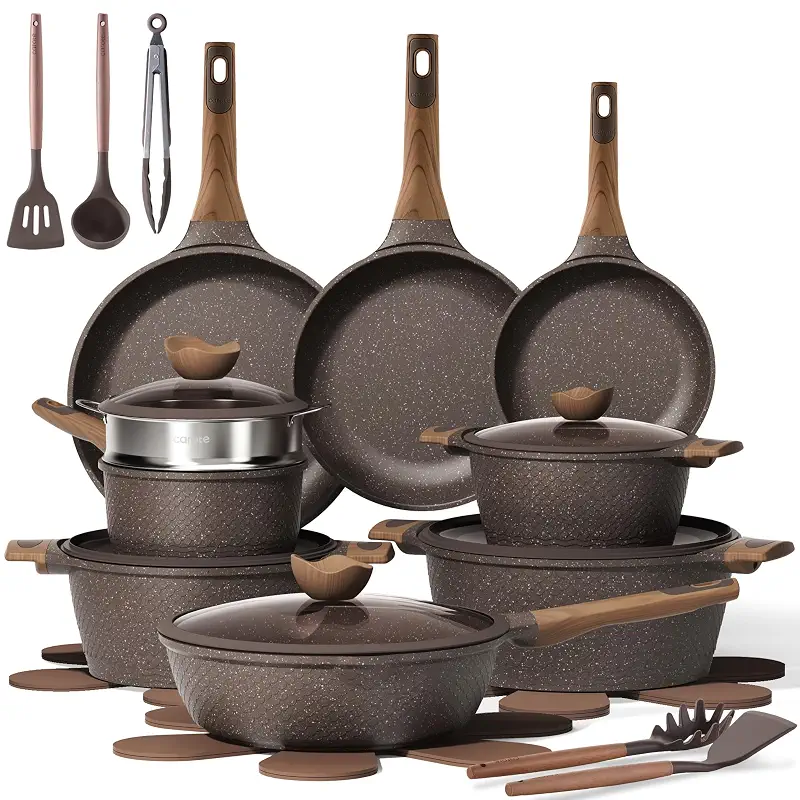
The Carote set stands out for delivering restaurant-quality nonstick surfaces without a premium price tag. Owners consistently praise how effortlessly food releases from the pan and how quickly cleanup happens, which matters when you're cooking multiple dishes on a gas stove where timing counts. The textured exterior design isn't just decorative: it complements the nonstick interior by creating a cohesive, high-end appearance that makes these look far more expensive than they cost.
What I look for in this category is long-term reliability, and the buyer feedback suggests Carote holds up well under daily use. The included glass lids with silicone seals trap moisture effectively, and the variety of sizes (three frying pans, multiple stock pots, and a sauté pan) means you're equipped for most gas-stove cooking scenarios. One consistent concern across some reviews mentions soot buildup on the bottom from gas flames, which is a trade-off to weigh if your stovetop sits close to cookware.
Compared to the T-Fal Ultimate Hard Anodized option, the Carote set prioritizes nonstick convenience over the heavier construction some cooks prefer. If you value ease of use and minimal oil cooking, this set wins. The handle heat issue mentioned in a few reviews appears isolated, and most owners report comfortable grip even during extended cooking sessions.
Pros
Nonstick coating resists sticking even without oil or butter
Comprehensive 26-piece set covers most cooking needs
Glass lids with silicone seals lock in moisture effectively
Easy cleanup with minimal scrubbing required
Cons
Gas stove use can leave soot marks on exterior bottoms
Silicone lid seals may wear or retain odors over time
Key features
Reinforced nonstick coating with special texture exterior design
Silicone-sealed glass lids for moisture retention and monitoring
Includes 8-inch, 9.5-inch, and 11-inch frying pans plus multiple stockpots
PFOA-free construction with hand-wash or dishwasher-safe options
12-month warranty with direct manufacturer support
#2 Pick
Best Heavy-Duty Construction
T-Fal
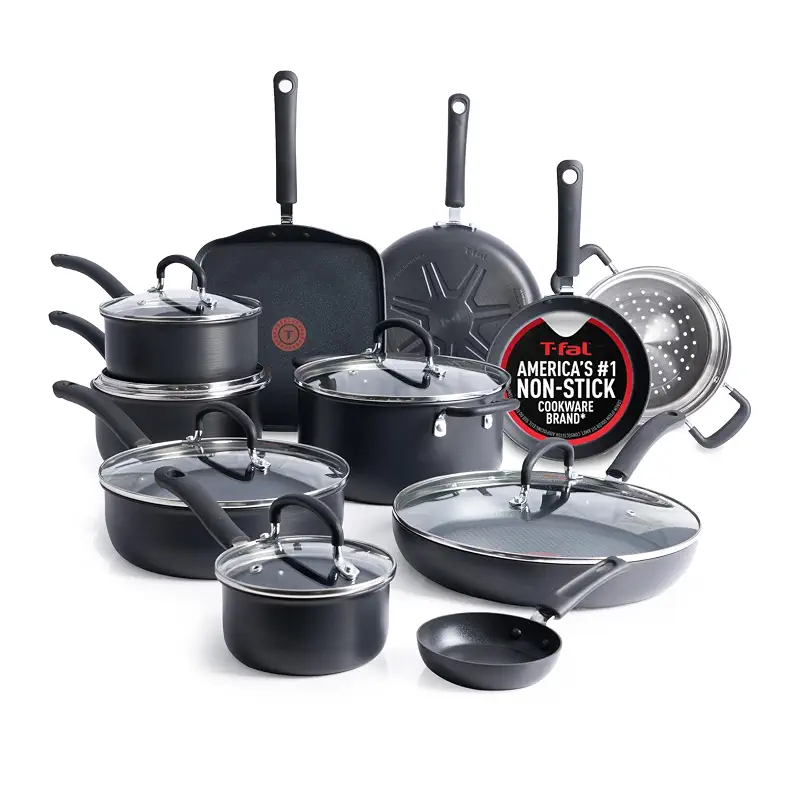
T-Fal Ultimate Hard Anodized Nonstick Pots and Pans Set 17 Piece, Nonstick Cookware Set with Fry Pan, Saucepans, Saute-Pan, Griddle, Dishwasher Safe, Onyx
4.7(18,845)
Hard-anodized professional-grade cookware built for decades of use with titanium-reinforced nonstick coating.
Ideal for: Experienced cooks who prioritize durability and plan to use cookware for years.
The T-Fal Ultimate Hard Anodized set represents the workhorse option in this lineup. What I appreciate about this choice is the weight and substance: owners who've used this brand for 45 years report the cookware still looks new, which speaks to the hard-anodized exterior's resistance to scratching and warping. The titanium-reinforced nonstick interior strikes a balance between the lighter Carote coating and true stainless steel, offering durability that justifies keeping the set long-term.
The Thermo-Spot heat indicator is a practical feature that takes guesswork out of preheating, especially valuable on gas stoves where flame control can feel intuitive but results vary. Multiple owners note this feature ensures even cooking and proper food searing. However, the set's weight means it won't slide easily on your stovetop: some owners mention holding the handle while stirring is necessary, which is actually safer but requires habit adjustment.
Where this differs from the Cuisinart hard-anodized option is the price positioning and oven temperature ceiling (400°F versus 500°F). If you regularly transition from stovetop to oven, the Cuisinart edges ahead. But for purely gas-stove cooking with daily meal prep, the T-Fal's proven longevity and titanium coating make it the more durable choice for serious cooks.
Pros
Hard-anodized construction resists scratching and warping
Titanium-reinforced nonstick coating withstands high heat
Thermo-Spot indicator turns red when pan is preheated correctly
Comprehensive 17-piece set with griddle and specialty pans
Cons
Heavier weight can slide on stovetops without hand support
Not all pan sizes include matching lids in the set
Key features
Hard-anodized aluminum construction with forged design
Titanium-reinforced nonstick interior resists wear and sticking
Thermo-Spot heat indicator for consistent preheat verification
Oven safe to 400°F with tempered glass vented lids
Includes griddle, egg wonder pan, steamer insert, and Dutch oven
#3 Pick
Best for High-Heat Cooking
Cuisinart
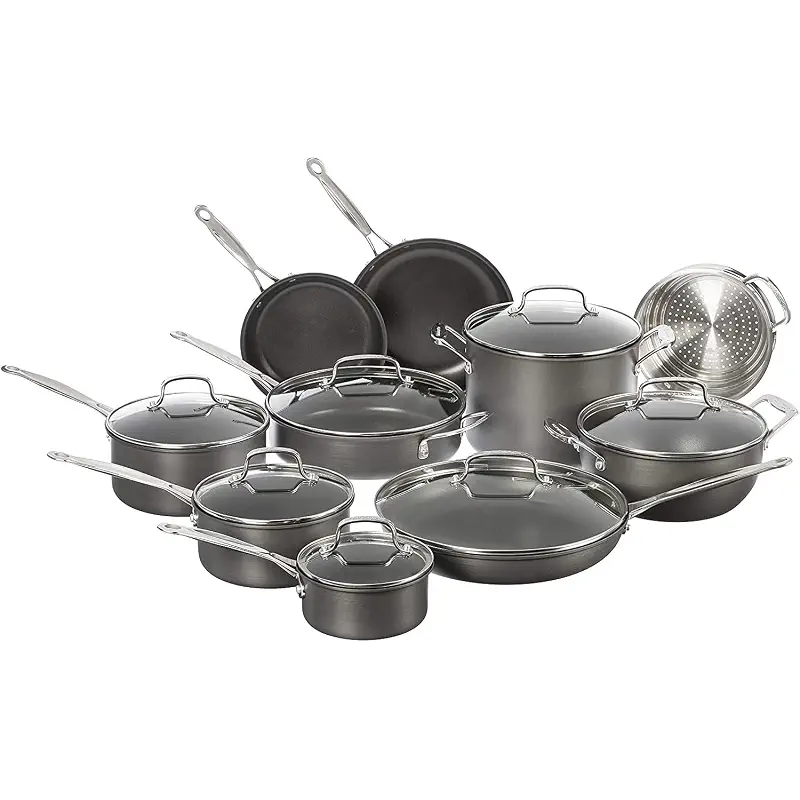
Cuisinart 17-Piece Pots and Pans Set, Non Stick Hard Anodized Cookware Set, Compatible with Electric, Gas Cooktops, Dishwasher Safe, Oven Safe Pot Set, Cool Grip Handles, Aluminum Core for Even Heat
4.6(3,865)
Premium nonstick with Quantanium reinforcement and 500°F oven capability, ideal for searing and finishing.
Ideal for: Home cooks who sear frequently and need to transition dishes to the oven.
The Cuisinart hard-anodized nonstick set brings professional polish to home gas cooking. The Quantanium reinforcement (a step above standard titanium) provides lasting food release that owners report holds up across months of daily use without degradation. This matters on a gas stove where high-heat searing is common; the nonstick surface continues performing even after repeated exposure to flames.
What differentiates this option is the 500°F oven-safe rating, the highest in this roundup. If you sear a steak on your gas stovetop and finish it in the oven, or if you cook frequently with recipes requiring oven transitions, this set accommodates that workflow better than lower-temperature alternatives. The cool-grip handles stay comfortable, and the anodized exterior (harder than stainless steel) resists the kind of visible wear that can make cookware look tired after a year of use.
Owners note the nonstick performs exceptionally well even with minimal oil, and cleanup is genuinely effortless. The trade-off compared to the T-Fal Ultimate is that this set is hand-wash only (not dishwasher safe), which some view as a minor inconvenience but others see as better for coating longevity. If you cook regularly and appreciate the flexibility of high-temperature oven finishing, the Cuisinart hard-anodized justifies the extra investment.
Pros
Quantanium nonstick coating resists wear and maintains release
Oven safe to 500°F for searing and finishing techniques
Hand-wash only design may extend nonstick coating lifespan
Solid construction and weight prevent sliding on gas flame
Cons
Hand-wash only; not dishwasher safe like some competitors
Slightly heavier than entry-level nonstick options
Key features
Hard-anodized construction stronger than stainless steel
Quantanium-reinforced premium nonstick interior for lasting food release
Oven safe to 500°F with glass lids rated to 450°F
Cool-grip stainless steel riveted handles stay cool on stovetop
17-piece set includes saucepans, skillets, sauté pan, stockpot, steamer
#4 Pick
Best Budget-Friendly Option
T-Fal
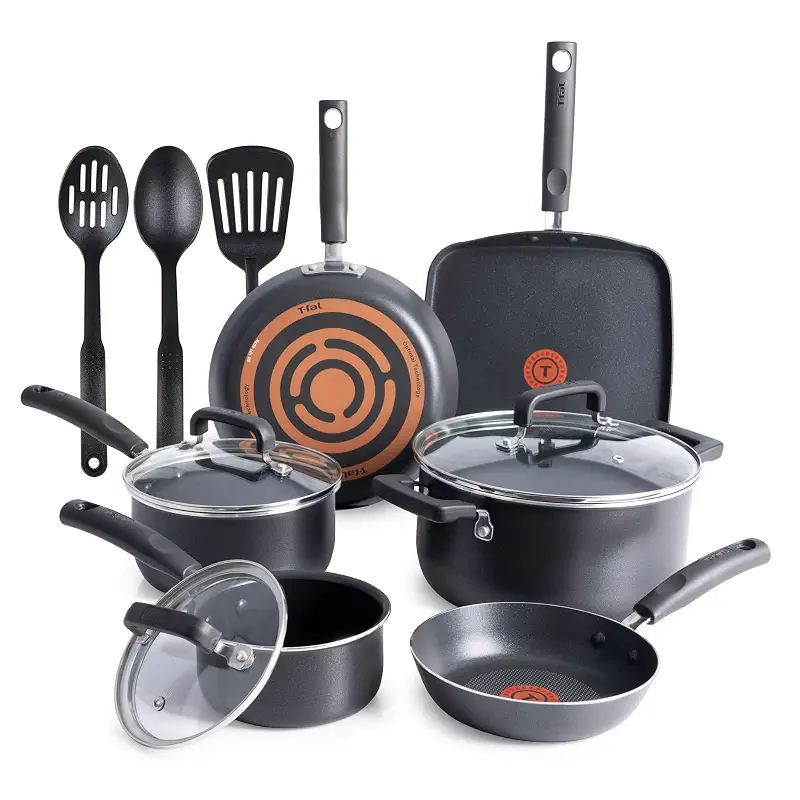
T-Fal Signature Nonstick Pots and Pans Set 12 Piece, Oven Broiler Safe 350F, Kitchen Cookware Set w/Fry Pans, Saucepans, Saute Pan, Dutch Oven, Griddle, Kitchen, Home, Dishwasher Safe, Black
4.7(18,373)
Lightweight, durable nonstick with ProGlide coating and Thermo-Spot technology at entry-level investment.
The T-Fal Signature nonstick set hits a sweet spot for budget-conscious home cooks who don't want to sacrifice performance. The ProGlide nonstick interior receives strong marks from owners for food release, and the Thermo-Spot heat indicator (shared with the T-Fal Ultimate) removes preheat guesswork. What I find compelling is how often owners mention the lightweight construction makes everyday cooking more comfortable, especially for those with hand fatigue or arthritis: a practical consideration that specs don't always capture.
This set's 350°F oven rating limits its versatility compared to the Cuisinart or T-Fal Ultimate models, but for straightforward stovetop cooking on a gas stove (sauteeing, simmering, frying) it delivers. The included griddle and dutch oven expand your cooking range without increasing the set's footprint. One owner noted the griddle has ridges on the bottom for glass-top stoves, so be aware if you use a glass cooktop; the other pans have flat bottoms suitable for gas.
Where the Carote set offers more pieces at similar price points, the T-Fal Signature prioritizes quality of core pieces (larger skillets and stockpot) over quantity. If you want a reliable, lightweight nonstick set that handles everyday gas-stove cooking without the premium pricing, this is the sensible choice. Just avoid metal utensils to protect the coating, as some owners learned the hard way.
Pros
Lightweight construction reduces fatigue during cooking
Ideal for: Experienced or aspiring cooks ready to master stainless steel technique for professional-grade results.
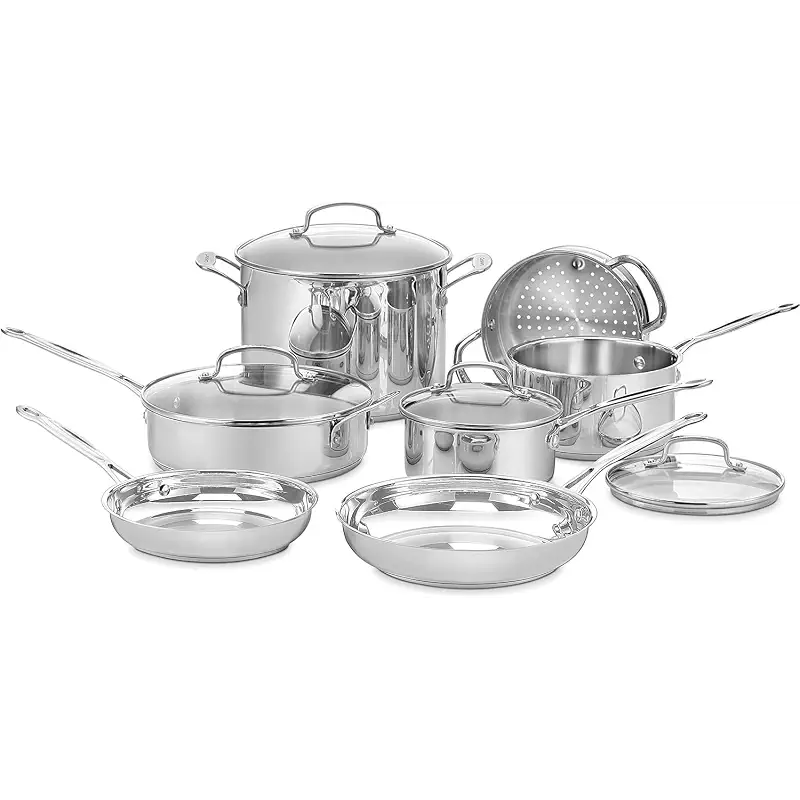
The Cuisinart Chef's Classic stainless steel set represents a fundamental shift from nonstick toward durability and longevity. Where nonstick coatings eventually degrade, stainless steel improves with proper technique. Owners who've taken time to learn preheating and oil protocols report exceptional results, even heating that eliminates hot spots, consistent browning, and the ability to build fond for pan sauces. On a gas stove, this means you develop real control over heat response and can achieve restaurant-quality sears that nonstick pans struggle to match.
The aluminum-encapsulated base is what makes this work on gas; it distributes flame heat evenly so you avoid the hot spots that plague thin stainless steel. The 500°F oven rating opens doors that nonstick sets close, and the riveted stainless handles stay genuinely cool during stovetop cooking. If you compare this to the nonstick versus stainless steel cookware decision, stainless demands more technique upfront but pays dividends in cooking versatility and lifespan.
This choice requires accepting a learning curve that the Carote or T-Fal sets don't impose. But owners who've invested report the stainless steel outperforms every nonstick set they've previously owned once the preheating and seasoning steps become automatic. For gas-stove cooking where you can control flame precisely and appreciate the ability to build flavor through proper searing, this is the best long-term investment. It's not the easiest set to clean compared to nonstick options, but the durability justifies the extra care.
Pros
Stainless steel lasts indefinitely with no coating degradation
Aluminum encapsulated base eliminates hot spots and heats evenly
Oven safe to 500°F for versatile stovetop-to-oven cooking
Riveted handles stay cool and handle high-heat searing
Cons
Food sticks without proper preheat and oil technique
Requires hand-washing and more involved cleanup than nonstick
Key features
Premium stainless steel construction with aluminum-core base
Cool-grip cast stainless steel handles contoured for secure grip
Oven safe to 500°F for finishing and versatile cooking
Includes three saucepans, stockpot, two skillets, and steamer insert
Dishwasher safe with drip-free pouring rim and helper handles
How to Choose Cookware for Gas Stoves
Four trade-offs that actually matter when matching a rated cookware for gas stoves to your kitchen.
Nonstick vs. Stainless Steel for Gas Cooking
The choice between nonstick versus stainless steel cookware hinges on cooking style and long-term commitment. Nonstick cookware excels for everyday meal prep on gas stoves: eggs slide effortlessly, cleanup is minimal, and the learning curve is nonexistent. Stainless steel demands proper technique (preheating, oil application) but rewards you with superior searing, pan-sauce building, and durability that extends decades. For gas stoves specifically, both perform well because you can control flame intensity, but nonstick suits casual cooks while stainless serves those who cook frequently and value technique development.
Heat Distribution and Gas Flame Response
Gas stoves deliver direct flame heat, so cookware construction matters more than on electric cooktops. Look for either hard-anodized aluminum or stainless steel with an encapsulated aluminum base: both distribute heat evenly and prevent hot spots. The weight and thickness of the pan bottom determine how quickly it responds to flame adjustments; heavier pans (like hard-anodized sets) hold heat more steadily but respond slower to changes, while lighter nonstick options react faster but may slide on your stovetop if you don't hold the handle. Test how a set performs by checking owner feedback specific to gas-stove use.
Oven Temperature and Cooking Versatility
Check the oven-safe rating of any cookware set you consider. Most nonstick options top out at 350–400°F, which limits finishing techniques like searing on the stovetop and transferring to the oven. If you regularly sear proteins or make skillet breads, you'll want 500°F capability. Stainless steel sets typically offer this flexibility. For pure gas-stove cooking without oven transitions, a 350°F rating is sufficient, but investing in higher heat capacity adds future cooking flexibility and justifies cost for serious cooks.
Care and Maintenance for Long-Term Performance
How to clean and care for your cookware directly impacts lifespan and performance. Nonstick pans require plastic or wooden utensils and hand-washing to preserve the coating; dishwasher use shortens their life. Stainless steel is more forgiving: it's dishwasher safe and can handle metal utensils, though hand-washing preserves the polished finish. Hard-anodized cookware sits between these; most manufacturers recommend hand-washing. Budget time weekly for proper care, and your cookware investment will repay you across years of cooking. Avoid stacking bare pans or storing metal utensils inside them.
Frequently asked
Quick answers to the questions readers ask most.
Will gas stove cookware bottom staining affect cooking performance?
No. The black soot or discoloration that builds on cookware bottoms from gas flames is purely cosmetic and doesn't impact heat transfer or cooking results. It wipes off with a damp cloth or slightly harder scrubbing with a gentle abrasive. Most owners accept this as a minor trade-off of gas-stove cooking. If appearance matters, stainless steel shows staining less visibly than darker nonstick finishes, but it still occurs.
Can I use metal utensils on nonstick gas-stove cookware?
Manufacturers recommend plastic or wooden utensils for nonstick cookware because metal scratches the coating and accelerates degradation. Once scratches form, food begins sticking in those spots. You can occasionally use metal utensils without catastrophic damage, but if longevity is your goal, invest in a few plastic spatulas and wooden spoons. Most nonstick sets include basic utensils, so use those first.
Which cookware material heats most evenly on a gas stove?
Hard-anodized aluminum and stainless steel with encapsulated aluminum bases both perform equally well, distributing flame heat evenly and eliminating hot spots. Thin aluminum or single-layer stainless steel shows more temperature variation. The deciding factor is your cooking goal: nonstick hard-anodized excels at low-to-medium heat cooking, while stainless steel shines at high-heat searing. Both paired with proper gas-flame technique deliver consistent results.
How long does nonstick cookware typically last on a gas stove?
Properly cared-for nonstick cookware lasts 3–7 years on a gas stove, depending on use frequency and whether you hand-wash versus use a dishwasher. Hard-anodized nonstick lasts longer (5–10 years) than traditional PTFE coatings because the reinforced surface resists wear better. Stainless steel has no coating to degrade, so it can last indefinitely if you avoid warping from extreme temperature swings.
Should I choose a large cookware set or smaller, higher-quality pieces?
A larger set (15+ pieces) offers convenience and covers more cooking scenarios, making it ideal for families or entertaining. Smaller premium sets let you invest more in fewer, higher-quality pieces that often outperform budget sets. For most home cooks on a gas stove, a 12–17 piece set strikes the balance: enough variety without excess clutter. Consider your cabinet space and whether you actually cook multiple dishes simultaneously.