Verdict, analysis, and key features for each pick.
#1 Pick
Best Overall
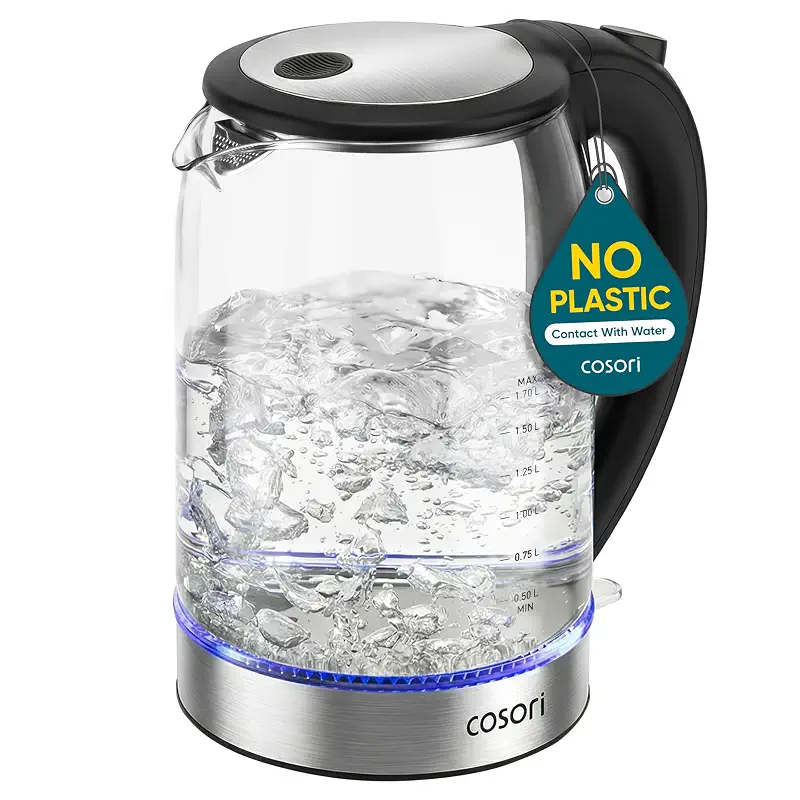
Cosori
Cosori Electric Kettle, No Plastic Contact with Water, 1.7L, Black | Wide Opening, Easy to Clean, Auto Shut-Off, Boil-Dry Protection, Tea Kettle, Hot Water Boiler, Borosilicate Glass, 1500W
4.5(49,129)
Fast-boiling glass kettle with zero plastic contact and strong customer loyalty across thousands of reviews.
Ideal for: Tea and coffee drinkers who prioritize pure water taste and reliable daily performance.
The Cosori glass kettle earns its top ranking through consistency and pure design simplicity. What appeals to owners most is the complete absence of plastic touching water (the interior is borosilicate glass with a stainless steel base and filter) so there's no plastic smell or taste creeping into your tea. It boils a half-liter in under three minutes, which is competitive with any kettle in this lineup. The mechanical steam-powered auto shut-off is reliable, though it does require the lid to be closed for the safety feature to work; owners report this as a minor learning curve rather than a deal-breaker.
One consistent theme in feedback is durability: many buyers report owning multiple units across years of use. The blue LED light is functional rather than flashy, and the precision spout prevents annoying spills. The one trade-off is that this is a glass kettle, so it's more fragile than fully enclosed models and benefits from gentle handling. The wide mouth opening makes cleaning straightforward, and the descaling process (vinegar and water) is simple enough that most owners tackle it without fuss.
I'd reach for this first if you want a proven, no-nonsense kettle that prioritizes water purity and fast boiling. It's the kettle that makes people buy a second one for the guest room or office because they trust it to just work.
Pros
No plastic contact with water: glass interior only
Boils half-liter in under three minutes
Mechanical auto shut-off requires no electronics to fail
Wide mouth opening simplifies cleaning and descaling
Cons
Glass body is fragile and requires careful handling
Auto shut-off only works when lid is fully closed
Key features
Borosilicate glass carafe with stainless steel base
1500W heating element for quick boil times
Mechanical steam-activated auto shut-off system
Blue LED indicator light during heating
Precision spout with cool-touch handle design
#2 Pick
Best for Quiet Operation
Cooktron
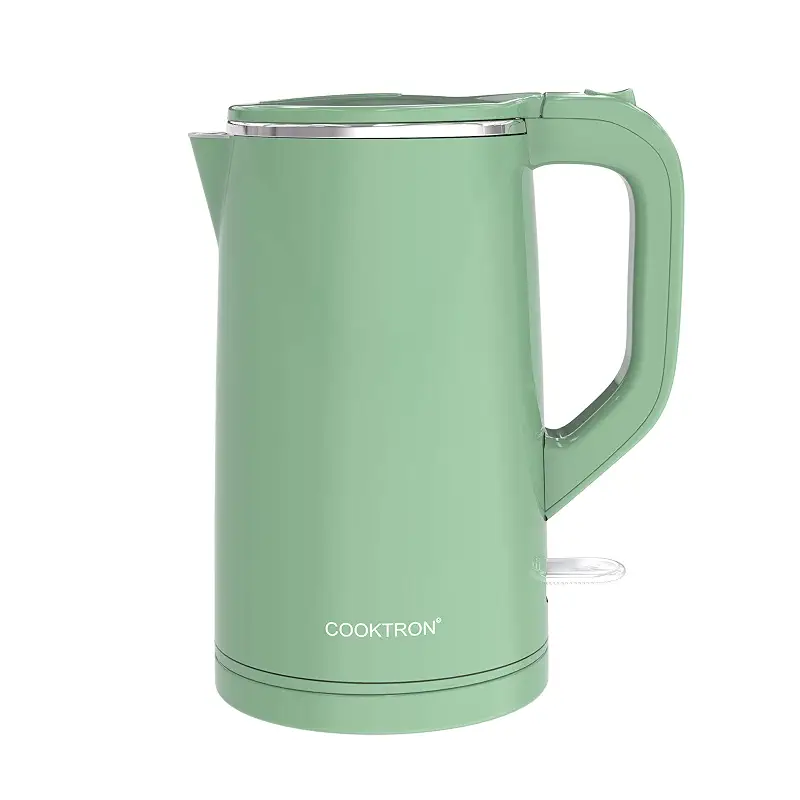
COOKTRON 1.7L Electric Kettle Quiet, Double Wall Hot Water Boiler BPA-Free, Quiet Boil and Cool Touch Tea Kettle, Cordless with Auto Shut-Off & Boil Dry Protection, 1500W Fast Boiling, Green
4.3(1,715)
Double-wall stainless steel design delivers genuinely quiet boiling with cool-touch exterior and superior heat retention.
Ideal for: Noise-sensitive households, early risers, and buyers prioritizing silent heating over visual water inspection.
The Cooktron stands out specifically for noise control: the manufacturer rates it under 30 decibels, which is measurably quieter than most electric kettles. This quietness comes from the double-wall construction: sound dampening is built into the design. Owners consistently praise how peaceful the boiling process is, making it ideal if you're sensitive to kitchen noise or brew in early mornings.
What makes this kettle different from the Cosori is that the interior is entirely stainless steel rather than glass. No plastic touches the water (the filter, lid, and spout are all 304 stainless steel), which addresses the plastic-odor concern without requiring fragile glass. The double wall keeps the exterior genuinely cool to touch, even during boiling, reducing burn risk. Heating takes about 3 to 7 minutes depending on fill level, so it's not the absolute fastest, but owners note that the quiet operation makes the wait feel less intrusive.
One caveat: the exterior is plastic (BPA-free), and a few reviewers flagged that mineral deposits from hard water can accumulate inside if you don't use filtered water. The manufacturer recommends filtered water to avoid the crusty buildup some owners encountered. Compared to the Cosori's ease of visual inspection, you can't see inside a stainless kettle, so descaling becomes a matter of routine rather than sight-based maintenance.
I'd choose this over the Cosori if you live in a household where early-morning quiet is non-negotiable or if you have young children or pets that startle easily at noise.
Pros
Operates under 30 decibels: genuinely quiet boiling
Entire interior is food-grade stainless steel, no plastic contact
Double-wall insulation keeps exterior cool and safe
Superior heat retention keeps water warm longer
Cons
Hard water deposits require filtered water to avoid buildup
Longer boil time (3-7 minutes) than some glass models
Key features
Double-wall stainless steel construction under 30dB noise
100% food-grade 304 stainless steel interior
1500W power with balanced heating to minimize scaling
British Strix thermostat technology for stable operation
360-degree rotatable cordless base for convenience
#3 Pick
Best for Pour-Over Coffee
Bodum
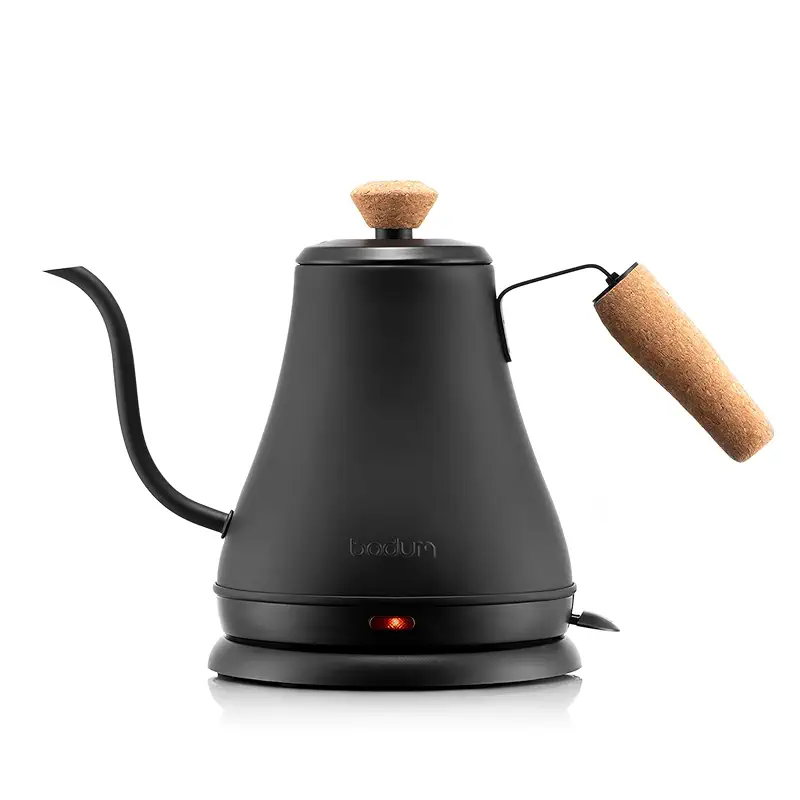
Bodum 27oz Bistro Gooseneck Electric Water Kettle, Pour Over Coffee & Tea, Stainless Steel, Matte Black
4.5(13,192)
Gooseneck design with precision pouring control, ideal for coffee enthusiasts who brew with intention.
Ideal for: Coffee enthusiasts, pour-over specialists, and those who value precision pouring over bulk capacity.
The Bodum gooseneck kettle is purpose-built for a specific audience: people who care deeply about pour-over technique. The slim, curved spout gives you full control over water flow rate and direction, which matters if you're dialing in coffee extraction. Unlike the wider-spout kettles above, this one is designed around slow, deliberate pouring rather than quick kitchen tasks. Owners report that the water stream is steady and responsive: you can pour aggressively for filling a French press or slow and gentle for a Chemex pour-over.
Build-wise, it's stainless steel with a natural cork handle and knob, which feels premium and stays comfortable in hand even during longer pour sessions. At 27 ounces (0.8 liters), capacity is smaller than the full-size kettles, but that's intentional: pour-over coffee rarely needs more than a cup or two of water at a time. Boil time is about 5.5 minutes from cold for a full tank, which is solid.
Where this kettle differs from the Cosori or Cooktron: it's specialized rather than general-purpose. If you brew instant coffee, tea bags, or noodles, you might find the smaller capacity and narrow spout a bit limiting. The cork trim is durable according to long-term owner reviews, but it's also the one material that will eventually wear and could be replaced. Some owners flagged a steam-valve issue in older versions, though recent reviews suggest Bodum updated that design. Compared to the full-size kettles in this lineup, this is a niche tool that excels at one job rather than a versatile workhorse.
I'd pick this if you're invested in pour-over coffee technique and want a kettle that makes the brewing ritual feel intentional and controlled.
Pros
Gooseneck spout allows precise control over water flow
Natural cork handle and knob stay cool and feel premium
Steady, unbroken water stream without drips
Stainless steel body with elegant, minimal design
Cons
0.8L capacity is small: suits single cups or small batches
Cork components will eventually wear and may need replacement
Key features
Precision gooseneck spout for controlled pouring
0.8 liter capacity ideal for pour-over coffee
Stainless steel with sustainable cork accents
Non-slip handle and ergonomic knob design
Automatic shutoff with easy-to-use power switch
#4 Pick
Most Durable Stainless Steel Option
Cosori
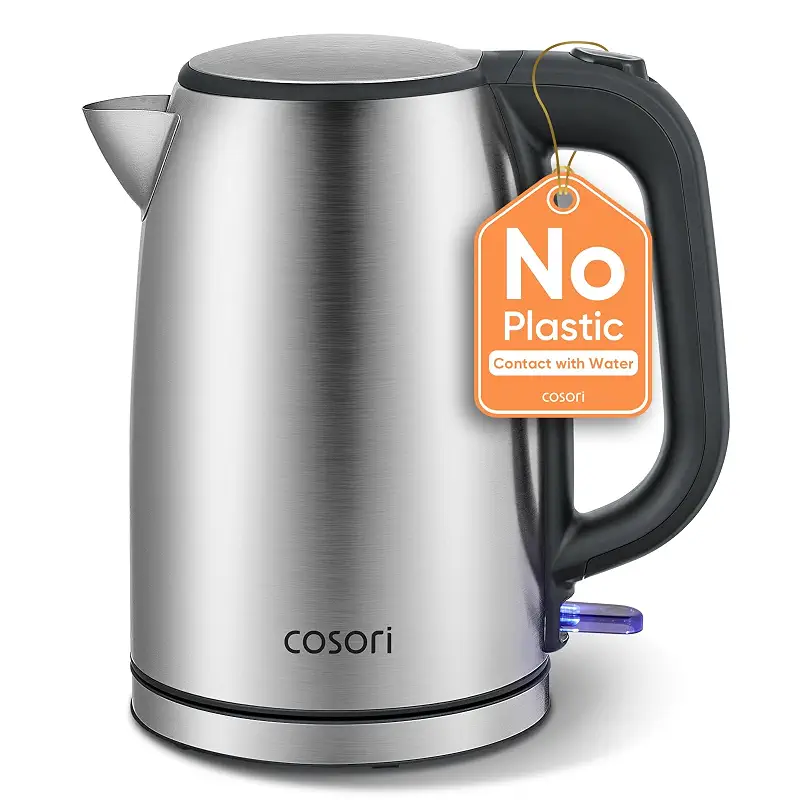
Cosori Stainless Steel Electric Kettle, No Plastic Contact with Water, 1.7L | Easy to Clean, Auto Shut-Off, Boil-Dry Protection, Tea Kettle, Hot Water Boiler, 1500W
4.5(5,401)
All-stainless interior with plastic-free gauge, engineered for long-term reliability without water purity compromise.
Ideal for: Buyers seeking maximum durability and plastic-free construction without fragile glass or double-wall bulk.
The Cosori stainless steel kettle is the company's answer to durability concerns. It's a direct step-up from their glass model for buyers who want the same plastic-free water contact but in a more rugged package. The entire interior is 304 food-grade stainless steel: spout, inner lid, filter, and water-level indicator all metal, no plastic window to cloud up or degrade.
One distinctive feature is the internal water-level markings instead of a plastic gauge window. This means you're reading fill levels by pouring to a marked line rather than looking through a window, which some owners find intuitive and others view as a minor inconvenience. The kettle retains water temperature longer than the glass model due to the thermal mass of stainless steel, which is a practical bonus if you're steeping multiple cups or doing back-to-back brewing.
Owners report solid performance, though a small number flagged durability issues: specifically lid separation or lid failures after a few months to a year of use. These are isolated cases among thousands of reviews, but worth noting if you're deciding between this and the Cosori glass model. The Strix auto shut-off system is the same reliable mechanical design found in other models here. Unlike the double-wall Cooktron, this kettle has a single wall, so it will be warmer to the touch during and after boiling.
Where this compares to the Cooktron: if you prioritize absolute quietness, the Cooktron's double-wall design wins. If you want the most durable all-stainless kettle without the bulk of double-wall construction, this Cosori model fills that role. Compared to the glass Cosori, this trades visibility for robustness and thermal retention.
Pros
All-stainless interior with plastic-free water gauge
Superior heat retention keeps water warm longer
Durable single-wall stainless steel construction
Strix auto shut-off system proven across thousands of units
Cons
Single-wall design means exterior gets hot during boiling
Reports of occasional lid separation after extended use
Key features
304 food-grade stainless steel interior, spout, and filter
Internal water-level markings: no plastic gauge window
1500W heating with Strix auto shut-off technology
Blue LED indicator light for heating confirmation
Cordless 360-degree swivel base design
#5 Pick
Best Value with Visual Feedback
Chefman
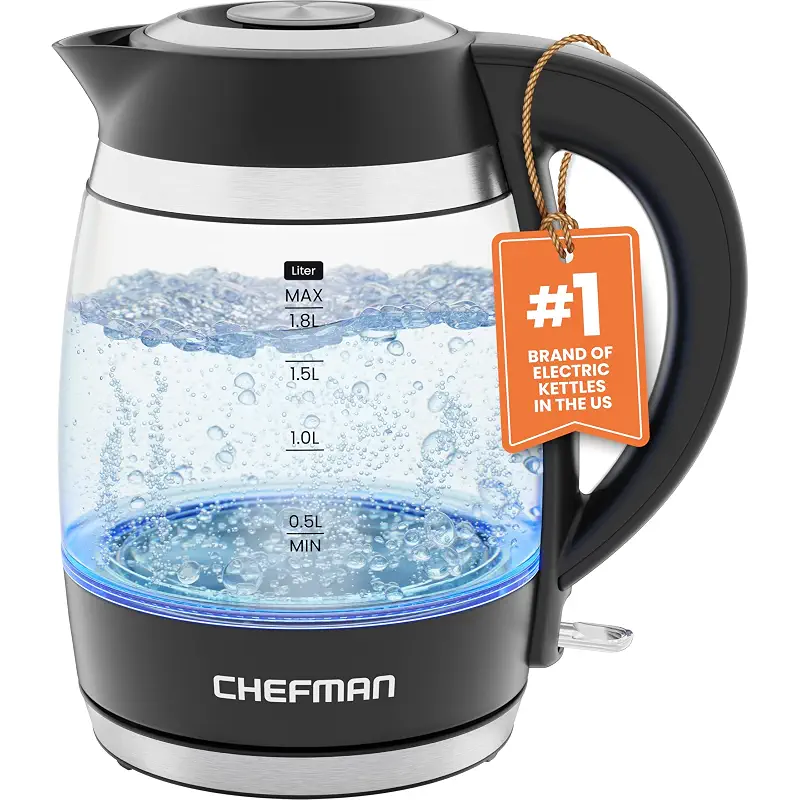
Chefman Electric Kettle, 1.8L 1500W, Hot Water Boiler, Removable Lid for Easy Cleaning, Auto Shut Off, Boil-Dry Protection, Stainless Steel Filter, BPA Free, Borosilicate Glass Electric Tea Kettle
4.5(13,590)
Borosilicate glass kettle offering fast boil, generous 1.8L capacity, and visual water monitoring at an entry-level price point.
Ideal for: Busy households, tea and coffee drinkers, and those who value visible water monitoring and larger capacity.
The Chefman kettle delivers practical everyday performance without premium positioning. At 1.8 liters, it's the largest capacity in this lineup, which matters if you're brewing for a household or doing back-to-back batches. The borosilicate glass body is transparent, so you can see exactly how much water you have and watch it heat: useful for both precision and peace of mind. The blue LED ring provides visual feedback during heating and turns off when boiling completes, a simple but effective design touch.
Boil time is quick: around three minutes for two cups, comparable to the Cosori glass model. The removable lift-off lid (no spring hinges or latches to break) makes filling and cleaning straightforward. A stainless steel filter comes standard, and the cordless 360-degree base is convenient. Safety features include auto shut-off and boil-dry protection, both industry standard at this price tier.
What to know about trade-offs: owners report that the kettle can drip or spit when filled to capacity, particularly when the water reaches a vigorous boil. Filling to about 80% of the line eliminates this, but it's worth mentioning if you're planning to use the full 1.8L regularly. The knob on the lid is small, which some owners with arthritis or longer nails find challenging to grip. The mineral deposits that accumulate on the glass bottom are cosmetic (vinegar removes them easily) but visible, unlike stainless steel kettles where you can't see buildup.
Compared to the Cooktron or Cosori stainless models, this trades durability and quietness for visibility and capacity. Compared to the Bodum gooseneck, this is a general-purpose kitchen workhorse rather than a specialized brewing tool. If you're outfitting a busy kitchen where multiple people need hot water quickly and you want to see your fill level at a glance, the Chefman delivers value. For those seeking aesthetic variety or specialty pieces, exploring a best copper tea kettle can complement a kitchen setup alongside an electric option for those times when you want a traditional stovetop experience.
Pros
Large 1.8L capacity covers multiple cups without refilling
Transparent borosilicate glass shows water level clearly
Removable lid design eliminates hinge-breaking issues
Fast three-minute boil for two-cup servings
Cons
Dripping or spitting at full-tank capacity during vigorous boil
Small lid knob difficult to grip for some users
Key features
1.8L borosilicate glass carafe with stainless steel filter
1500W heating element for fast three-minute boil
Blue LED indicator lights during heating cycle
Cordless 360-degree swivel base for convenient serving
Automatic shutoff with boil-dry protection system
How to Choose a Quiet Kettle
Four trade-offs that actually matter when matching a quiet kettle to your kitchen.
Quietness and Construction: Glass vs. Stainless vs. Double-Wall
If noise is your primary concern, understand where kettle sound actually originates. The loudest kettles are often stovetop models that whistle and steam aggressively. Electric kettles are quieter by design, but some models are measurably quieter than others. Double-wall construction (like the Cooktron) dampens vibration and boiling noise: it's the most effective method for sub-30-decibel operation. Single-wall kettles (glass or stainless) are louder during the boil but simpler and easier to inspect. Glass lets you watch the heating process, which some owners find reassuring; stainless steel is more durable and won't shatter, but you can't see inside. Electric kettle noise sources vary (some comes from the element heating water, some from escaping steam) and a well-designed kettle manages both.
Plastic Contact and Water Purity
Many buyers today avoid kettles where water touches plastic components, concerned about chemical leaching or off-flavors. All five models here keep plastic away from boiling water: the Cosori and Chefman use glass, the Cooktron and stainless Cosori use 304 food-grade stainless steel interiors, and the Bodum uses stainless steel with cork accents. If water purity matters to you, focus on models where the spout, filter, and inner lid are also non-plastic. Be aware that stainless steel kettles are opaque, so you can't visually confirm cleanliness the way you can with glass. Routine descaling with vinegar and water (or citric acid) keeps any interior clean and prevents mineral buildup. Some kitchens pair electric kettles with decorative stovetop pieces (for example, a copper tea kettle for display) but electric models remain the practical choice for noise-sensitive daily use.
Capacity and Boil Speed Trade-Offs
Capacity and speed are inversely related: smaller kettles boil faster because there's less water to heat. The Bodum gooseneck holds 0.8 liters and boils in about 5.5 minutes, perfect for single servings or pour-over coffee. The Chefman holds 1.8 liters and boils in three minutes for a full tank, ideal for households where multiple people need hot water. The Cosori glass and Cooktron models sit in the middle at 1.7 liters. If you regularly brew for one or two people, smaller capacity saves energy and boil time; if you have a family or entertain, larger capacity means fewer refills. Fast boiling (under 3-4 minutes for full capacity) requires high wattage (1500W is standard) and efficient heating design: all models here meet that benchmark.
Safety Features and Long-Term Reliability
Auto shut-off and boil-dry protection are non-negotiable for safe electric kettle use. All five models here have both. The difference lies in mechanism: mechanical auto shut-off (like the Cosori glass model's steam-powered system) has fewer electronic components to fail, but requires the lid to be closed to work properly. Electronic thermostats (like the Cooktron's Strix system) are more sensitive and responsive but add complexity. For durability, stainless steel kettles typically outlast glass models, but handle quality, lid design, and base construction matter equally. Removable lids (Chefman, some versions of Cosori) are less prone to breaking than hinged designs. Cordless bases with 360-degree rotation are more convenient than tethered cords and reduce wear on the connection point. Read long-term reviews carefully: some models accumulate issues after a year of daily use, while others power through years with minimal maintenance.
Water Hardness and Maintenance Demands
Hard tap water (high mineral content) will cause visible deposits inside any kettle, especially glass and stainless steel models where buildup is visible. This is purely cosmetic and doesn't affect water safety, but it can look unappealing. Regular descaling with white vinegar or citric acid solution (once monthly or quarterly, depending on your water hardness) prevents deposits and keeps the kettle running efficiently. The Cooktron and stainless Cosori models benefit most from filtered water to prevent the crusty mineral layer some owners reported. If you have very hard water, consider investing in a water filter pitcher or system, or plan on monthly descaling as part of your routine. Glass kettles make it easy to spot when descaling is needed; stainless kettles require you to remember the schedule rather than respond to visible signs.
Frequently asked
Quick answers to the questions readers ask most.
Why do some electric kettles make more noise than others?
Noise in electric kettles comes from two sources: the heating element vibrating as it warms water, and steam escaping as water approaches boiling. Single-wall kettles (glass or basic stainless) transmit these vibrations directly to the outer shell, making them louder. Double-wall kettles have an insulation layer between the inner and outer shells that absorbs vibration, reducing noise to near-silence. Element design also matters: a well-engineered element produces less vibration. If you're sensitive to morning kitchen noise, double-wall construction (like the Cooktron) is worth the trade-off in weight and bulk.
Is borosilicate glass kettle safe if it shatters from thermal shock?
Borosilicate glass is engineered to resist thermal shock better than standard glass, but it's still glass and can break if dropped or subjected to sudden temperature extremes. It won't shatter from normal boiling: that's the whole point of borosilicate over regular glass. The risk is physical damage (dropping the kettle) rather than heat-related failure. If durability and break-resistance are priorities, stainless steel kettles are inherently safer. Owners of glass kettles report years of trouble-free use if handled gently; buying a second unit as a backup isn't uncommon.
Do electric kettles use less energy than stovetop kettles?
Yes, electric kettles are more efficient. A 1500W electric kettle boils water directly through immersion heating, losing minimal energy. A stovetop kettle relies on heat transfer from the burner through the pot, with much of the energy escaping into the air. Most electric kettles boil a liter in 3-7 minutes; a stovetop kettle typically takes 10-15 minutes for the same amount. If you're boiling water daily (for tea, coffee, or cooking), an electric kettle will noticeably lower your energy bills over time and reduce kitchen heat in warm months.
Can I leave an electric kettle plugged in all day or use it as a hot-water dispenser?
Most electric kettles are designed for on-demand boiling, not continuous hot-water dispensing. Leaving one plugged in and running repeatedly can wear the auto shut-off mechanism and heating element. If you need consistently available hot water throughout the day, a countertop water warmer or hot-water dispenser is a better choice. All five models here are rated for multiple boils per day but assume downtime between uses. Repeatedly reboiling the same water (turning the kettle back on within minutes) can stress the auto shut-off sensor and cause overheating.
Why does water taste different from an electric kettle compared to stovetop boiling?
Water taste depends on dissolved minerals, kettle material, and any residual odors from kettle components. Kettles where plastic touches boiling water can impart a slight plastic flavor, especially when new. Stainless steel and glass kettles avoid this entirely. Boiling temperature and speed also matter: electric kettles reach exactly 212°F (100°C) and maintain it, while stovetop kettles may boil longer and lose volatile compounds. The biggest taste difference comes from mineral content in your tap water: hard water will taste mineral-heavy regardless of kettle type. Using filtered water and keeping your kettle clean (descaled monthly) ensures the best flavor in every cup.