Best Pots for Cooking on Gas Stove | Top Picks 2024
Find the best pots for gas stoves. Our guide covers stainless steel, nonstick, and stock pots designed for direct flame heat. Compare top gas cookware picks.
Ideal for: Home cooks moving from nonstick, willing to learn proper stainless steel technique, who value long-term durability.
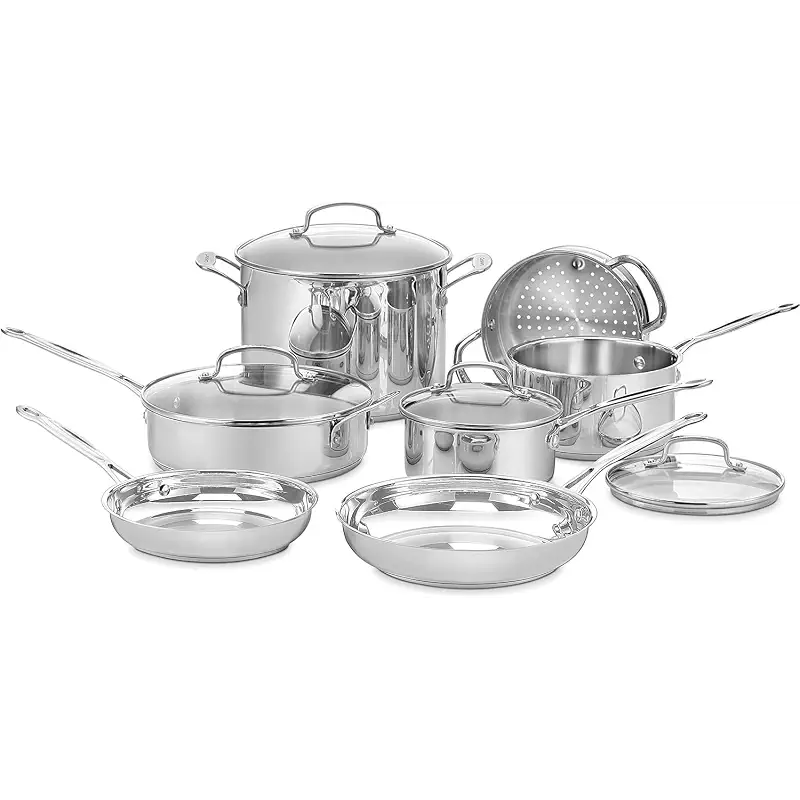
The Cuisinart Chef's Classic is built for cooks who want the control that stainless steel offers without fussiness. The aluminum encapsulated base responds evenly to gas flame, and the riveted handles (both stick handles and side grips) stay competently cool during stovetop work. The set is comprehensive enough that you'll reach for the right pan rather than force-fit a compromise.
That said, stainless steel requires a learning curve. You can't cook on it like nonstick; food will stick if the pan isn't preheated properly or if there's insufficient oil. Owners report excellent results once they master the fundamentals: heating the pan, testing with a water droplet, and using fat to build a temporary nonstick layer. The trade-off is durability and longevity: this cookware will outlast trendy coatings by decades.
I'd lean toward this over the Carote nonstick option if you sear meat regularly or value the professional sear mark and browning that stainless delivers. The 11-piece collection covers everyday cooking without overwhelming storage space, and the 500°F oven rating lets you move directly from stovetop to oven. Reviewers with patience consistently praise the even heating and the reliable pour from the rolled rims.
Pros
Encapsulated base heats evenly on gas flame without hot spots
Stainless steel stays durable through years of use
Cool-grip handles and side grips add control and safety
Cons
Steep learning curve; requires proper preheating and adequate oil to prevent sticking
Not ideal if you expect effortless nonstick performance right away
Key features
Aluminum encapsulated base distributes gas heat evenly throughout pan
11-piece set includes saucepans, stockpot, skillets, and steamer insert
Riveted handles stay cool and secure through years of stovetop work
Oven safe to 500°F; moves seamlessly from gas flame to oven
Dishwasher safe with mirror-polished stainless steel finish
#2 Pick
Best Large Capacity Stock Pot
Carote
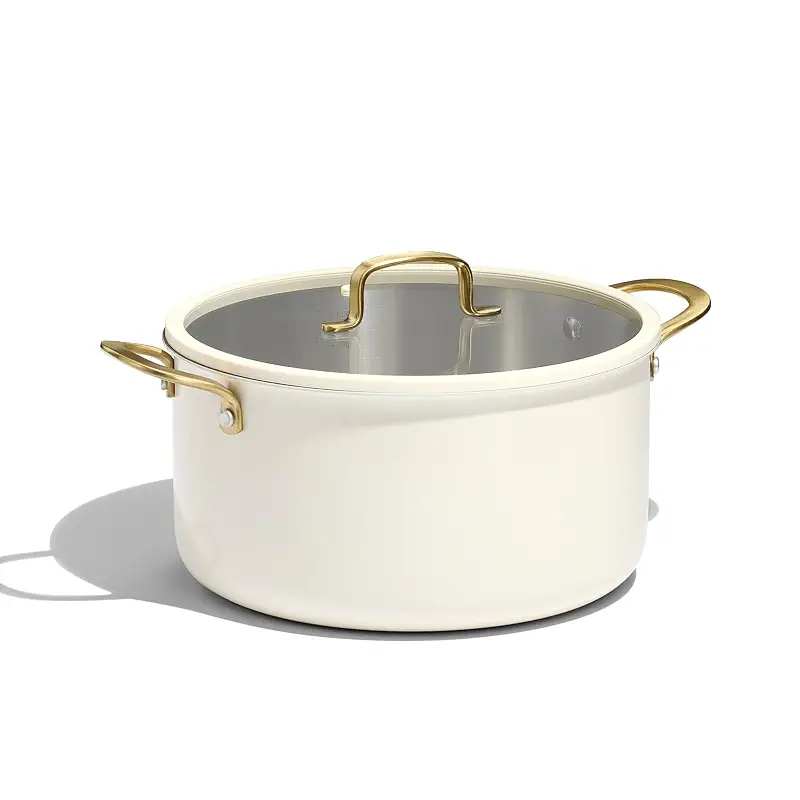
CAROTE 8QT Full Clad Tri Ply Stainless Steel Stock Pot with Lid | All Stoves Compatible, Oven & Dishwasher Safe, Stay Cool Handle, White, Cookware for Simmer
4.6(650)
Heavy-duty 8-quart pot with full tri-ply construction and tight-fitting lid for soups, pasta, and batch cooking.
Ideal for: Cooks making soups, stocks, and pasta in large batches; those with gas stoves who prioritize reliable heat distribution.
The Carote 8QT Full Clad Tri Ply is purpose-built for the task it handles: large-volume simmering on gas. The three-layer construction (outer stainless, aluminum core, inner stainless) distributes heat evenly from the gas flame without creating hot spots that scorch soups or cause uneven pasta cooking. Reviewers particularly praise its performance with long-simmering batches like jam and broth, where heat consistency matters across an extended cook time.
The lid sits snug with a vent that prevents aggressive boiling over, a practical touch for gas cooking where flame control can be imprecise. The internal measurement markings save guesswork when filling with water or stock. One genuine caveat: several owners report that the handles do get hot, despite the product's description. If cool handles are essential to you, budget for oven mitts or pot holders even though the silicone wrapping is present.
Compared to the Cuisinart set, this pot excels when you need sheer volume without needing skillets and saucepans. The full tri-ply bottom makes it more durable than single-layer alternatives, and it's noticeably heavier than the P&P Chef 5-quart option, which some cooks prefer for stability on gas burners.
Pros
Full tri-ply construction prevents warping and distributes heat evenly
8-quart capacity handles large meals and batch cooking efficiently
Tight-fitting glass lid with vent minimizes boiling-over on gas flame
Cons
Silicone-wrapped handles can still transfer heat during active cooking
Larger footprint requires dedicated stovetop and storage space
Key features
Full tri-ply clad construction for even heating and warp resistance
8-quart capacity ideal for soups, pasta, and batch cooking
Double-riveted stainless steel handles ensure strength and balance
Tempered glass lid with vented steam escape; fits securely on pot
Interior measurement markings for easy water and stock tracking
#3 Pick
Best Nonstick Set for Gas Stove
T-Fal
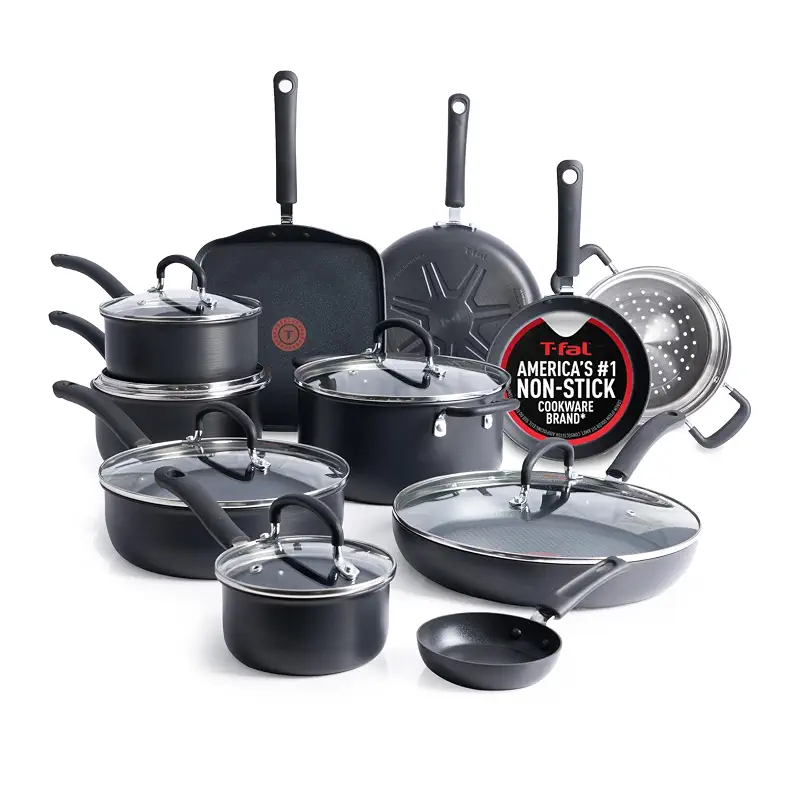
T-Fal Ultimate Hard Anodized Nonstick Pots and Pans Set 17 Piece, Nonstick Cookware Set with Fry Pan, Saucepans, Saute-Pan, Griddle, Dishwasher Safe, Onyx
4.7(18,845)
Hard-anodized nonstick collection with titanium coating, heat indicator, and 17-piece completeness for daily gas cooking.
Ideal for: Gas stove users who prioritize easy cleanup, even heating, and don't need the sear capability of stainless steel.
The T-Fal Ultimate Hard Anodized tackles the primary frustration with gas cooking: managing heat without scorching delicate items. The hard-anodized aluminum exterior is noticeably heavier than typical nonstick, which stabilizes the pan on gas flame and reduces the sliding-around that lighter cookware suffers. The Thermo-Spot heat indicator (a red zone in the pan's center that turns solid red when preheated) removes guesswork from readiness, a real advantage on gas where flames can obscure visual cues.
I think the 17-piece collection justifies itself for cooks who want to avoid a tower of mismatched pans. You get skillets, saucepans, a saute pan, a stockpot, and a griddle, all performing the same consistent nonstick function. Titanium-reinforced interior resists scratching better than basic nonstick, and owners report that the coating holds up well across multiple years of use.
The caveat is that T-Fal recommends medium heat or lower, which some gas cooks find limiting when they want a hard sear. If you're accustomed to cranking the flame for crust-building, this set's medium-heat preference might frustrate you. The Cuisinart stainless steel set above handles higher temps more forgivingly. That said, for everyday simmering, sautéing, and one-pan dinners on gas, this delivers effortless nonstick performance without breaking budget.
Pros
Hard-anodized exterior provides stability on gas burners without excessive weight
Thermo-Spot indicator turns red when preheated, eliminating guesswork
Titanium nonstick coating resists scratching and performs well over years of use
Cons
Manufacturer recommends medium heat or lower; high-heat searing is not the intended use
Nonstick coating requires gentler utensil use and hand-washing for longevity
Key features
Hard-anodized aluminum construction resists warping and corrosion on gas
Titanium-reinforced nonstick interior for durable food release and easy cleanup
17-piece set covers all stovetop tasks without storage clutter
Tempered glass lids with vents prevent boiling over on direct flame
Oven safe to 400°F; limited lifetime warranty provides confidence
#4 Pick
Best Lightweight Stainless Steel Pot
P&P Chef
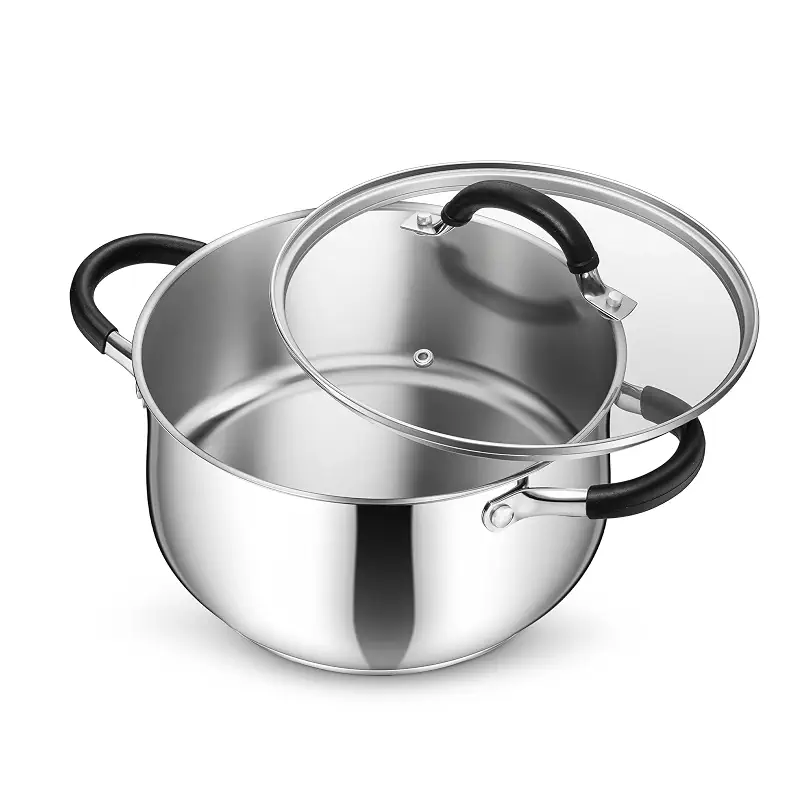
P&P CHEF 5 Quart Stainless Steel Stock Pot, Cooking Pot with Visible Lid | For Soup Pasta, Tri-Ply Bottom & Dual Heatproof Handles, For Induction Gas All Stoves, Non-Toxic & Dishwasher Safe
4.6(457)
5-quart stainless steel pot with tri-ply base, heatproof silicone handles, and visible glass lid for gas cooking.
Ideal for: Home cooks needing a dedicated stainless steel pot for soups and simmering; those with limited stovetop and storage space.
The P&P Chef 5-quart occupies a sweet spot between the Carote's 8-quart stockpot and full cookware sets: it's a dedicated pot that performs solidly without committing you to a matched collection. The tri-ply bottom (stainless exterior and interior with aluminum core) heats responsively on gas flame, and reviewers consistently note that heat distributes evenly without scorching soups or stews that simmer for hours.
The silicone-wrapped dual handles stay cool enough to touch during normal stovetop use, a practical asset on gas where you're frequently adjusting the pot. The glass lid has small steam holes that let excess pressure escape, reducing aggressive boiling over on gas. I'd choose this over the Carote 8QT if you cook for three to five people regularly but don't need industrial-scale capacity, or if counter and storage space is tight.
One minor issue: a few owners report that when filled to the absolute brim, it leaks slightly at the handle rivets. This is a design quirk worth knowing; fill to just below the handles and you'll have a full 4+ quarts of usable capacity without risk. The pot itself is lighter than the Carote, which some cooks appreciate for daily handling but others see as a trade-off for less heat-retention mass.
Pros
Tri-ply bottom responds evenly to gas flame without hot spots
Silicone-wrapped dual handles stay cool during stovetop cooking
Visible glass lid with steam vents prevents boiling over on direct flame
Cons
Filling to brim can cause minor leaking at handle rivets; usable capacity slightly less than stated
Lighter weight than some competing pots; some cooks prefer more thermal mass
Key features
Tri-ply stainless steel and aluminum construction for responsive gas-flame heating
5-quart capacity suits families of 3-5 without excess stovetop bulk
Double-riveted silicone-wrapped handles provide secure, cool grip
Tempered glass lid with steam vents; fits snugly to lock in moisture
Dishwasher safe; compatible with all stovetops including induction
#5 Pick
Best Nonstick Set with Induction Flexibility
Carote
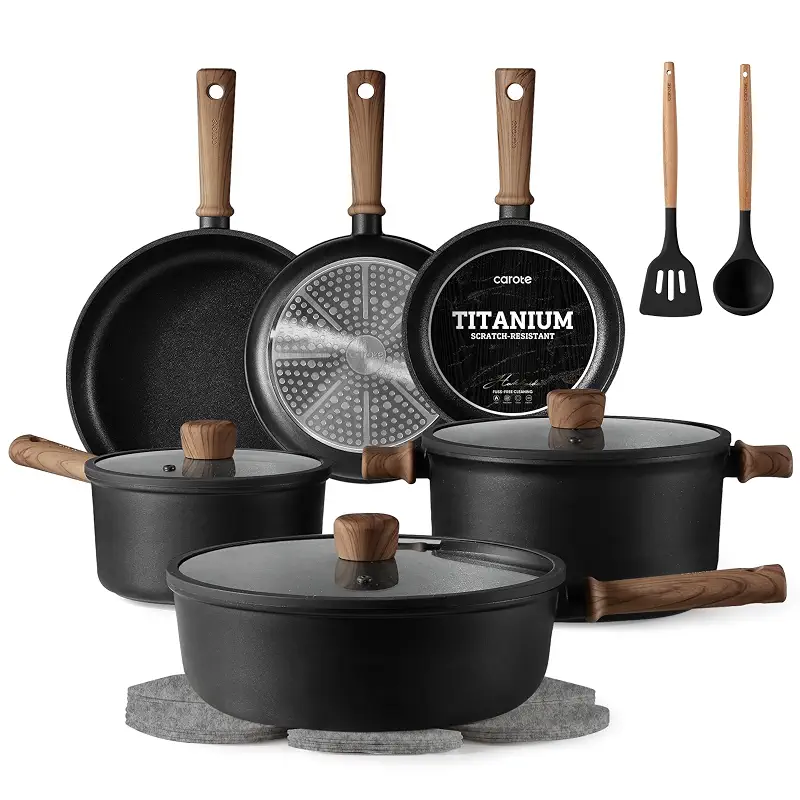
CAROTE 16pcs Pots and Pans Set, Nonstick Cookware Sets | Titanium Reinforced Coating, Scratch-Resistant, Easy to Clean, Even Heating, Induction Compatible, with Frying Pans Set
4.6(3,757)
16-piece titanium nonstick cookware set with silicone-sealed lids and die-cast aluminum construction for easy gas cooking and cleanup.
Ideal for: Gas cooks who value lightweight cookware, easy cleanup, and modern design without sacrificing nonstick reliability.
The Carote 16-piece nonstick set brings a modern, lighter-weight approach to gas cooking. The die-cast aluminum construction with titanium-reinforced nonstick coating heats quickly on gas flame and distributes temperature evenly across the cooking surface. Unlike the heavier T-Fal option, this set feels nimble in hand, which appeals to cooks who don't want fatigue from frequent lifting on the stovetop.
The silicone-sealed glass lids fit tightly without being rigid, letting you monitor food through the glass while keeping heat and steam trapped for even cooking. The set includes three frying pans, saucepans, a stockpot, a saute pan, and wooden utensils, so you're not searching your drawers for compatible tools. Owners praise the nonstick release and how quickly it heats; on gas, that means you go from cold stovetop to cooking in under a minute.
Where this differs from the T-Fal is in weight and perceived durability. The Carote feels lighter, which some interpret as less substantial. Hand-washing is strongly recommended to preserve the nonstick coating, and owners note that the titanium surface remains scratch-resistant if you stick to wood and silicone utensils. If you prefer best stackable cookware that doubles as everyday nonstick performers on gas, this set's variety and modern aesthetic make it worth considering over a single dedicated piece.
Pros
Titanium nonstick coating provides reliable food release with minimal oil use
Die-cast aluminum heats quickly and distributes heat evenly on gas flame
16-piece set covers all cooking needs; includes utensils and pan protectors
Cons
Lightweight design means less thermal mass; requires careful flame management on gas
Hand-washing recommended; nonstick surface vulnerable to metal utensils and high heat
Key features
Titanium-reinforced nonstick coating resists scratching and maintains food release
Die-cast aluminum foundation heats quickly and evenly on gas stovetops
Silicone-sealed tempered glass lids lock moisture and flavor during cooking
16-piece collection includes three frying pans, saucepans, stockpot, and saute pan
PFOS and PFOA-free; compatible with induction and all stovetop types
How to Choose the Right Cookware for Gas Stoves
Four trade-offs that actually matter when matching a pots for cooking on gas stove to your kitchen.
Understand Base Construction and Heat Response
Gas flame heats the bottom of cookware intensely and directly, so base construction is your primary concern. Look for encapsulated or tri-ply bottoms that sandwich aluminum between stainless steel layers. This design conducts heat rapidly while preventing warping and hot spots. Single-layer aluminum heats fast but warps easily; bare stainless steel conducts heat poorly and creates cold zones. On gas, an encapsulated base is the non-negotiable foundation. Understanding how gas stove cookware responds helps you avoid purchases that bow or develop uneven cooking zones within months.
Stainless Steel vs. Nonstick: The Core Trade-Off
Stainless steel cookware excels at browning, searing, and building fond for sauces. It's durable enough for high-heat gas cooking and lasts decades. The trade-off is a learning curve: you must preheat, use adequate fat, and respect proper technique. Nonstick cookware trades searing power for convenience. Food releases effortlessly, cleanup is minimal, and there's no learning curve. On gas, nonstick requires medium heat or lower to avoid coating breakdown. Choose stainless if you sear meat regularly or make pan sauces. Choose nonstick if daily convenience and speed matter more than high-heat browning.
Handle Design and Safety on Open Flame
Gas exposes handles to ambient heat from the flame. Look for stainless steel or silicone-wrapped handles that are either riveted or securely fused to the pot body. Loose or poorly attached handles can fail under repeated use. Cool-grip or silicone-wrapped handles reduce burns, but even those will warm up during extended cooking. Dual or side-handle designs add stability when moving heavy pots. Test handle comfort in-store if possible; you'll be gripping these dozens of times weekly, so ergonomics matter as much as heat resistance.
Lid Fit and Steam Management
Gas cooking often involves simmering and boiling, where lid seal quality prevents water loss and speeds cooking. Glass lids let you monitor food without lifting and disrupting heat, a real advantage over opaque lids on open flame. Tempered glass resists thermal shock better than standard glass. Small steam vents in lids allow controlled pressure release, preventing aggressive boiling over that can extinguish burners or splash liquid onto your stove. A tight-fitting lid with a vent is superior to a loose, rattling cover that lets all heat escape.
Set vs. Single Pot: Storage and Flexibility
Full cookware sets (11 to 17 pieces) offer economy and matching aesthetics but consume counter and cabinet space. Single dedicated pots like stockpots let you buy only what you use and pair them with existing cookware. Gas cooks often benefit from owning one quality pot for soups and simmering, plus a small nonstick skillet for eggs and sauces. If storage is tight or you cook irregularly, a single tri-ply pot outperforms a set gathering dust in cabinets. If you cook daily and want professional-grade tools, a matched set ensures consistent performance across all your stovetop tasks.
Frequently asked
Quick answers to the questions readers ask most.
Can I use any cookware on a gas stove?
No. Gas flames create intense direct heat, so cookware must have a flat, solid base that won't warp or rock on the grate. Thin aluminum or bare stainless steel can bow and lose contact with the flame, creating hot spots and uneven cooking. Choose encapsulated or tri-ply bases with aluminum cores. Curved or dished bottoms are unsafe on gas burners because they won't sit flat. Always verify flat-bottom design before buying for gas cooking.
Why does my stainless steel cookware stick so much on gas?
Stainless steel requires proper technique. Preheat the empty pan for one to two minutes on medium heat, then add oil and let it shimmer before adding food. Use a water-droplet test: if water beads up and rolls, the pan is ready. Insufficient preheating or too little fat causes sticking. This isn't a defect; it's the nature of the material. Once you master the technique, stainless steel becomes incredibly versatile. Most owners who report excellent results spent time learning, not just expecting it to work like nonstick.
Are hard-anodized nonstick pans safe on high gas heat?
Hard-anodized nonstick can handle gas cooking, but manufacturers recommend medium heat or lower. High flames risk damaging the nonstick coating and potentially releasing fumes. If you regularly sear meat or need high-heat cooking, stainless steel is a safer choice. Nonstick excels at everyday simmering, sautéing, and low-to-medium heat tasks. Respect the manufacturer's heat limits; they exist to preserve the coating and your food safety.
How do I prevent boiling over on a gas stove?
Boiling over happens when steam pressure exceeds the pot's ability to vent. Use a lid with steam holes or a slightly loose cover; never fully seal a pot on gas. A wooden spoon laid across the rim also works by breaking the surface tension. Fill the pot only two-thirds full to leave headroom. Choose a pot with tall sides and a proper lid; the Carote stockpot and P&P Chef pot both feature vented lids designed for this issue. Finally, reduce heat slightly once boiling begins.
Do I need to hand-wash gas cookware or can I use the dishwasher?
Most quality gas cookware is dishwasher safe, but hand-washing extends its life. Dishwashers can dull stainless steel finishes and degrade nonstick coatings faster than gentle hand-washing. Nonstick cookware particularly benefits from hand-washing with soft sponges and mild soap. Stainless steel tolerates dishwashers better but hand-washing keeps the polished finish looking new longer. If durability is your priority, hand-wash everything. If convenience matters most, check the manufacturer's guidelines; many cookware pieces are indeed dishwasher safe.