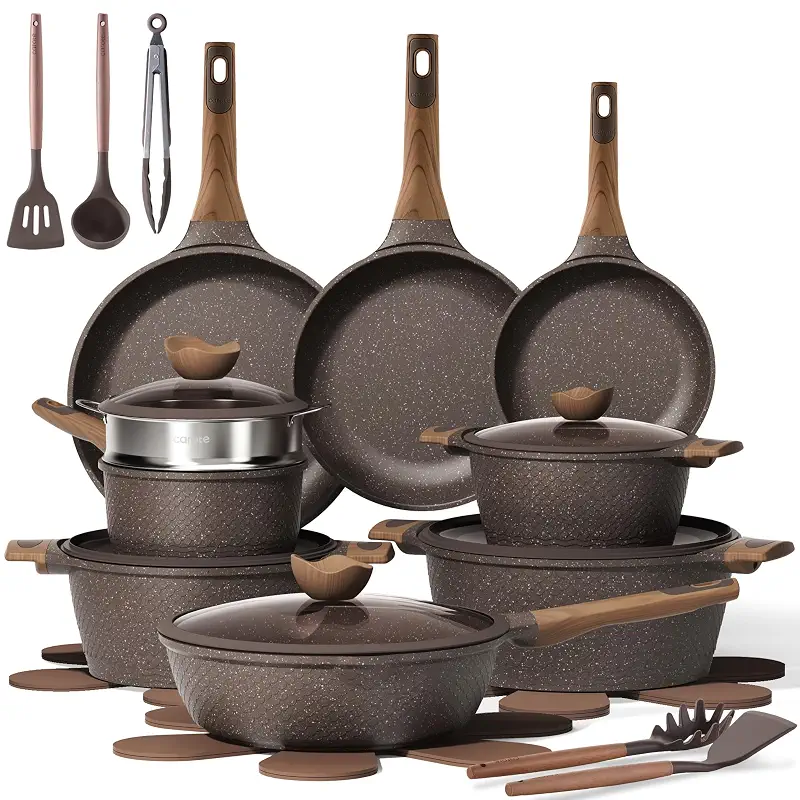
Ideal for: Home cooks who want nonstick convenience, minimal cleanup, and a visually polished kitchen without spending premium money.
The Carote 26-piece set represents the kind of no-fuss cookware that earned its place in nearly 1,800 households. What stands out in buyer feedback is how consistently the nonstick coating works: eggs and cheese slide off without oil or spray, and cleanup is genuinely effortless. The textured exterior gives it a premium look that belies the price, and the silicone-sealed glass lids lock in steam effectively.
For gas stove users specifically, owners report that the cookware sits stable on the grates and resists the black soot that can plague lighter cookware. The main consideration is that some buyers noted the pans warm up slightly slower than older steel cookware, though once heated they cook evenly. A few gas-stove owners also mentioned the stockpot handles can get quite hot, so oven mitts are recommended.
Compared to the stainless steel offerings in this lineup, this set trades durability for ease: nonstick coatings eventually wear, but most users report two years or more of reliable performance before degradation. If you prioritize cleanup speed and minimal oil usage, this set delivers that trade-off cleanly. The 12-month warranty also gives you a safety net for defects.
Pros
Exceptional nonstick performance with no sticking even without oil
Beautiful textured exterior hides fingerprints and looks upscale
Silicone-sealed lids trap steam and fit multiple pan sizes
Soot-resistant on gas stovetops with stable bottom contact
Cons
Nonstick coating durability depends on careful utensil use
Stockpot and large handles can conduct heat during cooking
Key features
26-piece set with three frying pans, four stockpots, and full utensil kit
Reinforced nonstick coating with textured exterior design
Ideal for: Serious home cooks and professional kitchens who value durability over convenience and are willing to master proper technique.
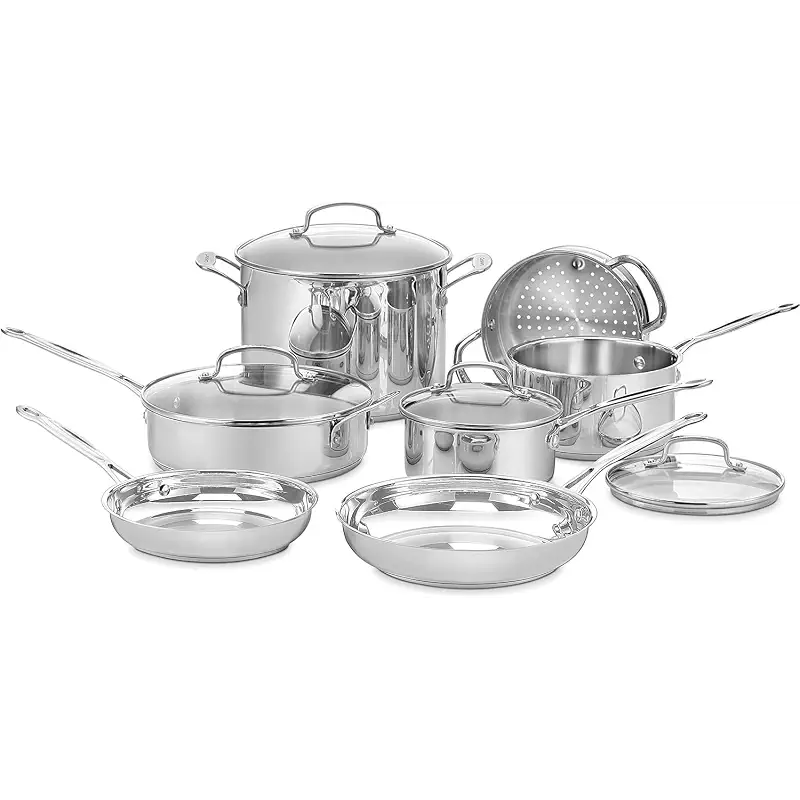
Cuisinart's stainless steel set has earned nearly 10,000 reviews for a reason: it's built to last decades if treated properly. The aluminum-encapsulated base heats evenly and fast, and there are no hot spots. Owners consistently praise the cool-grip handles and how the riveted construction feels solidly engineered. Unlike nonstick cookware, stainless steel never flakes, peels, or loses its surface: it just gets better with age.
The trade-off is real: stainless steel requires preheating and proper technique to prevent sticking. However, readers who took time to learn the water-drop test and oil method report excellent results: seared meat, perfectly boiled pasta, no burnt-on food. The learning curve is steeper than nonstick, but once mastered, owners find themselves reaching for stainless steel specifically because it sears, browns, and handles high heat better than any nonstick option. For gas cooking, this set's flat bottom and robust construction mean it sits evenly on open flame with zero warping.
Where this differs from the Carote nonstick set is longevity and versatility: this Cuisinart set is oven-safe to 500°F, so you can sear on the stovetop and finish in the oven. Nonstick coatings typically top out at 350°F. If you cook frequently and want cookware that will outlive your kitchen renovation, this is the frame of reference.
Pros
Premium stainless steel construction with lifetime durability
Aluminum core for even heat distribution with no hot spots
Oven-safe to 500°F for stovetop-to-oven transitions
Professional-style riveted handles and drip-free pouring rims
Cons
Steep learning curve for stainless steel cooking technique required
Requires preheating and proper oil use to prevent sticking
Key features
11-piece set with three saucepans, stockpot, two skillets, and steamer
Stainless steel body with encapsulated aluminum core
Works on gas, electric, induction, and broiler compatible
#3 Pick
Best Hard-Anodized Nonstick
T-Fal
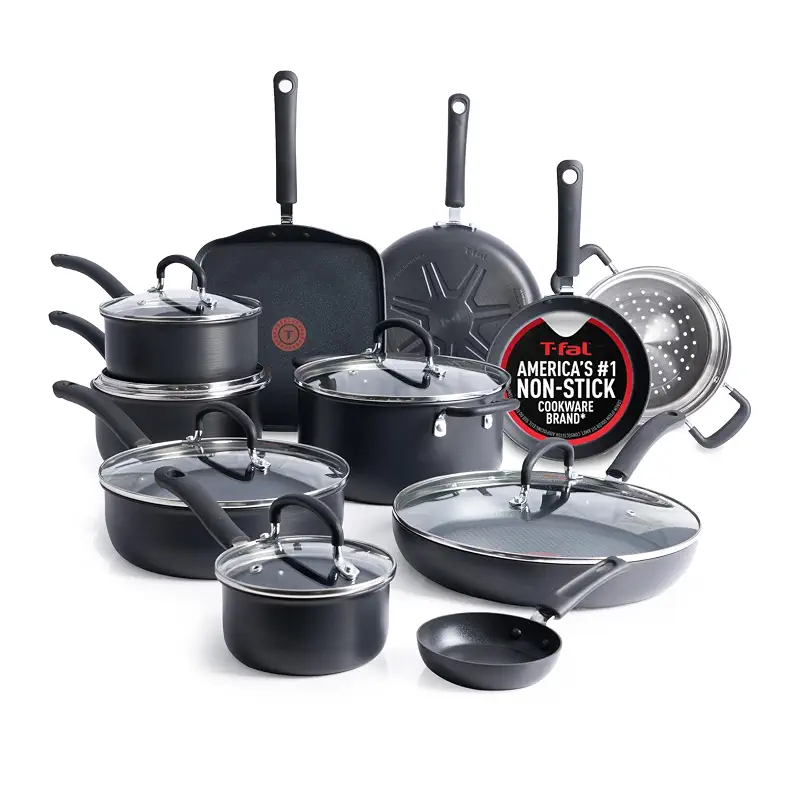
T-Fal Ultimate Hard Anodized Nonstick Pots and Pans Set 17 Piece, Nonstick Cookware Set with Fry Pan, Saucepans, Saute-Pan, Griddle, Dishwasher Safe, Onyx
4.7(18,845)
Durable titanium-reinforced nonstick with a built-in heat indicator, designed for reliability and medium-heat everyday cooking.
Ideal for: Gas cooks who want nonstick convenience with better longevity, and who value a built-in heat indicator for consistent results.
T-Fal's Ultimate Hard Anodized set lands between nonstick and stainless in philosophy: it offers the ease of nonstick but trades absolute non-stick capability for much longer coating life. The hard-anodized aluminum exterior is tougher than standard nonstick, and owners report five-plus years of reliable performance without flaking or peeling. The titanium-reinforced interior keeps food from sticking when used correctly, though it requires slightly more finesse than softer nonstick coatings.
The Thermo-Spot heat indicator is a genuinely useful feature: it turns solid red when the pan is properly preheated, removing guesswork and promoting even cooking. Gas-stove owners specifically appreciate that this set's weight and flat base sit stable on open flame, and the hard-anodized finish resists scratching better than standard nonstick. The 17-piece assortment is generous, including a special egg wonder pan and a griddle.
One consideration: T-Fal recommends keeping heat at medium or below to prevent warping, which is lower than some gas cookers might prefer for searing. Compared to the Cuisinart stainless steel, you won't get the high-heat capability or oven versatility above 400°F. But where the Carote nonstick set prioritizes pristine cleanup, this T-Fal option prioritizes durability: the coating holds up significantly longer to metal utensils and aggressive washing.
Pros
Hard-anodized construction delivers 5+ years of nonstick performance
Titanium-reinforced coating resists scratching and peeling
17-piece set includes specialty pieces like egg pan and griddle
Cons
Medium-heat maximum limits high-sear capability on gas
Requires learning medium-heat cooking technique for best results
Key features
17-piece set with three saucepans, frying pans, griddle, and specialty pieces
Hard-anodized aluminum with titanium-reinforced nonstick interior
Thermo-Spot heat indicator center for precise preheating
Oven-safe to 400°F; lids safe to 350°F
Works on all stovetops except induction; riveted silicone handles
#4 Pick
Best for Space-Conscious Kitchens
Carote
CAROTE 21pcs Pots and Pans Set, Nonstick Cookware Sets, with Egg Pan | Induction Kitchen Cooking Set, Durable, Easy Food Release, Fast & Even Heating, with Frying Pan
4.5(27,820)
Compact 21-piece set with removable handles and nesting design for tight storage, plus excellent heat distribution on gas.
Ideal for: Apartment and small-home cooks with limited cabinet space who value nesting design and removable handles.
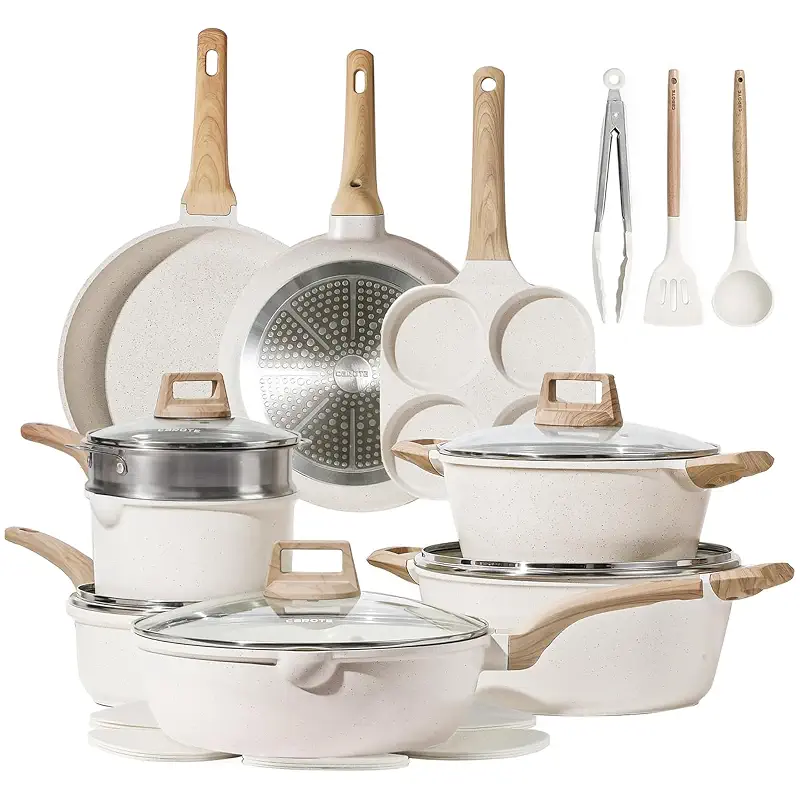
Carote's 21-piece set distinguishes itself with removable handles: a feature that saves real cabinet space in smaller kitchens and makes cleaning around tight corners simpler. The nesting design stacks compactly, and many owners report using felt dividers between pieces to protect the nonstick coating without sacrificing storage efficiency. The white granite nonstick coating performs comparably to the brand's 26-piece set, with strong release properties and even heating across the bottom.
For gas cooking, this set's solid base and die-cast aluminum construction mean no warping under direct flame. Several owners on gas stovetops reported satisfaction with how the cookware handles the heat variability inherent to gas burners. The stockpot handles can run hot during use, so again, silicone mitts are wise. One trade-off versus the larger Carote set: this version has fewer large pots, which may limit if you're feeding a family of six regularly.
Where this differs from the T-Fal hard-anodized option is in storage and weight. Carote's removable handles and lighter construction appeal to anyone with cabinet constraints, while T-Fal's solid construction is meant for permanent mounting and heavier daily use. If kitchen space is tight and you cook for two to four people, this set's compact footprint and removable handles solve a real problem.
Pros
Removable handles save cabinet space and simplify hand-washing
Compact nesting design stacks efficiently without scratching
Strong nonstick performance with 10x granite coating
Includes egg pan and steamer for cooking versatility
Cons
Fewer large-capacity pots than the 26-piece version limits batch cooking
Handles become hot during cooking; oven mitts essential
Key features
21-piece set with removable handle design for compact storage
White granite nonstick with 10x reinforced coating strength
Includes egg pan, steamer, and full utensil kit with pan protectors
Die-cast aluminum for even heating on all cooktop types
PFOS and PFOA free; hand-wash recommended for longevity
#5 Pick
Best Compact Premium Nonstick
Carote
CAROTE 16pcs Pots and Pans Set, Nonstick Cookware Sets | Titanium Reinforced Coating, Scratch-Resistant, Easy to Clean, Even Heating, Induction Compatible, with Frying Pans Set
4.6(3,757)
Lightweight 16-piece titanium-reinforced set with induction compatibility and modern styling, ideal for intentional minimalists.
Ideal for: Intentional minimalists and induction-curious cooks who want a curated set with modern styling and titanium-reinforced durability.
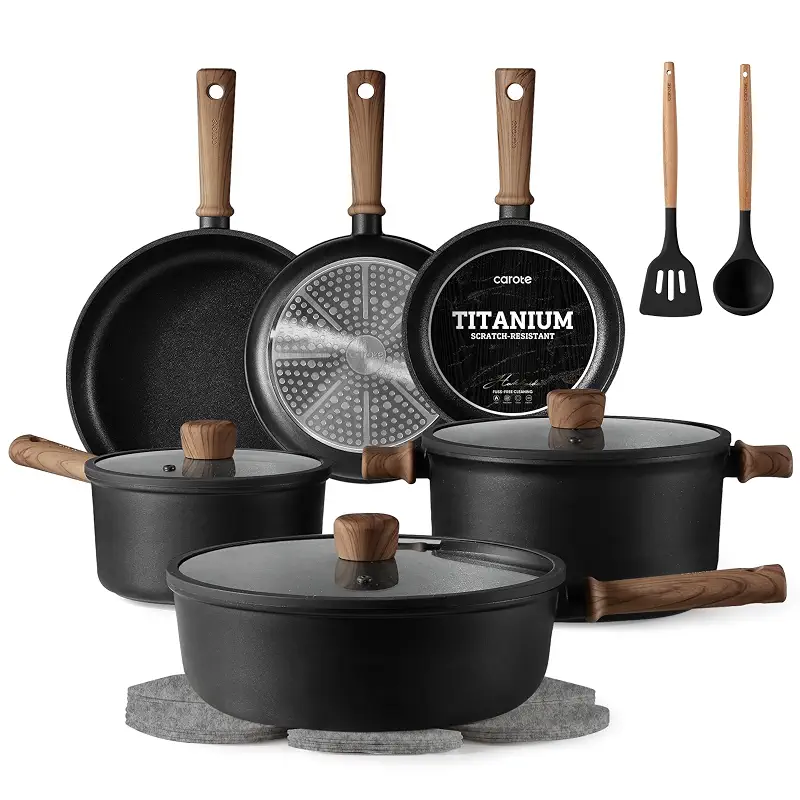
Carote's newest 16-piece set represents a streamlined approach: fewer pans than the 26-piece version, but with titanium reinforcement that promises longer nonstick life than entry-level coatings. The set still covers essential sizes (three frying pans, two saucepans, and a stockpot) and the lighter weight and modern black-and-wood design appeal to younger households upgrading from college dorm cookware. Induction compatibility is a bonus if you ever move to that technology.
Gas-stove performance is solid: the bottom stays flat and makes full contact with grates, and owners report even cooking and stable heat distribution. The silicone-sealed lids fit snugly and protect against chipping. Hand-washing is recommended to avoid black residue on the base, which some owners noted even when clean. One real limitation is the smaller stockpot capacity compared to the 26-piece lineup: if you frequently cook large batches of soup or pasta sauce, you may find yourself wishing for the larger pot.
Compared to stainless steel versus nonstick cookware, this sits firmly on the nonstick side but with a premium construction story that justifies the price slightly above the 26-piece set. Buyers who used the smaller Carote set report two to three years of reliable nonstick performance before visible wear, which is respectable for this price tier. It's a good choice if you've thought through exactly which pans you'll use and don't want drawers full of extras.
Lightweight design easy to handle and maneuver on gas burners
Silicone-sealed glass lids fit snugly with chipping protection
Induction-compatible base for future-proof flexibility
Cons
Smaller stockpot capacity limits batch cooking and large soups
Black residue on pan bases requires careful hand-washing technique
Key features
16-piece set with three frying pans, two saucepans, and stockpot
Die-cast aluminum with titanium-reinforced nonstick coating
Silicone-sealed tempered glass lids with ergonomic handles
PFOS and PFOA free; induction-compatible base
Modern black finish with wood-style handles; includes utensils and protectors
How to Choose Pots and Pans for Your Gas Stove
Four trade-offs that actually matter when matching a pots and pans for gas stove to your kitchen.
Nonstick vs. Stainless Steel Trade-Offs
The stainless steel versus nonstick cookware decision shapes everything else. Nonstick wins on cleanup and ease, nothing sticks, oils wash away instantly, and you spend less time scrubbing. But nonstick coatings wear out, typically lasting two to five years with careful use. Stainless steel requires preheating and proper technique (butter or oil, proper heat levels), but it lasts indefinitely, handles high heat, and can go oven-to-stovetop without limits. For gas cooking specifically, stainless steel's superior searing and high-heat tolerance are advantages if you brown meat or flash-fry regularly. Nonstick favors everyday soups, vegetables, and low-mess weeknight cooking. Your choice depends on whether you value cleanup speed or investment longevity.
Flat Bottoms and Grate Stability on Gas
Gas stoves expose cookware to direct flame and create multiple heat zones (hottest directly over the burner, cooler at the edges). Your pans must sit flat on the grates without rocking, which means checking for any warping or uneven casting. All five sets here have solid flat bases, but heavier cookware (stainless steel, hard-anodized) resists warping better under intense flame than lightweight nonstick. If you cook on high heat frequently, weight matters. Also watch for soot buildup on the pan bottom: some users report black residue on nonstick pans even after cleaning. Sealed bases and hand-washing (rather than dishwashing) reduce this issue.
Handle Heat and Grip Design
Gas stoves radiate more ambient heat than electric coils, so handles get hotter during cooking. Silicone-wrapped handles and wooden-style grips insulate better than bare metal, but they still conduct heat over time. Most buyers in this roundup recommend keeping an oven mitt nearby or using silicone grips when stirring. Cool-grip handles (like Cuisinart's cast stainless design) stay relatively comfortable but never eliminate heat transfer entirely. Removable handles (on the Carote 21-piece set) are an advantage for storage and cleanup but require assembly before cooking. Test-fit handles if possible; a comfortable grip makes daily cooking safer and less fatiguing.
Set Size and Actual Cooking Needs
A 26-piece set sounds complete, but many pieces are rarely used: extra lids, steamer inserts, and specialty pans sit in storage. Ask yourself: How many people do you cook for? Do you make large batches of sauce or soup? Do you frequently need multiple pans at once? A four-person household cooking weeknight meals might thrive with a 16-piece compact set, while a family of six or batch cookers benefits from the larger 26-piece lineup. Stainless steel and hard-anodized sets offer fewer but more versatile pieces; nonstick sets prioritize variety. Don't buy extra pans out of guilt: storage space and care effort matter.
Maintenance and Heat Distribution in Gas Cookware
Heat distribution in gas cookware depends on encapsulated bases (aluminum cores sandwiched between steel layers) or die-cast construction. Stainless steel sets typically feature thicker aluminum cores that distribute heat more evenly, reducing hot spots. Nonstick and hard-anodized aluminum heat quickly but can develop hot spots if the base is thin. For gas stoves with uneven flame, a thicker encapsulated base (Cuisinart stainless steel) outperforms lightweight aluminum. Hand-washing all sets in warm water (never ice-cold water on hot pans) prevents warping and extends life. Avoid dishwashers if durability matters; detergent and high heat hasten discoloration and corrosion on stainless steel and coating wear on nonstick.
Frequently asked
Quick answers to the questions readers ask most.
Will nonstick cookware eventually stop working on my gas stove?
Yes, but it takes time. The direct flame and heat variability of gas burners can accelerate nonstick coating wear if you use metal utensils or high heat. Most owners report two to five years of reliable performance before sticking increases. To extend the life, use silicone or wooden utensils, hand-wash promptly, and avoid high heat. If you cook daily, plan on re-purchasing nonstick sets every few years. Stainless steel avoids this cycle entirely.
Why does stainless steel cookware require preheating, and is it really worth the extra step?
Stainless steel has different thermal properties than nonstick. Cold steel has tiny surface irregularities that food grabs onto. Preheating smooths those irregularities and allows oil to heat, creating a temporary nonstick layer. Without preheating, food sticks immediately. It sounds tedious, but most stainless steel users adopt it as habit: two minutes of preheating prevents frustration later. If you dislike the extra step, nonstick is genuinely easier, even if it lasts a shorter time.
Can I use high heat on gas stovetops with any of these cookware sets?
It depends on the set. Stainless steel (Cuisinart) handles sustained high heat beautifully: it's designed for searing and browning. Hard-anodized sets (T-Fal) recommend medium heat maximum to prevent warping. Nonstick sets (Carote) also prefer medium heat; above that, coatings can break down and handles become dangerously hot. For gas cooking, if you frequently use high flame for searing or rapid boiling, stainless steel is the best choice. Nonstick and hard-anodized serve better at lower and medium temps.
How do I prevent the black soot buildup on the bottom of nonstick pans on my gas stove?
Black residue comes from incomplete combustion or oxidation of the pan's exterior coating. Hand-washing with warm water and neutral dish soap (avoid citrus-scented detergent) helps, and wiping the pan base dry before storing prevents mineral deposits from sitting. Some discoloration is inevitable on gas stoves; it's cosmetic and doesn't affect cooking. If heavy soot bothers you, stainless steel or hard-anodized aluminum (which are more visually resistant to staining) are better long-term choices than sensitive nonstick coatings.
Which cookware set is best if I'm a first-time cook on a gas stove?
Start with nonstick (Carote 26-piece or 16-piece). It's forgiving, requires minimal technique, cleans easily, and lets you focus on learning recipes rather than pan management. Once you're comfortable and decide to invest long-term, upgrade to stainless steel. Gas stoves are trickier to manage than electric coils: nonstick removes one variable. Many home cooks never leave nonstick; others transition to stainless after a year or two once they understand their preferences.