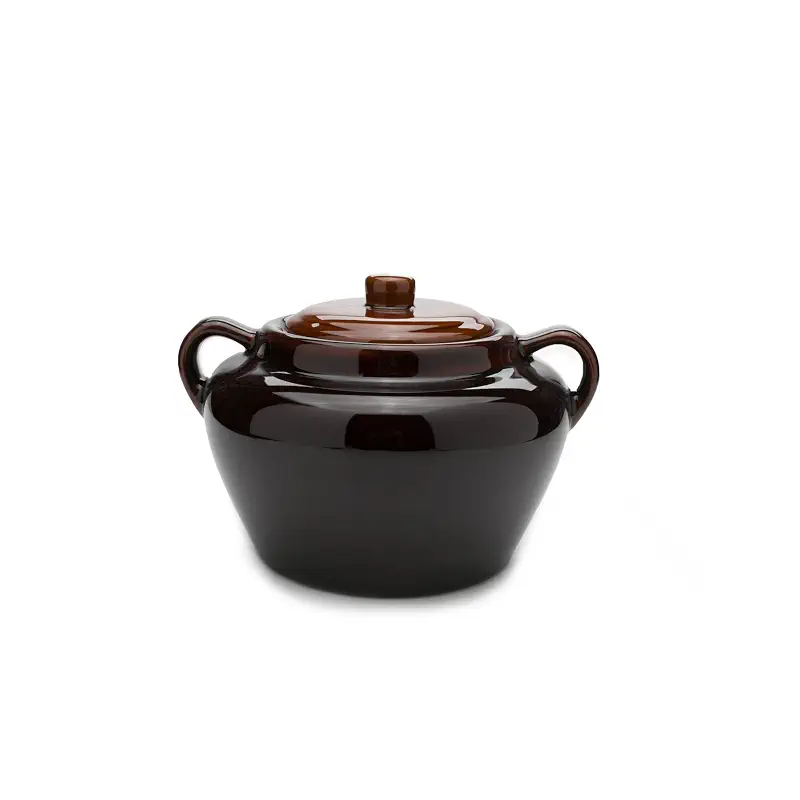
Ideal for: Home cooks pursuing traditional baked beans and slow-cooked stews with time to spare.
The Fox Run stoneware bean pot harks back to the New England tradition for a reason: narrow opening and wide belly work together to trap steam and minimize liquid loss during long braises. Owners consistently report that beans come out tender and flavorful after six-hour oven sessions with only one or two top-offs of water, which speaks to genuine heat retention rather than marketing.
What sets this pot apart is how honestly it performs its core job. At 3.5 quarts, it's sized right for a pound or so of dried beans plus aromatics: enough for a family meal but not so large that it feels unwieldy. The ceramic earthenware construction means it heats slowly and holds temperature steadily, qualities that matter when you're building flavor over hours. The glazed finish is genuinely stain-resistant, and the removable lid sits tight enough to keep moisture in.
The tradeoff is fragility. Some buyers report cracks appearing after thermal shock or during transport, which suggests you need to handle this pot with care and avoid rapid temperature swings. The lid knob is also poorly designed (smooth and narrow rather than flared) making it genuinely unsafe to grab when hot. It's a real design flaw that should have been caught. If you prioritize authentic slow-cooking results over durability guarantees, this is the pot; if you need something nearly unbreakable, the Granite Ware option trades some heat-retention magic for reliability.
Pros
Narrow opening minimizes evaporation during long oven cooking
Earthenware retains and distributes heat evenly
Stain-resistant glaze survives decades of bean-cooking use
Attractive design doubles as a serving vessel at the table
Cons
Prone to cracking from thermal shock or careless handling
Lid knob design creates burn risk when removing from hot oven
Key features
3.5-quart earthenware construction with tight-fitting lid
Narrow opening reduces moisture loss during slow cooking
Oven-safe ceramic glaze handles temperatures up to 1,235°C
Dual side handles with removable cover for easy serving
Brown earthenware finish complements traditional table settings
#2 Pick
Best Budget-Friendly: Lightweight Enamel Steel
Granite Ware
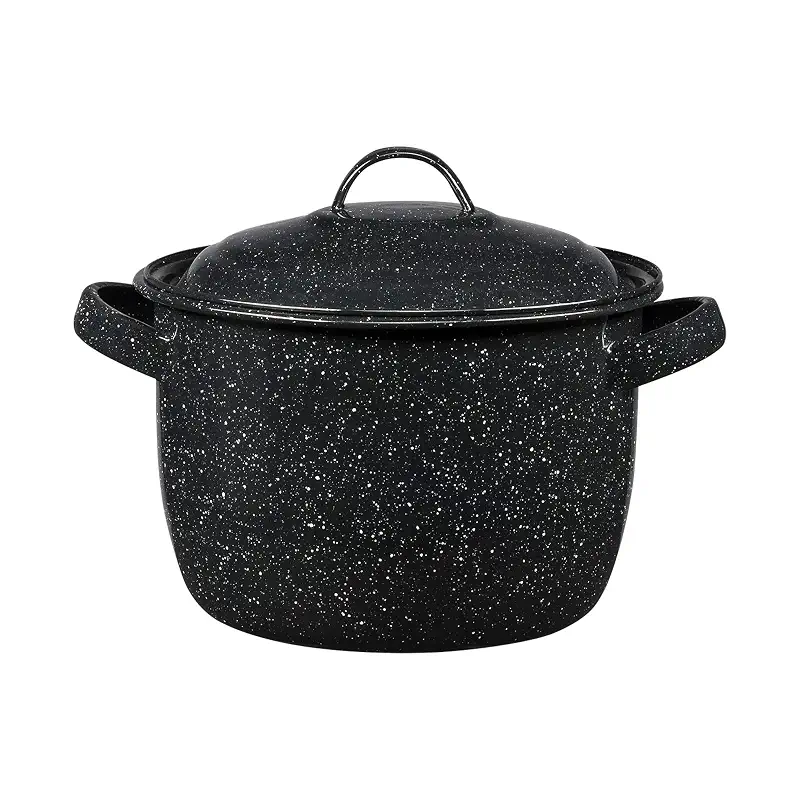
Granite Ware Porcelain Enamel Bean Pot, 4 Qt - Speckled Black | Carbon Steel Cookware with Lid for Baked Beans, Stews, Soups & Slow Cooking with Even Heat Distribution, Oven & Stovetop Safe
4.4(832)
Affordable porcelain-enamel pot that moves seamlessly from stovetop to oven with reliable even-heating performance.
Ideal for: Budget-conscious cooks who want reliable bean cooking without specialized single-purpose gear.
Granite Ware's four-quart bean pot offers a straightforward value proposition: solid enamel-on-steel construction at an entry-level cost, with enough versatility to handle beans, soups, and breads without feeling like a single-task tool. The speckled black finish is visually traditional, and owners note that the lightweight steel core heats quickly and distributes warmth evenly, which is crucial for preventing scorching on the bottom.
What makes this pot practical for everyday use is that it works equally well on the stovetop or in the oven, and the porcelain enamel surface is genuinely non-stick without PFOA or PTFE. Buyers report that beans stay intact better than in some thinner pots, and cleanup is genuinely simple: no seasoning required, no special maintenance. The four-quart capacity handles a 16 to 20-ounce bag of dried beans comfortably, which covers most household needs. One real caveat: a few owners found food sticking on first use, which contradicts the non-stick claim slightly; soaking or preseasoning the enamel with oil before the first batch may help.
Compared to the Fox Run earthenware pot, this trades some heat-retention finesse for durability and affordability. It also won't work on induction cooktops, which is a genuine limitation if your kitchen has moved to induction. The steel is thinner, so it heats faster but also cools faster: better for weeknight beans, less ideal for all-day braising.
Pros
Porcelain enamel naturally non-stick without harmful coatings
Lightweight construction makes oven removal and stovetop handling easy
Rapid, even heat distribution perfect for simmering and boiling
Affordable entry point for quality bean-pot cooking
Cons
Food occasionally sticks on initial use despite non-stick claim
Incompatible with induction cooktops
Key features
4-quart porcelain-enamel-on-steel construction with tight-fitting lid
Chip-resistant glaze maintains integrity through years of use
Lightweight steel core enables quick, even heating
Safe for stovetop, oven, and traditional fire cooking
Glass-like non-porous surface resists staining and food residue
#3 Pick
Best for Large Batches: Spacious Aluminum Caldero
Imusa
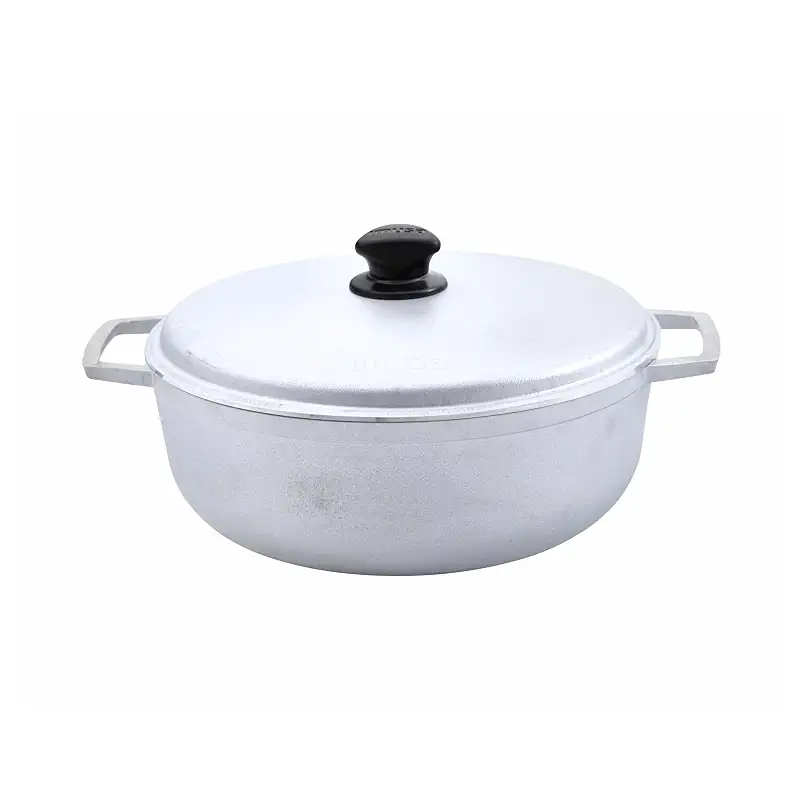
IMUSA 7.5 Quart Traditional Natural Made in Colombia Caldero with Lid for Cooking and Serving,Silver
4.4(14,788)
Oversized 7.5-quart pot suited for cooking big quantities of beans, rice, and stews with traditional rounded design.
Ideal for: Home cooks preparing large batches of beans and traditional Hispanic rice and stew dishes.
The Imusa caldero swings toward capacity and family-scale cooking. At 7.5 quarts, it dwarfs the Fox Run and Granite Ware options, making it the choice if you're cooking for a crowd or batch-freezing for the month. Cast aluminum construction is durable and seasons over time, developing a patina that some cooks prize for flavor development. The rounded sides and tight-fitting glass lid with steam vent follow a design that's worked in Latin American kitchens for generations.
Owners praise the even heat distribution and the pot's ability to handle rice, beans, stews, and braises without hotspots. The large capacity means you can confidently fit multiple pounds of beans plus plenty of liquid for a long simmer. However, the elephant in the room is the lid fit: a notable number of buyers report that the lid sits loose, leaving gaps that allow steam to escape and liquids to reduce unevenly. This is a serious manufacturing inconsistency that undermines one of the caldero's main advantages. A few units arrived with dents or visible damage despite intact packaging, suggesting quality control issues.
If you can source a specimen with a lid that actually seats properly, this pot excels at high-volume bean cooking and looks authentic doing it. But the risk of receiving a loose-fitting lid makes this a gamble compared to the more consistent Fox Run or Granite Ware options. The pot itself is sturdy and affordable, but that lid inconsistency is a genuine frustration.
Pros
7.5-quart capacity ideal for cooking large quantities at once
Cast aluminum develops seasoning flavor over time with use
Even heat distribution prevents scorching and hotspots
Rounded sides and tight glass lid support traditional cooking methods
Cons
Lid often fits loosely or unevenly, reducing steam seal effectiveness
Quality control issues result in occasional damage on arrival
Key features
7.5-quart cast-aluminum caldero with traditional rounded shape
Glass lid with steam vent allows monitoring without lifting
Cast aluminum seasons over time for enhanced cooking results
Oven-safe without lid; stovetop and range-compatible
Wide handles and rounded interior simplify serving and cleanup
#4 Pick
Best Premium: Heavy Enameled Cast Iron Dutch Oven
Umite Chef
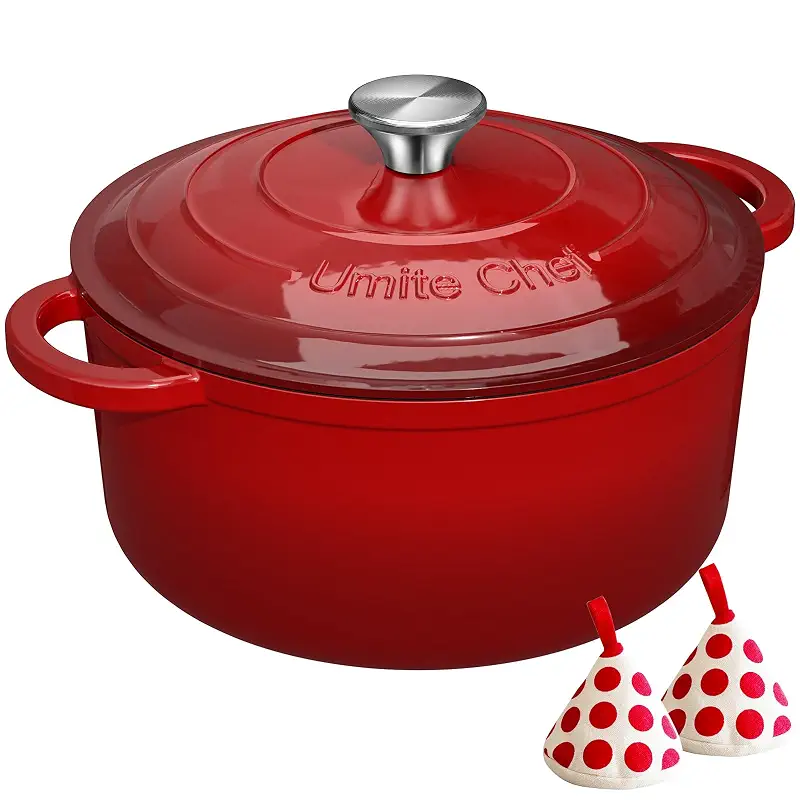
Enameled Cast Iron Dutch Oven - Umite Chef 5QT Pot with Lid & Cotton Potholders - Heavy-Duty Cookware for Bread Baking, Braising, Stews, Roasting(Red)
4.7(3,483)
Professional-grade cast iron with superior heat retention and tight-sealing enamel finish for showstopping braises and breads.
Ideal for: Serious home cooks and bread bakers who value heirloom-quality cookware and precise heat control.
The Umite Chef Dutch oven represents the premium end of bean cooking: a five-quart enameled cast iron vessel designed for both performance and longevity. Owners rave about the heat retention and the way the thick walls maintain steady simmering temperature without babysitting. The cream or white interior lets you see browning and food color clearly, avoiding the guessing game that plagues bare cast iron. The tight-sealing lid creates a true seal, locking in steam and keeping beans creamy rather than drying out.
What separates this from the earthenware Fox Run pot is sheer staying power. This is cookware that your grandchildren might inherit. The five-quart size handles most family bean batches comfortably, and cast iron's thermal mass means it holds heat so effectively you can reduce stovetop temperature to medium-low and still maintain a steady simmer. The included cotton oven mitts are a thoughtful touch for a pot whose handles do get genuinely hot. Oven-safe to 500°F opens doors beyond beans: sourdough baking, braises, roasts.
The tradeoff is weight and cost. This pot is substantially heavier than the lightweight options, which matters when you're pulling it in and out of the oven repeatedly. The initial investment is steeper. And while the enamel is durable, thermal shock (moving from a hot oven to a cold sink) can cause cracking. Compared to the Granite Ware pot, this commands respect and requires careful handling; it's the choice if you cook beans frequently and want equipment that outlasts every other kitchen tool.
Pros
Thick cast iron retains heat exceptionally, enabling perfect simmers
White or cream enamel interior shows browning and doneness clearly
Tight-sealing lid locks in moisture for creamy beans
Induction-compatible and oven-safe to 500°F for versatile cooking
Cons
Substantial weight requires two hands and careful oven maneuvering
High initial cost limits appeal for casual or occasional bean cooks
Key features
5-quart enameled cast iron with food-grade cream or red enamel
Thick cast-iron walls distribute and retain heat evenly
Precision-engineered lid with interior moisture-redistribution nodes
Stainless steel handles and included cotton oven mitts
Induction-compatible, oven-safe to 500°F, works on all cooktop types
#5 Pick
Best for High-Volume Cooking: Large Stainless Steel Stock Pot
Kirecoo
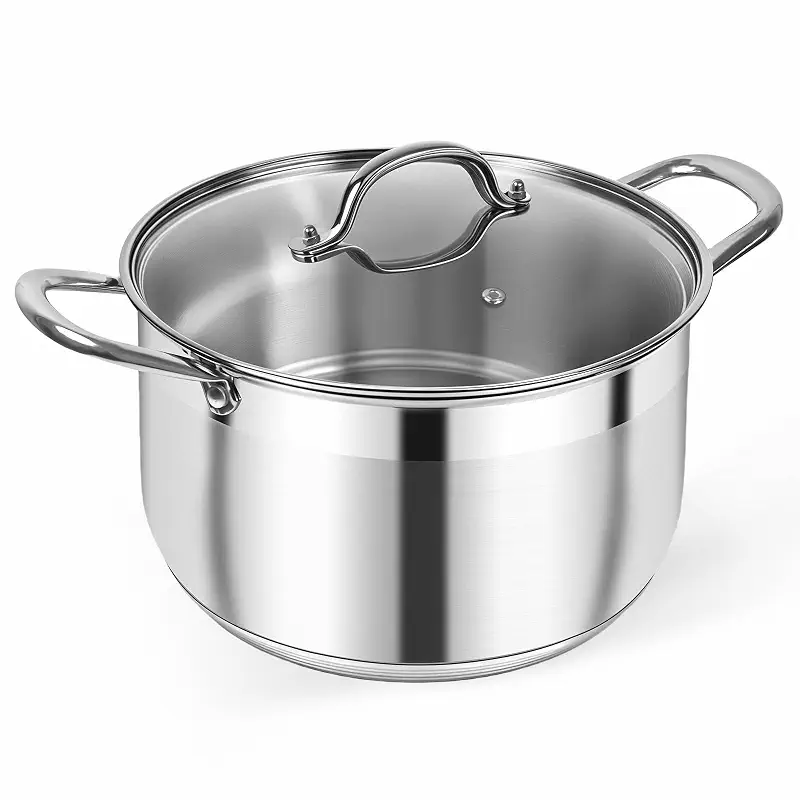
Kirecoo 8 Quart Stainless Steel Induction Stock Pot with Visible Lid | Heavy Duty, Even Heat, Thick Nonstick Base, Deep Cookware for Soup Pasta & Spaghetti, Ideal for Canning, Boiling & Simmering
4.4(1,904)
Eight-quart stainless pot with five-layer thickened base, ideal for batch cooking, canning, and big-family meals.
Ideal for: Large households, meal-prep enthusiasts, and cooks who batch-freeze soups and beans regularly.
The Kirecoo stainless steel stock pot is a workhorse for cooks who measure bean batches in pounds and often cook for gatherings rather than solo dinners. At eight quarts, it dwarfs the other options in this lineup, offering the kind of capacity that makes sense if you're running a household of six or more or freezing stock and bean broth by the quart. The five-layer thickened base (10mm at the bottom) with alternating aluminum, iron, and magnetic layers heats quickly and distributes warmth evenly, preventing the scorching that plague thinner pots.
Owners report that this pot excels at rapid boiling and sustained simmering, and the visible glass lid with steam vent means you can monitor progress without lifting the cover constantly. Stainless steel requires no seasoning or special care, and it genuinely cleans up quickly in the sink or dishwasher. The riveted handles feel solid after repeated use, and the pot's universal cooktop compatibility (gas, electric, ceramic, induction) means it works regardless of your kitchen setup.
The main caveat is that stainless steel's responsiveness cuts both ways: it heats faster than cast iron but also cools faster, so the slow, even temperature profile that beans adore in earthenware or cast iron doesn't happen here naturally. You'll achieve good results, but you may need to manage heat more actively to avoid boiling when you mean to simmer. Also, the massive capacity is wasted if you're cooking for two or three people; this pot demands scale. Compared to the best pot for gumbo, which often emphasizes appearance and browning, this prioritizes pure capacity and practicality.
Pros
Eight-quart capacity handles high-volume bean and stock cooking easily
Five-layer thickened base ensures even, rapid heating with no hotspots
Visible glass lid with steam vent monitors cooking progress
Universal cooktop compatibility including induction cooktops
Cons
Stainless steel cools quickly, requiring active heat management during simmering
Oversized for small households or occasional bean cooking
Key features
8-quart stainless steel construction with 10mm five-layer thickened base
Tempered glass lid with steam vent for safe, visible cooking
Riveted stainless steel handles rated for oven up to 350°F
Non-stick interior engineered for effortless food release and cleanup
Works on gas, electric, ceramic, halogen, and induction cooktops
How to Choose a Bean Pot
Four trade-offs that actually matter when matching a pot to cook beans to your kitchen.
Heat Retention vs. Heat Responsiveness
Beans benefit from steady, gentle warmth over hours rather than intense, fluctuating heat. Earthenware and cast iron excel here because their thermal mass absorbs heat and releases it slowly, keeping simmers truly gentle. Stainless steel and lightweight aluminum respond faster to burner changes, which is practical for weeknight cooking but less forgiving for all-day braises. If you're planning six-hour oven sessions, lean toward earthenware or cast iron; if you're simmering on the stovetop for 90 minutes, any of these pots work fine.
Capacity and Batch Size
A one-pound batch of dried beans expands to roughly three to three-and-a-half quarts when cooked. The Fox Run and Granite Ware pots (3.5 and 4 quarts respectively) handle single batches and family meals comfortably. The Imusa caldero at 7.5 quarts suits cooks who buy beans in bulk or freeze portions for the month. The Kirecoo stock pot at eight quarts is overkill for routine bean cooking but invaluable if you're also running a household of six or more. Match capacity to your actual cooking frequency and freezer habits, not aspirations.
Maintenance and Durability Concerns
Earthenware and enameled cast iron require gentle handling to avoid thermal shock (moving from a hot oven to a cold sink causes cracking). Stainless steel is virtually indestructible and dishwasher-safe. Unglazed cast iron demands seasoning and oil maintenance. Enamel-coated steel sits in the middle: durable but not indestructible, and chips in the enamel expose bare steel underneath. Consider your tolerance for care routines and your history with breaking cookware before committing to a fragile option.
Cooktop Compatibility
If your kitchen uses induction, the Granite Ware caldero is ruled out entirely (no magnetic base), though the Umite cast iron and Kirecoo stainless steel work perfectly. Glass cooktops favor lighter pots that don't scratch; avoid the heavy Umite if surface protection matters. Gas and electric cooktops are friendly to all options. Check your specific setup before assuming a pot will work: incompatibility is a silent deal-breaker that surfaces too late.
Understanding Bean Pot Material Types
Bean pot material types fall into three categories, each with tradeoffs. Earthenware and ceramic heat slowly and retain warmth steadily, producing creamy beans but requiring careful handling. Cast iron offers unmatched heat retention and longevity but demands maintenance and arrives heavy. Stainless steel and lightweight enameled steel prioritize durability, ease of cleanup, and cooktop versatility over the slow-cooking magic of earthenware. None is objectively best: the right choice depends on your dried bean cooking guide habits and what matters most in your kitchen.
Frequently asked
Quick answers to the questions readers ask most.
Can I cook beans on the stovetop in these pots, or do I need an oven?
All five pots work equally well on the stovetop for simmering beans, though oven cooking is where slow-braising magic happens and heat control is most passive. Stovetop simmering requires more attention: you'll need to monitor the flame and stir occasionally to prevent sticking. Oven cooking at a gentle temperature lets you set the timer and walk away. For weeknight speed, stovetop wins; for weekend flavor-building, the oven is worth the time.
What size pot should I choose if I cook beans once or twice a month?
A three-to-four quart pot (Fox Run or Granite Ware) is ideal for occasional cooks. It's large enough for a typical one-pound batch plus broth, small enough to fit easily on most shelves, and light enough to handle comfortably. Oversizing to an eight-quart pot creates storage headaches and overkill capacity that collects dust. Choose the smallest option that accommodates your average batch size plus a quarter-quart of headroom.
Do I need to soak beans before cooking, and does the pot choice affect soaking?
Soaking is optional and speeds cooking by a few hours, but it doesn't affect the pot choice: any of these vessels handles overnight soaking equally well. Soak in cool water for eight to twelve hours, drain, rinse, then proceed with cooking. Some cooks skip soaking entirely and add fifteen to twenty minutes to the cooking time; quick-soakers use boiling water for two hours instead. The pot's job is managing the actual cooking heat; soaking is a separate decision.
Will a bean pot work for other dishes, or is it really single-purpose?
Bean pots work beautifully for soups, stews, braised meats, and bread baking: any dish that benefits from gentle, even heat and long cooking times. The enameled cast iron Dutch oven is arguably the most versatile, doubling as bakeware and high-heat searing tool. Earthenware pots are specialized for slow cooking and low-and-slow braising. Stainless steel stock pots handle everything from pasta water to canning. Don't view a bean pot as a one-trick tool; think of it as a general-purpose slow-cooking vessel that happens to excel at beans.
Which pot is best if I have hard water or mineral buildup concerns?
Stainless steel (Kirecoo) is your best bet for hard-water regions because mineral deposits don't damage the smooth surface and rinse off cleanly with vinegar. Earthenware and cast iron can develop stubborn staining from mineral-rich water over time. Enamel coatings (Granite Ware) resist staining but aren't as easy to restore if buildup occurs. If hard water is a known issue in your home, prioritize stainless steel for low-maintenance longevity.