Best Pot for Candy Making: Saucepans, Double Boilers & Thermometers
Find the best pot for candy making. Compare digital thermometers, heavy-duty saucepans, and double boiler sets for precise temperature control and professional results.
Ideal for: Home candy makers, jam and syrup cooks, anyone tired of guessing stages by sight or feel.
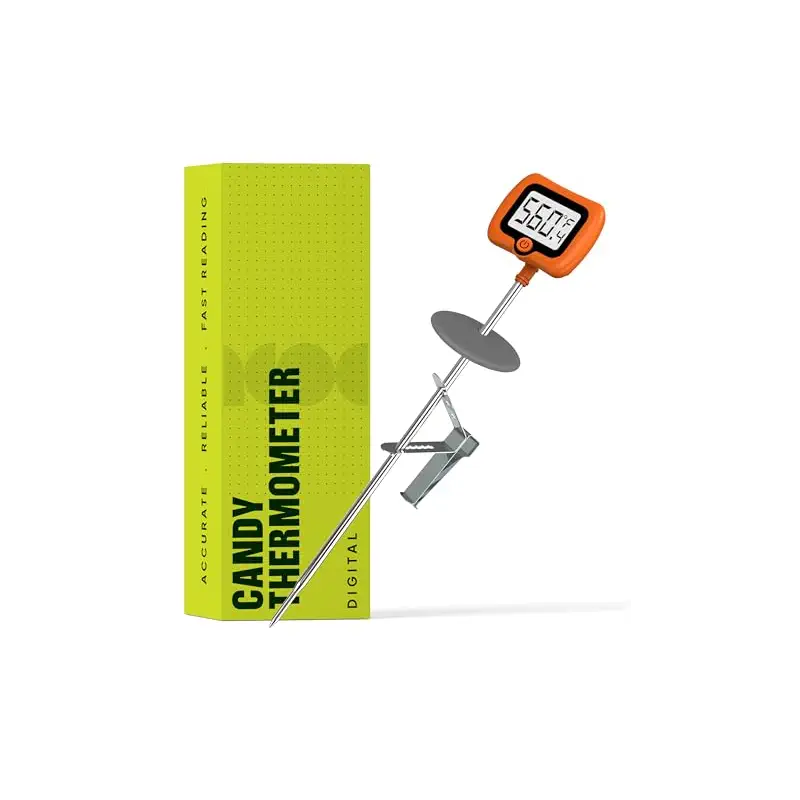
A candy thermometer lives or dies by three things: speed, accuracy, and stability. This digital model handles all three. The pot clip grips the side of your pan without dominating your workspace, so you can stir and adjust heat while monitoring temperature: no need to hold it, babysit it, or worry about it tumbling into hot sugar syrup. The 10-inch stainless steel probe sits deep enough to catch real bulk temperature while keeping your hand clear of steam and splatter.
Readers report that the instant 3-5 second read time is genuinely transformative for candy work. Soft ball, hard ball, hard crack: each stage demands split-second precision, and this thermometer doesn't keep you guessing. The LCD display stays legible even in kitchen glare, and the wide range from -58°F to 572°F covers everything from ice cream base to deep-fry oil. Cleanup is straightforward: stainless steel, no complex seams, waterproof design means a quick rinse between batches.
One caveat: a handful of owners report calibration drift of 1-3 degrees, which can compound in recipes where the margin between "done" and "overdone" is narrow. The thermometer includes a recalibration function using ice water, which buyers appreciate for maintaining confidence in readings. Also, the digital housing is plastic and does risk warping if the probe sits too close to the heat source on very hot pans; position it so the body clears the rim.
Pros
Secure pot clip frees both hands for stirring
Fast 3-5 second digital readout
Long probe keeps hands safely away from steam
Recalibration feature builds confidence in accuracy
Cons
Can drift 1-3 degrees; periodic recalibration needed
Plastic housing vulnerable to high ambient heat near stovetop
Key features
10-inch stainless steel probe with secure pot clip
Digital LCD display reads -58°F to 572°F
NSF-certified, dishwasher-safe, waterproof design
Instant 3-5 second temperature response
#2 Pick
Best Heavy-Duty Saucepan for Demanding Batches
Fortune Candy
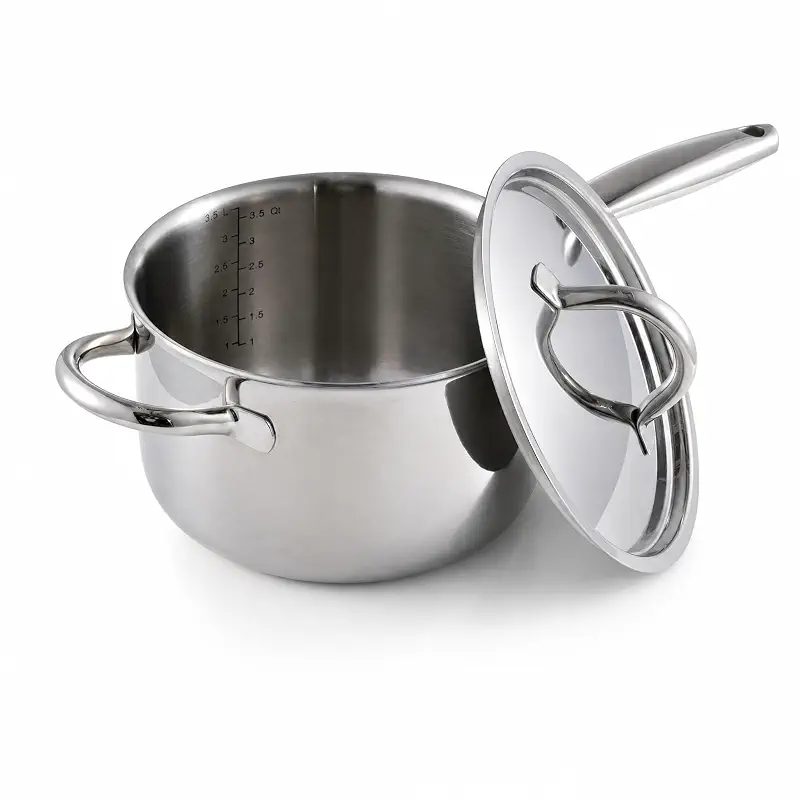
Fortune Candy 4-Quart Saucepan with Lid, Tri-Ply, 18/8 Stainless Steel, Advanced Welding Technology, Dishwasher Safe, Gas & Electric Stovetop Compatible
4.5(204)
Tri-ply construction and thick bottom distribute heat evenly; built to handle high-temperature candy work repeatedly.
Ideal for: Serious home confectioners, recipe developers, anyone making large batches of toffee, brittles, or caramel.
Candy making often demands sustained heat at the upper limits of stovetop cooking. This 4-quart saucepan is engineered for that pressure. The tri-ply bonded construction (stainless steel outer layers around an aluminum core) eliminates hot spots that can scorch sugar or caramelize chocolate unevenly. Owners who cook candy frequently praise the heavy 3.8-pound frame and thick bottom for their ability to climb toward hard-crack temperatures without burning the batch.
The 4-quart capacity is larger than a 3-quart standard, which matters more than it sounds: more volume means the same mass of sugar cooks at a slightly gentler rate, and you have room to stir aggressively without splashing. The tapered, drip-free pouring rim is a small grace note that saves cleanup. The welded stainless steel handles have been tested to 15,000 lifting cycles, which signals serious durability. Compared to the double boiler vs. heavy approach, this pot works beautifully for direct-heat sugar work like toffee or brittle where you want rapid temperature climb, not gentle steam-bath melting.
The trade-off is weight and maintenance: at 3.8 pounds empty, it demands respect when full of hot sugar, and stainless steel requires seasoning attention to prevent sticking (though the polished surface performs better than bare steel). Also, it's oven-safe only to a certain temperature, so it doesn't bridge to baking applications as fluidly as nonstick options might.
Pros
Tri-ply construction heats evenly without hot spots
4-quart capacity reduces thermal stress on large batches
Heavy bottom and thick walls resist scorching at high heat
Drip-free rim and dual handles for safer pouring
Cons
Heavy weight (3.8 lbs empty) demands careful handling when full
Stainless steel surface requires seasoning to prevent sticking
Key features
Tri-ply bonded stainless steel with aluminum core
18/8 stainless steel lid and tapered pour rim
4-quart capacity with dual stainless steel handles
Oven-safe; compatible with induction, gas, and electric
#3 Pick
Best Budget Double Boiler for Melting Work
Marsheepy
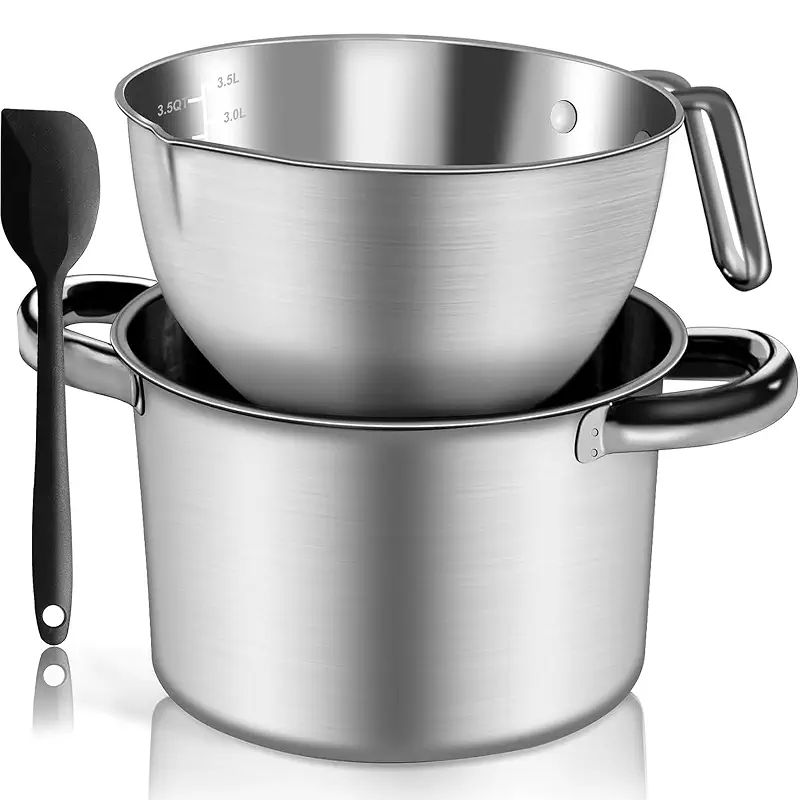
Marsheepy 3.1QT Double Boiler Melting Pot with 4.5QT Stainless Steel Pot | 304 food-grade steel, rust-proof. Melt chocolate, butter, candy, wax, soap. Stovetop safe, Dishwasher safe
4.6(949)
Compact, affordable setup perfect for melting chocolate, butter, and caramel using gentle steam instead of direct heat.
Ideal for: Home chocolatiers, candy makers on a budget, anyone melting chocolate, butter, or making caramel sauce.
Double boilers serve a different mission than direct-heat pans: they melt fragile ingredients (chocolate especially) without scorching. This 3.1-quart set is the entry point that doesn't compromise on material: it's 304 stainless steel, not aluminum or thin-gauge knockoffs. The 4.5-quart outer pot holds water, and the upper bowl nests inside, creating a steam jacket that keeps chocolate and caramel at a forgiving temperature. Owners who switched from microwave melting (where chocolate burns easily) report this is a revelation: no more seizing, no more bitter taste.
The silicone spatula included is a bonus, not an afterthought. It flexes enough to scrape bowl seams but stays firm enough to stir thick batches. The lighter weight is both a strength and a limitation: easy to handle and store, but you're not getting the thermal mass that guarantees super-even melting across large batches. At this price point, you're trading durability for accessibility. A few owners note the thin walls limit this setup for frequent, heavy use, and the inner bowl can seem cramped if you're working with multiple pounds of chocolate.
Compared to the Fortune Candy saucepan, this double boiler excels at finesse melting but lacks the high-temperature climbing power needed for direct-heat sugar cooking. Choose this if your candy work centers on chocolate, toffee sauce, or candy coating; reach for the heavy saucepan if you're boiling sugar syrup to hard-crack stage.
Pros
Gentle steam melting prevents chocolate scorching
Food-grade 304 stainless steel resists rust
Lightweight and compact; easy to store
Included silicone spatula is durable and well-designed
Cons
Thin-walled construction limits durability with frequent heavy use
Small inner-bowl capacity constrains large batches
Key features
3.1-quart inner melting bowl, 4.5-quart outer pot
304 food-grade stainless steel, rust-resistant
One-piece silicone spatula included
Stovetop and dishwasher safe; works on all burner types
#4 Pick
Most Versatile Double Boiler for Induction & Craft Work
Zyghjort
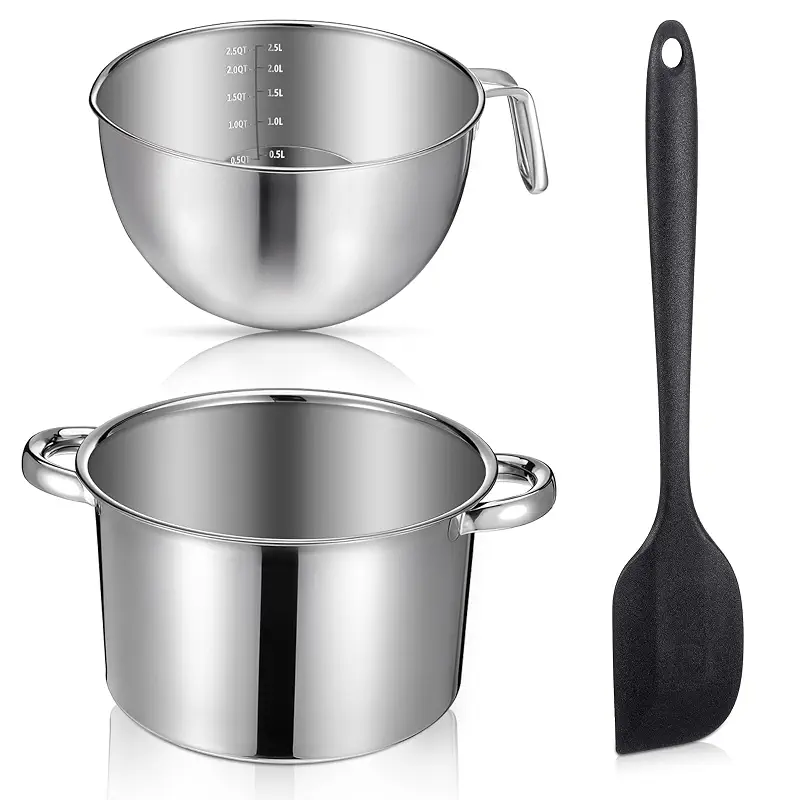
Double Boiler Pot Set, Include 2500ml/2.3QT Mixing Bowl and 4000ml/3.63qt Stainless Steel Pot, Silicone Spatula, For Candy, Soap Wax Candle Making Supplies, Induction Safe
4.2(21)
Induction-compatible, mid-size double boiler with measurement scales and angled spout for precise pouring.
Ideal for: Induction cooktop users, candy makers working in small batches, soap and candle crafters who value measurement precision.
This Zyghjort set bridges the gap between melting pots and serious cookware. The 2.3-quart upper bowl and 3.63-quart lower pot land in the sweet spot: larger than the budget option, but still nimble for small experimental batches. The built-in measurement scales are practical for candy work where a few grams of ingredient shift can change outcome. The angled pour spout drips less than a flat-rim bowl, which matters when you're transferring melted chocolate into molds or piping bags.
The real differentiator is induction compatibility. If you cook on induction, most standard double boilers sit there inert. This one works across induction, ceramic, gas, and halogen: important if your kitchen has mixed burners or you're testing recipes across different heat sources. The premium 304 stainless steel and slightly more robust construction suggest it'll handle more frequent use than the ultra-budget models. The silicone spatula is rated to 450°F and includes an anti-slip handle.
Trade-offs exist. At 21 reviews, this model has far less real-world feedback than the bestsellers; you're taking a slight risk on durability claims. A few owners report the upper bowl doesn't sit perfectly level over the lower pot (rivets in the rim can catch), which means periodic adjustment while whisking to keep the bottom from touching simmering water. It's not a flaw in the product so much as a reality of double boiler geometry that affects any set with riveted handles.
Ideal for: Small-batch chocolate lovers, apartment kitchens with minimal storage, soap and candle makers testing new recipes.
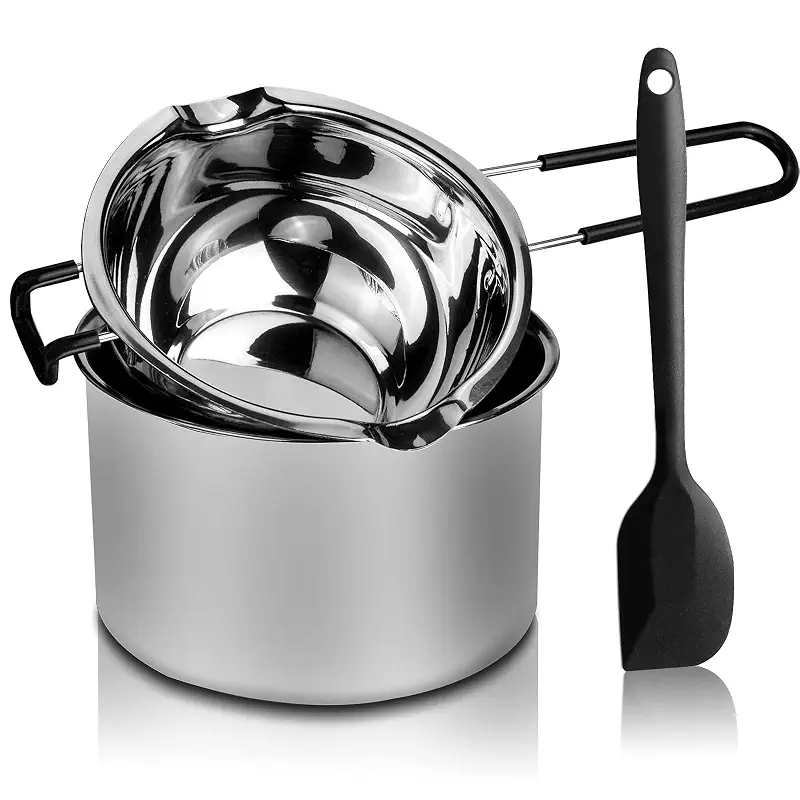
The Songziming set flips the script by offering two distinct pot sizes: a 600ml (20oz) upper bowl and a 1600ml (54oz) lower pot. This means you can melt a quarter-pound of chocolate without filling a pan designed for a pound. For home candy makers or soap crafters experimenting with new flavors or colors, this is genuine utility: you're not heating twice the chocolate you need just to avoid a microscopic pot.
The dual pour spouts on both pots are thoughtful engineering. Silicone front hooks prevent the upper bowl from sliding around, and the spatula that comes with it earns consistent praise for its flexibility and grip. At 4,042 reviews, this is the most proven model in the double-boiler category. Owners who make small batches of chocolate-covered fruit or individual candy molds celebrate the speed and simplicity.
But capacity is the catch. The 600ml bowl is genuinely tiny: great for 2-3 servings of melted chocolate, awkward if you're scaling up to a party tray. The 1600ml outer pot has no handle, which some buyers didn't anticipate and found annoying when moving hot water. A few owners report the silicone grip on the inner bowl's handle loosens over time, though customer service appears responsive. Compared to the Marsheepy set, this one prioritizes precision micro-batching; if you're cooking for a crowd or need headroom to whisk, go larger.
Pros
Compact 600ml upper bowl wastes no chocolate on small projects
Dual pour spouts on both pots prevent drips
Silicone safety hooks keep bowl from sliding
Excellent included spatula praised across thousands of reviews
Cons
Lower pot lacks handle; moving hot water is awkward and risky
Silicone grip on upper bowl handle can loosen with frequent use
Key features
600ml and 1600ml stainless steel pots for flexible batch sizing
High-quality included silicone spatula with soft grip
How to Choose a Pot for Candy Making
Four trade-offs that actually matter when matching a pot for candy making to your kitchen.
Direct Heat vs. Steam: Your Cooking Method Matters
Not all candy requires the same heat approach. If you're cooking sugar to specific stages (soft ball, hard crack, thread), you need direct heat and steep temperature climbs: reach for a heavy-bottomed saucepan. If you're melting chocolate, butter, or caramel sauce, steam-jacket melting via a double boiler prevents scorching and gives you more forgiveness. A quality double boiler vs. heavy saucepan decision hinges on your most common recipe type. Hard toffees and brittle demand the direct-heat pan; chocolate truffles and coated candies favor the double boiler.
Material & Heat Distribution: Why Tri-Ply Matters
Single-layer aluminum or thin stainless steel creates hot spots where sugar burns before the rest of the batch cooks evenly. Tri-ply construction (stainless steel layers bonded around an aluminum core) distributes heat uniformly across the bottom and sides, which is especially critical when climbing to high temperatures. Stainless steel 304 or 18/8 grades are safe and non-reactive with acidic ingredients. For a pot you'll use frequently, the upfront investment in tri-ply or heavy-bottomed construction pays back in consistent results.
Thermometer Placement and Accuracy
Your thermometer is as important as your pot. Digital thermometers with pot clips let you monitor temperature hands-free, which is crucial when you're stirring or adjusting heat. A candy thermometer placement guide will walk you through positioning: the probe should sit in the bulk liquid without touching the bottom (which reads artificially high) or the side of the pot. Many clips are adjustable to let you angle the probe exactly where you need it. If you choose an analog thermometer, expect slightly slower reads; digital models respond in 3-5 seconds and reduce guesswork.
Capacity: Bigger Isn't Always Better
A 4-quart saucepan is ideal for sugar syrups climbing to hard-crack stage; the extra volume slows the temperature rise slightly and gives you room to stir without splashing. For melting work, smaller is often smarter: a 2-3 quart double boiler is easier to manage and doesn't force you to melt more chocolate than you need. Consider your typical batch size and how often you're cooking. If you experiment with small recipes, a compact 600ml melting pot avoids waste. If you're making toffee for gifts, reach for the larger saucepan.
Durability & Long-Term Care
Stainless steel pots are durable but require seasoning (a thin oil layer) to prevent sticking on the cooking surface. Double boilers with thin walls are lighter and easier to store but show their limits faster if you use them multiple times a week. If you're a casual candy maker, budget-friendly options work fine. If candy making is a regular kitchen habit, invest in tri-ply or commercial-grade stainless steel that will handle years of high-heat use without warping or developing weak spots.
Frequently asked
Quick answers to the questions readers ask most.
What temperature should I cook candy to?
Candy stages depend on water content and molecular structure. Soft ball (235-240°F) for fudge; hard ball (250-265°F) for marshmallows; soft crack (270-290°F) for taffy; hard crack (300-310°F) for toffee and brittle. A quality thermometer that reads in 3-5 seconds and clips to the pot is essential for hitting these narrow windows consistently.
Can I use a regular cooking thermometer for candy?
Cooking thermometers measure protein doneness (140-165°F range) and often max out around 200°F. Candy cooking climbs to 300°F or higher, so a regular meat thermometer won't help. Choose a thermometer specifically rated for candy, with a range covering at least 200-320°F and a pot clip to keep it steady and your hands clear.
Why does my chocolate seize in a regular pot?
Chocolate seizes when moisture or heat spikes cause cocoa solids to clump. A double boiler uses steam from simmering water below to melt chocolate gently and indirectly, avoiding direct contact with high heat. If you melt chocolate in a regular pot over direct flame, even a few degrees too hot can break the cocoa butter emulsion and ruin the batch.
Is stainless steel or nonstick better for candy making?
Stainless steel is safer for candy work. Nonstick coatings break down at high temperatures (above 400-500°F), and candy cooking can approach or exceed those limits. Stainless steel handles hard-crack toffee without risk. The trade-off is that sugar sticks more readily to stainless, so seasoning and technique matter more.
Do I need a special pot lid for candy making?
A lid isn't strictly required, but it helps trap steam early in sugar cooking, which ensures all crystals dissolve evenly and prevents grainy texture. Most saucepans and double boilers sold as candy kits include a lid. For double boilers, a glass lid lets you monitor progress without lifting and losing heat.