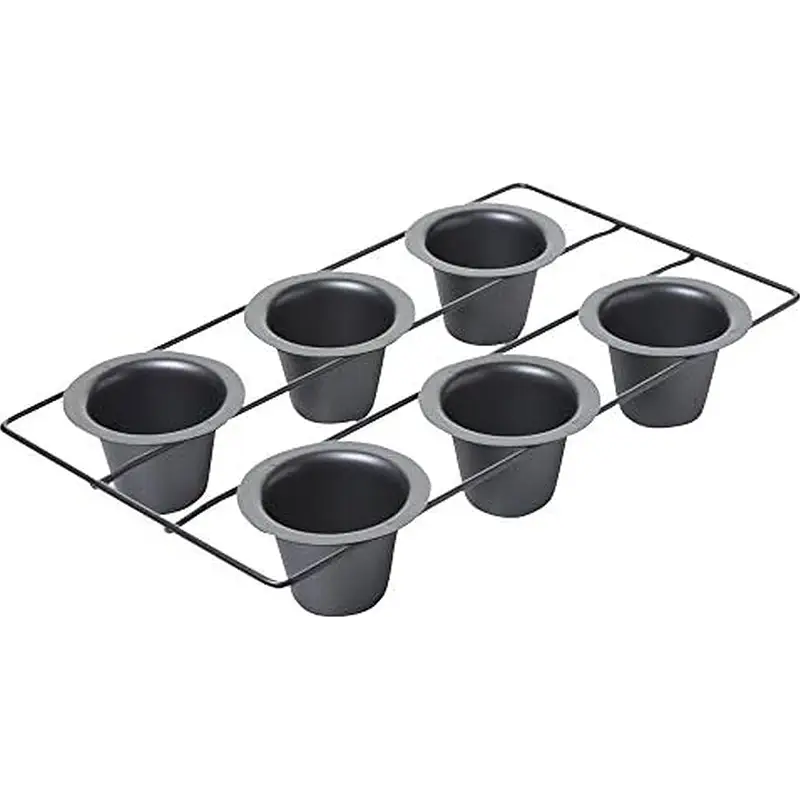
Ideal for: Home bakers seeking reliable, consistent results with a classic 6-cup format.
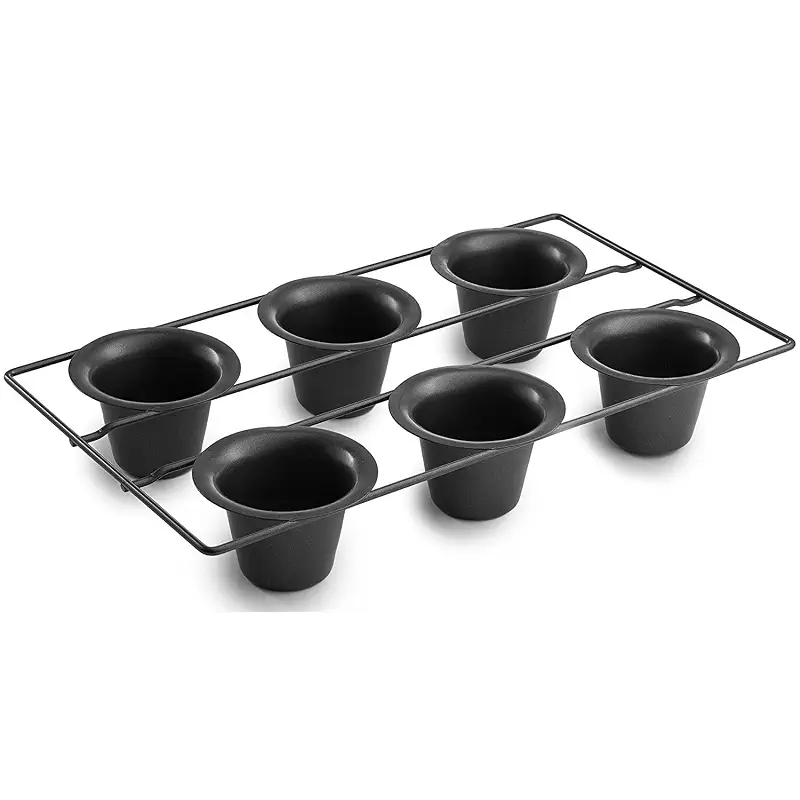
The Chicago Metallic 6-Cup has earned its reputation through years of home use. The heavyweight aluminized steel distributes heat evenly across all six cups, and the tapered design channels hot air to promote that signature rise. What owners appreciate most is how reliably the nonstick coating holds up: the silicone-based finish releases popovers cleanly without requiring you to strip the pan's protective layer through aggressive scrubbing. One owner who tested three iterations of Nordic Ware's smaller model before settling on this one noted that consistency matters when you're learning the technique, and this pan delivers it.
The main caveat: the pan requires a separate cookie sheet underneath to catch any batter that might drip during loading. That's not a flaw so much as part of the design: several owners actually prefer this setup because it makes moving the hot pan safer and cleanup easier. The 2.75-inch cup diameter produces generously sized popovers, and at 450°F maximum, the oven-safe rating covers the high heat these pastries demand. Hand washing is recommended to extend the nonstick life, though the pan is technically dishwasher safe.
For cooks who want a workhorse that won't surprise them after six months or a year of regular use, this is the pan that delivers. It's not the fanciest or the largest, but it performs the job without drama.
Pros
Durable aluminized steel resists warping over years
Nonstick coating stays effective with hand washing
Generously sized cups for full-bodied popovers
Cons
Requires separate cookie sheet underneath for safety
Maximum 450°F temperature limit (adequate but not extreme)
Key features
Six 2.75-inch tapered cups permanently affixed to frame
Silicone-based nonstick coating rated to 450°F
Heavyweight aluminized steel construction for even heat
Dishwasher safe; hand washing recommended for longevity
#2 Pick
Premium Choice
Nordic Ware
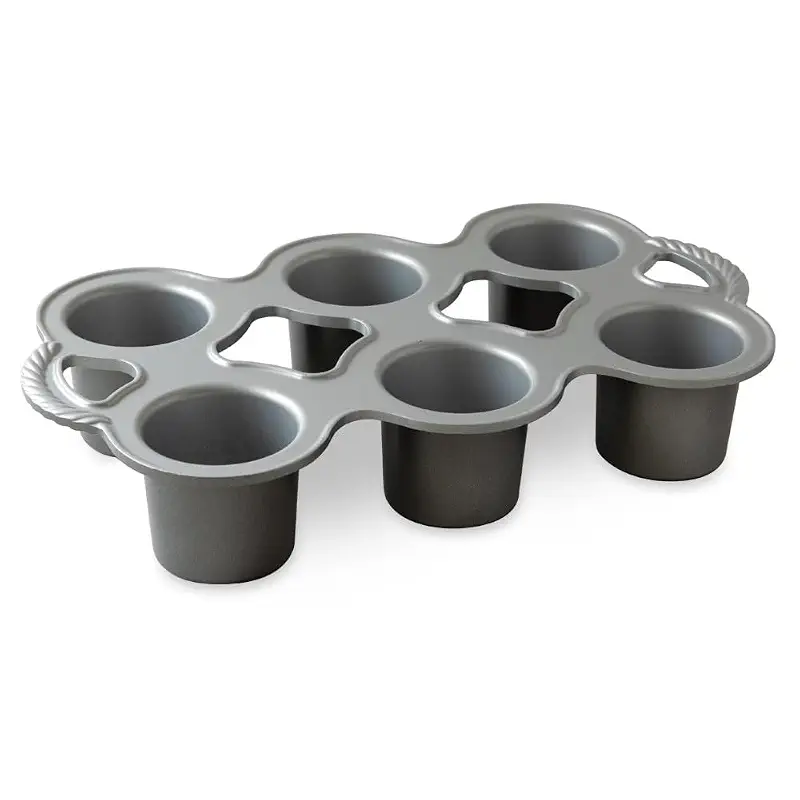
Nordic Ware Grand Popover Pan
4.8(1,052)
Cast aluminum built to outlast kitchen careers. Made in the USA with exceptional heat control and durability.
Ideal for: Serious bakers willing to invest in long-term quality and those who prioritize Made in the USA construction.
Nordic Ware's Grand Popover Pan represents the inverse philosophy: buy once, pass it down. Cast aluminum is heavier than aluminized steel and holds thermal mass differently: it heats slowly but maintains that heat with remarkable consistency. Owners report that popovers from this pan rise taller and more dramatically than from lighter competitors, which they attribute to the pan's ability to surround the batter with steady, unfluctuating heat. One baker achieved popovers that tripled in height using Marion Cunningham's recipe (a legendary popover expert) paired with this pan.
The nonstick coating on this model is proprietary and finicky about prep: Nordic Ware explicitly warns against standard cooking sprays like Pam, recommending instead a flour-based baking spray (like Bak-Klene ZT). That's not a drawback if you follow the label, and several reviewers found this spray to be professional-grade and long-lasting. The manual care instructions matter here more than with lighter pans, because the thick cast aluminum can trap soap residue in the deep cups if you don't rinse thoroughly. But owners who treat the pan with that discipline report it lasts decades without any loss of nonstick properties.
Compared to the Chicago Metallic option, this trades slightly more care requirements for superior heat retention and a pan that feels engineered to never fail. The Made in the USA manufacturing appeals to buyers who weight domestic production, and the limited lifetime warranty backs the company's confidence in durability.
Pros
Cast aluminum holds heat steadily for dramatic rise
Proprietary nonstick coating proves durable over decades
Made in the USA with limited lifetime warranty
Cons
Requires flour-based spray, not standard cooking spray
Deeper cups need thorough rinsing to avoid soap buildup
Key features
Heavy cast aluminum construction for superior thermal mass
Six oversized cups with deep, tapered design
Proprietary nonstick finish rated for professional use
Hand wash recommended; dishwasher not advised
#3 Pick
Best for Batch Baking
Chicago Metallic
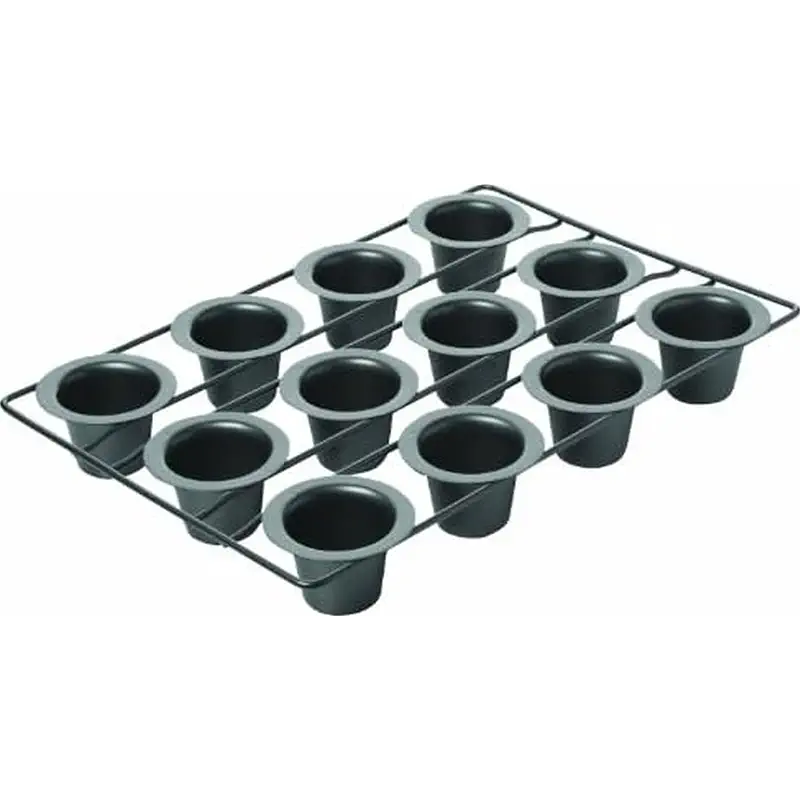
Chicago Metallic 26121 Professional 12-Cup Non-Stick Mini-Popover Pan, 16-Inch-by-10.75-Inch
4.7(2,223)
Twelve mini cups let you bake an entire crowd-sized batch in one go; suspended-cup design ensures even rise.
Ideal for: Hosts and larger families who bake popovers frequently and want to minimize oven time.
The Chicago Metallic Mini-Popover fills a specific niche: when you're cooking for six to eight people or need popover options for a brunch spread, a single 6-cup pan means two rounds in the oven. This 12-cup version solves that by letting you bake twice as many in a single pass. The engineering mirrors the 6-cup model's strengths (suspended cups linked by crossbars that keep hot air circulating) but scales it for mini portions. Each cup is slightly smaller (2.25 by 2 inches versus the standard 2.75 inches), which means quicker baking and more manageable handling.
Owners consistently report that the cups are engineered well enough that each popover rises uniformly, even the ones in the center where heat can be less intense. The wide lip design gives each mini popover room to puff outward without crowding its neighbors. One reviewer who grew up making popovers in Vermont praised the sturdy feel and even baking, noting that cleanup is straightforward because the nonstick holds up. The professional-grade steel is the same material Chicago Metallic uses in commercial kitchens, so warping is not a concern even under repeated high-heat cycles.
Where this differs from the Nordic Ware Grand: the 12-cup produces smaller individual portions, which some cooks prefer for plating or portion control, but others might find less impressive visually. The premium nonstick coating is the same silicone-based formula used in the 6-cup model, rated to 450°F, and hand washing extends its life.
Pros
Twelve cups bake full batches in one oven cycle
Suspended-cup crossbar design ensures even heat to center
Professional-grade steel resists warping over years
Cons
Smaller cup size means less dramatic individual portions
Requires a catch tray underneath to prevent batter drips
Key features
Twelve 2.25 by 2-inch suspended mini cups with crossbar links
Professional-grade aluminized steel for durability
Extra-wide lip design prevents crowding and overflow
Silicone nonstick coating rated to 450°F
#4 Pick
Best Value
Epica
Epica Bellemain Popover Pan, Nonstick Baking Pan for Perfect Popovers | high quality, easy to clean
4.7(4,657)
Affordable six-cup nonstick popover pan that delivers bakery-quality results without premium pricing.
Ideal for: Budget-conscious bakers trying popover-making for the first time or those who bake them occasionally.
Epica's Bellemain popover pan proves that you don't need to spend top dollar to get reliable popovers. The 2.25-inch-deep by 3-inch-diameter cups are designed specifically for maximum rise, and owners consistently report that popovers "practically jump out of the pan" after baking. The nonstick coating is high-quality enough that minimal greasing is required, though a light buttering before each use is still recommended for insurance. One reviewer who had struggled for years with a basic aluminum pan ungreased praised how the Bellemain changed the outcome immediately: no tweaking required, just solid results from the first try.
The pan comes with a recipe, which several owners noted is fussier than necessary; many simplified it (room-temperature eggs and milk, one cup each, flour, salt, butter, whisked smooth) and still achieved excellent results. A few bakers reported that actual oven temperature varied from the recommended 450°F (some needed 350°F in their convection ovens) which underscores that popover success is as much about learning your oven as having the right pan. The Bellemain is durable enough to handle that experimentation without showing wear.
Compared to the Chicago Metallic 6-cup, the Bellemain trades some of the heaviness for affordability and still delivers the core requirement: heat circulation and reliable nonstick release. It's the right choice if you want to test whether popovers are a regular part of your baking routine before investing in a premium option.
Pros
Nonstick coating works reliably with minimal greasing
Affordable entry point for testing popover success
Includes recipe to guide first-time bakers
Cons
Lighter construction than cast or heavyweight steel options
Recipe included can be overly detailed for experienced bakers
Key features
Six cups measuring 2.25 inches deep by 3 inches diameter
High-quality nonstick coating for easy release
Sturdy construction designed for consistent results
Versatile for popovers, muffins, and Yorkshire pudding
#5 Pick
Best for Multiple Batches
Evodae
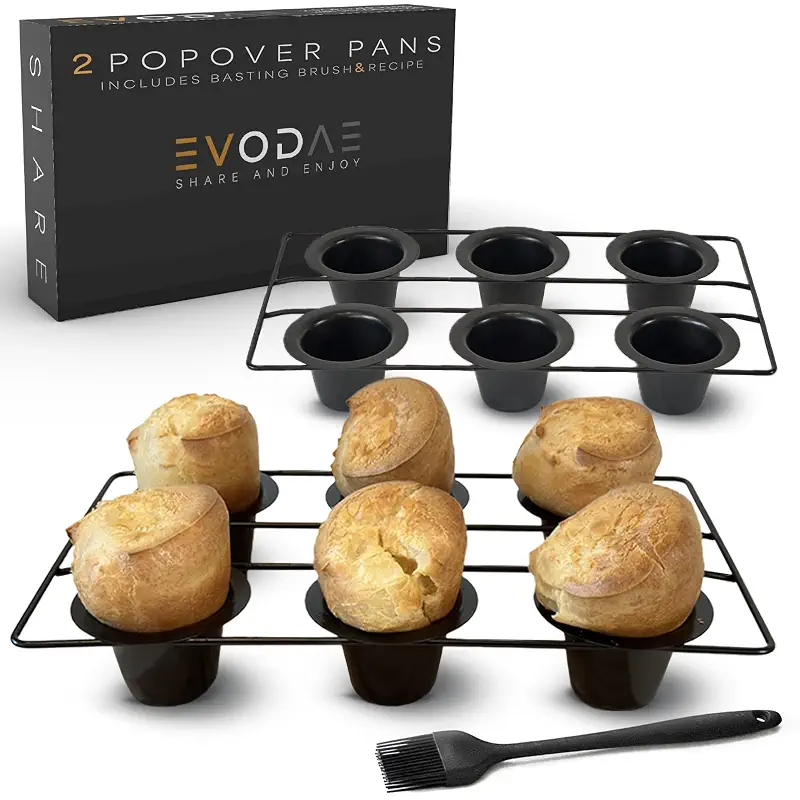
Popover Pans Set of 2 – 12 Cup (2x6) Pro-Grade Carbon Steel, Strong & Durable Build – Nonstick, PFOA & PTFE Free – Popover & Yorkshire Pudding Pan – Carefully Packaged in a Clean Black Box
4.7(92)
Two-pan set with PFOA-free carbon steel construction; ideal for bakers who want twelve cups or backup cookware.
Ideal for: Bakers who want flexibility to scale batches or those who value PFOA-free nonstick coatings.
Evodae's two-pan set flips the usual approach: instead of choosing between 6 and 12 cups, you get two 6-cup pans that can be used separately or together depending on your needs. This flexibility appeals to households where baking happens at different scales, or to someone who wants a backup pan so one can cool while the other bakes. The carbon steel construction (0.8mm thickness) sits between the lightweight aluminized models and the heavyweight cast options: it's sturdy without being as thermally massive as Nordic Ware's cast aluminum.
Owners emphasize that the nonstick coating is PFOA and PTFE free, which matters if you prefer to avoid fluorinated compounds in your kitchen. The carbon steel heats up quickly and conducts heat well, and reviewers report tall, airy popovers without sticking issues. One baker noted that switching from a muffin tin to these pans transformed the height and texture immediately. The set includes a silicone brush for greasing, which is a thoughtful touch that saves you from hunting for the right tool. A QR code on the packaging links to a popover recipe and baking tips, which newer bakers will find helpful.
This option sacrifices some of the thermal stability you'd get from Nordic Ware's cast option, but the two-pan set gives you practical flexibility that a single premium pan doesn't. If you're drawn to the popover pan material comparison between different constructions, this set lets you develop a feel for how carbon steel behaves versus aluminum.
Pros
Two pans provide flexibility for different batch sizes
PFOA and PTFE-free nonstick coating appeals to health-conscious cooks
Carbon steel heats quickly with good heat retention
Cons
Two pans take up more storage space than a single option
Carbon steel doesn't hold thermal mass quite like cast aluminum
Key features
Two 6-cup pans (twelve cups total) in one set
Carbon steel 0.8mm construction for durability
PFOA and PTFE-free nonstick coating
Includes silicone brush and access to recipe via QR code
How to Choose a Popover Pan
Four trade-offs that actually matter when matching a popover pan to your kitchen.
Cup Count and Batch Size
Most popover pans come in either 6-cup or 12-cup formats. A 6-cup pan is standard for households of four to six people and allows you to bake one batch at a time. The 12-cup versions (either as a single pan or two 6-cup pans) suit larger families or hosts who entertain regularly and want to minimize oven cycles. Mini-cup formats offer smaller portions, which some cooks prefer for plating or when serving popovers as a side dish. Think about whether you'll be making popovers weekly or just a few times a year: that determines whether investing in extra capacity is practical.
Material and Heat Conductivity
Popover pan material comparison matters because it affects how evenly heat surrounds the batter. Aluminized steel (lightweight, quick-heating) is affordable and reliable for consistent results. Cast aluminum is heavier and holds thermal mass, which some bakers find produces taller, more dramatic rises, but it requires more care during cleaning. Carbon steel sits in the middle, heating quickly while providing decent stability. Heavy-duty construction resists warping, which extends the pan's life, especially if you bake at the recommended 425–450°F. Cheaper aluminum pans may warp after repeated high-heat use, affecting future baking performance.
Nonstick Coating and Maintenance
All quality popover pans feature a nonstick coating, but the chemistry matters. Silicone-based coatings (used by Chicago Metallic and others) are durable and don't require special prep sprays. Some premium pans, like Nordic Ware, use proprietary coatings that explicitly prohibit standard cooking sprays and require flour-based alternatives instead: a minor extra step but worth noting. PFOA and PTFE-free options are available if you prefer to avoid fluorinated compounds. Regardless of coating type, hand washing extends the life of the nonstick surface far better than dishwasher use. The popover pan care guide covers detailed maintenance, but the basic rule: soft sponge, warm soapy water, never metal utensils.
Price and Long-Term Value
Popover pans range from budget-friendly entry-level options to premium investments. A mid-range aluminized steel pan typically performs as well as a premium cast aluminum option for most home bakers; the difference is durability and brand heritage. If you bake popovers frequently, a higher-quality pan that won't warp or lose its nonstick properties over years represents better value. If you're testing whether popover-making fits your routine, a budget option lets you learn the technique without significant expense. Many bakers who fall in love with popovers end up buying a second or better pan later: there's no shame in starting affordably and upgrading.
Oven Compatibility and Safety
Most popover pans max out at 450°F, which is the standard temperature for popovers. Some lightweight pans may have lower limits, so check the spec if you prefer extra heat margin. A separate consideration: many pans require a cookie sheet or baking tray underneath to catch any batter overflow and to make moving the hot pan safer. This is not a flaw but a reality of popover-baking ergonomics: plan for it when choosing. If your oven is small, verify that your preferred pan will fit comfortably with a cookie sheet underneath before ordering.
Frequently asked
Quick answers to the questions readers ask most.
Do I really need a dedicated popover pan, or will a muffin tin work?
A muffin tin will not produce proper popovers. Muffin cups are crowded together, trapping steam and moisture around the batter instead of letting heat circulate freely. Popover pans have suspended or separated cups specifically engineered to allow hot air to flow all around each piece of batter, which creates the dramatic rise and crispy exterior that defines a popover. Many bakers tried muffin tins first and were disappointed until they switched to a real popover pan: then the results transformed immediately.
What temperature and baking time should I use?
Most popover recipes call for a 425–450°F oven with baking times between 35 and 45 minutes, depending on your oven and recipe. A common approach is to start at a high temperature (425–450°F) for the first 20–25 minutes to set the structure, then reduce to 350°F for another 15–20 minutes to ensure the interior dries out without the exterior burning. Always preheat the pan (empty) in the oven before adding batter: this is critical for proper rise. Never open the oven door during the first 20 minutes, as the sudden temperature drop will collapse your popovers.
Why are my popovers sticking to the pan even though it's nonstick?
Sticking usually stems from inadequate greasing before baking, not a pan defect. Brush the cups generously with softened butter or use a cooking spray rated for baking (avoid standard sprays on pans that require flour-based formulas, like some premium models). Room-temperature eggs and milk also affect how the batter rises and releases. If sticking persists after proper prep, the pan's nonstick coating may be wearing out, which typically takes years of heavy use. Hand washing and avoiding metal utensils keep the coating in good condition longer.
Can I use a popover pan for other baked goods?
Yes. Popover pans work beautifully for Yorkshire pudding, oversized muffins, and individual quick breads. Some bakers use them for molded desserts or savory custard-based items. The deep, individual cups make them versatile for any batter that benefits from circulating heat and easy individual release. That said, they're specialized tools: a regular muffin tin or cake pan covers many baking tasks better.
Is hand washing really necessary, or is dishwasher safe okay?
Manufacturers typically recommend hand washing to extend nonstick life, even though many pans are labeled dishwasher safe. Dishwasher heat and detergent can gradually wear down the nonstick coating faster than gentle hand washing. For a pan you're investing in, especially premium options, hand washing with warm soapy water and a soft sponge takes only a few minutes and pays off in years of reliable nonstick performance. If you use the dishwasher regularly, budget for replacing the pan sooner.