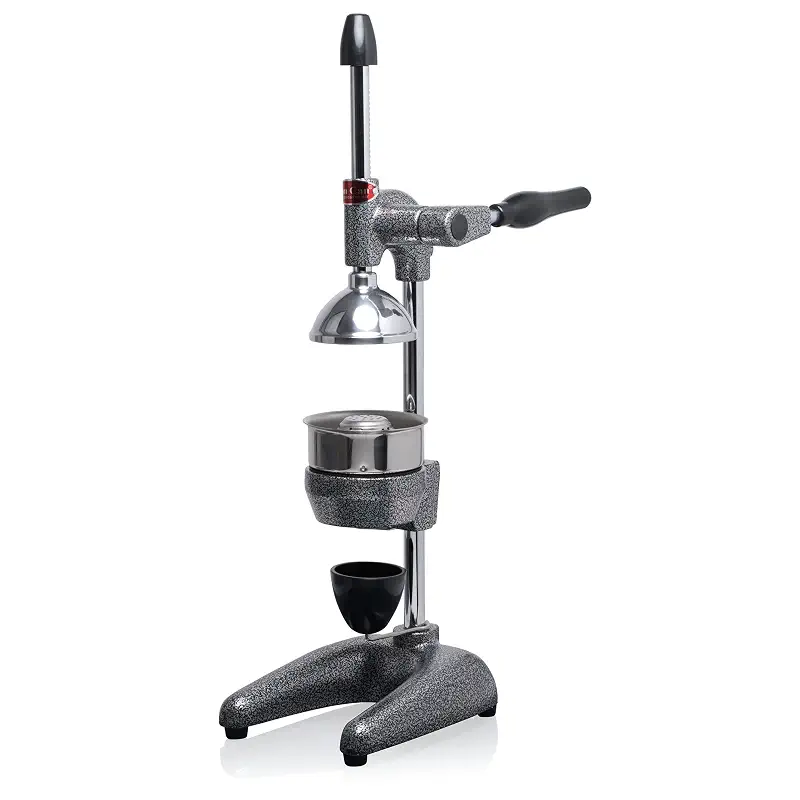
Ideal for: Daily juicers who prioritize extraction speed and durability over budget constraints.
The Can-Can stands apart because it's engineered the way street vendors in Turkey juice hundreds of fruits daily. The clamping system and robust cast construction mean you get genuine mechanical advantage without cranking hard. Owners consistently report that one press gets nearly all the juice out, leaving barely a drop in the pomegranate or citrus. Setup is straightforward: cut the fruit in half, place it cut-side down, and pull the lever. The integrated drip cup prevents mess on your counter, and cleanup takes seconds since the stainless steel contact parts are removable.
What sold many buyers was seeing it in action online before committing. The price sits well above entry-level juicers, but reviewers who've owned multiple presses elsewhere say this one justifies the investment through sheer extraction efficiency and longevity. The machine handles everything from small lemons to large grapefruits, and anyone researching the top juicer for tomatoes will find it falls outside this press's core design of pomegranates and citrus.
The only caution: shipping can be rough on the packaging, though the press itself arrives intact if you inspect carefully. Color is limited (gray-purple tones), and for very occasional home use, the step-up cost might feel steep. But if juicing is a regular part of your routine, this press earns its counter real estate.
Pros
Extracts maximum juice with single press, minimal force needed
Heavy-duty stainless steel contact parts resist corrosion and wear
Commercial-tested design proven in high-volume Turkish juice stands
Cons
Higher entry price than manual lever alternatives
Larger footprint requires dedicated counter space
Key features
Clamping system with lever mechanism for consistent pressure
Stainless steel filter bowl and removable strainer for quick cleanup
Rubber pads prevent slipping on wet or smooth countertops
Processes up to 50 kg of citrus per hour in commercial settings
#2 Pick
Best for Ease and Versatility
Zulay Kitchen
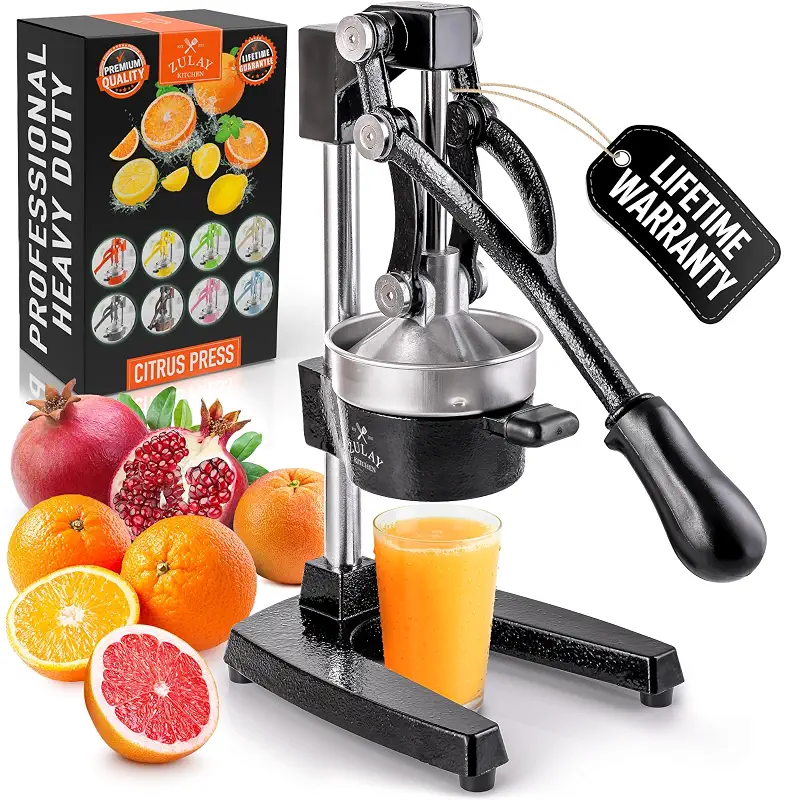
Zulay Kitchen Cast Iron Juicer - Heavy Duty Manual Juicer with Detachable Strainers for Easy Cleaning, Orange Juice Press for Citrus Fruits, Perfect for Bartenders, Juice Lovers & Health Enthusiasts
4.6(11,334)
Lightweight cast iron manual press that delivers strong juice extraction with minimal learning curve, perfect for home daily use.
Ideal for: Home cooks wanting fresh citrus juice daily without electricity, noise, or large appliance footprint.
Zulay's cast iron juicer has racked up over 11,000 reviews because it solves a real problem: you want fresh juice without owning a huge appliance or learning complex technique. The generous 5-inch bowl fits everything from small limes to large grapefruits, and the long lever arm does the work for you, even someone with modest hand strength can pull a solid juice yield.
What sets this apart from the Can-Can is approachability and footprint. It's lighter, takes less counter space, and requires no special setup or clamping. Cut the fruit, place it, pull. Owners report that the removable stainless steel parts make cleanup trivial. The rubberized feet keep it planted during use, so you're not wrestling the press across the counter. One quirk: some reviewers noted a slight plastic or rubber smell when new, but it fades within a few weeks and doesn't affect safety or performance.
Compared to electric models like the Breville, this juicer produces zero noise and no heat. If you're making just one or two glasses at a time, the manual action becomes part of the ritual rather than a chore. The trade-off is that high-volume juicing sessions do require arm engagement and repeat pressing for each fruit, and anyone seeking the best juicer for carrots should note that moisture retention in dense vegetables adds extra pressing rounds.
Pros
Long lever arm requires minimal hand strength for good extraction
Removable stainless steel parts dishwasher safe and easy to clean
Compact size fits tight counters yet handles large whole fruits
Cons
New-out-of-box plastic smell fades but lingers for weeks initially
Requires manual pressing effort for each fruit or repeated batches
Key features
Cast iron construction with stainless steel strainer and bowl
5-inch diameter bowl fits whole lemons, limes, oranges, and grapefruits
Mechanical lever arm reduces hand strain during pressing
Available in 20+ colors to match kitchen or bar aesthetic
#3 Pick
Best Value Manual Press
Eurolux
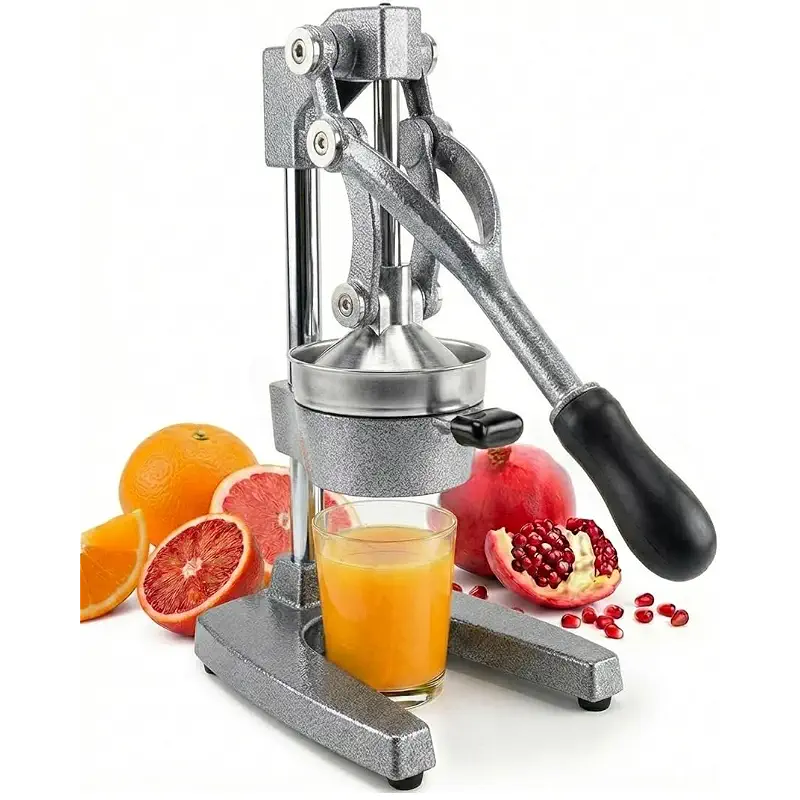
Eurolux Ultra-Premium Cast Iron Juicer | Extra-Large, Heavy Duty, Commercial Grade, Stainless Steel Manual Hand Press Citrus Squeezer For Fresh Orange Juice, Pomegranate, Lemon, and Much More (Gray)
4.4(2,705)
Solid commercial-grade cast iron press with suction-cup base and good extraction, built tough at a fair price point.
Eurolux hits a middle ground that appeals to buyers who want durability without the Can-Can's premium cost. The cast iron build and stainless steel contact surfaces are genuine quality, and the suction-cup base is a smart detail that keeps the press stable during use: no sliding or tipping.
Extraction performance is honest: owners get good juice yield, though a few noted it won't squeeze quite as completely as pricier options. The removable parts wash clean easily, and the overall footprint is manageable. One recurring theme in reviews is that after a few days of use, some loosen up slightly, which is worth monitoring. A couple of owners mentioned needing periodic oiling of moving parts to maintain smooth operation. The underside finish isn't as durable as the top, so if left wet, it can show rust: a light vegetable oil spray keeps it protected.
Where this differs from the Zulay is weight and lever length. Eurolux is heavier and the mechanical advantage is slightly different. Some people find that preferable for stability; others prefer the lighter feel. If you juice citrus regularly and want a press that won't break the bank but will last years, this is a sensible choice. The trade-off is minor maintenance attention and slightly less impressive single-press completeness.
Pros
Heavy cast iron base with suction cups provides rock-solid stability
Stainless steel cup and strainer included for serving and cleanup
Dishwasher-safe contact parts make maintenance straightforward
Cons
Requires occasional light oiling to keep lever smooth and stable
Underside finish can rust if left wet; needs periodic oil spray protection
Key features
Heavy-duty cast iron frame with suction-cup base for countertop stability
Stainless steel cup and integrated strainer for seed and pulp separation
Removable parts fit standard dishwashers for quick cleanup
Lever design delivers strong mechanical advantage for citrus and pomegranates
#4 Pick
Best Electric Centrifugal Option
Breville
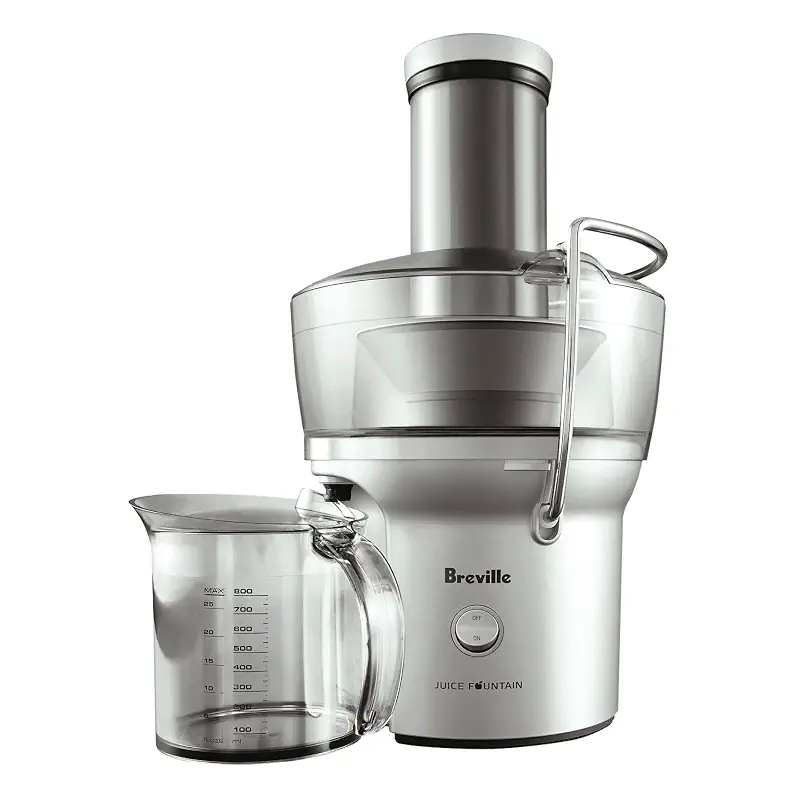
Breville BJE200XL Juice Fountain Compact Centrifugal Machine, Silver | Juice whole produce quietly with juicer's 3 in wide chute | Space-saving design for small kitchens | 25 fl oz capacity
4.5(12,930)
Compact, affordable electric juicer that handles whole citrus and soft fruits, ideal for households wanting speed over manual effort.
Ideal for: Busy households wanting fast daily juicing with minimal effort, limited counter space, and comfort with electrical appliances.
If you want to juice without any lever action and don't have unlimited counter space, the Breville Compact Juice Fountain offers genuine power in a footprint smaller than most manual presses. The 700-watt motor and titanium-reinforced disc process whole fruits through a 3-inch chute (no pre-cutting required) and owners report it handles citrus, apples, carrots, and leafy greens without strain.
Where electric centrifugal models differ from manual presses is in pulp management and juice temperature. The Breville's pulp container holds about 1.6 quarts, so high-volume sessions require a pause and empty. Some owners note the pulp isn't bone-dry (that's normal for centrifugal design), but the juice yield is solid and extraction is fast. A froth separator in the pitcher lid helps if that's a concern. Cleanup is quick (most parts rinse easily) though the mesh filter basket needs careful attention to prevent staining from repeated use.
Compared to manual presses, electricity brings speed and zero hand fatigue. But you're trading quiet operation for a working motor, and the juice heats slightly during extraction. Owners who've stuck with the Breville for years report it's durable if you hand-wash the delicate parts rather than using a dishwasher.
Pros
3-inch chute accepts whole fruits, reducing prep time significantly
Powerful 700-watt motor handles tough produce like carrots and cabbage
Compact footprint with cord storage makes it easy to keep on the counter
Cons
Pulp container requires emptying for high-volume sessions, interrupting workflow
Juice temperature rises slightly during centrifugal extraction process
Key features
700-watt motor with titanium-reinforced shredding disc for durability
3-inch extra-wide chute processes whole fruits and vegetables without cutting
Integrated froth separator in juice pitcher for cleaner serving
1.6-quart pulp container and 25 fl oz juice jug included
#5 Pick
Best Budget Manual Press
Ostba
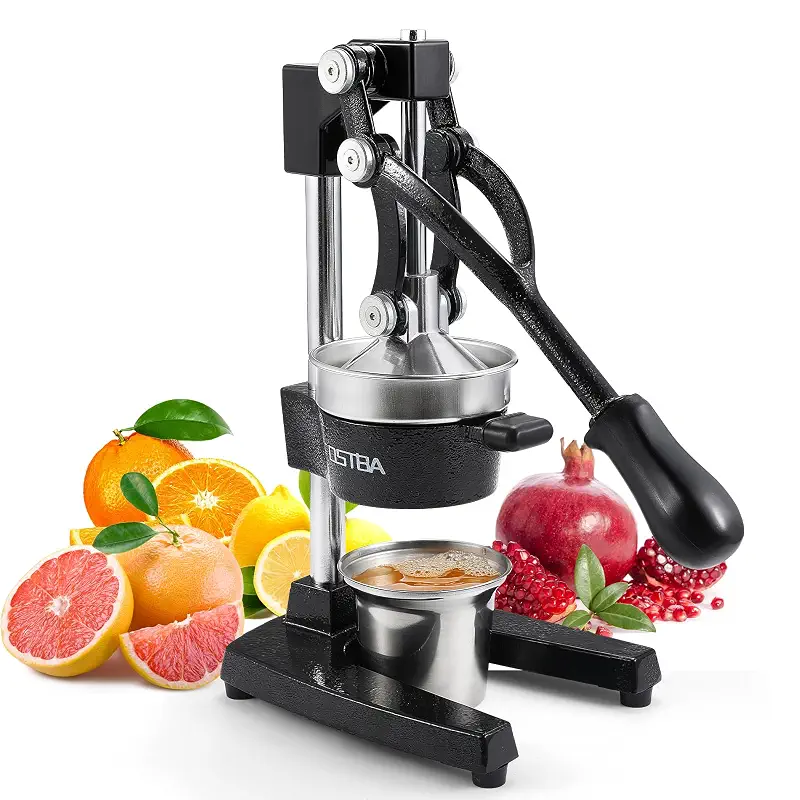
OSTBA Cast Iron Manual Citrus Juicer, Heavy Duty Hand Press Orange Juicer with Stainless Steel Cup & Strainer, Commercial Grade Lemon Squeezer for Orange, Lemon, Lime, Grapefruit, Pomegranate
4.4(101)
Heavy-duty cast iron press with stainless steel cup and strainer, good for daily citrus and pomegranate juicing on a tight budget.
Ideal for: Budget-conscious first-time pomegranate juicers seeking sturdy construction without premium-brand pricing.
Ostba delivers a manual press that looks and feels commercial-grade at an entry-level price. The cast iron frame and stainless steel food-contact parts hold up well, and the long lever handle applies strong, even pressure without requiring unusual strength. Owners who juice daily report excellent results on citrus fruits and solid performance on pomegranates.
One key insight from reviewers: countertop height matters. Because this is a manual lever press with substantial weight, you get better mechanical advantage if the base sits at or slightly below waist height. Pressing from a high counter requires more effort. The stainless steel cup and strainer separate seeds and pulp cleanly, and the removable parts rinse fast. Some users mentioned the base can slip forward slightly under pressure if the countertop is slick, so placing it on a mat or lower surface helps.
Where Ostba differs from the pricier Zulay and Can-Can is that it's newer to the market with fewer long-term reviews, though the ones posted are consistently positive. It's not ideal for soft fruits or pineapple without extra wrapping, but for daily lemon, lime, orange, and pomegranate work, it punches above its price point. If you're entry-level to juicing and want to test the waters before investing premium dollars, this is a sensible entry.
Pros
Heavy cast iron build offers long-term durability and stable operation
Stainless steel cup and strainer included for serving and cleanup
Long lever handle applies strong, even pressure with reasonable hand effort
Cons
Base may slip forward on smooth countertops under full pressing force
Best performance when placed at waist height or lower for optimal leverage
Key features
Sturdy cast iron frame with stainless steel food-contact parts
Long lever handle designed for strong, even mechanical pressure
Removable stainless steel cup and strainer for easy serving and cleanup
Dishwasher-safe removable parts simplify post-juicing maintenance
How to Choose a Pomegranate Juicer
Four trade-offs that actually matter when matching a pomegranate juicer to your kitchen.
Manual Lever vs. Electric Centrifugal
Manual presses use your body weight and leverage to extract juice through a simple mechanical system. They're quiet, electricity-free, and often faster to clean. Electric centrifugal juicers spin fruit rapidly, which is convenient for high-volume juicing but generates heat and requires storage space for a motor. Manual presses excel for daily 1–3 glass servings; electric makes sense if you're juicing for a household or want hands-free operation. Consider how often you juice and whether prep-free (whole fruit) convenience matters more than quiet, low-tech operation.
Extraction Efficiency and Juice Yield
Commercial-grade presses like the Can-Can deliver near-complete juice extraction in a single press, leaving pomegranates and citrus almost dry. Lower-priced manual models get 85–95% yield, which is still excellent. Electric centrifugal juicers typically extract well on citrus but produce slightly wetter pulp. Test reviews mention whether juice amount matches expectations and whether repeating the press yields more. If you're juicing expensive heirloom citrus or want minimal waste, efficiency matters; for casual home use, good yield is sufficient.
Durability, Materials, and Long-Term Maintenance
Cast iron frames with stainless steel food-contact parts resist corrosion and outlast plastic. Heavy-duty manual presses often last 10+ years with minimal maintenance. Check whether the underside finish is durable (some cast iron can rust if left wet) and whether moving parts need periodic oiling. Electric juicers are generally reliable but have motor and spinning components that can wear. Reading long-term owner feedback (especially reviews from users with years of experience) reveals which models stay trouble-free over time and which develop loose joints or cosmetic wear.
Counter Space and Storage
Manual presses range from compact (Zulay, Ostba) to heavier and larger (Can-Can, Eurolux). If your kitchen is tight, a lightweight manual lever is easy to tuck away or keep on the counter without dominating visual real estate. Electric models like the Breville are designed for compact kitchens but still occupy space. Consider both the footprint during use and whether you'll leave the juicer out between sessions: manual presses invite daily use when visible, while electric juicers work best when stored after use due to cord and motor considerations.
Strength and Technique
Manual presses require reasonable upper-body engagement. Longer lever arms (like Zulay and Ostba) reduce the force needed, while very heavy bases (Can-Can, Eurolux) benefit from being positioned at waist height. If you have limited hand strength, a manual versus electric juicer comparison might tip toward electric for comfort. For pomegranates specifically, the fruit is softer than hard citrus, so even budget manual presses handle them well with modest pressure. Some owners note that countertop height and body positioning matter more than raw strength.
Frequently asked
Quick answers to the questions readers ask most.
Can manual presses juice pomegranates as well as citrus?
Yes. Pomegranates are softer than hard citrus like oranges, so manual lever presses actually handle them very efficiently. Owners report excellent extraction on pomegranates with single or double presses. The main difference is that pomegranate juice is thicker and may require careful pouring to avoid splashing, but the mechanical extraction itself is straightforward.
How much juice does a typical pomegranate or orange yield?
A medium pomegranate yields roughly 3–4 ounces of juice, while a medium orange produces about 2–3 ounces. Manual presses extract most of this in one or two presses. Electric centrifugal juicers handle larger batches faster but require you to pause and empty pulp containers during high-volume sessions. Your actual yield depends on fruit ripeness and juicer efficiency.
What's the difference between a strainer and a filter in a juicer?
A strainer separates large seeds and pulp chunks through holes or mesh, allowing liquid juice through. A filter is finer mesh that also removes smaller particles. Most manual presses use a strainer bowl with integrated holes; some have detachable fine-mesh baskets. Strainers are faster to clean but allow slight pulp through; finer filters produce clearer juice but trap more liquid in the pulp.
Do I need to peel citrus or pomegranates before juicing?
No. Most manual presses are designed to handle whole fruit cut in half. The juice chamber contacts only the cut interior, keeping peel and skin out. Simply cut the fruit in half, place it cut-side down, and press. Some juicers have bowl shapes that guide the skin away naturally. Peeling beforehand is unnecessary and wastes the insulating peel.
How long do manual juicers typically last?
Commercial-grade cast iron manual presses often last 10–20 years or longer with basic care. Heavy-duty models see daily use in juice bars and continue performing reliably. Home use (even daily) typically puts less stress on the mechanism than commercial settings. The main wear happens to stainless steel contact parts (replaceable on some models) rather than the frame itself. Periodic light oiling of moving parts and keeping the base dry extend lifespan.