Kitchen & Dining · Small
Best Pizza Dough Proofing Box: Top Containers for Home Bakers
Find the best pizza dough proofing box for your kitchen. Compare stackable containers, lids, and durability: perfect for bulk fermentation and fridge storage.
Affiliate disclosure: As an Amazon Associate I earn from qualifying purchases.
At a glance
1
Best Overall ValueHans Grill
2
Best for Serious SourdoughBrod & Taylor
3
Best for Pizza Specialistsooni
4
Best for Large BatchesChef Pomodoro
5
Best Compact Snap-Lock DesignVtopmart
Detailed reviews
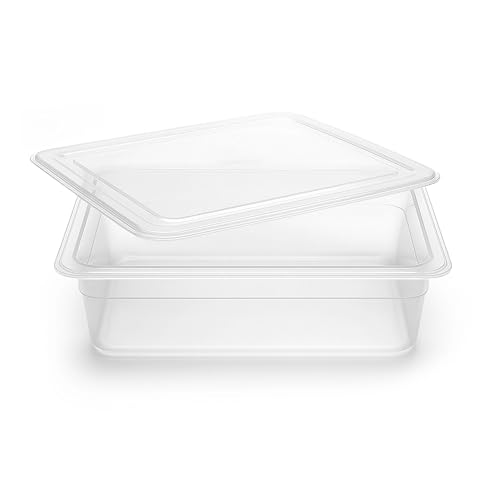
The Hans Grill two-pack gives you flexibility and storage efficiency without premium pricing. Buyers consistently praise the smooth interior surface, which makes removing dough straightforward even after extended fermentation, and the lids stay seated well enough to maintain humidity without requiring a hermetic seal. The compact footprint is a real advantage for fridge-bound workflows; these sit neatly on a shelf without monopolizing space or jutting into adjacent sections.
The main trade-off is that the lid slides rather than locks. A few owners note it can shift during transport, though this hasn't prevented successful proofing in most cases. If you're proofing dough in a temperature-stable fridge, that semi-permeable seal actually mimics how many professional setups work, allowing gentle air exchange while keeping the dough from drying. Compared to the Brod & Taylor's airtight design, you sacrifice some rigidity but gain affordability and a two-pack advantage.
This is the smart buy if you want backup boxes for bulk production or plan to proof multiple batches simultaneously. The capacity of six dough balls per tray (though owners report fitting anywhere from three to nine depending on size) covers everything from a solo pizza night to feeding a crowd.
Pros
- Smooth interior releases dough without sticking
- Two-pack gives backup or bulk-proofing capacity
- Compact footprint fits standard fridge shelves
Cons
- Lid slides rather than locking securely
- Not airtight; requires oil coating for long ferments
Key features (4)
- Two stackable containers with fitted lids included
- BPA-free polypropylene with smooth, non-stick interior
- Holds up to 6 dough balls per container or mixed storage
- Compact 14" x 11" footprint for standard refrigerators
The Brod & Taylor steps up the engineering. Its translucent walls feature calibrated volume markings so you can monitor rise without popping the lid, and the lid creates an actual airtight seal (though it requires some hand strength to remove). This matters for sourdough and other long-bulk-ferment workflows where moisture loss directly impacts texture. Buyers who've proofed side-by-side with glass bowls report cleaner dough release and faster ferments, likely because the lid controls humidity more precisely.
Capacity is substantial at 3000 grams (roughly three large boules or a double batch), and the wide rectangular base makes in-container stretch-and-fold movements practical. The dough releases smoothly even with high-hydration recipes, and it's dishwasher-safe without degrading. If you're working with a Brod & Taylor Folding Proofer, these containers nest perfectly inside, creating a dedicated fermentation setup.
The trade-off is single-container pricing and a larger footprint than the Hans Grill. If you only proof one or two loaves at a time, or you're comfortable with the proofing box versus bulk fermentation approach of covering dough loosely in a larger bowl, the premium cost may not justify itself. For bread-focused bakers or anyone bulk-fermenting at altitude or in dry climates, it's a solid investment.
Pros
- True airtight seal locks in moisture for extended ferments
- Volume markings let you monitor rise without opening lid
- Fits Brod & Taylor Folding Proofer for complete workflow
Cons
- Higher price than competitive two-packs
- Lid requires firm hand pressure to remove
Key features (4)
- Single 6-liter polypropylene container with airtight lid
- Clear walls with volume graduation marks for rise tracking
- Holds up to 3000 grams dough or multiple loaves
- Dishwasher-safe, freezer-friendly, designed for proofer nesting
ooni's offering leans into the pizza angle, and the engineering reflects that focus. Buyers report thick, durable plastic that feels commercial-grade, lids that seal snugly without requiring force, and a professional appearance that justifies keeping them on the counter or in your pizza setup. Each box holds up to six 250-gram balls (the standard for 12-inch pies), and the stackability means you can organize batches by ferment day or dough formula.
Where ooni diverges from the Hans Grill and Brod & Taylor is design philosophy. These are optimized specifically for pizza dough proofing, not general bread baking or vegetable storage. If you're running a pizza operation (whether weekend entertaining or more ambitious wood-fired production) the branded, polished aesthetic and stack-ability in a pizza oven workspace actually matter. Owners don't report the same drying issues that sometimes plague longer ferments in less-sealed containers.
The main consideration is cost per unit versus the Hans Grill's two-pack pricing. You're paying for focused design and brand equity. If pizza is your primary use and you want the visual continuity of a matching setup, this pays for itself in workflow clarity, especially when paired with pizza dough mixers built for spiral gluten development and high-hydration batches. For bakers splitting time between pizza, bread, and pastry, the ooni premium might be better spent elsewhere.
Pros
- Thick, durable plastic feels professional and long-lasting
- Lids fit snugly without excess force or slipping
- Two-box set stackable for organized production
Cons
- Higher per-unit cost than multi-pack alternatives
- Sized specifically for pizza; less versatile for other doughs
Key features (4)
- Two stackable boxes with secure-fitting lids included
- Thick polypropylene construction rated for heavy use
- Each box holds up to six 250-gram dough balls
- Compact design fits standard refrigerator shelves
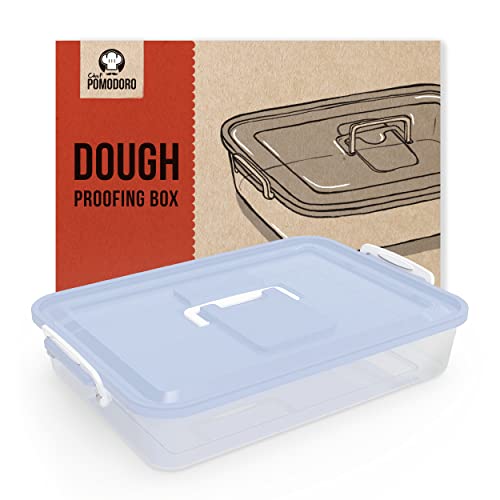
Chef Pomodoro's 14" x 11" footprint is the largest in this lineup, accommodating 4 to 6 full-sized dough balls or even a double batch of bread dough without crowding. The snap-lock lids on two ends provide more security than a sliding cover, and the recessed handles make one-handed transport feasible when you're moving proofing dough between kitchen stations or into a warming drawer. This design language appeals to home bakers who treat their setup like a small kitchen operation.
Buyers who choose this container tend to appreciate the transparency and the visible progress of bulk fermentation. The snapable design does have a caveat: the lids don't seal on all four sides simultaneously, so drying can occur during very long ferments unless you coat the dough with oil. Compare this to the Brod & Taylor's full airtight seal, and you'll see the trade-off. For ferments under 24 hours on the counter or in a humid environment, it's not a concern. For multi-day refrigerated ferments, you may need to adjust technique.
Price sits higher than the Hans Grill two-pack but lower than some premium options. If you're proofing large batches in a warming drawer rather than a fridge, or you value the carry handles and single large container over two stackable boxes, this fills that niche well.
Pros
- Oversized capacity fits 4-6 large dough balls or double batches
- Convenient carry handles for transport between work zones
- Snap-lock lids on two ends provide partial security
Cons
- Lids don't seal on all four sides; long ferments risk drying
- Plastic not as thick as some premium competitors
Key features (4)
- Single large 14" x 11" x 3" container with snap-lock lids
- Transparent polypropylene for easy visual monitoring
- Integrated carry handles for easy transport and storage
- Stackable design; recessed handles when nested
Vtopmart's 2-pack emphasizes mechanical reliability through snap-on buckle latches that stay firmly locked during stacking or transport. Unlike sliding lids or partial-seal designs, these snaps provide peace of mind when moving dough between a warming drawer and fridge, or when shifting containers around a crowded shelf. The internal height is slightly reduced compared to Chef Pomodoro, which some bakers prefer because it prevents the dough from rising into the lid during fermentation, reducing the risk of uneven proofing.
Owners report using these for both pizza dough and longer-term frozen-ball storage, which speaks to build quality and seal reliability. The smooth interior aids release, and the containers are dishwasher-safe. Where Vtopmart differs from the ooni is price; you get two boxes with secure latches at a fraction of the specialty-brand premium. If proofing box versus bulk fermentation is your decision point, this reduces the financial barrier to switching from open-bowl fermentation to a controlled environment.
The main constraint is that this is a narrower, taller design than some alternatives, so measure your fridge shelf height before ordering. If you have headroom and value secure, portable proofing with a two-pack advantage, Vtopmart delivers without the brand markup of ooni.
Pros
- Secure snap-on buckle latches stay locked during transport
- Two-pack with reduced-height interior prevents squashing
- Smooth interior cleans easily, dishwasher-safe
Cons
- Taller profile requires adequate fridge shelf clearance
- Latches require both hands to unlatch fully
Key features (4)
- Two containers with snap-on buckle latch lids included
- Food-safe BPA-free polypropylene, dishwasher-safe
- Compact 11.81" x 15.75" x 3.15" (tall, narrow footprint)
- Suitable for fridge, freezer, and room-temperature storage
How to Choose a Pizza Dough Proofing Box
Size and Fridge Fit
Before buying, measure your refrigerator shelf depth and height. Most proofing boxes are 11 to 14 inches wide and 3 to 4 inches tall when lidded, but some designs are taller and narrower. A box that juts beyond your shelf or crushes against the shelf above defeats the purpose. Consider also how many dough balls you typically proof at once. Single-loaf bakers may find a smaller container adequate, while pizza entertainer types benefit from capacity to hold 4 to 6 balls without crowding.
Seal Quality and Humidity Control
Proofing boxes manage fermentation through lid design. Full airtight seals preserve moisture, critical for long bulk ferments and high-hydration doughs. Partial seals or sliding covers allow gentle air exchange, which mimics professional practice and is fine for shorter ferments or oily doughs. If you're following a pizza dough proofing guide, check whether your recipe calls for extended countertop or refrigerated fermentation; that determines whether you need an absolute seal or a looser cover.
Material and Durability
Food-safe polypropylene is the standard, and thickness matters. Thin plastic can crack over time or warp under pressure when stacked. Look for containers marketed as commercial-grade or professional-quality plastic; they typically survive hundreds of bakes without degrading. Smooth interiors prevent dough from sticking and tear-free removal. Dishwasher-safe construction saves time on cleanup, especially if you're proofing bulk batches.
Single vs. Two-Pack Strategy
Two-pack options cost less per container and let you run parallel ferments or keep a backup on hand. Single premium containers suit bakers who proof one batch at a time and want maximum precision (volume markings, airtight seals, proofer compatibility). For bulk production or the proofing box versus bulk fermentation transition, a two-pack reduces financial commitment while building the habit of controlled fermentation.
Our picks at a glance
1
Best Overall ValueHans Grill
2
Best for Serious SourdoughBrod & Taylor
3
Best for Pizza Specialistsooni
4
Best for Large BatchesChef Pomodoro
5
Best Compact Snap-Lock DesignVtopmart
Frequently asked
Do I need an airtight seal, or is a sliding lid okay?
Both work, depending on your fermentation style. Airtight lids excel for extended bulk ferments (12+ hours) and prevent drying; they're essential for high-hydration sourdoughs. Sliding or partial-seal lids allow gentle air exchange and suit shorter ferments (4-8 hours) or pizza doughs left on the counter. In the fridge, even a loose-fitting lid preserves moisture adequately if your ferment is under 48 hours.
Can I stack proofing boxes with dough inside them?
Yes, most modern designs are stackable with dough inside, but check the lid design first. Snap-lock or clip-based lids stay secure during stacking. Sliding-cover lids may shift under weight. Never stack airtight containers more than two high to avoid crushing dough in the bottom box. Always verify fridge shelf height to prevent squishing the top container against the shelf.
What size dough ball fits in each container?
Most containers hold 4 to 6 balls sized 150-250 grams each (roughly one 12-inch pizza per ball). Actual capacity depends on dough hydration and how tightly you pack them. High-hydration doughs expand more, so you may fit fewer. Measure your dough-ball weight against the container's dimensions or consult the manufacturer specs to avoid guessing.
Are these containers only for pizza dough?
No. Proofing boxes work for any bulk-fermented dough: bread, sourdough, croissants, cinnamon rolls, even dumpling wrappers. Many buyers use them for vegetable or ingredient storage when not proofing. Choose a design that fits your primary use; pizza-focused containers may lack features useful for bread, while general-purpose containers suit mixed workflows.
How often do I need to oil the dough to prevent sticking?
A light oil or cooking spray on the container bottom and interior walls before placing dough is standard practice, even in non-stick containers. This is especially important for ferments over 24 hours or for doughs without added oil in the recipe. Oiling takes 30 seconds and guarantees clean release without dough damage, so most bakers do it by habit.