Kitchen & Dining · Cookware
Best Pans for Gas Stove
Find the best pans for gas stove cooking. Compare nonstick, cast iron, and hard-anodized options with expert guidance for even heat and durability.
Affiliate disclosure: As an Amazon Associate I earn from qualifying purchases.
At a glance
1
Best Value Nonstick SetCarote
4
Best for VersatilityLodge
5
Best Budget Fry PansCarote
Detailed reviews
The Carote set delivers what matters most on a gas stove: quick, even heating with almost no hot spots, plus a nonstick surface that stays true through regular use. Buyers consistently report that eggs, pancakes, and delicate proteins release without fuss, and cleanup is genuinely simple: a rinse and wipe, not a scrubbing session. The silicone-sealed glass lids fit tight enough to trap moisture during simmering, and the variety of pan sizes means you're ready for everything from a single omelet to a full dinner service.
The trade-off is typical of nonstick cookware: you'll need to respect the coating with softer utensils and avoid extreme heat, which is fine on gas where you can dial in medium instead of cranking to high. Hand-washing is the call, though the pans tolerate a gentle cycle if you're in a hurry. A few owners flagged delivery inconsistencies (missing parts on rare occasions), but the 12-month warranty makes that a straightforward fix.
Compared to the T-Fal options in this lineup, Carote trades the Thermo-Spot heat-indicator feature for a lower entry cost and slightly lighter feel. If you want a full set without the premium price tag, this is where to start.
Pros
- Truly nonstick surface holds up through months of regular use
- 16-piece set covers all daily cooking needs and sizes
- Heats evenly with no hot spots on gas burners
- Lightweight but sturdy, comfortable to handle and store
Cons
- Requires softer utensils and hand-washing to maintain coating
- Occasional shipping damage reports, though warranty covers it
Key features (4)
- Titanium-reinforced nonstick coating rated for everyday simmering and searing
- 16-piece set: three frying pans, saucepans, stockpot, sauté pan, utensils, lids
- Reinforced die-cast aluminum for rapid, even heat distribution
- Silicone-sealed glass lids lock moisture; induction compatible base
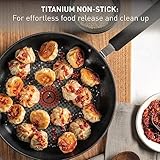
T-Fal's Ultimate Hard Anodized set has been the workhorse choice for home cooks and professional kitchens for decades, and the buyer data here shows why. The hard-anodized aluminum construction is significantly more durable than standard nonstick; owners report no warping or peeling even after years of regular use, and the titanium interior continues to release food cleanly without the degradation that plagues cheaper coatings. On a gas stove, the weight and thickness of these pans mean steady, even heating with minimal hot spots, and the riveted handles stay cool and secure.
The Thermo-Spot heat indicator: a ring that turns solid red when the pan reaches the ideal preheating temperature: is a feature that actually saves time and reduces guesswork, especially when you're searing meat or making pancakes. The 17-piece set is comprehensive, though not every pan gets a lid (which is fine for most daily cooking, and lids can be purchased separately if needed). One real consideration: these pans can slide a bit on glass-top ranges, but they sit firmly on gas grates with no movement.
The T-Fal fry-pan set below shares the same hard-anodized build but strips the full-set complexity. If you need just skillets for searing and sautéing, the 3-piece option is a leaner, more focused choice.
Pros
- Hard-anodized construction resists warping and scratching for years
- Thermo-Spot heat indicator removes guesswork from preheating
- Excellent heat retention and even cooking across all burner positions
- Comprehensive 17-piece set with steamers and specialty pans
Cons
- Not all pans include lids, which may feel incomplete for some cooks
- Medium heat recommended; high heat can cause warping over time
Key features (4)
- Hard-anodized aluminum exterior with titanium-reinforced nonstick interior
- 17-piece set: three saucepans, two frypans, sauté pan, steamer insert, griddle, Dutch oven
- Thermo-Spot heat indicator signals optimal preheating temperature
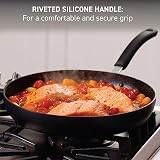
- Oven safe to 400°F, vented tempered glass lids, riveted silicone handles
If you already have pots for boiling pasta and sauces, and you want one thing done exceptionally well, the T-Fal 3-piece fry pan set is the smart pick. The 8, 10.25, and 12-inch sizes cover everything from a quick egg to a full family steak dinner, and the hard-anodized construction is the same proven durability as the larger set. On gas, these pans sit stable and heat evenly, and because there's no lid to manage, you get a clean, compact set that's easy to store and pull out for weeknight cooking.
The Thermo-Spot indicator works exactly as it does in the 17-piece line: solid red means your pan is ready, which cuts down on burned-on first sears and uneven browning. Owners who've used these heavily report that the nonstick coating holds up through years of metal-spatula use (though the manufacturer still recommends plastic or wood for maximum longevity). The pans slide a tiny bit on glass tops, but on gas they're rock-solid.
Where this differs from the Carote fry pan set below is weight and hardness. T-Fal's hard-anodized finish is noticeably more durable and forgiving, while Carote prioritizes lighter weight and a lower price, a different trade-off than the granite pan category, where coating quality determines whether nonstick survives years of daily use. Choose the T-Fal set if durability is your priority; pick Carote if you want agility and a nimble feel.
Pros
- Hard-anodized construction proven to last 5+ years with heavy daily use
- Thermo-Spot heat indicator ensures perfect preheating every time
- Excellent heat distribution with no hot spots on gas burners
- Three sizes cover nearly all frying and sautéing tasks
Cons
- No lids included; you'll need separate covers for simmering with a lid
- Slightly heavier than some competitors, though weight aids heat retention
Key features (4)
- Hard-anodized aluminum with titanium-reinforced nonstick interior
- Three frying pan sizes: 8-inch, 10.25-inch, and 12-inch skillets
- Thermo-Spot heat indicator for foolproof preheating on gas
- Oven safe to 400°F, vented tempered glass lids, riveted silicone handles
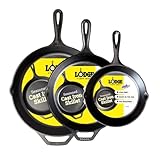
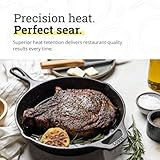
Cast iron on a gas stove is a different cooking experience entirely: the flame's direct heat makes these pans sing. Lodge's pre-seasoned skillets arrive ready to use (though many cooks add a few more seasoning layers to build a stronger nonstick base), and they excel at tasks where other pans struggle: searing steaks with a restaurant-quality crust, holding heat while you finish a pan sauce, baking cornbread in the oven, or even making a pizza. The 8, 10.25, and 12-inch set gives you the flexibility to cook an egg or feed a family, and because cast iron is virtually indestructible, these pans will outlive you.
The learning curve is real but not steep. Cast iron demands immediate cleaning (while still warm) to prevent rust, and you'll need to respect acidic foods until your seasoning layers are thick. But once you develop the rhythm (a quick rinse, a dab of oil, a brief stovetop dry) it becomes second nature. On gas, where you can heat slowly and evenly, cast iron shines compared to electric ranges. The weight does require some arm strength, which some cooks see as a drawback and others embrace as an advantage.
Unlike the nonstick pans above, cast iron improves with age and use. The cast iron versus nonstick comparison often comes down to this: nonstick for speed and convenience, cast iron for lasting performance and sear quality. Both have their place.
Pros
- Unmatched heat retention and searing performance on gas stovetops
- Pre-seasoned and ready to use; seasoning improves with each meal
- Works on any heat source: gas, electric, grill, campfire, oven
- Virtually indestructible; will last generations with basic care
Cons
- Requires immediate hand-washing and oiling; not for sink-soaking habits
- Significantly heavier than nonstick, which impacts arm fatigue when moving filled pans
Key features (4)
- Pre-seasoned with natural vegetable oil; ready to cook immediately out of box
- Three skillet sizes: 8-inch, 10.25-inch, and 12-inch cast iron skillets
- Superior heat retention and even heating across entire cooking surface
- Oven safe, stovetop compatible, works on induction; made in USA
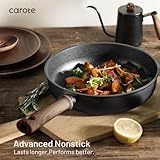
Carote's granite-style nonstick fry pans deliver strong nonstick performance at a price point that won't strain a kitchen budget. The three sizes (8, 10, 12-inch) are perfectly chosen for home cooking, and the coating releases food consistently, even on the first use, without the seasoning ritual cast iron requires. On gas, these pans heat quickly and evenly, and because they're notably lighter than hard-anodized competitors, they're easier to maneuver when tossing vegetables or flipping fish.
The granite-style coating isn't just marketing; it's genuinely tougher than standard nonstick and resists chipping through normal use. Hand-washing is recommended to preserve longevity, and a few owners note that the handles can get warm on prolonged cooking, though not dangerously so. One consideration: lids aren't included, so if you want to braise or simmer with a cover, you'll need to purchase them separately.
The Carote 16-piece set above offers breadth at a similar price; the 3-piece fry pan set here is the leaner choice if you just want reliable skillets without the bulk. Compared to T-Fal's hard-anodized 3-piece, the Carote set trades durability and the heat-indicator feature for lower weight and lower cost: a smart trade if you plan to upgrade in a few years rather than keep pans for a decade.
Pros
- Granite-style nonstick coating genuinely resists sticking and chipping
- Lightweight construction heats quickly and is easy to handle on gas
- Induction compatible with magnetic stainless-steel base
- PFOS and PFOA-free; safe for everyday family cooking
Cons
- No lids included; covers must be purchased separately
- Handles can warm up during extended high-heat cooking sessions
Key features (4)
- Granite-style nonstick coating, PFOS and PFOA-free for healthy cooking
- Three frying pan sizes: 8-inch, 10-inch, and 12-inch skillets
- Lightweight aluminum construction heats quickly on all stovetop types
- Heat-resistant handles, induction compatible, easy hand-wash cleanup
How to Choose Pans for Gas Stove Cooking
Heat Distribution and Stability
Gas flames apply heat directly to the pan bottom, which rewards pans with thick, flat bases and even conductivity. You'll want material that doesn't warp and stays in full contact with the grate. Hard-anodized aluminum and cast iron both excel here; lightweight nonstick can work, but thicker variants perform better. On a gas stove, you also control heat with precision, so you can dial down to low or medium: there's no need to max the burner.
Nonstick vs. Cast Iron: Core Trade-offs
A cast iron versus nonstick comparison shows fundamentally different philosophies. Nonstick prioritizes speed, convenience, and ease of cleanup: perfect for weeknight cooking and minimal-oil cooking. Cast iron prioritizes longevity, searing quality, and heat retention: better for restaurant-level browning and lifelong durability. Gas stoves play well with both; the choice depends on whether you value quick cleanup or lasting performance. Nonstick needs gentler handling and won't last forever; cast iron improves with age but demands immediate care.
Set Size vs. Focused Collections
Comprehensive sets (16 or 17 pieces) give you everything at once and often cost less per pan. But they take up storage space and may include pieces you rarely use. Focused 3-piece fry pan sets or single-pan purchases let you start lean and add later. For a first kitchen or a gas stove upgrade, a mid-size set of 3–5 pans often strikes the best balance between convenience and clutter.
Maintenance and Real-World Care
Gas cooking allows you flexibility in heat control, which extends pan life. Nonstick pans need softer utensils and prefer hand-washing; use them at medium heat. Cast iron needs immediate cleaning and a light oil coating after each use, but how to season and maintain cast iron on a gas stove is simpler than on electric: the direct flame lets you dry the pan evenly and quickly. Hard-anodized pans are the most forgiving and tolerate dishwashers and metal utensils, making them the lowest-maintenance option for busy households.
Our picks at a glance
1
Best Value Nonstick SetCarote
4
Best for VersatilityLodge
5
Best Budget Fry PansCarote
Frequently asked
Can you use nonstick pans on high heat on a gas stove?
Not recommended. Most nonstick coatings break down above medium heat and can warp or release harmful fumes. Gas stoves let you simmer, sauté, and sear beautifully at medium; reserve high heat for cast iron or stainless steel. If you regularly cook at high temperatures, cast iron or hard-anodized cookware is the safer choice.
Why do cast iron pans perform better on gas than on electric stoves?
Gas flames apply heat directly and unevenly to the bottom, which actually benefits cast iron's superior heat conductivity and retention. The pan distributes and holds that direct heat evenly across the surface. Electric coils heat more slowly and uniformly, which can make cast iron feel less responsive. Gas also lets you cool the pan quickly by lowering the flame.
Do I need lids for frying pans on a gas stove?
Not always. Frying, searing, and sautéing rarely need lids. But if you plan to simmer sauces or braise, lids become valuable for trapping steam and moisture. Check whether your pan set includes lids, or budget for purchasing them separately: most pans accept universal or brand-specific covers.
How long should nonstick pans last on a gas stove?
Quality nonstick cookware typically lasts 3–5 years with regular use and proper care (softer utensils, hand-washing, medium heat). Hard-anodized nonstick, like T-Fal's, often lasts 7–10 years. Cast iron, if seasoned and maintained, lasts a lifetime. Budget and replacement frequency matter to your choice.
Are heavier pans better for gas cooking?
Heavier pans (cast iron, hard-anodized) generally conduct and retain heat better, which is an advantage for searing and even cooking. Lighter pans heat faster but may develop hot spots. On gas, where you control heat precisely, moderate weight is ideal: heavy enough for stability and conductivity, light enough to handle comfortably.