Kitchen & Dining · Cookware
Best Pan for Rice: Top Calderos and Dutch Ovens Compared
Find the best pan for rice cooking. Compare traditional calderos, ceramic nonstick options, and induction-compatible rice pots for perfect results every time.
Affiliate disclosure: As an Amazon Associate I earn from qualifying purchases.
At a glance
1
Best Traditional ValueImusa
2
Best for Asian and Korean CookingBobikuke
3
Best Ceramic Nonstick for Daily UseImusa
4
Best for Large Batch CookingFrynest
5
Best Premium Ceramic OptionImusa
Detailed reviews
The Imusa traditional caldero remains the entry point for home cooks wanting authentic rice and stew performance without spending extra. Its 2.6-quart size suits smaller households or cooks who prefer portion control, and the thick aluminum walls heat evenly once seasoned. The glass lid lets you monitor cooking progress without lifting, and the design moves straight from stovetop to table.
That said, reviews consistently flag a significant issue: the lid doesn't always fit snugly. Some buyers report noticeable gaps that prevent proper steam retention, which directly affects rice texture and stew consistency. This is especially frustrating in a pot specifically built for dishes that depend on moisture control. Some units arrive with manufacturing defects like dents or loose construction. If you get one with a properly fitted lid, you'll have a reliable workhorse; if not, you're looking at a less forgiving experience.
Compared to the ceramic-coated Imusa option or the Frynest model, this traditional uncoated version requires more upkeep and seasoning discipline but rewards you with a cooking surface that improves over time. It's best suited for cooks comfortable with aluminum cookware maintenance and willing to accept occasional fit inconsistencies as part of the trade.
Pros
- Affordable entry point for caldero ownership
- Heats quickly and distributes warmth evenly
- Seasons over time, improving nonstick properties
Cons
- Lid fit issues common across user reports
- Requires hand washing and regular seasoning maintenance
Key features (4)
- 2.6-quart cast aluminum with natural finish cooking surface
- Glass lid with steam vent and easy-grip handles
- Oven safe without lid for braising and baking
- Tight-fitting design for simmering soups, beans, and stews
Bobikuke's Korean Dutch oven takes the caldero concept and refines it for contemporary cooking methods. The multilayer nonstick coating means minimal oil and effortless cleaning compared to traditional uncoated aluminum. At 63 ounces, it's sized right for two people or small family portions, and it works across all cooktop types including induction. The included silicone pot holders are a thoughtful safety feature, since the metal handles will heat quickly during use.
Buyers rave about heat retention and even cooking, especially for Korean stews and ramen. The enameled surface resists the staining and discoloration that plague bare aluminum. Where this diverges from a traditional caldero is versatility for large batch cooking or family meals. The smaller capacity and specialty design make it less flexible for the range of rice, beans, and braised meats that drive daily caldero use in many households. Some reviewers note the wooden knob doesn't get hot, which is convenient, though silicone can absorb odors over time.
If your cooking leans toward Korean cuisine, specialty soups, or you prioritize ease of cleaning over traditional aesthetics, this outperforms a bare-aluminum caldero. For those wanting a multipurpose family pot, you might prefer the larger Frynest or Imusa ceramic options.
Pros
- PFOA-free nonstick coating for easy food release
- Induction compatible and works on all cooktop types
- Excellent heat retention and even cooking results
Cons
- Smaller 63-ounce capacity limits batch cooking
- Metal handles get hot and require pot holders during cooking
Key features (4)
- High-performance multilayer nonstick enamel coating
- Aluminum construction with superior heat retention
- Compatible with gas, electric, ceramic, and induction cooktops
- Includes lid and two anti-scalding silicone potholder grips
The Imusa ceramic caldero addresses the maintenance burden of traditional uncoated aluminum by applying a durable ceramic interior that arrives nonstick and stays that way. At 3.2 quarts, it sits between the smaller traditional model and larger family-size options, making it a practical middle ground. The ceramic coating means you can skip the seasoning ritual and still get confident food release; butter or oil becomes a flavor choice, not a necessity.
Owners who grew up with bare-aluminum calderos in their families consistently praise this as a modern upgrade that preserves the traditional shape and spirit while removing upkeep friction. The silicone-rimmed glass lid stays cooler and fits more securely than many alternatives. One important caveat: hand wash only. The silicone rim and exposed aluminum handles cannot survive the dishwasher, and metal utensils will scratch the ceramic interior, so you must use wood or silicone for stirring and serving. The silicone rim will absorb odors from strongly spiced dishes, though this doesn't affect cooking performance. Finally, these pots should never be nested during storage, which differs from how many cooks save space.
Compared to the traditional Imusa model, this eliminates lid-fit complaints and seasoning worry. Compared to the Frynest aluminum option, it trades larger capacity for nonstick convenience and a more polished aesthetic that suits smaller to mid-size households.
Pros
- Ceramic nonstick interior requires no seasoning
- Tight-fitting silicone-rimmed lid with secure closure
- Hand wash cleanup is fast and effortless
Cons
- Metal utensils will scratch the ceramic coating permanently
- Silicone rim absorbs and retains food odors over time
Key features (4)
- 3.2-quart aluminum with white ceramic nonstick interior
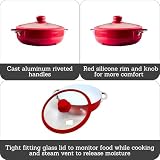
- Glass lid with silicone rim and secure side handles
- Oven safe design for braising and baking applications
- Red exterior finish with cast aluminum construction
Frynest's 5.5-quart caldero brings traditional uncoated aluminum construction to households that need capacity without premium pricing. The wide 12-inch mouth and flat induction-compatible base give you flexibility across cooktop types and make it easy to submerge large pieces of meat or vegetables. Heat distribution is fast and even, which matters when you're feeding more people and can't afford cold spots or uneven browning in the bottom layers.
Buyers report excellent results with bulk Spanish rice, thick family stews, and slow-simmered soups. The tight-fitting metal lid locks in steam efficiently, and the aluminum construction is thick enough to resist warping. One significant trade-off: like all uncoated aluminum calderos, the handles get very hot during cooking and require oven mitts or thick pot holders at all times. Also, some buyers have received the wrong size (an 8.2-quart instead of a 5.5-quart), so verify your shipment carefully. Induction compatibility was claimed but didn't work on all glass-top induction models in practice, so test on your cooktop before committing.
This sits between the Imusa ceramic nonstick (which offers smaller capacity and easier cleanup) and the Imusa traditional model (which is smaller and cheaper but plagued by lid-fit complaints). If you regularly cook for families or meal-prep in bulk, the Frynest capacity justifies the modest price step up.
Pros
- Spacious 5.5-quart capacity for family-size meals
- Thick aluminum with responsive heat distribution
- Wide mouth and induction-compatible flat base
Cons
- Uncoated handles become extremely hot during cooking
- Inconsistent induction compatibility across cooktop types
Key features (4)
- 5.5-quart traditional caldero with wide rounded sides
- Uncoated aluminum interior for responsive stovetop heat
- Flat induction-compatible base and fitted metal lid
- Dishwasher safe construction though hand wash recommended
The Imusa Bistro Cera takes the ceramic nonstick concept and scales it to 6.9 quarts, targeting households that want the convenience of ceramic without sacrificing volume. The black speckled ceramic coating is both functional and visually distinct, giving the pot a contemporary look while maintaining caldero heritage. Nonstick performance is strong out of the box, and the oven-safe design (without lid) opens options for braising and baking that go beyond stovetop cooking.
Owners emphasize the even heat distribution and true nonstick reliability across repeated use. The main concern mirrors the smaller ceramic Imusa: metal utensils will scratch the coating, and silicone pot holders are essential because the riveted handles conduct heat aggressively. One buyer reported receiving a chipped rim, suggesting occasional quality-control gaps in manufacturing. Like all ceramic calderos, it requires hand washing and careful utensil discipline. The larger capacity makes this a stronger choice than the 3.2-quart ceramic model for families or cooks who regularly prep multiple dishes.
Compared to the Frynest traditional aluminum caldero, this sacrifices the lower price and easier maintenance (bare aluminum seasons; ceramic coatings degrade with time) but gains immediate nonstick performance and a more refined appearance. It's the right pick if you want caldero capacity with modern cookware convenience and can commit to protective care.
Pros
- Spacious 6.9-quart capacity for large family meals
- Ceramic nonstick coating for effortless food release
- Oven safe without lid for braising and baking
Cons
- Uninsulated handles require pot holders at all times
- Ceramic coating will scratch with metal utensils and degrade over years
Key features (4)
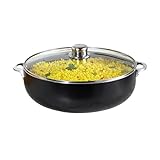
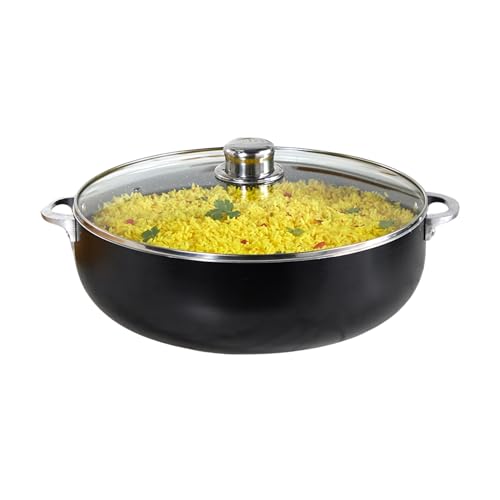
- 6.9-quart aluminum with black speckled ceramic nonstick interior
- Glass lid with steam vent and stainless-steel knob
- Riveted handles and matte black exterior finish
- Oven safe without lid up to 350 degrees Fahrenheit
How to Choose the Right Rice Pan
Capacity and Family Size
Rice pans range from 2.6 to 6.9 quarts. Smaller pots (2.6–3.2 quarts) suit singles, couples, and meal-preppers who cook in batches but store portions. Mid-size calderos (5.5 quarts) handle family dinners and weekend cooking without dominating your stovetop. Larger options (6.9 quarts) make sense if you regularly feed six or more people or prepare big batches of stews and soups. Remember that a pot filled only halfway won't heat as evenly, so match capacity to your typical cooking volume, not maximum theoretical use.
Coated vs. Uncoated Aluminum
Bare aluminum calderos season over time like cast iron, improving with use and demanding regular maintenance. Ceramic-coated options arrive nonstick and require no seasoning ritual, but the coating will eventually scratch or wear if exposed to metal utensils or aggressive scouring. Choose uncoated if you enjoy traditional cooking and don't mind hand care; choose ceramic if you prioritize convenience and ease of cleanup. Korean stone pots fall into a third camp, offering excellent heat retention and specialty styling for soups and stews but less versatility compared to the best pan to cook rice options designed for everyday family meals.
Cooktop Compatibility and Heat Handling
All calderos work on gas and electric coil stoves. Induction compatibility varies: check for a flat base and the product description before ordering if you use glass-top induction. A critical note: aluminum caldero handles get hot during cooking and conduct heat quickly. You must use pot holders or oven mitts every time; bare-hand gripping will result in burns. Ceramic-coated calderos don't solve this issue. Glass lids make monitoring easier, and tight-fitting lids are essential for proper rice steam and stew consistency. The caldero seasoning and maintenance guide covers long-term care for bare aluminum.
Lid Fit and Steam Control
A loose or misaligned lid defeats a caldero's core purpose: trapping steam for fluffy rice and tender stews. Some traditional calderos have notorious quality-control problems with poor-fitting lids, which directly impacts cooking results. Ceramic-coated calderos tend to have tighter, more consistent lid seals. Metal lids work fine and are durable, while glass lids let you check progress without lifting. A steam vent is a practical detail that prevents excessive pressure while still locking in most moisture. Read reviews carefully for any mentions of lid gaps before committing, just as you would when comparing cookware for different cooking methods like pan for cooking fish.
Care and Cleaning Trade-offs
Bare aluminum requires hand washing, regular seasoning, and careful storage (don't nest pots or stack heavy items on top). Ceramic-coated calderos are also hand-wash only and cannot tolerate metal utensils, which scratch the coating permanently. Both styles benefit from a caldero seasoning and maintenance guide that covers the right techniques for long-term performance. If dishwasher convenience is a priority, you're probably looking at specialty options like Korean stone pots rather than traditional calderos, which are designed for manual care and benefit from the attention.
Our picks at a glance
1
Best Traditional ValueImusa
2
Best for Asian and Korean CookingBobikuke
3
Best Ceramic Nonstick for Daily UseImusa
4
Best for Large Batch CookingFrynest
5
Best Premium Ceramic OptionImusa
Frequently asked
What's the difference between a caldero and a Dutch oven?
Calderos are traditional aluminum pots with a wide base and rounded sides, designed for rice, stews, and beans in Hispanic cooking. Dutch ovens are typically enameled cast iron and heavier, built for braising and baking at high heat. Some modern products (like Korean stone pots) blur the line by combining caldero shape with enamel or ceramic coating. Both can cook rice well, but calderos heat faster and cool quicker, while Dutch ovens retain heat longer and can handle higher oven temperatures.
Do I really need to season a bare aluminum caldero before using it?
Not immediately, but seasoning improves nonstick properties and longevity. Wash the pot, dry it completely, coat lightly with neutral oil, heat it on the stove until smoke appears, then cool and wipe away excess. Repeat two or three times. After that, regular cooking with fat or oil builds up the seasoning naturally. Ceramic-coated calderos skip this step entirely, which is a major convenience advantage. Either way, hand washing preserves the cooking surface better than dishwashers.
Can I use metal utensils in a ceramic-coated caldero?
No. Metal spoons, spatulas, and ladles will scratch and damage the ceramic coating, rendering it nonstick properties useless within weeks. Stick to wood, bamboo, or silicone utensils only. If you forget once or twice, the pot won't be ruined, but repeated metal contact will create bare spots that stick and brown food unevenly. This is one reason bare aluminum calderos appeal to cooks who prefer metal utensil freedom.
Which caldero works best on induction cooktops?
Look for models explicitly labeled induction-compatible with a flat base. The Frynest and Bobikuke options claim induction compatibility, but results vary depending on your specific cooktop brand and settings. Before buying, ask whether the seller accepts returns if induction compatibility fails on your stove. Bare aluminum calderos sometimes work on induction and sometimes don't: it's hit-or-miss. If induction is essential, Korean stone pots and ceramic-coated calderos with flat bases are safer bets.
How hot do caldero handles get, and is there a way to prevent burns?
Very hot: metal handles on aluminum calderos conduct heat rapidly and will burn bare skin within seconds of active cooking. There is no way to prevent this; it's inherent to the design. Always use oven mitts, thick pot holders, or kitchen towels to grip the handles during and after cooking. Ceramic-rimmed lids also get hot. This is why the Bobikuke Korean pot includes silicone pot holders: it's an acknowledgment of the reality. Plan your cooking with this in mind rather than hoping the handles will stay cool.