Best Pan for Making Caramel: Heavy-Duty & Even-Heat Options
Find the best pan for making caramel with even heat distribution and durable construction. Compare heavy-duty aluminum, stainless steel, and nonstick options.
Ideal for: Candy makers, brittle crafters, and cooks who prioritize even heat and direct control.
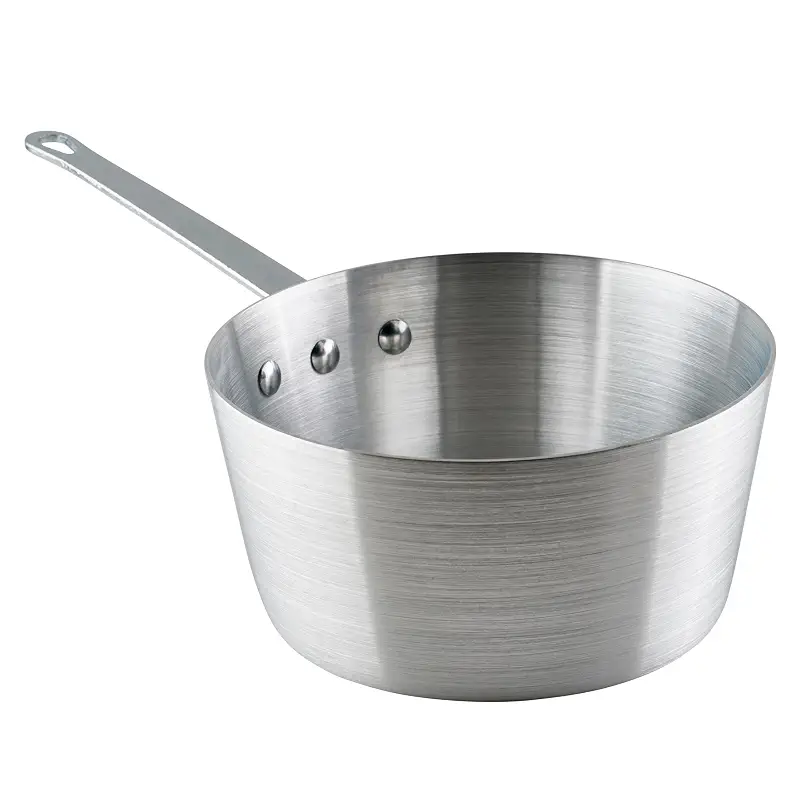
The Winco heavy-duty aluminum pan is designed exactly for the work caramel demands. Its 3mm thick 3003 aluminum conducts heat rapidly and distributes it evenly across the bottom and sides, which means you can control caramel color with precision rather than fighting hot spots. The tapered sides let you stir and manipulate the sugar without splashing, and the natural (uncoated) aluminum surface won't interfere with caramel's chemistry the way nonstick can sometimes do. One reviewer specifically bought this pan to make peanut brittle and called it excellent; another runs it daily in a restaurant kitchen with no complaints after months of use.
The trade-off here is that aluminum requires a light seasoning before first use, and the handle transmits heat directly, so you'll always need a pot holder. It's also not dishwasher safe, which matters if cleanup speed is a priority. Compared to the Michelangelo nonstick option, you lose the convenience of drip-free pouring and heat-resistant handle, but you gain the responsiveness and simplicity that serious candy makers prefer.
This pan works on gas and electric heat sources but is not induction compatible, which rules it out if your kitchen relies solely on induction.
Pros
Rapid, even heat distribution across tapered sides
Natural aluminum works well with caramel chemistry
Heavy-duty riveted handle built for daily use
Commercial-grade durability at accessible pricing
Cons
Handle gets hot; pot holders required for every grab
Not induction compatible; gas and electric only
Key features
3mm thick 3003 aluminum for fast, even heating
Tapered sides for easy stirring and controlled pouring
Riveted commercial-grade handle with hanging hole
Natural finish; hand wash only
#2 Pick
Best Nonstick Option
Michelangelo
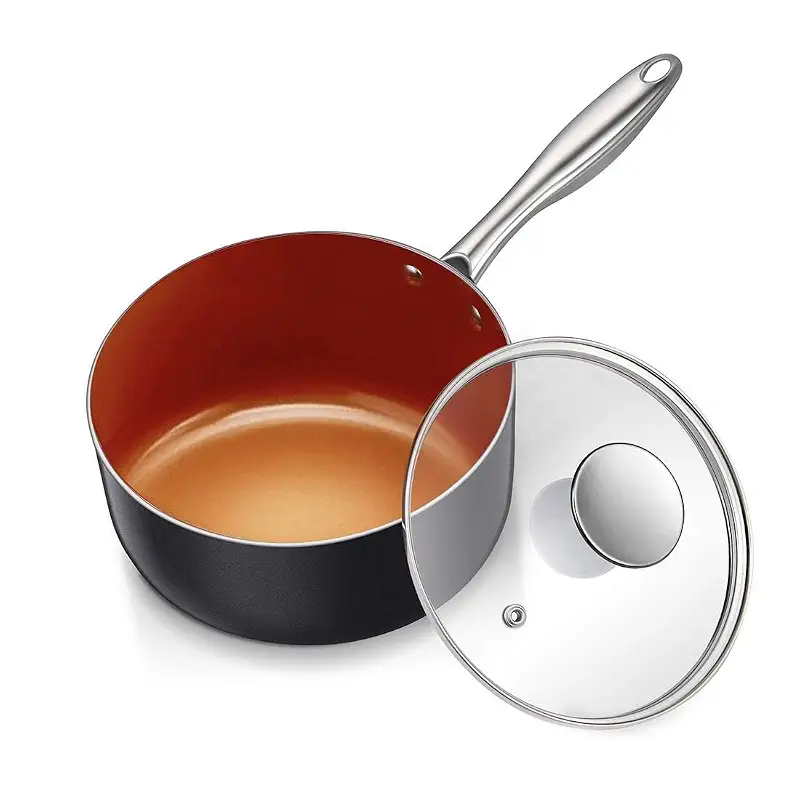
MICHELANGELO Sauce Pan with Lid, Ultra Nonstick 3 Qt Saucepan with Lid, 3 Quart Non Stick Pot Induction Compatible, Ceramic Small Pot, Copper
4.6(8,394)
Ceramic nonstick coating eliminates sticking and scorching, with included lid and fast heat-up.
Ideal for: Home cooks prioritizing ease and safety, and anyone nervous about scorching or cleanup.
The Michelangelo combines heat performance with the convenience nonstick delivers. Its diamond-infused ceramic coating is PFOA/PFOS-free, so there's no chemical concern if caramel sits in the pan for a moment longer than planned. The triple-layer base heats 30 percent faster than standard pots and distributes heat evenly, preventing the localized scorching that can ruin a batch. Multiple owners report making cream pie fillings and fudge in it without trouble, and one detailed reviewer has used it over 100 times with zero scratching or flaking.
Where this pan diverges from the Winco is in its approach to control: nonstick trades direct responsiveness for forgiveness. You can cook at lower temperatures without food sticking, which is useful if you're nervous about burning. The included glass lid and ergonomic handle that stays cool are bonuses. However, one reviewer noted the induction performance was sluggish on some burners despite the label claim, so test it on your specific cooktop before committing to induction work.
The 3-quart size is slightly smaller than the Winco, which may matter if you're scaling up large batches. If you need precision for specialty work like making aebleskiver pan creations alongside caramel sauces, the nonstick's forgiving surface means you can pivot between delicate tasks without constant adjustments.
Pros
Ceramic nonstick coating eliminates sticking without chemicals
Evenly distributes heat; prevents scorching and hot spots
Included glass lid with steam vent; easy monitoring
Dishwasher safe; low-maintenance cleanup
Cons
Nonstick surface is less responsive than bare aluminum to heat tweaks
Induction performance variable; may be slow on some burners
Key features
Triple-layer base with diamond-infused ceramic nonstick
Heats 30% faster than standard pots on all cooktop types
Stay-cool ergonomic handle; works with oven mitts
Steam-vented glass lid included; dishwasher safe
#3 Pick
Best for Small-Batch Caramel
Deayou
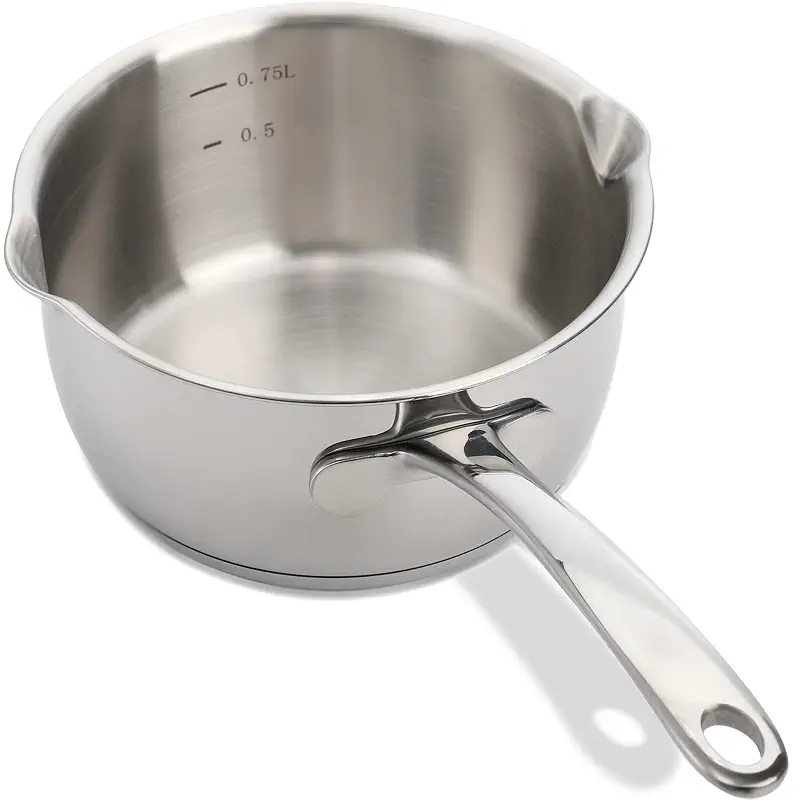
DEAYOU 18/10 Stainless Steel Butter Warmer Pan, 0.8-Quart Measuring Saucepan with Dual Pour Spout, Small Milk Butter Melting Pot, Induction Heavy Bottom Sauce Pan for Stove Top, Soup, Chocolate, 25OZ
4.6(303)
Compact stainless steel with dual pour spouts, ideal for single-batch candy work and sauces.
Ideal for: Candy makers doing test batches, small households, and those needing measurable portions.
The Deayou butter warmer brings precision to small-scale caramel making. At 25 ounces, it's designed for controlled batches, and the 18/10 stainless steel construction resists discoloration and doesn't react with sugar or acids. The heavy induction-ready bottom sits flat on any cooktop without tipping, and the measured interior markings let you gauge your sugar amount without a scale. Two pour spouts on opposite sides of the rim mean you can stream caramel left or right without adjusting your stance.
This is a narrow-purpose tool. It excels when you're making a small sauce or warming a single portion of chocolate, but it's too small for larger batch work. Compared to the Winco's 3.75-quart capacity, you're trading volume for precision and the ergonomic pour design. Stainless steel also requires proper preheating and won't offer the forgiving nonstick of the Michelangelo if you get distracted.
One reviewer noted that like all stainless steel, it demands you lower heat before adding food to prevent sticking, and you must let it cool before washing. For caramel specifically, the narrow width concentrates heat, which is great for crystallization prevention but demands closer attention than a wider pan.
Pros
Compact 25-ounce size perfect for single-batch caramel
Dual pour spouts for left- or right-hand pouring
18/10 stainless steel doesn't discolor or react with sugar
Interior measurement markings for easy portioning
Cons
Handle design requires learning curve for stainless steel cooking
Too small for larger batch work or family-scale recipes
Key features
Premium 18/10 stainless steel with heavy induction bottom
Dual pour spouts on opposing rims for convenient control
Clear interior measurement markings (up to 25 oz)
Ergonomic cool-grip handle with hanging hole
#4 Pick
Best Entry-Level Stainless Steel
Cuisinart
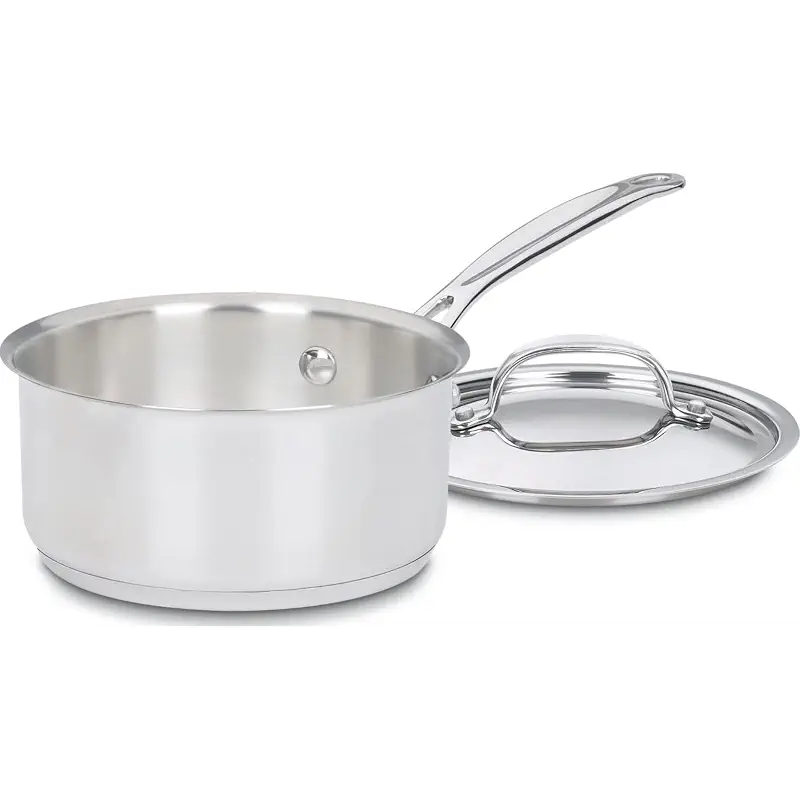
Cuisinart 1.5 Quart Sauce Pan with Cover, Stainless Steel Pot with Lid, Small Kitchen Pots, Dishwasher Safe, Compatible with Induction, Electric, Gas Cooktops, Oven Safe Saucepan, Cool Grip Handles | Stainless steel saucepan with aluminum encapsulated base for quick heating, dishwasher safe & oven safe to 550°F, 719-16
4.6(11,062)
Affordable, durable 1.5-quart stainless pot with lid; solid for sauce-style caramel and everyday use.
Ideal for: Home cooks seeking reliable stainless steel without premium pricing; everyday sauce making.
The Cuisinart 1.5-quart saucepan is a workhorse for the home kitchen. Its aluminum encapsulated base heats quickly and distributes heat evenly, eliminating hot spots that plague thin pots. Stainless steel doesn't interact chemically with caramel, and the included lid seals in moisture if you're working with syrups. One reviewer has owned a similar 1-quart Cuisinart for 26 years and still uses it weekly; another praised how evenly it distributes heat to prevent sticking.
This pan sits between the specialized Deayou and the commercial Winco in terms of capacity and purpose. It's larger than the butter warmer but smaller than the aluminum tapered sauce pan, making it a flexible middle ground. The cool-grip riveted handles stay comfortable during long sauce-making sessions. However, stainless steel is not nonstick: if you're not familiar with the material, you'll need to preheat it and add a touch of oil or butter before sugar hits the surface, or caramel will stick aggressively.
Compared to the Michelangelo nonstick, you lose the forgiveness of a ceramic coating, but you gain durability and the ability to run it through the dishwasher without concern. The 1.5-quart size works well for household caramel batches but won't handle commercial volumes.
Pros
Aluminum encapsulated base heats quickly and evenly
Cool-grip stainless handles stay comfortable when full
Included lid; flavor-lock design and drip-free rim
Lifetime warranty; durable enough for decades of use
Cons
Stainless steel surface requires proper preheating to prevent sticking
1.5-quart size limits larger batch capacity compared to Winco
Key features
Aluminum encapsulated base for fast, even heating
Stainless steel interior resists discoloration and food reaction
Measurement markings for ease of use; drip-free pouring rim
Dishwasher safe; oven safe to 550°F; lifetime warranty
#5 Pick
Best for Large-Batch Caramel
Cuisinart
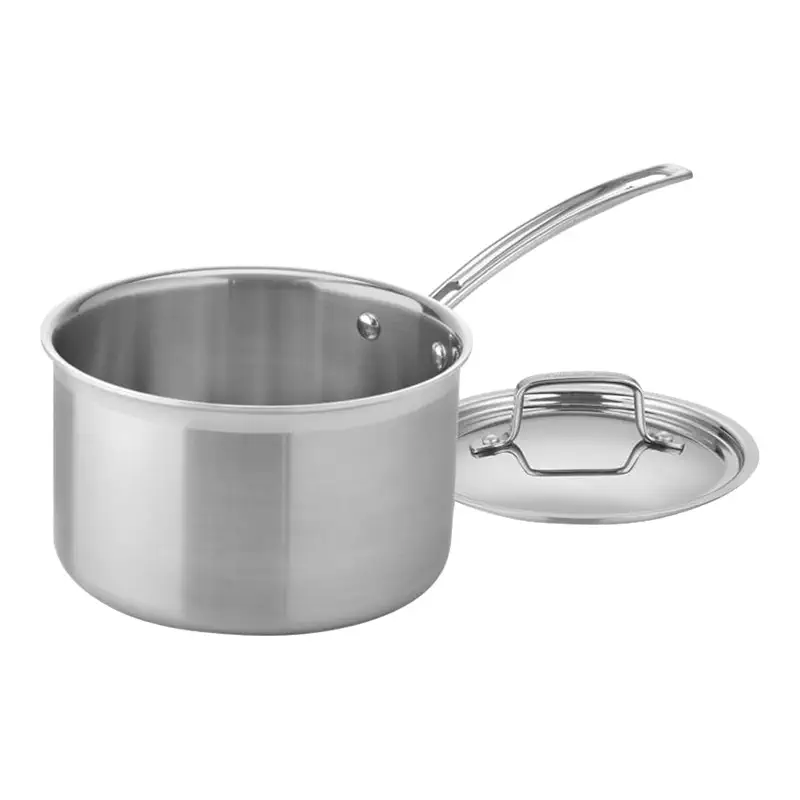
Saucepan with Lid Size: 4 qt.
4.8(7,617)
4-quart triple-ply stainless steel with heat-surround technology for large-scale candy and sauce work.
Ideal for: Serious home cooks and small-batch professionals needing large capacity and even results.
The Cuisinart MultiClad Pro 4-quart saucepan is built for serious cooking. Its triple-ply construction (stainless steel inner and outer, pure aluminum core) ensures heat distributes not just across the bottom but up the sidewalls, eliminating hot spots entirely. This is crucial for large batches of caramel where uneven heating can cause sugar to set at different rates. The aluminum core runs the full height of the pan without seams, and reviewers consistently praise how evenly it cooks.
At 4 quarts, it's significantly larger than the Deayou or the entry-level Cuisinart, making it suited to batches for gifts, events, or multiple recipes at once. The tight-fitting stainless steel cover seals in moisture and nutrients, the drip-free tapered rim prevents sticky spills, and the cool-grip handle is cast for balance. One long-time user compared it favorably to Le Creuset and All-Clad; another noted it took her from the world of nonstick without regrets.
The trade-off is that stainless steel requires the same heat discipline as the smaller Cuisinart: you must preheat and respect the material's natural stickiness without proper fat. On electric cooktops, the even sidewall heating prevents boil-over, but on gas stoves, an unrestricted flame will heat the handle unless you keep the flame tight to the bottom. Compared to the tapered aluminum Winco, you sacrifice raw heat responsiveness but gain the structure and prestige of professional triple-ply construction.
Pros
Triple-ply heat-surround technology eliminates hot spots entirely
4-quart capacity for large-scale caramel, candy, and sauces
Aluminum core runs full height with no seams; superior heat control
Stainless steel doesn't discolor; durable enough for decades
Cons
On gas stoves, handle receives heat unless flame is restricted to base
Stainless steel surface requires preheating to prevent caramel sticking
Key features
Triple-ply construction with aluminum core up the sidewalls
Heat Surround technology for even distribution along bottom and sides
4-quart capacity with measurement markings and drip-free rim
Tight-fitting stainless steel lid included; oven safe to 500°F
How to Choose a Caramel Pan
Four trade-offs that actually matter when matching a pan for making caramel to your kitchen.
Aluminum vs. Stainless Steel vs. Nonstick
Bare aluminum is the traditional choice for candy making because it heats fast and responds instantly to temperature changes, giving you precise control over caramel color. Stainless steel is more durable long-term and won't require seasoning, but it heats more slowly and can stick if not properly preheated. Nonstick surfaces reduce the risk of burning and simplify cleanup, but they won't offer the direct heat feedback that serious candy makers prefer. Consider your priorities: speed and responsiveness favor aluminum; durability and low maintenance favor stainless; forgiveness and ease favor nonstick.
Size and Volume
Caramel expands as it heats, so choose a pan larger than your sugar volume. A 1.5-quart pan works for household batches up to about a cup of sugar; 3 to 4 quarts handles larger recipe scales and reduces risk of overflow. Small pans (under 1 quart) concentrate heat and suit only test batches or syrups. Wider, shallower pans let you monitor color more easily than tall, narrow ones, though tapered sides help with stirring and pouring control. Whether you're working with a best aebleskiver pan or a traditional caramel vessel, the principle remains: match your pan's capacity to your recipe's needs.
Heat Distribution and caramel pan material characteristics
Uneven heat is your enemy: sugar will scorch in hot spots while staying pale elsewhere. Look for encapsulated or bonded bottoms, triple-ply construction, or heavy solid aluminum. The thicker the base and the more the core extends up the sides, the more evenly your pan will heat. Test on your own cooktop (gas and electric stoves distribute heat differently) before committing to large batches. Measurement markings inside the pan are a bonus for precision pouring.
Handle Design and Caramel Crystallization Prevention Tips
Caramel work is hands-on: you'll be tilting, pouring, and swirling frequently. A stay-cool handle matters, though some heat transfer is inevitable on high heat. Riveted handles are more durable than welded ones. Dual pour spouts or a tapered rim prevent drips that harden into a mess. A hanging hole is convenient but not essential. For caramel crystallization prevention tips, keep the pan sides free from sugar grains (many cooks use a wet pastry brush to wipe the pan walls during cooking) and keep your stove stable, as vibration can trigger unwanted crystals.
Frequently asked
Quick answers to the questions readers ask most.
Can I use a nonstick pan for caramel?
Yes, nonstick is fine for caramel and reduces burning risk. However, many experienced candy makers avoid it because nonstick doesn't let you see the sugar's true color as easily: the coating can mute visual cues. If you choose nonstick, ensure the coating is rated for the high temperatures caramel reaches (above 300°F), and check the manufacturer's guidance. Ceramic nonstick is safer than PTFE-based coatings.
Does a copper-bottomed pan heat better for caramel?
Copper conducts heat very efficiently, but it's expensive and requires polishing to stay bright. Heavy aluminum and stainless steel with encapsulated or bonded bases perform nearly as well for caramel work at a fraction of the cost. Copper is more common in French professional kitchens; home cooks rarely find the investment necessary.
What size pan do I need for a typical batch of caramel sauce?
A 2 to 3-quart pan works for most household recipes. If you're making brittle or hard candy, go up to 3 or 4 quarts to give the sugar room to bubble without boiling over. Measure your sugar by volume and choose a pan at least three times that size; caramel expands significantly as it cooks.
Is an induction-compatible pan essential for caramel?
Only if you cook on an induction cooktop. Gas and electric stove owners can use any pan with a flat bottom. If you do use induction, confirm the pan heats reliably on your specific burners: some lightweight stainless steel pans are slow to respond. Commercial aluminum is not induction compatible.
Why do some caramel pans have tapered sides?
Tapered sides make stirring and pouring easier because the angled rim guides the flow of caramel and keeps it in the pan longer during the tilt. Straight-sided pans are also fine but require more care when pouring. Tapered rims are common in commercial kitchens where speed and control matter.