Kitchen & Dining · Gadgets
Best Olive Pitter
How hand strength, olive size and cherry season shape the choice between plunger-style and spring-loaded pitters, with a pick for each kitchen.
Affiliate disclosure: As an Amazon Associate I earn from qualifying purchases.
At a glance
4
Spring-Action SpecialistWestmark
6
Best Backed PickSchvubenr
7
Best No-Frills MetalProTensils
Detailed reviews
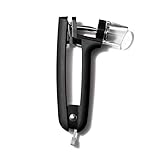
We'd point most mixed-use kitchens here. The generous cup is sized for large cherries, a recessed seat steadies smaller ones, and the same tool takes many varieties of olives, so it covers a pie-making weekend and a martini tray alike. The die-cast zinc body and the lock that closes the pitter for storage suit a drawer that gets crowded.
Owner feedback praises how well it works: it pits cherries cleanly, is simple to operate, and moves along quickly for small batches in season. The complaints cluster around the shield and the mess. Owners report that the splatter shield pops off during use, that a plastic part can come loose after each session, and that juice can still spray, although the shield contains it well in other reports.
Pros
- Takes cherries and many olive varieties
- Removable shield eases cleanup
- Locks closed for compact storage
- Non-slip grip suits long sessions
Cons
- Splatter shield can come off
- Juice may still spray
- Plastic part can loosen after use
Key features (4)
- Die-cast zinc body with pressure-absorbing non-slip grip
- Generous cup for large cherries, recessed seat for small ones
- Removable splatter shield, dishwasher safe
- Lock closes the pitter for storage
Heavy construction is the story here. The body is a single piece of cast aluminum with a powder-coated finish, and owners single out the solid feel and the one-piece casting. It is also the lightest tool on this page by the spec sheet, so the sturdiness does not come with a heavy hand.
Cherries stay whole under a smooth press, and owners say it copes well with sour cherries for pies; one report praises how easily it works through a large bowl of olives. Next to the OXO Good Grips Cherry & Olive Pitter, this one has no removable parts to lose, though the shared complaint holds: juice can squirt out while pitting, so work over a bowl or the sink.
It is dishwasher safe, and the smooth shape rinses clean under the tap.
Pros
- Single-piece cast aluminum feels solid
- Pits sour cherries without crushing
- Handles a bowl of olives
- Dishwasher safe, rinses easily
Cons
- Juice squirts while pitting
Key features (4)
- Heavy-duty cast aluminum with powder-coated finish
- Ergonomic handle for controlled pressure
- Smooth construction rinses clean or goes in dishwasher
- Made in Germany
This is a classic-looking spring-loaded olive stoner in cast aluminum, aimed squarely at olives rather than cherries. The listing describes a spring-loaded action meant to make pitting easy, and the tool is simple enough that there is little to learn.
The feedback gives us pause, though. A common complaint is that the hole for the pit is too small for olive pits, and owners also report that the tool broke on first use, though others find it strong enough for olives. Set beside the Westmark Olive Pitter, which shares the spring idea, it gives us less to go on in terms of listed features, so we'd treat it as a style choice for light use.
Pros
- Spring-loaded action for olives
- Cast aluminum construction
- Simple tool with little to learn
Cons
- Pit hole reported as too small
- Reports of breaking on first use
Key features (4)
- Cast aluminum spring-loaded olive stoner
- Retro finish in a compact hand-held body
- Single-olive pitting action
- Spring-loaded design for easier pitting
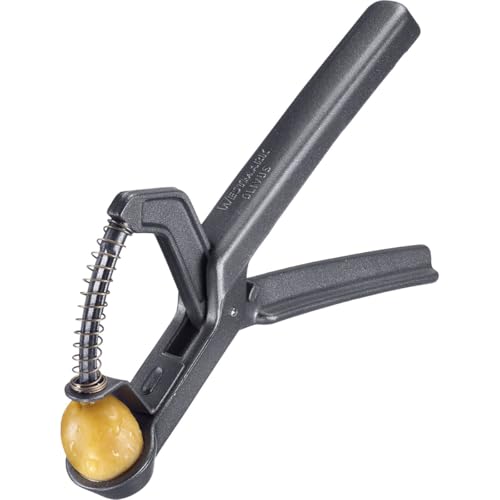
On paper this is the most olive-focused option here: a strong spring, well-balanced handles for one-hand operation, and a cast aluminum body in a black powder-coated finish. Owners who like it call it excellent at pitting, including Castelvetrano olives.
The complaints are specific, though. Owners report that the spring can malfunction, that the tool only suits the smallest olives, and that it can break quickly. In contrast to the Westmark Kernex Cherry Pitter Tool, which owners praise for sturdiness, this model carries the more uneven record, and we'd only suggest it if your olives are small.
Pros
- Spring design suits one-hand use
- Praised for pitting small olives
- Cast aluminum body, easy to rinse
Cons
- Spring reported to malfunction
- Fits only the smallest olives
- Reports of breaking quickly
Key features (4)
- Cast aluminum with black powder-coated finish
- Spring mechanism with balanced handles
- Dishwasher-safe, smooth to rinse
- Made in Germany
The push design is meant for one hand, comes ready to use, and the lengthened splatter shield and silicone grip are aimed at a tidy counter. The listing even positions it for children, and owners say it is easier than pitting by hand and that it cleans up quickly.
Staying power and consistency are where the reports pull apart. Owners describe it as sturdy at a fast pace, yet a common complaint is that it breaks easily; it can clear a bag of cherries with little fuss, but olives can come out mangled and pits can stick at the bottom or the base can stick to the top. If olives are the main job, the Westmark Olive Pitter Aluminum Coated is the more olive-specific tool; this one is better suited to cherries and similar small fruit.
Pros
- Easy one-hand push operation
- Quick to rinse or dishwash
- Long shield aimed at tidier pitting
- Owners find it easier than by hand
Cons
- Owners report it breaks easily
- Olives can come out mangled
- Pits or base can stick
Key features (4)
- Stainless steel and food-grade silicone construction
- Lengthened splatter shield, non-slip handles
- Lock design for compact storage
- Handles cherries, jujubes and red dates
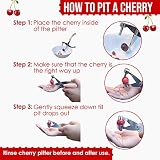
The pitting rod is extra long and spring-loaded to rebound, the spoon-shaped holder keeps cherries in place, and the extended splash guard is meant to protect the counter. It also locks shut for storage. Few products on this page spell out their coverage as plainly: a 2-year warranty plus a money-back guarantee.
Owners praise how it handles large batches and pie cherries, and report that it saves time. The catch, however, is effort. A common complaint is that it takes real force and sometimes more than one push, and owners report plastic parts breaking and pits staying in cherries. For lighter hands, the Honbuty Stainless Steel Cherry Pitter may be less of a workout, though it has its own reliability reports.
Pros
- Quick work on large cherry batches
- Extra-long rod with spring rebound
- Backed by a stated 2-year warranty
- Locks shut for tidy storage
Cons
- Takes considerable force to push
- Plastic parts reported breaking
- Pits sometimes stay in cherries
Key features (4)
- Extra-long pit rod with spring-loaded rebound
- Spoon-shaped holder with extended splash guard
- Rinse or dishwasher clean, locks for storage
- 2-year warranty and money-back guarantee
This one is plain by design, and owners count that as a strength: solid construction, no gimmicks, no plastic pieces to snap. The zinc alloy body, plunger needle and locking mechanism keep things compact, and the grip is non-slip and pressure-absorbing for hands that tire quickly.
Owners report that it pits cherries without mashing them, that it is far simpler than older methods, and that it washes up easily in the sink. One mentions it works on olives as well. While the OXO Good Grips Cherry & Olive Pitter leans on a removable shield, this tool skips extras altogether, so there is less to wash, lose or loosen. It is also the heaviest of the group by the spec sheet, a plus for anyone who wants a sturdy tool.
No complaint stands out in the feedback we reviewed, which is rare on this page.
Pros
- All-metal build with no plastic parts
- Pits cherries without damaging fruit
- Simple to wash and dishwasher safe
- Locks compactly for storage
Key features (4)
- Zinc alloy body with plunger needle
- Non-slip pressure-absorbing handles
- Compact locking mechanism
- Suitable for Bing and Rainier cherries
Side by side
| Pick | Item weight | Item dimensions |
|---|
#1 Best All-Rounder
OXO | 0.26 pounds | 10.43 × 4.25 × 1.57 inches |
#2 Sturdiest Build
Westmark | 0.15 pounds | 5.51 × 1.57 × 0.04 inches |
#3 Retro Pick
Westmark | 0.24 pounds | 6.89 × 1.97 × 0.01 inches |
#4 Spring-Action Specialist
Westmark | 0.24 pounds | 6.65 × 4.13 × 0.04 inches |
#5 Kid-Friendly Pick
Honbuty | — | — |
#6 Best Backed Pick
Schvubenr | 0.2 pounds | 7.8 × 3 × 0.8 inches |
#7 Best No-Frills Metal
ProTensils | 0.4 pounds | 5 × 2 × 0.04 inches |
How to Choose an Olive Pitter
Which pitting action suits your hands?
Pitters fall into two broad groups. Plunger or push styles seat the fruit in a cup and drive a rod through it, which asks little of your grip and suits long sessions and younger helpers. Spring-loaded tongs close like a pair of tweezers and spring back for the next olive, which is quick for olives but harder on weak hands.
For tired or small hands we'd lean toward the Honbuty Stainless Steel Cherry Pitter for its one-hand push design, though owners of the Schvubenr Cherry & Olive Pitter Tool report needing real force, so lever length and rod design matter as much as the category.
Will it fit your olives?
Pit-hole size and cup shape decide whether an olive comes out whole or mangled. Owners report that the Westmark Olive Pitter accepts only the smallest olives and that the pit hole on the retro Westmark model is reported as too tight, while the OXO Good Grips Cherry & Olive Pitter is described as taking most olives. Check the size of the olives you usually buy before choosing a spring tool.
Cherries ask for a larger cup. Olive-first buyers rarely need a cherry-first tool, and those who pit mostly cherries are better served by the best cherry pitter than by anything here.
How much mess can you tolerate?
Pitting any juicy fruit sprays liquid, which is why shields are a selling point. A longer shield on the Honbuty and Schvubenr models is meant to direct the spray, and the OXO has a shield you can remove for washing. Even so, owners of several pitters still report squirts, so work over a bowl or in the sink and wear an apron whichever tool you choose.
What actually holds up?
Material says a lot. Cast aluminum and zinc alloy bodies feel substantial, and stainless steel resists rust, but the plastic parts attached to them are what owners report cracking, popping off or wearing out. If you pit in volume, we'd choose the ProTensils Cherry Pitter Tool or the Westmark Kernex Cherry Pitter Tool, where owner feedback stresses sturdiness and the absence of fragile pieces.
Our picks at a glance
4
Spring-Action SpecialistWestmark
6
Best Backed PickSchvubenr
7
Best No-Frills MetalProTensils
Frequently asked
Can an olive pitter double as a cherry pitter?
Often, yes, when the cup suits both fruits. The OXO Good Grips Cherry & Olive Pitter is built around that overlap, with a cup for large cherries and a recessed seat for smaller ones. Spring-loaded olive tongs, by contrast, are meant for olives alone.
Which pitter is easiest on small or weak hands?
A push-down plunger with a comfortable handle takes the strain off the grip. Of this group, the Honbuty Stainless Steel Cherry Pitter is the one designed for easy one-hand pushing, while the ProTensils Cherry Pitter Tool has a pressure-absorbing grip aimed at reducing hand fatigue.
How do I keep a pitter from going bad quickly?
Rinse it right after use so juice and brine do not dry on, and use a dishwasher only where the maker says it is safe. For tools with removable plastic pieces, check them for looseness now and then. The Westmark Kernex Cherry Pitter Tool, a single-piece casting, has the least to loosen.