Ideal for: Daily cooks maintaining multiple wooden handles; anyone prioritizing deep conditioning over fragrance.
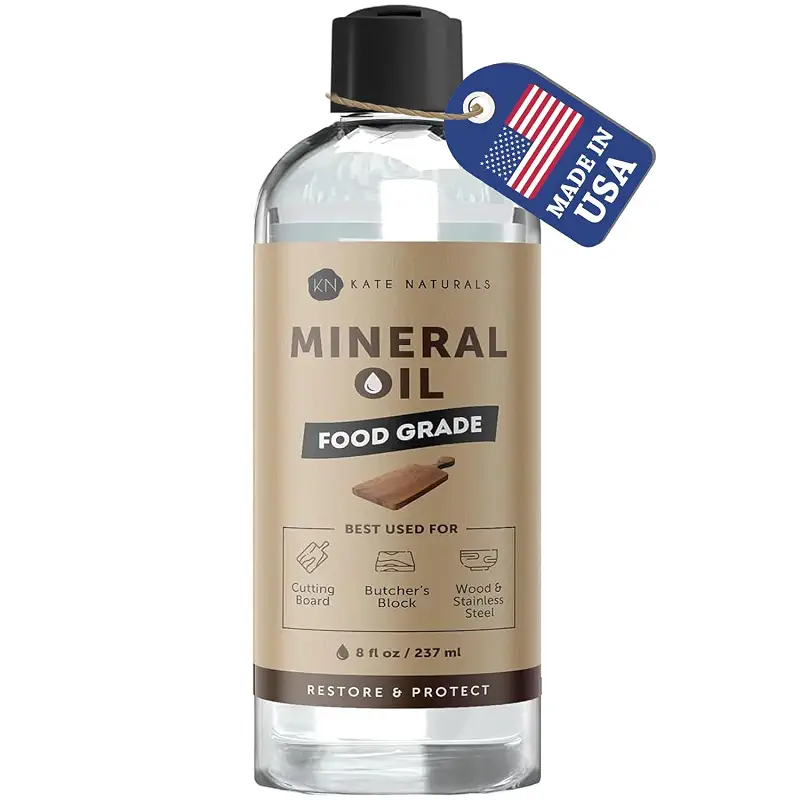
Kate Naturals delivers what serious home cooks and butchers want: a thin, penetrating mineral oil that doesn't sit on the surface or feel sticky. Buyers consistently report that it brings out the natural grain of handles and boards within a single application, making wood that looked weathered suddenly rich again. The food-grade certification and odorless formula mean you can apply it before service without worry.
The 8 oz bottle goes further than you'd expect because only a small amount is needed per session; monthly maintenance is the rhythm most users report. Application is straightforward: wipe it on with a cloth, let it soak for 15–20 minutes, then buff away any excess. Where the mineral oil vs. natural oil debate matters most is that mineral oil doesn't rancid or attract insects over time, making it the safer choice for handles that see daily use.
One practical trade-off is that it offers no scent masking: if you want your kitchen to smell fresh while you condition handles, you'll need to look elsewhere. That said, the purity is part of its appeal; nothing interferes with how the wood drinks it in.
Pros
Soaks deep with zero sticky residue
Restores dull wood grain visibly
Economical bottle lasts months
Cons
No scent; pure mineral oil only
Requires monthly reapplication for best results
Key features
Food-grade mineral oil, USP certified for food-contact safety
Odorless, colorless, tasteless formula soaks in quickly
8 oz bottle serves home kitchens for several months
Works on bamboo, teak, acacia, hardwood, and stainless steel
#2 Pick
Best for Large Collections
Thirteen Chefs
Thirteen Chefs Mineral Oil - 8 oz Food Grade Conditioner for Wood Cutting Board, Countertop & Butcher Block, Lubricant for Knife or Meat Grinder - Safe USP Finish on Marble, Soapstone
4.8(44,588)
NSF-certified, made-in-USA mineral oil engineered for long-term conditioning; the economical workhorse for knife collectors.
Thirteen Chefs stands out for its NSF certification and emphasis on lab testing, not just a label claim, but documented food-safety rigor. Buyers with large collections of wooden handles and butcher blocks report that one bottle easily outlasts a year of routine maintenance because the oil absorbs so thoroughly that you need less per application than with thinner products. The push-applicator cap is a small but genuine convenience if you're conditioning multiple handles in a session.
Compared to Kate Naturals, Thirteen Chefs has a slightly higher volume per bottle (listed as 8 oz on this product page but historically marketed with larger sizes available), and the brand's track record on Amazon spans years with tens of thousands of reviews. Many users also employ it on sharpening stones and even metal parts, making it genuinely multipurpose in ways a handle-only oil might not be. The 3–4 hour soak recommendation is longer than some competitors, but buyers find it worth the wait for the depth of conditioning.
The main limitation is that it's still plain mineral oil with no botanical additions. If your preference leans toward natural ingredients, this won't feel like an upgrade.
Pros
NSF certified and lab-tested for safety
One bottle provides years of maintenance
Convenient push-cap applicator bottle
Cons
Longer soak time (3–4 hours) than some alternatives
Plain mineral oil with no added botanicals
Key features
NSF certified food-grade mineral oil, 100% pure formula
Made in USA in FDA-compliant facilities
Economical one 1 oz treatment every 3 months per 18" board
Multipurpose use on stones, utensils, and metal tools
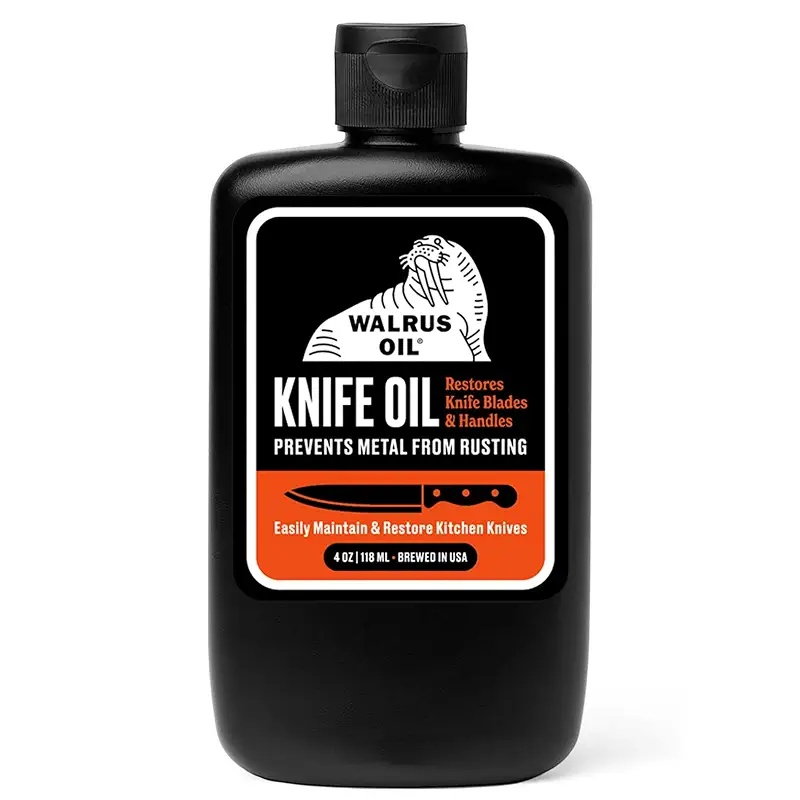
Walrus Oil takes a different approach: it combines fractionated coconut oil with carnauba wax to create both conditioning and corrosion protection in one bottle. Buyers specifically mention using it on carbon-steel blades, hunting knives, and pocket knives where rust is a genuine concern, not just a theoretical one. The wax component leaves a subtle protective barrier that mineral oil alone cannot provide, which matters if your handles or blades face moisture or temperature swings. This makes it especially relevant if you own a best knife to cut raw chicken or other specialty blades that need corrosion defense during regular kitchen work.
The all-natural, food-contact-safe ingredient list appeals to cooks who prefer plant-based products. However, one reviewer noted confusion about the name (it's plant-based, not derived from walrus) so marketing and reality don't entirely align. In direct comparison to mineral oil options, Walrus Oil is thicker and leaves a more pronounced finish on the blade itself, which some users love for aesthetics but others find less invisible than plain mineral oil.
With only 95 reviews compared to thousands for mineral oil alternatives, this is a smaller-scale product. It works well on handles and blades alike, but the learning curve is steeper; you need to experiment with application thickness to avoid over-waxy residue.
Pros
Addresses both handle and blade rust in one product
100% natural, plant-based ingredients
Wax component provides lasting protective barrier
Cons
Fewer reviews; less predictable on different handle materials
Thicker formula requires careful application to avoid excess
Key features
100% natural ingredients: fractionated coconut oil and carnauba wax
Food-contact safe and US-made in the Ozark Mountains
Protects metal from rust while conditioning wood handles
Suitable for kitchen knives, pocket knives, and carving tools
#4 Pick
Best with Citrus Scent
Clark's
Cutting Board Oil 12 oz, Food Grade Mineral Oil Added Orange Lemon Scent | Mineral Oil for Wood Cutting Boards, Butcher Blocks, Utensils, Lubricant for Knives. Soak for 2-3 Hours for Optimal Finish
4.8(9,623)
Food-grade mineral oil infused with orange and lemon oils; restores wood while refreshing your kitchen air.
Ideal for: Home cooks wanting aromatherapy alongside conditioning; users maintaining bamboo and maple handles.
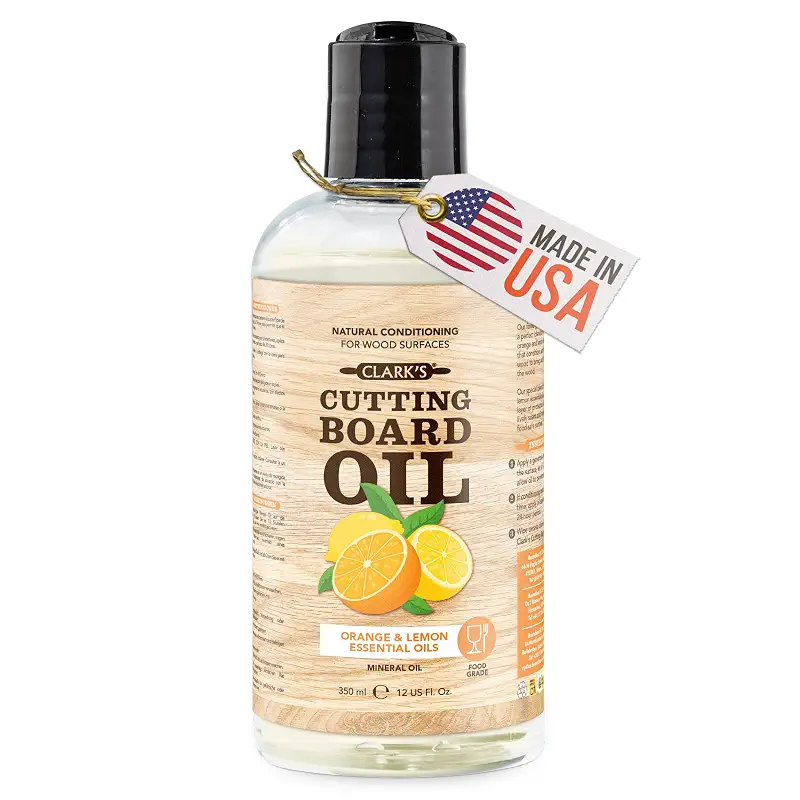
Clark's adds lemon and orange essential oils to food-grade mineral oil, creating a product that conditions handles while leaving a pleasant citrus fragrance behind. If you dislike the neutral smell of plain mineral oil, this solves that problem instantly. Buyers report that the aroma lingers briefly in the kitchen after application, which some find welcoming and others find unnecessary; your preference will determine whether this is a feature or a distraction.
The 12 oz bottle is one of the larger sizes in this lineup, and the oil's fluidity is high enough to absorb into tight-grained woods like maple quickly. Compared to Walrus Oil's heavier wax blend, Clark's remains a pure conditioning oil: it won't create a visible protective coating on the blade, just a conditioned handle. The food-grade certification and US bottling meet safety standards reliably.
One trade-off is that added essential oils mean fewer molecules of pure mineral oil per bottle, so the conditioning power is fractionally less than undiluted options. For handles that need both restoration and a kitchen refresh, it's an elegant choice; for minimalist cooks or those with scent sensitivity, it's worth noting.
Pros
Orange and lemon scent refreshes kitchen during application
12 oz bottle larger than many competitors
Spreads evenly and absorbs quickly into tight wood grain
Cons
Essential oils reduce pure mineral oil concentration per bottle
Scent not everyone prefers; personal preference determines value
Key features
Food-grade mineral oil blended with orange and lemon essential oils
12 oz bottle with mess-free push-cap applicator
Made in USA in FDA-compliant facilities
Safe for cutting boards, utensils, knife handles, and stainless steel
#5 Pick
Best Budget Option
Project Papa
USP Food Grade Mineral Oil for Cutting Boards & Butcher Blocks, 100% Pure | safe odorless wood conditioner for wooden utensils, spoons, bamboo, knife handles, countertops, stops drying and cracking
4.8(13)
100% pure USP food-grade mineral oil without brand markup; effective conditioning at a transparent price point.
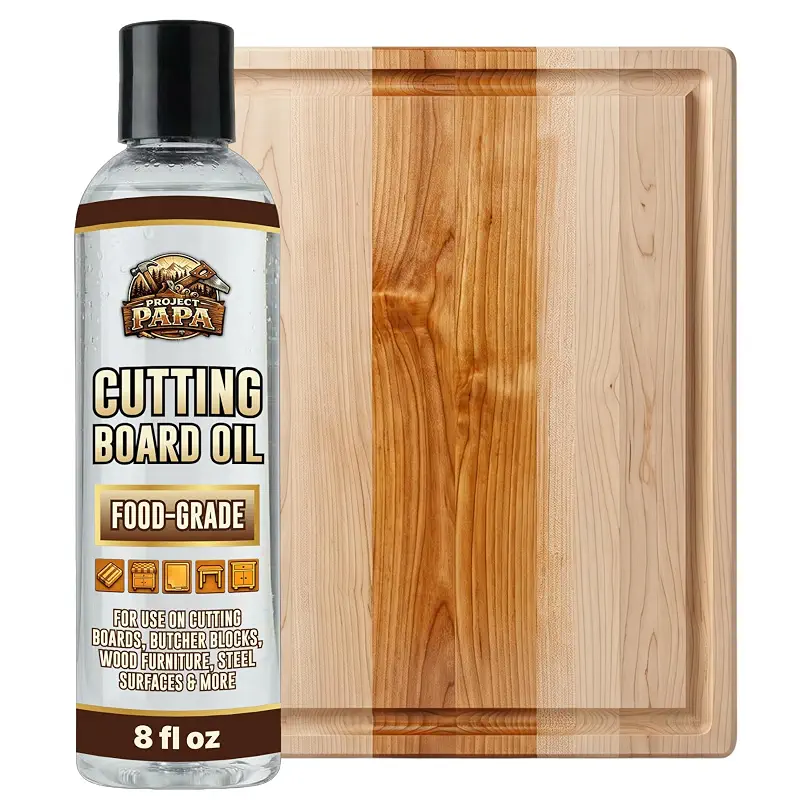
Project Papa strips away marketing and delivers straightforward mineral oil in a convenient bottle. One buyer explicitly notes that this is functionally identical to medical-grade mineral oil you can find in a pharmacy laxative aisle for less money, and they're right. The value proposition here is paying slightly more for kitchen-appropriate packaging and labeling rather than a superior formulation. If you've ever questioned why specialty cutting-board oils cost more, this product makes the economics visible.
What Project Papa does well is consistency: the oil is 100% pure, USP certified, odorless, and food-safe. It conditions handles effectively and soaks into wood at the same rate as premium alternatives. For a cook building a supply closet on a budget, or someone who wants to condition a handle without overthinking the choice, this works perfectly.
The trade-off is that with only 13 reviews, there's less collective user feedback than with the larger competitors. You're also missing any added convenience features like scent or wax protection. If your priority is pure conditioning and lowest cost per ounce, this delivers; if you want community confidence or special ingredients, look at mineral oil vs. natural oil discussions to decide your path.
Pros
100% pure USP food-grade mineral oil, no fillers
Transparent pricing without brand premium
Simple, effective conditioning formula
Cons
Fewer user reviews than larger competitors
No added features or scent; purely functional
Key features
100% pure USP food-grade mineral oil, undiluted formula
Odorless, colorless, tasteless, safe for food-contact surfaces
Deep penetration prevents drying, cracking, and splitting
Versatile use on handles, boards, utensils, and bowls
How to Choose the Right Oil for Wooden Knife Handles
Four trade-offs that actually matter when matching a oil for wooden knife handles to your kitchen.
Mineral Oil vs. Plant-Based: Which Works Better?
Food-grade mineral oil dominates this category because it's food-safe, doesn't rancid, and penetrates wood evenly without leaving a sticky film. It has no taste or smell and costs less than alternatives. Plant-based options like fractionated coconut oil offer a natural feel and can include protective waxes, but they cost more and require fresher application cycles. The mineral oil vs. natural oil decision often comes down to kitchen philosophy: if you want proven, affordable, and chemical-free conditioning, mineral oil wins. If you prefer all-natural ingredients and don't mind paying extra, plant-based products deliver.
How Often Should You Condition Wooden Handles?
Most owners report monthly maintenance as the sweet spot. Handles that see daily use in a busy kitchen can benefit from weekly or bi-weekly light applications, while occasional-use handles might only need conditioning quarterly. The wooden handle conditioning guide covers application timing in detail, but the rule of thumb is simple: when the wood starts looking dull or feels slightly dry to the touch, it's time. A small amount per session is better than occasional heavy applications; regular light conditioning prevents cracking far more effectively than reactionary treatment.
What to Look for in Food-Grade Certification
Any oil intended for kitchen handles or tools should carry food-grade or USP certification, which means it meets FDA standards for food-contact safety. Look for labels stating 'NSF certified', 'USP food-grade', or explicit FDA compliance. This is not optional if your handle will come into contact with food or your hands during meal prep. Ungraded mineral oils sold for industrial or laxative use are often identical chemically, but buying a product labeled for kitchen use ensures accountability and peace of mind.
Scent, Convenience, and Collection Size
If you're conditioning one or two favorite knives, a smaller bottle with a pleasant scent like citrus might enhance the ritual. If you maintain a large collection or butcher-block countertops, an economical, larger bottle and a simple push-cap applicator will save time and money. Consider whether you want your kitchen to smell like lemon oil or remain neutral. For working cooks, functionality and cost per ounce often outweigh aesthetic preferences; for home cooks with pride in their tools, the ritual and fragrance can matter. Keeping your handles in top shape also means they'll perform reliably when you reach for a knife to cut raw chicken or tackle any meal prep task.
Frequently asked
Quick answers to the questions readers ask most.
Can I use the same oil on my knife blade and wooden handle?
Most food-grade mineral oils work on both. However, blades benefit from slightly heavier protection, especially carbon steel that rusts. Products like Walrus Oil that combine oil with protective wax are designed for blade and handle care together. Plain mineral oil conditions handles beautifully but offers no rust prevention for the blade itself. If you want one product for both, look for formulations that include wax or are specifically marketed for blade protection.
How long does one bottle typically last?
An 8 oz bottle of mineral oil lasts most home kitchens 3–6 months with monthly conditioning of multiple handles and boards. One ounce per session is standard, and a small amount goes a long way because the oil absorbs fully into wood. If you're conditioning just one or two handles occasionally, a single bottle can last a year or more. Larger 12 oz bottles extend that window further, especially for occasional use.
Will mineral oil make my handles slippery?
No. Food-grade mineral oil soaks into wood fibers rather than sitting on the surface. Once absorbed and any excess is wiped away, the handle returns to normal grip. If your handle feels slippery after oiling, you've applied too much; use less next time and wipe thoroughly. The goal is conditioning from within, not a glossy coating.
Can I use vegetable or olive oil on wooden handles?
Avoid cooking oils like olive or vegetable oil. They leave sticky residue, rancid over time, and attract insects or mold if left on wood. Food-grade mineral oil and plant-based fractionated coconut oil are the safe choices because they're refined to not degrade. Cooking oils will eventually smell off and compromise your handle's safety and appearance.
What's the best way to apply oil to a wooden handle?
Apply a small amount with a clean cloth, rub it in gently for 30 seconds to one minute, let it soak for 15–20 minutes (or longer for heavy conditioning), then wipe away any excess with a dry cloth. For deep restoration of very dry handles, repeat the process daily for a week. For maintenance, monthly application is sufficient. Always work on a clean, dry handle to maximize absorption.