Best Nut Chopper for Almonds: Manual Grinders Tested
Find the best nut chopper for almonds. Compare manual grinders with stable bases, fine-and-coarse options, and dishwasher-safe designs for home bakers.
Verdict, analysis, and key features for each pick.
#1 Pick
Best Overall for Almonds
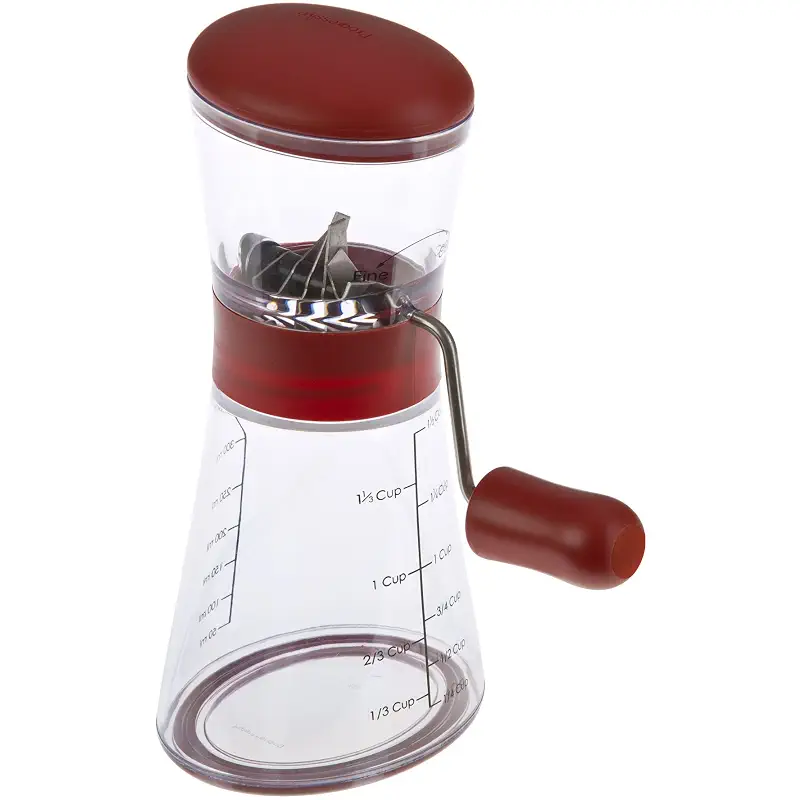
Progressive
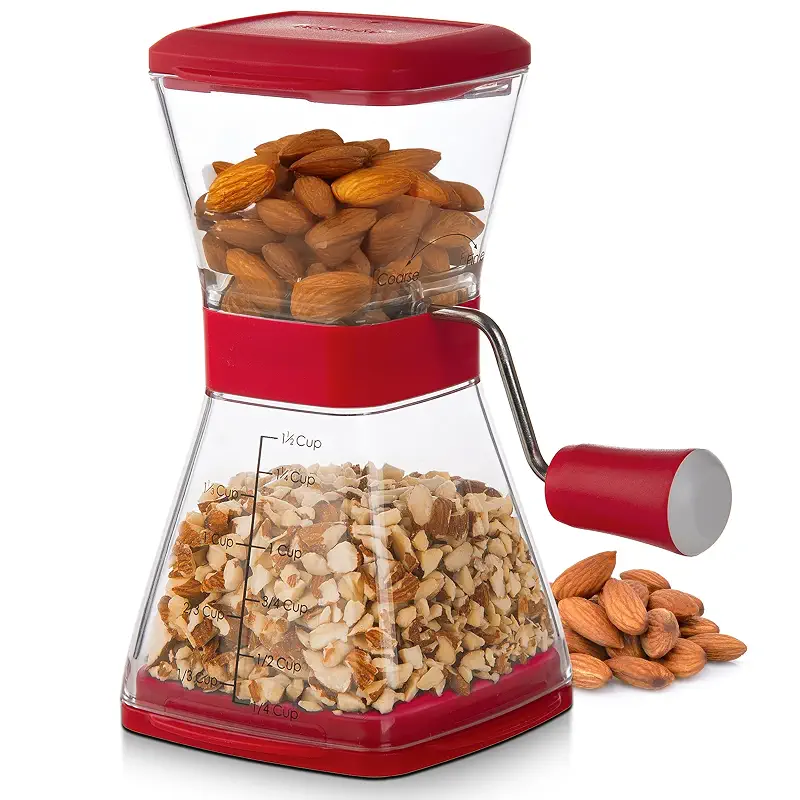
PrepWorks Manual Nut Chopper, Chop Nuts With Coarse and Fine Functions, Red | Grinds up to 1.5 Cups of Nuts, Seeds, or Herbs, Non-Skid Base for Stability While Chopping, Dishwasher Safe
4.2(3,695)
Square design with full-length blades and sturdy construction handles almonds reliably when used with proper technique.
Ideal for: Home bakers who chop almonds regularly and will support the mechanism with proper grip.
This model stands out because the square footprint lets all six blades work at their full length, which means more consistent grinding than round designs. Owners who chop almonds regularly report it does the job well if you support the mechanism properly by securing the crank center with your thumb while turning. The non-skid base stays put, and the hinged lid makes filling straightforward. The big caveat is that almonds do expose a structural weakness: the handle shows flex and requires deliberate technique to avoid feeling like it might break apart. You'll get the best results by working in half-turn increments rather than full cranks, and supporting the center throughout. That's not a fatal flaw for home bakers, but it's worth knowing upfront. Compared to the Norpro model, this chopper works better on harder nuts despite its compact size, though the Norpro excels with softer varieties like walnuts. The measurements on the removable base are helpful for recipe portions, and the dishwasher-safe components clean up without hassle. Some reviewers note inconsistency between the coarse and fine settings, so don't expect dramatic differences if you dial the direction.
I think the real value here is the square design and how those full-length blades distribute the load. For someone who chops almonds a few times a week and doesn't mind a little technique, this delivers solid results at an entry-level price point. The build quality suggests longevity if treated carefully, though the handle flex on hard nuts means it's not the toughest option available.
One lingering design issue some owners mention: the components can come apart when emptying if you're not holding everything snugly, spilling nuts on your counter. It's not a deal-breaker, but it means you'll develop a habit of keeping firm pressure on the assembly while unscrewing the base. Owners also report this works well on softer nuts like walnuts and pecans without any fuss, so it's a true jack-of-all-trades if almonds aren't your only use case.
Pros
Square design with six full-length blades
Non-skid base keeps steady during operation
Hinged lid makes filling and measuring easy
Dishwasher-safe components
Cons
Handle flex on hard nuts requires deliberate technique
Components can separate during emptying if not held firmly
Key features
1.5-cup capacity with marked measurements on removable base
Square body with full-length rotating blades for consistent grinding
Coarse and fine settings via clockwise and counterclockwise rotation
Non-skid rubber base for countertop stability
Hinged lid for easy filling; dishwasher-safe parts
#2 Pick
Best for Everyday Reliability
Progressive
Prepworks by Progressive Nut Chopper with Non-Skid Base, Red
4.4(8,509)
Proven workhorse with an elliptical design and simple construction that handles most nuts smoothly for a decade or more.
Ideal for: Cooks who want a reliable chopper that works for years without finicky technique or maintenance.
This is the model that owners report buying again after their first one finally wore out from years of regular use. The elliptical shape and patented design feel like modest refinements, but they translate to a chopper that feels stable and doesn't tip or flex the way some competitors do. The non-skid base is a genuine feature that makes a difference; it sits firmly and lets you turn the handle without one hand babysitting the assembly. Stainless steel blades and a removable base with measurement marks are standard, but the real selling point is that owners keep using the same unit daily for a decade. For almonds specifically, this model is less forceful than the square-design option, so if you're choosing between this and the first product, the square design edges ahead for hard nuts, but this wins on overall durability and hands-off operation.
I'd lean toward this if you want a chopper that simply works without requiring technique refinement. Owners report running it through the dishwasher regularly without complaint, and the only maintenance issue mentioned is occasional re-gluing of a plastic ring if it detaches, which is a trivial fix. The elliptical body is easier to grip than round designs, and the overall feel is more refined than budget models.
One design compromise worth noting: the hinged lid is a two-piece top rather than a removable cap, which some owners prefer, but it does introduce a potential breakpoint over time. For a chopper you plan to keep for years, that's a minor trade-off against the stability you gain. This model also leaves nut dust and small debris, which is true of all hand choppers, but some owners mitigate it with a fine sieve after grinding. Not a defect, just the nature of the tool.
Pros
Elliptical design provides superior stability and grip
Proven durability; owners report 10+ years of daily use
Stainless steel blades with smooth operation
Measurement marks on base simplify portioning
Cons
Leaves fine nut dust and small debris unsuitable for some uses
Hinged lid introduces a potential breakpoint over time
Key features
Patented elliptical design for ergonomic grip and stability
Stainless steel blades with non-skid base for secure operation
Removable base with measurement marks for accurate portions
Fine to coarse grinding options via handle direction
Compact size fits kitchen drawers; lid serves as storage cover
#3 Pick
Best for Soft Nuts
Norpro
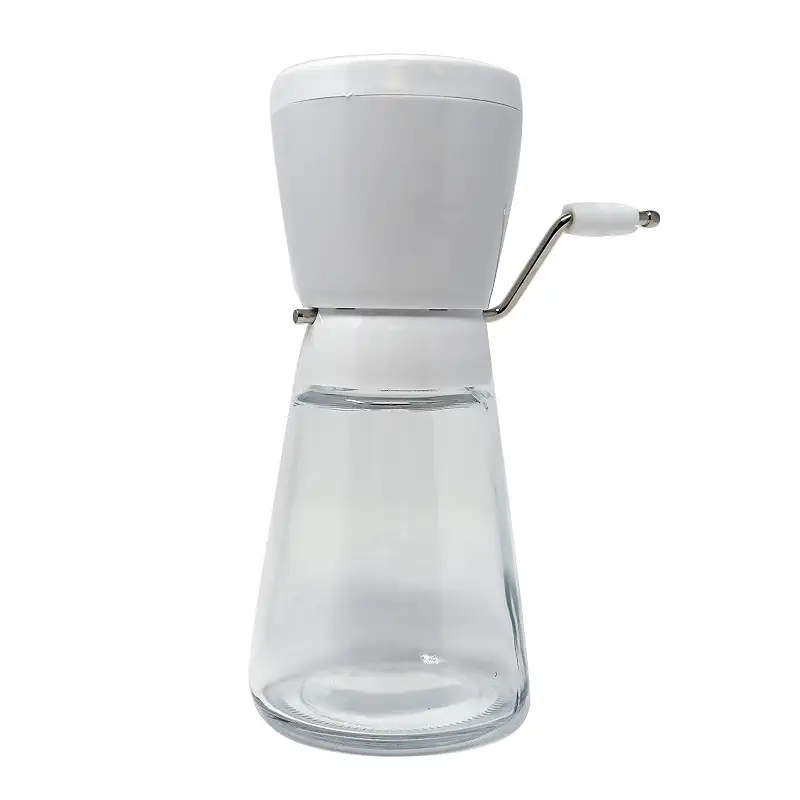
Norpro Nut/Topping Chopper
4.2(2,441)
Durable hand-crank design with a sturdy glass base excels at walnuts and pecans, but struggles and risks bending blades on harder almonds.
Ideal for: Cooks who primarily chop walnuts, pecans, and other soft nuts and value durability and elegant design.
The Norpro is built on a classic hand-crank principle with a glass base that feels substantial and looks good on the counter. Owners praise the build quality and report units lasting 35 years or more, which speaks to real engineering. The glass base doesn't harbor food odors like plastic, and there's something reassuring about seeing the finished product collect in a transparent container. Where you need to be clear-eyed is the almond question. Norpro explicitly notes this is meant for soft nuts like walnuts, pecans, cashews, and pistachios, and owners who've tried almonds report bent blades and tough going. The mechanism is not as strong as the square-design Progressive model or the all-plastic hand-crank alternatives, so if almonds are your primary nut, this isn't the right pick. However, if you're mostly grinding walnuts and pecans with occasional almonds, the Norpro's build quality and elegance make it worth considering over the manual chopper versus food processor decision entirely.
I think the glass base is the real differentiator here. It's heavier and more stable than plastic, it cleans without fogging, and it contributes to a tool that feels like a kitchen keepsake rather than a disposable gadget. The learning curve is real: you have to hold the top while cranking and not grip the bottom container, or the top will come loose. Once you establish that habit, operation is smooth and the handle turns easily on softer nuts.
One important caveat: many one-star reviews cite bent blades after grinding almonds or hard nuts, and this is a legitimate design limitation. The plastic and metal construction is not overbuilt for extreme pressure. Choosing this means accepting it as a soft-nut chopper. That's not a secret fault, but it's the decision you're making. Some owners mitigate by thawing frozen nuts first, and the design can handle individual hard nuts if you rotate the handle in reverse if one gets stuck, but sustained pressure on almonds will bend the blades.
Pros
Sturdy glass base with rounded edges resists chipping
Build quality suggests decades of reliable use
Metal handle and stainless steel blades feel substantial
Easy cleaning and works in dishwasher
Cons
Blades bend under pressure from hard nuts like almonds
Requires technique to avoid top coming loose during crank
Key features
1.25-cup glass base with stainless steel blades
Hand-crank mechanism works for both left and right-handed use
Optimized for soft nuts like walnuts, pecans, cashews, and pistachios
Compact 7.25-inch footprint fits small kitchens and storage
Simple assembly with minimal parts to maintain or clean
#4 Pick
Best Budget Option
ZJchao
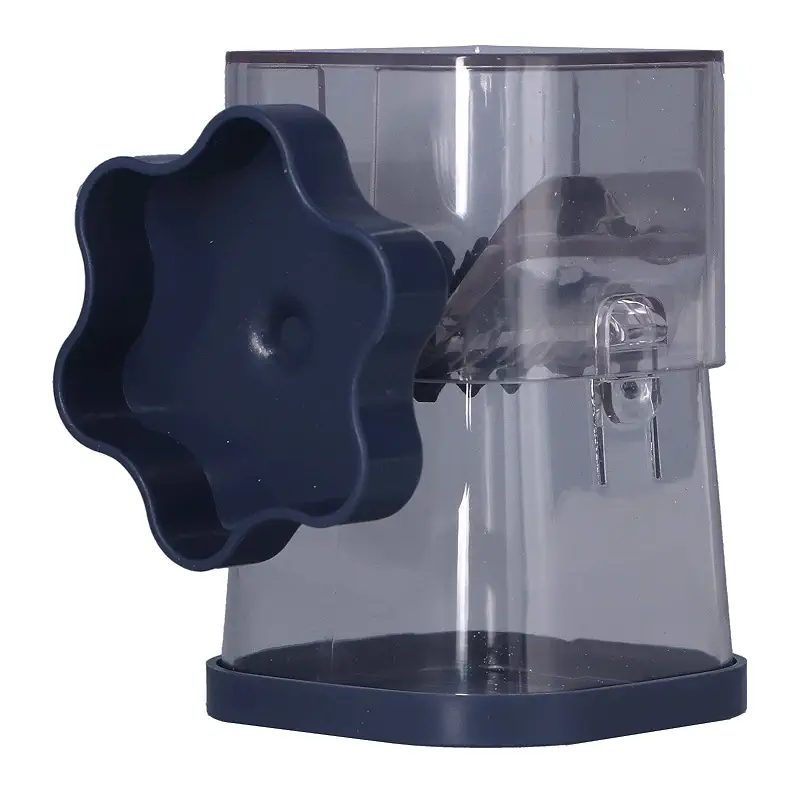
Manual Hand Crank Nut Chopper for Almonds Walnuts Pecans Compact Dishwasher Safe Kitchen Grinder with Non Slip Base Easy Cutting Action
(0)
Entry-level chopper with basic hand-crank function and no reviews yet; suitable only if you need minimal spending.
Ideal for: Price-sensitive buyers willing to take a risk on an unproven model with no customer reviews.
This budget model from ZJchao arrives with ambitious claims about handling almonds and other hard nuts, but there's no customer review data to verify those claims. The product description signals a straightforward design: ABS plastic construction with a non-slip knob and manual operation, dishwasher-safe components. Compared to the Progressive and Norpro models that have thousands of verified reviews, this is a wildcard. The feature list mentions it works on almonds, hazelnuts, pecans, and walnuts, and also promotes multi-purpose chopping of garlic and ginger, which sounds like marketing reach rather than focused engineering. Without customer feedback, I can't tell you whether the blade is truly robust enough for almonds, whether the plastic base will flex under pressure, or how long the blades stay sharp. If budget is your only constraint, consider stretching to the first Progressive model, which costs only slightly more and has 3,600+ reviews confirming it works for almonds with proper technique. The ZJchao might be fine, but you're gambling on unknown build quality.
I'd recommend waiting for customer reviews to accumulate on this one before ordering. The material and design sound adequate for soft nuts, but there's no way to assess whether the claims about almonds are realistic without hearing from actual buyers. When you compare to the square-design Progressive, which is proven and affordable, the risk of the ZJchao isn't justified by the savings.
The multi-purpose angle, chopping garlic and ginger, might appeal if you want a secondary kitchen tool. But that's also a sign the chopper isn't laser-focused on the nut-chopping mission. A tool that claims to excel at everything often excels at nothing. Until reviewers weigh in, this remains an unproven option.
Pros
ABS plastic with non-slip knob for basic durability
Manual operation requires no electricity
Dishwasher-safe components advertised
Cons
No customer reviews to verify almond-chopping claims
Build quality and blade robustness untested in real kitchens
Key features
Manual hand-crank design with ABS plastic construction
Marketed for almonds, hazelnuts, walnuts, pecans, and soft nuts
Multi-purpose function for nuts, garlic, ginger, and other ingredients
Non-slip chopper knob for controlled operation
Dishwasher-safe detachable components for easy cleaning
#5 Pick
Most Versatile for Fine Cutting
Hornbills
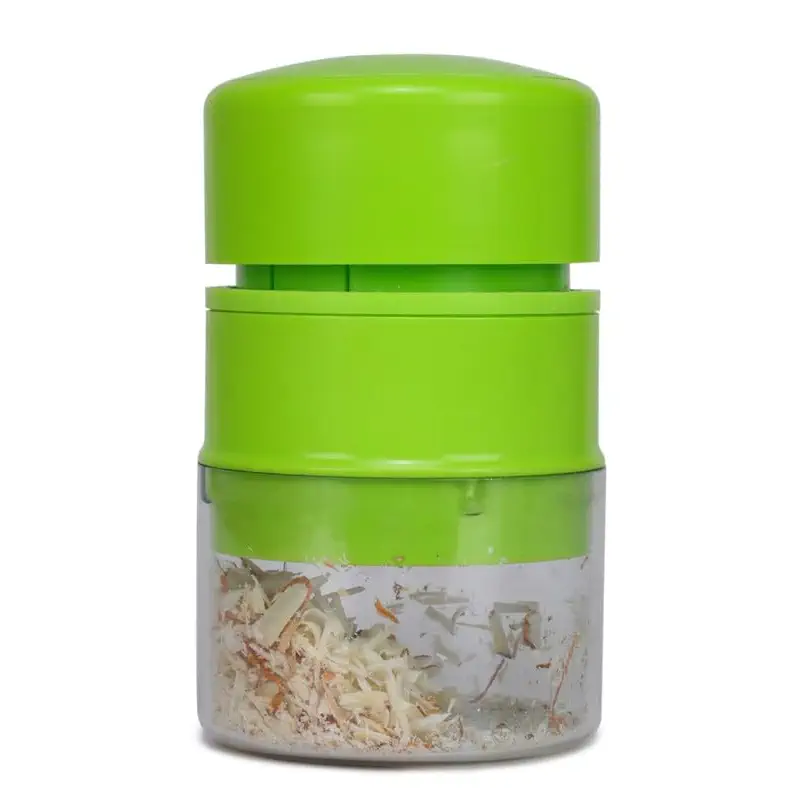
Dry Fruit & Nut Cutter With Container For Kitchen Manual Cutter Machine Kitchen Gadget Chopper for Badam, Kaju, Walnut, Pista Dry Fruit Crusher Fine Cup Slicer
4.0(72)
Compact chopper with fine stainless steel blades and built-in container delivers even slices for almonds and dry fruits, though limited capacity.
Ideal for: Cooks who slice almonds and dry fruits for toppings and need fine, uniform cuts without mess or electricity.
The Hornbills model takes a different approach than the rotating-crank choppers above. It uses a manual push-down mechanism to cut dry fruits and nuts into fine, consistent slices rather than grinding them. The built-in container catches what you cut, so nothing scatters across your counter, which is genuinely useful if you're working with small quantities. Owners report it slices almonds, cashews, walnuts, and pistachios evenly in seconds, and the sharp stainless steel blades maintain their edge over repeated use. The compact footprint means it doesn't demand drawer space, and it's sturdy enough that kids can operate it with supervision. If you're slicing almonds for garnishing desserts or sprinkling over salads, this gives you finer, more uniform pieces than a rotating grinder, which tends to produce a mix of sizes. The trade-off is that capacity is smaller, so you're working in batches, and it's designed for slicing rather than the chunky-chopped texture some recipes call for.
I think this is the right pick if you care about consistent, fine cuts and don't mind a small built-in container. The non-detachable stainless steel blade means no parts to lose, but it also means you can't separate and soak if something sticky gets caught. Cleaning is straightforward for dry nuts, though the blade does require careful rinsing around the edges. The random-color aspect of the order is an annoyance if you have color preferences in your kitchen, but it's a minor cosmetic issue.
One thing to weigh: this is a slicer, not a grinder, so if you need finely ground nut flour or coarse nut chunks for baking, the rotating choppers above are better matches. But if your goal is uniform slices for toppings and garnish, this delivers results the manual chopper versus food processor comparison can't easily replicate. Owners report it's especially useful for adding chopped dry fruits to shakes, desserts, and festive sweets where presentation matters. The learning curve is minimal; it's genuinely as simple as the design suggests.
Pros
Non-detachable stainless steel blades stay sharp and never get lost
Built-in container prevents nuts from scattering during cutting
Delivers fine, even slices ideal for garnish and presentation
Compact design takes minimal storage space
Cons
Small capacity requires working in batches for larger quantities
Slicer design unsuitable for coarse-chopped or ground textures
Key features
Manual push-down cutting mechanism with sharp stainless steel blade
Built-in container collects sliced nuts and dry fruits neatly
Compact and durable food-grade plastic construction
Designed for almonds, cashews, walnuts, pistachios, and dry fruits
Easy cleaning with no detachable parts; dishwasher safe
How to Choose a Nut Chopper for Almonds
Four trade-offs that actually matter when matching a nut chopper for almonds to your kitchen.
Almond Hardness Matters
Almonds are harder than walnuts, pecans, and cashews, and not every hand chopper handles them equally. Models with a square footprint and full-length blades distribute the load better than round designs, and those with sturdy plastic bodies resist flexing under pressure. If almonds are your primary nut, avoid models explicitly marketed for soft nuts only. Test reviews for owners who specifically mention almonds, not just general nut compatibility. A chopper that works fine on pecans might struggle or bend blades when you push it on almonds.
Stability and Counter Control
A non-skid base is not just a convenience; it's a safety feature that keeps the chopper from tipping or sliding when you apply pressure. Elliptical and square bodies also provide better stability than round designs. Some models require you to hold the top while cranking, which adds technique but also prevents the assembly from coming loose. If you want hands-off operation, look for choppers that sit firmly without needing constant pressure or support. Stability also affects consistency: a moving chopper produces uneven cuts because the blades aren't aligned with your force.
Grind Coarseness and Texture Options
Some choppers offer coarse and fine settings by changing the crank direction; others produce a fixed texture. If your recipes call for chunky almond pieces for some dishes and fine flour for others, a variable chopper is more versatile. But know that the difference between coarse and fine settings is often subtle, and some owners report minimal variation. If texture control is critical, read specific reviews describing the range, because marketing claims often overstate the flexibility. A manual chopper versus food processor comparison shows that hand tools give you less extreme range, but you gain precision and no over-processing.
Capacity and Batch Size
Most hand choppers hold 1 to 1.5 cups of whole nuts, which translates to smaller amounts of finished product. If you're chopping almonds for a single recipe, capacity isn't an issue. But if you do large-batch holiday baking, working in multiple rounds gets tedious. Check the measurement markings on the base; they help you portion without guessing. Glass bases and plastic containers have different properties: glass shows the finished product clearly and feels premium, but plastic is lighter and more portable. Consider how often you chop and whether working in batches fits your rhythm.
Cleaning and Maintenance
Hand choppers are simpler than food processors, but nut residue can be sticky if you chop anything other than fully dry nuts. Most models are dishwasher-safe, though some owners hand-wash to protect plastic from fogging. Check whether the blade is detachable for thorough cleaning or fixed in place. A nut chopper cleaning guide can walk you through best practices for different materials. Stainless steel blades stay sharper longer than cheaper metals, and models with removable bases are easier to empty and rinse than fixed containers. Factor maintenance into your choice if you plan to use the chopper multiple times a week.
Frequently asked
Quick answers to the questions readers ask most.
Can a hand nut chopper really handle almonds, or should I use a food processor?
Hand choppers can handle almonds if they're built sturdy enough, but they require more effort and deliberate technique than softer nuts. The key is a chopper with a solid body that doesn't flex, like the square-design models. A food processor is faster for large batches, but hand choppers give you better texture control and avoid over-processing your almonds into powder. Choose based on batch size and how often you chop, not on nut type alone.
What's the difference between coarse and fine settings on a nut chopper?
Coarse and fine settings are typically controlled by turning the crank in different directions (clockwise vs. counterclockwise). The difference in texture is usually subtle; what you really control is how many passes you make. For truly coarse pieces, one or two cranks in coarse mode works. For fine texture, you crank several more times. Don't expect dramatic variations like a food processor offers; hand choppers produce more uniform results across that range.
Why do some reviews mention nut dust and powder as a drawback?
Hand choppers can't separate particles by size the way a food processor can selectively pulse. Fine particles and powder naturally accumulate during grinding, especially with harder nuts like almonds. If your recipe needs chunky pieces, you can sift the finished almonds through a fine mesh strainer to remove dust. It's a minor extra step, not a design flaw, and it's the trade-off you accept when choosing hand control over mechanical consistency.
How long do hand nut choppers typically last?
Well-made models with stainless steel blades and sturdy bodies can last 10 to 35 years if treated carefully. The Norpro, for example, has owners reporting decades of use. Plastic handle components and hinged lids are the most likely failure points. Avoiding dishwasher heat on plastic parts and storing the chopper with the base unscrewed helps extend life. Budget models with untested reviews are unknowns, but proven designs from established brands suggest longevity.
Is a glass base really better than plastic for a nut chopper?
Glass looks elegant and doesn't retain food odors, but it's heavier and chips if dropped. Plastic is lightweight, portable, and won't break, but it can fog in the dishwasher and absorb odors over time. Neither is inherently better; it depends on your priorities. If you're storing the chopper permanently on your counter, glass is a nicer aesthetic. If you travel with it or prioritize durability against accidents, plastic is the safer bet.