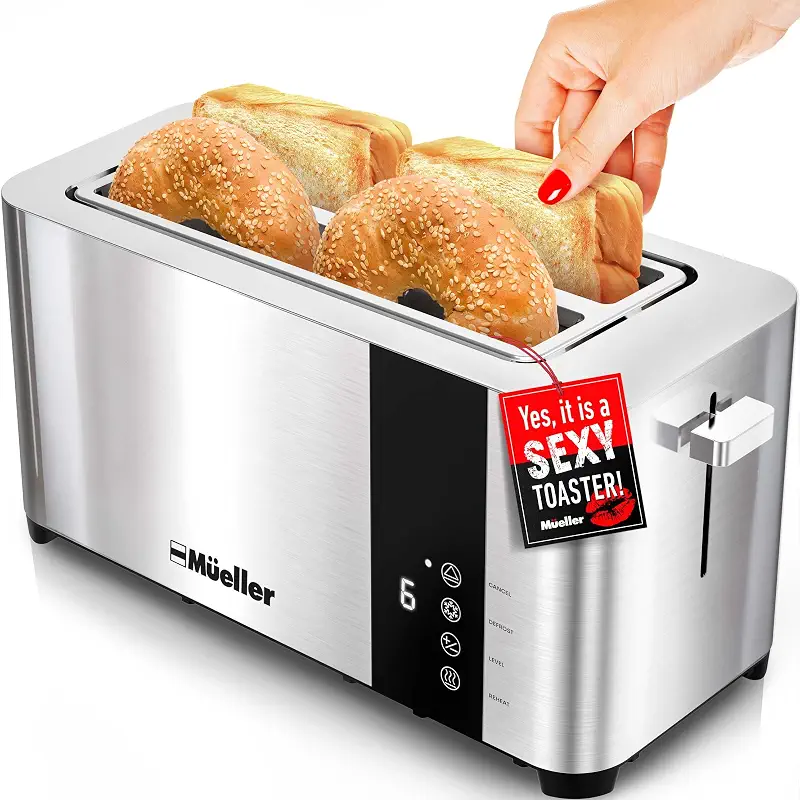
Ideal for: Families toasting thick artisan bread, bagels, and frozen breakfast items multiple times daily.
The Mueller UltraToast sits in the sweet spot for households that toast more than just sandwich bread. Its 1.6-inch slots are the widest in this lineup, which means thick artisan loaves, Texas toast, and bagels go in without forcing or squishing. That matters because when you're not fighting the toaster to fit your bread, you're not accidentally pushing parts together in ways that shouldn't happen.
What owners consistently report is even browning when you load both slots, which stems from intelligent heating that doesn't rely on one element doing all the work. The memory recall on browning level is genuinely useful if you're toasting the same bread daily; set it once, and the machine keeps your preference saved. Defrost and reheat functions cover the frozen-waffle scenario that catches most budget toasters off guard. The removable crumb tray is straightforward, and the overall footprint is compact enough for standard counters despite the extra width.
Where the Mueller asks you to pay attention: some owners note the stainless steel feels lighter than expected, which is a fair observation but doesn't necessarily signal durability issues after five weeks or even five months of daily use. The real unknown is longevity beyond a year or two. It performs solidly in that window, though I'd expect to see how owners feel after 18 months of real use to make a final call on build quality.
Pros
Extra-wide 1.6-inch slots fit thick sourdough and bagels
Ideal for: Couples or small households wanting a retro aesthetic and verified food-grade materials without added complexity.
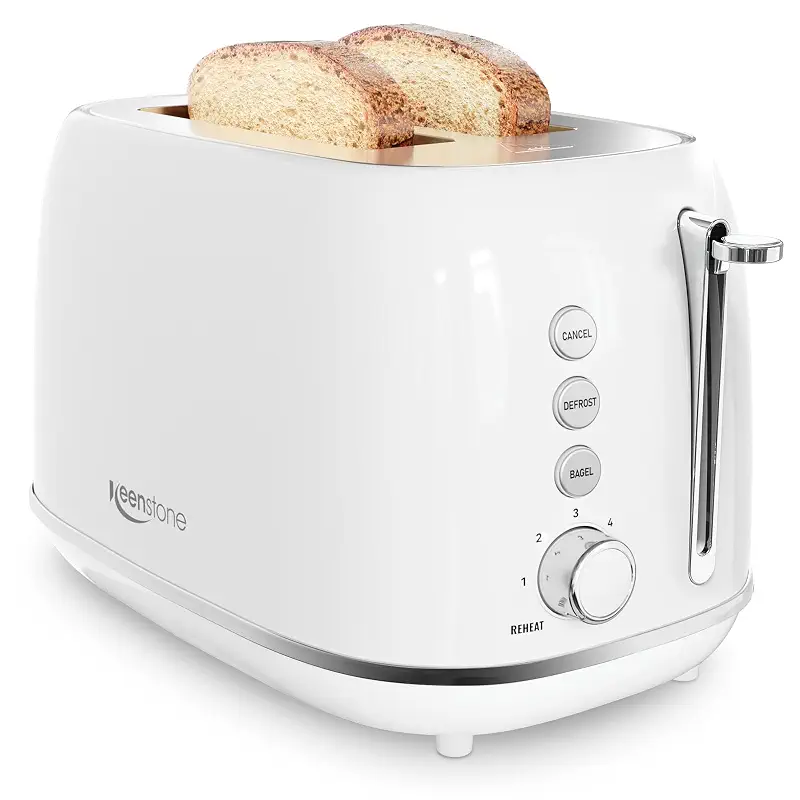
Keenstone's 2-slice model leads with material transparency that sets it apart: the brand explicitly states 18/8 food-grade stainless steel on every surface touching your bread. That specification matters. Food-grade 18/8 resists corrosion from moisture and heat, and owners report no peeling, rust, or odd smells when the toaster heats up. For anyone specifically hunting a non-toxic toaster, that clarity is a selling point.
The retro aesthetic isn't just window dressing; it also means a simpler control scheme. The dial for browning levels is tactile and spacious: you can feel the difference between level 3 and level 4, which makes consistency easier than poking a touch panel. Owners rave about even toasting (a physics problem most toasters never fully solve), and the bagel function delivers on its promise of toasting one side without scorching the other. The 1.5-inch slot width handles most breads comfortably, though sourdough leaves and large handmade loaves might need a quarter-turn trick.
Compared to the Mueller UltraToast, this trades the extra width and four-slice capacity for simplicity and that explicit material guarantee. If your household is two people or you don't routinely toast artisan loaves, the Keenstone's straightforward design and food-grade credentials make it a smarter pick than paying for slots you won't use.
Pros
18/8 food-grade stainless steel explicitly stated
Even toasting across both slots consistently
Retro design fits farmhouse and modern kitchens alike
Bagel function toasts one side without over-browning
Cons
Two-slice capacity limits breakfast for larger families
1.5-inch slots require some artisan loaves to be positioned carefully
Key features
18/8 food-grade stainless steel on all bread-contact surfaces
Six browning settings with precise tactile control dial
Bagel, defrost, reheat, and cancel functions
Removable crumb tray and retractable cord for neat countertop
#3 Pick
Best for Even Browning
GE
GE 2 Slice Stainless Steel Toaster, Extra Wide Slots for Toasting Bagels, Breads, Waffles & More, 7 Adjustable Shade Settings, Removable Crumb Tray, Countertop Kitchen Essentials, 850 Watts
4.3(11,287)
No-frills 2-slice with seven shade settings and consistent heating element that delivers repeatable toast, every time.
Ideal for: Budget-conscious buyers who want seven shade options and consistent results without extra functions or complexity.
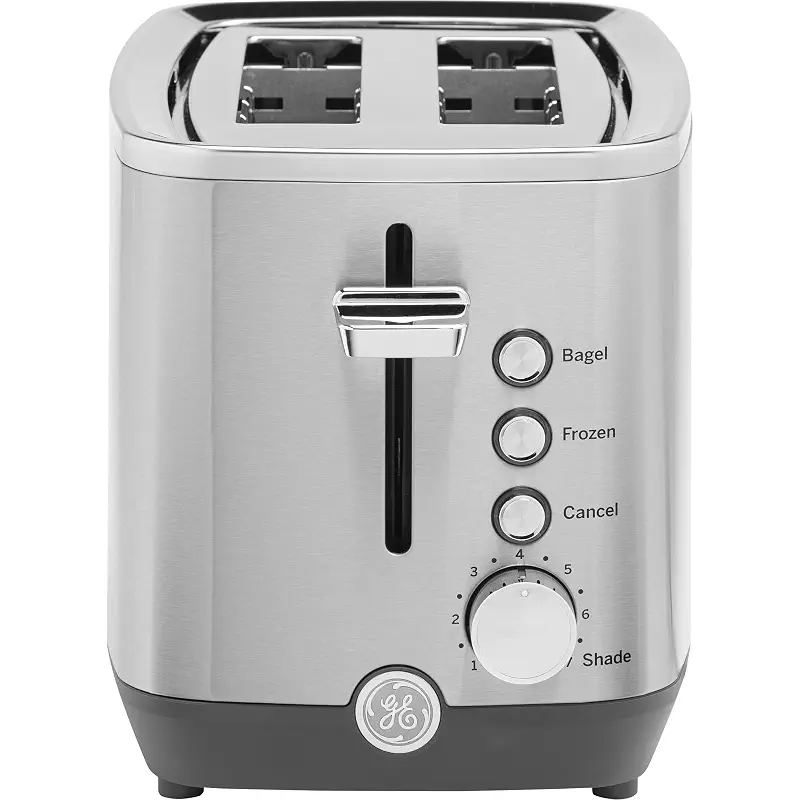
The GE approach is almost retro in its philosophy: no memory settings, no fancy touch controls, just a dial and a lever. That simplicity means fewer parts that fail, and owners consistently praise the heating element for delivering even browning across both slices without the dramatic light-and-dark problem that plagues many competitors. The seven shade options give you more granularity than most two-slice models, and reviewers note that each setting is genuinely distinct rather than bunched together in the middle range.
The extra-wide slots (1.38 inches) handle bagels and thick bread without squeezing, and the 850-watt heating system is strong enough that toast pops up quickly without lingering. The removable crumb tray is easy to empty, and the overall footprint keeps your counter tidy. Where it differs from the Keenstone is the absence of any explicit food-grade material certification. GE lists stainless steel but doesn't break out the grade. That's a minor gap if your primary concern is function over material documentation.
A few owners report uneven toasting after six months to a year, which suggests the heating element can degrade over time. However, the majority of feedback across thousands of reviews points to solid performance during that first 12-month window, making it a reliable choice if you're willing to replace it sooner than you'd hope a toaster would last.
Pros
Seven browning settings with distinct, repeatable levels
Even heating across both slots in normal use
Extra-wide 1.38-inch slots for bagels and thick breads
Durable dial and lever mechanism with minimal moving parts
Cons
Uneven toasting reported by some users after 12 months
No explicit food-grade material certification provided
Key features
Seven adjustable shade settings for precise browning control
Extra-wide slots measuring 1.38 by 5.5 inches
850-watt heating element for quick, consistent toasting
Removable crumb tray and sleek stainless steel finish
#4 Pick
Best Four-Slice for Families
Lainsten
Toaster 4 Slice Retro Stainless Steel,Best Prime 4 Slice Toaster Wide Solt with 7 Shade Settings, Perfect for Waffles, Bagels and More Lainsten T-527
4.4(3,134)
Four-slice retro toaster with full stainless steel body, 1.5-inch wide slots, and anti-jam safety features for busy breakfast routines.
Ideal for: Families needing four slots with a retro look and straightforward dial-and-lever controls.
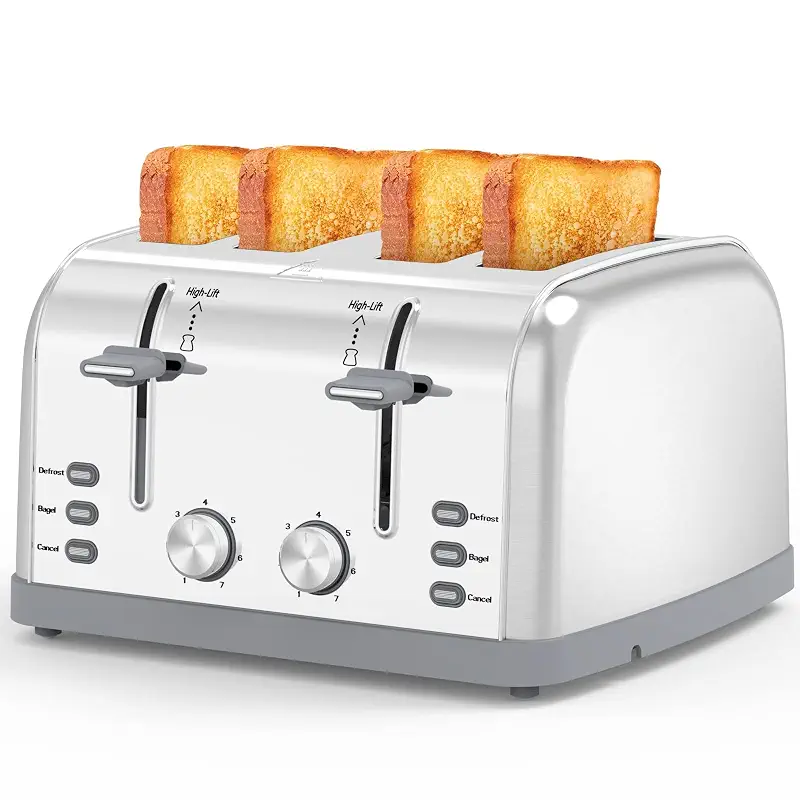
Lainsten's 4-slice model fills a niche the GE leaves open: you want four slots with the retro aesthetic and robust stainless steel construction without the premium pricing. The extra-wide 1.5-inch slots are designed to fit artisan bread, bagels, and waffles, and the anti-jam function prevents the common frustration of bread getting stuck halfway through the toasting cycle. Owners report even browning on both sides and appreciate the high-lift design, which means small items like English muffins don't require fishing with a butter knife.
The seven browning levels and rotating gear button feel tactile and less finicky than touch controls. The integrated bagel function lets you toast one side if you're in a rush, and the defrost mode works for frozen bread without turning it into charcoal. The retro aesthetic is genuine stainless steel (not spray-painted plastic), and buyers mention the toaster matches other kitchen appliances well. One owner noted the toast sometimes pops out with enthusiasm, which is more of a feature announcement than a flaw; it means the spring mechanism has real tension.
Where the Lainsten differs from the Mueller UltraToast: you get the same 1.5-inch slot width but lose the narrower profile and memory recall. If your kitchen has room for a wider toaster and you're not adjusting browning level multiple times daily, the Lainsten's simpler controls and four-slice capacity make it a solid choice for families. That said, the Mueller's memory feature is handy if you're toasting at the same level every morning.
Pros
Four-slice capacity for batch toasting without multiple cycles
Anti-jam and high-lift features for safe, easy operation
1.5-inch extra-wide slots for bagels and artisan bread
Full stainless steel body with genuine retro aesthetic
Cons
No memory recall for browning settings like the Mueller offers
Toaster width exceeds standard compact models
Key features
Full stainless steel construction with anti-jam safety function
1.5-inch extra-wide slots for thick breads and bagels
Seven browning levels with rotating gear control
High-lift design and defrost, bagel, cancel functions
#5 Pick
Best for Small Kitchens
Bella
bella Fits-Anywhere™ Slim Toaster, 4 Slice Extra Long & Wide Slot, Oatmilk
4.2(19,138)
Slim 4-slice toaster with a unique 10-inch long slot, space-saving 6.14-inch profile, and consistent heating for artisan bread.
Ideal for: Small-kitchen households wanting four-slice capacity without sacrificing counter space, especially those toasting artisan or long-form breads.
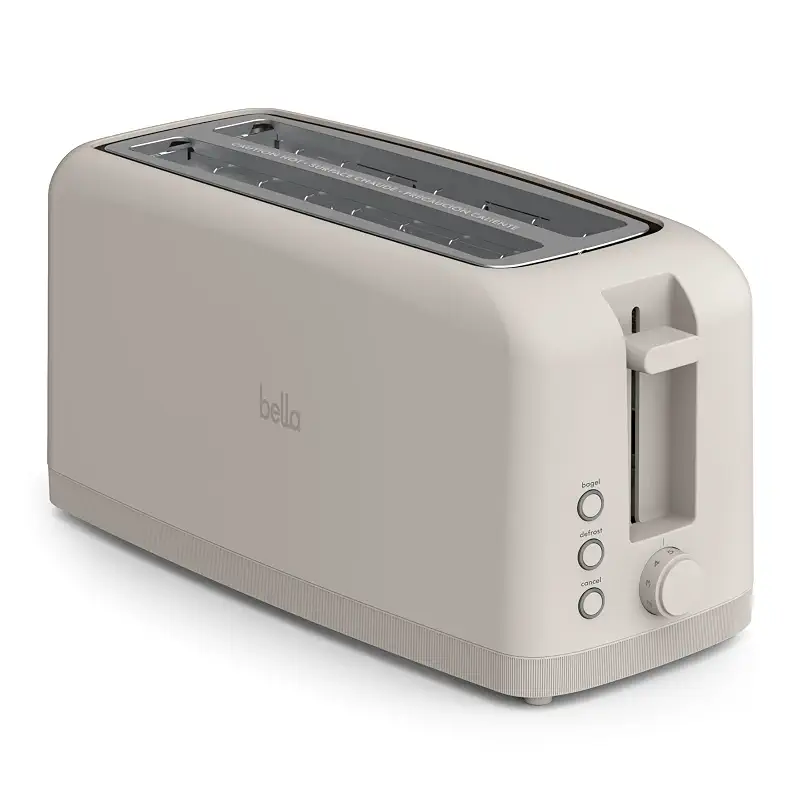
The Bella Slim toaster solves a specific problem: four-slice capacity without the typical footprint. At 6.14 inches wide, it occupies less counter real estate than standard four-slice models, which matters if your kitchen is tight or you're trying to fit matching appliances side by side. The 10-inch long slot is the standout feature; it lets you toast two square slices side by side or one extra-long piece of artisan bread without cutting or rotating mid-toast. That's genuinely useful if you're buying whole boules or working with baguettes regularly.
Owners consistently report even, consistent browning, and the six browning levels with cancel and reheat functions cover most breakfast scenarios. The high-lift lever is particularly praised for retrieving English muffins or croissants without burning your fingers. The removable crumb tray is accessible and easy to clean. The 900-watt heating system delivers quick results, and reviewers who've owned toasters for decades note this one ranks among the better-performing models they've used.
Where the Bella differs from the Lainsten 4-slice: you gain a narrower profile and the ability to toast two slices side by side, but lose the anti-jam function and explicit anti-corrosion material certification. One owner mentioned wishing the crumb tray access faced the other direction for their setup, a minor design point but worth considering if your toaster will sit at the end of a counter. The plastic components that show in some materials are a trade-off for achieving that slim profile; if durability and all-metal construction are your priority, the Lainsten's full stainless steel body might be the better call. For most kitchens balancing space and performance, the Bella covers breakfast alongside a best non toxic waffle maker without hogging counter room.
Pros
Slim 6.14-inch profile saves counter space versus standard toasters
Ten-inch long slot fits two square slices or one artisan loaf side-by-side
Six browning levels with cancel and reheat functions
High-lift lever for safe retrieval of small items
Cons
Plastic components visible in construction versus all-metal models
Crumb tray access positioning may not suit all counter arrangements
Key features
Unique 10-inch long slot for two-slice-wide or artisan bread toasting
Slim 6.14-inch profile fits tight kitchens without sacrificing capacity
900-watt heating system for quick, consistent browning
High-lift lever, auto-centering guides, and removable crumb tray
How to Choose a Non-Toxic Toaster
Four trade-offs that actually matter when matching a non toxic toaster to your kitchen.
What Makes a Toaster Non-Toxic
Food-grade stainless steel is the material standard you're looking for. The best models use 18/8 stainless steel (18 percent chromium, 8 percent nickel) on all surfaces that touch bread; this grade resists corrosion, doesn't chip or peel, and won't leach into food when heated. When shopping, check whether the brand explicitly states the grade and which parts use food-grade material. Some toasters use stainless steel exterior but cheaper metals inside the heating chamber, not ideal if safety is your priority. The food-grade stainless steel standards document covers material specs in depth, but the quick version: verified food-grade certification, no plastic heating components, and no coatings that flake or discolor over time are your red flags to watch.
Capacity and Slot Size
How much bread do you toast at once, and what types? Two-slice models work for couples or light toasters; four-slice for families or batch breakfast prep. Slot width matters equally: anything under 1.4 inches forces you to cut thick artisan loaves, bagels, or English muffins before toasting. Wide slots (1.5 inches and up) let you toast a sourdough boule or homemade loaf whole, which means better crust texture and no extra prep. Consider how you actually use bread; if you're grabbing thick slices from a fresh loaf daily, a narrow slot becomes annoying fast. If you're mostly toasting sandwich bread, standard width is fine.
Heating System and Even Browning
Cheap toasters have a single heating element doing all the work, which leads to one side golden and the other pale. Better models distribute heat across the slot width and depth so browning is consistent. Look for descriptions like 'dual heating elements' or 'intelligent heating technology.' The number of browning settings (six or seven is typical) matters less than whether each setting is truly distinct; if levels 1, 2, and 3 all look the same on toast, the granularity doesn't help. Owner reviews are your best indicator here: read whether people consistently get the browning they expect, not just whether the toaster exists.
Special Functions You'll Actually Use
Defrost, bagel, reheat, and cancel buttons show up on most models, but not all are equally useful. Defrost heating is legitimately valuable if you eat frozen waffles or bread regularly; it warms without over-browning. Bagel function toasts one slot's heating element for one side only, which makes sense if you eat bagels daily. Reheat warms cold toast without adding browning, a small nicety. Cancel lets you stop mid-toast if something's burning. Memory recall (remembering your preferred browning level between uses) is a convenience feature that saves you dialing in the same setting every morning. Skip anything marketed as AI-powered or app-controlled; toaster controls haven't needed software in fifty years and don't need it now.
Durability and Design Longevity
Stainless steel toasters age better than painted finishes because fingerprints and scratches are less visible on the brushed surface. The lever and dial mechanisms wear with use; plastic levers snap more easily than metal ones, so check whether reviews mention reliability after 12 months or longer. Cord storage and removable crumb trays add maybe thirty seconds to maintenance, but they keep your appliance cleaner and your counter tidier. The best way to choose a non-toxic toaster is to examine ownership reports specifically for mentions of durability at the six-month, one-year, and eighteen-month marks to get a real sense of longevity. Brands with responsive customer support will also help you troubleshoot early issues before they become reasons to buy a replacement.
Frequently asked
Quick answers to the questions readers ask most.
Can stainless steel toasters rust or corrode?
Food-grade 18/8 stainless steel resists rust and corrosion very well, even with regular heating and exposure to moisture from bread. Cheaper stainless grades (like 430) are more prone to discoloration and can degrade over time. If you're prioritizing non-toxic materials, confirm the toaster uses 18/8 or better. Regular cleaning of the exterior and ensuring the crumb tray is emptied weekly prevents moisture buildup inside the heating chamber, which further protects the internal components from any corrosion.
Do non-toxic toasters actually perform differently than standard ones?
Not dramatically, but material quality affects longevity and safety. A well-designed toaster with food-grade stainless steel and proper heating elements delivers consistent browning and lasts longer than one with cheaper metals or plastic components. The performance difference shows up over time; a quality non-toxic toaster from a trusted brand usually maintains even browning for 12 to 18 months, while budget models sometimes develop heating inconsistencies sooner. The real advantage is peace of mind knowing what's touching your food.
What's the difference between 'stainless steel' and 'food-grade stainless steel'?
Not all stainless steel is food-safe. Food-grade stainless steel (typically 18/8, meaning 18 percent chromium and 8 percent nickel) meets strict standards for non-corrosion and non-reactivity with food. Cheaper stainless grades can contain higher nickel content or other alloys that may leach into food over time, especially when heated. Always look for explicit mentions of food-grade or 18/8 certification. If a toaster just says 'stainless steel body' without specifying the grade, contact the brand for clarification before buying.
How often should I clean the inside of my toaster?
Empty the removable crumb tray at least weekly, or whenever it looks full. For the internal heating chamber, unplug the toaster and turn it upside down over a sink or trash bin, then gently tap the bottom to dislodge loose crumbs. Never use water or cleaning tools inside the toaster while plugged in, and avoid inserting anything into the slots. Keeping crumbs cleared prevents buildup that can affect heating performance or create a fire hazard. A clean toaster also maintains the integrity of the heating elements and electrical components longer.
Can I toast items other than bread in a non-toxic toaster?
Yes, but with caution. Bagels, English muffins, frozen waffles, and pastries work fine in most toasters with wide slots and defrost settings. Avoid anything with toppings, spreads, or fillings that might melt and drip onto the heating elements; that includes pop-tarts and frosted pastries. Never force oversized items into narrow slots, as that can damage the bread guides or heating chamber. Most toasters include a bagel function that addresses one-sided toasting; use it for items where you want toasting on just one surface.