Ideal for: Families cooking rice multiple times per week who want ceramic safety and multi-function versatility.
The Cosori 10-cup model stands out because it delivers on both safety and performance. The ceramic nonstick interior means no PFAS worries, and owners consistently report rice that comes out fluffy and evenly cooked, even across mixed grains or brown rice varieties. Fuzzy logic technology adapts to humidity and heat fluctuations automatically, so you get reliable results whether you're in Denver or coastal California. The 24-hour keep-warm function is genuinely useful for families eating at staggered times, and the ability to sauté, slow-cook, and steam vegetables adds real utility beyond rice alone.
What I appreciate is the honesty in reviews: this cooker does take longer than stovetop rice (about 50 minutes for some varieties), but owners accept that trade-off because they don't have to watch it and cleanup is straightforward. The ceramic pot is dishwasher-safe, and the stainless steel steamer basket adds practical value. Compared to budget competitors, this model justifies its cost through durability and consistent performance that reviewers report holding steady after years of regular use.
The only legitimate caveat is size: at just over 12 inches wide, it's not as compact as the GreenLife models, so measure your counter space before ordering. If you have room and cook rice multiple times weekly, this is the safest long-term investment in the lineup.
Pros
Fuzzy logic adjusts cooking to humidity and heat automatically
Ceramic nonstick pot is PFAS-free and dishwasher-safe
Ideal for: Apartment dwellers, solo cooks, or small families prioritizing counter space and non-toxic materials.
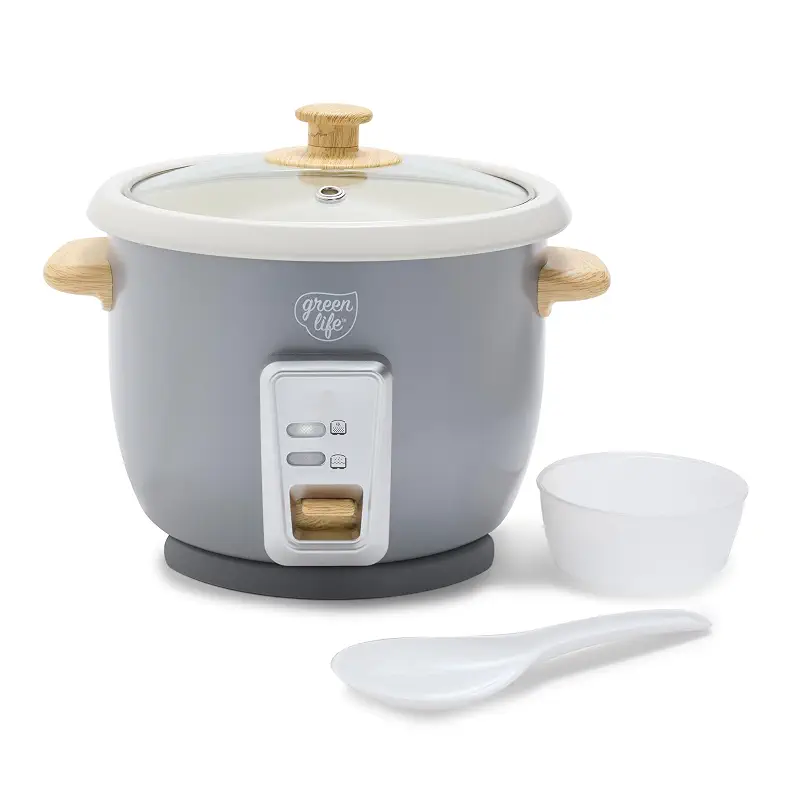
GreenLife's 6-cup cooker solves a real problem: you want ceramic nonstick safety but don't have counter real estate or need industrial capacity. The removable PFAS-free ceramic pot means you can cook rice right in the base and serve straight from it, and the compact design actually fits on a shelf or counter corner. One owner praised the lid design where the pot rim overlaps the unit, preventing spills onto the heating element like some cheaper models allow.
Where this model shines for its category is simplicity. No digital display, no preset buttons, just white-rice and brown-rice switches. That directness appeals to cooks who want fewer things to break and faster cleanup. The cool-touch handles and heat-resistant exterior are practical details that show thoughtful design.
However, reviewers flag a real trade-off compared to the Cosori: rice can cook unevenly, with some batches coming out soft in the center but firmer at edges. One user reported struggling with consistency despite following instructions carefully, and a few owners mentioned rice burning at the bottom occasionally. If you're willing to experiment with water ratios and accept that this cooker demands a bit more attention than a fuzzy-logic model, the trade-off for compact size and PFAS-free ceramic is worth it. For comparison, the best pan to cook rice on a stovetop gives you more control over heat distribution, but this compact model trades that adaptability for set-and-forget convenience.
Pros
Ultra-compact footprint fits tight kitchens and shelves easily
PFAS-free ceramic nonstick coating, removable and dishwasher-safe
Simple one-touch white and brown rice settings, no learning curve
Removable pot doubles as serving dish, reducing cleanup dishes
Cons
Rice can cook unevenly or inconsistently between batches
No fuzzy logic; requires manual adjustment to water ratios for best results
Key features
PFAS-free ceramic nonstick removable inner pot
One-touch white or brown rice cooking with auto keep-warm
6-cup cooked capacity, 3-cup uncooked rice maximum
Cool-touch side handles and heat-resistant exterior
Includes measuring cup, rice paddle, and dishwasher-safe parts
#3 Pick
Best with Digital Presets
GreenLife
GreenLife Digital Rice Cooker, 2-Cups Uncooked/4-Cups Cooked, White | PFAS-Free Ceramic Nonstick Coated 1.5QT Pot, One-Touch Presets, Oats, Quinoa, Brown Rice, Auto Warming, Fuzzy Logic Tech
4.3(4,679)
Compact digital cooker with one-touch presets for multiple grains and fuzzy logic technology in a PFAS-free ceramic package.
Ideal for: Small households wanting digital convenience and multiple grain presets with compact storage.
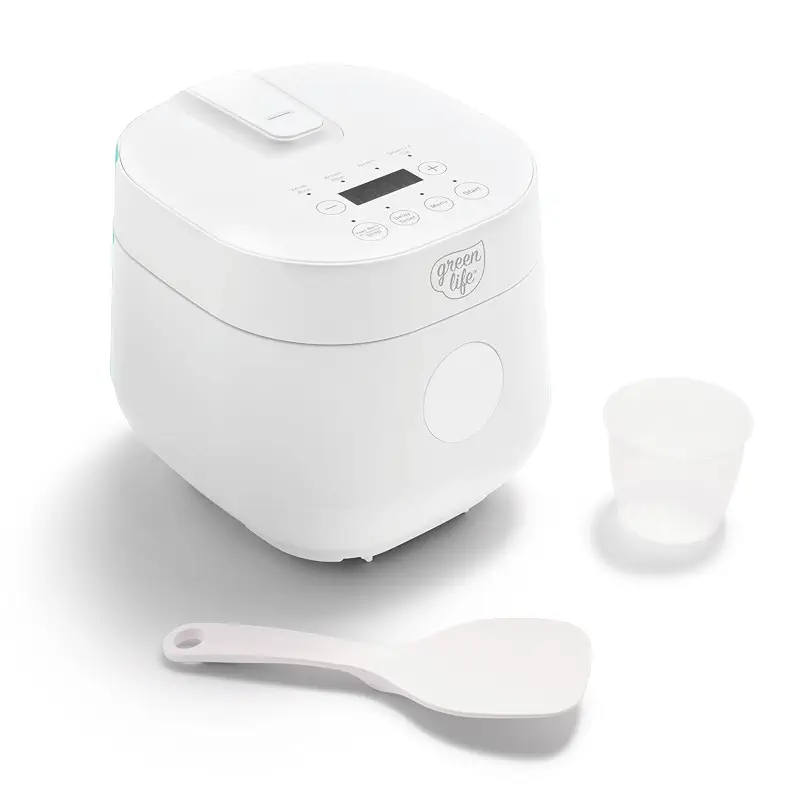
GreenLife's digital model bridges the gap between simplicity and smart cooking. It offers one-touch buttons for white rice, brown rice, quinoa, and steel-cut oats, plus a delay timer so you can set it in the morning for dinner-time rice. The 4-cup cooked capacity is roomy enough for a small family without taking up the space of the Cosori. Fuzzy logic means it adapts automatically to environmental factors, so you should get more consistent results than the one-switch model next to it.
Owners report that white rice comes out fluffy in about 25 minutes and brown rice in 50 minutes, which aligns with user expectations. The LED display is readable, and the ceramic nonstick interior keeps PFAS chemicals off your plate. Cleanup is straightforward because the pot is removable and dishwasher-safe.
The significant caveat here is durability. One careful user reported the ceramic nonstick coating beginning to chip after just three months of gentle use and hand-washing. She then discovered the company won't sell replacement inner pots separately and classified minor chipping as "normal." That's a red flag if you plan to own this cooker for years. The GreenPan Advanced model below addresses this with sturdier ceramic, so if longevity matters to you, consider that option instead.
Pros
Fuzzy logic technology adjusts for consistent results across grain types
One-touch presets for white rice, brown rice, quinoa, steel-cut oats
LED display with delay timer lets you schedule cooking in advance
PFAS-free ceramic nonstick, removable pot is dishwasher-safe
Cons
Ceramic coating can chip within months of careful use and hand-washing
No replacement inner pots available separately from manufacturer
Key features
PFAS-free ceramic nonstick coating derived from sand
Fuzzy logic microprocessor automatically adjusts temperature and timing
LED display with one-touch presets and delay timer function
4-cup cooked capacity with measuring cup and serving spatula
Dishwasher-safe removable inner pot and heat-resistant exterior
#4 Pick
Best Family-Sized
GreenPan
GreenPan Advanced Rice Cooker, 4-Cups Uncooked/8-Cups Cooked, Removable Nonstick Ceramic PFAS-Free Pot, White & Brown Rice, Family Sized, Quick Cook in 25mins, 6 Presets, Fuzzy Logic Tech, Clay
4.7(9)
Larger-capacity PFAS-free cooker with quick-cook option and fuzzy logic, designed for households cooking 4+ servings at once.
Ideal for: Families of 4+ or meal-prep cooks needing larger batches and quick-cook convenience.
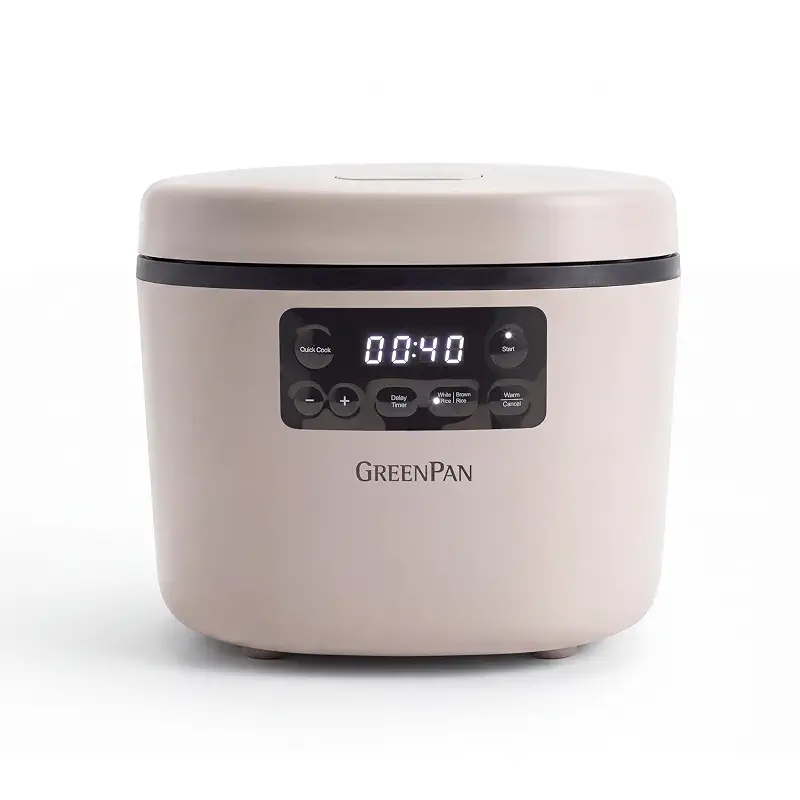
GreenPan's Advanced model jumps to 8-cup cooked capacity, which is substantial enough for a family of four or a meal-prep Sunday. It keeps the PFAS-free ceramic nonstick and adds six one-touch presets including a quick-cook white rice function that finishes in 25 minutes. The fuzzy logic technology adjusts for consistent texture, and the delay timer means you can prep in the morning and have rice ready by dinner.
Reviewers rave about daily use and quick cooking times. One owner with a family of four says they use it every single day and appreciate not having to worry about toxic coatings while feeding kids. The quick-cook function genuinely saves time when you're in a rush, and the larger capacity means one batch covers multiple meals without reheating.
This model addresses the durability concern I flagged with the smaller GreenLife digital: owners report robust construction and no premature coating wear in early reviews. One caveat from the limited review sample is that overfilling beyond recommended ratios can cause boiling over, so measure carefully. The stainless steel steamer basket from the Cosori isn't included here, so you lose that multi-function versatility, but if you just want larger-volume rice with non-toxic certainty, this delivers. Those cooking the best korean rice cooker styles will appreciate that this model's fuzzy logic handles different rice varieties consistently, making it adaptable for Asian cuisine preparation.
Pros
8-cup cooked capacity handles family-sized portions in one batch
Quick-cook white rice in 25 minutes without sacrificing fluffiness
PFAS-free ceramic nonstick and fuzzy logic for consistent results
Delay timer and six one-touch presets simplify daily cooking
Cons
Can boil over if water ratios exceed recommended amounts
Limited multi-function capability; focused on rice and grains only
Key features
PFAS-free ceramic nonstick pot designed for long-lasting wear resistance
8-cup cooked rice capacity, up to 4 cups uncooked at once
Six one-touch presets including quick-cook white and brown rice
Fuzzy logic technology adjusts temperature and timing automatically
Delay timer, warm function, LED display, and dishwasher-safe removable pot
#5 Pick
Best Non-Coated Option
Elite Gourmet
Elite Gourmet ERC006SS 6-Cup Electric Rice Cooker with Stainless Steel Inner Pot, Makes Soups, Stews, Porridges, Grains and Cereals, 6 cup (3 cups uncooked), Black
4.2(1,802)
Simple stainless steel cooker for health-conscious cooks willing to trade convenience for the certainty of zero chemical coatings.
Ideal for: Health-focused cooks prioritizing zero-chemical materials over convenience, or frequent rice eaters.
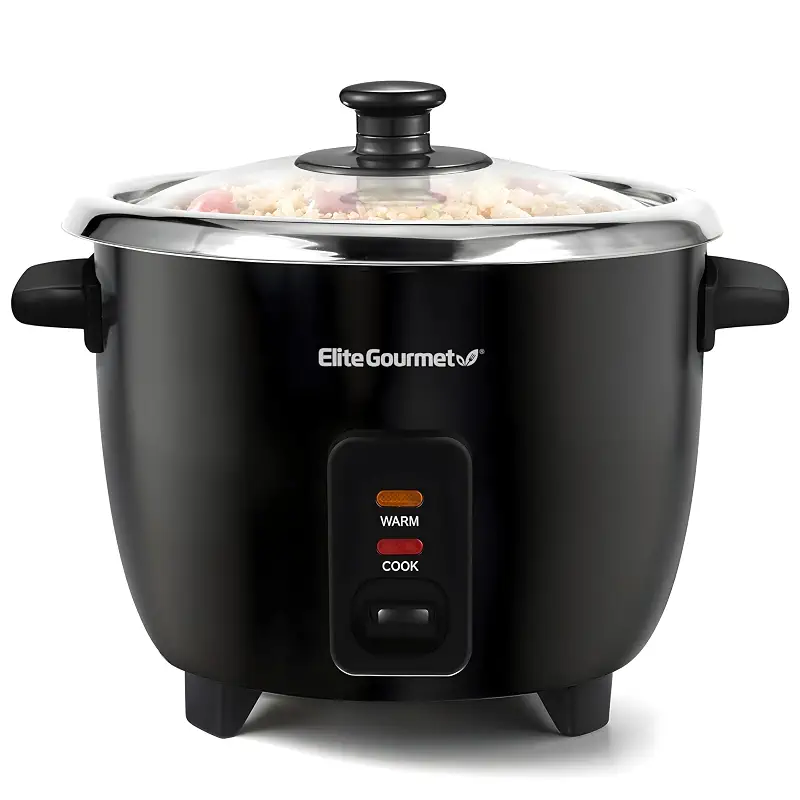
Elite Gourmet's 6-cup cooker takes a different approach: no ceramic coating, no fuzzy logic, just a solid stainless steel pot and basic heat. If you're concerned about any coating degrading or leaching over time, this eliminates that entire category of worry. Surgical-grade 304 stainless steel doesn't require adhesives or primers, so there's nothing to chip or peel. You get durability that outlasts most coated models.
Owners who prioritize this approach report the cooker is genuinely reliable and easy to clean, with a substantial bottom that distributes heat evenly. One reviewer specifically compared it favorably to a high-end Zojirushi in terms of build quality, noting the stainless construction feels like an investment rather than a disposable appliance. For Asian households or anyone eating rice multiple times weekly, the permanence of stainless steel appeals strongly.
The trade-off is real: rice sticks to stainless steel, requiring soaking after cooking if you don't want scrubbing. You'll need to dial in your water-to-rice ratio through trial and error because there's no fuzzy logic to adapt. It's also louder than digital models and lacks keep-warm consistency some users depend on. If you're comfortable with stovetop-level attention but want the convenience of a hands-off appliance, this delivers non-toxic certainty at a budget price. Compared to ceramic cookers, you sacrifice ease for absolute safety.
Pros
Surgical-grade 304 stainless steel pot has zero coating or chemical risk
Durable construction designed to outlast coated alternatives
Simple on-off switch with no learning curve or failed presets
Removable lid and substantial bottom allow even heating without fancy tech
Cons
Rice sticks to stainless steel, requiring overnight soaking or vigorous scrubbing
No fuzzy logic or presets; requires manual water-ratio experimentation
Key features
Removable surgical-grade 304 stainless steel inner pot, no coatings
6-cup cooked capacity, 3-cup uncooked rice maximum
Simple cook and warm toggle switch with tempered glass lid
Cool-touch exterior handles prevent burns during operation
Includes measuring cup and serving spatula; heats quickly in 20-30 minutes
How to Choose a Non-Toxic Rice Cooker
Four trade-offs that actually matter when matching a non toxic rice cooker to your kitchen.
Understanding Non-Toxic Coatings
When manufacturers claim PFAS-free ceramic, they're replacing traditional fluorinated nonstick (like PTFE or PFOA) with ceramics derived from natural minerals. The ceramic versus stainless steel pots each carry distinct advantages: ceramic offers nonstick convenience with chemical-free materials, while stainless steel eliminates coating concerns entirely but requires more elbow grease during cleanup. Learning about these options helps you understand the actual trade-off between convenience and material certainty. PFAS-free ceramic sits in the middle, offering nonstick release without chemical additives, though your mileage depends on usage intensity.
Fuzzy Logic vs. Simple Heating
Fuzzy logic cookers use microprocessors to monitor temperature and humidity, automatically adjusting the cooking cycle for consistent results. This matters most if you cook multiple rice types or live in climate extremes. Simple one-switch cookers are more durable (fewer things break) and easier to repair, but they demand you master water ratios through trial and error. If you cook rice just once or twice weekly and enjoy tinkering, simple is fine. If you cook several times weekly and want set-it-and-forget-it reliability, fuzzy logic pays for itself in reduced stress and better outcomes.
Capacity and Counter Space
Rice cooker size directly impacts how you store and use it. A 10-cup model feeds a large family but dominates countertop real estate; compact 4-cup models fit apartments but require cooking twice for leftovers. Consider your household size and how often you cook. If you meal-prep Sunday rice for the week, larger capacity saves time. If you live alone or in a dorm, compact models make sense. The Cosori is best overall but takes substantial space. GreenLife and GreenPan options provide flexibility for tight kitchens without sacrificing safety standards.
Multi-Function vs. Rice-Only Focus
Some cookers offer 18 preset functions (steaming, slow-cooking, sautéing); others do rice and little else. Multi-function models cost more but justify the investment if you use them for oatmeal, quinoa, soups, or steamed vegetables regularly. If you want one appliance handling multiple meals, the Cosori's versatility pays off. If you cook rice specifically and have separate tools for other tasks, a rice-focused model reduces kitchen clutter. Think honestly about whether you'll use those extra functions or whether they're marketing noise that drives up price without changing your actual cooking.
Frequently asked
Quick answers to the questions readers ask most.
What does PFAS-free ceramic nonstick actually mean?
PFAS refers to a class of fluorinated chemicals historically used in nonstick coatings. PFAS-free ceramic replaces those chemicals with minerals like sand-derived coatings that work through mechanical bonding. This eliminates the chemical additives many health-conscious cooks want to avoid. Unlike traditional nonstick, ceramic coatings can chip if scraped aggressively, but they won't leach PTFE or PFOA into your food. The trade-off is durability and ease of use for material peace of mind.
Is stainless steel rice really that much harder to clean?
Yes, stainless steel requires more post-cook work than ceramic or nonstick. Rice sticks to uncoated steel, so most owners soak the pot overnight or scrub after each use. The payoff is that stainless never degrades, peels, or needs replacement, and there's zero risk of coating chemicals. If you cook rice multiple times weekly, that extra cleanup adds up; for occasional use, it's manageable and worth the durability.
Can I replace the inner pot if it gets damaged?
This varies by brand and is a common frustration. Cosori and Elite Gourmet design their pots for easy replacement, though parts may be harder to find over time. GreenLife has been less transparent about replacement availability, so check with customer service before buying if pot longevity matters to you. The stainless steel models eliminate this problem entirely since there's no coating to degrade.
How much longer does a cooker take than stovetop rice?
Most electric rice cookers take 25-50 minutes depending on rice type and fuzzy logic features. Stovetop typically takes 15-20 minutes once water boils. The time difference reflects the cooker's gentler, lower heat, which produces fluffier results. The real value isn't speed; it's that you can walk away and forget about it rather than monitoring a pot and worrying about boilover.
Do I need fuzzy logic if I eat rice a few times per month?
No. Fuzzy logic is insurance against inconsistency and adapts to environmental factors. If you cook rice infrequently, the simpler one-switch models let you dial in a water ratio that works and repeat it reliably. Fuzzy logic justifies its cost when you're cooking multiple rice varieties or several times weekly and want automation. For occasional use, the GreenLife one-switch model or Elite Gourmet stainless steel covers your needs at lower price.