Best Non Teflon Rice Cooker: Stainless Steel & Ceramic Options
Find the best non Teflon rice cooker with stainless steel or ceramic pots. Compare top models for healthy cooking without PFAS, PFOA, or toxic coatings.
Ideal for: Couples and small families who want no-fuss cooking and value pure stainless steel durability.
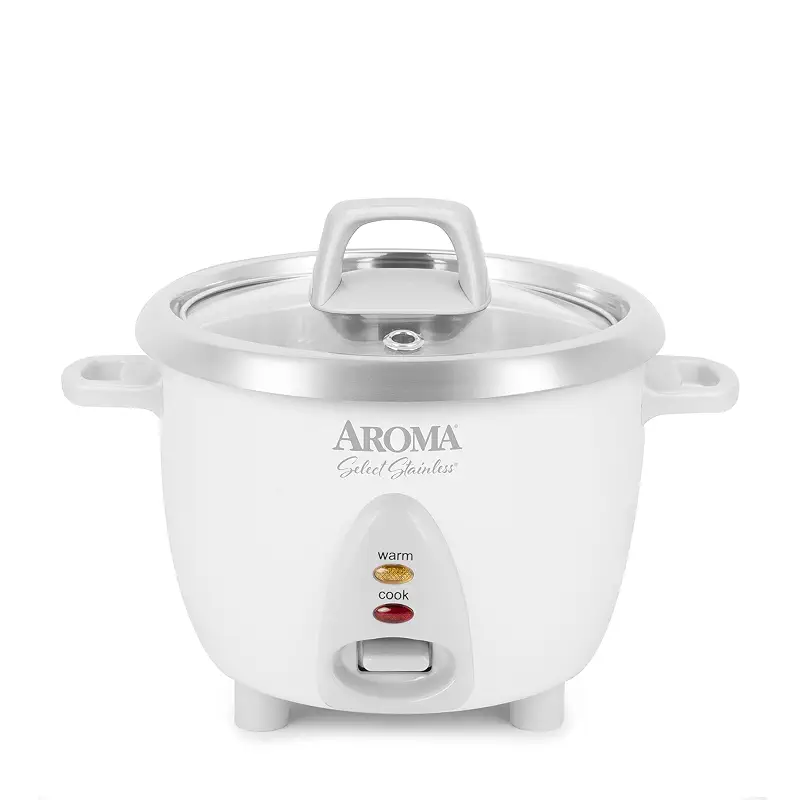
The Aroma Select Stainless delivers what you're looking for: a food-grade 304 stainless steel inner pot with no coatings at all. One lever, automatic heat sensing, and that's it. Buyers consistently praise how well the rice comes out, and the dishwasher-safe pot is a genuine convenience. The stainless steel does mean rice can stick to the bottom if you leave it on the warm setting too long, but reviewers report this is easy to manage by unplugging after cooking finishes.
For a household that eats rice several times weekly, this straightforward design makes sense. It cooks 1 to 3 cups of uncooked rice and shifts to keep-warm automatically. Where this trails the Martha Stewart model is sheer capacity and cooking modes, but that simplicity is also its strength. Many owners who ditched older Teflon-coated Aroma cookers upgraded to this exact pot, and it performs comparably to a best korean rice cooker in terms of consistent results, though without the specialized modes.
One thing to weigh: some users report minor splattering from the steam vent during cooking, which is normal starch behavior but worth knowing. The included spatula and measuring cup are handy, and the pot is available as a replacement part at a modest cost.
Pros
Food-grade 304 stainless steel inner pot, no coatings
Dishwasher-safe pot and simple one-touch operation
Replacement stainless steel pot available cheaply
Cons
Rice can stick to bottom if left on warm too long
Smaller capacity compared to other models here
Key features
304 stainless steel inner pot, fully removable and dishwasher safe
One-touch lever operation with automatic heat sensing
3-cup (uncooked) capacity, cooks rice in roughly 20-25 minutes
Automatic keep-warm mode after cooking cycle ends
#2 Pick
Best Ceramic Nonstick: PFAS-Free Easy Cleanup
Aroma
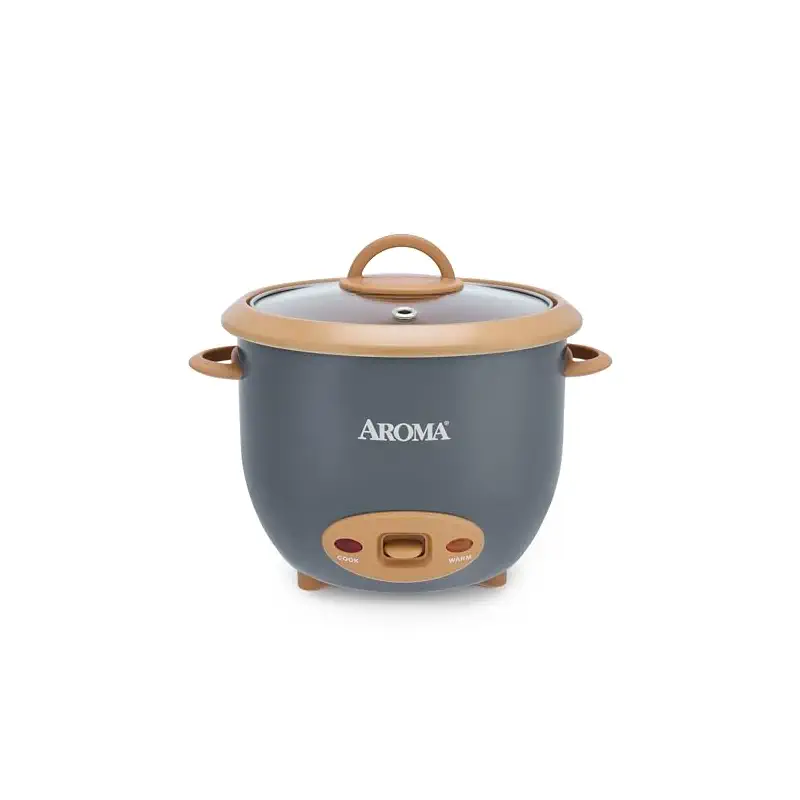
AROMA® 6-Cup (Cooked) One-Touch Pot Style Rice Cooker with CoreCoat™ PFAS-Free Nonstick Ceramic Surface (1.5 Quarts)
4.3(2,426)
CoreCoat ceramic surface avoids PFAS while maintaining genuine nonstick performance and straightforward operation.
Ideal for: Small households seeking PFAS-free ceramic nonstick without complexity or premium pricing.
The Aroma 6-Cup with CoreCoat ceramic represents a middle ground between bare stainless and traditional nonstick. CoreCoat is ceramic-bonded and explicitly free of PFAS, PFOA, lead, and cadmium, so you get that safety assurance. I find this appealing for buyers who want some nonstick convenience but won't accept fluorinated coatings. The ceramic surface feels durable in owner hands, and cleanup is noticeably easier than stainless steel, though not as maintenance-free as you might expect.
This cooker shares the Aroma Select's simplicity but adds a 6-cup cooked capacity, making it better for small families or meal prep. Owners report consistent, fluffy rice with minimal fuss. Compared to the Martha Stewart 8-Cup, you're trading capacity and preset modes for a lower price point and a more compact footprint. The ceramic pot lifts rice off easily, and most users find a quick rinse sufficient after each use.
One caveat: ceramic surfaces, while durable, can still develop wear over years of daily use. Some reviewers note that after extended cooking cycles, keeping warm for long periods can cause rice to stick slightly, similar to stainless steel. The included steaming tray adds versatility for cooking alongside rice.
Pros
CoreCoat ceramic surface with no PFAS or PFOA
Natural nonstick feel, rice lifts cleanly
Affordable entry point to ceramic-coated cookers
Cons
Ceramic can show wear after years of daily use
Smaller capacity than Martha Stewart model
Key features
PFAS-free CoreCoat ceramic inner pot surface
One-touch auto-cook with LED warm indicator
6-cup cooked capacity, fits 3 cups uncooked rice
Includes steaming tray, spatula, and measuring cup
#3 Pick
Best Premium & Versatile: Fuzzy Logic with Multiple Modes
Martha Stewart
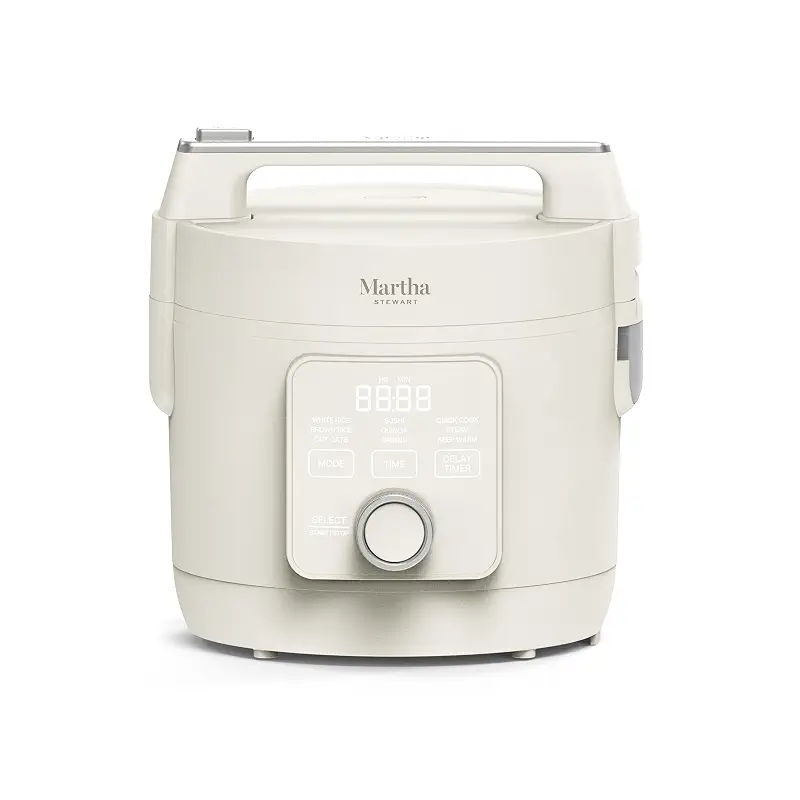
Martha Stewart 8 Cup Cooked (4 Cup Uncooked) Rice Cooker & Steamer, Linen | PFAS-Free Ceramic Nonstick Removable Pot, 9 Modes, Keep Warm, Steamer, White & Brown Rice, Quinoa, Grains, Oats, Easy Clean
4.4(146)
Eight-cup ceramic cooker with smart temperature control, delay timer, and nine cooking presets for rice, grains, oats, and steaming.
Ideal for: Families of four or home cooks who cook multiple grains and want preset convenience plus PFAS-free ceramic.
The Martha Stewart 8-Cup is a step up in features and capacity. It pairs a PFAS-free ceramic inner pot with fuzzy logic technology, which adjusts temperature and timing in real time based on cooking variables. I think this appeals to households that rotate between rice, quinoa, brown rice, steel-cut oats, and steaming vegetables, because the preset modes eliminate guesswork. Buyers consistently praise how evenly the rice comes out, and the LED touch interface is genuinely intuitive.
Compared to the simpler Aroma models here, you're paying more for capacity and automation. The eight-cup size suits families of four or meal-preppers who want to cook once and eat multiple times. The delay timer lets you load the cooker before work and have dinner ready at a set time. Owners find the ceramic pot performs well over time, and the nonstick surface is noticeably less sticky than bare stainless steel, making cleanup faster.
One honest note: a small number of buyers report water seeping from the lid during early use, though most experience no issues. The bowl can hold more volume than some users expect, so measuring correctly matters. The versatility here genuinely justifies the premium for busy households that appreciate both a dedicated rice cooker and the ability to prepare grains with the same device, much as a pan to cook rice serves a specific niche but this multi-mode cooker replaces the need for several tools.
Pros
Eight-cup capacity handles family meals and meal prep
Nine cooking modes including brown rice, quinoa, steel-cut oats
Fuzzy logic auto-adjusts temperature for perfect results
Cons
Higher price than smaller models in this lineup
Water can occasionally seep from lid on first use
Key features
PFAS-free ceramic nonstick inner pot with 8-cup capacity
Fuzzy logic technology adapts cooking time and heat automatically
Delay timer up to 24 hours and 12-hour keep-warm function
Nine preset modes for white rice, brown, quinoa, oats, grains, steam, more
#4 Pick
Best for Rice Enthusiasts: Compact Micom with Specialty Settings
Zojirushi
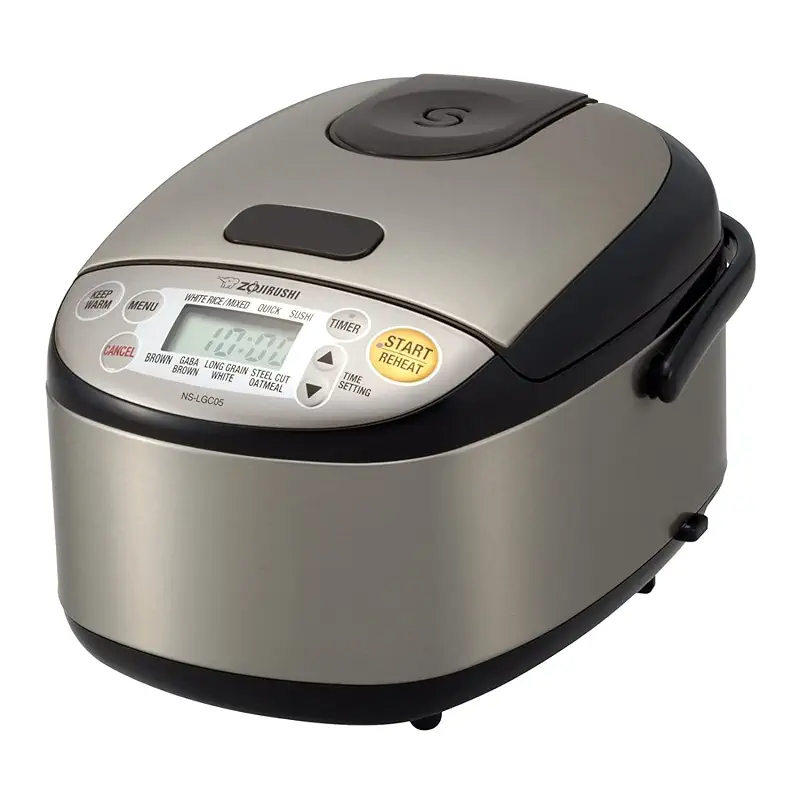
Zojirushi Micom 3-Cup Compact Size, Multiple Settings, Stainless Steel Made, Built-In Retractable Power Cord and Easy to Transport Rice Cooker and Warmer | Multiple settings, retractable power cord, easy transport
4.7(8,118)
Three-cup capacity with GABA brown rice activation, retractable cord, and exceptional fuzzy logic precision for serious rice eaters.
Ideal for: Serious rice enthusiasts or households eating rice daily, valuing maximum precision and portability.
The Zojirushi Micom is the premium choice here, and the price reflects years of refinement in rice cooker engineering. I recognize this appeals to households that eat rice daily and want the best possible outcome from each batch. The three-cup capacity might seem small, but owners who switched from larger cookers often prefer it because the rice is cooked more evenly in a smaller volume.
What sets this model apart is the GABA brown rice setting, which activates the rice at a controlled temperature before full cooking, increasing certain nutrients. There's also a steel-cut oatmeal mode, long-grain white rice preset, and retractable cord for portability and storage. Owners consistently report that the rice texture is noticeably superior to budget models, with a fluffy, sweet finish that even experienced home cooks notice. The fuzzy logic here is more sophisticated than entry-level cookers.
Tradeoffs: this is the costliest option, and the three-cup capacity means you'll cook more frequently if you're feeding a larger family. The internal clock battery is non-replaceable without manufacturer service, though the cooker still functions if unplugged; you just reset the time each time. Compared to the Martha Stewart 8-Cup, you're trading capacity for absolute rice-cooking precision and specialty settings. Owners who make rice constantly say the investment pays for itself in texture and consistency.
Pros
GABA brown rice mode increases nutrient activation
Retractable power cord and portable fold-down handle
Superior fuzzy logic delivers consistently fluffy, high-quality rice
Cons
Premium price point, highest cost in this lineup
Small three-cup capacity requires more frequent cooking
Key features
Micom fuzzy logic adjusts heat with precision for perfect rice texture
GABA brown rice, steel-cut oatmeal, and long-grain white rice modes
Retractable 44-inch power cord and portable carrying handle
Three-cup capacity, compact footprint ideal for small kitchens or travel
#5 Pick
Best Budget: Stainless Steel without Premium Pricing
Elite Gourmet
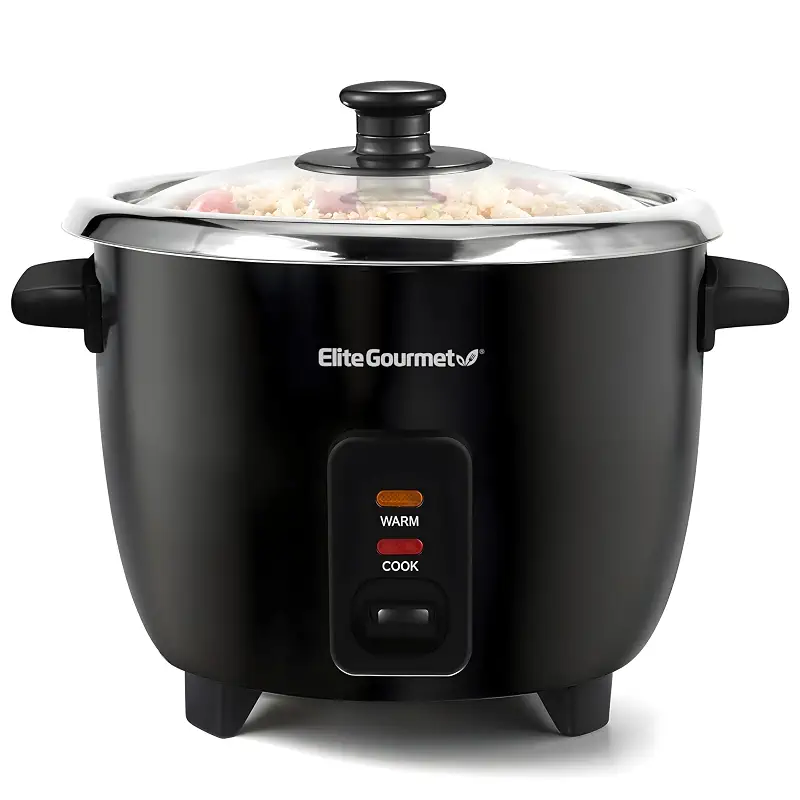
Elite Gourmet ERC006SS 6-Cup Electric Rice Cooker with Stainless Steel Inner Pot, Makes Soups, Stews, Porridges, Grains and Cereals, 6 cup (3 cups uncooked), Black
4.2(1,802)
Entry-level stainless steel cooker with solid build quality and straightforward operation at an honest price point.
Ideal for: Budget-conscious buyers wanting stainless steel durability without digital controls or premium pricing.
The Elite Gourmet offers genuine stainless steel construction at a price that doesn't demand a premium budget. I think this is valuable for first-time buyers or households looking to exit nonstick coatings without spending heavily. The six-cup capacity sits between the Aroma Select and Martha Stewart, and owners report the stainless steel pot feels substantial and built to last.
Operation is simple: fill, press cook, and it switches to warm automatically. No presets or delay timer, just straightforward heating. Buyers praise the pot's durability and the fact that no nonstick surface will scratch or peel. The trade-off is that rice can stick to the bottom, similar to bare stainless steel, so you'll want to soak the pot post-cooking or scrape carefully to avoid staining. This is normal stainless steel behavior, not a flaw.
Where this differs from the Aroma Select is capacity (Elite Gourmet holds more) and design simplicity (fewer accessories, no steaming tray). A handful of owners report the heating element runs warm rather than hot, which produces gentler, more consistent cooking. Compared to the Zojirushi, you're losing precision and specialty modes, but you're also spending a fraction of the cost. If you cook rice once or twice weekly and want PFAS-free stainless without complications, this is honest value.
Pros
Surgical-grade 304 stainless steel pot, no coatings or PFAS
Substantial construction at a fraction of premium cooker costs
Straightforward on/off switch, no learning curve
Cons
Rice sticks to stainless steel bottom, requires soaking to clean
No preset modes or delay timer functions
Key features
304 surgical-grade stainless steel removable inner pot
Simple on/off operation with automatic warm mode after cooking
Six-cup cooked capacity, fits three cups uncooked rice
Tempered glass lid and cool-touch handles for safety
How to Choose a Non-Teflon Rice Cooker
Four trade-offs that actually matter when matching a non teflon rice cooker to your kitchen.
Stainless Steel vs. Ceramic Inner Pots
The core choice comes down to surface durability versus ease of use. Pure stainless steel pots like those in the Aroma Select and Elite Gourmet offer maximum longevity and no risk of coating damage, but rice will stick unless you master water ratios or add a touch of oil. Ceramic-bonded surfaces like CoreCoat reduce sticking and clean faster, but are not indestructible and can show wear after years of heavy use. When deciding between stainless steel vs ceramic inner, consider your cooking frequency: daily cooks benefit from ceramic's reduced sticking, while occasional users can tolerate stainless steel's cleanup trade-off for long-term reliability.
Capacity and Household Size
A three-cup cooker (like the Zojirushi) cooks roughly one cup of uncooked rice, serving two people generously. Six-cup models handle up to three cups uncooked, suitable for a family of four or meal prep. Eight-cup cookers like the Martha Stewart support larger families or batch cooking. Think about whether you cook rice once weekly or daily. Small households with limited counter space benefit from compact cookers, while bigger families or those who make rice frequently justify larger capacity. Remember that even a large cooker used daily will keep rice warm automatically, so capacity isn't about cooking fewer times, it's about cooking quantity at once.
Features vs. Simplicity
Entry-level cookers have one button and automatic warm mode. Mid-range models add preset modes for brown rice, oats, or quick cook. Premium cookers like the Martha Stewart offer fuzzy logic, delay timers, and specialized settings such as steel-cut oatmeal or GABA activation. If you only cook white rice, simplicity saves money and counter space. If you rotate between rice types, grains, and oatmeal, presets eliminate guesswork. Delay timers are valuable only if you plan your meals hours in advance. Assess what you actually use before paying for features you won't touch.
Budget and Long-Term Value
Budget cookers (Elite Gourmet) cost half as much as premium models (Zojirushi) but lack precision and specialty modes. Mid-range ceramic options (Aroma 6-Cup) split the difference, offering ease of cleanup and PFAS-free surfaces at a moderate price. The best value depends on use: if you cook rice twice weekly, a budget stainless steel model will last years. If rice is a staple eaten daily, the precision and texture from a fuzzy logic cooker justifies higher upfront cost. How to clean and care for ceramic rice cooker inner pots extends their lifespan significantly, so maintenance routine also factors into true value over time.
Frequently asked
Quick answers to the questions readers ask most.
Are stainless steel rice cooker pots safe compared to nonstick?
Yes. Bare stainless steel has no coatings that can scratch, peel, or leach chemicals. Ceramic-bonded surfaces like CoreCoat are also safe and explicitly tested for absence of PFAS and PFOA. Both avoid the concerns associated with older Teflon coatings. The trade-off is that stainless steel requires more careful cleaning to prevent sticking and staining, whereas ceramic surfaces reduce sticking naturally. Neither poses health risks when used as directed.
Why does rice stick to the bottom of stainless steel pots?
Stainless steel lacks the slippery nonstick surface, so starch and moisture naturally adhere to it during cooking. Prevent sticking by using correct water-to-rice ratios, rinsing rice thoroughly before cooking, and unplugging the cooker immediately after the cooking cycle ends rather than leaving it on warm mode for hours. Soaking the pot in warm water after cooking makes cleanup easier. This is normal behavior, not a defect, and many cooks accept it as the trade-off for avoiding synthetic coatings.
Can I cook things other than rice in these cookers?
Yes. Most of these cookers handle oatmeal, grains, quinoa, pasta, and steamed vegetables. The Martha Stewart and Zojirushi have preset modes for oatmeal and grains, making them more versatile. Simpler models like the Elite Gourmet work fine for anything you'd boil on the stove. Cooking times will vary by ingredient, so check the manual for ratios. The automatic warm mode keeps any cooked food at serving temperature once the cooking cycle ends.
How long do stainless steel and ceramic cooker pots last?
Bare stainless steel pots can last decades with normal use, as there is no coating to degrade. Ceramic-bonded surfaces typically last five to ten years of daily cooking, depending on water hardness, cleaning method, and usage intensity. Both outlast older Teflon-coated pots, which often became unusable within five years as coatings peeled. Replacement pots are available for most models at modest cost, so even if the surface wears, you can extend the cooker's life.
What is fuzzy logic in a rice cooker?
Fuzzy logic refers to automatic temperature and timing adjustments made by the cooker's sensor during cooking. It detects when water is boiling, adjusts heat accordingly, and compensates for variables like rice type, water amount, and humidity. The result is more consistent texture across different batches. Models like the Martha Stewart and Zojirushi use this technology to deliver superior rice quality with minimal user intervention. Budget cookers lack this, so results depend more on precise measurement and user experience.