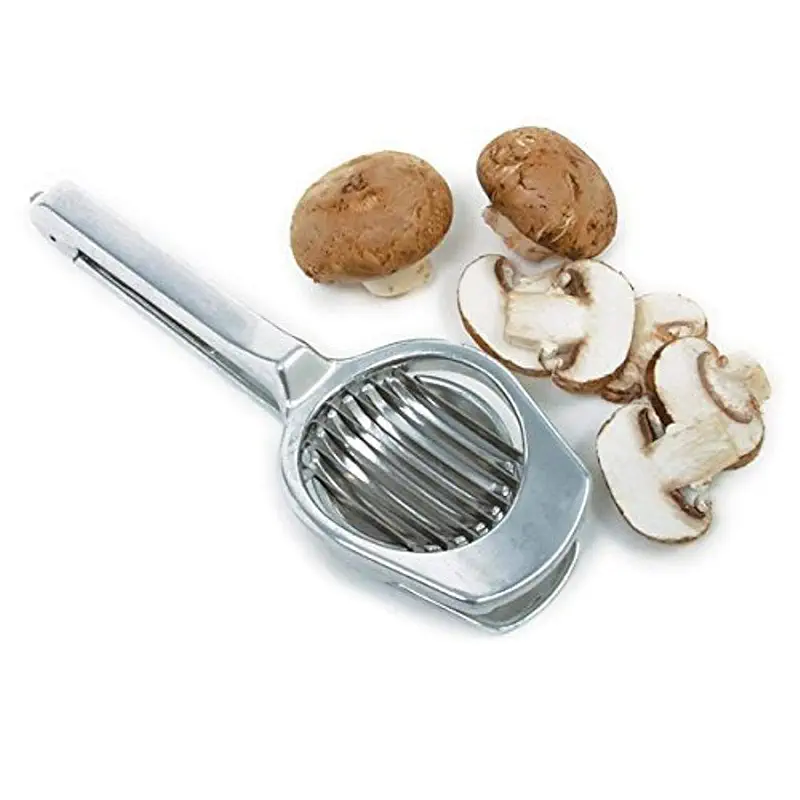
Ideal for: Home cooks who prefer traditional designs and don't mind occasional maintenance.
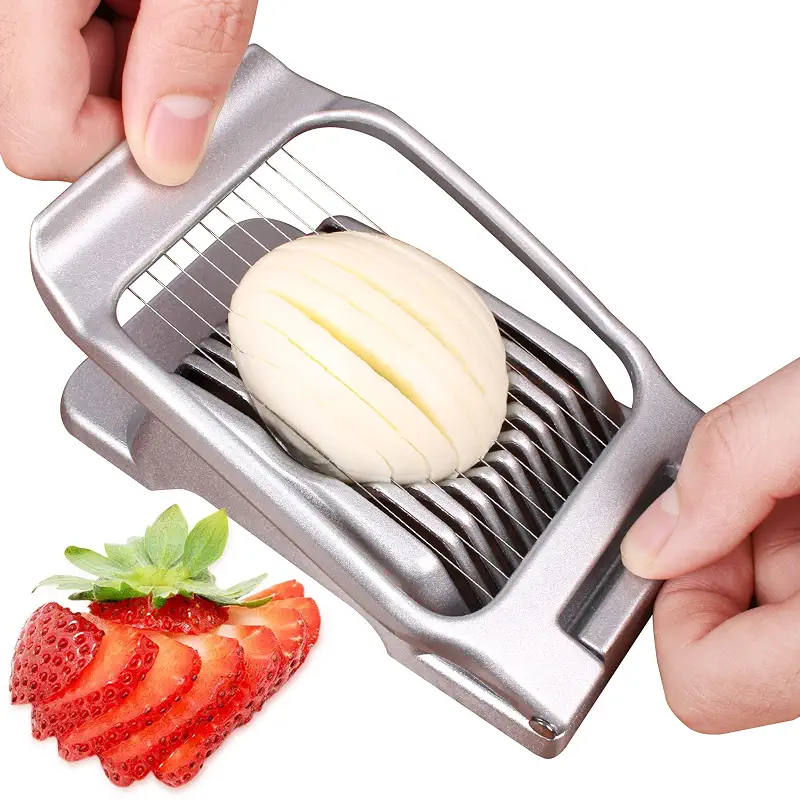
The Norpro is the slicer many cooks grew up with. It has been around long enough to prove itself, and owners who maintain it report years of reliable use. The cast aluminum frame pairs with stainless steel blades, which should theoretically resist corrosion better than cheaper alternatives. However, there's a real trade-off here: those blades arrive relatively dull from the factory, and some reviewers had to sharpen them before getting clean cuts rather than mushroom squash. The opening diameter is also on the small side, so anything larger than a medium button mushroom gets squeezed rather than sliced cleanly.
Compared to the Codoule wire-slicer design, the Norpro's flat blades take more pressure to push through firm mushrooms and require more maintenance if you want razor-sharp performance. If you're willing to hand-sharpen and don't mind a few extra pounds of force, it's a solid choice that won't break the bank. Just don't expect it to arrive ready to slice without a bit of prep work on your end.
One caution: the cast aluminum can discolor in the dishwasher due to chemical reactions with modern detergent, so hand washing is the safer route despite the listed features. Owners who follow that rule report long product life.
Pros
Heavy-duty cast aluminum frame resists warping
Stainless steel blades won't break like wire alternatives
Compact footprint fits most kitchen drawers
Cons
Blades arrive dull and need sharpening for clean cuts
Small opening limits mushroom size, requiring pre-slicing large specimens
Key features
Cast aluminum construction with stainless steel blades
Accommodates medium-sized mushrooms and soft fruits whole
Hand wash recommended to preserve finish and durability
Compact size: 1 inch by 7.5 inches by 2.75 inches
#2 Pick
Best Overall
Codoule
Egg Slicer for Hard Boiled Eggs Egg Cutter Strawberry Slicer Heavy Duty Aluminium Slicer Stainless Steel Wire Multipurpose Egg Slicer Dicer for Soft Fruit Mushroom,Egg Slicer | Stainless Steel Wire,Rust Resistant Multipurpose Egg Chopper Dicer for Soft Fruit Mushroom Tomato Butter Cheese Spam Home Use
4.6(7,555)
Heavy-duty aluminum with razor-sharp stainless steel wires; consistently praised for speed, durability, and multipurpose performance.
Ideal for: Daily home cooks who want a reliable, low-maintenance slicer for mushrooms, eggs, and soft fruits.
The Codoule stands out for the sheer number of reliable reviews and the consistency of user praise. Owners repeatedly mention that the stainless steel wires arrive sharp and stay sharp through dozens of uses, cutting through mushrooms and strawberries with minimal effort. The ergonomic aluminum alloy handle feels solid without being heavy, and the hollow base design makes cleanup genuinely fast: just a quick rinse removes food particles. Many buyers have moved past eggs and found this tool equally effective for strawberries, tomatoes, kiwis, and even soft cheeses.
Where the Codoule excels compared to the Westmark blade-style slicer is in the balance of power and simplicity. It requires less downward pressure than blade slicers, making it less fatiguing for repetitive prep, and the wires don't need sharpening. Dishwasher safety is a real feature here, not a warning, which matters for busy kitchens. The only limitation is that it's still essentially an egg-slicer form factor, so very dense or very large items will give you trouble.
The one notable negative review mentioned fragile wires, but this appears to be an outlier given the 4.6 rating across over 7,500 reviews. Most owners report years of trouble-free use.
Pros
Sharp stainless steel wires require minimal pressure and stay sharp
Heavy-duty aluminum frame feels solid and stable
Dishwasher safe with easy-clean hollow base design
Cons
Wire design can eventually stretch or break under heavy force
Limited to smaller mushrooms and soft foods; dense items won't cooperate
Key features
High-quality aluminum alloy base with razor-sharp stainless steel wires
Ergonomic handle for comfortable grip and controlled pressure
Dishwasher safe for quick cleanup without hand washing
Compact storage design fits drawers without taking up counter space
#3 Pick
Best Premium Option
Westmark
Westmark Mushroom & Egg Slicer – Heavy-Duty Aluminum Cutter with 7 Stainless Steel Blades for Even Slices, Multi-Purpose Food Slicer for Mushrooms, Eggs, Strawberries & Kiwi, Kitchen Essentials
4.3(569)
German-engineered slicer with seven stainless steel blades; exceptional durability and multi-decade lifespan.
Ideal for: Serious home cooks who value durability and are willing to invest in a tool that will last a lifetime.
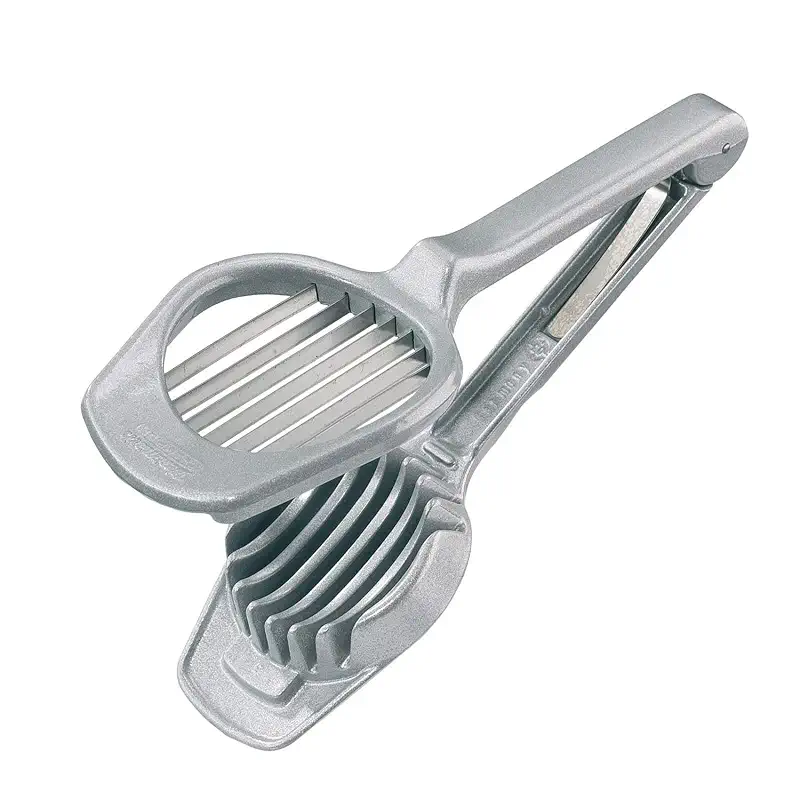
Westmark's blade-style slicer carries a reputation for precision engineering that justifies a higher price point. Made in Germany with a 5-year guarantee, it features seven individual sharp blades rather than wires, which means more contact points and cleaner cuts through mushrooms and strawberries. Owners report using the same unit for 10+ years with only one blade finally bending, which speaks to the engineering quality. The blades are genuinely razor-sharp (one reviewer mentioned cutting a finger during cleanup) so you get professional results at the cost of needing caution.
Compared to the Codoule wire slicer, this Westmark trades the ease-of-use of wires for the durability and cutting power of blades. You do need to apply more downward pressure, and the action feels less fluid than a spring-loaded wire slicer. However, if you're the type who keeps kitchen tools for decades and views them as investments rather than consumables, the build quality and longevity justify the premium. The red band that holds it closed during storage is a small detail that reflects thoughtful design.
One trade-off: it requires more force to work through mushrooms than the wire-based Codoule, which matters if you have limited hand strength or plan to slice large batches regularly.
Ideal for: Families seeking a fun, kid-safe prep tool for small quantities of soft fruits and tender mushrooms.
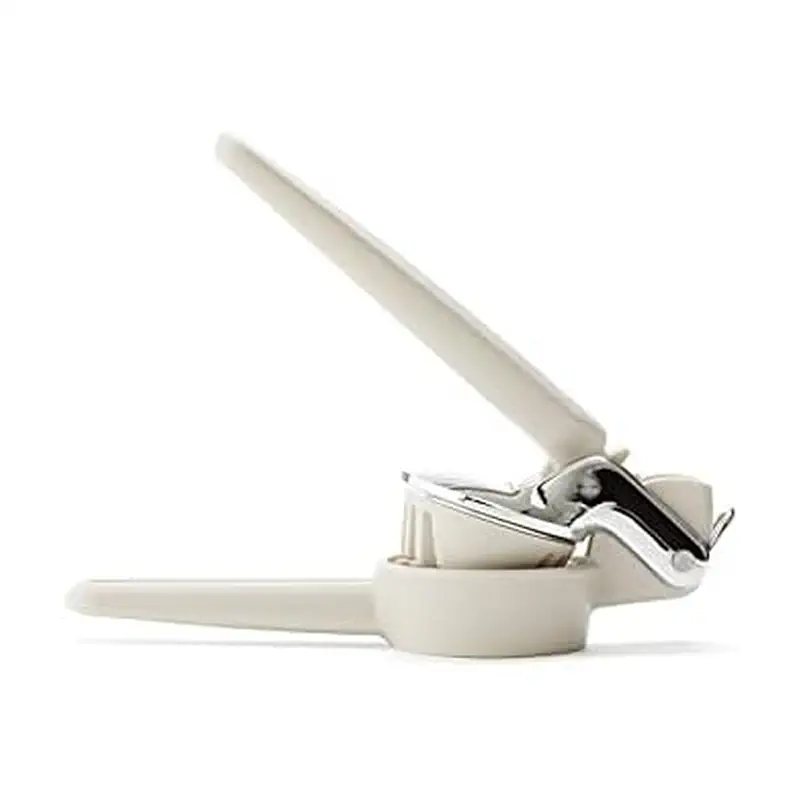
The Chef'n FreshForce takes a fundamentally different approach from all the frame-and-blade designs. Instead of laying food in a slot and applying downward pressure, you hold it like a hand tool, insert food, and squeeze the handles together. The patented geared mechanism does the cutting work, and the two stainless steel serrated blades keep the food stable throughout. It's lightweight, fun to use, and (according to owners) requires almost no effort to slice strawberries and mushrooms into uniform pieces.
The real value here is safety and engagement. Kids can use this with minimal supervision compared to blade slicers that require careful hand placement. Reviewers note that nothing gets stuck in the blades, and the entire tool disassembles for thorough cleaning. If you prep only small quantities at a time or want to involve younger cooks in the kitchen, the hand-held form factor is a genuine advantage. However, compared to the larger slicer designs, this tool is slower for high-volume prep: you're working one or two items at a time rather than loading a tray, much like how a best tomato dicer excels for individual portions but struggles when you need to batch-prep ingredients.
One caveat from the reviews: harder items like mushrooms can require more squeeze effort than expected, and one user reported a piece breaking off. The tool performs best on truly soft items like strawberries; mushrooms sit in a middle ground where results depend on firmness.
Pros
Lightweight hand-held design with minimal learning curve
Safe for children to use with straightforward squeeze-and-slice action
Geared mechanism and serrated blades prevent sticking and crushing
Cons
Requires more effort on denser items like firm mushrooms
One-at-a-time operation makes high-volume prep slower than frame slicers
Key features
Patented FreshForce geared technology with squeeze activation
Two stainless steel serrated blades keep food stable and in place
Lightweight and compact; safe, supervised tool for kitchen learning
Disassembles completely for thorough cleaning and drying
Ideal for: Experienced home cooks who want proven, long-lasting durability and won't shy away from proper technique.
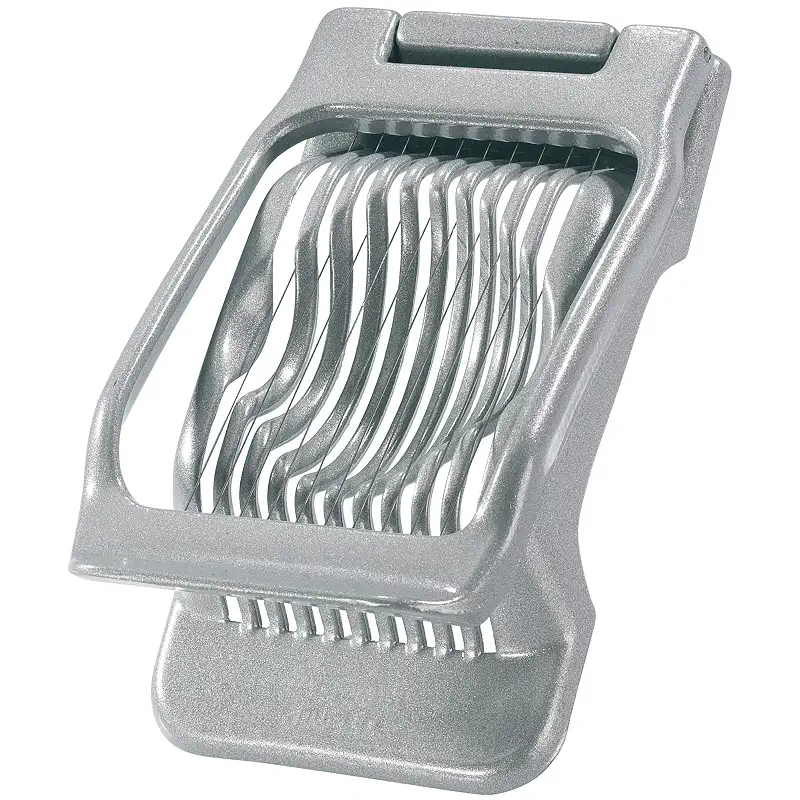
The Westmark wire slicer represents the other half of the Westmark family: elegantly simple and built to German specifications that have proven themselves across thousands of owners and ten-year stretches of daily use. Unlike the plastic egg slicers many people grew up with, the all-metal construction (cast aluminum base with stainless steel wires) resists warping and the wires don't snap under normal use. Owners who've switched from budget plastic slicers describe it as the tool that finally made them stop dreading mushroom prep.
The key technique here is using a quick snapping motion rather than slow, steady pressure: the wires bite through mushrooms cleanly when you commit to the cut, but they stretch and struggle if you ease down gradually. Once you learn that rhythm, prep becomes genuinely fast. Compared to the Codoule wire slicer, this Westmark is older, more established, and carries a loyal following of people who've owned the same unit for over a decade. Many owners recommend hand washing to preserve the finish, though dishwasher safety is technically listed as a feature.
One practical note: mushroom size matters more with wire slicers than with blade designs. Reviewers emphasize cutting larger mushrooms in half beforehand, and the snapping-motion technique is essential. For those willing to use proper technique, the payoff is speed and a tool that simply won't break.
Pros
All-metal construction (aluminum and stainless steel) resists warping permanently
Established reputation backed by ten-plus-year ownership stories
Quick snapping motion makes prep fast once technique is learned
Cons
Requires specific snapping technique; slow or uneven pressure leads to wire stretching
Works best with medium-sized mushrooms; larger ones need pre-cutting
Key features
High-quality stainless steel wires paired with cast aluminum base and handle
Proven durability; many owners report 10+ years of reliable use
Ergonomic handle designed for comfortable grip and controlled snapping motion
Quick cleanup via hand rinse; hand washing preferred over dishwasher
How to Choose a Mushroom Slicer
Four trade-offs that actually matter when matching a mushroom slicer to your kitchen.
Frame vs. Hand-Held Design
Frame slicers (where food sits in a slot and you apply downward force) dominate this category because they're faster for volume prep and require less hand fatigue. Hand-held squeeze designs like the Chef'n shine for small quantities, individual portions, and kid-safe involvement. If you're slicing a full pound of mushrooms for soup, a frame slicer will save you time and effort. If you're plating a single mushroom on a salad or prepping snacks with children, the hand-held form factor may feel more natural.
Wires vs. Blades
Wire slicers use thin stainless steel wires (like an egg slicer) and require a quick snapping motion to work cleanly. They're lighter and less tiring for extended use, and wires typically arrive very sharp. Blade slicers use individual flat blades (usually seven) and require more downward pressure but deliver powerful cuts through denser items. Wires excel on softer mushrooms and strawberries; blades perform better on medium-firm produce. The mushroom slicer versus egg slicer distinction matters here: traditional egg slicers are wire-based, while some mushroom-specific tools use blade designs for added power.
Durability and Material
Cast or die-cast aluminum paired with stainless steel is the gold standard. Plastic frames inevitably warp or crack after a year or two of regular use. All-metal construction costs more upfront but lasts decades. German-engineered tools (Westmark and others) typically carry longer warranties and are made to withstand professional-kitchen conditions. Hand-washing is gentler on finishes than dishwasher chemicals, so if longevity matters, treat a slicer like a cherished tool rather than a disposable gadget.
Mushroom Size and Food Range
Most frame slicers work best with medium-sized mushrooms (button to cremini). Very large mushrooms may get squashed if their edges aren't fully supported by the frame. Wire and blade designs typically accept foods up to 6 centimeters in diameter. If you buy large portobello or oyster mushrooms, you'll be pre-cutting them in half, not ideal but workable. Many owners appreciate the multipurpose utility: strawberries, kiwis, hard-boiled eggs, and even soft cheese all work well, which justifies the counter space.
Cleaning and Maintenance
Most modern slicers are dishwasher safe, but hand washing extends the life of the finish and prevents discoloration on cast aluminum. A cleaning mushroom slicer guide will walk you through proper care, but the basics are a quick rinse and dry after use. Wire designs need occasional checks for stretching; blade designs need respect around the sharp edges during cleanup. If you plan to use the tool daily, invest in one that feels pleasant to wash: a chore tool you dread won't get used.
Frequently asked
Quick answers to the questions readers ask most.
Can I use a mushroom slicer for vegetables other than mushrooms?
Absolutely. All five slicers here work beautifully on strawberries, kiwis, and hard-boiled eggs. Many owners also use them for soft cheeses, tomatoes, zucchini, and olives. The limit is that items must be soft or medium-firm: you won't slice a carrot or celery effectively. Anything that holds its shape when fresh (like button mushrooms and strawberries) is fair game.
Do mushroom slicers need to be sharp, or is dull okay for mushrooms?
Sharpness matters a lot. A dull slicer squashes mushrooms instead of slicing them cleanly, which releases juice and creates a mushy texture. If you're choosing between two options, sharp wires or blades are significantly faster and produce better results. Some slicers arrive dull and need hand sharpening; others come razor-sharp and stay that way for years.
Is it safe to put my mushroom slicer in the dishwasher?
Most are technically dishwasher safe, but many owners recommend hand washing instead. Cast aluminum can discolor or develop a dull finish after repeated dishwasher cycles due to chemical reactions with detergent. A quick hand rinse takes 30 seconds and preserves the tool's appearance for decades. It's a small extra step that pays off in longevity, especially for premium options.
What's the difference between a mushroom slicer and an egg slicer?
Traditional egg slicers use wires and are designed for hard-boiled eggs, but they work equally well on mushrooms and strawberries. Specialized mushroom slicers often use wider blades or larger frames to accommodate larger produce. The names reflect marketing more than hard distinctions: both terms describe the same basic tool. Choose based on what foods you'll actually slice, not the name.
How long do mushroom slicers typically last?
With all-metal construction and proper care, a quality slicer can easily last 10-15 years or more. Owners of Westmark tools frequently report decade-plus ownership. Plastic-frame slicers rarely make it past two years. Hand washing, gentle drying, and avoiding heavy abuse (like forcing oversize mushrooms) extend lifespan. Think of a slicer as a long-term investment, not a disposable gadget, and it will repay you in years of fast, reliable prep.