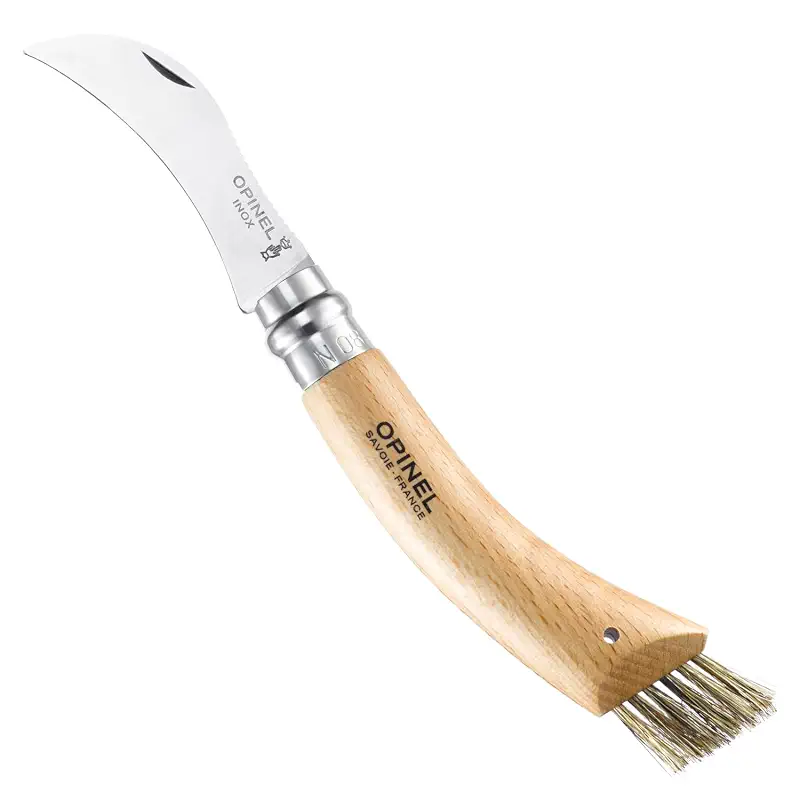
Find the best mushroom knife for your foraging needs. Compare curved blades, brush designs, and folding mechanisms for safe, clean mushroom harvesting.
Opinel's 135-year heritage and Virobloc safety collar make this the forager's standard. Curved blade cuts clean, brush removes debris, and the knife earns respect in the field.
Ideal for: Dedicated foragers who value heritage, proven design, and a tool that lasts decades
The Opinel No. 08 has become the benchmark mushroom knife for good reason. The curved stainless blade is designed specifically to slice through stems at the soil line without mangling the mushroom, and the integrated boar-bristle brush is firm enough to scour dirt and forest litter but gentle enough not to bruise caps. Buyers who use this regularly report that it becomes more comfortable with time, and the beechwood handle (unchanged since 1890) develops character over seasons. The Virobloc collar is a genuine safety feature; it locks the blade open or closed with a simple swivel, meaning no accidental folding mid-harvest and no fumbling in your pack.
The main catch is that it arrives duller than you might expect. Several owners note they spent a few minutes honing the edge before their first foray. That's not a defect: it's simply how Opinel ships them. If you're comparing against budget alternatives, this costs more upfront, but experienced foragers treat it as a lifetime purchase. Compared to the Drachenader N-1, which also folds and includes a leather sheath, the Opinel forgoes a sheath but gains a more refined locking mechanism and a lighter overall design.
This knife earns its place in serious forager kits because it does one thing (harvesting mushrooms) without compromise. The beech handle will swell and shrink with moisture, so you'll want to store it dry and ensure the lock engages before packing it away. For anyone building a foraging kit or already deep into the hobby, this is the pick that justifies the investment.
Pros
Curved blade cuts cleanly without bruising mushroom caps
Boar-bristle brush removes dirt and debris effectively
Virobloc collar locks blade securely open or closed
Lightweight and comfortable during long foraging sessions
Cons
Arrives duller than expected; requires quick sharpening
Beechwood handle swells and shrinks with moisture
Key features
Curved stainless steel blade with integrated boar-bristle brush
Virobloc safety collar for secure locking during use and storage
Ergonomic beechwood handle with 135-year design heritage
Portable and lightweight for extended foraging trips
#2 Pick
Best Premium Choice
Drachenader
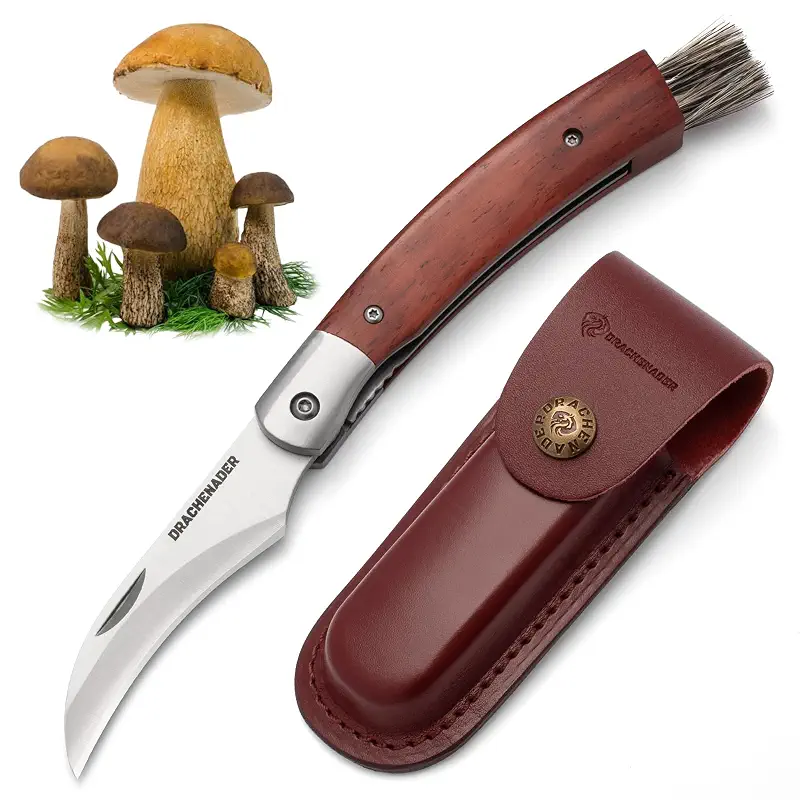
DRACHENADER Mushroom Knife N-1, 8.15" Folding Mushroom Knife with Brush, Leather Sheath, 5Cr14MoV Stainless Steel Blade, secure Liner-Lock Design for Foraging and Harvesting
4.7(268)
Drachenader N-1 pairs German craftsmanship with a reliable liner-lock and genuine leather sheath. Worth the step up if you want a knife that doubles as a field-to-table tool.
Ideal for: Foragers who want premium leather sheath included and appreciate German engineering
The Drachenader N-1 is built for foragers who want their knife to feel like an heirloom from day one. The stainless steel blade holds an edge through weeks of use, and the curved geometry is identical in intent to the Opinel: clean severance at the base without crushing the mushroom. What sets it apart is the liner-lock mechanism, which is rarely seen in this category and gives the blade a more decisive, professional lock-and-unlock action. The included hand-crafted double-layered leather sheath is a genuine upgrade; it protects the blade during transport and clips securely to a belt, making this knife feel less like a disposable tool and more like something you'll carry for years.
Buyers consistently praise the build quality and the aesthetic appeal of the wood handle and curved blade. The integrated brush is firm enough to handle tough substrate, though a few owners note it's not quite as aggressive as the Opinel's boar bristles. Where the N-1 departs from the Opinel is that it's a folding knife, which adds compactness but also means you'll need to manage the lock every time you open and close it. If you're deciding between this and the Opinel, choose the N-1 if you value portability and a leather carrying solution; the Opinel wins if you prefer a fixed blade wrapped in simplicity.
One trade-off: the steel is good but not top-tier, so it won't hold an edge quite as long as premium alternatives. Still, owners report satisfaction over months and years, and the knife arrives sharp and ready to work.
Hand-crafted leather sheath with double-layer construction
Curved blade cuts cleanly through mushroom stems
Integrated brush effectively cleans dirt in the field
Cons
Liner-lock requires practice to unlock smoothly
steel doesn't hold an edge as long as premium alloys
Key features
stainless steel blade with smooth curve for precise cutting
Secure liner-lock mechanism for safe folding and transport
Hand-crafted double-layered leather sheath with belt attachment
Natural wood handle with ergonomic grip for extended foraging sessions
#3 Pick
Best for Collectors
Drachenader
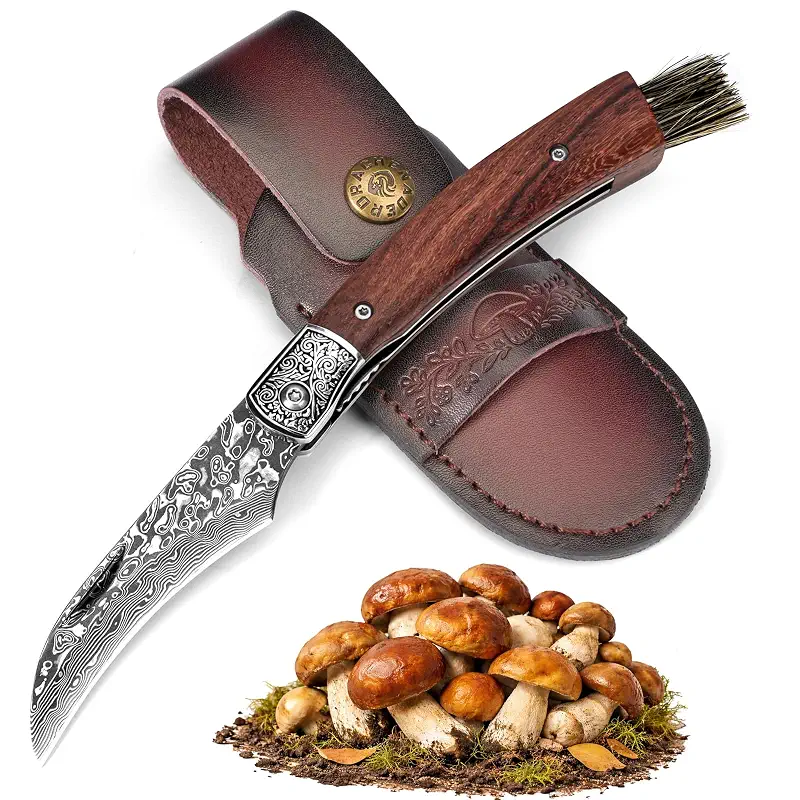
DRACHENADER Mushroom Knife with Brush, Folding Foraging Knife | with VG10 Damascus Steel Blade, Curved Blade Mushroom Harvesting Knives with Leather Sheath for Camping
4.6(17)
Drachenader's Damascus-style blade and artistic design appeal to foragers who want their knife to look as good as it functions. Beautiful but requires more maintenance than simpler rivals.
Ideal for: Foragers and gift-buyers who value artistic design and are willing to maintain premium blades
If you care about aesthetics as much as function, the Drachenader Damascus-style knife is hard to ignore. The blade arrives sharp and the curved profile handles mushroom harvesting without complaint. The integrated soft brush is gentler on delicate specimens, and the genuine leather sheath is the same quality as the N-1 model. This knife genuinely works, and many buyers report years of reliable service.
The catch is the Damascus pattern. Several owners note that while the blade looks stunning, the pattern is applied rather than the result of true layered Damascus steel. This matters if you're paying for metallurgical authenticity: you're getting visual appeal and a functional stainless blade, not the edge-retention benefits of genuine Damascus construction. The soft brush bristles also wear faster under heavy use, so if you're cleaning dozens of mushrooms in a session, you may find them less aggressive than owner expectations. Compared to the N-1, this knife trades slightly softer brush design for visual drama, and you'll need to weigh whether the aesthetic justifies the trade-off for your foraging style.
The liner-lock is secure but can feel stiff out of the box. German buyers especially praise the overall craftsmanship and presentation, making this an excellent gift for someone serious about foraging who also appreciates fine tools. Just know that regular maintenance (keeping it dry and wiping the blade after use) matters more with this knife than with stainless-only alternatives.
Pros
Damascus-style blade is visually striking and sharp from arrival
Soft integrated brush gentle on delicate mushrooms and fungi
Genuine leather sheath and secure liner-lock design
Highly rated across German and European reviews
Cons
Damascus pattern is applied, not true layered steel
Soft brush bristles wear faster with intensive use
Key features
Damascus-style blade with curved profile for clean cuts
Secure liner-lock folding mechanism for safe daily carry
Integrated soft brush for gentle field cleaning
Genuine leather sheath with belt attachment included
#4 Pick
Best Budget-Friendly
Cabuge
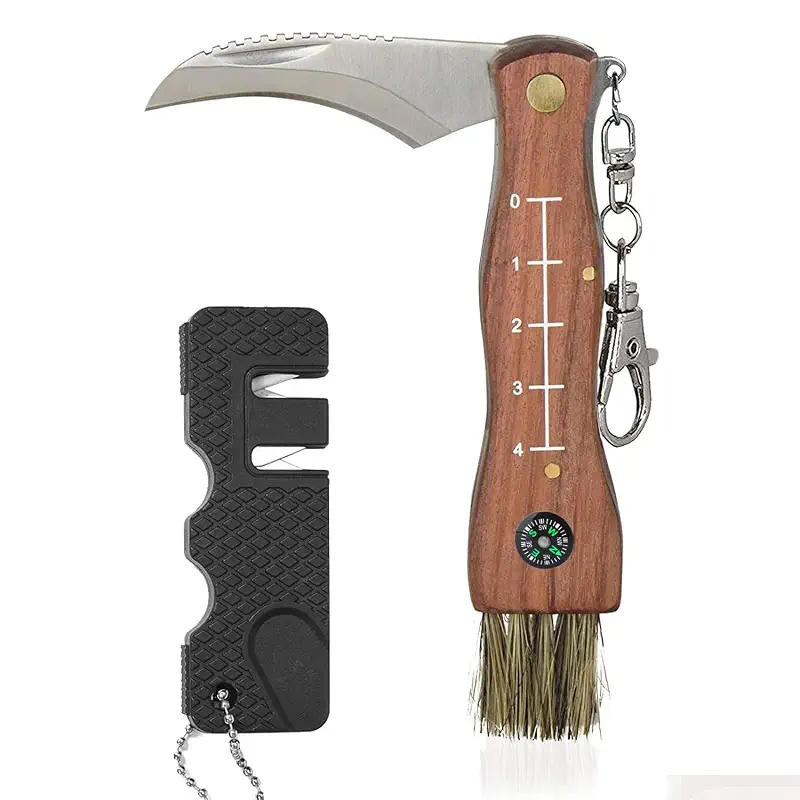
Mushroom Harvesting Knife, No Lock Folding Garden Tool for Foraging & Cleaning, Two-Hand Opening Knife with Wood Handle for Men Women
4.5(71)
Cabuge's no-lock design prioritizes simplicity and safety over folding convenience. Great for casual foragers or anyone with limited hand strength.
Ideal for: Casual foragers, people with limited hand strength, and budget-conscious newcomers to mushroom hunting
The Cabuge takes a deliberately different approach: no lock, no folding mechanism, just a blade that requires two hands to open and close. This is a deliberate safety choice, not a cost-cutting shortcut. If you have arthritis or limited hand strength, this design is actually an advantage because the two-hand requirement prevents accidental deployment. The stainless blade cuts adequately, the brush does its job, and printed measurement scales on the handle let you gauge mushroom size without extra tools. Buyers report this holds up for season after season of casual foraging, and several own multiple units.
The trade-off is portability. This knife is less compact than folding alternatives, and without a lock, it's less convenient to carry safely in a pack without a sheath. Some owners note they wish it came with one. The blade isn't quite as refined as the Opinel or Drachenader models, and the brush is adequate but not as finely tuned. If you're comparing this to the best kiritsuke knife (a specialty kitchen blade) you're looking at very different tools for very different jobs; the Cabuge is squarely aimed at field foraging, not indoor prep.
Where this knife shines is value and simplicity. It costs less than premium options, arrives with a sharpener, and asks nothing of you except keeping it dry. For someone trying mushroom foraging without committing to a premium tool, or for a parent outfitting a teenager, this removes barriers and delivers a functional blade.
Stainless blade and brush handle regular seasonal use
Cons
No lock makes carrying less convenient without a sheath
Larger profile than folding alternatives
Key features
Stainless steel blade with curved edge for mushroom harvesting
Two-hand opening mechanism for enhanced safety
Integrated brush for field cleaning and printed size scales
Includes portable tungsten-steel and ceramic knife sharpener
#5 Pick
Best Value Bundle
ProtectHobby
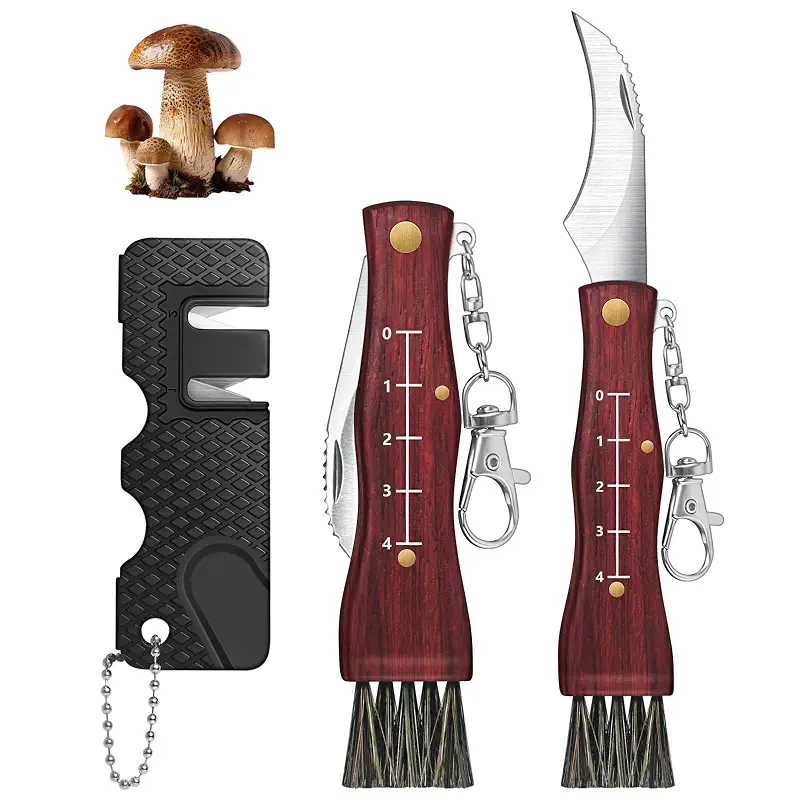
2 Pack Mushroom Knives with Brush & Knife Sharpener, Folding Pocket Knife with Wood Handle for Men Women, Foraging Kit for Outdoor Camping
4.3(66)
ProtectHobby's two-knife set with sharpener is ideal for sharing or building a foraging kit on a tight budget. Solid blades at an entry-level price point.
Ideal for: Families, newcomers testing the foraging hobby, and budget foragers who need multiple knives
If you want two functional mushroom knives without spending premium money, the ProtectHobby pack delivers. Each knife includes a 2.95-inch curved stainless blade, natural bristle brush, and wood handle with size markings. The included drag-style sharpener with tungsten and ceramic ports is genuinely useful and means you can touch up your blades in the field or at home. Buyers report satisfaction with the sharpness and durability, and many appreciate the portability: both knives are small enough to clip to a keychain or backpack.
The compromise is that these knives won't feel as refined as Opinel or Drachenader options. The steel is functional stainless, not premium alloy, so the edge won't last quite as long between sharpenings. Several owners note the brush bristles are stiffer than ideal and the overall build feels more utilitarian than heirloom-quality. One buyer mentioned the printed size scale wore off quickly. This is a knife designed to work hard and be replaced if needed, not to become a lifetime companion. Compared to premium folding alternatives, you're trading longevity and refinement for affordability and the convenience of owning two knives.
For a family or a pair of casual foragers, the two-pack model is smart. You'll want to sharpen the blades before your first outing, and you'll get a few seasons of reliable performance per knife. The included sharpener is legitimately practical, making this less of a compromise and more of a pragmatic choice for budget-conscious foragers.
Pros
Two knives with integrated brushes in one affordable package
Portable drag-style sharpener with tungsten and ceramic ports
Curved blades arrive sharp and handle mushroom stems cleanly
Printed size scales on handles help gauge mushroom dimensions
Cons
Stainless steel edge doesn't hold sharpness as long as premium alloys
Printed markings wear off with regular use
Key features
Two foldable mushroom knives with 2.95-inch stainless blades
Portable two-stage sharpener with tungsten steel and ceramic ports
Integrated natural bristle brushes for field cleaning
Keychain attachment for easy carry on backpack or belt
How to Choose the Right Mushroom Knife
Four trade-offs that actually matter when matching a mushroom knife to your kitchen.
Fixed vs. Folding Design
Fixed-blade mushroom knives offer simplicity and reliability but require a sheath and take up pack space. Folding knives trade some durability for compactness and easier carry. The Opinel uses a traditional fixed design wrapped in a safety collar; the Drachenader models fold with a liner-lock. If you forage for hours and want zero complexity, fixed is your path. If you carry the knife casually and value pack compactness, folding makes sense. Consider how many mushroom-hunting trips you take and whether you'll carry other gear.
Blade Material and Edge Retention
Stainless steel blades resist rust and require minimal maintenance, making them ideal for damp forest conditions. Premium alloys (, ) hold an edge longer but demand more care. Budget options use basic stainless that works fine for casual foragers but needs more frequent sharpening. If you forage intensively or in wet conditions, spending more on steel quality pays off over years. Most mushroom knives arrive duller than home kitchen knives, so plan to sharpen before your first outing regardless of price tier.
Brush Design and Cleaning Function
The integrated brush is often the difference between a hassle-free harvest and dirt embedded in mushroom gills. Boar-bristle brushes (like the Opinel) are firm enough to scrub soil but gentle on delicate caps. Natural bristle versions are softer and better for fragile specimens. Stiff synthetic brushes remove more debris but risk bruising mushrooms. For mushroom knife blade styles, comparing curved versus straight design helps you understand why the curve matters: a curved blade paired with a medium-stiffness brush is usually the sweet spot for most foragers.
Handle Material and Ergonomics
Wooden handles feel comfortable during extended use and develop a personal patina over time, but they require dry storage to avoid swelling. Most foragers prefer beechwood or similar hardwoods for their durability and grip. Size matters too: a handle that's too large or small will fatigue your hand during long sessions. Many mushroom knives include printed measurement scales, which are helpful for learning what size mushrooms you're harvesting. Try holding different models if possible, or read specific owner feedback about hand comfort during multi-hour foraging trips.
Maintenance and Care Requirements
Mushroom knife cleaning and maintenance should fit your lifestyle. Stainless steel knives need only a quick wipe and dry storage. Damascus-patterned or premium alloy blades demand more attention: immediate drying after use, occasional light oiling, and care to prevent rust. Fixed-blade knives with sheaths need to breathe and stay dry. Budget time for sharpening; most casual foragers touch up their blade once per season. If you're foraging in very wet conditions repeatedly, investing in a premium knife that tolerates moisture better will save frustration over time.
Frequently asked
Quick answers to the questions readers ask most.
Do I need a separate sharpener for a mushroom knife?
Most mushroom knives arrive duller than expected, so sharpening before your first trip is wise. A ceramic stick sharpener or drag-style tool works well for curved blades: avoid traditional whetstones, which don't handle the curve effectively. The ProtectHobby two-pack includes a sharpener, which is convenient. Many owners perform a quick touch-up once or twice a season. If you invest in a premium knife, a basic ceramic sharpener is a worthwhile companion purchase.
Can I use a regular kitchen knife for mushroom foraging?
You can, but you'll regret it. Kitchen knives are designed for cutting on a board, not for sawing through stems at soil level or cleaning mushrooms in the field. The curved blade of a dedicated mushroom knife cuts cleanly without crushing delicate caps, and the integrated brush solves a real field problem. A mushroom knife is inexpensive enough that a dedicated tool makes sense, even for casual foragers.
Why do mushroom knife blades have a curve?
The curve lets you use a rocking or slicing motion to sever mushroom stems cleanly at the base without mangling the cap or pulling the mycelium. A straight blade would require more downward pressure, increasing the risk of bruising. The curve also helps you reach mushrooms growing close to the ground or nestled in grass. It's a deliberate design choice, not a style preference.
Is a folding mushroom knife safer than a fixed blade?
Both are safe if used correctly. Folding knives are more convenient to carry in a pack, but fixed blades are simpler and eliminate the need to manage a locking mechanism during extended use. The Opinel's Virobloc collar and the Drachenader's liner-lock both prevent accidental deployment. Choose based on your carry preference and hand strength. For people with limited grip, the Cabuge's two-hand opening adds an extra layer of safety.
How do I store a mushroom knife to prevent rust and damage?
Keep it dry. Wooden handles swell and shrink with moisture, so store in a cool, dry place away from humid conditions. A leather sheath protects a folding knife during storage and transport. Wipe the blade dry after every use, especially after foraging in damp conditions. If your knife includes a brush, make sure that's dry too. Stainless blades resist rust better than carbon steel, but even stainless can spot if stored wet. Avoid leaving the knife locked in a closed, unventilated sheath for weeks.