Verdict, analysis, and key features for each pick.
#1 Pick
Best Overall
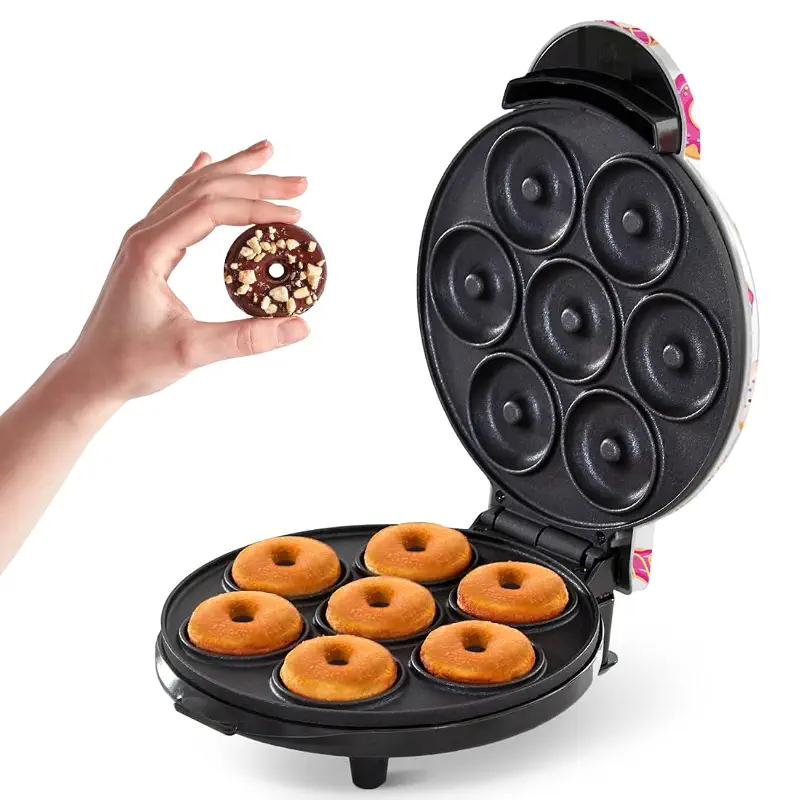
DASH
Dash Mini Donut Maker Machine for Kid-Friendly Breakfast, Snacks, Desserts & More with Non-stick Surface, Makes 7 Doughnuts, Donut Print | Electric Doughnut Machine for Kids & Families, Nonstick, No Deep Frying, Homemade Breakfast, Snacks, Party Treats & Gifts
4.6(14,624)
Seven-donut workhorse with proven reliability, easy cleanup, and broad appeal across ages and skill levels.
Ideal for: Families wanting quick homemade donuts without the fried mess; beginners and kids with adult supervision.
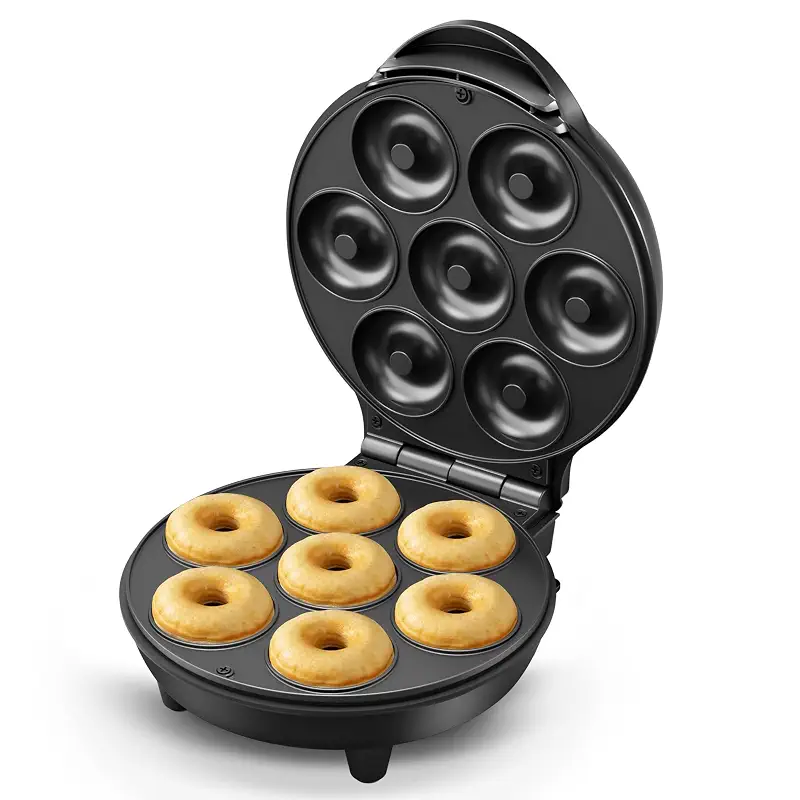
The DASH Mini Donut Maker stands out because it's been refined through thousands of households and reads as genuinely user-friendly. The 7-donut capacity strikes a practical middle ground: enough output for a family breakfast or small gathering without hogging counter space, and the machine heats fast enough that you're not waiting around between batches. Owners consistently praise how the nonstick surface actually works: you'll get release without heavy oil spraying on most batches once the machine is preheated, which means less work and a cleaner kitchen.
What owners do mention is that the bottom cooking surface runs hotter than the top, so flipping donuts halfway through baking yields more even browning if that matters to you. There's no power switch; you just unplug it, so keep that in mind if you're worried about leaving it on. The real win here is versatility: cake mix, brownie mix, even vegetable-based batters all work, and the texture lands somewhere between fluffy cake donut and something you'd actually look forward to eating, not just a novelty.
If you're torn between this and the Baker's Friend option below, the DASH edges ahead in terms of long-term owner satisfaction and the sheer volume of real-world testing reflected in its review count. That said, Baker's Friend offers double the per-batch output if your household size justifies it.
Pros
Nonstick surface releases donuts cleanly without excessive oil
Heats and cooks fast, batches ready in 4-6 minutes total
Compact footprint fits most kitchens and apartment counters
Cons
Bottom plate cooks hotter than top, flipping often needed for even color
No on-off switch, must unplug when done
Key features
Makes 7 mini donuts per batch in 4-6 minutes
Dual nonstick cooking surfaces, PFOA-free
Compact electric design, minimal counter footprint
Includes recipe booklet and online recipe database access
Ideal for: Party planners, decorators, and snackers who prefer tiny, portion-controlled donuts over full-sized versions.
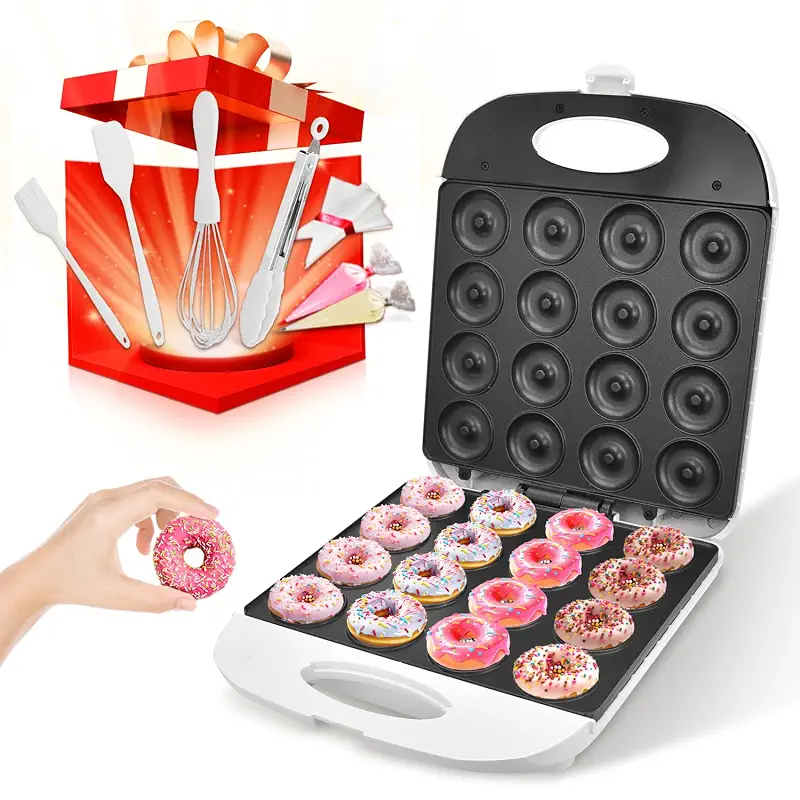
The DSP Mini Donut Maker leans into the word "mini" more than most competitors: donuts come out about the size of four quarters stacked, roughly 1.9 inches, making them genuinely bite-sized rather than the 3-inch versions other machines produce. This appeals specifically to people who want portion-controlled snacks or decorative treats for parties where lots of variety matters more than size. The bundle includes a piping bag set, spatula, whisk, tongs, and brush, so you're outfitted for the whole workflow without extra shopping.
The cool-touch exterior is a genuine safety advantage if kids will be nearby during operation, and the light-indicator system (red for power, green for preheat completion) removes guesswork. That said, owners report inconsistent heat control on some units: a few found the exterior heating uncontrollably hot or batter cooking unevenly, requiring unplugging mid-bake to manage temperature. This isn't universal, but it's worth noting compared to the more predictable performance of the DASH or Baker's Friend models. If heat stability matters to you, test-run it early and contact support if the machine overshoots.
Compare this to the Keinve model if you want a similar compact footprint but with more proven heat consistency and a larger output per batch.
Pros
Includes complete accessory kit with piping bags and tools
16 tiny donuts per batch for variety and portion control
Cons
Heat control inconsistent on some units, may require mid-bake adjustments
Donuts significantly smaller than traditional mini sizes
Key features
16 donuts per batch, each approximately 2 inches diameter
Stainless steel body with nonstick coating and light indicators
Includes 100 piping bags, spatula, whisk, tongs, and brush
Cool-touch exterior housing, preheat ready in 3 minutes
#3 Pick
Best Budget-Friendly
Keinve
KEINVE Mini Donut Waffle Cake Maker, 7 Slots Home Baking Machine, Great for Breakfast, Snacks, Desserts and More | Great for Breakfast, Snacks, Desserts and More
4.5(218)
Seven-donut machine with quick heating and uniform cooking; solid value for families testing the donut-maker concept.
Ideal for: First-time buyers, budget-conscious families, and anyone already equipped with basic baking tools.
The Keinve Mini Donut Waffle Cake Maker delivers consistent performance at an entry-level investment, making it the natural choice if you want to dip into homemade donuts without committing premium budget. Owners note it heats uniformly across the plate and produces evenly cooked donuts: a significant advantage over machines where bottom heat dominates. The 7-donut capacity and 4-6 minute cook time match the DASH, and cleanup is equally straightforward thanks to the nonstick surface.
One caveat: the manual that shipped with some units mentions "sandwich maker" and lacks donut-specific recipes, which confused a few early adopters. However, this isn't a functional flaw: box cake mix and pancake mix both work beautifully, and online recipe communities are robust for this category. If you don't mind a shallow learning curve or are confident winging it with standard batter recipes, this gap becomes irrelevant. Compared to the DSP's accessory abundance, the Keinve strips down to basics, which is either refreshing or disappointing depending on whether you already own piping bags and kitchen tools.
The trade-off is straightforward: slightly lower price for slightly less hand-holding, but identical core function to machines costing more.
Pros
Even heat distribution across cooking plates
Makes 7 donuts in 4-6 minutes, quick and efficient
Low price point relative to feature set
Cons
Manual includes incorrect sandwich-maker instructions, no donut recipes
Minimal accessories compared to DSP bundle
Key features
Makes 7 mini donuts per batch, 4-6 minute cook time
High-quality nonstick plates with even heating
Compact design fits standard kitchen counters
Simple operation, no switches or complex controls
#4 Pick
Best for Large Batches
Baker's Friend
Baker's Friend Mini Donut Maker Machine, Bake 12 Mini Doughnuts, Maquina Para Hacer Donas, Perfect for Breakfast, Snacks, Desserts & More
4.6(340)
Doubles output to 12 donuts per batch with proven nonstick performance and a donut maker capacity comparison.
Ideal for: Large families, frequent entertainers, or anyone prepping multiple batches for freezer storage.
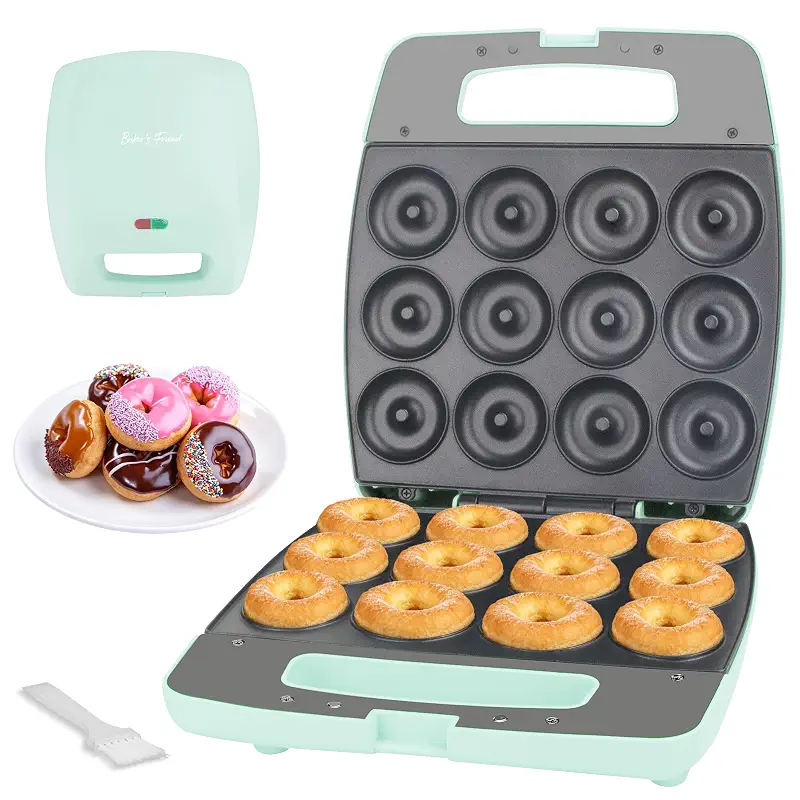
Baker's Friend makes the logical case for anyone whose current machines are a bottleneck: 12 donuts per batch means fewer cycles to feed a crowd or stock a freezer. Owners praise how quickly it heats and the aggressive nonstick coating: batter releases cleanly even without prespreading oil, and cleanup mirrors the 7-donut competitors despite the larger cavity count. The machine is also furnished with recipes in the instruction booklet, which saves you the recipe-hunting step the Keinve skips.
One timing note that appears in reviews: the green light signals preheat completion, but some owners found donuts browning too dark if they wait for that signal before baking. A 3-5 minute cook window is real, and you may want to start checking at 3 minutes even if the light suggests otherwise. This isn't a design flaw so much as a variance between units or user interpretation of color. The 12-donut format also means the machine is slightly larger, not huge, but it needs a bit more elbow room than the 7-donut models.
If the DASH is your workhorse-midsize option, the Baker's Friend is the production upgrade. The choice between them hinges on whether you regularly need 12 donuts at once or whether 7 batches feel fine to you.
Pros
12 donuts per batch reduces cycles for bigger needs
Nonstick coating works exceptionally well, minimal oil needed
Includes recipes with instruction booklet
Cons
Green light indicator may signal readiness before ideal cook time
Slightly larger footprint than 7-donut models
Key features
Makes 12 mini donuts per batch in 3-5 minutes
Double-sided nonstick surfaces, PFOA-free coating
Fast preheating, no power switch required
Compact storage size with recipe booklet included
#5 Pick
Best for High Volume
Laven Birch
23 Mini Donut Maker Machine – Electric Donut Maker, Non-Stick, Fast Heating, Easy to Use for Home and Restaurants, Perfect for Breakfast, Snacks, Kids Parties, Gift Idea - Makes 23 Doughnuts at Once
4.1(84)
23-donut capacity for events and businesses; fast production but donuts run genuinely tiny and heat control varies by unit.
Ideal for: Event caterers, bake-sale organizers, small business operators, and those serving very large groups.
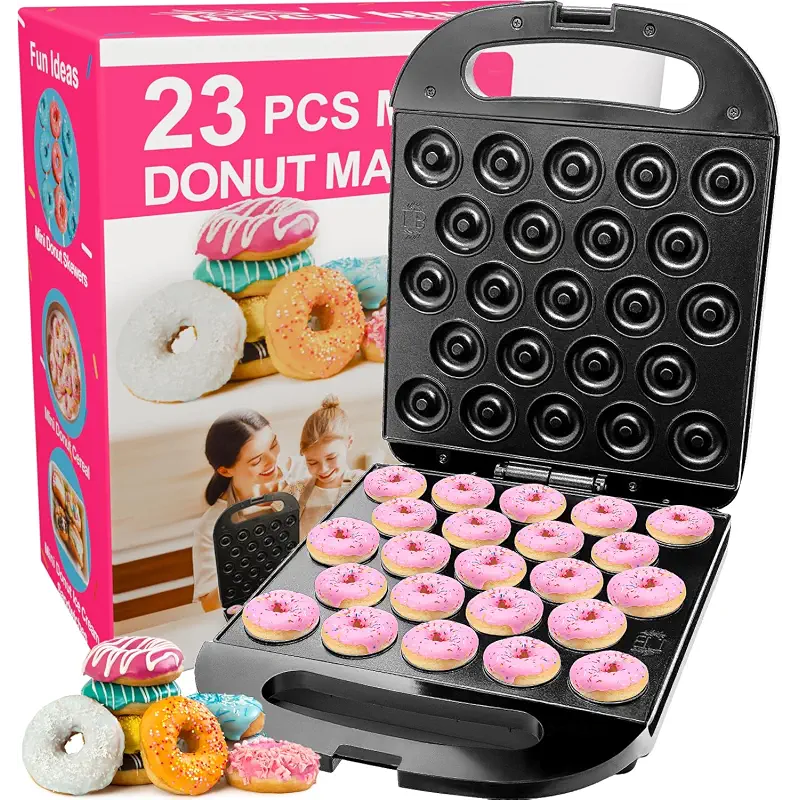
The Laven Birch 23-donut machine is the production beast: one cycle yields nearly two dozen finished treats, making it the only practical choice if you're running a bake sale, hosting a large party, or testing a small food business. Owners who've committed to high-volume runs report making 800+ donuts in a single session with proper setup: the economics work if you're actually baking at scale. The one-touch locking mechanism and even heating deliver consistent results across the full cavity array, and cleanup remains simple because of the nonstick plates.
Here's the critical caveat: these donuts are truly mini: approximately 1.5 to 2 inches in diameter, closer to the DSP's bite-size range than to the fuller mini donuts other machines produce. Several owners noted surprise at the actual size versus the listing description, so set expectations now. Additionally, a handful of owners experienced durability issues (the unit cracking apart after second use), and some found heat consistency problematic on arrival units. This isn't a universal failure rate, but it suggests less refinement than the top-tier DASH or Baker's Friend.
Before committing to this model, confirm you actually need 23 donuts per cycle. For typical home use, the output mismatch with donut size and the durability questions make one of the proven mid-capacity machines more practical.
Pros
Makes 23 donuts per batch, maximizing production speed
Nonstick release works reliably across full cavity count
Fast heating and 4-5 minute cook cycle per batch
Cons
Donuts significantly smaller than standard mini size, roughly 1.5-2 inches
Some units report durability issues or inconsistent heat control
Key features
Makes 23 mini donuts per batch in 4-5 minutes
Powerful heating system with even cooking across all cavities
Premium nonstick plates, easy release and cleanup
One-touch locking operation, suitable for home or commercial use
How to Choose a Mini Donut Maker
Four trade-offs that actually matter when matching a mini donut maker to your kitchen.
Capacity Matters More Than You Think
The jump from 7 to 12 to 23 donuts per batch sounds dramatic but shapes your actual kitchen workflow. Seven donuts per cycle works for daily snacks or small family breakfasts; you'll use it often without fatigue. Twelve is the sweet spot for weekend entertaining or freezer-prep sessions. Twenty-three only makes sense if you're baking commercially or regularly serving 20+ people. Think about how many times you're willing to refill and monitor the machine in one sitting, and whether your counter can accommodate the larger footprint. A smaller machine you'll actually use beats an oversized one gathering dust.
Heat Control and Even Cooking
Cheaper models sometimes cook hotter on the bottom plate than the top, requiring you to flip donuts midway through baking if you want even browning. The Keinve and Baker's Friend earn marks for more uniform heat distribution, while some units of other brands show variance between batches. Check the early reviews for any mentions of uneven cooking or brown-versus-pale donuts; if it's a widespread complaint, that machine likely has a design quirk worth avoiding. Even heat means less hands-on monitoring and more consistent results, especially if kids are doing the decorating.
Nonstick Performance and Cleanup
A quality nonstick surface is the difference between a fun appliance and a frustrating one. Most machines claim nonstick coating, but real-world testing shows some need heavy oil spray or prespeading while others release donuts cleanly after a simple preheat. Owners consistently report which models are genuinely low-maintenance, and that feedback shapes how often you'll reach for the machine on a busy morning. If cleanup requires soaking or scrubbing, you'll avoid it. The best machines let you wipe down with a damp cloth once cool, taking under a minute.
Donut Size and Portion Control
Mini donuts vary wildly: some machines produce 3-inch treats closer to a traditional donut size, while others yield true one-bite snacks around 1.5 inches. There's no universal standard, so check product images and buyer photos carefully. Size affects portion control for kids, decorating options for parties, and whether they feel like a snack or a novelty. Larger donuts suit families wanting breakfast appeal; tiny ones work better for variety-heavy events where you want lots of visual impact with less cake per piece.
Recipe Flexibility and What Batters Work
Most machines handle boxed cake mix, brownie mix, and pancake batter without modification, making the learning curve minimal. However, some owners experiment with fresh fruit, vegetable purees, or whole-grain flours, and success depends on batter consistency. Thicker batters need a heaping spoon per donut; runny ones take a level spoon. The best machines come with recipe booklets and online community support so you're not guessing. A mini donut maker cleaning guide and donut maker capacity comparison will help you maintain performance and choose the right size for future batches.
Frequently asked
Quick answers to the questions readers ask most.
Do I need to use nonstick spray every time?
Most quality machines don't require it if properly preheated, though a light spray on the first batch never hurts. Owners report that once the nonstick coating is seasoned, food releases cleanly without additional oil. However, some batter types (especially those with added sugar) stick more readily, so keep spray handy for experimentation. Always let the machine cool before wiping, as applying spray to a hot surface reduces effectiveness.
Can I make savory donuts or use whole-wheat flour?
Yes, though consistency matters more than with cake mix. Whole-wheat and alternative flours work if you adjust liquid ratios so the batter flows into molds without being runny. Savory batters (herb-infused or containing cheese) cook fine, but you'll need to experiment with your specific recipe. The nonstick surface handles everything equally well; the limiting factor is whether your batter viscosity fills the cavities properly.
How do I remove donuts without breaking them?
Let them cool for 30 seconds after cooking, then use a silicone spatula, wooden toothpick, or dedicated donut tongs to gently pry them out. A piping bag for filling helps too, squeezing batter from above rather than spooning it reduces spillage and makes donuts easier to manipulate. Some owners swear by gentle side-to-side wiggling rather than straight upward pulling to avoid splitting the donut.
How long does it take from unboxing to first batch?
Most machines are ready in under 10 minutes: unbox, wipe the plates clean, plug in, and preheat for 3-5 minutes. Some models have no assembly required beyond positioning on your counter. Recipe prep and batter mixing add another 5-10 minutes depending on whether you're using boxed mix or making batter from scratch. Your first batch cooks in 4-6 minutes, so realistically you can have finished, decorated donuts in 20-30 minutes from first opening the box.
Are donuts made in these machines healthier than store-bought fried ones?
Yes, because they're baked rather than deep-fried, reducing overall oil content. You control ingredients, so you can reduce added sugar, use whole grains, or add vegetables. However, the texture and indulgence still come from sugar, butter, or eggs in the batter: these aren't health-food machines. The real advantage is freshness and customization rather than nutritional transformation compared to commercial donuts.