Kitchen & Dining · Small
Best Milkshake Machine for Home & Commercial Use
Find the best milkshake machine for your needs. Compare top-rated drink mixers for thick shakes, easy cleanup, and reliable performance.
Affiliate disclosure: As an Amazon Associate I earn from qualifying purchases.
At a glance
1
Best Budget-Friendly PickHamilton Beach
2
Best for Commercial-Grade PowerVevor
3
Best Commercial-Grade ChoiceWaring
4
Best for High-Volume Home ProductionVevor
5
Most Compact & Quiet OptionOvente
Detailed reviews
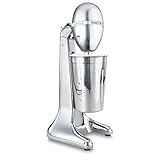
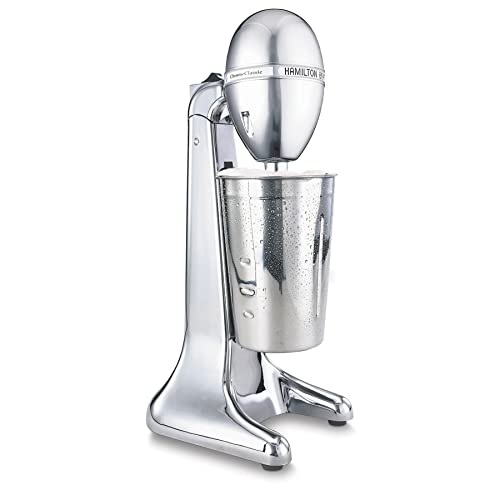
The Hamilton Beach DrinkMaster offers nostalgic diner appeal and a reasonable price point, making it attractive for occasional home use. The 28-ounce stainless steel cup is genuinely helpful for larger servings, the two-speed control gives you basic flexibility, and the tilting head does make cup removal and cleanup straightforward. The stainless steel cup itself is solid.
However, buyer reports reveal a significant catch: the housing and internal components are mostly plastic, not the metal construction many customers expected based on the product description. Multiple reviewers noted the unit feels flimsy out of the box and flagged concerns about the motor longevity and the plastic tilt-joint durability. A handful of owners reported motor burnout within weeks of regular use, which is a red flag for any appliance you're counting on daily. The lightweight plastic construction also makes the machine top-heavy, raising stability concerns.
We'd lean toward this model only if your shakes are occasional treats and you're comfortable with a 2-3 year lifespan. For anyone planning daily use or wanting something that can handle thick ice cream consistently, stepping up to the Vevor single-head or Waring commercial models makes more sense. The nostalgia factor is real, but build quality doesn't match the price premium.
Pros
- Compact footprint fits small counters
- Easy-to-use two-speed control
- Dishwasher-safe stainless steel cup
Cons
- Mostly plastic housing despite metal-sounding marketing
- Reports of early motor failure and durability concerns
Key features (4)
- 28 oz. stainless steel mixing cup with two-speed control
- Tilting head design for easy cup removal and spindle cleaning
- 70-watt motor suitable for light to moderate mixing tasks
- Retro chrome finish for classic kitchen aesthetic
The Vevor single-head is the workhorse of this lineup. A robust 375-watt motor with three speed settings (15,000 to 21,000 rpm) powers through thick ice cream in seconds, completing most soft drinks in around 12 seconds. The food-grade stainless steel cup is built to last, and the fixed spindle design eliminates a common failure point. Owners using it in active ice cream trucks and shops report it outperforms commercial-grade double-head mixers while taking up less space, which is high praise from people who depend on reliability.
The anti-toppling base is genuinely useful for stability in a busy setting, and the 10-minute timer gives you hands-free operation during peak service. The smooth inner cup wall resists buildup and makes cleaning easier than competitors.
The catches are real: this machine is loud: several owners compared it to a power drill at full speed, which matters if your kitchen is open to living space. It's also tall (taller than standard countertop height), so measure your cabinet clearance before buying. Some users reported overspray if you fill past the recommended 3/4-full level or push speed too high, though following the guidelines prevents this. Unlike the Hamilton Beach, the spindle doesn't detach for dishwasher cleaning; you'll hand-wash it or run a soap-and-water cycle. Despite these quirks, buyers consistently note this machine feels like a real investment and will outlast consumer-grade alternatives by years.
Pros
- Powerful 375-watt motor handles frozen ice cream instantly
- Food-grade stainless steel cup with excellent durability
- Anti-toppling base and fixed spindle for reliable hands-free operation
Cons
- Notably loud operation unsuitable for open-concept kitchens
- Tall profile requires above-cabinet clearance to sit permanently
Key features (4)
- 375W motor reaching 21,000 RPM at highest speed setting
- Three-speed control with mechanical knob for flexible texture control
- 820 ml food-grade stainless steel cup designed for commercial use
- Programmable 10-minute timer for automatic shutoff
The Waring WDM120TX is engineered for commercial kitchens and delivery services that require zero downtime. It features a powerful 1 HP motor (matching the Vevor's peak power), a programmable LCD digital timer, and pulse-on-demand functionality for precision control. The automatic start/stop when the cup engages saves staff time during rushes, and the stainless steel construction is NSF and cTUVus certified for food service standards.
Owners running ice cream shops report this unit handles rock-hard ice cream and thick milkshakes, the kind of performance that blender to make milkshakes picks consistently highlight as the benchmark, without hesitation. The timer can be set before or during use, and the pulse mode lets you control mixing intensity even after the cup is removed from the holder. Several professional buyers compared it favorably to equipment they'd used for years and note that the build quality justifies the premium price for commercial settings.
The trade-offs are significant for home use: this is a no-nonsense commercial tool with a footprint and noise level suited to food service, not quiet home kitchens. One buyer reported a motor issue within a month (flashing "Hall" error), though this appears to be an outlier given the strong majority of professional endorsements. The compact 7 x 8 x 19.5-inch footprint is deceptive: it's still a heavy, stationary piece of equipment. If you're a home cook, the Vevor single-head offers 95% of the performance at a fraction of the commercial premium. But if you're running a business or a high-volume personal operation, Waring's warranty and professional support justify the investment.
Pros
- 1 HP motor with professional NSF certification for food service
- Digital LCD timer with programmable countdown and pulse function
- Commercial-grade stainless steel construction for years of high-volume use
Cons
- Premium price and full commercial footprint unsuitable for home counters
- Occasional reports of motor control issues, though rare among users
Key features (4)
- 1 horsepower commercial-grade motor for consistent performance
- Programmable 10-minute digital timer with automatic shutoff
- Compact 7 x 8 x 19.5-inch footprint for commercial kitchen efficiency
- NSF and cTUVus certified for food service safety and sanitation
The Vevor double-head offers real appeal if your household or small operation needs multiple shakes at once. The 180-watt dual-motor setup reaches 18,000 rpm and lets you create two 400 ml shakes in parallel, cutting wait time compared to single-head machines. The all-stainless construction mirrors the single-head's durability, and the two-speed setting gives enough control for different textures.
Owners who follow the learning curve report genuinely creamy results and note that the double-head design pays for itself quickly if you're making shakes for a family of four or more. The microswitch auto-start (cups trigger the motors when engaged) is convenient, and cleanup is straightforward.
Compare this to the Waring single-head: while the Vevor double-head sounds like it handles twice the volume, actual throughput depends on whether you can keep both spindles loaded simultaneously. Several users noted that the smaller mixing heads on the dual-head design can struggle with dense ice cream or gelato compared to the single-head's larger spindle. One buyer specifically mentioned that cups don't rotate automatically as advertised, requiring you to hold them in place: a significant convenience loss. The machine is also quite loud, and at 800 ml total capacity (400 ml per cup), thick ice cream shakes still need careful loading to avoid overspray. If you want to serve two people at once, this works; if you're running back-to-back orders, the single-head is faster per drink.
Pros
- Dual-head design makes two shakes simultaneously
- All-stainless steel construction matches single-head durability
- Two-speed control for texture flexibility
Cons
- Smaller spindle heads less effective with dense ice cream or gelato
- Requires manual cup positioning, no automatic rotation
Key features (4)
- 180-watt dual-motor design producing two simultaneous shakes
- 18,000 RPM maximum speed with two-speed selector switch
- 400 ml stainless steel cups per spindle head
- Microswitch auto-start triggered by cup engagement
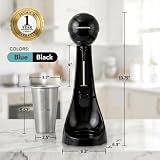
The Ovente is the minimalist choice: just 100 watts of power, a compact 15.2 oz cup, and simple one-touch speed switching. It occupies virtually no counter space, fits in a cabinet easily, and appeals to apartment dwellers or anyone with zero spare space. The safety lock and dishwasher-safe stainless cup are practical touches. A handful of owners genuinely enjoy it for light mixing tasks like protein powders, Nescafé, and light fruit drinks.
However, the limitations are substantial. Buyers consistently report that 100 watts simply isn't enough to handle real ice cream or thick shake texture without requiring extended run times, motor heat, and manual spoon-mixing to finish the job. The small 15-ounce cup means single servings only, making it impractical for household sharing or any production scenario. Multiple reviewers flagged that the tiny spindle rod doesn't reach the cup bottom effectively, leaving powder unblended. Noise is deceptively high for such a small unit: one owner said it sounded like a jet engine, which contradicts the "compact and quiet" positioning. The plastic engagement switch is also cited as a durability weak point.
We'd steer first-time buyers toward the Vevor double-head if they want something small but capable, or the Hamilton Beach DrinkMaster if budget is the primary constraint. The Ovente works only if you're mixing lightweight items (powders, soft ingredients) and accept that a real milkshake will feel like a commitment rather than a quick treat.
Pros
- Smallest countertop footprint of any option tested
- One-touch dual-speed operation, no learning curve
- Safety lock and dishwasher-safe cup for peace of mind
Cons
- 100-watt motor struggles with ice cream and thick textures
- 15.2 oz cup too small for sharing or family use
Key features (4)
- Compact 100-watt motor suitable for light mixing tasks
- Two-speed button control for low and high settings
- 15.2 oz stainless steel cup with safety lock feature
- One-touch operation with automatic stop when cup removed
How to Choose the Right Milkshake Machine
Power vs. Footprint Trade-Off
Motor wattage directly determines how quickly and smoothly your mixer handles ice cream. A 375-watt Vevor single-head will finish a thick shake in 12 seconds; a 100-watt Ovente might take three times as long and still leave you manually stirring. If you make one or two shakes weekly with soft ice cream, 100 watts suffices. For daily use, thick ice cream, or gelato, jump to at least 375 watts. Remember that commercial-grade machines (Waring, high-end Vevor) take up more counter or permanent shelf space. Measure your cabinet clearance before committing.
Cup Size and Production Goals
A 15 oz cup (Ovente) is individual only. A 28 oz cup (Hamilton Beach) handles one large shake or two small servings. The Vevor single-head's 820 ml cup and Waring's standard commercial sizing support consistent production. Double-head machines (Vevor dual) let you make two at once but with smaller individual cups. If you're serving a family or small business, you need capacity: otherwise you're constantly reloading. Consider your typical daily volume before buying.
Noise and Noise-Sensitive Environments
Commercial-grade machines (Vevor single-head, Waring) produce noise equivalent to a power drill or small lawnmower. This is normal for high-speed spindles but rules out open-concept kitchens or early-morning use. The Hamilton Beach and Ovente are quieter but sacrifice mixing speed. If quiet operation matters, be realistic: you can't have both silence and 375-watt power. Test-drive a friend's machine if noise concerns you, or read verified buyer reviews carefully for noise descriptions.
Maintenance and the milkshake machine cleaning guide
Some spindles detach for dishwasher cleaning (Hamilton Beach); others are fixed and require hand-washing (Vevor, Waring). Hand-washing adds time but prevents wear from dishwasher jets. Fixed spindles reduce failure points but limit your cleaning convenience. Check whether cups are dishwasher-safe and if the spindle rod removes: these details compound over dozens of uses. Commercial machines often tolerate soap-and-water cycles; consumer models may have temperature or pressure limits. Factor this into your choice based on your own cleaning tolerance.
Durability and Long-Term Value
Budget machines (Hamilton Beach, Ovente) typically last 2-4 years with light use; heavy plastic housings fail before motors do. Mid-range single-head models (Vevor single-head) show 5-7 years of reliable life if used regularly. Commercial machines (Waring) are designed for 10+ years in professional settings. If you're making shakes three times a week, a durable machine pays for itself through avoided replacement costs. Consider total cost of ownership, not just sticker price.
Our picks at a glance
1
Best Budget-Friendly PickHamilton Beach
2
Best for Commercial-Grade PowerVevor
3
Best Commercial-Grade ChoiceWaring
4
Best for High-Volume Home ProductionVevor
5
Most Compact & Quiet OptionOvente
Frequently asked
Can a milkshake machine handle frozen fruit or gelato?
Yes, but power matters enormously. A 100-watt motor will struggle and overheat; 375 watts and above handles frozen fruit and firm gelato without slowing. The spindle design also affects results: larger, solid spindles (Vevor single-head, Waring) outperform smaller or multi-blade designs under heavy load. Always start at low speed and avoid filling past 3/4 capacity to prevent overspray.
What's the difference between single-head and double-head machines?
Single-head machines mix one shake at a time with a larger spindle and cup, delivering speed and consistent texture. Double-head machines make two shakes simultaneously but with smaller spindles and cups, suited for high-volume home use. For pure mixing power per drink, single-head wins. For parallel production when serving multiple people, double-head saves time: if you can load both cups consistently.
Do I really need a commercial-grade machine for home use?
Only if you make shakes daily or for a small business. Commercial machines (Waring, high-end Vevor) cost more, take up permanent space, and produce noise suited to food-service settings. For occasional home use, a mid-range option like the Vevor single-head balances power, durability, and footprint better than full commercial grade. Home-only users rarely justify the Waring expense.
How loud are these machines, really?
Budget and compact models (Hamilton Beach, Ovente) produce typical small-appliance noise. Mid-range and commercial machines reach 85-90 decibels: comparable to a lawnmower or power drill. If you have an open kitchen or make shakes before 8 AM, test the noise level in person or watch verified buyer videos. Quieter operation always costs power and speed.
Should I buy based on the single vs double head comparison?
That depends on your household size and production frequency. A single-head machine mixes one large shake faster and with greater power efficiency. A double-head lets you make two smaller shakes in the same time, useful for families but with trade-offs in spindle power and individual cup size. Review the single vs double head comparison for detailed throughput analysis specific to your needs.