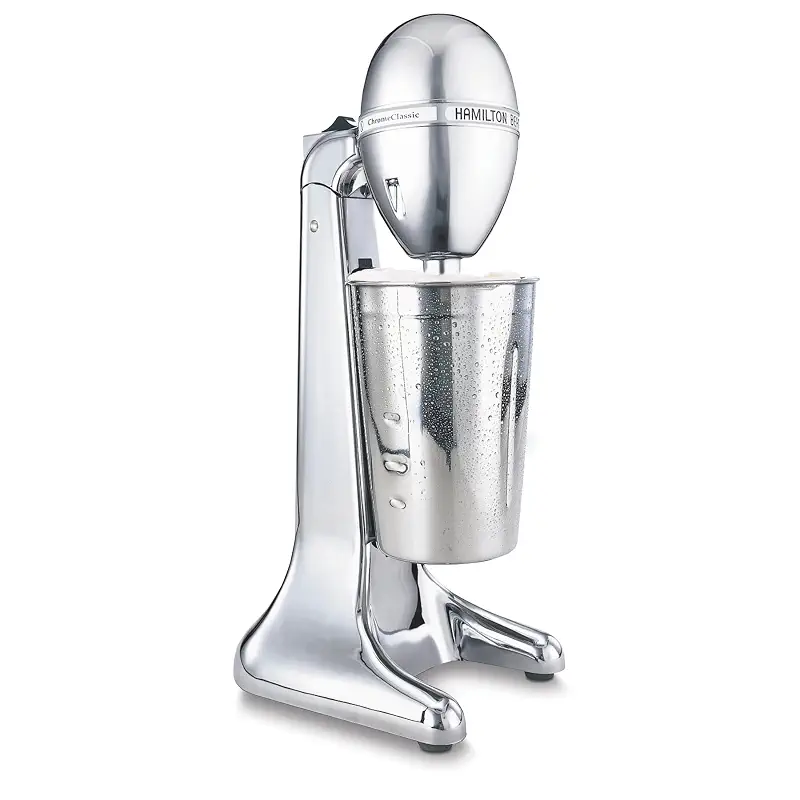
Ideal for: Home cooks making occasional shakes and smoothies on a tight budget.
The Hamilton Beach DrinkMaster is the entry point for home cooks who want a dedicated milkshake maker without spending heavily. It's lightweight, compact, and mixes reasonably fast for single or double servings. The 28-ounce stainless-steel cup is generous for personal use, and the two-speed control gives you room to dial in texture.
That said, this machine carries some real caveats. Multiple owners report that the build feels plastic-heavy despite marketing that emphasizes stainless steel, and the tilting head doesn't lock in place on its own, requiring you to hold it open. Several reviews flag motor durability concerns, with some units reporting burnout after just a few uses. The unit is also top-heavy with a narrow base, which poses a tipping risk if you're working with thick ice cream or pushing the motor hard.
I'd recommend this machine mainly for casual home use: daily smoothies, occasional milkshakes with softer ice cream, a manual ice crusher for crushed-ice drinks, or frothing milk for coffee drinks. If you make thick shakes frequently or want something that will last years under regular use, the Vevor single-head or Waring commercial models offer better durability at a higher investment.
Pros
Compact footprint fits small kitchens easily
Two-speed control for texture adjustment
Dishwasher-safe mixing cup and spindle
Cons
Build quality feels lightweight and plastic-heavy
Motor durability concerns reported in reviews
Key features
28 oz stainless-steel cup with tilting head access
Two-speed mixer for gentle to moderate blending
Tilt-back design for easy spindle removal and cleaning
Compact retro styling suited to small counters
#2 Pick
Best for Heavy-Duty Home & Small Commercial Use
Vevor
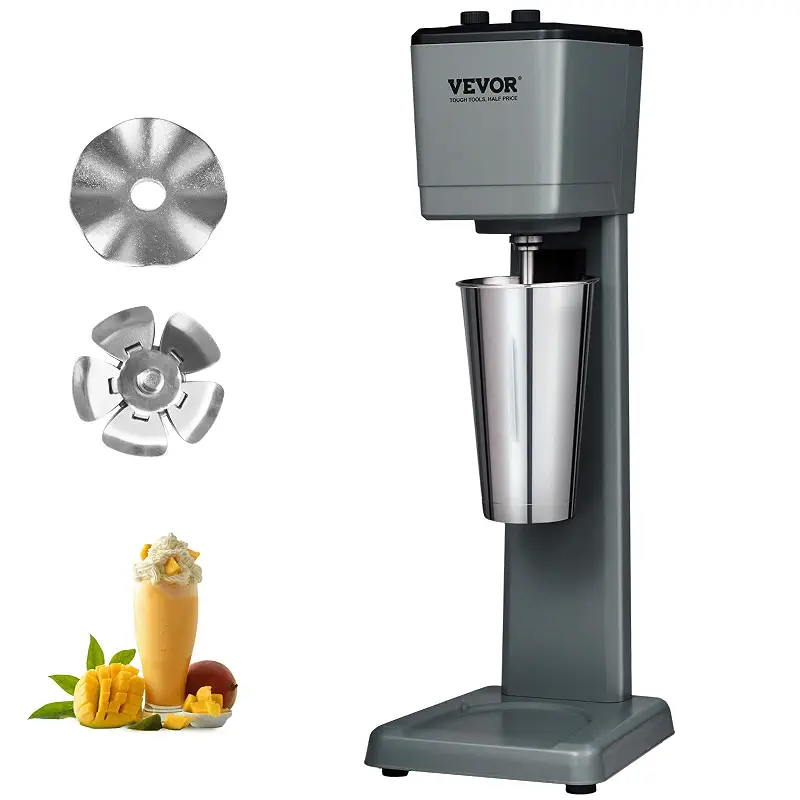
VEVOR Milkshake Maker, 375W Electric Milkshake Machine, Single Head Drink Mixer Blender Machine, 3-Speed Milkshake Mixer with 820 ml Stainless Steel Cup, Milkshake Blender for Commercial and Home
4.4(116)
Powerful single-spindle machine with commercial-grade durability that handles thick ice cream and high-volume mixing.
Ideal for: Home shake enthusiasts and small commercial operators who mix frequently or need thick-shake performance.
The Vevor single-head mixer brings genuine commercial-grade construction to a home-friendly format. Its 375-watt motor reaches 21,000 RPM at high speed and crushes frozen ice cream and thick mixtures in seconds, earning consistent praise from ice cream truck operators and home shake enthusiasts alike. The 820-milliliter food-grade stainless-steel cup is large enough for generous servings, and the three-speed mechanical control lets you match power to ingredient thickness.
The anti-tip support design and solid build quality clearly set this apart from consumer models like the Hamilton Beach. Owners consistently report that this machine feels like a piece of professional equipment, and it delivers fast results without the burnt-motor smell some home mixers develop. The 10-minute timer is genuinely useful for hands-free operation.
The real trade-off is size and noise. This machine is tall and won't fit under standard kitchen cabinets if you leave it on the counter. Several owners also report noise at higher speeds comparable to a power tool, which can be jarring in a home kitchen. Additionally, the fixed mixing shaft cannot be removed for dishwasher cleaning; you'll need to run soapy water through it manually. Compared to the Hamilton Beach DrinkMaster, you're paying significantly more, but you get a machine built for daily professional use rather than occasional home shakes.
Pros
Powerful motor handles frozen ice cream without strain
Three-speed control and 10-minute timer function
Commercial-grade stainless steel and build quality
Cons
Tall footprint won't fit under standard kitchen cabinets
Fixed shaft requires manual cleaning, no dishwasher option
Key features
375-watt motor reaching 21,000 RPM at maximum speed
Three-speed control with mechanical knob selection
820 ml food-grade stainless-steel cup with lotus-leaf agitator
10-minute programmable timer with anti-topple design
#3 Pick
Best for Multi-Batch Production
Vevor
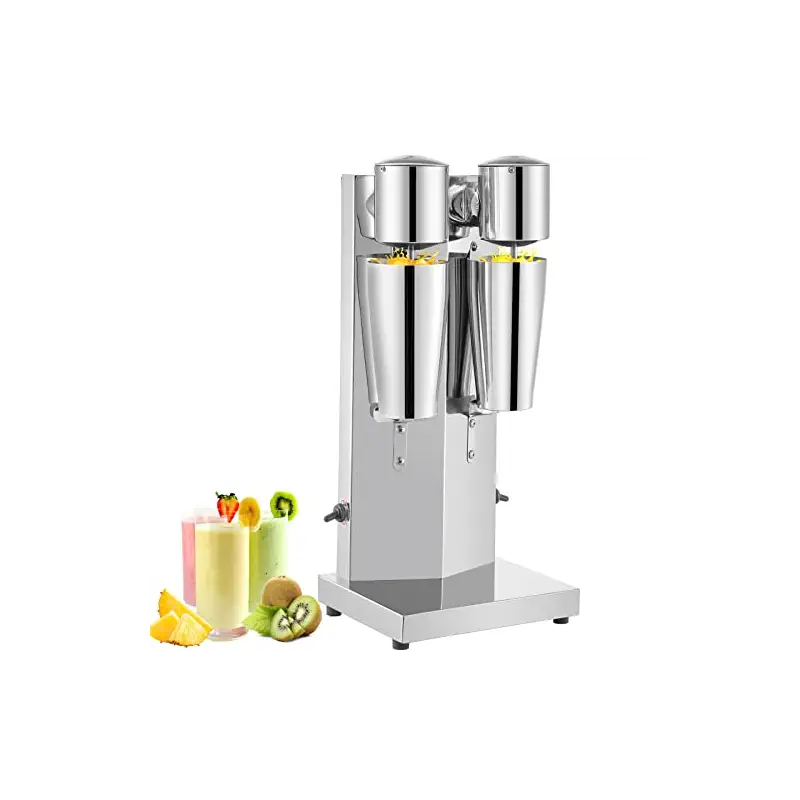
VEVOR Milkshake Double Head Electric Blender, 180W, Silver, 800ml
4.2(44)
Dual-spindle design lets you mix two shakes simultaneously, cutting wait times and boosting efficiency.
Ideal for: Families and small beverage shops making multiple shakes per session.
The Vevor double-head mixer addresses a specific and valuable use case: making multiple shakes at once. With two independent mixing heads and 180 watts total power, you can create two full servings side-by-side, which is ideal for families or small shop environments where batch speed matters. The 800-milliliter cups are substantial, and the microswitch design means the mixer starts automatically when the cup is seated and stops when removed: minimal fuss.
Owners making homemade shakes at home rave about the value and speed, and ice cream shop operators confirm it outperforms cheaper single-head alternatives. The stainless-steel build feels durable, and the two-speed settings give reasonable control. Where the Vevor single-head offers three speeds and 375 watts, this double-head trade-offs raw power for simultaneity.
The main limitation is that because you have two spindles running at once, if you're filling both cups to capacity with thick ingredients, the machines can struggle or splash. Several owners note you need to be conservative with fill levels and speed selection to avoid mess. Also, unlike the single-head Vevor or the commercial Waring, this machine doesn't come with a timer, so you're manually timing each batch. Compared to the Waring commercial mixer, this is lighter-duty and less powerful per spindle, but it costs far less and is designed for home or small-cafe volumes, not high-volume commercial kitchens.
Pros
Dual spindles let you mix two shakes at once
Microswitch auto-start design with minimal operation
Stainless-steel cup and housing for durability
Cons
Limited power per spindle requires careful fill levels
No programmable timer function for batch control
Key features
Dual-head design with two independent 180-watt motors
Two-speed settings per spindle for flexible mixing
800 ml stainless-steel cups with 360-degree rotation
Microswitch auto-start when cup is engaged
#4 Pick
Best Premium Commercial Choice
Waring
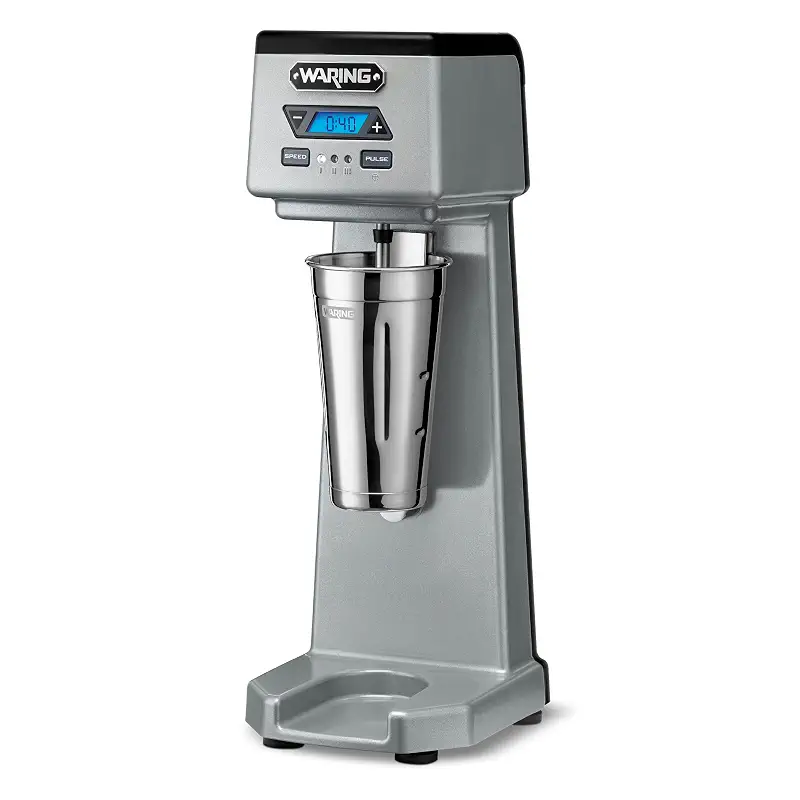
Waring Heavy-Duty Single Spindle Drink Mixer | 1 Horsepower Motor with Digital Timer, Milkshake Maker Machine for Ice Cream Shops
4.5(78)
Heavy-duty professional mixer with digital controls, programmable timer, and durability built for high-volume operations.
The Waring commercial single-spindle mixer is the professional standard for ice cream shops, bars, and quick-service restaurants. Its 1-horsepower motor delivers consistent power that pulverizes rock-hard ice cream without hesitation, and the digital LCD timer with programmable countdown lets you set precise mixing times and walk away: critical when you're juggling multiple orders.
Owners with commercial experience consistently praise the build quality and reliability. The 10-minute programmable timer, automatic start and stop, and pulse feature for manual control give you the precision that volume operations demand. The compact footprint (7 x 8 x 19.5 inches) fits commercial workstations better than the towering Vevor single-head, and NSF and cTUVus certification means it meets food-service safety standards.
The premium pricing reflects commercial-grade engineering, not consumer convenience. This machine is overkill for making one shake a day at home, and the emphasis on commercial safety and durability means less ergonomic polish than the Vevor models. One reviewer reported a motor defect within a month, and warranty claims require navigating Waring's commercial support process rather than streamlined consumer returns. Compared to the Vevor single-head, you're paying substantially more for timer precision, 1 HP versus 375 watts, and professional certification, but only if you truly need high-volume or all-day reliability.
Pros
1 HP motor with unwavering power through thick ice cream
Digital LCD timer with programmable countdown function
Professional NSF and cTUVus certification for food service
Warranty support skews commercial rather than consumer-friendly
Key features
1 horsepower motor with high-torque ice cream mixing
Programmable 10-minute digital countdown timer
Compact 7 x 8 x 19.5 inch footprint for commercial stations
Automatic start/stop and pulse control for operational flexibility
#5 Pick
Best Budget Compact Option
Ovente
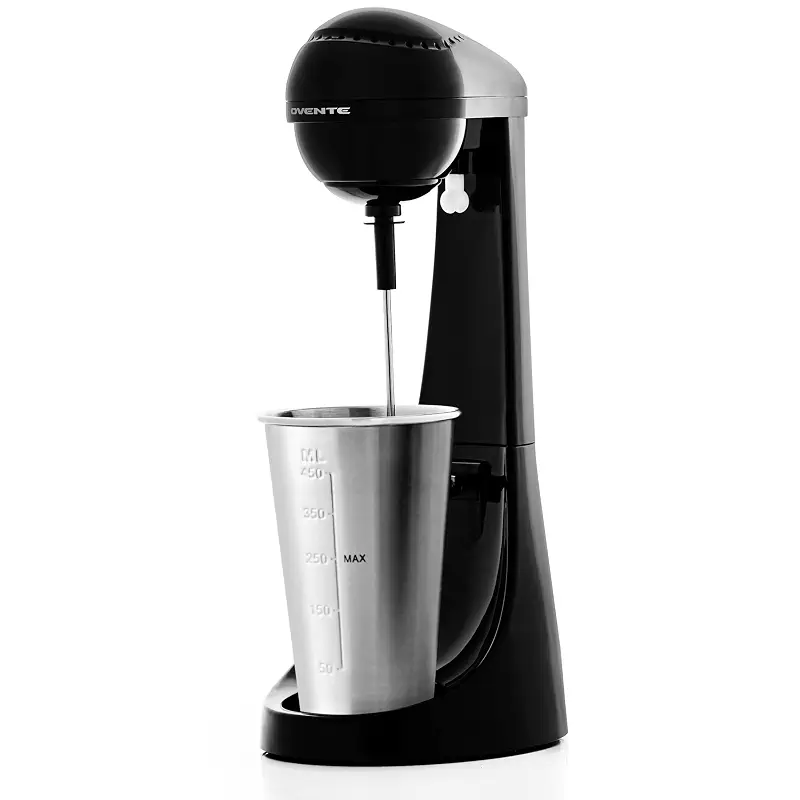
OVENTE Classic Milkshake Maker Machine, 15.2 oz, 100W, Black MS2070B | With 2 Speed Settings, Stainless Steel Mixing Cup & Rod, Electric Drink Mixer Ideal for Malted Milk, Protein Shakes & More
3.9(900)
Lightweight entry-level mixer for small servings, best for casual smoothies and frappés on minimal counter space.
Ideal for: Solo cooks making occasional light shakes or frappés in tiny kitchens.
The Ovente Classic is the smallest and least expensive option here, designed for single-person households or those who make shakes very occasionally. At just 100 watts and a 15.2-ounce cup, it's genuinely compact and quick to store. The one-touch speed toggle and simple stainless-steel spindle are easy to use, and the safety lock prevents operation until the cup is seated properly.
Where Ovente positions this machine is important: it's not a daily workhorse like the Vevor models, and it can't handle the consistency that commercial kitchens demand. Multiple owners report that the small spindle head struggles to blend thick ice cream or powder-based shakes thoroughly, leaving lumps or unblended powder at the bottom. The noise level is also disproportionately loud for its power output, and the motor tends to heat up quickly under load, requiring cool-down time between batches. One reviewer compared it to a jet engine in their kitchen.
I'd steer first-time buyers toward the Hamilton Beach if they want retro style on a budget, or toward the Vevor single-head if they plan to use the mixer more than a few times per month. The Ovente works fine for light frothing, thin smoothies, and occasional milkshakes made with soft ice cream, but it's really the bare-minimum entry point rather than a machine you'll rely on long-term.
Pros
Compact 15.2 oz cup and lightweight design
Simple one-touch speed operation
Dishwasher-safe cup with safety lock
Cons
Small spindle struggles with thick ice cream and powders
Motor runs very loud and heats up quickly under load
Key features
100-watt motor with two-speed button toggle control
15.2 oz stainless-steel mixing cup and rod
Safety lock prevents operation without proper cup seating
Compact footprint ideal for minimal counter space
How to Choose a Milkshake Maker
Four trade-offs that actually matter when matching a milk shake maker to your kitchen.
Power and Speed: What You Actually Need
Motor wattage and RPM matter far more for thick ice cream than casual smoothies. Home models range from 100 watts (Ovente) to 375 watts (Vevor single) to commercial 1 HP (Waring). If you're mixing room-temperature milk and protein powder, 100 watts is enough. If you're blending frozen ice cream daily, jump to 375 watts minimum. Commercial kitchens operate at 1 HP because they run all day, every day. Multiple speeds (two or three) give you flexibility to match power to ingredient density, which reduces splashing and motor strain.
Cup Size and Material
Smaller cups (15 oz) suit solo drinkers; larger cups (28 oz and up) handle family servings or commercial batches. Stainless steel holds temperature better and is more durable than plastic, but plastic cups are lighter and easier to replace if damaged. Pay attention to whether the cup is dishwasher-safe or requires hand-washing. Also check if the spindle shaft is removable for cleaning: some commercial models have fixed shafts, which means you must hand-wash the entire unit rather than tossing parts into the dishwasher.
Footprint and Noise: Counter Reality
A milkshake maker only earns counter space if it fits. Measure your available height, especially if you have wall cabinets or a low ceiling. Compact models like Ovente and Hamilton Beach stay under 16 inches tall. Commercial and high-powered home models like Vevor single-head often exceed 18 inches and won't tuck under standard cabinets. Noise is equally real: compare home versus commercial milkshake makers to understand the difference in motor intensity. Commercial units run at decibel levels closer to power tools; home models are quieter but still noticeable in a residential kitchen.
Build Quality and Longevity
Check materials honestly. Does the product description emphasize stainless steel throughout, or mostly plastic housing with a steel cup? Read reviews for durability signals: motor burnout, tilting-head failures, spindle breakage. Heavier machines with solid bases tip less easily. Commercial machines carry NSF and cTUVus certification because they're engineered for constant use; home machines rely more on lightweight materials and simpler motors. If you mix shakes daily, budget for commercial or heavy-duty home models. If you mix a few times per week, consumer-grade machines hold up fine.
Features Worth Paying For
Programmable timers (found on Vevor and Waring models) eliminate guesswork and free your hands while mixing. Pulse control lets you apply power in bursts, useful for manually breaking up ice cream. Anti-tip base design prevents tipping when you're applying force. Microswitch auto-start means the mixer engages only when the cup is seated, reducing safety risk. Multi-speed control lets you start slow and increase power as ingredients soften. Don't pay extra for features you won't use, but if you mix daily or run a shop, timer and multi-speed justify the cost.
Frequently asked
Quick answers to the questions readers ask most.
Can I use a regular blender instead of a milkshake maker?
Regular blenders and milkshake makers are designed for different jobs. Blenders excel at breaking down leafy greens and soft ingredients; they overheat and often stall when you load them with hard ice cream. Milkshake makers have lower RPM but higher torque, specifically tuned to churn frozen mixtures without burning out. If you're making frozen fruit smoothies, a blender works fine. For thick ice-cream shakes, a dedicated milkshake maker delivers faster, cooler results and longer motor life.
How do I prevent the shake from splashing out of the cup?
Start at low speed and increase gradually as ingredients soften. Don't fill the cup past the maximum marking, especially when starting with cold, hard ice cream. Some owners create a simple lid to contain splash. Avoid scooping rock-hard ice cream directly into cold milk; let ice cream sit at room temperature for a minute or two first, or use soft-serve consistency. Use the pulse feature (if available) to manually apply power in bursts rather than sustained high speed, which gives you better control.
What's the difference between home and commercial milkshake makers?
Commercial machines run continuous high-power motors (1 HP or more) rated for all-day operation, include programmable timers and digital controls, and carry food-safety certification for commercial kitchens. Home machines prioritize compact footprints and lower noise over sheer power, and typically run 100–375 watts with simpler controls. Commercial units cost two to three times more because they're engineered for high-volume shops and ice cream trucks, not occasional home use. For household mixing, home versus commercial milkshake makers reflects a real gap in durability and feature focus.
Do I need to remove the spindle rod for cleaning?
Many home machines have removable spindles that pop into the dishwasher. Commercial machines like Waring often have fixed shafts for durability, meaning you hand-wash the whole unit or run soapy water through the motor housing. Check the product details before buying if dishwasher convenience matters to you. Hand-washing takes two minutes but requires you to unplug the machine first. Some brands like Ovente include a quick hand-wash option: fill the cup with soapy water, run it for 10 seconds on low speed, then rinse and dry.
How long does a milkshake maker motor typically last?
Home motors (100–375 watts) run 3–7 years with occasional use; commercial motors (1 HP) last 10+ years with daily use. Longevity depends heavily on build quality, load consistency, and cooling time between uses. Avoid running the motor continuously for more than a minute or two without pause. If the motor starts smelling like burnt wire or gets unusually hot, stop using it immediately. Regular milkshake maker cleaning guide maintenance (cleaning the housing, checking spindle alignment) extends lifespan. Commercial models last longer partly because they're engineered for thermal management, not because the motors themselves are inherently tougher.