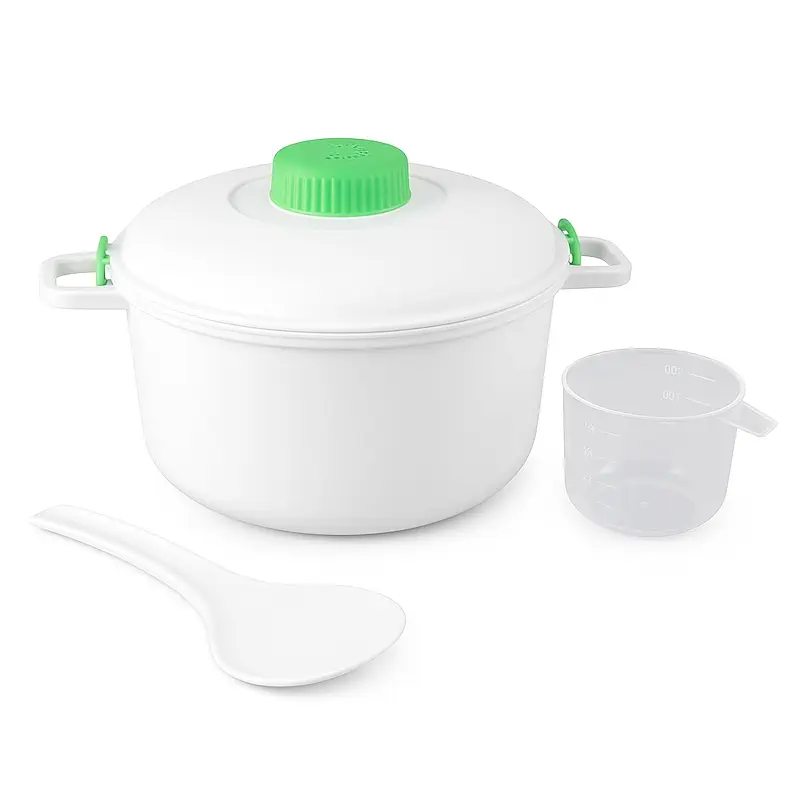
The Dependable Industries Essentials steamer delivers straightforward microwave cooking at a price that won't strain your budget. It comes complete with a rice spoon and measuring cup, so you're not hunting for accessories on day one. The 2.8-liter capacity handles cooking for a small family or meal prep, and the BPA-free plastic is dishwasher-safe for easy cleanup.
Where this model stumbles is durability. A meaningful number of owners report that the plastic feels thin and the lid clips wear out or break within months of regular use. Some buyers describe the lid coming apart in pieces or failing to seal properly, which defeats the purpose of pressure cooking. This isn't universal (plenty of five-star reviews exist) but it's a pattern you should know about.
I'd steer toward this one if you're trying the microwave pressure cooker approach for the first time and want to spend conservatively. Just understand you may need to replace it sooner than you'd hope. If durability is your top priority and you're willing to spend more, the Sistema model offers better long-term reliability.
Pros
Complete set with measuring cup and rice spoon included
Generous 2.8L capacity for families or batch cooking
Oil-free steaming retains nutrients and keeps meals clean
Cons
Thin plastic construction wears out faster than competitors
Lid clips and seals fail with regular use for some owners
Key features
2.8-liter capacity with secure locking lid and steam-release valve
Includes rice spoon and measuring cup for prep convenience
BPA-free polypropylene, dishwasher and freezer safe
Oil-free steaming for health-conscious cooking
Fast microwave cooking cuts prep time by half or more
#2 Pick
Best for Serious Home Cooks
Tupperware
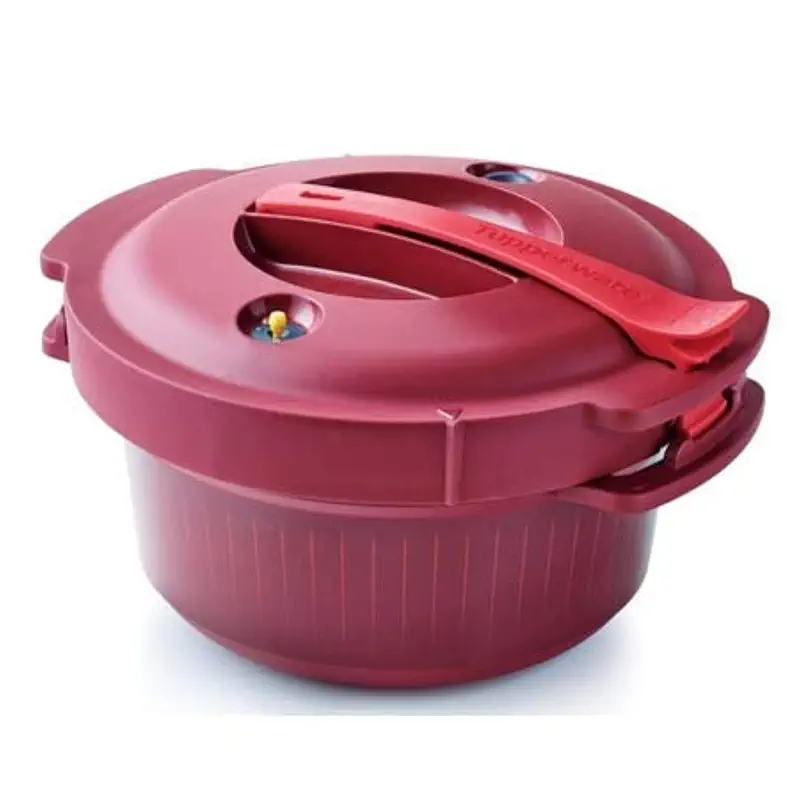
Tupperware Pressure Cooker Microwave Round 2 Quarts Burgundy Red
4.0(82)
Tupperware's premium build delivers years of reliable use, though it requires a learning curve and lacks included instructions.
Ideal for: Experienced cooks prioritizing durability and reliability over price or convenience
Tupperware's microwave pressure cooker has earned a loyal following among owners who use it weekly. The plastic construction is genuinely more robust than budget alternatives, and buyers report that these vessels last for years with minimal degradation. The 2-quart size is modest but appropriate for single servings or small households, and the company's reputation for quality translates to confidence that you're investing in durability.
The catch is that some units arrive without a user manual or instructions, which can be frustrating if you're new to microwave pressure cooking. A few buyers also mention that the interior surface gradually loses its smoothness over extended use, raising questions about long-term material integrity. Compared to the Sistema, which comes with clear care guidelines and consistent documentation, the Tupperware requires you to seek out cooking tips separately or rely on trial and error.
I recommend this for cooks who already understand pressure-cooking basics and value longevity over hand-holding. If you buy it, search online for cooking tips or order a dedicated Tupperware cookbook to maximize what the vessel can do.
Pros
Heavy-duty plastic withstands years of regular weekly use
Ideal for: Rice lovers, couscous cooks, and those valuing consistent microwave cooking results
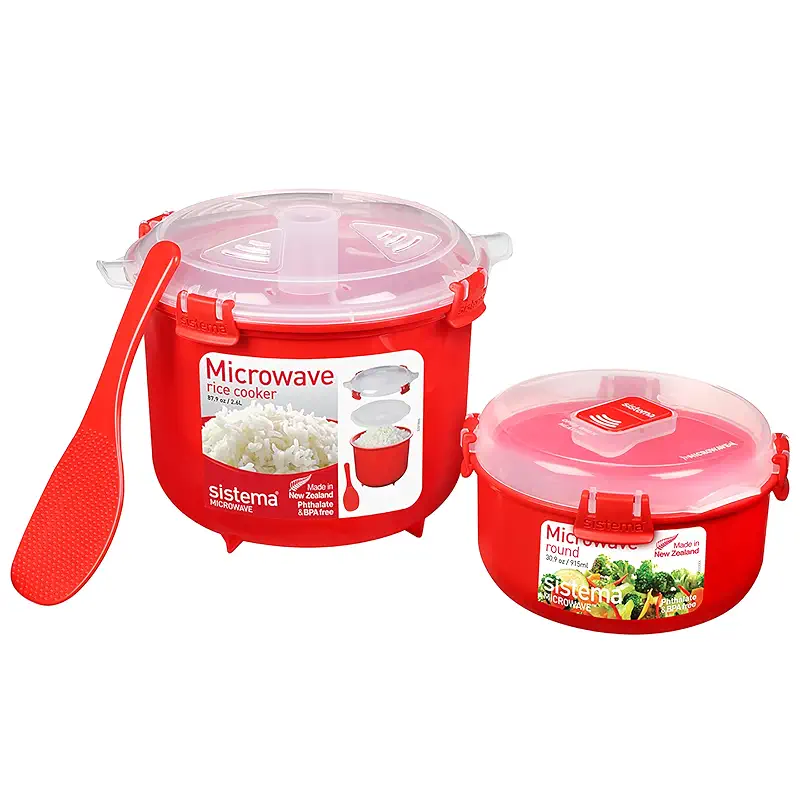
The Sistema Heat & Eat stands out because it does one thing exceptionally well: cook perfect rice every time. The pressure chamber plate ensures even moisture distribution, delivering fluffy, evenly cooked grains without the mushiness that catches people off guard with cheaper models. At 2.6 liters, it sits between the budget and premium options, and the bonus 915ml round container with a steam-release vent doubles as a storage vessel: practical if your kitchen space is tight.
Owners who were skeptical about microwave rice cooking report being surprised by how much better this produces rice than their Instant Pot ever did. The 5,890 reviews create a strong confidence signal; the consistency of five-star praise suggests Sistema nailed the engineering on this one. One caveat: overfilling can cause spillover, but that's more of a user error than a design flaw. The lid vents need to be properly aligned during cooking: a small learning moment, but straightforward once you know it.
If rice is your primary use or you eat it several times a week, this is the clearest pick. Compared to the Meyer, which struggles with consistent pressure and is often limited to lighter dishes, the Sistema's specialized design actually delivers on the promise.
Ideal for: Small-space kitchens, seniors, and light-duty steam or grain cooking
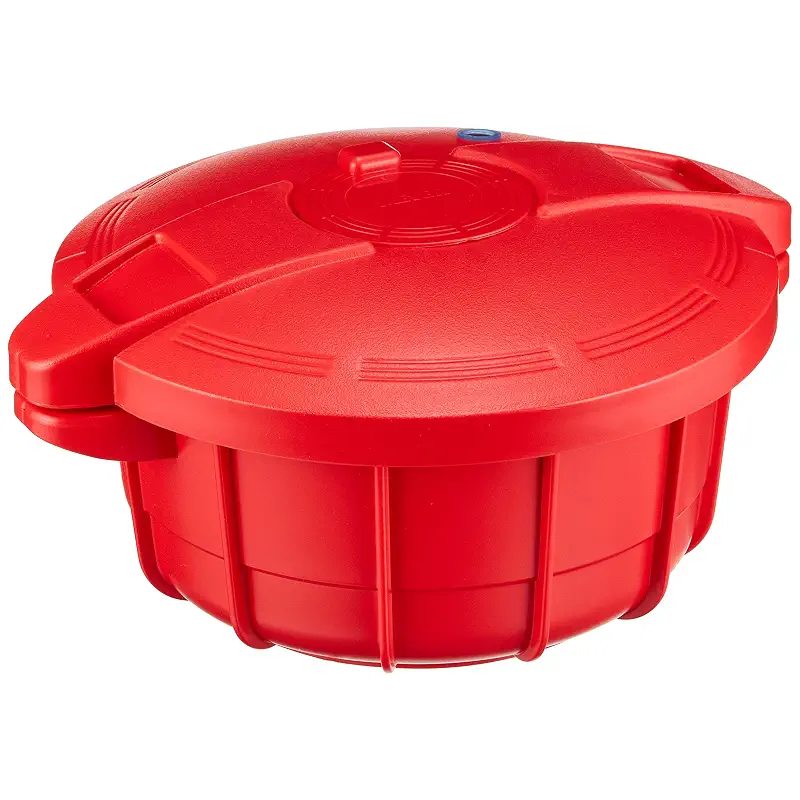
The Meyer MPC offers a genuinely small footprint that fits tight kitchens or apartment dwellers who can't sacrifice counter real estate. At 2.3 liters and weighing very little, it's portable and friendly for seniors or anyone seeking something truly lightweight. The microwave-only operation is inherently safe (no stovetop risks) and owners who use it for lighter tasks like steaming or quick rice are satisfied.
The real limitation is that this model's pressure capacity is noticeably weaker than competitors. Buyers who attempted to braise tougher cuts or achieve the collagen extraction from bones found it underperformed compared to a traditional pressure cooker. One owner noted that after extended cooking, the meat wasn't tender and vegetables didn't soften as expected. The Japanese-language documentation that sometimes ships with units has also frustrated English-speaking buyers. Compared to the Sistema, which excels at precision cooking, the Meyer trades power for portability: a fair compromise if you're cooking soft vegetables and grains but a poor fit if you want to braise or tackle denser proteins.
I'd pick this only if compact size is non-negotiable and your cooking needs are light. For actual pressure cooking tasks, you'll be disappointed.
Pros
Ultra-compact and lightweight, ideal for tight kitchens
Safe fire-free microwave operation with no stovetop hazards
Affordable entry point for trying microwave pressure cooking
Cons
Weak pressure limits effectiveness on tough cuts and deep braising
Documentation sometimes in Japanese; minimal English support available
Key features
Compact 2.3-liter capacity with lightweight polypropylene construction
Fits apartments and small kitchens without hogging counter space
Microwave-safe with steam-release valve for safe operation
Best suited for grains, soft vegetables, and quick steaming
Easy to clean and store; simple microwave-only design
#5 Pick
Best Travel-Friendly Pick
Illiyin
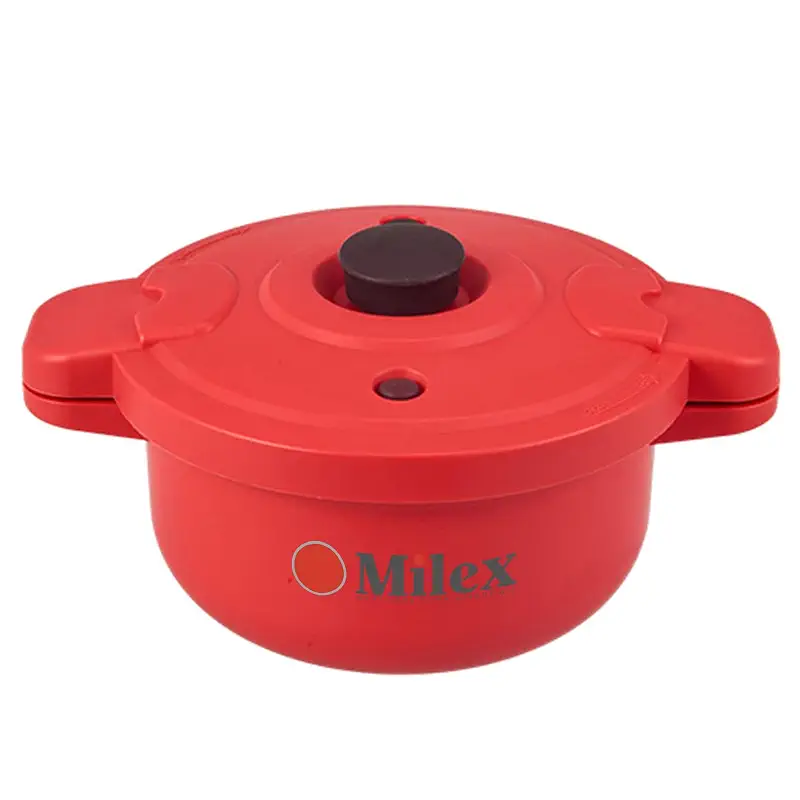
11" Milex 2.43 Quarts Insta Microwave Pressure Cooker With Non Slip Silicone Gloves - Color Red
(0)
Includes convenient silicone gloves and travel-ready design, but lacks owner reviews to verify real-world performance.
Ideal for: Travelers, office kitchens, and those valuing safety features over brand-name reassurance
The Illiyin Milex brings thoughtful touches like non-slip silicone gloves that protect your hands when removing a hot vessel from the microwave: a safety detail competitors overlook. At 2.3 liters, the capacity is modest but workable, and the 11-inch span (handle to handle) makes it portable enough for office kitchens or RV use. The polypropylene construction meets safety standards and weights less than traditional stovetop models, which matters if you're cooking in shared spaces or moving frequently.
The challenge is that this model has no owner reviews on Amazon, so I can't verify whether the pressure system actually performs as advertised or how the plastic holds up over months of use. The specification sheet looks reasonable, but real-world durability and pressure consistency remain unknown. Compared to the Sistema or Tupperware, both of which have extensive owner feedback documenting what works and what breaks, buying this is somewhat of a blind shot. The gloves are a nice touch, but they don't replace the confidence you get from hundreds of verified customer experiences.
I'd recommend passing unless you're willing to take a risk on an unproven model. If the silicone gloves and travel design appeal to you, start with the Meyer or Dependable Industries model first, both of which have established track records.
Pros
Includes non-slip silicone gloves for safe handling
Lightweight and portable for travel or shared kitchens
Compact 2.3-liter capacity with pressure valve system
Cons
Zero owner reviews means no real-world performance verification
Unknown durability; plastic longevity unconfirmed by users
Key features
2.3-liter microwave pressure cooker with pressure valve system
Includes protective non-slip silicone gloves for safe handling
Lightweight polypropylene; temperature range 14F to 284F
Microwave and freezer safe; no gas or stovetop fire needed
Ideal for home, office, and travel use; meets SG safety standards
How to Choose the Right Microwave Pressure Cooker
Four trade-offs that actually matter when matching a microwave pressure cooker to your kitchen.
Capacity and Household Size
Microwave pressure cookers range from 2 to 2.8 liters, and the choice depends on how many people you're cooking for. A 2 to 2.3-liter model suits single servings or couples, while 2.6 to 2.8 liters handles small families and meal prep. If you're feeding four or batch-cooking lunches for the week, aim for the larger end. Keep in mind that overfilling reduces pressure effectiveness, so manufacturers recommend filling only halfway with liquids.
Plastic Quality and Durability
Not all microwave pressure cooker designs last equally. Some models use thinner plastic that degrades or warps within a year, while others withstand years of regular use. Check reviews for mentions of lid durability, clip strength, and whether the vessel maintains its seal over time. Premium brands like Tupperware and Sistema command higher prices partly because they invest in plastic compounds that resist wear. Budget models may feel flimsy at first; this usually signals they'll fail sooner.
Pressure Strength and Cooking Tasks
Microwave pressure cookers deliver gentler pressure than stovetop models, making them ideal for tender vegetables, grains, and light steaming but less effective for braising tough cuts or extracting collagen from bones. If your primary goal is rice or vegetable cooking, any model works. If you want to braise meat or tackle denser proteins, look for reviews mentioning strong pressure and successful braising results. A microwave versus stovetop pressure cookers comparison can help clarify which approach suits your most common dishes.
Build Completeness and Documentation
Some models arrive with helpful accessories like rice spoons, measuring cups, or protective gloves; others ship bare or without user manuals. If you're new to microwave pressure cooking, a microwave pressure cooker setup guide can clarify timing and technique. Check whether the seller includes documentation or whether you'll need to source cooking instructions separately. Tupperware, for instance, sometimes omits manuals, which requires independent research before your first use.
Frequently asked
Quick answers to the questions readers ask most.
Is a microwave pressure cooker as effective as a stovetop pressure cooker?
No: microwave models use gentler pressure, making them ideal for rice, vegetables, and light steaming but less effective for braising tough meat or extracting deep flavors over long cook times. They excel at speed and convenience for weeknight meals but sacrifice the aggressive pressure of traditional cookers. Choose microwave if you want quick, healthy meals; choose stovetop if you regularly braise or need intense pressure.
Can I use a microwave pressure cooker for frozen foods?
Yes, but you'll need to add extra liquid and cooking time. Most models work best with fresh or thawed ingredients, which cook more evenly. Frozen vegetables or meats require longer exposure and careful monitoring to avoid uneven cooking. Add an extra 2–3 minutes to your usual time and check the results before adjusting further.
How do I prevent spillover or mess inside my microwave?
Fill the cooker only halfway with liquid or ingredients; never exceed the maximum line. Make sure the lid seals properly and any steam vents are aligned correctly before microwaving. Place the cooker on a microwave-safe plate or shallow dish to catch spills. Let pressure release gradually before opening, and always open away from your face to avoid steam burns.
Do microwave pressure cookers come with user manuals?
Not always. Some brands like Tupperware and Meyer occasionally ship without printed instructions, leaving you to find cooking times online or in recipe books. Check the product listing to see whether documentation is included, and if it doesn't mention a manual, plan to search for the model number plus 'instructions' on the manufacturer's website before your first use.
What's the difference between a microwave pressure cooker and a regular microwave steamer?
Pressure cookers have sealed lids with steam-release valves that trap steam, cooking food faster under pressure. Regular steamers rely on open or vented designs that allow steam to escape. Pressure cookers cut cooking time dramatically for grains and vegetables; steamers work well for gentle reheating or light cooking but don't speed things up as much. If speed is your priority, choose a pressure cooker.