Kitchen & Dining · Small
Best Microwave for Elderly: Easy-to-Use Models for Seniors
Find the best microwave for elderly users. Compare easy-to-operate models with clear controls, safety features, and reliable heating for senior kitchens.
Affiliate disclosure: As an Amazon Associate I earn from qualifying purchases.
At a glance
1
Best for Straightforward CookingBlack+Decker
2
Best Budget-Friendly OptionCommercial CHEF
3
Best Mid-Range UpgradeBlack+Decker
4
Best for Sensor CookingToshiba
5
Best for Modern SimplicityChefman
Detailed reviews
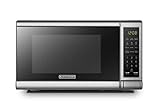
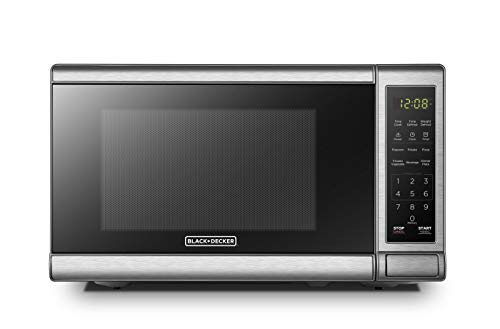
The Black+Decker 0.7 Cu.Ft model excels at what matters most to older cooks: simplicity and consistency. The large LED digital display reads clearly in daylight, and the six preset buttons (popcorn, potato, pizza, frozen vegetables, beverage, dinner plate) mean you can heat the foods you eat most without hunting through menus. At 700 watts, it's lower-powered than some competitors, which actually suits slower, more controlled cooking. The 10 power settings give flexibility without overwhelming choice, and the push-button door release is gentler on arthritic hands than pull handles.
Owners report it heats food reliably once you dial in the right time, though some note the interior capacity runs tight if you're warming large dinner plates. The standout weakness is the small, thin labeling on the control panel: in dim kitchen light or without reading glasses, you'll struggle to see what each button does. A few users also mention the unit slides on smooth countertops without rubber feet, a real safety concern if you're moving around the kitchen. The mechanical reliability is solid; several owners have kept earlier versions of this model running for years.
Compare this to the Toshiba if you want more power and a handle grip, or the Chefman if you value a more modern interface. For an older adult who wants to set the clock once and forget about learning new features, this hits the right balance.
Pros
- Large LED display, easy to read in daylight
- Six preset buttons for everyday foods
- Gentle push-button door, no hard pulling required
Cons
- Control labels too small and dim to read in low light
- Unit slides on smooth countertops without foot grips
Key features (4)
- 700W microwave with 10 adjustable power levels for precise cooking
- Six pre-programmed buttons for popcorn, potato, pizza, and vegetables
- Large LED digital display with clock and countdown timer
- 0.7 cubic-foot capacity with removable 10-inch glass turntable
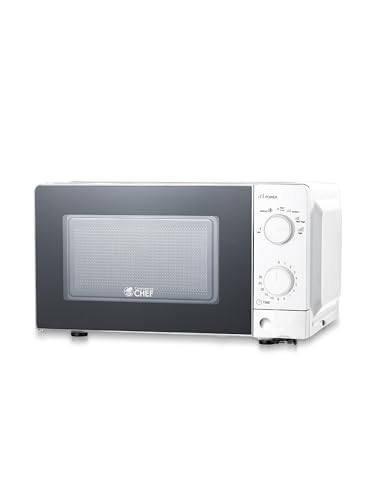
The Commercial Chef 0.6 Cu.Ft stands out for its mechanical dial timer and straightforward six-level power knob: no touch screen, no confusing button sequences. For older users who've used dial microwaves for decades, this feels familiar and trustworthy. At 700 watts and a compact footprint, it's a true economy choice without sacrificing basic performance. The mechanical controls are durable; there's no display panel to fail, no touch-sensor glitches to frustrate you.
Owners who've used similar budget models for 10+ years speak highly of this design philosophy. You'll notice heating times are slightly longer than higher-wattage units, but for daily reheating of leftovers and warming beverages, the delay is negligible. The push-button door works smoothly, and the turntable rotates reliably. One real advantage: if you're the type to avoid electronics and prefer pure mechanical operation, this eliminates worry about digital boards failing.
Weighed against the Black+Decker above, you trade the large LED display and preset buttons for even simpler mechanics and lower cost. If you're on a tight budget and already know how to use a dial microwave, this delivers dependable value. The Toshiba and Chefman offer more features at a modest price step up, so consider your comfort level with pushing buttons versus turning dials.
Pros
- Mechanical dial timer, zero electronics to fail
- Compact size perfect for small kitchens
- Proven durability in low-cost segment
Cons
- 700W power means slower heating than mid-range models
- No clock display or timer countdown on screen
Key features (4)
- 700W microwave with six mechanical power levels
- Mechanical dial timer with 30-minute maximum setting
- Push-button door release for easy one-handed operation
- 0.6 cubic-foot capacity with removable glass turntable
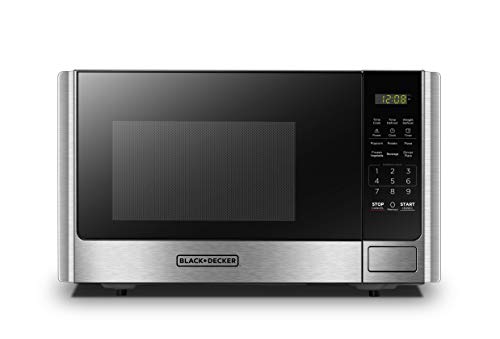
The Black+Decker 0.9 Cu.Ft model steps up to 900 watts and a larger cavity, making it the sensible choice for older adults who cook for more than one person or want faster reheating. The 10 power levels and six preset buttons keep the interface manageable, not overwhelming, not stripped down. Owners consistently report even heating and fast performance on frozen dinners and leftovers, a real advantage if cooking fatigue is a concern.
The large LED digital display reads clearly, and the push-button door is smooth to operate. Where this model sets itself apart: the interior dimensions are genuinely roomy without taking up excessive counter space. You can fit standard dinner plates, covered casseroles, and beverage mugs without playing Tetris. Several users over years of ownership report the door button becoming less responsive over time, and the defrost function isn't the most intuitive (you'll need to refer to the manual), but for basic everyday reheating, it's consistent and fast.
Compared to the Black+Decker 0.7 model, you're buying more wattage and space for modest extra cost. Where it falls short against the Toshiba: the Toshiba's humidity sensor and mute button offer refinements, though they add complexity some seniors may not want. If you're looking for the middle ground between budget simplicity and premium features, this lands squarely there.
Pros
- 900W power delivers faster, more even heating
- Larger 0.9 cubic-foot cavity fits dinner plates easily
- Six preset buttons keep operation intuitive
Cons
- Door button can wear with frequent use over time
- Defrost and advanced modes require manual reference
Key features (4)
- 900W microwave with 10 adjustable power levels
- Six pre-programmed cooking presets for common foods
- Large LED digital display with clock and 30-second quick start
- 0.9 cubic-foot capacity with larger 10.6-inch turntable
The Toshiba 1.2 Cu.Ft brings genuine kitchen tech (a humidity sensor that adjusts cooking time automatically) without demanding that you master complicated settings. For older adults who sometimes forget to check if food is hot enough (or worry about overheating), the sensor presets for reheating and defrosting remove guesswork. At 1000 watts with a larger cavity, it handles big portions and multiple containers at once. Several owners praise how quiet this unit runs compared to other models in its class; if you're sensitive to kitchen noise, the difference is noticeable.
The main frustration, which you'll see repeated in reviews, is the control layout: the STOP button sits directly below the COOK TIME button, and users frequently hit STOP by accident after entering time, canceling their settings mid-entry. After two months of use, the annoyance doesn't fade. The ECO mode and Soften/Melt functions also require the manual; you won't intuitively figure out all five soften settings or how to use the weight-defrost without reading instructions. For older adults with steady hands and patience for learning, this is fine. For those who find manuals frustrating, the learning curve stings.
Against the Black+Decker 0.9, you gain sensor cooking and real power, but trade simplicity for slightly more complexity. If you live alone and mostly reheat single portions, the Chefman's 1000W at smaller capacity might suit you better. If you cook for two and want the sensor advantage plus quiet operation, this earns its place.
Pros
- Humidity sensor automatically adjusts cooking for optimal results
- 1000W power with large 1.2 cubic-foot capacity
- Remarkably quiet operation compared to competing models
Cons
- STOP button placement causes accidental press interruptions
- Advanced functions (soften, defrost modes) require manual study
Key features (4)
- 1000W microwave with 10 power levels and auto-sensor presets
- Smart humidity sensor for optimized heating of common foods
- Large LED digital display with clock and countdown timer
- 1.2 cubic-foot capacity with 12.4-inch glass turntable
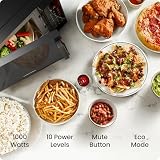
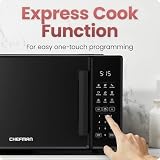
The Chefman 1.1 Cu.Ft brings modern conveniences without overwhelming complexity. At 1000 watts in a compact footprint, it delivers the power of a full-size unit while leaving room on smaller countertops. The child safety lock built into the handle is smart design: you depress it the same motion you use to open the door, not an awkward two-step process. For older adults living with grandchildren or in shared housing, this safety feature doesn't feel like an afterthought.
What sets this model apart is the mute button, which silences the beeping between cycles and at completion. If you're noise-sensitive or live in a close space, this refinement matters. The memory function lets you program favorite cooking times for one-touch start, reducing the number of steps for meals you make often. Six preset buttons cover the usual foods, and the display is bright and legible. However, owners consistently report the keypad buttons require firm, deliberate pressure to register, not a light touch. If you have arthritis or weak hands, you may find yourself leaning into the buttons, which some find tiring. Importantly, this takes focus away from the simplicity pitch.
Compared to the Toshiba, you gain a simpler interface and mute function but lose the humidity sensor. Compared to best microwaves at costco, you're looking at specialty retail options that often emphasize either budget pricing or premium sensor features; this Chefman balances both without requiring you to shop warehouse clubs. If you want a balance of current-era features without sensor complexity, and you're willing to press buttons firmly, this is a strong pick.
Pros
- 1000W power in compact size saves counter space
- Mute button silences beeping for noise-sensitive users
- Child safety lock integrated into door handle design
Cons
- Keypad buttons require firm, deliberate pressure to register
- Memory function adds complexity if you prefer simple operation
Key features (4)
- 1000W microwave with 10 adjustable power levels
- Six preset cooking buttons for everyday foods
- Memory function stores three favorite time and power combinations
- 1.1 cubic-foot capacity with dishwasher-safe glass turntable
How to Choose a Microwave for Seniors
Power Level: Speed vs. Learning Curve
Wattage ranges from 700W (slower but adequate for reheating) to 1000W (fast, even cooking). For older adults, the gap matters less than consistency. A 700W unit takes slightly longer to warm coffee but won't overheat it if you set time carefully. A 1000W unit cuts reheating time roughly in half, helpful if standing becomes tiring. The trade-off: more power sometimes means learning more settings. If you primarily reheat leftovers and warm beverages, 700–800W suffices. If you cook for two or thaw frozen foods regularly, stepping up to 900–1000W reduces frustration.
Control Types and Readability
Choose between mechanical dials (simple, no electronics to fail) and digital buttons (more features, brighter displays). Mechanical controls suit those comfortable turning knobs; digital controls offer clear readability with an LED display and preset buttons. The real deciding factor: can you read the labels in your kitchen's lighting? Check that button labels are printed boldly and the display is large enough without glasses if that's important to you. A dim or tiny control panel defeats the purpose of a microwave that's supposed to simplify cooking. When learning control types for older adults, prioritize visibility and muscle memory: you want to operate your microwave by feel and sight without constantly checking instructions.
Door and Handle Design
Push-button doors are gentler on hands than pull handles, especially for those with arthritis or grip weakness. Some models now integrate child safety locks into the handle itself: you depress while pulling, a natural motion that doesn't require remembering an extra step. Test the door action if you can; it should require moderate pressure, not a firm yank. A smooth-opening door signals better overall build quality.
Interior Size and Turntable
Measure your most-used dishes and containers before buying. A standard dinner plate is 10–11 inches; ensure the turntable accommodates it without edges catching. Compact models (0.6–0.7 cu.ft.) suit small kitchens and one-person households but can feel cramped for serving dishes or multiple items. Mid-size (0.9 cu.ft.) and full-size (1.1+ cu.ft.) models offer breathing room without dominating counters. Consider whether you'll be using covered dishes or tall containers, which need vertical clearance inside the unit.
Safety and Support Resources
Look for models with child safety locks (important if grandchildren visit) and accessible customer support. Ensure the manufacturer provides a clear, readable manual and responsive warranty handling. Some brands offer extended coverage; read a few user reviews specifically about warranty claims before committing. A microwave that dies after two years of light use is a frustration you don't need.
Our picks at a glance
1
Best for Straightforward CookingBlack+Decker
2
Best Budget-Friendly OptionCommercial CHEF
3
Best Mid-Range UpgradeBlack+Decker
4
Best for Sensor CookingToshiba
5
Best for Modern SimplicityChefman
Frequently asked
What wattage is best for an older adult who only reheats food?
700–800 watts is sufficient for reheating leftovers, warming beverages, and cooking frozen sides. You'll add 30–60 seconds to heating times compared to a 1000W unit, but the trade-off is simplicity and lower cost. If you live alone or rarely cook large portions, this power range is ideal. Only step up to 900W+ if you cook for two or thaw frozen meats regularly.
Are digital displays harder to read than mechanical dials for seniors?
Not necessarily. A good LED digital display is often easier to read than mechanical dials, especially in low light. The key is size and brightness: look for large numerals, backlit displays, and bold control labels. Mechanical dials are simpler conceptually (turn knob, set time) but don't show you remaining cook time or a clock unless you watch the dial yourself.
Should I worry about sensor cooking if I'm just reheating?
Sensor cooking is helpful if you often reheat different foods with varying moisture levels (rice, pasta, soup) and want to avoid overcooking. For simpler routines (warming the same coffee cup or reheating a plate of leftovers) sensor presets add complexity without much benefit. Stick with manual power-level controls if you prefer predictable, straightforward operation.
Why do some microwaves have child safety locks, and should I care?
Child locks prevent accidental opening while the microwave is running and keep young children from operating it unsupervised. If grandchildren visit or you live with younger family members, this feature adds safety. If you live alone, it's less critical, though some designs integrate the lock smoothly into normal door opening so it's not an annoyance.
What size microwave fits best on a senior kitchen counter without crowding?
A 0.9–1.1 cubic-foot model strikes a balance: large enough for most dishes without overwhelming a standard kitchen counter. Measure your counter width (most are 24–36 inches) and depth from backsplash to front edge (typically 16–24 inches). Compact models (0.6–0.7 cu.ft.) fit tight spaces but sacrifice interior capacity. Full-size models (1.2+ cu.ft.) are overkill unless you cook large meals.