Best Meatball Maker: Top Picks for Uniform Portions
Find the best meatball maker for your kitchen. Compare tongs, trays, and multi-tube makers to shape meatballs faster. Read our buying guide and reviews.
Ideal for: Home cooks who prioritize comfort, flexibility, and hand-friendly portability over batch speed.
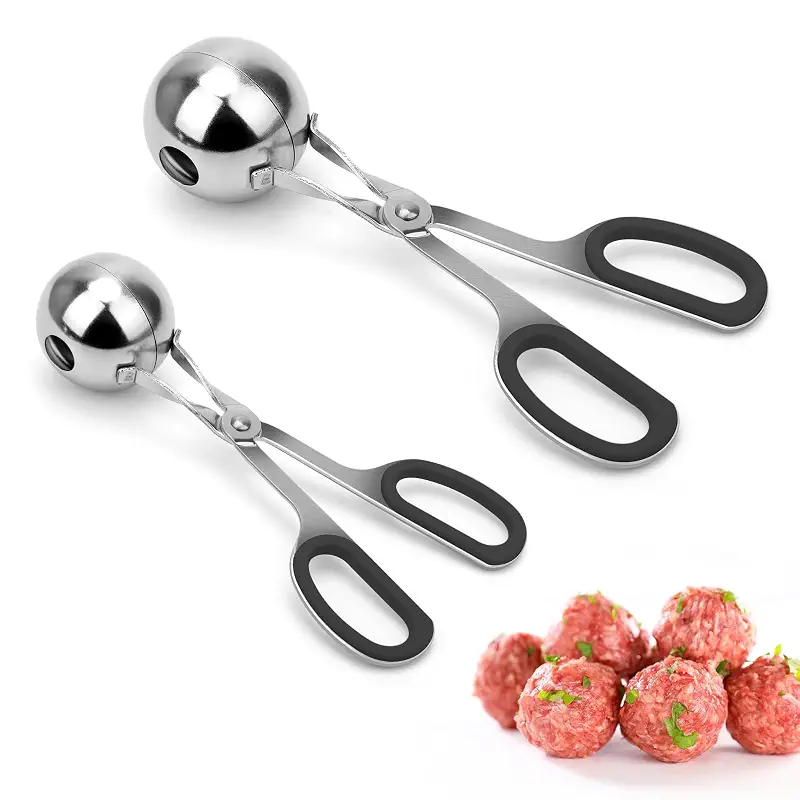
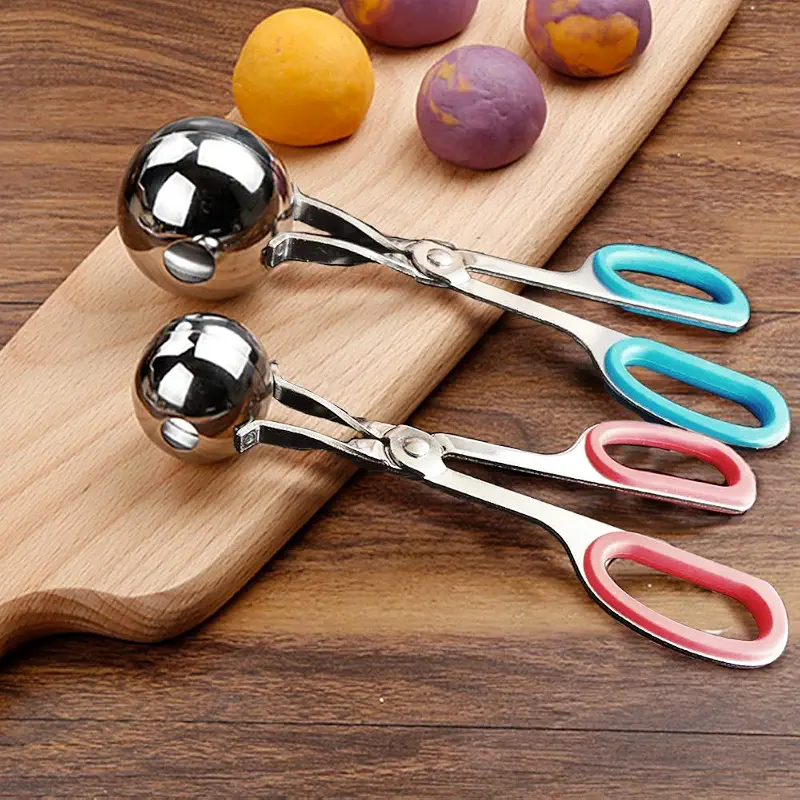
The QMET tongs feel solid in hand and earn strong marks from buyers who deal with arthritis or hand fatigue. The mechanism is straightforward: load the scoop, close the handles, squeeze out the excess, and release. Two sizes (1.38 and 1.78 inches) give you flexibility for meatballs, cake pops, or rice balls without needing multiple tools. The stainless steel doesn't chip, and the detachable handles wash easily in a sink or dishwasher.
One consistent note from reviewers is that a light oil dip between scoops prevents sticking and speeds the process. A few buyers found the opening width limiting for very soft batters, and cake-pop enthusiasts split on whether the tool works as well for delicate batters as it does for seasoned meat. Still, the tool's ergonomic design and price point make it a solid daily-driver option for most home cooks.
Compared to tray-style makers like the Shape+Store Meatball Master, this trades batch speed for ease of use and portability. If you value comfort and flexibility over making 32 at once, the QMET tongs are the pick.
Pros
Arthritis-friendly handles and effortless squeezing
Two-size set covers meatballs and smaller portions
Smooth non-stick stainless steel cleans quickly
Cons
Requires technique and practice to avoid sticking
Limited opening width for very soft batters
Key features
Scissor-action tongs with detachable ergonomic handles in two sizes
Food-grade 304 stainless steel with non-stick surface
Holes in scoop squeeze out excess, shaping ball automatically
Dishwasher safe; handles separate for thorough cleaning
#2 Pick
Best for Batch Prep
Shape+Store
Meatball Master
4.3(3,525)
Freezer-to-table tray that shapes 32 uniform meatballs at once; game plan changes when efficiency matters most.
Ideal for: Meal-prep cooks and large families who freeze meatballs in bulk and want zero hand-rolling.
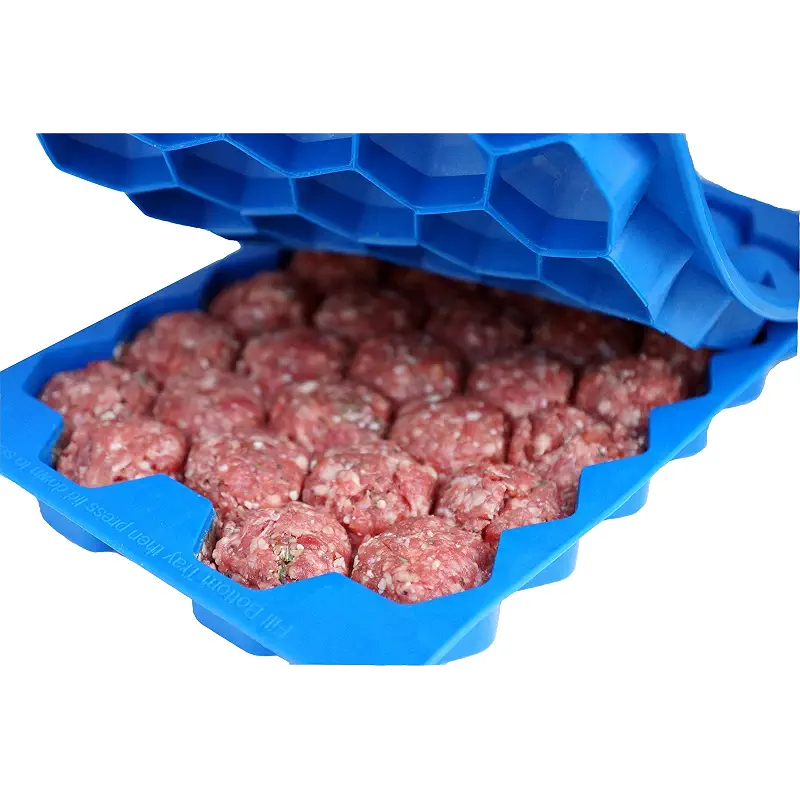
The Shape+Store Meatball Master is built for cooks who batch-prep and freeze. You fill 32 compartments with your meat mixture, pop the tray in the freezer for a couple of hours, then extract ready-to-cook meatballs. Each one comes out the same size and weight, and the raw meat never touches your hands: a real win if you're squeamish or processing several pounds at once. Reviewers who followed the filling instructions (not overstuffing) and used a light oil spray had excellent results, with meatballs popping out cleanly and staying frozen for weeks with minimal freezer burn.
The tradeoff: you need to fill all 32 compartments or accept partial trays in your freezer. Cleanup requires attention: the tray has edges and sides that trap grease, so running it through a dishwasher is tempting (and works) but hand-washing each compartment thoroughly is the safer choice for longevity. A few buyers reported oozing when they overfilled or didn't allow the tray to freeze long enough; that's user error, not a design flaw.
Where single versus triple meatball makers shine at rolling smaller batches, this tray is unbeatable if you're feeding a family of four or making a month's worth of frozen portions at once.
Pros
Makes 32 perfectly uniform meatballs in one batch
Freezer safe; meatballs pop out cleanly when frozen
No hand-rolling required; keeps raw meat off hands entirely
Cons
Must fill all 32 compartments for efficient use
Thorough hand-washing needed to clear grease from edges and holes
Key features
32-compartment tray yields 1-ounce meatballs at 1.5 inches diameter
Freeze before portioning; meatballs release cleanly when frozen
Dishwasher safe; freezer and storage friendly
Design keeps raw meat from ever touching your hands
#3 Pick
Best Value Two-Pack
Ahier
Meatball Maker, AHIER 2PCS None-stick Meatball Scoop Ball Maker with Detachable Anti-Slip Handles, Stainless Steel Meat Baller Cake Pop Scoop for Kitchen
4.1(728)
Affordable scissor tongs with varied results; works for soft meats but struggles with dense or cold mixtures.
Ideal for: Budget-conscious home cooks making soft batters or room-temperature meat mixtures; testing meatball makers for the first time.
The Ahier set pairs two differently sized scoops at a budget-friendly price, making it appealing for first-time meatball makers or anyone testing the category without a big investment. The non-stick stainless steel feels smooth, and the detachable handles do reduce hand strain compared to hand-rolling. For softer meat mixtures, batter, or cookie dough, many buyers reported good results and tidy portion control.
The weakness shows up with denser or chilled meat. Buyers who made falafel, cheese crisps, or cold ground beef noted that the mixture stuck stubbornly to the scoop and sometimes split in half when opening. The coating helps prevent sticking, but not enough for every mixture or condition. A couple of users found the handle connection loosened over repeated use, suggesting durability might lag behind pricier models over months of weekly cooking.
If your main project is soft dough or loose meat at room temperature, this set delivers value. But the QMET tongs above handle a wider range of mixtures more reliably, which is why I'd prioritize the latter if durability and versatility matter to you.
Pros
Two sizes at an affordable entry-level price
Non-stick coating works well for soft doughs and batters
Detachable handles reduce hand fatigue during scooping
Cons
Struggles with dense, cold, or sticky meat mixtures
Handle connections may loosen after extended use
Key features
Two-piece set with 1.38-inch and 1.8-inch scoops
Food-grade 304 stainless steel with non-stick surface
Detachable anti-slip rubber handles
Dishwasher safe; versatile for meatballs, cookie dough, rice balls
Ideal for: High-volume cooks, caterers, restaurants, and home meal-preppers who make 50+ meatballs per session.
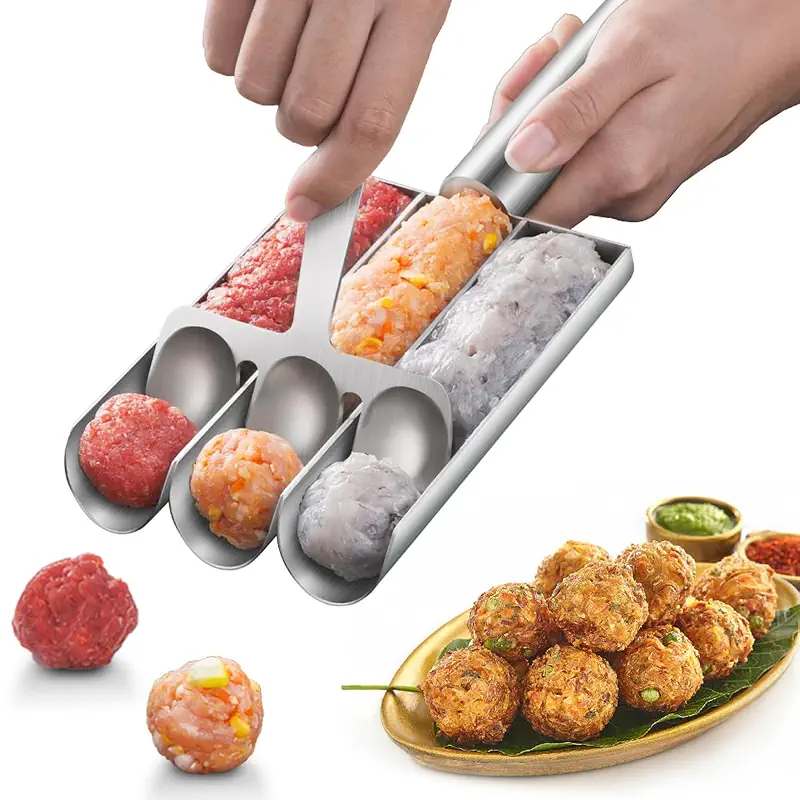
The choxila triple maker feeds meatballs down three chutes with a single scoop motion, cutting prep time significantly if you're working with large volumes. Restaurant and catering use is common, and home cooks who batch-cook once or twice a month love the speed. It's stainless steel, dishwasher safe, and the long handle feels balanced and comfortable. Buyers who make meatballs weekly report the gadget pays for itself in saved labor.
The caveats: the chutes are a touch tight, and as you press, the spoon can catch slightly on the guide rails. A couple of reviewers found the finished balls came out smaller than expected in photos, and shaping requires a little gentle hand-work after release to round them out and compact them, so while the tool speeds things up, it's not completely hands-off. There's a learning curve to getting uniform density and shape, and very cold or very dense meat can be sluggish to push through.
Compare this to single versus triple meatball makers: if you're making dozens in one session, the triple design is a time-saver. For occasional dinner prep, the simpler tongs or tray might suit you better. Many home cooks find that pairing a meatball maker with best meat claws for handling and turning finished meatballs in the pan or oven adds another layer of efficiency to the whole workflow.
Pros
Shapes three meatballs per press; major time savings for volume
Solid stainless steel construction feels commercial-grade
Dishwasher safe and long handle reduces reach fatigue
Cons
Chutes catch slightly during pressing; requires technique
Meatballs need gentle hand-shaping to round and compact after release
Key features
Triple-tube design shapes three meatballs simultaneously
Includes separate meatball scoop for easy pressing
Long handle for comfortable reach and leverage
Stainless steel construction, dishwasher safe, suitable for professional or high-volume home use
#5 Pick
Best Multi-Tube Option
Kazheon
Meatball Maker Tool, with Nonstick Scoop | Stainless Steel Portable Non Stick Meat ball Maker, Kitchen Restaurant Must Have Meatball Making Set,Home Cooking Tools
3.6(38)
Four-tube maker with included scoop; good build quality but demands practice and proper technique to excel.
Ideal for: Experienced cooks and volume preppers comfortable with a learning curve; restaurants or caterers seeking commercial-style production.
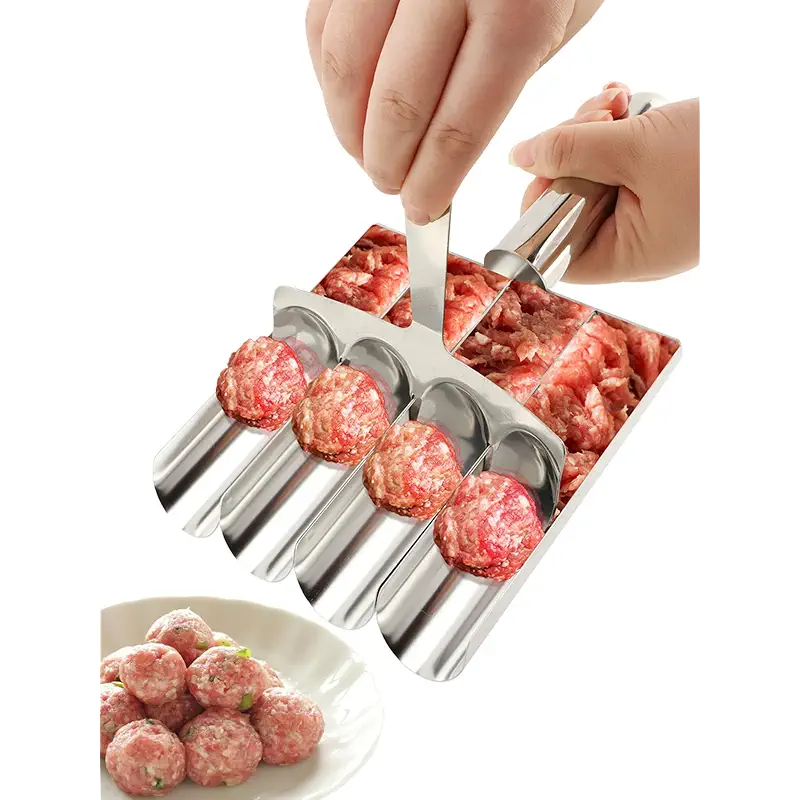
The Kazheon four-tube maker promises to shape four meatballs at once and includes a dedicated scoop to press the meat through. The stainless steel feels sturdy, and the non-stick coating is a genuine plus. Buyers who mastered the technique (firmly pressing the meat mixture down through the tubes with the scoop) reported faster prep and evenly sized portions, especially for larger batches or restaurant-style service.
The reality, though, is that this tool has a learning curve steeper than the scissor tongs or tray options. One reviewer noted the process felt "slightly complicated and not as quick or effortless as expected," and others emphasized that practice and finding the right pressure and angle are crucial. The four-tube design can feel awkward initially if you're used to hand-rolling or simpler single-scoop tools. A few buyers reported durability questions ("not quite as sturdily made as I would have liked"), which is a concern given the price point.
For volume cooks willing to invest time in mastering the tool, it works. But if you want immediate results without a ramp-up period, the Shape+Store tray or QMET tongs are faster paths to success.
Pros
Four tubes speed production beyond single-tube tongs
Includes dedicated scoop for consistent pressing technique
Non-stick surface reduces sticking and cleanup time
Cons
Steep learning curve; technique and practice required
Build quality questions from some buyers on durability
Key features
Four-tube simultaneous shaping for volume production
Includes non-stick meatball scoop for pressing
Food-grade stainless steel, rust-resistant and dishwasher safe
Versatile for chicken, shrimp, rice, or potato balls
How to Choose the Right Meatball Maker
Four trade-offs that actually matter when matching a meatball maker to your kitchen.
Single Scoop vs. Multi-Tube vs. Tray
Single-scoop tongs (like the QMET) are best for everyday cooks who make one or two dozen meatballs at a time. They're nimble, store easily, and work for multiple foods beyond meatballs. Multi-tube designs (triple or four-tube) excel when you're batch-cooking 50 or more portions in one session, cutting press time in half compared to single scoops. Trays like the Shape+Store hold 32 compartments and require freezing before portioning, making them ideal for monthly meal prep but less flexible if you need fresh meatballs immediately. Your choice depends on volume: occasional dinners favor tongs; high-volume prep favors trays or multi-tubes.
Material and Non-Stick Coating
Food-grade stainless steel (typically 304) is standard across all models and resists rust and corrosion. Non-stick surfaces reduce sticking, but they're not foolproof, using meatball makers correctly requires a thin oil application between scoops or coating the tool before use. The non-stick coating also needs gentle handling; abrasive scrubbers can strip it over time. Stainless steel without non-stick coating is more durable long-term but requires more frequent oiling. Check dishwasher safety: some multi-tube or tray models can go in the machine, but hand-washing with a soft sponge is often safer for the coating.
Comfort and Hand Fatigue
Ergonomic design matters, especially if you're making meatballs weekly or have arthritis or hand weakness. Scissor-action tongs with cushioned, detachable handles significantly reduce strain compared to hand-rolling or squeezing. The QMET and Ahier models both offer ergonomic grips and detachable handles that separate for thorough washing. Long-handled multi-tube makers distribute pressure across your whole hand and arm rather than concentrating force in your fingers. If hand comfort is critical, prioritize tongs with cushioned grips over other features.
Batch Size and Storage Fit
Consider your freezer and how often you cook. A 32-compartment tray takes up shelf space and requires commitment to filling all or most compartments for efficiency. Scissor tongs create portions on demand and store in a single drawer. Multi-tube makers are compact but demand repeated use to justify the counter or drawer real estate. If you have limited freezer space or prefer flexibility, tongs win. If you dedicate a full day to prepping and want zero hand-rolling, a tray justifies the space. Single versus triple meatball makers balances speed against the footprint you can afford.
Meat Mixture Consistency and Temperature
Different tools handle different mixtures better. Scissor tongs work reliably with room-temperature, well-seasoned ground meat and soft batters like cookie dough or falafel. Trays require meat that's slightly chilled or at room temperature and not overstuffed; they struggle if the mixture is too dense. Multi-tube makers need consistent, slightly firm mixture and pressure applied correctly through the scoop. Using meatball makers correctly means understanding your meat's temperature and texture: cold, dense beef needs different handling than warm, loose chicken or batter.
Frequently asked
Quick answers to the questions readers ask most.
Do I need to oil the meatball maker before each scoop?
A light oil coating between scoops (or every second scoop) helps prevent sticking and speeds release, especially with tongs and multi-tube makers. You can use cooking spray, vegetable oil, or even water for some mixtures. Trays benefit from a light spray on top and bottom before filling. Without oil, meat or dough can stick stubbornly to the tool and split when you open or press. Many buyers report the difference between oiling and not oiling is dramatic, so yes, it's worth the extra step.
Can I use a meatball maker with cake batter or cookie dough?
Yes, most scissor-action tongs and trays work for cake pops, cookie dough balls, and other soft batters. Multi-tube makers also handle these well. The non-stick surface is particularly helpful with batter. However, very wet or thin batters may ooze from the sides of trays or multi-tube makers, and delicate mixtures can split when the tool opens. Test with a small batch first, and ensure your batter is thick enough to hold together. If splitting happens, your batter may be too wet or your tool may be too far open.
Is a freezer tray better than hand-rolling meatballs?
A freezer tray is dramatically faster if you're making 30+ meatballs at once and can wait 2-3 hours for them to freeze before removing. Each meatball comes out uniform and requires no hand-rolling. Hand-rolling is slower but gives you more control over texture and compactness, and the finished balls are ready to cook immediately. For bulk batch prep, a tray wins on speed and uniformity. For small batches or fresh-cook scenarios, tongs or multi-tube makers offer a better balance of speed and flexibility.
What's the difference between a meatball maker and a melon baller?
Melon ballers are designed for soft fruits like cantaloupe and melons, with thin metal cups and usually only one size. Meatball makers are reinforced for denser ingredients (ground meat, cookie dough, falafel) and often come in multiple sizes or multi-tube configurations to speed production. Many meatball makers work fine for melon, but a melon baller is too delicate for ground meat or dense mixtures: it can bend or crack under the pressure needed. Use the right tool for the job.
Do meatball makers work for wonton filling and rice balls?
Yes, both scissor tongs and multi-tube makers work well for wonton portions, rice balls, and mashed potato balls. Trays are less practical for wontons because you'd be hand-filling individual cups. Tongs give you quick, uniform portions without hand-rolling, which is the main appeal. The same oiling and technique rules apply: a light oil coat between scoops prevents sticking and ensures clean release. Rice and potato mixtures, being slightly starchy, tend to stick more than meat, so expect to oil frequently.