Ideal for: Home cooks making jerky weekly or monthly with consistent thickness requirements.
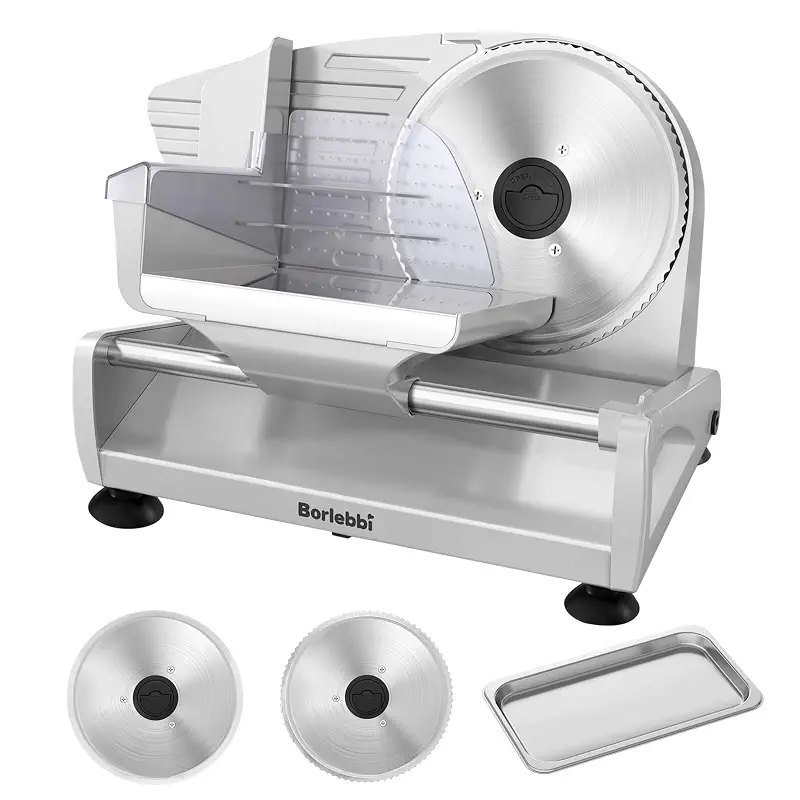
The Borlebbi is a capable workhorse for home jerky projects. Its 200W motor spins at a pace that doesn't rush through the cut, giving you paper-thin strips when you dial the thickness knob to the low end. Owners report getting consistent results on eye of round and brisket, which are jerky staples, and the removable blade design makes it reasonably straightforward to disassemble for cleaning. The suction feet hold firm on most countertops, and the compact footprint doesn't demand much cabinet space afterward.
One real consideration: the feed tray is small, which means you'll process jerky beef in batches rather than loading a whole side at once. If you're making a few pounds for the week, that's fine. If you're doing 10 pounds in one session, you'll reset it several times. Cleanup can be messier with fatty cuts because juice collects in a crevice where the blade assembly meets the housing, and that spot is hard to reach; slicing leaner cuts (or partially freezing first) helps. Compared to the Paladin manual jerky slicer, this trades the crank-and-arm control for electric convenience, which matters if you want repeatable thickness without physical effort.
Owners praise the customer service and blade sharpness, and many found it worth the investment for regular use. It's not a commercial unit, and it works at a home pace, but that's exactly the design point.
Pros
Adjustable thickness from paper-thin to chunky strips
Two removable blades handle jerky and other meats
Quiet DC motor and stable suction-cup feet
Cons
Small feed tray requires batch processing of larger quantities
Juice accumulates in hard-to-reach crevice during cleanup
Key features
200W DC motor with adjustable thickness 0–15mm
Two removable 7.5" stainless steel blades (serrated and smooth)
Stainless steel tray and child safety lock
Compact footprint with non-slip suction-cup feet
Removable parts for easy sanitation
#2 Pick
Best for Speed and Heavy Volume
Weston
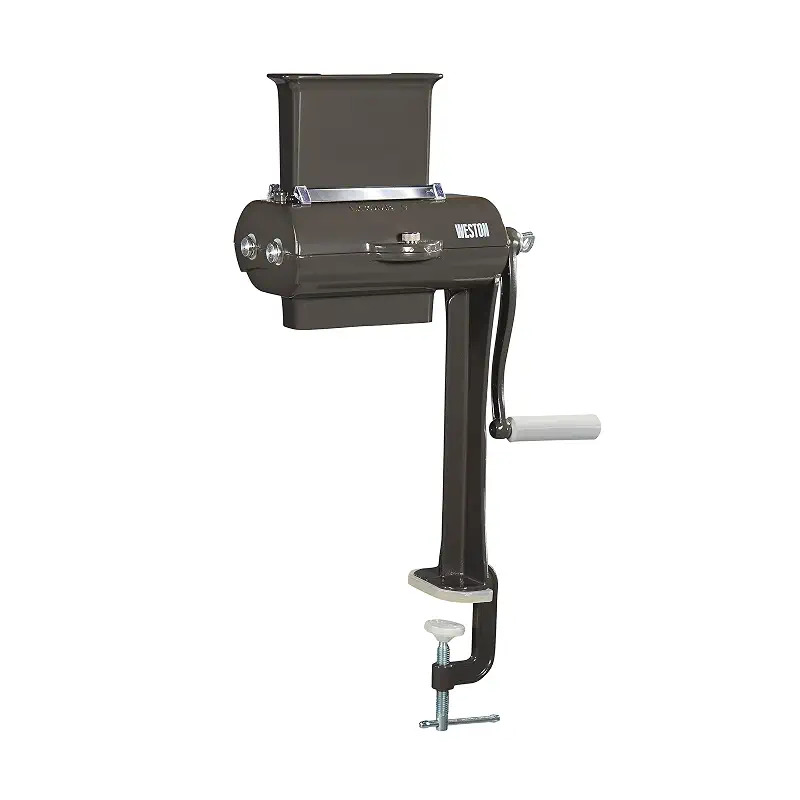
Weston Manual Support Beef Jerky Slicer, Quick and Easy Operation For Cuts Up To 5” Wide x 1.25” Thick, Durable Aluminum Construction, Stainless Steel Blades, Charcoal Gray (07-3801-W-A)
4.2(541)
A manual clamping slicer with 32 ultra-sharp blades that cuts 15 strips at once, ideal for high-volume jerky batches.
Ideal for: Volume jerky makers and hunters processing large game cuts into uniform strips quickly.
The Weston is purpose-built for jerky makers who value sheer throughput. Instead of a single rotating blade, this rig uses 32 stainless steel blades mounted on two shafts, so when you crank the handle, a whole section of meat slices into uniform quarter-inch strips in one motion. Owners who make jerky in volume report cutting 30 pounds in 20 minutes, which is a dramatic time savings compared to single-blade slicers. The large chute accepts beef up to 5 inches wide and 1.25 inches thick, so you can run substantial pieces through without pre-cutting into smaller portions.
The trade-off is manual labor and cleaning complexity. You need forearm strength to crank through dense meat, and those 32 blades are razor-sharp, which is excellent for the cut but demands respect during disassembly and washing. Many owners recommend cut-resistant gloves for cleanup. The unit clamps solidly to a table, so it won't walk around, and the stainless steel combs help prevent meat from wrapping around the blades. If you're shredding or breaking down poultry, tools like best meat claws work well in tandem with a jerky slicer for managing and holding large pieces steady during prep. This prioritizes batch speed and uniform output. Both deliver consistent jerky slices, but this one pays off only if you're making jerky regularly and in volume.
Owners consistently note that slicing pre-frozen or semi-frozen meat is unnecessary here, which means you can process fresh cuts without prep time.
Pros
32 blades cut 15 strips per crank for rapid throughput
Accepts thick, wide cuts up to 5" by 1.25"
No freezing required for most game and beef
Cons
Manual cranking demands physical effort and forearm endurance
Extremely sharp blades require careful handling and cut-resistant gloves
Key features
32 stainless steel blades for multi-strip cutting per crank
Heavy-duty cast aluminum body with durable coating
Built-in C-clamp secures to tables up to 2" thick
Included stainless steel combs prevent blade jamming
Comes with protective tongs for safe meat handling
#3 Pick
Best Budget Electric Option
Borlebbi
Meat Slicer Machine for Home, 200W Food Slicer with Two 7.5" Blades | 200W DC Motor, 2 Removable 7.5" Stainless Steel Blades, Stainless Steel Tray, Child Lock, 0-15 mm Adjustable Thickness
4.5(665)
A compact 200W electric slicer with DC motor and two blade styles that delivers quiet, precise jerky cuts at an entry-level price point.
Ideal for: First-time jerky makers and home cooks who want electric convenience and versatility for occasional slicing tasks.
This Borlebbi model is a close cousin to the B08X27LXYC but with a DC motor that runs quieter and at lower speed, trading some cutting pace for steadier, more controlled slices. The two-blade setup includes both serrated and smooth options, so you have flexibility depending on the meat texture. Owners report excellent performance on cheese and bread as well, which means if you're not making jerky every day, this slicer earns its counter space by handling diverse tasks. The suction feet grip reliably, and the cord is a generous length, which is rare in this category.
The bigger draw for budget-conscious buyers is the price-to-features ratio. You get adjustable thickness, removable parts, a child safety lock, and a DC motor that doesn't scream while running. Setup is minimal, and the blade unlock mechanism is intuitive. Partially freezing meat does help with clean slices, and the machine asks for a light hand rather than a forceful feed. Compared to the Weston manual slicer, this removes the labor entirely and comes in at a lower price point, but you sacrifice the high-volume throughput for a machine that works best in smaller batches. If you're new to jerky making or only make it a few times a year, this is a smarter buy than investing in a manual rig.
Owners note that cleanup is straightforward and the motor remains quiet even during extended sessions.
Pros
Quiet DC motor with lower noise than standard electric slicers
Two blade options for jerky, cheese, bread, and vegetables
Long power cord and reliable suction-cup grip on countertops
Cons
Slower cutting speed due to DC motor design
Suction grip weaker than heavier commercial-style machines
Key features
200W DC motor with adjustable thickness 0–15mm
Two 7.5" removable blades: serrated and smooth stainless steel
Ideal for: Game processors and hunters who want to tenderize tough meat and make uniform jerky strips in one machine.
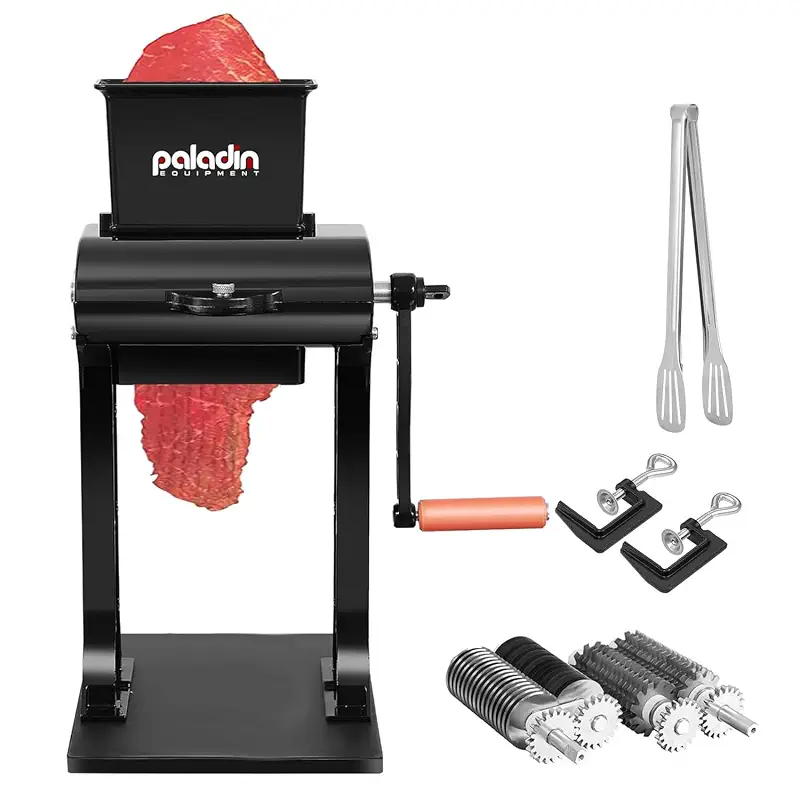
The Paladin tackles jerky prep differently: it first tenderizes meat using cube-blade attachments, then switches to jerky-blade mode for stripping. This means if you're working with tougher cuts or game meat, you can condition the protein before slicing, which some jerky makers find produces better texture. The two blade sets give you true versatility, and it clamps securely to a table for stability during cranking. Owners report processing 20 pounds of venison efficiently, and the jerky blade output is consistent and ready for the dehydrator.
The main limitation is setup and cleanup complexity. This machine requires partial disassembly to switch between tenderizer and slicer modes, and then full disassembly for washing. The blades are razor-sharp (expected and good), but the crevices between blade shafts trap meat debris and require a bottle brush to clean properly. The instruction manual suggests food-grade silicone spray for storage, which adds a maintenance step. Unlike the Weston, which focuses purely on speed-slicing, the Paladin's tenderizing phase is optional but useful if your game or beef is particularly dense. Some owners report quality control issues, so reviews vary, though most who got a well-made unit are enthusiastic about the time savings.
The manual crank offers fine control, and the included clamps and tongs make the process safer than free-handing.
Pros
Two blade sets for both tenderizing and jerky stripping
Clamps securely to countertop or table
Manual control allows precise, consistent output
Cons
Requires full disassembly for cleaning, increasing maintenance time
Quality control inconsistencies reported in some units
Key features
design: tenderizing blades and jerky-slicing blades
Heavy-duty aluminum construction with cast iron elements
Built-in C-clamps and tongs for safe operation
Works on meat up to 0.8" thick and 4" wide
Hand-wash cleaning with no harsh chemicals required
#5 Pick
Most Versatile Electric for Mixed Tasks
Ostba
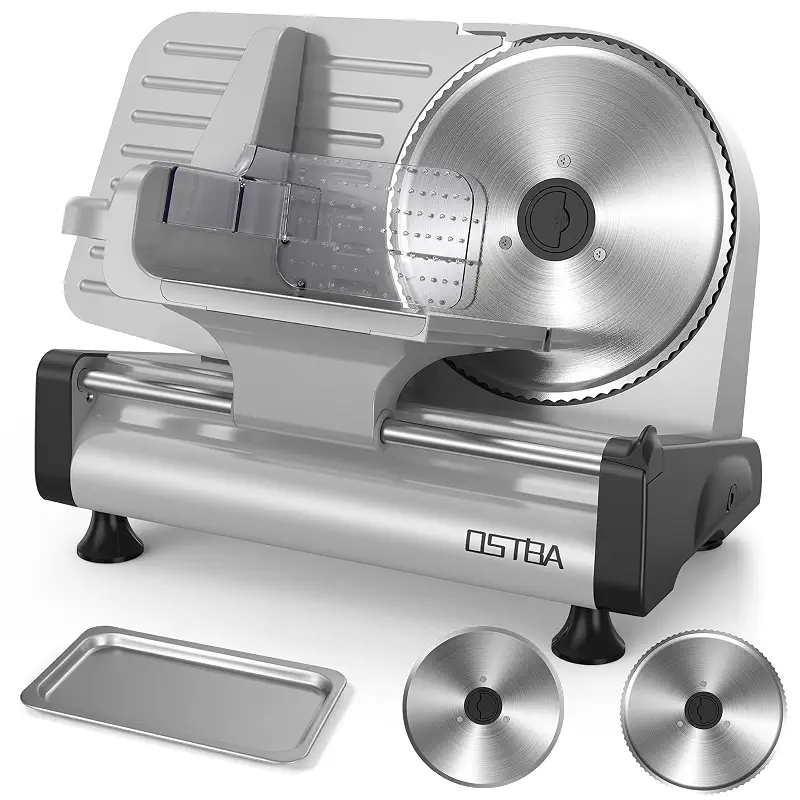
OSTBA Meat Slicer, Two 8.7” Stainless Steel Blades, 200W DC Motor | Adjustable Thickness 0–15mm, Food Tray & Hand Grip, Commercial Deli Food Slicer for Meat, Cheese, Bread, Veggies
4.4(183)
A powerful 200W electric slicer with larger 8.7" blades that excels at jerky, deli meats, cheese, and bread with easy fine-tuning.
Ideal for: Home cooks who want one reliable slicer for jerky, deli meats, cheese, bread, and occasional veggie work.
The Ostba brings a bigger blade to the table, literally: the 8.7" stainless steel blade is wider than most compact home slicers, which means fewer passes through smaller cuts and a wider working surface. The dual-blade setup (serrated and smooth) lets you tackle jerky one moment and sourdough the next, and owners report exceptional performance on both. The rear thickness dial uses tactile clicks that stay put during slicing, so you won't have accidental thickness drift mid-cut. The assist hand grip on the pusher gives you better control than models with simpler pusher arms.
The machine is heavier and larger than the compact Borlebbi models, which means it demands more counter real estate, though it's still manageable for a 200W slicer. Cleanup is straightforward because the parts come apart easily, and most are dishwasher-safe. Owners note the motor is strong and steady without excessive noise. Performance on jerky is solid, though the machine shines most when you're mixing jerky prep with deli-meat slicing or bread work. If you also work with poultry and want to shred cooked chicken for salads or tacos, a top chicken shredder works as a companion tool. But if your jerky operation is your sole focus, the Weston manual might be faster for volume, or the budget Borlebbi might be easier to store.
One owner noted that the plastic pusher can break if over-forced, but the manufacturer replaced it within 48 hours, so support is solid.
Pros
Larger 8.7" blades reduce passes needed for thick cuts
Dual serrated and smooth blade options
Tactile click thickness dial maintains precision throughout slicing
Cons
Larger footprint and weight require more storage space
Plastic pusher vulnerable to breakage if over-forced
Key features
Larger 8.7" stainless steel blades with serrated option
200W DC motor with adjustable thickness 0–15mm
Assist hand grip on pusher for enhanced control
Removable, dishwasher-safe parts for easy maintenance
Child lock and blade cover for safe storage
How to Choose a Meat Slicer for Beef Jerky
Four trade-offs that actually matter when matching a meat slicer for beef jerky to your kitchen.
Electric vs. Manual: Speed and Effort
Electric slicers demand plug-in access but handle high volume with minimal physical strain. Manual clamp-and-crank models like the Weston excel at batch processing and don't need power, but you'll feel it in your forearm after 30 pounds. The choice hinges on frequency: if you're making jerky once a month, electric is more convenient; if you're processing game or beef multiple times per season, a manual model recoups its effort in speed. Understanding electric vs manual meat slicers will help you weigh the trade-offs.
Blade Configuration and Consistency
Single-blade slicers (rotating design) give you one strip at a time but offer fine thickness control. Multi-blade systems like the Weston's 32-blade array deliver 15 strips per crank, which saves time but sacrifice granular adjustment. For jerky, consistency matters more than perfection, since the dehydrator evening out minor differences in thickness. Choose single-blade if you're experimenting with thickness; choose multi-blade if you have a target thickness and want to stick to it.
Meat Prep and Freezing
Partially frozen meat (1-2 hours in the freezer) produces cleaner slices from electric units and reduces mess during cleanup. Manual slicers often work on room-temperature meat without freezing, which saves a prep step. The toughness of your cut matters too: tender eye of round needs less freezing; a denser brisket benefits from a chill. A beef jerky slice thickness guide will show you how thickness interacts with texture and drying time, helping you dial in the right approach for your meat choice.
Cleanup and Maintenance Reality
All slicers have tight spaces where meat juice collects, and all require disassembly to clean properly. Electric models with removable blades are easier to access; manual models with 32 stacked blades require a bottle brush and patience. Budget extra time for cleanup after fatty cuts, and consider keeping the machine assembled if you make jerky frequently. Some owners use silicone spray or food-grade oil to prevent rust on stainless steel components and lubricate plastic gears for smoother operation after washing.
Frequently asked
Quick answers to the questions readers ask most.
Can I slice jerky without partially freezing the meat?
Yes, especially with manual slicers and tough cuts. Semi-freezing (1-2 hours) mostly helps electric slicer users get cleaner edges and reduce juice splash during cleanup. Game meat and dense cuts like eye of round hold together well at room temperature, while softer cuts like brisket benefit from a chill. Experiment with your first batch to find what works for your slicer and meat type.
How thin should jerky slices be?
Quarter-inch (6mm) is standard for home jerky and balances flavor absorption, drying time, and chew. Paper-thin slices dry faster but can over-cure; thicker slices (3/8-inch) take longer but yield a meatier texture. Most slicers let you dial between 0-15mm, so start at 6mm and adjust up or down based on your dehydrator results and taste preference.
Are electric slicers loud?
Most 200W electric slicers are moderate in noise level, similar to a coffee grinder. DC motor models like the Borlebbi B0D9RZBR82 run quieter than standard AC motors. Manual slicers are silent but require physical effort. If noise is a concern for early-morning prep, manual won't disturb household members, but electric won't be loud enough to require hearing protection.
What's the biggest drawback of home meat slicers?
Cleanup complexity and time. Meat fibers and juice get trapped in crevices between the blade and housing, especially with fatty cuts. Plan 10-15 minutes for thorough washing and disassembly. This is why many jerky makers batch their slicing: prep and slice 5-10 pounds in one session, then clean once rather than slice, clean, repeat five times.
Can I use these slicers for game meat like venison or elk?
Yes, all five models here handle game meat well. Venison is leaner and tougher than beef, so it benefits from partial freezing and slices cleanly. Elk similar. The Paladin's tenderizing blade option is especially useful for tough game cuts. Manual slicers actually prefer dense game meat because it doesn't slide around as much during cranking, making them a popular choice for hunters processing large quantities.