Kitchen & Dining · Gadgets
Best Manual Nut Grinder for Home Cooks
Find the best manual nut grinder for your kitchen. Compare top hand-crank models for chopping nuts, seeds, and spices with stable bases and easy cleanup.
Affiliate disclosure: As an Amazon Associate I earn from qualifying purchases.
At a glance
4
Best for VersatilityPartslety
5
Best for Daily UseProgressive
Detailed reviews
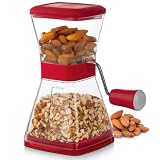
The Progressive PrepWorks Manual Nut Chopper stands out for its thoughtful design elements that make it genuinely practical to use. The non-skid base keeps it anchored to the countertop while you turn the handle, which addresses one of the biggest frustrations with hand-crank models. The measured container (up to 1.5 cups) helps you portion ingredients for recipes without guessing, and the hinged lid means you fill and empty without fussing with separate pieces. Turning the handle clockwise delivers finer results; counterclockwise gives you coarser chunks. This is genuinely useful if you want walnuts chunky for one dish and finely ground for another.
Owners report consistent results on walnuts, pecans, and almonds, though almonds do require steady downward pressure on the lid to keep everything in place. The square design gives all six blades full length, making the grind more efficient than round models. A few buyers found that coarse and fine settings produced less dramatic differences than expected, and there's always some nut powder in the mix, though this is typical for hand-crank designs. The removable base pours easily, and it's dishwasher safe, which matters if you use it several times a week.
Compared to the Norpro model, this chopper excels with harder nuts and offers easier assembly. The plastic handle is shorter and less flimsy than some competitors report, though very heavy nuts like almonds still demand the right grip. Most buyers who follow the intended use case (softer to medium nuts, not frozen) report longevity and consistent performance.
Pros
- Non-skid base keeps chopper steady during use
- Measured container eliminates guesswork for recipes
- Two grinding directions for coarse or fine results
- Hinged lid makes filling and emptying convenient
Cons
- Requires firm downward pressure to prevent assembly separation
- Produces some nut powder regardless of direction
Key features (5)
- 1.5-cup capacity with measurement markings on clear base
- Clockwise and counterclockwise grinding options for texture control
- Non-skid rubber base for stability during operation
- Removable base for easy pouring and cleaning
- Dishwasher-safe components for quick cleanup
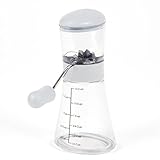
The Norpro Nut/Topping Chopper has earned a loyal following because it works reliably for what it's designed to do: chop soft nuts like walnuts, peanuts, cashews, and pecans. The glass base is a genuine advantage: it's durable, won't stain or retain odors, and looks clean even after years of use. The stainless steel blades stay sharp, and the compact 7.25-inch footprint fits into tight kitchens. Many owners report their Norpro models lasting years or even decades, which speaks to the engineering, though newer production runs seem slightly less robust than older versions.
The handle design requires a specific technique: you must hold the top unit while turning, not grip the base, or the threads will loosen and everything separates. This isn't intuitive and leads to frustration for users with weaker grip strength or arthritis. The learning curve is real. Hard nuts like almonds or hazelnuts bend the blades or demand so much force that the mechanism feels like it's about to fail. Owners also note that the coarse and fine settings are less distinct than you might expect, producing more of a one-size-fits-most chop.
If you're comparing this to the best nutmeg grater for specialized spice work, the Norpro proves that a hand-crank chopper excels at bulk grinding while single-spice tools handle individual aromatics. Where the Progressive model above embraces two separate grip settings, the Norpro leaves you with limited textural control and makes more sense as a workhorse for larger quantities of soft nuts.
Pros
- Durable glass base resists staining and retains no odors
- Works smoothly on soft nuts with minimal effort
- Compact size ideal for small kitchens and storage
- Stainless steel blades remain sharp over years of use
Cons
- Blades bend or flex when grinding hard nuts like almonds
- Requires specific hand-grip technique to avoid loosening assembly
Key features (5)
- 1.25-cup capacity with glass base for durability and visibility
- Stainless steel blades for consistent cutting without corrosion
- 7.25-inch height fits compact kitchen spaces easily
- Hand-crank mechanism works smoothly on soft to medium nuts
- Works equally well for left- and right-handed users
The Fovnot Manual Nut Grinder delivers genuine value at an entry-level price. It handles walnuts, pecans, hazelnuts, and pumpkin or sunflower seeds with impressive fineness for the cost, and owners consistently praise how well it grinds without demanding excessive effort from older hands or those with limited strength. The stainless steel blades stay sharp, and disassembly for cleaning is straightforward: most owners report two minutes of rinse-and-dry work. The food-grade plastic is safe and neutral, and the device works as advertised for everyday grinding needs.
The real limitation is that it lacks a proper collection base. As you grind, small particles scatter across the countertop, which means you either grind directly over a bowl or accept some cleanup waste. Some finely ground material can also stick at the bottom or not grind evenly if you load too much at once: small batches work better. Flaxseeds fall through the holes entirely, so if you're serious about grinding tiny seeds, you'll need to add those to your skip list. A few buyers commented on the plastic quality feeling lighter-duty than premium competitors, though the device still functions well for occasional use. This isn't a tool for daily heavy-duty grinding, but for someone who grinds nuts once or twice a week, it's a practical and budget-friendly choice.
Where the Progressive model emphasizes a contained, measured approach, the Fovnot prioritizes simplicity and ease of hand operation: you trade containment and longevity for lower cost and gentler manual effort.
Pros
- Easy disassembly and quick rinsing cleanup in about two minutes
- Sharp stainless steel blades grind hazelnuts and seeds to fine texture
- Gentle hand operation suitable for older hands or limited grip strength
- Food-grade plastic materials safe for nut and seed grinding
Cons
- No collection base means ground nuts scatter across countertop
- Fine particles can remain unground at bottom if loaded too heavily
Key features (5)
- Stainless steel cutting rotor with sharp blades for even grinding
- Food-grade PE plastic construction safe for all nut types
- Designed for walnuts, peanuts, coffee beans, and larger seeds
- Disassembles easily for quick two-minute cleaning
- Top-rack dishwasher safe for convenience
The Partslety Manual Nut Chopper Grinder stands out because it comes with two different drum blades, allowing you to swap between fine and coarse grinding without flipping direction or adjusting technique. This is genuinely useful if you want walnuts finely ground for one recipe and chunky for another without the guesswork of directional control. The aluminum alloy and stainless steel construction is heavier and more substantial than many budget options, and owners report minimal rust or wear even after heavy use.
The versatility extends beyond nuts: you can use the same tool for shredding cheese, grating vegetables like potatoes or zucchini, and grinding spices, chocolate, or dried ginger. This makes it a legitimate multitool for the kitchen rather than a single-purpose gadget. Assembly and disassembly are straightforward, and the removable parts fit easily into a drawer. Hand-washing is recommended when cleaning the blades, though parts are dishwasher safe: the cutting surfaces stay sharper if you hand-wash.
The tradeoff is that manual operation requires genuine effort and forearm strength. Grinding nuts demands regular half-turns of the handle, not continuous rotation, and some owners with less upper-body strength found it tiring. The aluminum body and plastic lid are durable for occasional use but not as obviously long-lasting as glass-base models. Compared to the Progressive chopper above, this offers more blade variety but less integrated stability: you're responsible for holding it steady. Build quality varies across reviews, with some reporting excellent durability and others noting cheaply made components, so expectations should match the price point.
Pros
- Two interchangeable drum blades for fine or coarse grinding
- Grinds nuts, shreds cheese, and grates vegetables in one tool
- Stainless steel surface resists rust and corrosion
- Parts disassemble easily for storage and cleaning
Cons
- Requires significant hand effort and forearm strength for nuts
- Build quality inconsistent; less obviously durable than glass-base options
Key features (5)
- Two interchangeable stainless steel drum blades for texture control
- Multifunctional for nuts, cheese, vegetables, spices, and chocolate
- Aluminum alloy and stainless steel construction resists corrosion
- Manual hand-crank operation with no electricity required
- Dishwasher-safe removable parts for easy cleanup
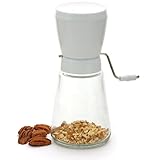
The Progressive Prepworks by Progressive Nut Chopper with Non-Skid Base (the white square model, not the red oval from the first position) earns praise from owners who use it almost daily. One reviewer reported using it multiple times a day for nearly a decade without failure, which is a genuine endorsement. The measured container with clear markings removes guesswork, and the non-skid base keeps the tool anchored even when you're turning with real force on hard nuts. The fine and coarse directions actually produce noticeably different textures, giving you real control.
Sharp stainless steel blades grind walnuts, pecans, peanuts, and almonds consistently, though almonds do require a firm grip and steady downward pressure. The compact design stores easily, and all parts are dishwasher safe, which matters when you're using the tool several times a week. A handful of owners reported the screw-ring detaching from the plastic top after extended use: a simple super-glue fix that doesn't diminish the overall build quality, just signals that nothing lasts forever at this price point.
The hinged lid design is more convenient than separate pieces but introduces one more junction that can eventually separate if mishandled. Dishwasher use can fog the plastic over time, though this is purely cosmetic. Comparing this to the Norpro model, the Progressive design favors stability and ease of use over classic glass, which is the right trade for someone grinding nuts multiple times per week. The blade quality and consistent results make it a workhorse rather than a specialty tool.
Pros
- Holds up to near-daily use over years with minimal wear
- Measured base with markings eliminates guesswork for recipes
- Sharp blades deliver noticeably different coarse and fine textures
- All components dishwasher safe for quick cleanup
Cons
- Hinged lid can detach with heavy use; simple super-glue fix
- Plastic fogging over time from dishwasher use is cosmetic only
Key features (5)
- 1.5-cup capacity with measurement markings on clear base
- Non-skid base provides stability during heavy grinding
- True coarse and fine grinding by direction change
- Hinged lid for tool-free filling and lid storage
- Stainless steel blades sharp enough for almonds
How to Choose a Manual Nut Grinder
Soft Nuts vs. Hard Nuts
The type of nuts you plan to grind matters most. Soft nuts like walnuts, pecans, cashews, and peanuts work smoothly in any hand-crank model. Hard nuts like almonds or hazelnuts demand stronger blades and more grip strength from you. If almonds are your primary ingredient, choose a model with a sturdy handle and non-skid base so you can apply downward pressure without the whole device shifting. Models without these features risk separating or flexing dangerously when you squeeze hard.
Frequency of Use
Occasional grinders (once or twice a month) can prioritize cost and simple cleanup. Daily or near-daily users should invest in a model with a sturdy base, measured capacity, and blade quality that handles repetitive operation. A non-skid base becomes essential if you grind nuts multiple times per week, because it saves frustration and reduces the risk of parts separating mid-chop. Glass bases last longer than plastic for frequent users, but plastic models with metal reinforcement handle daily grinding well too.
Grinding Texture Control
Some models offer two grinding directions (clockwise for fine, counterclockwise for coarse) that actually produce noticeably different results. Others use interchangeable blades. A few offer limited texture control, giving you essentially one grind size. If you bake and cook different dishes that need different nut sizes, directional control or swappable blades are worth the extra cost. For most home cooks, a single texture works fine: the nut grinder cleaning and care routine stays simpler.
Containment and Measurement
Models with integrated measuring cups and clear bases let you see how much you've ground and portion accurately for recipes without extra cleanup. Models without collection bases scatter fine particles across your counter, which is fine if you grind directly over a bowl but adds cleanup work otherwise. If counter space and minimal mess matter, a contained design with measurement marks is worth prioritizing. For comparison, a best nutmeg grinder focuses on smaller volumes and specialized aromatics, while a full-capacity nut grinder tackles larger batches of proteins and baking ingredients.
Hand Strength and Grip Comfort
Manual operation requires sustained grip and rotational force. Shorter handles demand more wrist effort; longer handles provide better leverage. If you have limited grip strength, arthritis, or hand fatigue, test the handle ergonomics or choose a model specifically praised for gentle operation. The manual grinder versus food processor debate often hinges here: if your hands tire easily, a food processor eliminates the hand-crank effort, though it sacrifices the control and simplicity of a manual tool.
Our picks at a glance
4
Best for VersatilityPartslety
5
Best for Daily UseProgressive
Frequently asked
Can a manual nut grinder handle almonds?
Yes, but with caveats. Manual grinders can chop almonds if the blades are sharp and sturdy and you apply steady, firm downward pressure. However, almonds demand more effort than softer nuts like walnuts or pecans. Models with non-skid bases and shorter, wider handles give you better leverage. Very hard nuts like whole hazelnuts or frozen nuts may bend weaker blades, so check reviews for the specific model.
How do I prevent the grinder from separating while grinding?
Keep consistent downward pressure on the top of the unit while turning the handle. Many manual grinders separate when you grip only the base or turn too aggressively without anchoring the lid. A non-skid base helps by keeping the whole unit in place, but your technique matters. Take steady, controlled turns rather than rapid spins, and ensure all threads are screwed tight before you start.
Is a manual nut grinder dishwasher safe?
Most modern hand-crank models are dishwasher safe, though manufacturers recommend hand-washing the blades to preserve sharpness longer. Plastic components can fog or warp in a dishwasher's heat, which is cosmetic but worth knowing. Glass bases hold up well to dishwashers. If you use the grinder several times per week, hand-rinsing takes two minutes and extends blade life noticeably.
What can I grind besides nuts?
Most models work well on seeds (pumpkin, sunflower), dried herbs, spices, and dried fruit. Some grind cheese or chocolate. Avoid sticky foods like dates or coconut, which jam the mechanism. Very tiny seeds like flaxseeds can fall through the holes. Frozen nuts should thaw first to avoid damaging the blades. Always use dry ingredients unless the manufacturer explicitly states the model handles wet foods.
Why does my grinder produce nut powder along with chopped pieces?
Some powder is inevitable in any hand-crank grinder: friction and the grinding motion naturally create fine particles. If you're seeing too much powder, you're likely turning too slowly (letting the blades rest on the nut longer) or overloading the chamber. Grind in smaller batches, use steady, complete turns, and empty between batches. The fine dust is still edible and works well in baking; strain it out only if you need uniform chunk sizes.