Verdict, analysis, and key features for each pick.
#1 Pick
Best Overall
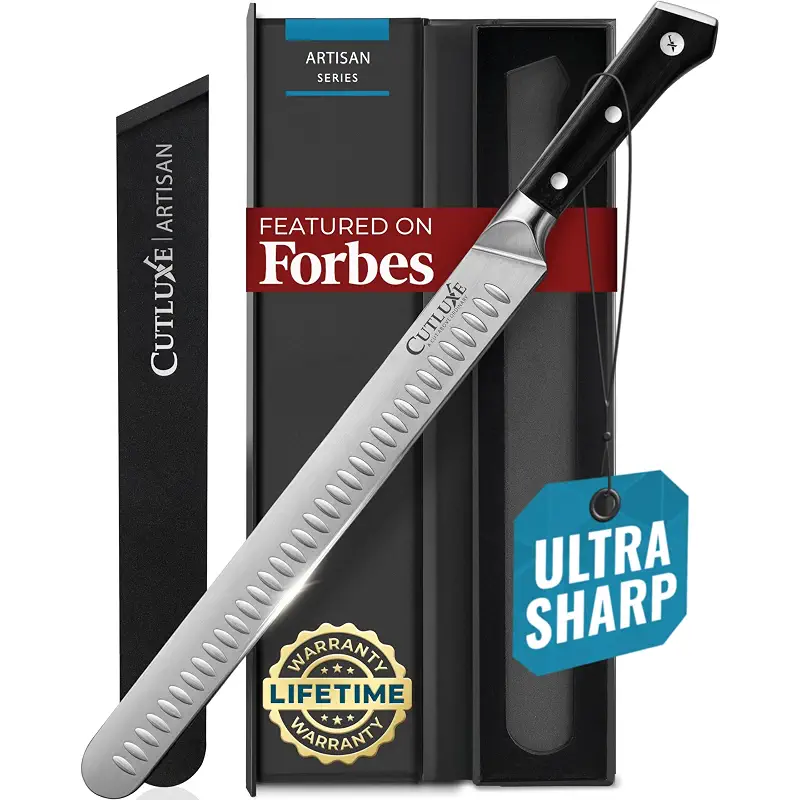
Cutluxe
Cutluxe Brisket Knife, 12" Carving & Slicing Knife for Meat & BBQ | Razor Sharp German Steel, Full Tang Ergonomic Handle, Sheath Included – Grilling Gift for Men
4.8(7,433)
Professional-grade German steel at an accessible price, with unmatched consistency across thousands of verified buyers.
Ideal for: Home cooks and BBQ enthusiasts who smoke or roast meat regularly and want dependable German-steel performance.
The Cutluxe 12-inch knife has earned over 7,400 five-star reviews by delivering on a single promise: it slices brisket effortlessly. The high-carbon German steel is forged to 56+ Rockwell hardness, which translates to an edge that holds up through repeated cuts and resists the wear that softer blades surrender to quickly. Owners consistently report that the knife glides through bark and meat without tearing, and the granton dimples (shallow indents along the blade) reduce sticking without compromising cutting surface.
The full-tang construction means the steel runs through the entire handle, eliminating any flex or wobble. The ergonomic pakkawood grip sits securely in the hand for long carving sessions, and the weight distribution feels balanced rather than blade-heavy or handle-dominant. At this price point, the lifetime warranty is also noteworthy: it signals the maker's confidence in material and construction.
The main trade-off is that you'll need to hand-wash and dry it after use to preserve the edge and finish. Some owners report that the included sheath's interior lining can loosen with repeated use, though this doesn't affect the knife's performance itself. If storage space is tight, the 12-inch length requires dedicated drawer room or a knife block designed for longer blades.
Pros
Razor-sharp granton blade holds edge through many uses
Full-tang construction ensures durability and balance
Lifetime warranty backs the quality commitment
Cons
Requires hand washing to maintain edge quality
Sheath interior lining can separate with frequent use
Key features
12-inch high-carbon German steel blade at 56+ Rockwell hardness
Hand-sharpened granton edge at 14-16 degrees per side
Full-tang ergonomic pakkawood handle with triple rivets
Includes protective sheath for safe storage
Lifetime warranty against material or workmanship defects
#2 Pick
Best Two-Piece Set
Cutluxe
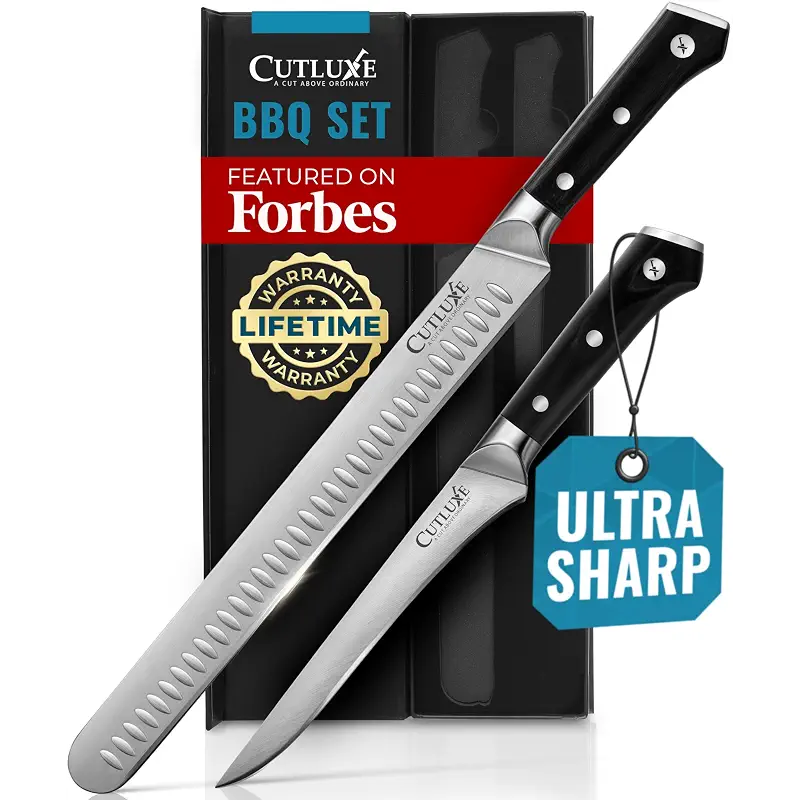
Cutluxe Carving Knife Set, Brisket Slicing & Boning Knife for Meat & BBQ | Razor Sharp German Steel, Full Tang Ergonomic Handle – Grilling Gift for Men, Artisan Series
4.8(1,524)
Pairs the full-size slicing knife with a dedicated boning blade for trimming before and after cooking.
Ideal for: Cooks who prepare whole cuts from raw and want both trimming and slicing blades in one purchase.
If you want both a long carving blade and a smaller trimming knife without buying separately, this Cutluxe set combines the same 12-inch slicing knife with a 6-inch boning blade. The pairing makes sense for anyone preparing whole pork shoulders or briskets from raw: you can trim fat caps and silver skin before cooking, then slice cleanly after. Both knives share the same German steel and granton design, so the cutting philosophy is consistent.
Owners appreciate the quality-to-price ratio, particularly noting that the Rockwell hardness exceeds some mainstream premium brands while costing less. The set comes in a velvet-lined presentation box, which makes it feel like a considered gift (many buyers purchase specifically for this reason). Compared to buying the Cutluxe single knife alone, the two-piece set adds genuine utility if you're doing full meat prep rather than just slicing finished protein.
The main limitation is storage: the 12-inch blade won't fit in a standard knife block, so you'll need dedicated drawer space or the original box. One owner noted a small design quirk where the top spine of the blade is cut square, which can catch a finger if you're not careful during handling. This is a minor ergonomic detail rather than a cutting-performance issue.
Pros
Includes both 12" slicing and 6" boning knife in one set
Same German steel and granton design on both blades
Premium presentation box suitable for gifting
Cons
12-inch blade requires significant drawer or external storage space
Square spine on blade edge requires careful grip awareness
Key features
12-inch carving knife and 6-inch boning blade included
High-carbon German steel with granton edges on both
Full-tang ergonomic handles on both knives
Velvet-lined storage box for protection and presentation
Lifetime warranty covers both blades
#3 Pick
Best Budget Option
Rondauno
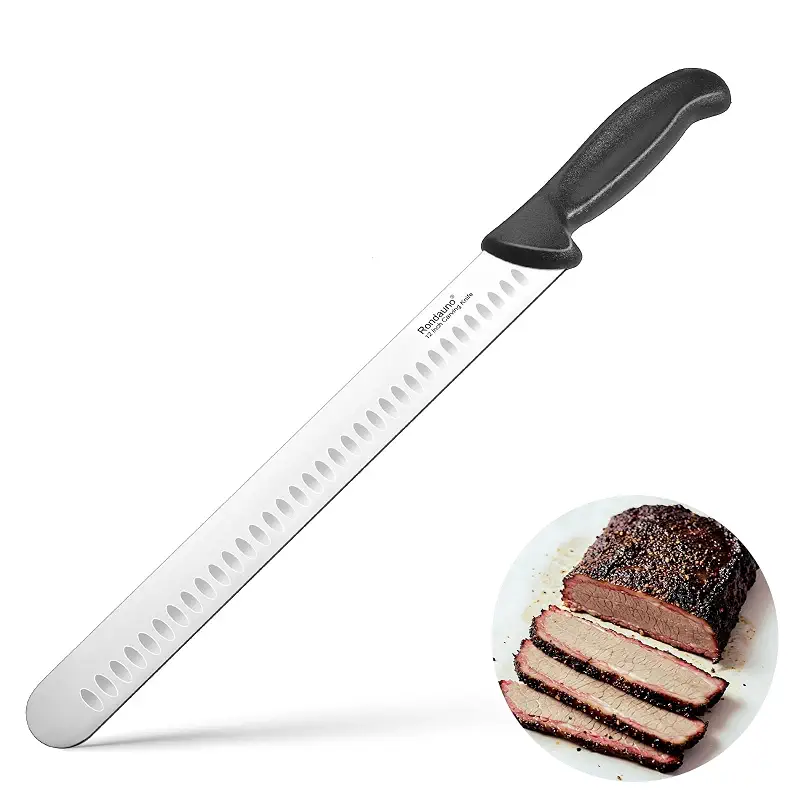
Rondauno Brisket Knife, Carving Knife for Meat Cutting Slicing Knives | 12 inch Ultra Sharp Blade, Premium High Carbon Stainless Steel, Turkey and Roast
4.8(309)
Solid 12-inch high-carbon blade that performs well at a lower entry cost than premium rivals.
Ideal for: Budget-conscious home cooks who will invest time in sharpening and use the knife occasionally.
The Rondauno strikes a different balance than the Cutluxe lineup: it uses 5Cr15MoV high-carbon stainless steel rather than German forging, and buyers consistently note it requires initial sharpening work to reach its potential. That said, once you invest time on a whetstone, owners report it takes a very keen edge and holds it reasonably well for home use. For someone who smokes brisket occasionally or doesn't mind periodic touch-ups, this is a meaningful savings without sacrificing core function.
The blade is on the heavier side compared to the Cutluxe and Hoshanho options, which some experienced carvers see as a feature (weight assists the cut) and others find tiring during extended slicing. The ergonomic handle offers good grip, though reviewers note it lacks the refined balance of higher-priced competitors. One chef noted that if daily professional carving were the goal, a more refined (and expensive) option would be worth the upgrade, but for occasional home use and brisket trimming, this delivers solid value.
Compared to the Hoshanho Japanese steel knife, the Rondauno ships slightly duller and requires more initial prep, but it's also more forgiving for those without sharpening experience or access to professional honing services.
Pros
Excellent price point relative to comparable blade length
Takes and holds a keen edge after proper sharpening
Heavy blade assists slicing with minimal hand pressure
Cons
Requires initial sharpening before reaching full sharpness
Heavier weight may fatigue hands during extended use
Ideal for: Home cooks who slice meat regularly and want the thinnest, most visually impressive cuts.
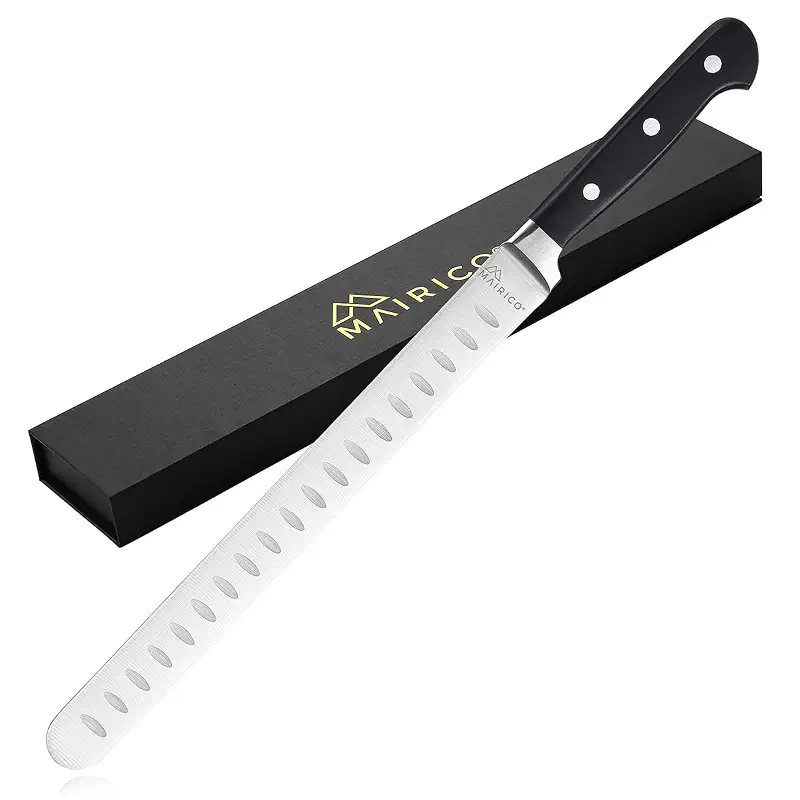
The Mairico is the shortest of the lineup at 11 inches rather than 12, but that inch translates into a slightly more maneuverable blade that many reviewers find easier to control for thin, angled cuts. The premium stainless steel arrives exceptionally sharp: one owner noted they didn't need to hone it before first use, which is rare in this price range. The hollow-ground indents along the blade reduce sticking and allow for those paper-thin deli-style slices that make an impressive presentation.
Owners frequently compare it favorably to knives costing twice as much, particularly for sous vide beef and smoked meats where slice thickness directly affects the eating experience. The blade is remarkably stiff despite its thinness, meaning it won't flex under cutting pressure. One caveat: it doesn't retain its edge quite as long as the Cutluxe or Hoshanho options, so you'll need to steel it more frequently or budget for occasional sharpening. Compared to the Cutluxe single knife, the Mairico delivers slightly more aggressive initial sharpness but requires more frequent maintenance.
Storage is easier than the 12-inch models, and it fits in most standard knife blocks. Hand washing is recommended to preserve edge retention.
Pros
Arrives exceptionally sharp, ready to use immediately
Paper-thin slices with minimal cutting pressure needed
Stiff blade resists flexing under downward force
Cons
Edge retention is shorter than German-steel competitors
Requires regular steeling or periodic sharpening maintenance
Key features
premium stainless steel blade with hollow-ground indents
Engineered for professional-length cuts with single strokes
Ergonomic handle with balanced weight distribution
Versatile enough for brisket, roasts, fruits, and vegetables
Storage-friendly size fits standard knife blocks and drawers
#5 Pick
Best Japanese-Style Construction
Hoshanho
HOSHANHO Carving Knife 12 Inch, Razor Sharp Japanese Brisket Slicing Knife | Japanese High Carbon Steel Brisket Knife with Ergonomic Pakkawood Handle, Breaking Knives for Meat Cutting, BBQ, Turkey
4.8(744)
Sub-zero treated Japanese high-carbon steel with single-piece forging delivers premium balance and edge retention.
Ideal for: Knife enthusiasts who appreciate Japanese metallurgy and want a premium, single-piece forged tool.
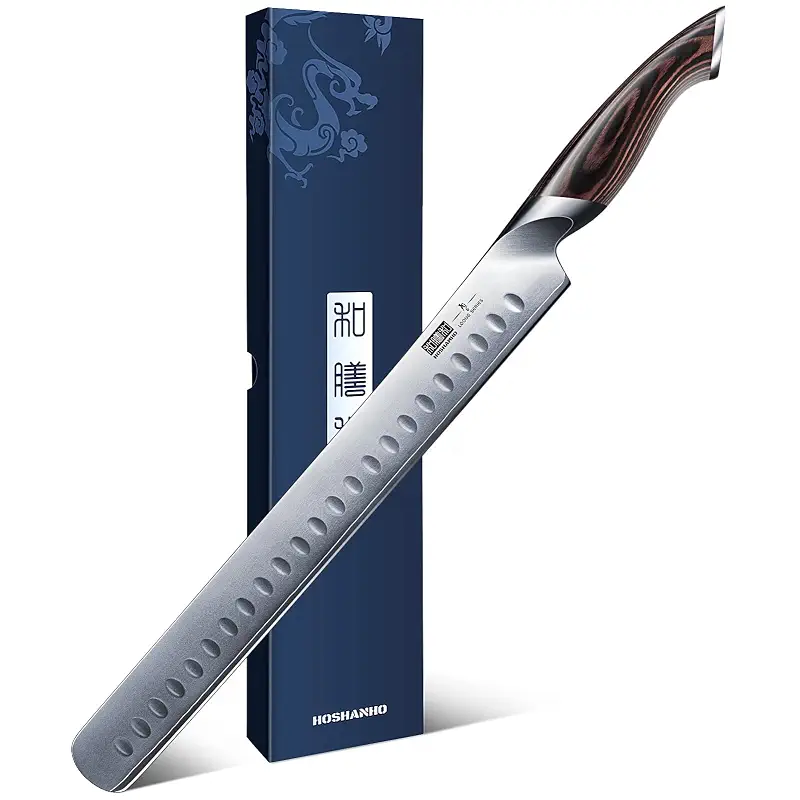
The Hoshanho represents a different metallurgical approach than German-steel alternatives. The Japanese 10Cr15CoMoV blade is treated at sub-zero temperatures for hardness, then forged as a single piece from blade to handle (called full-tang integration). Owners consistently praise the balance and the way it glides through brisket bark without resistance or tearing. The engineered 15-degree angle ensures minimal cutting resistance, which translates to less hand fatigue during longer carving sessions.
The aesthetic is notably different too: it has a sleeker, more minimalist design than the Cutluxe, and reviewers frequently mention that it feels like a precision tool rather than a kitchen gadget. One experienced owner noted it's the knife they'd choose over several higher-priced competitors, citing quiet competence and excellent execution. Edge retention is strong, and the knife holds its sharpness through months of regular use if you hand-wash and dry it promptly.
The main trade-off is that the 12-inch length can be unwieldy for smaller hands or kitchens with limited storage. One owner mentioned the blade protrudes significantly from standard magnetic knife blocks. Compared to the Cutluxe series, the Hoshanho costs slightly more but offers a different aesthetic and Japanese-steel philosophy: both are excellent choices, but the Hoshanho appeals more to those who prioritize minimalist design and single-piece construction.
Pros
Single-piece forged construction eliminates handle separation risk
Japanese high-carbon steel holds edge through months of use
Minimalist design with exceptional balance and control
Cons
12-inch length protrudes from standard magnetic knife blocks
Premium pricing relative to budget German-steel options
Key features
12-inch Japanese 10Cr15CoMoV high-carbon steel blade
Sub-zero temperature treatment for enhanced hardness and durability
Single-piece forged blade and handle for seamless integrity
Engineered 15-degree edge angle for minimal cutting resistance
Ergonomic pakkawood handle with optimized grip reduction
How to Choose the Right Brisket Knife
Four trade-offs that actually matter when matching a knife to slice brisket to your kitchen.
Blade Length and Thickness Matter
A brisket knife's length determines slice consistency. The 12-inch blade (standard on most top performers) allows you to cut through large meat in one smooth motion, rather than sawing back and forth. A longer, single stroke preserves meat fiber integrity and creates cleaner presentation. The Mairico option works well if storage is tight or your hand is smaller. Blade thickness also affects control: too thin and it flexes under pressure; too thick and you lose maneuverability. Most premium options balance a stiff profile with manageable weight. Understanding brisket knife blade dimensions explained will help you match length to your typical meat size and cutting board setup.
Steel Type: German vs. Japanese Construction
German-forged steel (like Cutluxe's 56+ Rockwell hardness) tends to arrive pre-sharpened and maintains its edge longer with less frequent maintenance. Japanese high-carbon approaches (such as Hoshanho's sub-zero-treated 10Cr15CoMoV) often prioritize balance, single-piece construction, and aesthetic minimalism. Neither is objectively better: it depends on whether you want immediate readiness and lower maintenance (German) or premium feel and Japanese craftsmanship philosophy. When learning about carving knife versus brisket knife differences, you'll notice carving knives sometimes favor flexibility, while dedicated brisket blades optimize for controlled, clean slicing of tough bark and meat layers.
Edge Design and Maintenance
Granton edges (shallow dimples along the blade) reduce meat sticking and are standard on high-quality options. A 14-16 degree per-side sharpening angle produces a keener initial edge than wider angles, but requires more careful maintenance. All premium slicing knives benefit from hand washing and immediate drying: dishwashers will dull the blade faster and risk rust. Budget models like Rondauno require initial sharpening work but can be touched up with a whetstone at home. Premium German and Japanese options arrive sharper and hold their edge longer, making them lower-maintenance for frequent users.
Handle Comfort and Storage
A 12-inch blade requires dedicated storage space: standard knife blocks often won't accommodate it. Full-tang construction (metal running through the entire handle) eliminates handle separation concerns but adds weight. Ergonomic pakkawood or premium handle materials distribute weight better than plastic and feel more secure during extended carving. If your kitchen is compact, the Mairico or a magnetic strip might be better than drawer storage. Test the grip weight and balance in your hand if possible: a tool that feels wrong will be used less, no matter how sharp it is.
Frequently asked
Quick answers to the questions readers ask most.
Can I use a regular chef's knife instead of a dedicated brisket knife?
In a pinch, yes, but you'll notice the difference. A chef's knife (typically 7-8 inches) requires multiple overlapping strokes to slice a large brisket, which increases tearing and inconsistent thickness. A dedicated 11-12 inch slicing blade lets you cut the entire cross-section in one smooth motion, preserving meat fiber and creating uniform slices. The thinner, more flexible blade also reduces the downward pressure needed, making long carving sessions less fatiguing.
How often do I need to sharpen a brisket knife?
Premium options like Cutluxe German steel or Hoshanho Japanese high-carbon hold their edge for months of regular home use if hand-washed and dried promptly. Budget models like Rondauno may need steeling or sharpening every few weeks depending on cutting volume. None should be used dull: a sharp blade actually requires less pressure and is safer than a dull one. Invest in a honing steel for quick touch-ups between uses, and sharpen on a whetstone once or twice yearly for home cooks.
Is granton edge (dimples) really better than a straight edge?
Yes, for slicing. The shallow indents reduce friction and prevent meat from sticking to the blade during the cut, which helps you maintain consistent slice thickness and reduces the need to wipe the blade between cuts. This is especially noticeable on fatty meats like brisket point or heavily barked cuts. Straight edges work fine if you're willing to wipe more frequently, but granton is the professional standard for a reason.
Should I hand-wash or can I use a dishwasher?
Hand-wash always. Dishwashers subject the blade to high heat, alkaline detergent, and tumbling contact with other items, all of which dull edges faster and can promote rust in the handle-blade junction. Wash with mild soap and warm water immediately after use, dry with a soft cloth, and store in a sheath or block. This simple habit will extend your knife's sharpness and lifespan by years.
What's the difference between a carving knife and a brisket knife?
The terms are often used interchangeably, but carving knives sometimes favor a slightly curved blade and more flexibility for handling various meat shapes (turkey, roasts, ham). Dedicated brisket knives emphasize a straight, rigid blade optimized for slicing flat meat layers with minimal flex. For brisket specifically, a straighter blade gives you more control and cleaner cuts through bark and fat. Most premium options blur this line and work well for both purposes.