Verdict, analysis, and key features for each pick.
#1 Pick
Best Overall
Paudin
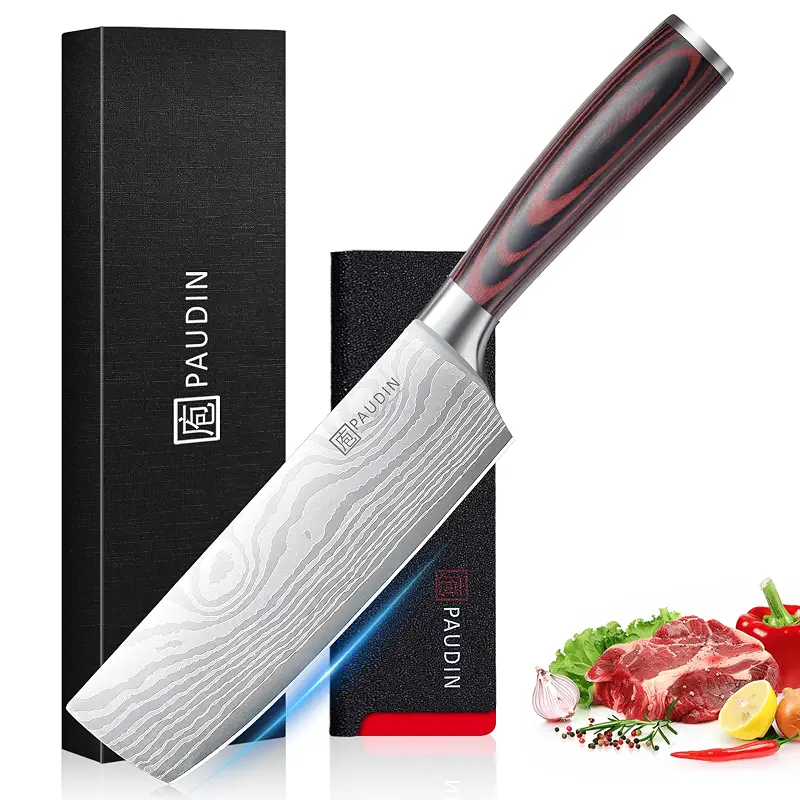
PAUDIN Nakiri Knife - 7" Razor Sharp Meat Cleaver and Vegetable Kitchen Knife, High Carbon Stainless Steel, Multipurpose Asian Chef Knife for Home and Kitchen with Ergonomic Handle
4.6(4,821)
Nakiri designed specifically for vegetables, razor-sharp out of the box, excels at cutting dense root vegetables like sweet potatoes.
Ideal for: Home cooks who cut vegetables daily and want a knife designed specifically for that task.
The Paudin Nakiri is the standout choice for anyone who cuts sweet potatoes regularly. Buyers consistently report that its flat, wide blade makes quick work of dense vegetables in ways that traditional chef's knives can't match. The 7-inch length gives you enough cutting surface to handle larger potatoes, and the design lets you use a rocking motion rather than a forward chop, which feels more controlled and less likely to slip off a round surface.
What makes this knife perform so well on sweet potatoes specifically is the flat profile combined with the weight distribution. Multiple owners mention cutting through butternut squash and sweet potatoes with ease where other knives required laying the vegetable on its side or significant hand fatigue. The blade stays sharp with basic maintenance (a honing steel after each use), and the 5Cr15Mov stainless steel resists rust even with frequent handling.
The trade-off is that this is a specialized tool. It's optimized for vegetables and soft items, so if you're also cutting through bones or hard-frozen items regularly, you'll want a more robust chef's knife for those jobs. Hand-washing and proper storage on a magnetic strip are essential to keep the edge in shape.
Pros
Flat blade profile excels at cutting round, dense root vegetables
Razor-sharp edge out of the box, maintains sharpness with light maintenance
Lightweight design reduces hand fatigue during prep work
Cons
Not suitable for cutting bones or hard-frozen items
Requires hand-washing and careful storage to maintain blade quality
Key features
7-inch flat blade with 5Cr15Mov stainless steel, 56+ HRC hardness
Wave-patterned design reduces food friction and sticking
Ergonomic pakkawood handle with balanced pinch point
Push-cutting style prevents accordion effect when slicing vegetables
#2 Pick
Best Premium
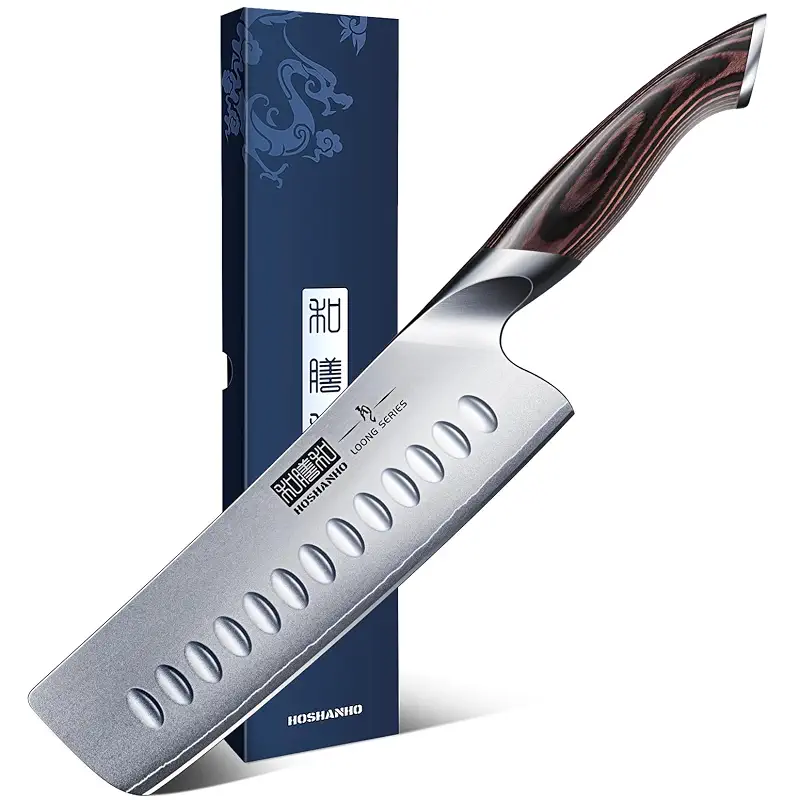
Hoshanho
HOSHANHO 7 Inch Nakiri Knife, Ultra Sharp Japanese Kitchen Chef Knife | Multipurpose Japanese High Carbon Stainless Steel Meat Vegetable Sharp Kitchen Knife with Ergonomic Pakkawood Handle
4.7(1,849)
Higher hardness steel (60HRC) and expert hand-polish deliver longer edge retention and professional-grade cutting performance.
Ideal for: Cooks willing to invest more for better edge retention and professional-grade craftsmanship.
The Hoshanho represents a step up in steel quality. At 60HRC hardness (compared to the Paudin's 56+), this blade is engineered to hold its edge longer even with heavy use. Buyers who own multiple Japanese knives report that this performs comparably to knives costing significantly more. The 10Cr15CoMoV steel and vacuum heat treatment give it the durability to handle frequent sweet potato prep without needing constant touch-ups.
The scalloped hollow pits on the blade serve both aesthetic and functional purposes: they create a non-stick surface that helps vegetables slide off more easily. For sweet potatoes in particular, this anti-stick feature is genuinely useful: starchy vegetables tend to stick more than most. The hand-polished 15-degree edge angle is sharper than many budget alternatives and translates to cleaner cuts with less pressure required.
Compared to the Paudin, the Hoshanho costs more upfront but offers longer intervals between honing sessions, which some cooks find worth the investment. The same specialized vegetable focus applies here, though if your kitchen prep also involves tasks like cutting watermelon or larger fruit, you may find the santoku options below offer more flexibility across different cutting jobs.
Pros
60HRC hardness provides extended edge retention under daily use
Scalloped hollow pits reduce food sticking on dense vegetables
Heavier blade than competitors offers more cutting force with less effort
Cons
Higher entry cost compared to budget-tier nakiri options
Still requires hand-washing and magnetic storage for longevity
Key features
Japanese 10Cr15CoMoV high-carbon steel with 60HRC hardness after vacuum treatment
Hand-polished 15-degree edge angle for superior cutting precision
Scalloped hollow pits for non-stick functionality and visual appeal
Balanced ergonomic handle designed to reduce fatigue during extended prep
#3 Pick
Best Value
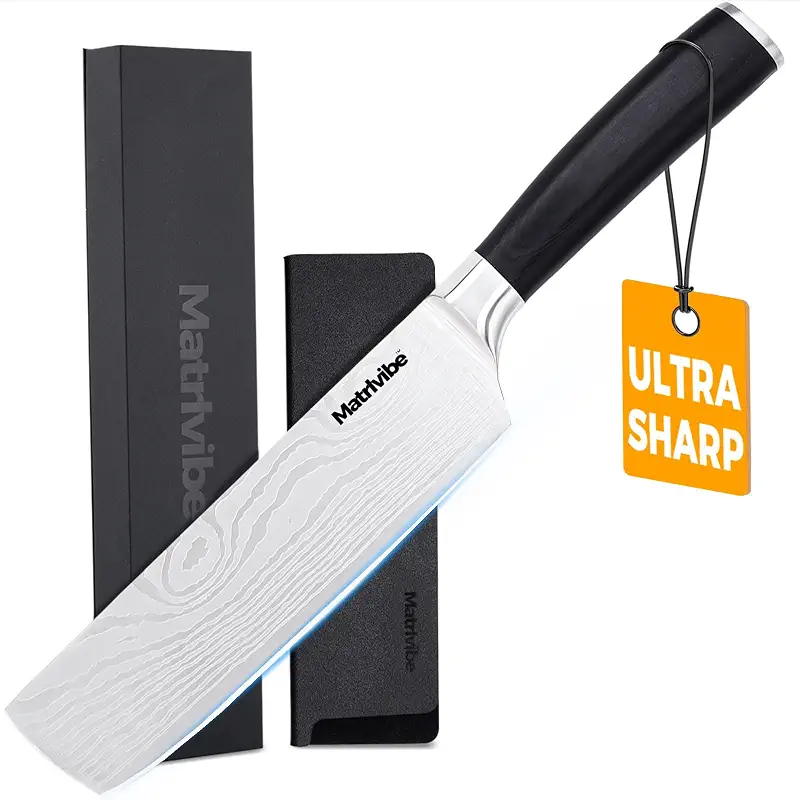
Matrlvibe
7" Nakiri Knife Ultra Sharp Kitchen Knife For Meat and Vegetable | High Carbon Steel, Economic Handle, with Premuin Gift Box and Sheath, Ideal Gift for Men and Women
4.6(210)
Affordable nakiri with sharp blade and solid build quality, includes protective sheath and gift box.
Ideal for: Budget-conscious cooks seeking a reliable nakiri with included protective storage and gift packaging.
The Matrlvibe offers nakiri-style cutting performance at a competitive price point. It uses 5Cr15Mov steel (identical to the Paudin) but with a slightly higher hardness range (56-58 HRC), hitting the sweet spot between durability and value. Buyers note that it arrives exceptionally sharp and cuts carrots and potatoes "like butter," which is exactly the job this knife is built for.
What sets the Matrlvibe apart is the package: it includes a protective sheath and premium gift box, making it an excellent choice if you're buying for someone else or want built-in storage protection. The Damascus-style wave pattern matches the Paudin's design, reducing friction as you cut through starchy vegetables. For the price, owners consistently mention being surprised by the quality and balance, especially given that it's a standalone piece rather than part of an expensive set.
One caveat that emerged from reviews: the edge angle is slightly less aggressive (15 degrees per side) than some competitors, so it may require a light touch or honing stone before use if you expect it to pass a paper-slicing test straight from the box. That said, for regular vegetable prep including sweet potatoes, reviewers report it performs beautifully after a few uses.
Pros
Competitive pricing with sharp, well-balanced blade design
Includes protective sheath and attractive gift packaging
5Cr15Mov steel offers durability comparable to higher-priced alternatives
Cons
Edge may require initial honing to reach maximum sharpness
Hand-sharpened 15-degree edge on each side for clean cuts
Damascus-style pattern reduces food sticking on root vegetables
Includes protective knife sheath and premium gift box packaging
#4 Pick
Best for Smaller Hands
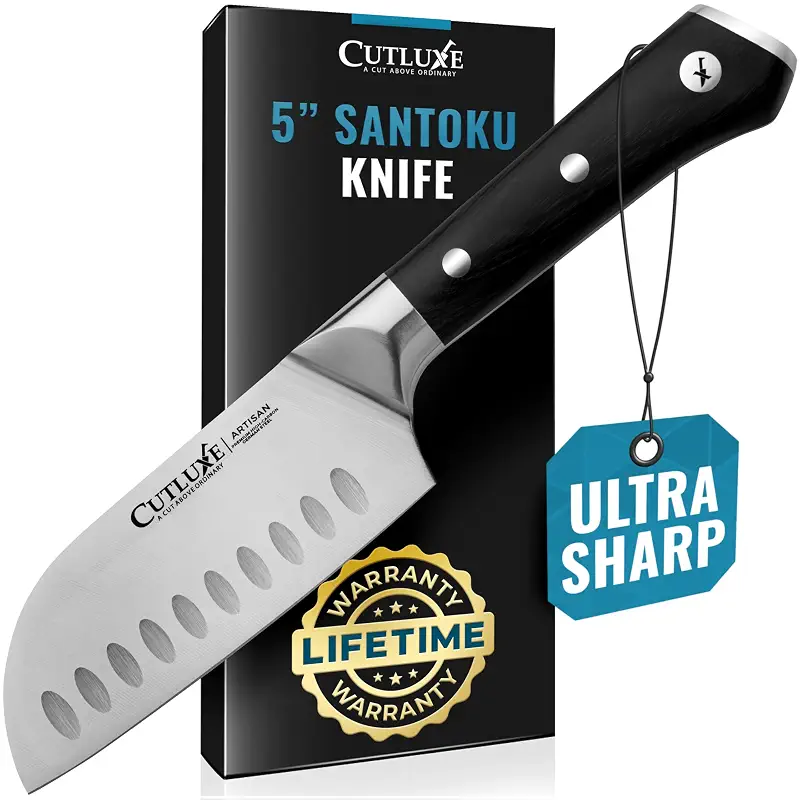
Cutluxe
Cutluxe Santoku Knife 5" – Meat & Vegetable Chopping Knife, German Steel | Hand-sharpened high carbon blade, full tang with ergonomic pakkawood handle; grooved sides release food for fast slicing
4.6(867)
Compact 5-inch santoku with full tang construction delivers professional sharpness and control for precise vegetable work.
Ideal for: Cooks with smaller hands, those who prefer compact blade length, or anyone seeking precise, detailed vegetable work.
If larger knives tire your hands or feel unwieldy, the Cutluxe Santoku offers a more manageable alternative. At 5 inches, it's significantly smaller than the 7-inch nakiris in this lineup, but owners with smaller hands or those who prefer detailed work report that this compact size doesn't compromise cutting power on sweet potatoes. The German stainless steel at 56+ HRC hardness stays sharp and handles dense vegetables cleanly.
The grooved sides on this santoku serve the same purpose as the hollow pits on nakiri blades: they reduce food sticking and create cleaner separation as you slice. For sweet potato cubing or thinner slicing work, the narrower blade gives you more precision control compared to the wider nakiri profile. The triple-riveted full tang construction and lifetime warranty suggest serious engineering behind the price point.
Owners do note one caveat that's worth considering: the santoku blade geometry is optimized for a push-pull or tapping motion rather than the rocking action a nakiri uses. If you prefer the traditional rocking cut, the longer nakiri blades above (like the Hoshanho or Matrlvibe) would feel more natural. Some early users also mentioned needing to touch up the edge before first use, though this seems to be a consistency issue rather than a design flaw.
Pros
Compact 5-inch blade manageable for smaller hands and precise control
Grooved sides reduce sticking on starchy vegetables like sweet potatoes
Full tang construction with lifetime warranty against manufacturing defects
Cons
Requires different cutting technique than push-rocking motion of nakiri
Blade may benefit from honing before first use to reach peak sharpness
Key features
5-inch German stainless steel blade with 56+ HRC hardness
Hand-sharpened at 14-16 degrees per side for superior edge retention
Grooved sides release food particles for faster, cleaner slicing
Triple-riveted full tang with ergonomic pakkawood handle
#5 Pick
Most Versatile
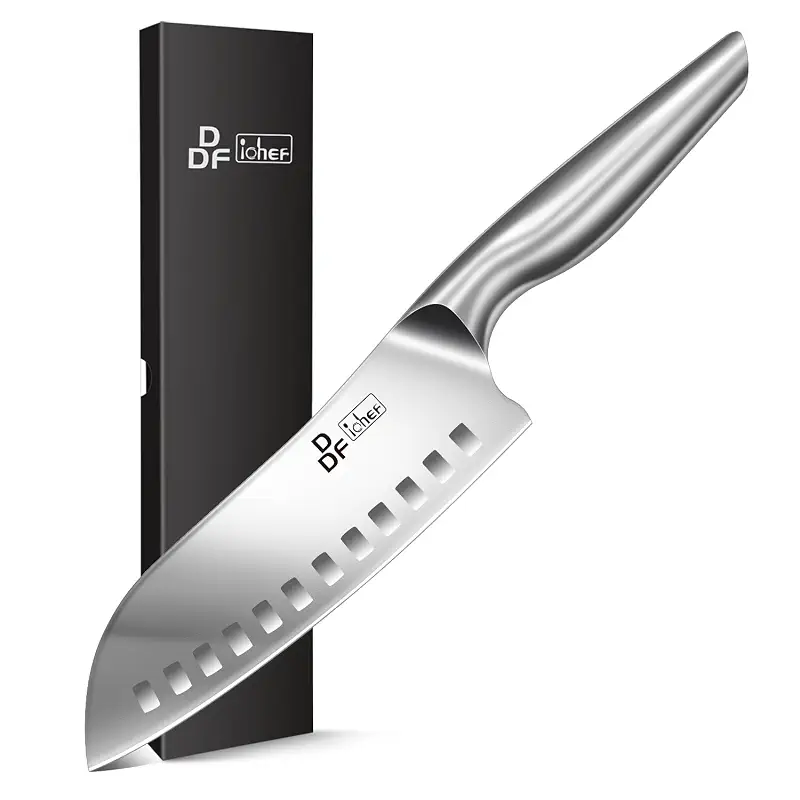
DDF iohEF
Chef Knife 7 Inch, High-Carbon Stainless Steel Santoku, Dishwasher Safe | Japanese Kitchen Knife with Ergonomic Hollow Handle, Ultra Sharp Santoku Knife for Chopping, Silver
4.7(3,880)
7-inch double-edged santoku works for left and right-handed users, handles sweet potatoes plus meat and fruit with equal ease.
Ideal for: Home cooks needing one reliable blade for vegetables, fruits, and occasional soft meats; both left and right-handed users.
The DDF iohEF takes a hybrid approach: it has the 7-inch length of a chef's knife but the santoku profile with grooved blade design. This makes it genuinely versatile for cooks who want one knife that handles vegetables, fruits, and soft meats without compartmentalizing tasks. The stainless steel construction (5Cr15Mov at 58 HRC) is sturdy enough for daily use on a range of ingredients, whereas the nakiris above are optimized for vegetables specifically.
For sweet potato work, owners report that the grooved sides and sharp 15-degree edge handle dense root vegetables cleanly, though the santoku profile means the cutting motion feels less natural than a dedicated nakiri: you're using more of a vertical tap or slice rather than a rock. The real advantage here is flexibility: if you're the type of cook who doesn't want multiple knives for different tasks, this single blade covers more ground than a specialized tool.
One practical advantage over the nakiri lineup is that this model is listed as dishwasher-safe, though reviewers who own expensive knives universally recommend hand-washing anyway. The ergonomic hollow handle provides good balance and comfort during extended prep sessions, and buyers consistently mention that it ships exceptionally sharp and maintains that edge well. Where the best knife for watermelon might demand a longer, heavier blade suited to thick rinds, this santoku's versatility makes it a better all-around choice for cooks who juggle many vegetable types and fruits.
Pros
Double-edged blade accommodates both left and right-handed users
Grooved santoku design handles sweet potatoes plus meat and soft fruit
Ergonomic hollow handle with excellent balance and comfort
Cons
Santoku profile less intuitive than nakiri for the rocking-cut technique
Lighter blade than some competitors may require more hand pressure
15-degree per-side edge angle, hand-polished for superior sharpness
Grooved blade sides release food particles for faster, cleaner cuts
Ergonomic stainless-steel hollow handle designed to minimize hand fatigue
How to Choose a Knife for Cutting Sweet Potatoes
Four trade-offs that actually matter when matching a knife to cut sweet potatoes to your kitchen.
Nakiri vs. Santoku vs. Chef's Knife
A nakiri is purpose-built for vegetables and uses a flat, wide blade that you rock back and forth, which is ideal for round, dense items like sweet potatoes. A santoku is smaller and uses grooved sides to reduce sticking, making it better for detailed slicing and fruits. A traditional chef's knife is the generalist, but the round handle and tapered blade don't perform as well on starchy root vegetables. If you cut vegetables most days, a nakiri is the best match. If you want one knife for everything, a santoku or chef's knife covers more ground.
Blade Material and Hardness
Look for high-carbon stainless steel (not pure stainless) because it holds an edge longer and resists rust. Hardness is measured on the Rockwell scale (HRC). Most budget options range from 56-58 HRC, which is perfectly adequate for sweet potatoes. Premium options go to 60 HRC or higher, staying sharp longer between honing sessions. All the knives in this lineup use proven steel formulas (5Cr15Mov or 10Cr15CoMoV); the difference is in heat treatment and craftsmanship. For daily home use, 56+ HRC is sufficient unless you cook professionally.
Edge Angle and Sharpness
Japanese knives typically have a 14-16 degree edge angle per side, making them sharper and requiring more finesse than western chef's knives. The sharper the angle, the easier the cut on soft vegetables, but the edge dulls faster and is more fragile on hard items. All the knives here arrive sharp, but some may benefit from a light honing stone before first use. Plan on using a honing steel every few uses (takes 30 seconds) to maintain the edge, and hand-washing immediately after use to prevent staining and rust. Learning the sweet potato cutting technique guide will help you develop habits that protect both the blade edge and your hands.
Handle Comfort and Balance
The handle should feel balanced at the point where your index finger naturally lands on the blade (the pinch point). If the handle is much heavier than the blade, you'll work harder. Pakkawood is the standard on most of these options: it's a compressed wood composite that resists moisture and feels warmer in the hand than stainless steel. Try holding the knife in a photo or video if possible; weight distribution matters more than brand name. For sweet potato prep, a slightly heavier blade helps push through dense flesh without excessive hand pressure.
Maintenance and Care
All of these knives require hand-washing and immediate drying to prevent rust and staining. Store on a magnetic strip, knife block, or with a sheath: never loose in a drawer where the blade edge contacts other utensils. Most importantly, use a honing steel (not a sharpener) every few uses; a honing steel realigns the edge and takes seconds, while actual sharpening is less frequent.
Frequently asked
Quick answers to the questions readers ask most.
Can I use a regular chef's knife to cut sweet potatoes?
Yes, but it's not ideal. A chef's knife has a curved blade designed for rocking, which can slide sideways on round vegetables. A nakiri's flat profile and wider blade give you much better control and require less hand strength. If you already own a good chef's knife, it will work, but a dedicated vegetable knife makes the job noticeably easier and faster, especially for dense root vegetables.
Do I really need to hand-wash these knives?
Yes. The high-carbon stainless steel in these knives will stain and rust in a dishwasher's harsh environment and high heat. Hand-washing with warm soapy water and drying immediately takes 20 seconds and prevents rust, staining, and blade damage. It's the single easiest way to keep your blade looking pristine and performing well for years.
How often should I sharpen or hone my blade?
Use a honing steel after every few uses (takes 30 seconds and realigns the edge). A honing steel isn't sharpening; it maintains an already-sharp edge. Actual sharpening on a whetstone is needed perhaps 2-4 times per year depending on use. Most owners find that regular honing keeps their blade sharp enough that formal sharpening becomes infrequent. Test the edge by carefully trying to slice a piece of paper; if it catches, hone it.
What's the difference between a nakiri and a santoku?
A nakiri has a flat rectangular blade optimized for vegetables, with a rocking motion. A santoku is smaller, more pointed, and has grooved sides; it's better for precise slicing and is more forgiving on a variety of ingredients including fruit and soft meat. Both are Japanese designs. If you cut vegetables 80% of the time, nakiri. If you want one knife for mixed prep, santoku or chef's knife.
Are these knives suitable for left-handed users?
Most nakiri and traditional Japanese knives are beveled on both sides, making them workable for left and right-handed users. The DDF iohEF model explicitly advertises double-edge design for both. However, some knives have subtle right-handed bias in handle design. Check the product details if you're left-handed; when in doubt, hand-washing and honing technique matter far more than handedness.