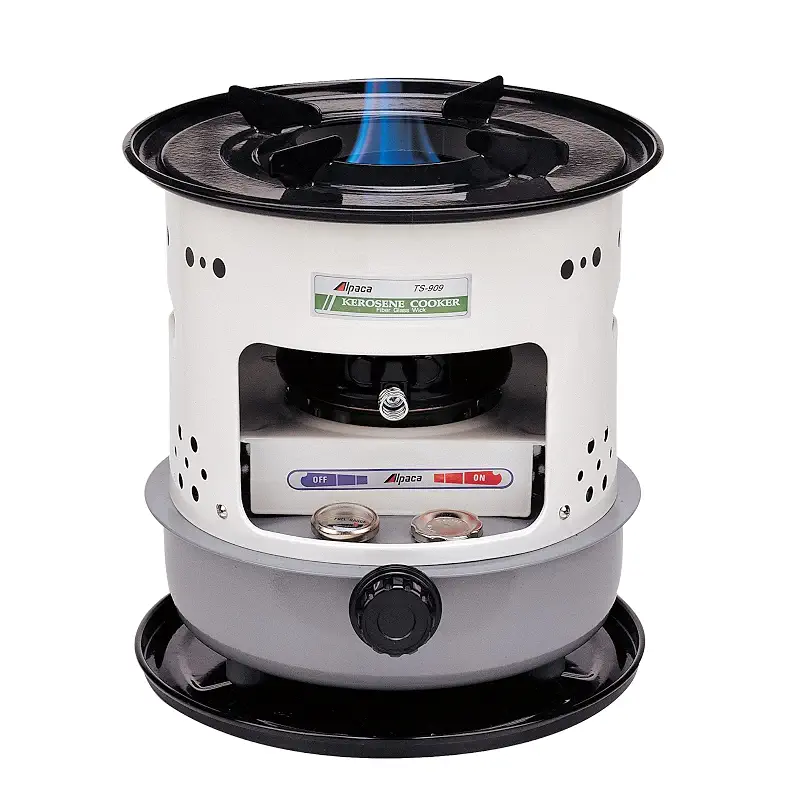
Ideal for: Homeowners seeking emergency backup heat, casual campers with vehicle access, and outdoor cooks who prioritize reliability.
The Warrior Alpaca stands out among kerosene stoves because buyers consistently report that it simply works reliably, even after months of storage or in the hands of first-time users. The 8,500 BTU output sits in the sweet spot: powerful enough to boil water in under 20 minutes and heat a kitchen or office room, yet efficient enough that a single gallon stretches to 16 hours. The steel construction feels purposeful rather than cost-cut, and the drip tray design with upturned grip edges shows attention to practical details.
What I appreciate from owner feedback is the honest assessment of the learning curve. Initial startup works best outdoors because the wick saturation process creates odor; owners who follow the five-minute soak-and-ignite routine report clean blue-flame operation thereafter with minimal smell. The fiberglass wick holds up through repeated use, and the adjustable flame knob gives real control between high and low settings. One owner tested it with a 12-cup percolator on cold water and had coffee brewing in 18 minutes, demonstrating it handles camping cookware without fuss.
Compared to the lighter multi-wick models in this lineup, the Alpaca trades portability for durability and sustained heat output. If you're setting up a basecamp or keeping this in a garage or shed for emergencies, the heft and solid frame are assets, not drawbacks. The only genuine limitation is size: at heavier weight, it's not a backpack stove, and the footprint requires stable, level ground.
Pros
Long 16-hour runtime on single gallon of fuel
Durable all-metal construction with steel base and chimney
Adjustable flame control for flexible cooking and heating
Supports up to standard pot and pan sizes
Cons
Requires learning curve for initial wick saturation and startup
Heavier design limits portability for backpack hiking
Key features
8,500 BTU high-efficiency burner, three times more powerful than typical camping stoves
1-gallon fuel tank with visible fuel gauge for tracking consumption
Ideal for: Solo hikers, backpackers, and minimalist campers who value weight savings and quick meal prep.
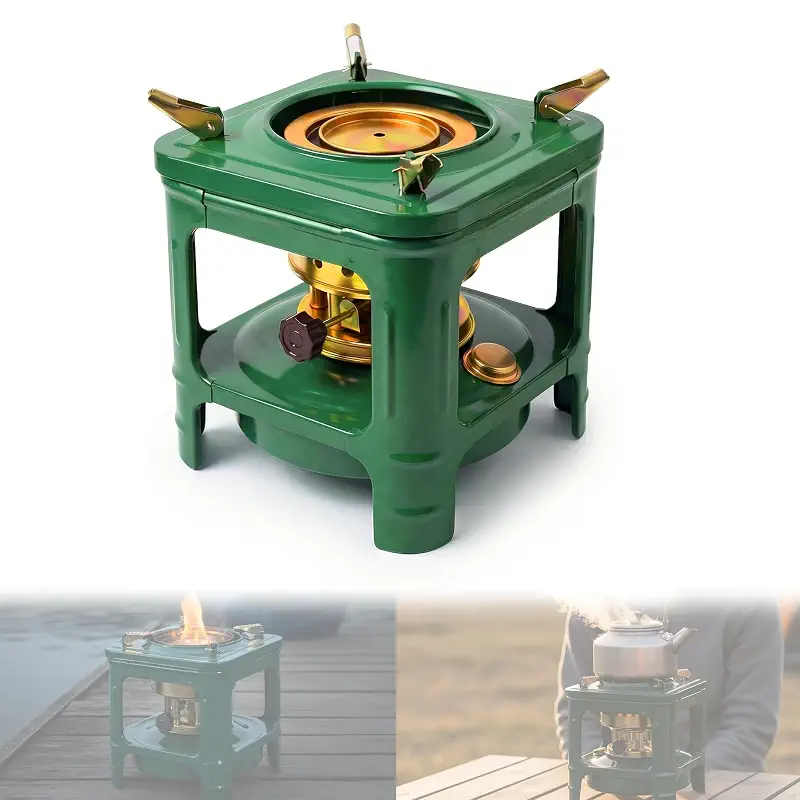
The Wshxjzyay sits at the far portability end of the kerosene stove spectrum. At under a pound and 18 centimeters wide, it slips into a backpack pocket without occupying half your load capacity. The eight-wick burner system concentrates heat efficiently, boiling water or warming canned goods in under 8 minutes, which matters when you're tired and hungry at 10,000 feet. Multi-fuel compatibility (kerosene, diesel, alcohol) is practical insurance in remote areas where one fuel type might be unavailable.
Buyer reviews show this stove works best when expectations match its design: it's a survival tool and camp-stove, not a full kitchen. Most owners praise its compact footprint and heating speed for the price point. That said, build quality feedback splits between five-star confidence and red flags about missing parts and flimsy construction. One reviewer noted the ignition process requires practice, and flame regulation can feel imprecise compared to stoves with larger control mechanisms.
Where this differs from the heavier-duty Warrior Alpaca is runtime and sustained output. The Wshxjzyay delivers 4-6 hours per fuel load, making it ideal for day hikes or warming overnight shelter, but less suited to multi-day basecamp cooking. The 8-wick design spreads heat across a wider burner face, so pots sit more stable than on single-burner rigs, but the overall footprint remains delicate on uneven ground.
Pros
Ultra-lightweight design fits easily into any backpack or emergency kit
Eight-wick burner layout stabilizes cookware and spreads heat evenly
Multi-fuel compatibility adapts to kerosene, diesel, or alcohol availability
Fast 7-8 minute boil time for quick meal preparation
Cons
Quality control inconsistency; some units arrive with missing or defective parts
Flame adjustment requires trial and error to dial in precise control
Key features
Compact 18cm width, weighs under one pound for maximum portability
Eight-wick burner system with 4-6 hour continuous burn time per tank
Adjustable flame switch from high heat down to complete shut-off
Multi-fuel design runs on kerosene, diesel, or alcohol in emergencies
Dual-purpose stove and heater for tent warming, boats, or survival situations
#3 Pick
Best for Reliability & Value
HOER
Portable Kerosene Stove 8-Wicks, Camping Stove & Fogon de Petróleo para Cuba, Multi-Fuel Kerosene Heater for Outdoor Cooking, Hiking, Backpacking, Emergency Stove Use (Square)
4.4(48)
Square eight-wick stove with solid build and consistent 7-8 minute boil time; tested by repeat buyers.
Ideal for: Campers and emergency preparedness households seeking proven durability without premium pricing.
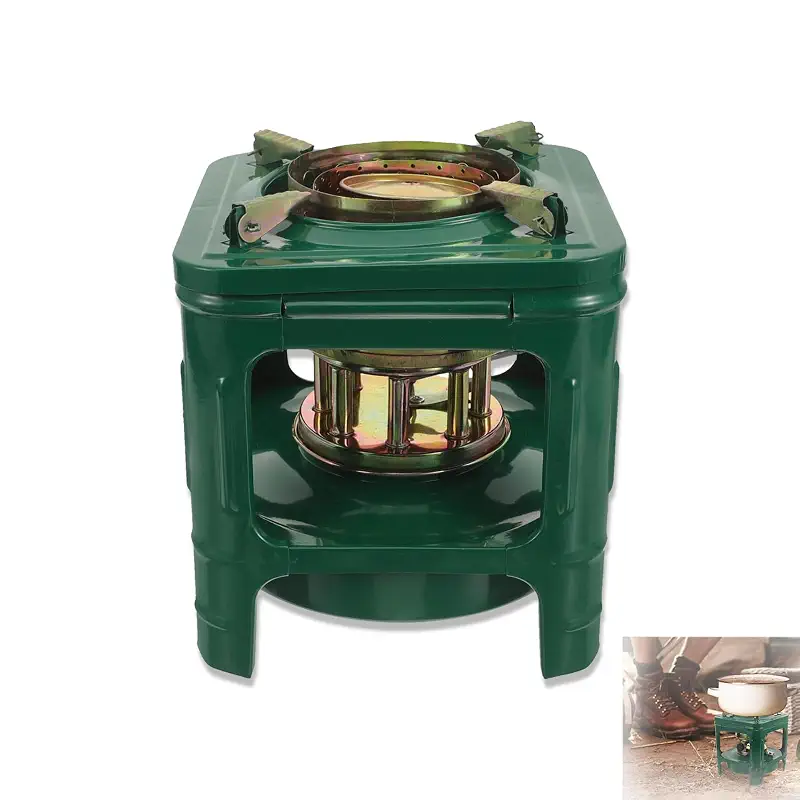
The HOER occupies the practical middle ground: lighter than the Alpaca, more robustly constructed than some ultralight models, and priced accessibly. The eight-wick square footprint provides stability advantages over round designs when setting cookware on uneven ground. Most owner reviews mention it arrives in good condition and ignites consistently, which eliminates the frustration some buyers encounter with cheaper multi-wick stoves.
What stands out from user feedback is the pattern of repeat purchases. One reviewer bought this model specifically because a family member in Cuba had owned the same unit for years without failure, then intentionally reordered it. Another owner called it a beast for the price, emphasizing sturdier welds and durable materials compared to competitors. The square shape for pot stability, the even heating from the eight-wick design, and kerosene's low fuel cost create a low-maintenance option for both outdoor cooking and emergency prep.
Compared to the Wshxjzyay, this trades some portability for build confidence and parts quality control. Compared to the Warrior Alpaca, it sacrifices the premium construction and longer runtime but cuts weight by half and costs significantly less. The trade-offs make it well-suited for campers and preppers who value proven durability over either ultralight design or premium materials.
Pros
Sturdy eight-wick burner design with solid weld construction
Square footprint provides excellent pot and pan stability
Multi-fuel compatibility with kerosene, diesel, and alcohol
Lightweight at 0.75 kg yet feels more robust than similarly sized models
Cons
Longer ignition process compared to single-burner designs
Requires proper ventilation when starting and shutting down
Key features
Eight-wick burner heats water to boil in approximately 7-8 minutes
Square design stabilizes cookware and distributes heat evenly across pots
0.75 kg lightweight construction fits backpacks without sacrificing durability
Adjustable flame control from full heat to precise simmer or complete shutoff
Multi-purpose for camping, tent heating, boats, and emergency home cooking
#4 Pick
Best for Dual-Purpose Heating & Cooking
Vevor
VEVOR 9000 BTU Portable Kerosene Heater & Stove, 2 in 1 Non-Electric Indoor Outdoor Heater with Adjustable Height & Flame & Easy Storage,for Camping, Hunting, Cooking, Home, Garage, Black
4.4(34)
9,000 BTU heater-stove hybrid with 20-hour runtime and 3.6-inch adjustable height for flexible indoor-outdoor use.
Ideal for: Homeowners, RV enthusiasts, and growers needing reliable emergency heat plus occasional cooking capability.
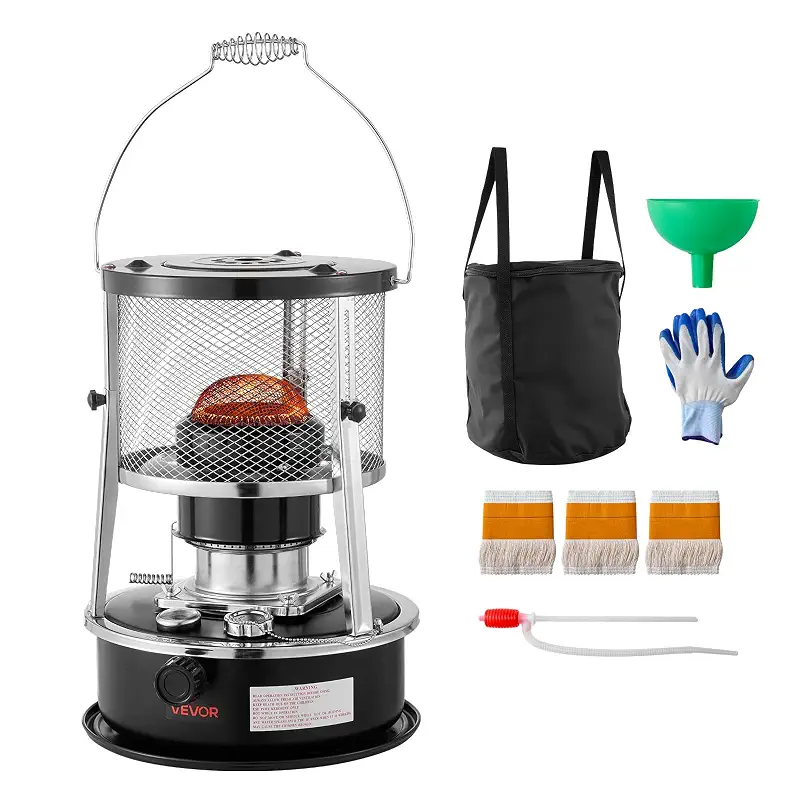
The Vevor leans into versatility by combining serious heating output with stove functionality in one unit. The 9,000 BTU rating exceeds most camping stoves, and the 1.3-gallon tank stretches to 20 hours of operation, making it genuinely practical for a garage, greenhouse, or cabin during power loss. The adjustable-height lid mechanism (raising 3.6 inches during use, collapsing to 13.4 inches for storage) shows engineering that thinks beyond a single use case.
Owner reviews highlight that it takes time to reach optimal burn temperature for a clean flame, but once dialed in, it runs quietly and efficiently. The 33-pound weight capacity handles full pots and kettles without wobbling. Some buyers used it successfully in RVs, greenhouses, and rooms where spot heating mattered more than portability. That said, one reviewer reported a leg connection issue that compromised handle stability, and several noted this unit ships disassembled, requiring assembly before first use: a friction point for buyers expecting plug-and-play operation.
Compared to the eight-wick models, the Vevor prioritizes sustained radiant heat over quick boil speed, making it better suited to stationary indoor heating or a basecamp that needs ambient warmth. The multi-wick stoves excel at active cooking; this one excels at keeping a space warm while also supporting occasional cookware.
Pros
High 9,000 BTU output warms 30-square-meter spaces in ten minutes
Extended 20-hour runtime from 1.3-gallon tank reduces refueling frequency
Adjustable height lid optimizes surface stability and storage footprint
Supports up to 33 pounds of cookware for full-size pots and kettles
Cons
Requires assembly upon arrival; does not ship ready to use
Learning curve needed to find optimal burn temperature for clean operation
Key features
9,000 BTU burner with 360-degree radiant heating for large space warming
1.3-gallon fuel tank delivers up to 20 hours continuous operation
Adjustable-height lid raises 3.6 inches during use, collapses for easy storage
EZ flame controller, fuel gauge, and security grill for convenient operation
Sturdy support base handles up to 33 pounds for cooking and heating flexibility
Ideal for: Budget-conscious buyers, emergency preparedness on a tight budget, occasional light outdoor cooking.
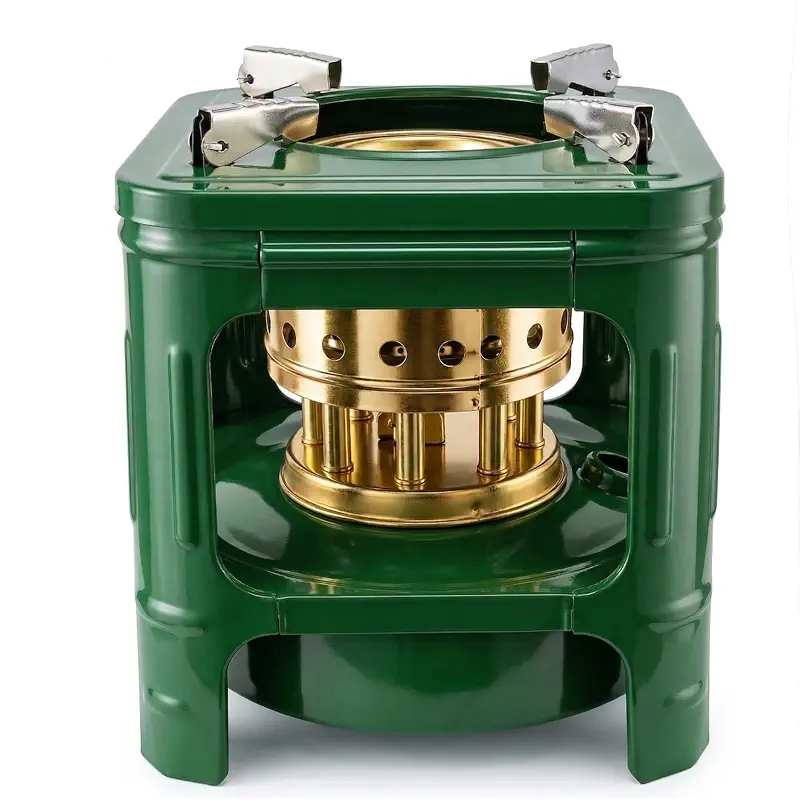
The Jlpawsecc targets buyers who need a kerosene stove for occasional use or true emergency backup and prioritize cost over longevity. The eight-wick design boils water quickly, and multi-fuel compatibility (kerosene, diesel, alcohol) offers flexibility. At compact size and low price, it fits into emergency kits or as a spare backup stove.
Buyer feedback reveals the tension in this product's design: owners appreciate the portability and heating speed, but flag thin pressed-metal construction, spill risk, and odor persistence even after burning properly. One reviewer noted welds could be reinforced to make this a genuinely good product, yet acknowledged the price point explains some trade-offs. Another found the flame to be steady and even, but warned the thin build feels fragile on uneven ground. Build quality inconsistency appears more pronounced here than in the multi-wick models positioned above it.
Compared to the HOER or Wshxjzyay, this sacrifices build confidence and long-term durability to undercut price. It's not a bad choice for a sealed emergency box that sits in a closet for years and might never be opened, or for someone who already owns a primary stove and wants a throwaway backup. But for regular camping or outdoor cooking, the extra investment in a more robust model yields better experience and fewer frustrations.
Pros
Lowest entry price point in kerosene stove category
Eight-wick design heats quickly for short-term cooking needs
Multi-fuel compatible with kerosene, diesel, or alcohol
Compact and lightweight for emergency kit storage
Cons
Thin pressed-metal construction feels fragile under regular use
High spillage risk and persistent odor even after proper burn adjustment
Key features
Eight-wick burner system boils water within 7-8 minutes
Compact lightweight design suitable for emergency kits and minimal packing
Intuitive flame adjustment switch for precise heat control
Multi-purpose use for camping, heating small spaces, or survival situations
Kerosene, diesel, and alcohol compatible for fuel flexibility
How to Choose a Kerosene Stove
Four trade-offs that actually matter when matching a kerosene stove to your kitchen.
Single Burner vs. Multi-Wick Design
The Warrior Alpaca uses a single-burner design with a long-life fiberglass wick, concentrating heat in one focused point ideal for heating or cooking in a stationary setup. Multi-wick stoves (8-wick models like the HOER, Wshxjzyay, and Jlpawsecc) spread heat across multiple burner points, stabilizing cookware and distributing warmth more evenly. A multi-wick versus single-burner comparison shows that single-burner stoves typically deliver higher sustained temperatures and longer runtimes, while multi-wick models excel at quick boil times and pot stability. Choose single-burner for basecamp heating or extended outdoor cooking; choose multi-wick for hiking, boat use, or quick meal prep where weight and rapid heat matter.
Runtime and Fuel Capacity
Fuel tank size directly affects how often you refill and how long the stove runs between fills. The Warrior Alpaca's 1-gallon tank delivers 16 hours at high output, making it ideal for all-day or multi-day camping or emergency situations. The Vevor's 1.3-gallon tank stretches to 20 hours. Multi-wick models typically carry smaller tanks and deliver 4-6 hours per fill, suitable for day trips or overnight heating. Consider your typical use: a weekend car-camping trip benefits from extended runtime; a day hike benefits from compact weight over runtime. Emergency preparedness setups should prioritize longer runtime to minimize refueling interruptions.
Build Quality and Durability
Higher-end stoves like the Warrior Alpaca use all-metal construction with steel bases and reinforced welds, designed to withstand years of outdoor use and survive storage in garages or sheds. Mid-tier models like the HOER deliver solid construction without premium pricing. Budget options like the Jlpawsecc use thinner pressed metal that can feel fragile and may develop leaks or instability over time. If you plan to use this stove regularly or keep it for years, invest in sturdier construction. If it's purely backup equipment that might sit unused for years, budget models satisfy emergency-only needs. Read owner feedback closely; repeated complaints about missing parts or construction defects are warning signs.
Portability vs. Stationary Use
Ultralight models like the Wshxjzyay weigh under one pound and fit backpack pockets, making them essential for hiking where every ounce matters. Mid-weight stoves like the HOER at 0.75 kilograms balance portability with stability. Heavier stoves like the Warrior Alpaca and Vevor require vehicle access but provide superior stability and extended runtime for basecamp or home emergency use. Clarify your primary use: solo backpacking demands ultralight design; family camping or home emergency prep tolerates more weight in exchange for durability and longer runtime. A kerosene stove fuel safety guide covers proper fuel storage and handling, crucial knowledge before selecting a stove you'll use regularly indoors.
Startup and Flame Control
Most kerosene stoves require priming the wick before ignition: typically saturating the wick with fuel for several minutes, then raising it to the top and lighting. Clean blue-flame operation comes after initial orange-flame and smoke clear. Some stoves have intuitive knobs; others require trial and error to find the optimal setting. Read owner reviews for startup notes: if multiple buyers mention finicky flame control or lengthy learning curves, expect frustration when you need heat quickly. Premium models generally have better-engineered flame adjustment knobs that respond predictably, while budget stoves may require more fiddling.
Frequently asked
Quick answers to the questions readers ask most.
Can I use a kerosene stove indoors?
Kerosene stoves can operate indoors with proper ventilation. Most owners crack a window and keep a carbon monoxide detector nearby. Never seal a kerosene stove in a closed room; it consumes oxygen and produces CO. During startup, the orange-flame stage produces odor and smoke: many users light outdoors or in a garage until blue-flame operation begins. Once the stove is burning clean, indoor use with ventilation is safe for short-term heating or emergency situations.
How long does a kerosene stove last?
Well-built models like the Warrior Alpaca last years or decades with basic maintenance: regular wick replacement when it becomes frayed or discolored, periodic cleaning of the burner, and proper off-season storage in a dry location. Budget models with thin construction may fail within a few years of regular use. Kerosene itself is non-corrosive and stores for years if kept dry and sealed, so fuel isn't the limiting factor. Most failures stem from neglected wick maintenance or rough handling, not inherent lifespan.
What's the difference between kerosene, diesel, and alcohol fuel?
Kerosene (1-K) is the standard fuel, burns clean when properly lit, and is widely available. Diesel burns similarly but may produce more soot. Alcohol burns hotter but uses fuel faster and produces less heat output overall. Multi-fuel compatible stoves offer flexibility for emergencies or international travel where kerosene may be scarce. Always check your stove's manual; some single-fuel stoves perform poorly on alternatives. Kerosene stove fuel safety guide details proper storage and handling for each fuel type.
Why does my kerosene stove smell, and how do I reduce odor?
Odor comes primarily during startup when the wick heats up and the orange flame burns off excess fuel. Once the flame turns blue and stable, odor drops dramatically. Proper priming (letting the wick soak in fuel) and starting the stove outdoors or in a well-ventilated space reduces indoor odor problems. Using high-quality 1-K kerosene rather than dirty or low-grade fuel also minimizes smell. Some residual odor is normal; excessive persistent odor signals incomplete combustion or poor-quality fuel.
How do I store a kerosene stove over the off-season?
Empty or nearly empty the fuel tank to prevent stale kerosene from gumming the wick. Store the stove in a dry, cool place away from direct sunlight and moisture. Cover it to keep dust and insects out. Inspect the wick annually; if it's hardened or discolored, replace it before next use. Keep a spare wick on hand, as they're inexpensive and occasionally wear out. Properly stored kerosene stoves start reliably after months or years of storage.